NCO User Guide 
|
Note to readers of the NCO User Guide in HTML format:
The NCO User Guide in PDF format
(also on SourceForge)
contains the complete NCO documentation.
|
The netCDF Operators, or NCO, are a suite of programs known as
operators.
The operators facilitate manipulation and analysis of data stored in the
self-describing netCDF format, available from
(http://www.unidata.ucar.edu/software/netcdf).
Each NCO operator (e.g., ncks) takes netCDF input
file(s), performs an operation (e.g., averaging, hyperslabbing, or
renaming), and outputs a processed netCDF file.
Although most users of netCDF data are involved in scientific research,
these data formats, and thus NCO, are generic and are equally
useful in fields from agriculture to zoology.
The NCO User Guide illustrates NCO use with
examples from the field of climate modeling and analysis.
The NCO homepage is http://nco.sf.net, and the
source code is maintained at http://github.com/nco/nco.
This documentation is for NCO version 5.4.1. It was last updated 2 October 2026. Corrections, additions, and rewrites of this documentation are gratefully welcome.
Enjoy,
Charlie Zender
Table of Contents
- Foreword
- Summary
- 1 Introduction
- 2 Operator Strategies
- 3 Shared Features
- 3.1 Internationalization
- 3.2 Metadata Optimization
- 3.3 OpenMP Threading
- 3.4 Command Line Options
- 3.5 Sanitization of Input
- 3.6 Specifying Input Files
- 3.7 Specifying Output Files
- 3.8 Accessing Remote Files
- 3.9 Retaining Retrieved Files
- 3.10 File Formats and Conversion
- 3.11 Zarr and NCZarr
- 3.12 Large File Support
- 3.13 Subsetting Files
- 3.14 Subsetting Coordinate Variables
- 3.15 Group Path Editing
- 3.16 Retaining Orphaned Dimensions
- 3.17 C and Fortran Index conventions
- 3.18 Hyperslabs
- 3.19 Stride
- 3.20 Record Appending
- 3.21 Subcycle
- 3.22 Interleave
- 3.23 Multislabs
- 3.24 Wrapped Coordinates
- 3.25 Auxiliary Coordinates
- 3.26 Grid Generation
- 3.27 Regridding
- 3.28 Climatology and Bounds Support
- 3.29 UDUnits Support
- 3.30 Rebasing Time Coordinate
- 3.31 Multiple Record Dimensions
- 3.32 Missing values
- 3.33 Chunking
- 3.34 Quantization Algorithms
- 3.35 Compression
- 3.36 Deflation
- 3.37 MD5 digests
- 3.38 Buffer sizes
- 3.39 Buffer sizes
- 3.40 RAM disks
- 3.41 Unbuffered I/O
- 3.42 Packed data
- 3.43 Operation Types
- 3.44 Type Conversion
- 3.45 Batch Mode
- 3.46 Global Attribute Addition
- 3.47 Global Attribute Deletion
- 3.48 History Attribute
- 3.49 File List Attributes
- 3.50 CF Conventions
- 3.51 ARM Conventions
- 3.52 Operator Version
- 4 Reference Manual
- 4.1
ncap2netCDF Arithmetic Processor- 4.1.1 Syntax of
ncap2statements - 4.1.2 Expressions
- 4.1.3 Dimensions
- 4.1.4 Left hand casting
- 4.1.5 Arrays and hyperslabs
- 4.1.6 Attributes
- 4.1.7 Value List
- 4.1.8 Number literals
- 4.1.9 if statement
- 4.1.10 Print & String methods
- 4.1.11 Missing values ncap2
- 4.1.12 Methods and functions
- 4.1.13 RAM variables
- 4.1.14 Where statement
- 4.1.15 Loops
- 4.1.16 Include files
- 4.1.17
sortmethods - 4.1.18 UDUnits script
- 4.1.19 Vpointer
- 4.1.20 Irregular Grids
- 4.1.21 Bilinear interpolation
- 4.1.22 GSL special functions
- 4.1.23 GSL interpolation
- 4.1.24 GSL least-squares fitting
- 4.1.25 GSL statistics
- 4.1.26 GSL random number generation
- 4.1.27 Examples ncap2
- 4.1.28 Intrinsic mathematical methods
- 4.1.29 Operator precedence and associativity
- 4.1.30 ID Quoting
- 4.1.31 make_bounds() function
- 4.1.32 solar_zenith_angle function
- 4.1.1 Syntax of
- 4.2
ncattednetCDF Attribute Editor - 4.3
ncbonetCDF Binary Operator - 4.4
nccheckernetCDF Compliance Checker - 4.5
ncclimonetCDF Climatology Generator- Timeseries Reshaping mode, aka Splitting
- MPAS-O/SI/LI considerations
- Annual climos
- Regridding Climos and Other Files
- Extended Climatologies
- Coupled Runs
- Memory Considerations
- Single, Dedicated Nodes at LCFs
- 12 node MPI-mode Jobs
- What does
ncclimodo? - Assumptions, Approximations, and Algorithms (AAA) Employed:
- 4.6
ncecatnetCDF Ensemble Concatenator - 4.7
ncesnetCDF Ensemble Statistics - 4.8
ncflintnetCDF File Interpolator - 4.9
ncksnetCDF Kitchen Sink - 4.10
ncpdqnetCDF Permute Dimensions Quickly - 4.11
ncranetCDF Record Averager - 4.12
ncrcatnetCDF Record Concatenator - 4.13
ncremapnetCDF Remapper - 4.14
ncrenamenetCDF Renamer - 4.15
ncwanetCDF Weighted Averager
- 4.1
- 5 Contributing
- 6 Quick Start
- 7 CMIP5 Example
- 8 Parallel
- 9 CCSM Example
- 10 References
- General Index
Foreword 
NCO is the result of software needs that arose while I worked
on projects funded by NCAR, NASA, and ARM.
Thinking they might prove useful as tools or templates to others,
it is my pleasure to provide them freely to the scientific community.
Many users (most of whom I have never met) have encouraged the
development of NCO.
Thanks espcially to Jan Polcher, Keith Lindsay, Arlindo da Silva,
John Sheldon, and William Weibel for stimulating suggestions and
correspondence.
Your encouragment motivated me to complete the NCO User Guide.
So if you like NCO, send me a note!
I should mention that NCO is not connected to or
officially endorsed by Unidata, ACD, ASP,
CGD, or Nike.
Charlie Zender
May 1997
Boulder, Colorado
Major feature improvements entitle me to write another Foreword.
In the last five years a lot of work has been done to refine
NCO.
NCO is now an open source project and appears to be much
healthier for it.
The list of illustrious institutions that do not endorse NCO
continues to grow, and now includes UCI.
Charlie Zender
October 2000
Irvine, California
The most remarkable advances in NCO capabilities in the last
few years are due to contributions from the Open Source community.
Especially noteworthy are the contributions of Henry Butowsky and Rorik
Peterson.
Charlie Zender
January 2003
Irvine, California
NCO was generously supported from 2004–2008 by US
National Science Foundation (NSF) grant
IIS-0431203.
This support allowed me to maintain and extend core NCO code,
and others to advance NCO in new directions:
Gayathri Venkitachalam helped implement MPI;
Harry Mangalam improved regression testing and benchmarking;
Daniel Wang developed the server-side capability, SWAMP;
and Henry Butowsky, a long-time contributor, developed ncap2.
This support also led NCO to debut in professional journals
and meetings.
The personal and professional contacts made during this evolution have
been immensely rewarding.
Charlie Zender
March 2008
Grenoble, France
The end of the NSF SEI grant in August, 2008 curtailed
NCO development.
Fortunately we could justify supporting Henry Butowsky on other research
grants until May, 2010 while he developed the key ncap2
features used in our climate research.
And recently the NASA ACCESS program commenced
funding us to support netCDF4 group functionality.
Thus NCO will grow and evade bit-rot for the foreseeable
future.
I continue to receive with gratitude the thanks of NCO users at nearly every scientific meeting I attend. People introduce themselves, shake my hand and extol NCO, often effusively, while I grin in stupid embarassment. These exchanges lighten me like anti-gravity. Sometimes I daydream how many hours NCO has turned from grunt work to productive research for researchers world-wide, or from research into early happy-hours. It’s a cool feeling.
Charlie Zender
April, 2012
Irvine, California
The NASA ACCESS 2011 program generously supported (Cooperative Agreement NNX12AF48A) NCO from 2012–2014. This allowed us to produce the first iteration of a Group-oriented Data Analysis and Distribution (GODAD) software ecosystem. Shifting more geoscience data analysis to GODAD is a long-term plan. Then the NASA ACCESS 2013 program agreed to support (Cooperative Agreement NNX14AH55A) NCO from 2014–2016. This support permits us to implement support for Swath-like Data (SLD). Most recently, the DOE has funded me to implement NCO re-gridding and parallelization in support of their ACME program. After many years of crafting NCO as an after-hours hobby, I finally have the cushion necessary to give it some real attention. And I’m looking forward to this next, and most intense yet, phase of NCO development.
Charlie Zender
June, 2015
Irvine, California
The DOE Energy Exascale Earth System Model (E3SM) project (formerly ACME) has generously supported NCO development for the past four years. Supporting NCO for a mission-driven, high-performance climate model development effort has brought unprecedented challenges and opportunities. After so many years of staid progress, the recent development speed has been both exhilirating and terrifying.
Charlie Zender
May, 2019
Laguna Beach, California
The DOE E3SM project has supported NCO development and maintenance since 2015. This is an eternity in the world of research funding! Their reliable support has enabled us to add cutting-edge features including quantization, vertical interpolation, and support for multiple regridding weight-generators. Recently NSF supported us to enable user-friendly support for modern compression algorithms that can make geoscience data analysis greener by reducing dataset size, and thereby storage, power, and associated greenhouse gas emissions. I am grateful for this this agency support that inspires me to create new features that help my amazing colleagues pursue their scientific ideas.
Charlie Zender
July, 2022
Laguna Beach, California
The DOE E3SM project, NASA OSTFL program, and NSF CSSI program all supported NCO for the past three years. Our quantization and compression features are now mature and implemented in the netCDF C-Library where they can be used by other toolkits and languages. These IPCC AR7 CMIP7 model intercomparison project will allow use of these features. This lays the groundwork for their widespread adoption throughout geoscientific computing, potentially saving enormous amounts of storage and reducing its attendant power requirements and GHG emissions. Help from my colleagues at CF, CMOR, E3SM, NASA, NOAA, and Unidata has been indispensable. Unfortunately the future of US-based support for these organizations and collaborators is dire due to the climate denialism and science budget cutbacks of the current administration. Thankfully the University of California (though it too is threatened by the federal government) still affords me the independence to continue maintaining and improving NCO for years to come.
Charlie Zender
September, 2025
Santa Fe, New Mexico
Summary 
This manual describes NCO, which stands for netCDF Operators.
NCO is a suite of programs known as operators.
Each operator is a standalone, command line program executed at the
shell-level like, e.g., ls or mkdir.
The operators take netCDF files (including HDF5 files
constructed using the netCDF API) as input, perform an
operation (e.g., averaging or hyperslabbing), and produce a netCDF file
as output.
The operators are primarily designed to aid manipulation and analysis of
data.
The examples in this documentation are typical applications of the
operators for processing climate model output.
This stems from their origin, though the operators are as general as
netCDF itself.
1 Introduction 
- Availability
- How to Use This Guide
- Operating systems compatible with NCO
- Symbolic Links
- Libraries
- netCDF2/3/4 and HDF4/5 Support
- Help Requests and Bug Reports
1.1 Availability 
The complete NCO source distribution is currently distributed
as a compressed tarfile from
http://sf.net/projects/nco
and from
http://dust.ess.uci.edu/nco/nco.tar.gz.
The compressed tarfile must be uncompressed and untarred before building
NCO.
Uncompress the file with ‘gunzip nco.tar.gz’.
Extract the source files from the resulting tarfile with ‘tar -xvf
nco.tar’.
GNU tar lets you perform both operations in one step
with ‘tar -xvzf nco.tar.gz’.
The documentation for NCO is called the
NCO User Guide.
The User Guide is available in PDF, Postscript,
HTML, DVI, TeXinfo, and Info formats.
These formats are included in the source distribution in the files
nco.pdf, nco.ps, nco.html, nco.dvi,
nco.texi, and nco.info*, respectively.
All the documentation descends from a single source file,
nco.texi
1.
Hence the documentation in every format is very similar.
However, some of the complex mathematical expressions needed to describe
ncwa can only be displayed in DVI, Postscript, and
PDF formats.
A complete list of papers and publications on/about NCO is available on the NCO homepage. Most of these are freely available. The primary refereed publications are ZeM06 and Zen08. These contain copyright restrictions which limit their redistribution, but they are freely available in preprint form from the NCO.
If you want to quickly see what the latest improvements in NCO are (without downloading the entire source distribution), visit the NCO homepage at http://nco.sf.net. The HTML version of the User Guide is also available online through the World Wide Web at URL http://nco.sf.net/nco.html. To build and use NCO, you must have netCDF installed. The netCDF homepage is http://www.unidata.ucar.edu/software/netcdf.
New NCO releases are announced on the netCDF list
and on the nco-announce mailing list
http://lists.sf.net/mailman/listinfo/nco-announce.
1.2 How to Use This Guide 
Detailed instructions about how to download the newest version, and how to complie source code, as well as a FAQ and descriptions of Known Problems etc. are on our homepage (http://nco.sf.net/).
There are twelve operators in the current version (5.4.1).
The function of each is explained in Reference Manual.
Many of the tasks that NCO can accomplish are described during
the explanation of common NCO Features (see Shared Features).
More specific use examples for each operator can be seen by visiting the
operator-specific examples in the Reference Manual.
These can be found directly by prepending the operator name with the
xmp_ tag, e.g., http://nco.sf.net/nco.html#xmp_ncks.
Also, users can type the operator name on the shell command line to
see all the available options, or type, e.g., ‘man ncks’ to see
a help man-page.
NCO is a command-line language. You may either use an operator after the prompt (e.g., ‘$’ here), like,
$ operator [options] input [output]
or write all commands lines into a shell script, as in the CMIP5 Example (see CMIP5 Example).
If you are new to NCO, the Quick Start (see Quick Start) shows simple examples about how to use NCO on different kinds of data files. More detailed “real-world” examples are in the CMIP5 Example. The Index is presents multiple keyword entries for the same subject. If these resources do not help enough, please see Help Requests and Bug Reports.
1.3 Operating systems compatible with NCO 
In its time on Earth, NCO has been successfully ported and tested on so many 32- and 64-bit platforms that if we did not write them down here we would forget their names: IBM AIX 4.x, 5.x, FreeBSD 4.x, GNU/Linux 2.x, LinuxPPC, LinuxAlpha, LinuxARM, LinuxSparc64, LinuxAMD64, SGI IRIX 5.x and 6.x, MacOS X 10.x, DEC OSF, NEC Super-UX 10.x, Sun SunOS 4.1.x, Solaris 2.x, Cray UNICOS 8.x–10.x, and Microsoft Windows (95, 98, NT, 2000, XP, Vista, 7, 8, 10). If you port the code to a new operating system, please send me a note and any patches you required.
The major prerequisite for installing NCO on a particular
platform is the successful, prior installation of the netCDF library
(and, as of 2003, the UDUnits library).
Unidata has shown a commitment to maintaining netCDF and UDUnits on all
popular UNIX platforms, and is moving towards full support for
the Microsoft Windows operating system (OS).
Given this, the only difficulty in implementing NCO on a
particular platform is standardization of various C-language API
system calls.
NCO code is tested for ANSI compliance by
compiling with C99 compilers including those from
GNU (‘gcc -std=c99 -pedantic -D_BSD_SOURCE -D_POSIX_SOURCE’ -Wall)
2,
Comeau Computing (‘como --c99’),
Cray (‘cc’),
HP/Compaq/DEC (‘cc’),
IBM (‘xlc -c -qlanglvl=extc99’),
Intel (‘icc -std=c99’),
LLVM (‘clang’),
NEC (‘cc’),
PathScale (QLogic) (‘pathcc -std=c99’),
PGI (‘pgcc -c9x’),
SGI (‘cc -c99’),
and
Sun (‘cc’).
NCO (all commands and the libnco library) and
the C++ interface to netCDF (called libnco_c++) comply with
the ISO C++ standards as implemented by
Comeau Computing (‘como’),
Cray (‘CC’),
GNU (‘g++ -Wall’),
HP/Compaq/DEC (‘cxx’),
IBM (‘xlC’),
Intel (‘icc’),
Microsoft (‘MVS’),
NEC (‘c++’),
PathScale (Qlogic) (‘pathCC’),
PGI (‘pgCC’),
SGI (‘CC -LANG:std’),
and
Sun (‘CC -LANG:std’).
See nco/bld/Makefile and nco/src/nco_c++/Makefile.old for
more details and exact settings.
Until recently (and not even yet), ANSI-compliant has meant
compliance with the 1989 ISO C-standard, usually called C89 (with
minor revisions made in 1994 and 1995).
C89 lacks variable-size arrays, restricted pointers, some useful
printf formats, and many mathematical special functions.
These are valuable features of C99, the 1999 ISO C-standard.
NCO is C99-compliant where possible and C89-compliant where
necessary.
Certain branches in the code are required to satisfy the native
SGI and SunOS C compilers, which are strictly ANSI
C89 compliant, and cannot benefit from C99 features.
However, C99 features are fully supported by modern AIX,
GNU, Intel, NEC, Solaris, and UNICOS
compilers.
NCO requires a C99-compliant compiler as of NCO
version 2.9.8, released in August, 2004.
The most time-intensive portion of NCO execution is spent in
arithmetic operations, e.g., multiplication, averaging, subtraction.
These operations were performed in Fortran by default until August,
1999.
This was a design decision based on the relative speed of Fortran-based
object code vs. C-based object code in late 1994.
C compiler vectorization capabilities have dramatically improved
since 1994.
We have accordingly replaced all Fortran subroutines with C functions.
This greatly simplifies the task of building NCO on nominally
unsupported platforms.
As of August 1999, NCO built entirely in C by default.
This allowed NCO to compile on any machine with an
ANSI C compiler.
In August 2004, the first C99 feature, the restrict type
qualifier, entered NCO in version 2.9.8.
C compilers can obtain better performance with C99 restricted
pointers since they inform the compiler when it may make Fortran-like
assumptions regarding pointer contents alteration.
Subsequently, NCO requires a C99 compiler to build correctly
3.
In January 2009, NCO version 3.9.6 was the first to link
to the GNU Scientific Library (GSL).
GSL must be version 1.4 or later.
NCO, in particular ncap2, uses the GSL
special function library to evaluate geoscience-relevant mathematics
such as Bessel functions, Legendre polynomials, and incomplete gamma
functions (see GSL special functions).
In June 2005, NCO version 3.0.1 began to take advantage
of C99 mathematical special functions.
These include the standarized gamma function (called tgamma()
for “true gamma”).
NCO automagically takes advantage of some GNU
Compiler Collection (GCC) extensions to ANSI C.
As of July 2000 and NCO version 1.2, NCO no
longer performs arithmetic operations in Fortran.
We decided to sacrifice executable speed for code maintainability.
Since no objective statistics were ever performed to quantify
the difference in speed between the Fortran and C code,
the performance penalty incurred by this decision is unknown.
Supporting Fortran involves maintaining two sets of routines for every
arithmetic operation.
The USE_FORTRAN_ARITHMETIC flag is still retained in the
Makefile.
The file containing the Fortran code, nco_fortran.F, has been
deprecated but a volunteer (Dr. Frankenstein?) could resurrect it.
If you would like to volunteer to maintain nco_fortran.F please
contact me.
1.3.1 Compiling NCO for Microsoft Windows OS 
NCO has been successfully ported and tested on most Microsoft Windows operating systems including: XP SP2/Vista/7/10. Support is provided for compiling either native Windows executables, using the Microsoft Visual Studio Compiler (MVSC), or with Cygwin, the UNIX-emulating compatibility layer with the GNU toolchain. The switches necessary to accomplish both are included in the standard distribution of NCO.
With Microsoft Visual Studio compiler, one must build NCO with C++ since MVSC does not support C99. Support for Qt, a convenient integrated development environment, was deprecated in 2017. As of NCO version 4.6.9 (September, 2017) please build native Windows executables with CMake:
cd ~/nco/cmake
cmake .. -DCMAKE_INSTALL_PREFIX=${HOME}
make install
The file nco/cmake/build.bat shows how deal with various path issues.
As of NCO version 4.7.1 (December, 2017) the Conda package
for NCO is available from the conda-forge channel on
all three smithies: Linux, MacOS, and Windows.
# Recommended install with Conda
conda config --add channels conda-forge # Permananently add conda-forge
conda install nco
# Or, specify conda-forge explicitly as a one-off:
conda install -c conda-forge nco
Using the freely available Cygwin (formerly gnu-win32) development
environment
4, the compilation process is very similar to
installing NCO on a UNIX system.
Set the PVM_ARCH preprocessor token to WIN32.
Note that defining WIN32 has the side effect of disabling
Internet features of NCO (see below).
NCO should now build like it does on UNIX.
The least portable section of the code is the use of standard
UNIX and Internet protocols (e.g., ftp, rcp,
scp, sftp, getuid, gethostname, and header
files <arpa/nameser.h> and
<resolv.h>).
Fortunately, these UNIX-y calls are only invoked by the single
NCO subroutine which is responsible for retrieving files
stored on remote systems (see Accessing Remote Files).
In order to support NCO on the Microsoft Windows platforms,
this single feature was disabled (on Windows OS only).
This was required by Cygwin 18.x—newer versions of Cygwin may
support these protocols (let me know if this is the case).
The NCO operators should behave identically on Windows and
UNIX platforms in all other respects.
1.4 Symbolic Links 
NCO relies on a common set of underlying algorithms.
To minimize duplication of source code, multiple operators sometimes
share the same underlying source.
This is accomplished by symbolic links from a single underlying
executable program to one or more invoked executable names.
For example, nces and ncrcat are symbolically linked
to the ncra executable.
The ncra executable behaves slightly differently based on its
invocation name (i.e., ‘argv[0]’), which can be
nces, ncra, or ncrcat.
Logically, these are three different operators that happen to share
the same executable.
For historical reasons, and to be more user friendly, multiple synonyms
(or pseudonyms) may refer to the same operator invoked with different
switches.
For example, ncdiff is the same as ncbo and
ncpack is the same as ncpdq.
We implement the symbolic links and synonyms by the executing the
following UNIX commands in the directory where the
NCO executables are installed.
ln -s -f ncbo ncdiff    # ncbo --op_typ='-'
ln -s -f ncra nces      # ncra --pseudonym='nces'
ln -s -f ncra ncrcat    # ncra --pseudonym='ncrcat'
ln -s -f ncbo ncadd     # ncbo --op_typ='+'
ln -s -f ncbo ncsubtract # ncbo --op_typ='-'
ln -s -f ncbo ncmultiply # ncbo --op_typ='*'
ln -s -f ncbo ncdivide   # ncbo --op_typ='/'
ln -s -f ncpdq ncpack    # ncpdq
ln -s -f ncpdq ncunpack  # ncpdq --unpack
# NB: Windows/Cygwin executable/link names have '.exe' suffix, e.g.,
ln -s -f ncbo.exe ncdiff.exe
...
The imputed command called by the link is given after the comment.
As can be seen, some these links impute the passing of a command line
argument to further modify the behavior of the underlying executable.
For example, ncdivide is a pseudonym for
ncbo --op_typ='/'.
1.5 Libraries 
Like all executables, the NCO operators can be built using dynamic
linking.
This reduces the size of the executable and can result in significant
performance enhancements on multiuser systems.
Unfortunately, if your library search path (usually the
LD_LIBRARY_PATH environment variable) is not set correctly, or if
the system libraries have been moved, renamed, or deleted since
NCO was installed, it is possible NCO operators
will fail with a message that they cannot find a dynamically loaded (aka
shared object or ‘.so’) library.
This will produce a distinctive error message, such as
‘ld.so.1: /usr/local/bin/nces: fatal: libsunmath.so.1: can't
open file: errno=2’.
If you received an error message like this, ask your system
administrator to diagnose whether the library is truly missing
5, or whether you
simply need to alter your library search path.
As a final remedy, you may re-compile and install NCO with all
operators statically linked.
1.6 netCDF2/3/4 and HDF4/5 Support 
netCDF version 2 was released in 1993.
NCO (specifically ncks) began soon after this in 1994.
netCDF 3.0 was released in 1996, and we were not exactly eager to
convert all code to the newer, less tested netCDF implementation.
One netCDF3 interface call (nc_inq_libvers) was added to
NCO in January, 1998, to aid in maintainance and debugging.
In March, 2001, the final NCO conversion to netCDF3
was completed (coincidentally on the same day netCDF 3.5 was
released).
NCO versions 2.0 and higher are built with the
-DNO_NETCDF_2 flag to ensure no netCDF2 interface calls
are used.
However, the ability to compile NCO with only netCDF2
calls is worth maintaining because HDF version 4,
aka HDF4 or simply HDF,
6
(available from HDF)
supports only the netCDF2 library calls
(see http://hdfgroup.org/UG41r3_html/SDS_SD.fm12.html#47784).
There are two versions of HDF.
Currently HDF version 4.x supports the full netCDF2
API and thus NCO version 1.2.x.
If NCO version 1.2.x (or earlier) is built with only
netCDF2 calls then all NCO operators should work with
HDF4 files as well as netCDF files
7.
The preprocessor token NETCDF2_ONLY exists
in NCO version 1.2.x to eliminate all netCDF3
calls.
Only versions of NCO numbered 1.2.x and earlier have this
capability.
HDF version 5 became available in 1999, but did not support netCDF (or, for that matter, Fortran) as of December 1999. By early 2001, HDF5 did support Fortran90. Thanks to an NSF-funded “harmonization” partnership, HDF began to fully support the netCDF3 read interface (which is employed by NCO 2.x and later). In 2004, Unidata and THG began a project to implement the HDF5 features necessary to support the netCDF API. NCO version 3.0.3 added support for reading/writing netCDF4-formatted HDF5 files in October, 2005. See File Formats and Conversion for more details.
HDF support for netCDF was completed with HDF5 version version 1.8 in 2007. The netCDF front-end that uses this HDF5 back-end was completed and released soon after as netCDF version 4. Download it from the netCDF4 website.
NCO version 3.9.0, released in May, 2007, added support for
all netCDF4 atomic data types except NC_STRING.
Support for NC_STRING, including ragged arrays of strings,
was finally added in version 3.9.9, released in June, 2009.
Support for additional netCDF4 features has been incremental.
We add one netCDF4 feature at a time.
You must build NCO with netCDF4 to obtain this support.
NCO supports many netCDF4 features including atomic data
types, Lempel-Ziv compression (deflation), chunking, and groups.
The new atomic data types are NC_UBYTE, NC_USHORT,
NC_UINT, NC_INT64, and NC_UINT64.
Eight-byte integer support is an especially useful improvement from
netCDF3.
All NCO operators support these types, e.g., ncks
copies and prints them, ncra averages them, and
ncap2 processes algebraic scripts with them.
ncks prints compression information, if any, to screen.
NCO version 3.9.1 (June, 2007) added support for netCDF4 Lempel-Ziv deflation. Lempel-Ziv deflation is a lossless compression technique. See Deflation for more details.
NCO version 3.9.9 (June, 2009) added support for netCDF4
chunking in ncks and ncecat.
NCO version 4.0.4 (September, 2010) completed support for
netCDF4 chunking in the remaining operators.
See Chunking for more details.
NCO version 4.2.2 (October, 2012) added support for netCDF4
groups in ncks and ncecat.
Group support for these operators was complete (e.g., regular
expressions to select groups and Group Path Editing) as of
NCO version 4.2.6 (March, 2013).
See Group Path Editing for more details.
Group support for all other operators was finished in the
NCO version 4.3.x series completed in December, 2013.
Support for netCDF4 in the first arithmetic operator, ncbo,
was introduced in NCO version 4.3.0 (March, 2013).
NCO version 4.3.1 (May, 2013) completed this support and
introduced the first example of automatic group broadcasting.
See ncbo netCDF Binary Operator for more details.
netCDF4-enabled NCO handles netCDF3 files without change. In addition, it automagically handles netCDF4 (HDF5) files: If you feed NCO netCDF3 files, it produces netCDF3 output. If you feed NCO netCDF4 files, it produces netCDF4 output. Use the handy-dandy ‘-4’ switch to request netCDF4 output from netCDF3 input, i.e., to convert netCDF3 to netCDF4. See File Formats and Conversion for more details.
When linked to a netCDF library that was built with HDF4 support 8, NCO automatically supports reading HDF4 files and writing them as netCDF3/netCDF4/HDF5 files. NCO can only write through the netCDF API, which can only write netCDF3/netCDF4/HDF5 files. So NCO can read HDF4 files, perform manipulations and calculations, and then it must write the results in netCDF format.
NCO support for HDF4 has been quite functional since December, 2013. For best results install NCO versions 4.4.0 or later on top of netCDF versions 4.3.1 or later. Getting to this point has been an iterative effort where Unidata improved netCDF library capabilities in response to our requests. NCO versions 4.3.6 and earlier do not explicitly support HDF4, yet should work with HDF4 if compiled with a version of netCDF (4.3.2 or later?) that does not unexpectedly die when probing HDF4 files with standard netCDF calls. NCO versions 4.3.7–4.3.9 (October–December, 2013) use a special flag to circumvent netCDF HDF4 issues. The user must tell these versions of NCO that an input file is HDF4 format by using the ‘--hdf4’ switch.
When compiled with netCDF version 4.3.1 (20140116) or later,
NCO versions 4.4.0 (January, 2014) and later more gracefully
handle HDF4 files.
In particular, the ‘--hdf4’ switch is obsolete.
Current versions of NCO use netCDF to determine automatically
whether the underlying file is HDF4, and then take appropriate
precautions to avoid netCDF4 API calls that fail when applied
to HDF4 files (e.g., nc_inq_var_chunking(),
nc_inq_var_deflate()).
When compiled with netCDF version 4.3.2 (20140423) or earlier,
NCO will report that chunking and deflation properties of
HDF4 files as HDF4_UNKNOWN, because determining
those properties was impossible.
When compiled with netCDF version 4.3.3-rc2 (20140925) or later,
NCO versions 4.4.6 (October, 2014) and later fully support
chunking and deflation features of HDF4 files.
Unfortunately, netCDF version 4.7.4 (20200327) introduced a regression
that breaks this functionality for all NCO versions until
we first noticed the regression a year later and implemented a
workaround to restore this functionality as of 4.9.9-alpha02
(20210327).
The ‘--hdf4’ switch is supported (for backwards compatibility) yet
redundant (i.e., does no harm) with current versions of NCO
and netCDF.
Converting HDF4 files to netCDF: Since NCO reads HDF4 files natively, it is now easy to convert HDF4 files to netCDF files directly, e.g.,
ncks        fl.hdf fl.nc # Convert HDF4->netCDF4 (NCO 4.4.0+, netCDF 4.3.1+)
ncks --hdf4 fl.hdf fl.nc # Convert HDF4->netCDF4 (NCO 4.3.7-4.3.9)
The most efficient and accurate way to convert HDF4 data to netCDF format is to convert to netCDF4 using NCO as above. Many HDF4 producers (NASA!) love to use netCDF4 types, e.g., unsigned bytes, so this procedure is the most typical. Conversion of HDF4 to netCDF4 as above suffices when the data will only be processed by NCO and other netCDF4-aware tools.
However, many tools are not fully netCDF4-aware, and so conversion to netCDF3 may be desirable. Obtaining any netCDF file from an HDF4 is easy:
ncks -3 fl.hdf fl.nc      # HDF4->netCDF3 (NCO 4.4.0+, netCDF 4.3.1+)
ncks -4 fl.hdf fl.nc      # HDF4->netCDF4 (NCO 4.4.0+, netCDF 4.3.1+)
ncks -6 fl.hdf fl.nc      # HDF4->netCDF3 64-bit  (NCO 4.4.0+, ...)
ncks -7 -L 1 fl.hdf fl.nc # HDF4->netCDF4 classic (NCO 4.4.0+, ...)
ncks --hdf4 -3 fl.hdf fl.nc # HDF4->netCDF3 (netCDF 4.3.0-)
ncks --hdf4 -4 fl.hdf fl.nc # HDF4->netCDF4 (netCDF 4.3.0-)
ncks --hdf4 -6 fl.hdf fl.nc # HDF4->netCDF3 64-bit  (netCDF 4.3.0-)
ncks --hdf4 -7 fl.hdf fl.nc # HDF4->netCDF4 classic (netCDF 4.3.0-)
As of NCO version 4.4.0 (January, 2014), these commands work even when the HDF4 file contains netCDF4 atomic types (e.g., unsigned bytes, 64-bit integers) because NCO can autoconvert everything to atomic types supported by netCDF3 9.
As of NCO version 4.4.4 (May, 2014) both
ncl_convert2nc and NCO have built-in, automatic
workarounds to handle element names that contain characters that are
legal in HDF though are illegal in netCDF.
For example, slashes and leading special characters are are legal in
HDF and illegal in netCDF element (i.e., group,
variable, dimension, and attribute) names.
NCO converts these forbidden characters to underscores, and
retains the original names of variables in automatically produced
attributes named hdf_name
10.
Finally, in February 2014, we learned that the HDF group
has a project called H4CF
(described here)
whose goal is to make HDF4 files accessible to CF
tools and conventions.
Their project includes a tool named h4tonccf that converts
HDF4 files to netCDF3 or netCDF4 files.
We are not yet sure what advantages or features h4tonccf has
that are not in NCO, though we suspect both methods have their
own advantages. Corrections welcome.
As of 2012, netCDF4 is relatively stable software. Problems with netCDF4 and HDF libraries have mainly been fixed. Binary NCO distributions shipped as RPMs and as debs have used the netCDF4 library since 2010 and 2011, respectively.
One must often build NCO from source to obtain netCDF4
support.
Typically, one specifies the root of the netCDF4
installation directory. Do this with the NETCDF4_ROOT variable.
Then use your preferred NCO build mechanism, e.g.,
export NETCDF4_ROOT=/usr/local/netcdf4 # Set netCDF4 location
cd ~/nco;./configure --enable-netcdf4  # Configure mechanism -or-
cd ~/nco/bld;./make NETCDF4=Y allinone # Old Makefile mechanism
We carefully track the netCDF4 releases, and keep the netCDF4 atomic type support and other features working. Our long term goal is to utilize more of the extensive new netCDF4 feature set. The next major netCDF4 feature we are likely to utilize is parallel I/O. We will enable this in the MPI netCDF operators.
1.7 Help Requests and Bug Reports 
We generally receive three categories of mail from users: help requests, bug reports, and feature requests. Notes saying the equivalent of “Hey, NCO continues to work great and it saves me more time everyday than it took to write this note” are a distant fourth.
There is a different protocol for each type of request. The preferred etiquette for all communications is via NCO Project Forums. Do not contact project members via personal e-mail unless your request comes with money or you have damaging information about our personal lives. Please use the Forums—they preserve a record of the questions and answers so that others can learn from our exchange. Also, since NCO is both volunteer-driven and government-funded, this record helps us provide program officers with information they need to evaluate our project.
Before posting to the NCO forums described below, you might first register your name and email address with SourceForge.net or else all of your postings will be attributed to nobody. Once registered you may choose to monitor any forum and to receive (or not) email when there are any postings including responses to your questions. We usually reply to the forum message, not to the original poster.
If you want us to include a new feature in NCO, please consider implementing the feature yourself and sending us the patch. If that is beyond your ken, then send a note to the NCO Discussion forum.
Read the manual before reporting a bug or posting a help request. Sending questions whose answers are not in the manual is the best way to motivate us to write more documentation. We would also like to accentuate the contrapositive of this statement. If you think you have found a real bug the most helpful thing you can do is simplify the problem to a manageable size and then report it. The first thing to do is to make sure you are running the latest publicly released version of NCO.
Once you have read the manual, if you are still unable to get NCO to perform a documented function, submit a help request. Follow the same procedure as described below for reporting bugs (after all, it might be a bug). That is, describe what you are trying to do, and include the complete commands (run with ‘-D 5’), error messages, and version of NCO (with ‘-r’). Some commands behave differently depending on the exact order and rank of dimensions in the pertinent variables. In such cases we need you to provide that metadata, e.g., the text results of ‘ncks -m’ on your input and/or output files. Post your help request to the NCO Help forum.
If you think you used the right command when NCO misbehaves, then you might have found a bug. Incorrect numerical answers are the highest priority. We usually fix those within one or two days. Core dumps and sementation violations receive lower priority. They are always fixed, eventually.
How do you simplify a problem to reveal a bug? Cut out extraneous variables, dimensions, and metadata from the offending files and re-run the command until it no longer breaks. Then back up one step and report the problem. Usually the file(s) will be very small, i.e., one variable with one or two small dimensions ought to suffice.
Run the operator with ‘-r’ and then run the command with ‘-D 5’ to increase the verbosity of the debugging output. It is very important that your report contain the exact error messages and compile-time environment. Include a copy of your sample input file, or place one on a publicly accessible location, of the file(s).
You can also access the netCDF library logging capability. This might help you determine whether the problem is with NCO or with netCDF. Invoke the operator with ‘--log_lvl=log-level’, where 0 < log-level < 5 is an integer that increases the verbosity of the library reporting.
If you are sure you have found an NCO bug, post your report to the NCO Project buglist. Otherwise post all the information to NCO Help forum.
Build failures count as bugs.
Our limited machine access means we cannot fix all build failures.
The information we need to diagnose, and often fix, build failures
are the three files output by GNU build tools,
nco.config.log.${GNU_TRP}.foo,
nco.configure.${GNU_TRP}.foo,
and nco.make.${GNU_TRP}.foo.
The file configure.eg shows how to produce these files.
Here ${GNU_TRP} is the “GNU architecture triplet”,
the chip-vendor-OS string returned by config.guess.
Please send us your improvements to the examples supplied in
configure.eg.
The regressions archive at http://dust.ess.uci.edu/nco/rgr
contains the build output from our standard test systems.
You may find you can solve the build problem yourself by examining the
differences between these files and your own.
2 Operator Strategies 
- Philosophy
- Climate Model Paradigm
- Temporary Output Files
- Appending Variables
- Simple Arithmetic and Interpolation
- Statistics vs Concatenation
- Large Numbers of Files
- Large Datasets
- Memory Requirements
- Performance
2.1 Philosophy 
The main design goal is command line operators which perform useful, scriptable operations on netCDF files. Many scientists work with models and observations which produce too much data to analyze in tabular format. Thus, it is often natural to reduce and massage this raw or primary level data into summary, or second level data, e.g., temporal or spatial averages. These second level data may become the inputs to graphical and statistical packages, and are often more suitable for archival and dissemination to the scientific community. NCO performs a suite of operations useful in manipulating data from the primary to the second level state. Higher level interpretive languages (e.g., IDL, Yorick, Matlab, NCL, Perl, Python), and lower level compiled languages (e.g., C, Fortran) can always perform any task performed by NCO, but often with more overhead. NCO, on the other hand, is limited to a much smaller set of arithmetic and metadata operations than these full blown languages.
Another goal has been to implement enough command line switches so that frequently used sequences of these operators can be executed from a shell script or batch file. Finally, NCO was written to consume the absolute minimum amount of system memory required to perform a given job. The arithmetic operators are extremely efficient; their exact memory usage is detailed in Memory Requirements.
2.2 Climate Model Paradigm 
NCO was developed at NCAR to aid analysis and manipulation of datasets produced by General Circulation Models (GCMs). GCM datasets share many features with other gridded scientific datasets and so provide a useful paradigm for the explication of the NCO operator set. Examples in this manual use a GCM paradigm because latitude, longitude, time, temperature and other fields related to our natural environment are as easy to visualize for the layman as the expert.
2.3 Temporary Output Files 
NCO operators are designed to be reasonably fault tolerant, so
that a system failure or user-abort of the operation (e.g., with
C-c) does not cause loss of data.
The user-specified output-file is only created upon successful
completion of the operation
11.
This is accomplished by performing all operations in a temporary copy
of output-file.
The name of the temporary output file is constructed by appending
.pid<process ID>.<operator name>.tmp to the
user-specified output-file name.
When the operator completes its task with no fatal errors, the temporary
output file is moved to the user-specified output-file.
This imbues the process with fault-tolerance since fatal error
(e.g., disk space fills up) affect only the temporary output file,
leaving the final output file not created if it did not already exist.
Note the construction of a temporary output file uses more disk space
than just overwriting existing files “in place” (because there may be
two copies of the same file on disk until the NCO operation
successfully concludes and the temporary output file overwrites the
existing output-file).
Also, note this feature increases the execution time of the operator
by approximately the time it takes to copy the output-file
12.
Finally, note this fault-tolerant feature allows the output-file
to be the same as the input-file without any danger of
“overlap”.
Over time many “power users” have requested a way to turn-off the fault-tolerance safety feature that automatically creates a temporary file. Often these users build and execute production data analysis scripts that are repeated frequently on large datasets. Obviating an extra file write can then conserve significant disk space and time. For this purpose NCO has, since version 4.2.1 in August, 2012, made configurable the controls over temporary file creation. The ‘--wrt_tmp_fl’ and equivalent ‘--write_tmp_fl’ switches ensure NCO writes output to an intermediate temporary file. This is and has always been the default behavior so there is currently no need to specify these switches. However, the default may change some day, especially since writing to RAM disks (see RAM disks) may some day become the default. The ‘--no_tmp_fl’ switch causes NCO to write directly to the final output file instead of to an intermediate temporary file. “Power users” may wish to invoke this switch to increase performance (i.e., reduce wallclock time) when manipulating large files. When eschewing temporary files, users may forsake the ability to have the same name for both output-file and input-file since, as described above, the temporary file prevented overlap issues. However, if the user creates the output file in RAM (see RAM disks) then it is still possible to have the same name for both output-file and input-file.
ncks in.nc out.nc # Default: create out.pid.tmp.nc then move to out.nc
ncks --wrt_tmp_fl in.nc out.nc # Same as default
ncks --no_tmp_fl in.nc out.nc # Create out.nc directly on disk
ncks --no_tmp_fl in.nc in.nc # ERROR-prone! Overwrite in.nc with itself
ncks --create_ram --no_tmp_fl in.nc in.nc # Create in RAM, write to disk
ncks --open_ram --no_tmp_fl in.nc in.nc # Read into RAM, write to disk
There is no reason to expect the fourth example to work. The behavior of overwriting a file while reading from the same file is undefined, much as is the shell command ‘cat foo > foo’. Although it may “work” in some cases, it is unreliable. One way around this is to use ‘--create_ram’ so that the output file is not written to disk until the input file is closed, See RAM disks. However, as of 20130328, the behavior of the ‘--create_ram’ and ‘--open_ram’ examples has not been thoroughly tested.
The NCO authors have seen compelling use cases for utilizing the RAM switches, though not (yet) for combining them with ‘--no_tmp_fl’. NCO implements both options because they are largely independent of eachother. It is up to “power users” to discover which best fit their needs. We welcome accounts of your experiences posted to the forums.
Other safeguards exist to protect the user from inadvertently overwriting data. If the output-file specified for a command is a pre-existing file, then the operator will prompt the user whether to overwrite (erase) the existing output-file, attempt to append to it, or abort the operation. However, in processing large amounts of data, too many interactive questions slows productivity. Therefore NCO also implements two ways to override its own safety features, the ‘-O’ and ‘-A’ switches. Specifying ‘-O’ tells the operator to overwrite any existing output-file without prompting the user interactively. Specifying ‘-A’ tells the operator to attempt to append to any existing output-file without prompting the user interactively. These switches are useful in batch environments because they suppress interactive keyboard input.
2.4 Appending Variables 
Adding variables from one file to another is often desirable. This is referred to as appending, although some prefer the terminology merging 13 or pasting. Appending is often confused with what NCO calls concatenation. In NCO, concatenation refers to splicing a variable along the record dimension. The length along the record dimension of the output is the sum of the lengths of the input files. Appending, on the other hand, refers to copying a variable from one file to another file which may or may not already contain the variable 14. NCO can append or concatenate just one variable, or all the variables in a file at the same time.
In this sense, ncks can append variables from one file to
another file.
This capability is invoked by naming two files on the command line,
input-file and output-file.
When output-file already exists, the user is prompted whether to
overwrite, append/replace, or exit from the command.
Selecting overwrite tells the operator to erase the existing
output-file and replace it with the results of the operation.
Selecting exit causes the operator to exit—the output-file
will not be touched in this case.
Selecting append/replace causes the operator to attempt to place
the results of the operation in the existing output-file,
See ncks netCDF Kitchen Sink.
The simplest way to create the union of two files is
ncks -A fl_1.nc fl_2.nc
This puts the contents of fl_1.nc into fl_2.nc. The ‘-A’ is optional. On output, fl_2.nc is the union of the input files, regardless of whether they share dimensions and variables, or are completely disjoint. The append fails if the input files have differently named record dimensions (since netCDF supports only one), or have dimensions of the same name but different sizes.
2.5 Simple Arithmetic and Interpolation 
Users comfortable with NCO semantics may find it easier to
perform some simple mathematical operations in NCO rather than
higher level languages.
ncbo (see ncbo netCDF Binary Operator) does file
addition, subtraction, multiplication, division, and broadcasting.
It even does group broadcasting.
ncflint (see ncflint netCDF File Interpolator) does
file addition, subtraction, multiplication and interpolation.
Sequences of these commands can accomplish simple yet powerful
operations from the command line.
2.6 Statistics vs Concatenation 
The most frequently used operators of NCO are probably the
statisticians (i.e., tools that do statistics) and concatenators.
Because there are so many types of statistics like averaging (e.g.,
across files, within a file, over the record dimension, over other
dimensions, with or without weights and masks) and of concatenating
(across files, along the record dimension, along other dimensions),
there are currently no fewer than five operators which tackle these two
purposes: ncra, nces, ncwa,
ncrcat, and ncecat.
These operators do share many capabilities 15, though each has its unique specialty.
Two of these operators, ncrcat and ncecat,
concatenate hyperslabs across files.
The other two operators, ncra and nces, compute
statistics across (and/or within) files
16.
First, let’s describe the concatenators, then the statistics tools.
2.6.1 Concatenators ncrcat and ncecat 
Joining together independent files along a common record dimension is
called concatenation.
ncrcat is designed for concatenating record variables, while
ncecat is designed for concatenating fixed length variables.
Consider five files, 85.nc, 86.nc,
… 89.nc each containing a year’s worth of data.
Say you wish to create from them a single file, 8589.nc
containing all the data, i.e., spanning all five years.
If the annual files make use of the same record variable, then
ncrcat will do the job nicely with, e.g.,
ncrcat 8?.nc 8589.nc.
The number of records in the input files is arbitrary and can vary from
file to file.
See ncrcat netCDF Record Concatenator, for a complete description of
ncrcat.
However, suppose the annual files have no record variable, and thus
their data are all fixed length.
For example, the files may not be conceptually sequential, but rather
members of the same group, or ensemble.
Members of an ensemble may have no reason to contain a record dimension.
ncecat will create a new record dimension (named record
by default) with which to glue together the individual files into the
single ensemble file.
If ncecat is used on files which contain an existing record
dimension, that record dimension is converted to a fixed-length
dimension of the same name and a new record dimension (named
record) is created.
Consider five realizations, 85a.nc, 85b.nc,
… 85e.nc of 1985 predictions from the same climate
model.
Then ncecat 85?.nc 85_ens.nc glues together the individual
realizations into the single file, 85_ens.nc.
If an input variable was dimensioned [lat,lon], it will
have dimensions [record,lat,lon] in the output file.
A restriction of ncecat is that the hyperslabs of the
processed variables must be the same from file to file.
Normally this means all the input files are the same size, and contain
data on different realizations of the same variables.
See ncecat netCDF Ensemble Concatenator, for a complete description
of ncecat.
ncpdq makes it possible to concatenate files along any
dimension, not just the record dimension.
First, use ncpdq to convert the dimension to be concatenated
(i.e., extended with data from other files) into the record dimension.
Second, use ncrcat to concatenate these files.
Finally, if desirable, use ncpdq to revert to the original
dimensionality.
As a concrete example, say that files x_01.nc, x_02.nc,
… x_10.nc contain time-evolving datasets from spatially
adjacent regions.
The time and spatial coordinates are time and x, respectively.
Initially the record dimension is time.
Our goal is to create a single file that contains joins all the
spatially adjacent regions into one single time-evolving dataset.
for idx in 01 02 03 04 05 06 07 08 09 10; do # Bourne Shell
  ncpdq -a x,time x_${idx}.nc foo_${idx}.nc  # Make x record dimension
done
ncrcat foo_??.nc out.nc       # Concatenate along x
ncpdq -a time,x out.nc out.nc # Revert to time as record dimension
Note that ncrcat will not concatenate fixed-length variables,
whereas ncecat concatenates both fixed-length and record
variables along a new record variable.
To conserve system memory, use ncrcat where possible.
2.6.2 Averagers nces, ncra, and ncwa 
The differences between the averagers ncra and nces
are analogous to the differences between the concatenators.
ncra is designed for averaging record variables from at least
one file, while nces is designed for averaging fixed length
variables from multiple files.
ncra performs a simple arithmetic average over the record
dimension of all the input files, with each record having an equal
weight in the average.
nces performs a simple arithmetic average of all the input
files, with each file having an equal weight in the average.
Note that ncra cannot average fixed-length variables,
but nces can average both fixed-length and record variables.
To conserve system memory, use ncra rather than
nces where possible (e.g., if each input-file is one
record long).
The file output from nces will have the same dimensions
(meaning dimension names as well as sizes) as the input hyperslabs
(see nces netCDF Ensemble Statistics, for a complete description of
nces).
The file output from ncra will have the same dimensions as
the input hyperslabs except for the record dimension, which will have a
size of 1 (see ncra netCDF Record Averager, for a complete
description of ncra).
2.6.3 Interpolator ncflint 
ncflint can interpolate data between or two files.
Since no other operators have this ability, the description of
interpolation is given fully on the ncflint reference page
(see ncflint netCDF File Interpolator).
Note that this capability also allows ncflint to linearly
rescale any data in a netCDF file, e.g., to convert between differing
units.
2.7 Large Numbers of Files 
Occasionally one desires to digest (i.e., concatenate or average)
hundreds or thousands of input files.
Unfortunately, data archives (e.g., NASA EOSDIS) may not
name netCDF files in a format understood by the ‘-n loop’
switch (see Specifying Input Files) that automagically generates
arbitrary numbers of input filenames.
The ‘-n loop’ switch has the virtue of being concise,
and of minimizing the command line.
This helps keeps output file small since the command line is stored
as metadata in the history attribute
(see History Attribute).
However, the ‘-n loop’ switch is useless when there is no
simple, arithmetic pattern to the input filenames (e.g.,
h00001.nc, h00002.nc, … h90210.nc).
Moreover, filename globbing does not work when the input files are too
numerous or their names are too lengthy (when strung together as a
single argument) to be passed by the calling shell to the NCO
operator
17.
When this occurs, the ANSI C-standard argc-argv
method of passing arguments from the calling shell to a C-program (i.e.,
an NCO operator) breaks down.
There are (at least) three alternative methods of specifying the input
filenames to NCO in environment-limited situations.
The recommended method for sending very large numbers (hundreds or
more, typically) of input filenames to the multi-file operators is
to pass the filenames with the UNIX standard input
feature, aka stdin:
# Pipe large numbers of filenames to stdin
/bin/ls | grep ${CASEID}_'......'.nc | ncecat -o foo.nc
This method avoids all constraints on command line size imposed by
the operating system.
A drawback to this method is that the history attribute
(see History Attribute) does not record the name of any input
files since the names were not passed as positional arguments
on the command line.
This makes it difficult later to determine the data provenance.
To remedy this situation, operators store the number of input files in
the nco_input_file_number global attribute and the input file
list itself in the nco_input_file_list global attribute
(see File List Attributes).
Although this does not preserve the exact command used to generate the
file, it does retains all the information required to reconstruct the
command and determine the data provenance.
As of NCO version 5.1.1, released in November, 2022,
all operators support specifying input files via stdin
(see Specifying Input Files), and also store such input filenames
in the File List Attributes).
A second option is to use the UNIX xargs command.
This simple example selects as input to xargs all the
filenames in the current directory that match a given pattern.
For illustration, consider a user trying to average millions of
files which each have a six character filename.
If the shell buffer cannot hold the results of the corresponding
globbing operator, ??????.nc, then the filename globbing
technique will fail.
Instead we express the filename pattern as an extended regular
expression, ......\.nc (see Subsetting Files).
We use grep to filter the directory listing for this pattern
and to pipe the results to xargs which, in turn, passes the
matching filenames to an NCO multi-file operator, e.g.,
ncecat.
# Use xargs to transfer filenames on the command line
/bin/ls | grep ${CASEID}_'......'.nc | xargs -x ncecat -o foo.nc
The single quotes protect the only sensitive parts of the extended
regular expression (the grep argument), and allow shell
interpolation (the ${CASEID} variable substitution) to
proceed unhindered on the rest of the command.
xargs uses the UNIX pipe feature to append the
suitably filtered input file list to the end of the ncecat
command options.
The -o foo.nc switch ensures that the input files supplied by
xargs are not confused with the output file name.
xargs does, unfortunately, have its own limit (usually about
20,000 characters) on the size of command lines it can pass.
Give xargs the ‘-x’ switch to ensure it dies if it
reaches this internal limit.
When this occurs, use either the stdin method above, or the
symbolic link presented next.
Even when its internal limits have not been reached, the
xargs technique may not be flexible enough to handle
all situations.
A full scripting language like Perl or Python can handle any level of
complexity of filtering input filenames, and any number of filenames.
The technique of last resort is to write a script that creates symbolic
links between the irregular input filenames and a set of regular,
arithmetic filenames that the ‘-n loop’ switch understands.
For example, the following Perl script creates a monotonically
enumerated symbolic link to up to one million .nc files in a
directory. If there are 999,999 netCDF files present, the links are
named 000001.nc to 999999.nc:
# Create enumerated symbolic links
/bin/ls | grep \.nc | perl -e \
'$idx=1;while(<STDIN>){chop;symlink $_,sprintf("%06d.nc",$idx++);}'
ncecat -n 999999,6,1 000001.nc foo.nc
# Remove symbolic links when finished
/bin/rm ??????.nc
The ‘-n loop’ option tells the NCO operator to
automatically generate the filnames of the symbolic links.
This circumvents any OS and shell limits on command-line size.
The symbolic links are easily removed once NCO is finished.
One drawback to this method is that the history attribute
(see History Attribute) retains the filename list of the symbolic
links, rather than the data files themselves.
This makes it difficult to determine the data provenance at a later
date.
2.8 Large Datasets 
Large datasets are those files that are comparable in size to the
amount of random access memory (RAM) in your computer.
Many users of NCO work with files larger than 100 MB.
Files this large not only push the current edge of storage technology,
they present special problems for programs which attempt to access the
entire file at once, such as nces and ncecat.
If you work with a 300 MB files on a machine with only 32 MB of
memory then you will need large amounts of swap space (virtual memory on
disk) and NCO will work slowly, or even fail.
There is no easy solution for this.
The best strategy is to work on a machine with sufficient amounts of
memory and swap space.
Since about 2004, many users have begun to produce or analyze files
exceeding 2 GB in size.
These users should familiarize themselves with NCO’s Large
File Support (LFS) capabilities (see Large File Support).
The next section will increase your familiarity with NCO’s
memory requirements.
With this knowledge you may re-design your data reduction approach to
divide the problem into pieces solvable in memory-limited situations.
If your local machine has problems working with large files, try running
NCO from a more powerful machine, such as a network server.
If you get a memory-related core dump
(e.g., ‘Error exit (core dumped)’) on a GNU/Linux system,
or the operation ends before the entire output file is written,
try increasing the process-available memory with ulimit:
ulimit -f unlimited
This may solve constraints on clusters where sufficient hardware
resources exist yet where system administrators felt it wise to prevent
any individual user from consuming too much of resource.
Certain machine architectures, e.g., Cray UNICOS, have special
commands which allow one to increase the amount of interactive memory.
On Cray systems, try to increase the available memory with the
ilimit command.
The speed of the NCO operators also depends on file size.
When processing large files the operators may appear to hang, or do
nothing, for large periods of time.
In order to see what the operator is actually doing, it is useful to
activate a more verbose output mode.
This is accomplished by supplying a number greater than 0 to the
‘-D debug-level’ (or ‘--debug-level’, or
‘--dbg_lvl’) switch.
When the debug-level is non-zero, the operators report their
current status to the terminal through the stderr facility.
Using ‘-D’ does not slow the operators down.
Choose a debug-level between 1 and 3 for most situations,
e.g., nces -D 2 85.nc 86.nc 8586.nc.
A full description of how to estimate the actual amount of memory the
multi-file NCO operators consume is given in
Memory Requirements.
2.9 Memory Requirements 
Many people use NCO on gargantuan files which dwarf the memory available (free RAM plus swap space) even on today’s powerful machines. These users want NCO to consume the least memory possible so that their scripts do not have to tediously cut files into smaller pieces that fit into memory. We commend these greedy users for pushing NCO to its limits!
This section describes the memory NCO requires during
operation.
The required memory depends on the underlying algorithms, datatypes,
and compression, if any.
The description below is the memory usage per thread.
Users with shared memory machines may use the threaded NCO
operators (see OpenMP Threading).
The peak and sustained memory usage will scale accordingly,
i.e., by the number of threads.
In all cases the memory use refers to the uncompressed size of
the data.
The netCDF4 library automatically decompresses variables during reads.
The filesize can easily belie the true size of the uncompressed data.
In other words, the usage below can be taken at face value for netCDF3
datasets only.
Chunking will also affect memory usage on netCDF4 operations.
Memory consumption patterns of all operators are similar, with
the exception of ncap2.
2.9.1 Single and Multi-file Operators 
The multi-file operators currently comprise the record operators,
ncra and ncrcat, and the ensemble operators,
nces and ncecat.
The record operators require much less memory than the ensemble
operators.
This is because the record operators operate on one single record (i.e.,
time-slice) at a time, whereas the ensemble operators retrieve the
entire variable into memory.
Let MS be the peak sustained memory demand of an operator,
FT be the memory required to store the entire contents of all the
variables to be processed in an input file,
FR be the memory required to store the entire contents of a
single record of each of the variables to be processed in an input file,
VR be the memory required to store a single record of the
largest record variable to be processed in an input file,
VT be the memory required to store the largest variable
to be processed in an input file,
VI be the memory required to store the largest variable
which is not processed, but is copied from the initial file to the
output file.
All operators require MI = VI during the initial copying of
variables from the first input file to the output file.
This is the initial (and transient) memory demand.
The sustained memory demand is that memory required by the
operators during the processing (i.e., averaging, concatenation)
phase which lasts until all the input files have been processed.
The operators have the following memory requirements:
ncrcat requires MS <= VR.
ncecat requires MS <= VT.
ncra requires MS = 2FR + VR.
nces requires MS = 2FT + VT.
ncbo requires MS <= 3VT
(both input variables and the output variable).
ncflint requires MS <= 3VT
(both input variables and the output variable).
ncpdq requires MS <= 2VT
(one input variable and the output variable).
ncwa requires MS <= 8VT (see below).
Note that only variables that are processed, e.g., averaged,
concatenated, or differenced, contribute to MS.
Variables that do not appear in the output file
(see Subsetting Files) are never read and contribute nothing
to the memory requirements.
Further note that some operators perform internal type-promotion on some
variables prior to arithmetic (see Type Conversion).
For example, ncra, nces, and ncwa all
promote integer types to double-precision floating-point prior to
arithmetic, then perform the arithmetic, then demote back to the
original integer type after arithmetic.
This preserves the on-disk storage type while obtaining the precision
advantages of double-precision floating-point arithmetic.
Since version 4.3.6 (released in September, 2013), NCO also
by default converts single-precision floating-point to double-precision
prior to arithmetic, which incurs the same RAM penalty.
Hence, the sustained memory required for integer variables and
single-precision floats are two or four-times their on-disk,
uncompressed, unpacked sizes if they meet the rules for automatic
internal promotion.
Put another way, disabling auto-promotion of single-precision variables
(with ‘--flt’) considerably reduces the RAM footprint
of arithmetic operators.
The ‘--open_ram’ switch (and switches that invoke it like ‘--ram_all’ and ‘--diskless_all’) incurs a RAM penalty. These switches cause each input file to be copied to RAM upon opening. Hence any operator invoking these switches utilizes an additional FT of RAM (i.e., MS += FT). See RAM disks for further details.
ncwa consumes between two and eight times the memory of an
NC_DOUBLE variable in order to process it.
Peak consumption occurs when storing simultaneously in memory
one input variable, one tally array,
one input weight, one conformed/working weight, one weight tally,
one input mask, one conformed/working mask, and
one output variable.
NCO’s tally arrays are of type C-type long, whose size
is eight-bytes on all modern computers, the same as NC_DOUBLE
18.
When invoked, the weighting and masking features contribute up to
three-eighths and two-eighths of these requirements apiece.
If weights and masks are not specified
(i.e., no ‘-w’ or ‘-a’ options)
then ncwa requirements drop to MS <= 3VT
(one input variable, one tally array, and the output variable).
The output variable is the same size as the input variable when
averaging only over a degenerate dimension.
However, normally the output variable is much smaller than the input,
and is often a simple scalar, in which case the memory requirements
drop by 1VT since the output array requires essentially no
memory.
All of this is subject to the type promotion rules mentioned above.
For example, ncwa averaging a variable of type
NC_FLOAT requires MS <= 16VT (rather than MS <= 8VT)
since all arrays are (at least temporarily) composed of eight-byte
elements, twice the size of the values on disk.
Without mask or weights, the requirements for NC_FLOAT are
MS <= 6VT (rather than MS <= 3VT as for NC_DOUBLE)
due to temporary internal promotion of both the input variable and the
output variable to type NC_DOUBLE.
The ‘--flt’ option that suppresses promotion reduces this to
MS <= 4VT (the tally elements do not change size), and to
MS <= 3VT when the output array is a scalar.
The above memory requirements must be multiplied by the number of threads thr_nbr (see OpenMP Threading). If this causes problems then reduce (with ‘-t thr_nbr’) the number of threads.
2.9.2 Memory for ncap2 
ncap2 has unique memory requirements due its ability to process
arbitrarily long scripts of any complexity.
All scripts acceptable to ncap2 are ultimately processed as a
sequence of binary or unary operations.
ncap2 requires MS <= 2VT under most conditions.
An exception to this is when left hand casting (see Left hand casting) is used to stretch the size of derived variables beyond the
size of any input variables.
Let VC be the memory required to store the largest variable
defined by left hand casting.
In this case, MS <= 2VC.
ncap2 scripts are complete dynamic and may be of arbitrary
length.
A script that contains many thousands of operations, may uncover a
slow memory leak even though each single operation consumes little
additional memory.
Memory leaks are usually identifiable by their memory usage signature.
Leaks cause peak memory usage to increase monotonically with time
regardless of script complexity.
Slow leaks are very difficult to find.
Sometimes a malloc() (or new[]) failure is the
only noticeable clue to their existence.
If you have good reasons to believe that a memory allocation failure
is ultimately due to an NCO memory leak (rather than
inadequate RAM on your system), then we would be very
interested in receiving a detailed bug report.
2.10 Performance 
An overview of NCO capabilities as of about 2006 is in Zender, C. S. (2008), “Analysis of Self-describing Gridded Geoscience Data with netCDF Operators (NCO)”, Environ. Modell. Softw., doi:10.1016/j.envsoft.2008.03.004. This paper is also available at http://dust.ess.uci.edu/ppr/ppr_Zen08.pdf.
NCO performance and scaling for arithmetic operations is described in Zender, C. S., and H. J. Mangalam (2007), “Scaling Properties of Common Statistical Operators for Gridded Datasets”, Int. J. High Perform. Comput. Appl., 21(4), 485-498, doi:10.1177/1094342007083802. This paper is also available at http://dust.ess.uci.edu/ppr/ppr_ZeM07.pdf.
It is helpful to be aware of the aspects of NCO design that can limit its performance:
-
No data buffering is performed during
nc_get_varandnc_put_varoperations. Hyperslabs too large to hold in core memory will suffer substantial performance penalties because of this. - Since coordinate variables are assumed to be monotonic, the search for bracketing the user-specified limits should employ a quicker algorithm, like bisection, than the two-sided incremental search currently implemented.
-
C_format, FORTRAN_format, signedness,
scale_format and add_offset attributes are ignored by
nckswhen printing variables to screen. - In the late 1990s it was discovered that some random access operations on large files on certain architectures (e.g., UNICOS) were much slower with NCO than with similar operations performed using languages that bypass the netCDF interface (e.g., Yorick). This may have been a penalty of unnecessary byte-swapping in the netCDF interface. It is unclear whether such problems exist in present day (2007) netCDF/NCO environments, where unnecessary byte-swapping has been reduced or eliminated.
3 Shared Features 
Many features have been implemented in more than one operator and are described here for brevity. The description of each feature is preceded by a box listing the operators for which the feature is implemented. Command line switches for a given feature are consistent across all operators wherever possible. If no “key switches” are listed for a feature, then that particular feature is automatic and cannot be controlled by the user.
- Internationalization
- Metadata Optimization
- OpenMP Threading
- Command Line Options
- Sanitization of Input
- Specifying Input Files
- Specifying Output Files
- Accessing Remote Files
- Retaining Retrieved Files
- File Formats and Conversion
- Zarr and NCZarr
- Large File Support
- Subsetting Files
- Subsetting Coordinate Variables
- Group Path Editing
- Retaining Orphaned Dimensions
- C and Fortran Index conventions
- Hyperslabs
- Stride
- Record Appending
- Subcycle
- Interleave
- Multislabs
- Wrapped Coordinates
- Auxiliary Coordinates
- Grid Generation
- Regridding
- Climatology and Bounds Support
- UDUnits Support
- Rebasing Time Coordinate
- Multiple Record Dimensions
- Missing values
- Chunking
- Quantization Algorithms
- Compression
- Deflation
- MD5 digests
- Buffer sizes
- Buffer sizes
- RAM disks
- Unbuffered I/O
- Packed data
- Operation Types
- Type Conversion
- Batch Mode
- Global Attribute Addition
- Global Attribute Deletion
- History Attribute
- File List Attributes
- CF Conventions
- ARM Conventions
- Operator Version
3.1 Internationalization 
|
Availability: All operators |
NCO support for internationalization of textual input and output (e.g., Warning messages) is nascent. We introduced the first foreign language string catalogues (French and Spanish) in 2004, yet did not activate these in distributions because the catalogues were nearly empty. We seek volunteers to populate our templates with translations for their favorite languages.
3.2 Metadata Optimization 
|
Availability: All operators |
NCO supports padding headers to improve the speed of future
metadata operations.
Use the ‘--hdr_pad’ and ‘--header_pad’ switches to request
that hdr_pad bytes be inserted into the metadata section of the
output file.
There is little downside to padding a header with kilobyte of space,
since subsequent manipulation of the file will annotate the
history attribute with all commands, let alone any explicit
metadata additions with ncatted.
ncks --hdr_pad=1000  in.nc out.nc # Pad header with  1 kB space
ncks --hdr_pad=10000 in.nc out.nc # Pad header with 10 kB space
Future metadata expansions will not incur the netCDF3 performance
penalty of copying the entire output file unless the expansion exceeds
the amount of header padding.
This can be beneficial when it is known that some metadata will be added
at a future date.
The operators that benefit most from judicious use of header padding
are ncatted and ncrename, since they only alter
metadata.
This optimization exploits the netCDF library nc__enddef()
function.
This function behaves differently with different storage formats.
It will improve speed of future metadata expansion with CLASSIC
and 64bit netCDF files, though not necessarily with NETCDF4
files, i.e., those created by the netCDF interface to the HDF5
library (see File Formats and Conversion).
netCDF3 formats use a simple sequential ordering that requires copying
the file if the size of new metadata exceeds the available padding.
netCDF4 files use internal file pointers that allow flexibility at
inserting and removing data without necessitating copying the whole
file.
3.3 OpenMP Threading 
|
Availability: |
NCO supports shared memory parallelism (SMP) when
compiled with an OpenMP-enabled compiler.
Threads requests and allocations occur in two stages.
First, users may request a specific number of threads thr_nbr with
the ‘-t’ switch (or its long option equivalents, ‘--thr_nbr’,
‘--threads’, and ‘--omp_num_threads’).
If not user-specified, OpenMP obtains thr_nbr from the
OMP_NUM_THREADS environment variable, if present, or from the
OS, if not.
|
Caveat:
Unfortunately, threading does not improve NCO throughput (i.e.,
wallclock time) because nearly all NCO operations are
I/O-bound.
This means that NCO spends negligible time doing anything
compared to reading and writing.
The only exception is regridding with |
NCO may modify thr_nbr according to its own internal
settings before it requests any threads from the system.
Certain operators contain hard-code limits to the number of threads they
request.
We base these limits on our experience and common sense, and to reduce
potentially wasteful system usage by inexperienced users.
For example, ncrcat is extremely I/O-intensive so we restrict
thr_nbr <= 2 for ncrcat.
This is based on the notion that the best performance that can be
expected from an operator which does no arithmetic is to have one thread
reading and one thread writing simultaneously.
In the future (perhaps with netCDF4), we hope to demonstrate significant
threading improvements with operators like ncrcat by performing
multiple simultaneous writes.
Compute-intensive operators (ncremap) benefit most from
threading.
The greatest increases in throughput due to threading occur on
large datasets where each thread performs millions, at least,
of floating-point operations.
Otherwise, the system overhead of setting up threads probably outweighs
the speed enhancements due to SMP parallelism.
However, we have not yet demonstrated that the SMP parallelism
scales beyond four threads for these operators.
Hence we restrict thr_nbr <= 4 for all operators.
We encourage users to play with these limits (edit file
nco_omp.c) and send us their feedback.
Once the initial thr_nbr has been modified for any operator-specific limits, NCO requests the system to allocate a team of thr_nbr threads for the body of the code. The operating system then decides how many threads to allocate based on this request. Users may keep track of this information by running the operator with dbg_lvl > 0.
By default, threaded operators attach one global attribute,
nco_openmp_thread_number, to any file they create or modify.
This attribute contains the number of threads the operator used to
process the input files.
This information helps to verify that the answers with threaded and
non-threaded operators are equal to within machine precision.
This information is also useful for benchmarking.
3.4 Command Line Options 
|
Availability: All operators |
NCO achieves flexibility by using command line options. These options are implemented in all traditional UNIX commands as single letter switches, e.g., ‘ls -l’. For many years NCO used only single letter option names. In late 2002, we implemented GNU/POSIX extended or long option names for all options. This was done in a backward compatible way such that the full functionality of NCO is still available through the familiar single letter options. Many features of NCO introduced since 2002 now require the use of long options, simply because we have nearly run out of single letter options. More importantly, mnemonics for single letter options are often non-intuitive so that long options provide a more natural way of expressing intent.
Extended options, also called long options, are implemented using the
system-supplied getopt.h header file, if possible.
This provides the getopt_long function to NCO
19.
The syntax of short options (single letter options) is -key value (dash-key-space-value). Here, key is the single letter option name, e.g., ‘-D 2’.
The syntax of long options (multi-letter options) is --long_name value (dash-dash-key-space-value), e.g., ‘--dbg_lvl 2’ or --long_name=value (dash-dash-key-equal-value), e.g., ‘--dbg_lvl=2’. Thus the following are all valid for the ‘-D’ (short version) or ‘--dbg_lvl’ (long version) command line option.
ncks -D 3 in.nc        # Short option, preferred form
ncks -D3 in.nc         # Short option, alternate form
ncks --dbg_lvl=3 in.nc # Long option, preferred form
ncks --dbg_lvl 3 in.nc # Long option, alternate form
The third example is preferred for two reasons. First, ‘--dbg_lvl’ is more specific and less ambiguous than ‘-D’. The long option format makes scripts more self documenting and less error-prone. Often long options are named after the source code variable whose value they carry. Second, the equals sign = joins the key (i.e., long_name) to the value in an uninterruptible text block. Experience shows that users are less likely to mis-parse commands when restricted to this form.
3.4.1 Truncating Long Options 
GNU implements a superset of the POSIX standard. Their superset accepts any unambiguous truncation of a valid option:
ncks -D 3 in.nc        # Short option
ncks --dbg_lvl=3 in.nc # Long option, full form
ncks --dbg=3 in.nc     # Long option, OK unambiguous truncation
ncks --db=3 in.nc      # Long option, OK unambiguous truncation
ncks --d=3 in.nc       # Long option, ERROR ambiguous truncation
The first four examples are equivalent and will work as expected.
The final example will exit with an error since ncks cannot
disambiguate whether ‘--d’ is intended as a truncation of
‘--dbg_lvl’, of ‘--dimension’, or of some other long option.
NCO provides many long options for common switches. For example, the debugging level may be set in all operators with any of the switches ‘-D’, ‘--debug-level’, or ‘--dbg_lvl’. This flexibility allows users to choose their favorite mnemonic. For some, it will be ‘--debug’ (an unambiguous truncation of ‘--debug-level’, and other will prefer ‘--dbg’. Interactive users usually prefer the minimal amount of typing, i.e., ‘-D’. We recommend that re-usable scripts employ long options to facilitate self-documentation and maintainability.
This manual generally uses the short option syntax in examples. This is for historical reasons and to conserve space in printed output. Users are expected to pick the unambiguous truncation of each option name that most suits their taste.
3.4.2 Multi-arguments 
As of NCO version 4.6.2 (November, 2016), NCO accepts multiple key-value pair options for a single feature to be joined together into a single extended argument called a multi-argument, sometimes abbreviated MTA. Only four NCO features accept multiple key-value pairs that can be aggregated into multi-arguments. These features are: Global Attribute Addition options indicated via ‘--gaa’ (see Global Attribute Addition); Image Manipulation indicated via ‘--trr’20, Precision-Preserving Compression options are indicated via ‘--ppc’ (see Precision-Preserving Compression); and Regridding options are indicated via ‘--rgr’ (see Regridding). Arguments to these four indicator options take the form of key-value pairs, e.g., ‘--rgr key=val’. As of version 5.2.5 (May 2024), NCO changed to preferring ‘--qnt’ over ‘--ppc’ for quantization algorithms. The two are simply synonyms, and backward compatibility is maintained.
These features have so many options that making each key its own command line option would pollute the namespace of NCO’s global options. Yet supplying multiple options to each indicator option one-at-a-time can result in command lines overpopulated with indicator switches (e.g., ‘--rgr’):
ncks --rgr grd_ttl='Title' --rgr grid=grd.nc --rgr latlon=129,256 \
     --rgr lat_typ=fv --rgr lon_typ=grn_ctr ...
Multi-arguments combine all the indicator options into one option that receives a single argument that comprises all the original arguments glued together by a delimiter, which is, by default, ‘#’. Thus the multi-argument version of the above example is
ncks --rgr grd_ttl='Title'#grid=grd.nc#latlon=129,256#lat_typ=fv#lon_typ=grn_ctr
Note the aggregation of all key=val pairs into a single argument. NCO simply splits this argument at each delimiter, and processes the sub-arguments as if they had been passed with their own indicator option. Multi-arguments produce the same results, and may be mixed with, traditional indicator options supplied one-by-one.
As mentioned previously, the multi-argument delimiter string is, by default, the hash-sign ‘#’. When any key=val pair contains the default delimiter, the user must specify a custom delimiter string so that options are parsed correctly. The options to change the multi-argument delimiter string are ‘--mta_dlm=delim_string’ or ‘--dlm_mta=delim_string’, where delim_string can be any single or multi-character string that (1) is not contained in any key or val string; and (2) will not confuse the shell. For example, to use multi-arguments to pass a string that includes the hash symbol (the default delimiter is ‘#’), one must also change the delimiter so something besides hash, e.g., a colon ‘:’:
ncks --dlm=":" --gaa foo=bar:foo2=bar2:foo3,foo4="hash # is in value"
ncks --dlm=":" --gaa foo=bar:foo2=bar2:foo3,foo4="Thu Sep 15 13\:03\:18 PDT 2016"
ncks --dlm="csz" --gaa foo=barcszfoo2=bar2cszfoo3,foo4="Long text"
In the second example, the colons that are escaped with the backslash become literal characters. Many characters have special shell meanings and so must be escaped by a single or double backslash or enclosed in single quotes to prevent interpolation. These special characters include ‘:’, ‘$’, ‘%’, ‘*’, ‘@’, and ‘&’. If val is a long text string that could contain the default delimiter, then delimit with a unique multi-character string such as ‘csz’ in the third example.
As of NCO version 4.6.7 (May, 2017), multi-argument flags no longer need be specified as key-value pairs. By definition a flag sets a boolean value to either True or False. Previously MTA flags had to employ key-value pair syntax, e.g., ‘--rgr infer=Y’ or ‘--rgr no_cll_msr=anything’ in order to parse correctly. Now the MTA parser accepts flags in the more intuitive syntax where they are listed by name, i.e., the flag name alone indicates the flag to set, e.g., ‘--rgr infer’ or ‘--rgr no_cll_msr’ are valid. A consequence of this is that flags in multi-argument strings appear as straightforward flag names, e.g., ‘--rgr infer#no_cll_msr#latlon=129,256’. It is also valid to prefix flags in multi-arument strings with single or double-dashes to make the flags more visible, e.g., ‘--rgr latlon=129,256#--infer#-no_cll_msr’.
3.5 Sanitization of Input 
|
Availability: All operators |
NCO is often installed in system directories (although not
with Conda), and on some production machines it may have escalated
privileges.
Since NCO manipulates files by using system() calls (e.g., to
move and copy them with mv and cp) it makes sense to audit it for vulnerabilities and
protect it from malicious users trying to exploit security gaps.
Securing NCO against malicious attacks is multi-faceted, and
involves careful memory management and auditing of user-input.
In versions 4.7.3–4.7.6 (March-September, 2018), NCO
implements a whitelist of characters allowed in user-specified
filenames.
This whitelist proved unpopular mainly because it proscribed certain
character combinations that could appear in automatically generated
files, and was therefore turned-off in 4.7.7 and following versions.
The whitelist is described here for posterity and for possible
improvement and re-introduction:
The purpose of the whitelist was to prevent malicious users from injecting
filename strings that could be used for attacks.
The whitelist allowed only these characters:
abcdefghijklmnopqrstuvwxyz
ABCDEFGHIJKLMNOPQRSTUVWXYZ
1234567890_-.@ :%/
The backslash character \ was also whitelisted for Windows only. This whitelist allows filenames to be URLs, include username prefixes, and standard non-alphabetic characters. The implied blacklist included these characters
;|<>[](),&*?'"
This blacklist rules-out strings that may contain dangerous commands and injection attacks. If you would like any of these characters whitelisted, please contact us and include a compelling real-world use-case.
The DAP protocol supports accessing files with so-called “constraint expressions”. NCO allows access to a wider set of whitelisted characters for files whose names indicate the DAP protocol. This is defined as any filename beginning with the string ‘http://’, ‘https://’, or ‘dap4://’. The whitelist for these files is expanded to include these characters:
#=:[];|{}/<>
The whitelist method is straightforward, and does not interfere
with NCO’s globbing feature.
The whitelist applies only to filenames because they are handled by
shell commands passed to the system() function.
However, the whitelist method is applicable to other user-input such
as variable lists, hyperslab arguments, etc.
Hence, the whitelist could be applied to other user-input in the future.
3.6 Specifying Input Files 
|
Availability ( |
It is important that users be able to specify multiple input files without typing every filename in full, often a tedious task even by graduate student standards. There are four different ways of specifying input files to NCO: explicitly typing each, using UNIX shell wildcards, and using the NCO ‘-n’ and ‘-p’ switches (or their long option equivalents, ‘--nintap’ or ‘--pth’ and ‘--path’, respectively). Techniques to augment these methods to specify arbitrary numbers (e.g., thousands) and patterns of filenames are discussed separately (see Large Numbers of Files).
To illustrate these methods, consider the simple problem of using
ncra to average five input files, 85.nc, 86.nc,
… 89.nc, and store the results in 8589.nc.
Here are the four methods in order.
They produce identical answers.
ncra 85.nc 86.nc 87.nc 88.nc 89.nc 8589.nc
ncra 8[56789].nc 8589.nc
ncra 8?.nc 8589.nc
ncra -p input-path 85.nc 86.nc 87.nc 88.nc 89.nc 8589.nc
ncra -n 5,2,1 85.nc 8589.nc
The first method (explicitly specifying all filenames) works by brute
force.
The second method relies on the operating system shell to glob
(expand) the regular expression 8[56789].nc.
The shell then passes the valid filenames (those which match the
regular expansion) to ncra.
In this case ncra never knows that a regular expression was
used, because the shell intercepts and expands and matches the regular
expression before ncra is actually invoked.
The third method is uses globbing with a different regular expression
that is less safe (it will also match unwanted files such as
81.nc and 8Z.nc if present).
The fourth method uses the ‘-p input-path’ argument to
specify the directory where all the input files reside.
NCO prepends input-path (e.g.,
/data/username/model) to all input-files (though not to
output-file).
Thus, using ‘-p’, the path to any number of input files need only
be specified once.
Note input-path need not end with ‘/’; the ‘/’ is
automatically generated if necessary.
The last method passes (with ‘-n’) syntax concisely describing
the entire set of filenames
21.
This option is only available with the multi-file operators:
ncra, ncrcat, nces, and ncecat.
By definition, multi-file operators are able to process an arbitrary
number of input-files.
This option is very useful for abbreviating lists of filenames
representable as
alphanumeric_prefix+numeric_suffix+.+filetype
where alphanumeric_prefix is a string of arbitrary length and
composition, numeric_suffix is a fixed width field of digits, and
filetype is a standard filetype indicator.
For example, in the file ccm3_h0001.nc, we have
alphanumeric_prefix = ccm3_h, numeric_suffix =
0001, and filetype = nc.
NCO decodes lists of such filenames encoded using the
‘-n’ syntax.
The simpler (three-argument) ‘-n’ usage takes the form
-n file_number,digit_number,numeric_increment
where file_number is the number of files, digit_number is
the fixed number of numeric digits comprising the numeric_suffix,
and numeric_increment is the constant, integer-valued difference
between the numeric_suffix of any two consecutive files.
The value of alphanumeric_prefix is taken from the input file,
which serves as a template for decoding the filenames.
In the example above, the encoding -n 5,2,1 along with the input
file name 85.nc tells NCO to
construct five (5) filenames identical to the template 85.nc
except that the final two (2) digits are a numeric suffix to be
incremented by one (1) for each successive file.
Currently filetype may be either be empty, nc, h5,
cdf, hdf, hd5, or he5.
If present, these filetype suffixes (and the preceding .)
are ignored by NCO as it uses the ‘-n’ arguments to
locate, evaluate, and compute the numeric_suffix component of
filenames.
Recently the ‘-n’ option has been extended to allow convenient
specification of filenames with “circular” characteristics.
This means it is now possible for NCO to automatically
generate filenames which increment regularly until a specified maximum
value, and then wrap back to begin again at a specified minimum value.
The corresponding ‘-n’ usage becomes more complex, taking one or
two additional arguments for a total of four or five, respectively:
-n
file_number,digit_number,numeric_increment[,numeric_max[,numeric_min]]
where numeric_max, if present, is the maximum integer-value of
numeric_suffix and numeric_min, if present, is the minimum
integer-value of numeric_suffix.
Consider, for example, the problem of specifying non-consecutive input
files where the filename suffixes end with the month index.
In climate modeling it is common to create summertime and wintertime
averages which contain the averages of the months June–July–August,
and December–January–February, respectively:
ncra -n 3,2,1 85_06.nc 85_0608.nc
ncra -n 3,2,1,12 85_12.nc 85_1202.nc
ncra -n 3,2,1,12,1 85_12.nc 85_1202.nc
The first example shows that three arguments to the ‘-n’ option
suffice to specify consecutive months (06, 07, 08) which do not
“wrap” back to a minimum value.
The second example shows how to use the optional fourth and fifth
elements of the ‘-n’ option to specify a wrap value.
The fourth argument to ‘-n’, when present, specifies the maximum
integer value of numeric_suffix.
In the example the maximum value is 12, which will be formatted as
12 in the filename string.
The fifth argument to ‘-n’, when present, specifies the minimum
integer value of numeric_suffix.
The default minimum filename suffix is 1, which is formatted as
01 in this case.
Thus the second and third examples have the same effect, that is, they
automatically generate, in order, the filenames 85_12.nc,
85_01.nc, and 85_02.nc as input to NCO.
As of NCO version 4.5.2 (September, 2015), NCO
supports an optional sixth argument to ‘-n’, the month-indicator.
The month-indicator affirms to NCO that the right-most digits
being manipulated in the generated filenames correspond to month numbers
(with January formatted as 01 and December as 12).
Moreover, it assumes digits to the left of the month are the year.
The full (six-argument) ‘-n’ usage takes the form
-n file_number,digit_number,month_increment,max_month,min_month,‘yyyymm’.
The ‘yyyymm’ string is a clunky way (can you think of a clearer
way?) to tell NCO to enumerate files in year-month mode.
When present, ‘yyyymm’ string causes NCO to automatically
generate a filename series whose right-most two digits increment from
min_month by month_increment up to max_month and then
the leftmost digits (i.e., the year) increment by one, and the whole
process is repeated until the file_number filenames are
generated.
ncrcat -n 3,6,1,12,1         198512.nc 198512_198502.nc
ncrcat -n 3,6,1,12,1,yyyymm  198512.nc 198512_198602.nc
ncrcat -n 3,6,1,12,12,yyyymm 198512.nc 198512_198712.nc
The first command above concatenates three files (198512.nc, 198501.nc, 198502.nc) into the output file. The second command above concatenates three files (198512.nc, 198601.nc, 198602.nc). The ‘yyyymm’-indicator causes the left-most digits to increment each time the right-most two digits reach their maximum and then wrap. The first command does not have the indicator so it is always 1985. The third command concatenates three files (198512.nc, 198612.nc, 198712.nc).
As of NCO version 5.1.1, released in November, 2022,
all operators support specifying input files via stdin.
This capability was implemented with NCZarr in mind, though it can
also be used with traditional POSIX files.
The ncap2, ncks, ncrename, and
ncatted operators accept one or two filenames as positional
arguments.
If the input file for these operators is provided via stdin,
then the output file, if any, must be specified with ‘-o out.nc’
so the operators know whether to check stdin.
Multi-file operators (ncra, ncea,
ncrcat, ncecat) will continue to identify the last
positional argument as the output file unless the ‘-o out.nc’
form is used.
The best best practice is to use ‘-o out.nc’ to specify output
filenames when stdin is used for input filenames:
echo in.nc | ncks
echo in.nc | ncks -o out.nc
echo "in1.nc in2.nc" | ncbo -o out.nc
echo "in1.nc in2.nc" | ncflint -o out.nc
For the provenance reasons dicussed above
(see Large Numbers of Files), all filenames input via stdin
are stored as global attributes in the File List Attributes).
3.7 Specifying Output Files 
|
Availability: All operators |
NCO commands produce no more than one output file, fl_out. Traditionally, users specify fl_out as the final argument to the operator, following all input file names. This is the positional argument method of specifying input and ouput file names. The positional argument method works well in most applications. NCO also supports specifying fl_out using the command line switch argument method, ‘-o fl_out’.
Specifying fl_out with a switch, rather than as a positional
argument, allows fl_out to precede input files in the argument
list.
This is particularly useful with multi-file operators for three reasons.
Multi-file operators may be invoked with hundreds (or more) filenames.
Visual or automatic location of fl_out in such a list is
difficult when the only syntactic distinction between input and output
files is their position.
Second, specification of a long list of input files may be difficult
(see Large Numbers of Files).
Making the input file list the final argument to an operator facilitates
using xargs for this purpose.
Some alternatives to xargs are heinous and undesirable.
Finally, many users are more comfortable specifying output files
with ‘-o fl_out’ near the beginning of an argument list.
Compilers and linkers are usually invoked this way.
Users should specify fl_out using either (not both) method. If fl_out is specified twice (once with the switch and once as the last positional argument), then the positional argument takes precedence.
3.8 Accessing Remote Files 
|
Availability: All operators |
All NCO operators can retrieve files from remote sites as well
as from the local file system.
A remote site can be an anonymous FTP server, a machine on
which the user has rcp, scp, or sftp
privileges, NCAR’s Mass Storage System (MSS), or
an OPeNDAP server.
Examples of each are given below, following a brief description of the
particular access protocol.
To access a file via an anonymous FTP server, simply supply the remote file’s URL. Anonymous FTP usually requires no further credentials, e.g., no .netrc file is necessary. FTP is an intrinsically insecure protocol because it transfers passwords in plain text format. Users should access sites using anonymous FTP, or better yet, secure FTP (SFTP, see below) when possible. Some FTP servers require a login/password combination for a valid user account. NCO allows transactions that require additional credentials so long as the required information is stored in the .netrc file. Usually this information is the remote machine name, login, and password, in plain text, separated by those very keywords, e.g.,
machine dust.ess.uci.edu login zender password bushlied
Eschew using valuable passwords for FTP transactions, since .netrc passwords are potentially exposed to eavesdropping software 22.
SFTP, i.e., secure FTP, uses SSH-based security protocols that solve the security issues associated with plain FTP. NCO supports SFTP protocol access to files specified with a homebrew syntax of the form
sftp://machine.domain.tld:/path/to/filename
Note the second colon following the top-level-domain, tld.
This syntax is a hybrid between an FTP URL and standard
remote file syntax.
To access a file using rcp or scp, specify the
Internet address of the remote file.
Of course in this case you must have rcp or scp
privileges which allow transparent (no password entry required) access
to the remote machine.
This means that ~/.rhosts or ~/ssh/authorized_keys must
be set accordingly on both local and remote machines.
To access a file on a High Performance Storage System (HPSS)
(such as that at NCAR, ECMWF, LANL,
DKRZ, LLNL) specify the full HPSS pathname
of the remote file and use the ‘--hpss’ flag.
Then NCO will attempt to detect whether the local machine has direct
(synchronous) HPSS access.
If so, NCO attempts to use the Hierarchical Storage
Interface (HSI) command hsi get
23.
The following examples show how one might analyze files stored on remote systems.
ncks -l . ftp://dust.ess.uci.edu/pub/zender/nco/in.nc
ncks -l . sftp://dust.ess.uci.edu:/home/ftp/pub/zender/nco/in.nc
ncks -l . dust.ess.uci.edu:/home/zender/nco/data/in.nc
ncks -l . /ZENDER/nco/in.nc # NCAR (broken old MSS path)
ncks -l . --hpss /home/zender/nco/in.nc # NCAR HPSS
ncks -l . http://thredds-test.ucar.edu/thredds/dodsC/testdods/in.nc
The first example works verbatim if your system is connected to the
Internet and is not behind a firewall.
The second example works if you have sftp access to the
machine dust.ess.uci.edu.
The third example works if you have rcp or scp
access to the machine dust.ess.uci.edu.
The fourth and fifth examples work on NCAR computers with
local access to the HPSS hsi get command
24.
The sixth command works if your local version of NCO is
OPeNDAP-enabled (this is fully described in OPeNDAP),
or if the remote file is accessible via wget.
The above commands can be rewritten using the ‘-p input-path’
option as follows:
ncks -p ftp://dust.ess.uci.edu/pub/zender/nco -l . in.nc
ncks -p sftp://dust.ess.uci.edu:/home/ftp/pub/zender/nco -l . in.nc
ncks -p dust.ess.uci.edu:/home/zender/nco -l . in.nc
ncks -p /ZENDER/nco -l . in.nc
ncks -p /home/zender/nco -l . --hpss in.nc # HPSS
ncks -p http://thredds-test.ucar.edu/thredds/dodsC/testdods \
     -l . in.nc
Using ‘-p’ is recommended because it clearly separates the input-path from the filename itself, sometimes called the stub. When input-path is not explicitly specified using ‘-p’, NCO internally generates an input-path from the first input filename. The automatically generated input-path is constructed by stripping the input filename of everything following the final ‘/’ character (i.e., removing the stub). The ‘-l output-path’ option tells NCO where to store the remotely retrieved file. It has no effect on locally-retrieved files, or on the output file. Often the path to a remotely retrieved file is quite different than the path on the local machine where you would like to store the file. If ‘-l’ is not specified then NCO internally generates an output-path by simply setting output-path equal to input-path stripped of any machine names. If ‘-l’ is not specified and the remote file resides on a detected HPSS system, then the leading character of input-path, ‘/’, is also stripped from output-path. Specifying output-path as ‘-l ./’ tells NCO to store the remotely retrieved file and the output file in the current directory. Note that ‘-l .’ is equivalent to ‘-l ./’ though the latter is syntactically more clear.
3.8.1 OPeNDAP 
The Distributed Oceanographic Data System (DODS) provides useful replacements for common data interface libraries like netCDF. The DODS versions of these libraries implement network transparent access to data via a client-server data access protocol that uses the HTTP protocol for communication. Although DODS-technology originated with oceanography data, it applyies to virtually all scientific data. In recognition of this, the data access protocol underlying DODS (which is what NCO cares about) has been renamed the Open-source Project for a Network Data Access Protocol, OPeNDAP. We use the terms DODS and OPeNDAP interchangeably, and often write OPeNDAP/DODS for now. In the future we will deprecate DODS in favor of DAP or OPeNDAP, as appropriate 25.
NCO may be DAP-enabled by linking
NCO to the OPeNDAP libraries.
This is described in the OPeNDAP documentation and
automagically implemented in NCO build mechanisms
26.
The ./configure mechanism automatically enables NCO as
OPeNDAP clients if it can find the required
OPeNDAP libraries.
Since about 2010 the netCDF library can be configured (with
--enable-dap) to build DAP directly into the netCDF
library, which NCO automatically links to, so DAP
need not be installed as a third-party library.
It has been so many years since NCO has needed to support
linking to DAP installed outside of the netCDF library that
is is unclear whether this configuration
27.
still works.
The $DODS_ROOT environment variable may be used to override the
default OPeNDAP library location at NCO
compile-time.
Building NCO with bld/Makefile and the command
make DODS=Y adds the (non-intuitive) commands to link to the
OPeNDAP libraries installed in the $DODS_ROOT
directory.
The file doc/opendap.sh contains a generic script intended to help
users install OPeNDAP before building NCO.
The documentation at the
OPeNDAP Homepage
is voluminous.
Check there and on the
DODS mail lists.
to learn more about the extensive capabilities of OPeNDAP
28.
Once NCO is DAP-enabled the operators are OPeNDAP clients. All OPeNDAP clients have network transparent access to any files controlled by a OPeNDAP server. Simply specify the input file path(s) in URL notation and all NCO operations may be performed on remote files made accessible by a OPeNDAP server. This command tests the basic functionality of OPeNDAP-enabled NCO clients:
% ncks -O -o ~/foo.nc -C -H -v one -l /tmp \
  -p http://thredds-test.ucar.edu/thredds/dodsC/testdods in.nc
% ncks -H -v one ~/foo.nc
one = 1
The one = 1 outputs confirm (first) that ncks correctly
retrieved data via the OPeNDAP protocol and (second) that
ncks created a valid local copy of the subsetted remote file.
With minor changes to the above command, netCDF4 can be used as both the
input and output file format:
% ncks -4 -O -o ~/foo.nc -C -H -v one -l /tmp \
  -p http://thredds-test.ucar.edu/thredds/dodsC/testdods in_4.nc
% ncks -H -v one ~/foo.nc
one = 1
And, of course, OPeNDAP-enabled NCO clients continue to support orthogonal features such as UDUnits (see UDUnits Support):
% ncks -u -C -H -v wvl -d wvl,'0.4 micron','0.7 micron' \
  -p http://thredds-test.ucar.edu/thredds/dodsC/testdods in_4.nc
% wvl[0]=5e-07 meter
The next command is a more advanced example which demonstrates the real
power of OPeNDAP-enabled NCO clients.
The ncwa client requests an equatorial hyperslab from remotely
stored NCEP reanalyses data of the year 1969.
The NOAA OPeNDAP server (hopefully!) serves these data.
The local ncwa client then computes and stores (locally) the
regional mean surface pressure (in Pa).
ncwa -O -C -a lat,lon,time -d lon,-10.,10. -d lat,-10.,10. \
http://www.esrl.noaa.gov/psd/thredds/dodsC/Datasets/ncep.reanalysis.dailyavgs/surface/pres.sfc.1969.nc ~/foo.nc
All with one command! The data in this particular input file also happen to be packed (see Methods and functions), although this complication is transparent to the user since NCO automatically unpacks data before attempting arithmetic.
NCO obtains remote files from the OPeNDAP server (e.g., www.cdc.noaa.gov) rather than the local machine. Input files are first copied to the local machine, then processed. The OPeNDAP server performs data access, hyperslabbing, and transfer to the local machine. This allows the I/O to appear to NCO as if the input files were local. The local machine performs all arithmetic operations. Only the hyperslabbed output data are transferred over the network (to the local machine) for the number-crunching to begin. The advantages of this are obvious if you are examining small parts of large files stored at remote locations.
Natually there are many versions of OPeNDAP servers supplying data and bugs in the server can appear to be bugs in NCO. However, with very few exceptions 29 an NCO command that works on a local file must work across an OPeNDAP connection or else there is a bug in the server. This is because NCO does nothing special to handle files served by OPeNDAP, the whole process is (supposed to be) completely transparent to the client NCO software. Therefore it is often useful to try NCO commands on various OPeNDAP servers in order to isolate whether a problem may be due to a bug in the OPeNDAP server on a particular machine. For this purpose, one might try variations of the following commands that access files on public OPeNDAP servers:
# Strided access to HDF5 file
ncks -v Time -d Time,0,10,2 http://eosdap.hdfgroup.uiuc.edu:8080/opendap/data/NASAFILES/hdf5/BUV-Nimbus04_L3zm_v01-00-2012m0203t144121.h5
# Strided access to netCDF3 file
ncks -O -D 1 -d time,1 -d lev,0 -d lat,0,100,10 -d lon,0,100,10 -v u_velocity http://nomads.ncep.noaa.gov:9090/dods/rtofs/rtofs_global20140303/rtofs_glo_2ds_forecast_daily_prog ~/foo.nc
These servers were operational at the time of writing, March 2014. Unfortunately, administrators often move or rename path directories. Recommendations for additional public OPeNDAP servers on which to test NCO are welcome.
3.9 Retaining Retrieved Files 
|
Availability: All operators |
In order to conserve local file system space, files retrieved from remote locations are automatically deleted from the local file system once they have been processed. Many NCO operators were constructed to work with numerous large (e.g., 200 MB) files. Retrieval of multiple files from remote locations is done serially. Each file is retrieved, processed, then deleted before the cycle repeats. In cases where it is useful to keep the remotely-retrieved files on the local file system after processing, the automatic removal feature may be disabled by specifying ‘-R’ on the command line.
Invoking -R disables the default printing behavior of
ncks.
This allows ncks to retrieve remote files without
automatically trying to print them.
See ncks netCDF Kitchen Sink, for more details.
Note that the remote retrieval features of NCO can always be
used to retrieve any file, including non-netCDF files, via
SSH, anonymous FTP, or msrcp.
Often this method is quicker than using a browser, or running an
FTP session from a shell window yourself.
For example, say you want to obtain a JPEG file from a weather
server.
ncks -R -p ftp://weather.edu/pub/pix/jpeg -l . storm.jpg
In this example, ncks automatically performs an anonymous
FTP login to the remote machine and retrieves the specified
file.
When ncks attempts to read the local copy of storm.jpg
as a netCDF file, it fails and exits, leaving storm.jpg in
the current directory.
If your NCO is DAP-enabled (see OPeNDAP), then you may use NCO to retrieve any files (including netCDF, HDF, etc.) served by an OPeNDAP server to your local machine. For example,
ncks -R -l . -p \
http://www.esrl.noaa.gov/psd/thredds/dodsC/Datasets/ncep.reanalysis.dailyavgs/surface \
  pres.sfc.1969.nc
It may occasionally be useful to use NCO to transfer files when your other preferred methods are not available locally.
3.10 File Formats and Conversion 
|
Availability: |
All NCO operators support (read and write) all three (or four,
depending on how one counts) file formats supported by netCDF4.
The default output file format for all operators is the input file
format.
The operators listed under “Availability” above allow the user to
specify the output file format independent of the input file format.
These operators allow the user to convert between the various file
formats.
(The operators ncatted and ncrename do not support
these switches so they always write the output netCDF file in the same
format as the input netCDF file.)
3.10.1 File Formats 
netCDF supports five types of files: CLASSIC,
64BIT_OFFSET, 64BIT_DATA, NETCDF4, and
NETCDF4_CLASSIC.
The CLASSIC (aka CDF1) format is the traditional 32-bit offset written by netCDF2 and netCDF3.
As of 2005, nearly all netCDF datasets were in CLASSIC format.
The 64BIT_OFFSET (originally called plain old 64BIT)
(aka CDF2) format was added in Fall, 2004.
As of 2010, many netCDF datasets were in 64BIT_OFFSET format.
As of 2013, an increasing number of netCDF datasets were in
NETCDF4_CLASSIC format.
The 64BIT_DATA (aka CDF5 or PNETCDF)
format was added to netCDF in January, 2016 and immediately supported
by NCO.
Support for Zarr and NCZarr backend storage formats was added to
netCDF in 2021 and supported by NCO in 2022.
The NETCDF4 format uses HDF5 as the file storage layer.
The files are (usually) created, accessed, and manipulated using the
traditional netCDF3 API (with numerous extensions).
The NETCDF4_CLASSIC format refers to netCDF4 files created with
the NC_CLASSIC_MODEL mask.
Such files use HDF5 as the back-end storage format (unlike
netCDF3), though they incorporate only netCDF3 features.
Hence NETCDF4_CLASSIC files are entirely readable by applications
that use only the netCDF3 API (though the applications must be
linked with the netCDF4 library).
NCO must be built with netCDF4 to write files in the new
NETCDF4 and NETCDF4_CLASSIC formats, and to read files in
these formats.
Datasets in the default CLASSIC or the newer 64BIT_OFFSET
formats have maximum backwards-compatibility with older applications.
NCO has deep support for NETCDF4 formats.
If backwards compatibility is important, and your datasets are too large
for netCDF3, use NETCDF4_CLASSIC instead of CLASSIC format
files.
NCO support for the NETCDF4 format is complete and many
high-performance disk/RAM efficient workflows utilize this
format.
As mentioned above, all operators write use the input file format for
output files unless told otherwise.
Toggling the short option ‘-6’ or the long option ‘--6’ or
‘--64bit_offset’ (or their key-value equivalent
‘--fl_fmt=64bit_offset’) produces the netCDF3 64-bit offset format
named 64BIT_OFFSET.
NCO must be built with netCDF 3.6 or higher to produce
a 64BIT_OFFSET file.
As of NCO version 4.6.9 (September, 2017), toggling the short
option ‘-5’ or the long options ‘--5’, ‘--64bit_data’,
‘--cdf5’, or ‘--pnetcdf’ (or their key-value
equivalent ‘--fl_fmt=64bit_data’) produces the netCDF3 64-bit data
format named 64BIT_DATA.
This format is widely used by MPI-enabled modeling codes
because of its long association with PnetCDF.
NCO must be built with netCDF 4.4 or higher to produce
a 64BIT_DATA file.
Using the ‘-4’ switch (or its long option equivalents
‘--4’ or ‘--netcdf4’), or setting its key-value
equivalent ‘--fl_fmt=netcdf4’ produces a NETCDF4 file
(i.e., with all supported HDF5 features).
Using the ‘-7’ switch (or its long option equivalent
‘--7’
30, or
setting its key-value equivalent
‘--fl_fmt=netcdf4_classic’ produces a NETCDF4_CLASSIC
file (i.e., with all supported HDF5 features like compression
and chunking but without groups or new atomic types).
Operators given the ‘-3’ (or ‘--3’) switch without arguments
will (attempt to) produce netCDF3 CLASSIC output, even from
netCDF4 input files.
Note that NETCDF4 and NETCDF4_CLASSIC are the same
binary format.
The latter simply causes a writing application to fail if it attempts to
write a NETCDF4 file that cannot be completely read by the
netCDF3 library.
Conversely, NETCDF4_CLASSIC indicates to a reading application
that all of the file contents are readable with the netCDF3 library.
NCO has supported reading/writing basic NETCDF4 and
NETCDF4_CLASSIC files since October, 2005.
3.10.2 Determining File Format 
Input files often end with the generic .nc suffix that leaves
(perhaps by intention) the internal file format ambiguous.
There are at least three ways to discover the internal format of a
netCDF-supported file.
These methods determine whether it is a classic (32-bit offset) or newer
64-bit offset netCDF3 format, or is a netCDF4 format.
Each method returns the information using slightly different terminology
that becomes easier to understand with practice.
First, examine the first line of global metadata output by ‘ncks -M’:
% ncks -M foo_3.nc
Summary of foo_3.nc: filetype = NC_FORMAT_CLASSIC, 0 groups ...
% ncks -M foo_6.nc
Summary of foo_6.nc: filetype = NC_FORMAT_64BIT_OFFSET, 0 groups ...
% ncks -M foo_5.nc
Summary of foo_5.nc: filetype = NC_FORMAT_CDF5, 0 groups ...
% ncks -M foo_7.nc
Summary of foo_7.nc: filetype = NC_FORMAT_NETCDF4_CLASSIC, 0 groups ...
% ncks -M foo_4.nc
Summary of foo_4.nc: filetype = NC_FORMAT_NETCDF4, 0 groups ...
This method requires a netCDF4-enabled NCO version 3.9.0+
(i.e., from 2007 or later).
As of NCO version 4.4.0 (January, 2014), ncks will
also print the extended or underlying format of the input file.
The extended filetype will be one of the six underlying formats that
are accessible through the netCDF API.
These formats are
NC_FORMATX_NC3 (classic and 64-bit versions of netCDF3 formats),
NC_FORMATX_NC_HDF5 (classic and extended versions of netCDF4, and
“pure” HDF5 format),
NC_FORMATX_NC_HDF4 (HDF4 format),
NC_FORMATX_PNETCDF (PnetCDF format),
NC_FORMATX_DAP2 (accessed via DAP2 protocol), and
NC_FORMATX_DAP4 (accessed via DAP4 protocol).
For example,
% ncks -D 2 -M hdf.hdf
Summary of hdf.hdf: filetype = NC_FORMAT_NETCDF4 (representation of \
  extended/underlying filetype NC_FORMAT_HDF4), 0 groups ...
% ncks -D 2 -M http://thredds-test.ucar.edu/thredds/dodsC/testdods/in.nc
Summary of http://thredds-test.ucar.edu/thredds/dodsC/testdods/in.nc: \
  filetype = NC_FORMAT_CLASSIC (representation of extended/underlying \
  filetype NC_FORMATX_DAP2), 0 groups
% ncks -D 2 -M foo_4.nc
Summary of foo_4.nc: filetype = NC_FORMAT_NETCDF4 (representation of \
  extended/underlying filetype NC_FORMAT_HDF5), 0 groups
The extended filetype determines some of the capabilities that netCDF has to alter the file.
Second, query the file with ‘ncdump -k’:
% ncdump -k foo_3.nc
classic
% ncdump -k foo_6.nc
64-bit offset
% ncdump -k foo_5.nc
cdf5
% ncdump -k foo_7.nc
netCDF-4 classic model
% ncdump -k foo_4.nc
netCDF-4
This method requires a netCDF4-enabled netCDF 3.6.2+ (i.e., from 2007 or later).
The third option uses the POSIX-standard od (octal dump)
command:
% od -An -c -N4 foo_3.nc
   C   D   F 001
% od -An -c -N4 foo_6.nc
   C   D   F 002
% od -An -c -N4 foo_5.nc
   C   D   F 005
% od -An -c -N4 foo_7.nc
 211   H   D   F
% od -An -c -N4 foo_4.nc
 211   H   D   F
This option works without NCO and ncdump.
Values of ‘C D F 001’ and ‘C D F 002’ indicate 32-bit
(classic) and 64-bit netCDF3 formats, respectively, while values of
‘211 H D F’ indicate either of the newer netCDF4 file formats.
3.10.3 File Conversion 
Let us demonstrate converting a file from any netCDF-supported input format into any netCDF output format (subject to limits of the output format). Here the input file in.nc may be in any of these formats: netCDF3 (classic, 64bit_offset, 64bit_data), netCDF4 (classic and extended), HDF4, HDF5, HDF-EOS (version 2 or 5), and DAP. The switch determines the output format written in the comment: 31
ncks --fl_fmt=classic in.nc foo_3.nc # netCDF3 classic
ncks --fl_fmt=64bit_offset in.nc foo_6.nc # netCDF3 64bit-offset
ncks --fl_fmt=64bit_data in.nc foo_5.nc # netCDF3 64bit-data
ncks --fl_fmt=cdf5 in.nc foo_5.nc # netCDF3 64bit-data
ncks --fl_fmt=netcdf4_classic in.nc foo_7.nc # netCDF4 classic
ncks --fl_fmt=netcdf4 in.nc foo_4.nc # netCDF4
ncks -3 in.nc foo_3.nc # netCDF3 classic
ncks --3 in.nc foo_3.nc # netCDF3 classic
ncks -6 in.nc foo_6.nc # netCDF3 64bit-offset
ncks --64 in.nc foo_6.nc # netCDF3 64bit-offset
ncks -5 in.nc foo_5.nc # netCDF3 64bit-data
ncks --5 in.nc foo_5.nc # netCDF3 64bit-data
ncks -4 in.nc foo_4.nc # netCDF4
ncks --4 in.nc foo_4.nc # netCDF4
ncks -7 in.nc foo_7.nc # netCDF4 classic
ncks --7 in.nc foo_7.nc # netCDF4 classic
Of course since most operators support these switches, the
“conversions” can be done at the output stage of arithmetic
or metadata processing rather than requiring a separate step.
Producing (netCDF3) CLASSIC or 64BIT_OFFSET or
64BIT_DATA files from NETCDF4_CLASSIC files always
works.
3.10.4 Autoconversion 
Because of the dearth of support for netCDF4 amongst tools and user
communities (including the CF conventions), it is often useful
to convert netCDF4 to netCDF3 for certain applications.
Until NCO version 4.4.0 (January, 2014), producing netCDF3
files from netCDF4 files only worked if the input files contained no
netCDF4-specific features (e.g., atomic types, multiple record
dimensions, or groups).
As of NCO version 4.4.0, ncks supports
autoconversion of many netCDF4 features to their closest
netCDF3-compatible representations.
Since converting netCDF4 to netCDF3 results in loss of features,
“automatic down-conversion” may be a more precise description of what
we term autoconversion.
NCO employs three algorithms to downconvert netCDF4 to netCDF3:
-
Autoconversion of atomic types:
Autoconversion automatically promotes
NC_UBYTEtoNC_SHORT, andNC_USHORTtoNC_INT. It automatically demotes the three typesNC_UINT,NC_UINT64, andNC_INT64toNC_INT. And it convertsNC_STRINGtoNC_CHAR. All numeric conversions work for attributes and variables of any rank. Two numeric types (NC_UBYTEandNC_USHORT) are promoted to types with greater range (and greater storage). This extra range is often not used so promotion perhaps conveys the wrong impression. However, promotion never truncates values or loses data (this perhaps justifies the extra storage). Three numeric types (NC_UINT,NC_UINT64andNC_INT64) are demoted. Since the input range is larger than the output range, demotion can result in numeric truncation and thus loss of data. In such cases, it would possible to convert the data to floating-point values instead. If this feature interests you, please be the squeaky wheel and let us know.String conversions (from
NC_STRINGtoNC_CHAR) work for all attributes, but not for all variables. This is because attributes are at most one-dimensional and may be of any size whereas variables require gridded dimensions that usually do not fit the ragged sizes of text strings. Hence scalarNC_STRINGattributes are correctly converted to and stored asNC_CHARattributes in the netCDF3 output file, but not allNC_STRINGvariables are correctly converted.As of version 5.3.1 (January, 2025), NCO has two distinct levels of support for autoconversion of
NC_STRINGvariables.ncremapfully supports autoconversion of scalarNC_STRINGvariables in both horizontal regridder and vertical interpolation mode. This means thatncremapwill produce netCDF3 output files from netCDF4 input files (if requested) and that anyNC_STRINGvariables in the input files will be translated toNC_CHARarrays in the netCDF3 output files. There is no loss of information since the entire contents of the string is preserved in the character array. The autoconversion stores the character array with a new dimension namedsng_lng_Xwhere X is the smallest power of ten between 10 and 10000 that is capable of containing the string contents (including the terminatingNULcharacter). This type of variable autoconversion fails if the input string length exceeds 10000 (this is a safety measure, and will be expanded if people lobby me).All operators besides
ncremapcurrently retain only the first character of the inputNC_STRINGarray. This loses information. We are working to implement the same feature thatncremapenjoys. Both types of autoconversion fail if the input string variable is multidimensional, i.e., an array of typeNC_STRING. A feature to solve that case would be tractable, though we have not yet received any requests for it. -
Convert multiple record dimensions to fixed-size dimensions.
Many netCDF4 and HDF5 datasets have multiple unlimited
dimensions.
Since a netCDF3 file may have at most one unlimited dimension, all but
possibly one unlimited dimension from the input file must be converted
to fixed-length dimensions prior to storing netCDF4 input as netCDF3
output.
By invoking
--fix_rec_dmn allthe user ensures the output file will adhere to netCDF3 conventions and the user need not know the names of the specific record dimensions to fix. SeencksnetCDF Kitchen Sink for a description of the ‘--fix_rec_dmn’ option. - Flattening (removal) of groups. Many netCDF4 and HDF5 datasets have group hierarchies. Since a netCDF3 file may not have any groups, groups in the input file must be removed. This is also called “flattening” the hierarchical file. See Group Path Editing for a description of the GPE option ‘-G :’ to flatten files.
Putting the three algorithms together, one sees that the recipe to convert netCDF4 to netCDF4 becomes increasingly complex as the netCDF4 features in the input file become more elaborate:
# Convert file with netCDF4 atomic types
ncks -3 in.nc4 out.nc3
# Convert file with multiple record dimensions + netCDF4 atomic types
ncks -3 --fix_rec_dmn=all in.nc4 out.nc3
# Convert file with groups, multiple record dimensions + netCDF4 atomic types
ncks -3 -G : --fix_rec_dmn=all in.nc4 out.nc3
Future versions of NCO may automatically invoke the record dimension fixation and group flattening when converting to netCDF3 (rather than requiring it be specified manually). If this feature would interest you, please let us know.
3.11 Zarr and NCZarr 
|
Availability: All Operators |
As of version 5.1.1 (November 2022), all NCO operators
support NCZarr I/O.
This support is currently limited to the file:// scheme.
Support for the S3 scheme is next.
All NCO commands should work as expected independent of the
back-end storage format of the I/O.
Operators can ingest and output POSIX or Zarr backend file
formats:
in_ncz="file://${HOME}/in_zarr4#mode=nczarr,file"
in_psx="${HOME}/in_zarr4.nc"
out_ncz="file://${HOME}/foo#mode=nczarr,file"
out_psx="${HOME}/foo.nc"

ncks ${in_ncz} # Print contents of Zarr file
ncks -O -v var ${in_psx} ${out_psx} # POSIX input to POSIX output
ncks -O -v var ${in_psx} ${out_ncz} # POSIX input to Zarr output
ncks -O -v var ${in_ncz} ${out_psx} # Zarr input to  POSIX output
ncks -O -v var ${in_ncz} ${out_ncz} # Zarr input to Zarr output
ncks -O --cmp='gbr|shf|zst' ${in_psx} ${out_ncz} # Quantize/Compress
ncks -O --cmp='gbr|shf|zst' ${in_ncz} ${out_ncz} # Quantize/Compress
Note that NCZarr only supports the netCDF4 (not netCDF3) data model. This is because NCZarr needs to know chunking and compression information by default (it is not optional). Hence if the input format is netCDF3, then the user must explicitly specify a netCDF4 format for the output NCZarr storage:
in_psx="${HOME}/in_zarr3.nc" # As above, but a netCDF3 input file

ncks -O -4 ${in_psx} ${out_ncz} # netCDF3 POSIX input to Zarr output
ncks -O -7 ${in_psx} ${out_ncz} # netCDF3 POSIX input to Zarr output
Furthermore, the current NCZarr library (version 4.9.2, March 2023) does not yet support record dimensions (this is a significant and high priority netCDF library limitation, not an NCO limitation). All dimensions must be fixed, not record To workaround this limitation, first fix any record dimensions with, e.g.,
ncks -O --fix_rec_dmn=all ${in_psx} ${in_psx}
Commands with Zarr I/O behave mostly as expected. NCO treats Zarr and POSIX files identically once they are opened via the netCDF API. The main difference between Zarr and POSIX, from the viewpoint of NCO, is in handling the filenames. By default NCO performs operations in temporary files that it moves to a final destination once the rest of the command succeeds. Supporting Zarr in NCO requires applying the correct procedures to create, copy, move/rename, and delete files and directories correctly depending on the backend format.
Many NCO users rely on POSIX filename globbing for
multi-file operations, e.g., ‘ncra in*.nc out.nc’.
Globbing returns matches in POSIX format (e.g.,
in1.nc in2.nc in3.nc) which lacks the scheme://
indicator and the #mode=... fragment that the netCDF
API needs to open a Zarr store.
There is no perfect solution to this.
A partial solution is available by judiciously using NCO’s
new stdin capabilities for all operators
(see Specifying Input Files).
The procedure uses the ls command (instead of globbing) to
identify the desired Zarr stores, and pipes the
(POSIX-style) results of that through the newly supplied
NCO filter-script ncz2psx that will prepend the
desired scheme and append the desired fragment to the matched Zarr
stores, and pipe those results onward to an NCO operator:
nces in*.nc out.nc      # POSIX input files via globbing
ls in*.nc | nces out.nc # POSIX input files via stdin
ls -d in* | ncz2psx | nces out.nc # Zarr input via stdin
ls -d in* | ncz2psx --scheme=file --mode=nczarr,file | nces out.nc
3.12 Large File Support 
|
Availability: All operators |
NCO has Large File Support (LFS), meaning that NCO can write files larger than 2 GB on some 32-bit operating systems with netCDF libraries earlier than version 3.6. If desired, LFS support must be configured when both netCDF and NCO are installed. netCDF versions 3.6 and higher support 64-bit file addresses as part of the netCDF standard. We recommend that users ignore LFS support which is difficult to configure and is implemented in NCO only to support netCDF versions prior to 3.6. This obviates the need for configuring explicit LFS support in applications (such as NCO) that now support 64-bit files directly through the netCDF interface. See File Formats and Conversion for instructions on accessing the different file formats, including 64-bit files, supported by the modern netCDF interface.
If you are still interested in explicit LFS support for netCDF versions prior to 3.6, know that LFS support depends on a complex, interlocking set of operating system 32 and netCDF support issues. The netCDF LFS FAQ describes the various file size limitations imposed by different versions of the netCDF standard. NCO and netCDF automatically attempt to configure LFS at build time.
3.13 Subsetting Files 
|
Options |
Subsetting variables refers to explicitly specifying variables and groups to be included or excluded from operator actions. Subsetting is controlled by the ‘-v var[,…]’ and ‘-x’ options for directly specifying variables. Specifying groups, whether in addition to or instead of variables, is quite similar and is controlled by the ‘-g grp[,…]’ and ‘-x’ options. A list of variables or groups to extract is specified following the ‘-v’ and ‘-g’ options, e.g., ‘-v time,lat,lon’ or ‘-g grp1,grp2’. Both options may be specified simultaneously and NCO will extract the intersection of the lists, i.e., only variables of the specified names found in groups of the specified names. The ‘--unn’ option causes NCO to extract the union, rather than the intersection, of the specified groups and variables. Not using the ‘-v’ or ‘-g’ option is equivalent to specifying all variables or groupp, respectively.
The ‘-x’ option causes the list of variables specified with ‘-v’ to be excluded rather than extracted. Thus ‘-x’ saves typing when you only want to extract fewer than half of the variables in a file.
ncks -x -v v1,v2 in.nc out.nc # Extract all variables except v1, v2
ncks -C -x -v lat,lon in.nc out.nc # Extract all except lat, lon
The first example above shows the typical use of ‘-x’ to
subset all variables except a few into the output.
Note that v1 and v2 will be retained in the
output if they are coordinate-like variables
(see Subsetting Coordinate Variables)
associated with any extracted variable.
If one wishes to exclude coordinate-like variables despite their
being referenced by extracted variables, one must use the ‘-C’
(or synonym ‘--xcl_ass_var’) option as shown in the second
example.
Variables or groups explicitly specified for extraction with ‘-v var[,…]’ or ‘-g grp[,…]’ must be present in the input file or an error will result. Variables explicitly specified for exclusion with ‘-x -v var[,…]’ need not be present in the input file. To accord with the sophistication of the underlying hierarchy, group subsetting is controlled by a few powerful yet subtle syntactical distinctions. When learning this syntax it is helpful to keep in mind the similarity between group hierarchies and directory structures.
As of NCO 4.4.4 (June, 2014), ncks (alone) supports
an option to include specified groups yet exclude specified variables.
The ‘--grp_xtr_var_xcl’ switch (with long option equivalent
‘--gxvx’) extracts all contents of groups given as arguments to
‘-g grp[,…]’, except for variables given as arguments
to ‘-v var[,…]’.
Use this when one or a few variables in hierarchical files are not to be
extracted, and all other variables are.
This is useful when coercing netCDF4 files into netCDF3 files such as
with converting, flattening, or dismembering files
(see Deletion, Truncation, and Flattening of Groups).
ncks --grp_xtr_var_xcl -g g1 -v v1 # Extract all of group g1 except v1
Two properties of subsetting, recursion and anchoring, are best
illustrated by reminding the user of their UNIX equivalents.
The UNIX command mv src dst moves src
and all its subdirectories (and all their subdirectories etc.)
to dst.
In other words mv is, by default, recursive.
In contrast, the UNIX command cp src dst moves
src, and only src, to dst,
If src is a directory, not a file, then that command fails.
One must explicitly request to copy directories recursively, i.e.,
with cp -r src dst.
In NCO recursive extraction (and copying) of groups is the
default (like with mv, not with cp).
Recursion is turned off by appending a trailing slash to the path.
These UNIX commands also illustrate a property we call
anchoring.
The command mv src dst moves (recursively) the source
directory src to the destination directory dst.
If src begins with the slash character then the specified path is
relative to the root directory, otherwise the path is relative to the
current working directory.
In other words, an initial slash character anchors the subsequent path
to the root directory.
In NCO an initial slash anchors the path at the root group.
Paths that begin and end with slash characters (e.g., //,
/g1/, and /g1/g2/) are both anchored and non-recursive.
Consider the following commands, all of which may be assumed to end with ‘in.nc out.nc’:
ncks -g  g1  # Extract, recursively, all groups with a g1 component
ncks -g  g1/ # Extract, non-recursively, all groups terminating in g1
ncks -g /g1  # Extract, recursively, root group g1
ncks -g /g1/ # Extract, non-recursively root group g1
ncks -g //   # Extract, non-recursively the root group
The first command is probably the most useful and common. It would extract these groups, if present, and all their direct ancestors and children: /g1, /g2/g1, and /g3/g1/g2. In other words, the simplest form of ‘-g grp’ grabs all groups that (and their direct ancestors and children, recursively) that have grp as a complete component of their path. A simple string match is insufficient, grp must be a complete component (i.e., group name) in the path. The option ‘-g g1’ would not extract these groups because g1 is not a complete component of the path: /g12, /fg1, and /g1g1. The second command above shows how a terminating slash character / cancels the recursive copying of groups. An argument to ‘-g’ which terminates with a slash character extracts the group and its direct ancestors, but none of its children. The third command above shows how an initial slash character / anchors the argument to the root group. The third command would not extract the group /g2/g1 because the g1 group is not at the root level, but it would extract, any group /g1 at the root level and all its children, recursively. The fourth command is the non-recursive version of the third command. The fifth command is a special case of the fourth command.
As mentioned above, both ‘-v’ and ‘-g’ options may be specified simultaneously and NCO will, by default, extract the intersection of the lists, i.e., the specified variables found in the specified groups 33. The ‘--unn’ option causes NCO to extract the union, rather than the intersection, of the specified groups and variables. Consider the following commands (which may be assumed to end with ‘in.nc out.nc’):
# Intersection-mode subsetting (default)
ncks -g  g1  -v v1 # Yes: /g1/v1, /g2/g1/v1. No: /v1, /g2/v1
ncks -g /g1  -v v1 # Yes: /g1/v1, /g1/g2/v1. No: /v1, /g2/v1, /g2/g1/v1
ncks -g  g1/ -v v1 # Yes: /g1/v1, /g2/g1/v1. No: /v1, /g2/v1, /g1/g2/v1
ncks -v  g1/v1     # Yes: /g1/v1, /g2/g1/v1. No: /v1, /g2/v1, /g1/g2/v1
ncks -g /g1/ -v v1 # Yes: /g1/v1. No: /g2/g1/v1, /v1, /g2/v1 ...
ncks -v /g1/v1     # Yes: /g1/v1. No: /g2/g1/v1, /v1, /g2/v1 ...

# Union-mode subsetting (invoke with --unn or --union)
ncks -g  g1  -v v1 --unn # All variables in  g1 or progeny, or named v1
ncks -g /g1  -v v1 --unn # All variables in /g1 or progeny, or named v1
ncks -g  g1/ -v v1 --unn # All variables in  g1 or named v1
ncks -g /g1/ -v v1 --unn # All variables in /g1 or named v1
The first command (‘-g g1 -v v1’) extracts the variable v1 from any group named g1 or descendent g1. The second command extracts v1 from any root group named g1 and any descendent groups as well. The third and fourth commands are equivalent ways of extracting v1 only from the root group named g1 (not its descendents). The fifth and sixth commands are equivalent ways of extracting the variable v1 only from the root group named g1. Subsetting in union-mode (with ‘--unn’) causes all variables to be extracted which meet either one or both of the specifications of the variable and group specifications. Union-mode subsetting is simply the logical “OR” of intersection-mode subsetting. As discussed below, the group and variable specifications may be comma separated lists of regular expressions for added control over subsetting.
Remember, if averaging or concatenating large files stresses your systems memory or disk resources, then the easiest solution is often to subset (with ‘-g’ and/or ‘-v’) to retain only the most important variables (see Memory Requirements).
ncks          in.nc out.nc # Extract all groups and variables
ncks -v scl   # Extract variable scl from all groups
ncks -g g1    # Extract group g1 and descendents
ncks -x -g g1 # Extract all groups except g1 and descendents
ncks -g g2,g3 -v scl # Extract scl from groups g2 and g3
Overwriting and appending work as expected:
# Replace scl in group g2 in out.nc with scl from group g2 from in.nc
ncks -A -g g2 -v scl in.nc out.nc
Due to its special capabilities, ncap2 interprets the
‘-v’ switch differently
(see ncap2 netCDF Arithmetic Processor).
For ncap2, the ‘-v’ switch takes no arguments and
indicates that only user-defined variables should be output.
ncap2 neither accepts nor understands the -x and
-g switches.
Regular expressions the syntax that NCO use pattern-match object names in netCDF file against user requests. The user can select all variables beginning with the string ‘DST’ from an input file by supplying the regular expression ‘^DST’ to the ‘-v’ switch, i.e., ‘-v '^DST'’. The meta-characters used to express pattern matching operations are ‘^$+?.*[]{}|’. If the regular expression pattern matches any part of a variable name then that variable is selected. This capability is also called wildcarding, and is very useful for sub-setting large data files.
Extended regular expressions are defined by the POSIX
grep -E (aka egrep) command.
As of NCO 2.8.1 (August, 2003), variable name arguments
to the ‘-v’ switch may contain extended regular expressions.
As of NCO 3.9.6 (January, 2009), variable names arguments
to ncatted may contain extended regular expressions.
As of NCO 4.2.4 (November, 2012), group name arguments
to the ‘-g’ switch may contain extended regular expressions.
Because of its wide availability, NCO uses the POSIX
regular expression library regex.
Regular expressions of arbitary complexity may be used.
Since netCDF variable names are relatively simple constructs, only a
few varieties of variable wildcards are likely to be useful.
For convenience, we define the most useful pattern matching operators
here:
- ‘^’
Matches the beginning of a string
- ‘$’
Matches the end of a string
- ‘.’
Matches any single character
The most useful repetition and combination operators are
- ‘?’
The preceding regular expression is optional and matched at most once
- ‘*’
The preceding regular expression will be matched zero or more times
- ‘+’
The preceding regular expression will be matched one or more times
- ‘|’
The preceding regular expression will be joined to the following regular expression. The resulting regular expression matches any string matching either subexpression.
To illustrate the use of these operators in extracting variables
and groups, consider file in_grp.nc with groups
g0–g9, and subgroups s0–s9, in each of
those groups, and file in.nc with variables Q,
Q01–Q99, Q100, QAA–QZZ,
Q_H2O, X_H2O, Q_CO2, X_CO2.
ncks -v '.+' in.nc               # All variables (default)
ncks -v 'Q.?' in.nc              # Variables that contain Q
ncks -v '^Q.?' in.nc             # Variables that start with Q
ncks -v '^Q+.?.' in.nc           # Q, Q0--Q9, Q01--Q99, QAA--QZZ, etc.
ncks -v '^Q..' in.nc             # Q01--Q99, QAA--QZZ, etc.
ncks -v '^Q[0-9][0-9]' in.nc     # Q01--Q99, Q100
ncks -v '^Q[[:digit:]]{2}' in.nc # Q01--Q99
ncks -v 'H2O$' in.nc             # Q_H2O, X_H2O
ncks -v 'H2O$|CO2$' in.nc        # Q_H2O, X_H2O, Q_CO2, X_CO2
ncks -v '^Q[0-9][0-9]$' in.nc    # Q01--Q99
ncks -v '^Q[0-6][0-9]|7[0-3]' in.nc # Q01--Q73, Q100
ncks -v '(Q[0-6][0-9]|7[0-3])$' in.nc # Q01--Q73
ncks -v '^[a-z]_[a-z]{3}$' in.nc # Q_H2O, X_H2O, Q_CO2, X_CO2
ncks -g 'g.' in_grp.nc           # 10 Groups g0-g9
ncks -g 's.' in_grp.nc       # 100 sub-groups g0/s0, g0/s1, ... g9/s9
ncks -g 'g.' -v 'v.' in_grp.nc   # All variables 'v.' in groups 'g.'
Beware—two of the most frequently used repetition pattern matching
operators, ‘*’ and ‘?’, are also valid pattern matching
operators for filename expansion (globbing) at the shell-level.
Confusingly, their meanings in extended regular expressions and in
shell-level filename expansion are significantly different.
In an extended regular expression, ‘*’ matches zero or more
occurences of the preceding regular expression.
Thus ‘Q*’ selects all variables, and ‘Q+.*’ selects all
variables containing ‘Q’ (the ‘+’ ensures the preceding item
matches at least once).
To match zero or one occurence of the preceding regular expression,
use ‘?’.
Documentation for the UNIX egrep command details the
extended regular expressions which NCO supports.
One must be careful to protect any special characters in the regular expression specification from being interpreted (globbed) by the shell. This is accomplish by enclosing special characters within single or double quotes
ncra -v Q?? in.nc out.nc   # Error: Shell attempts to glob wildcards
ncra -v '^Q+..' in.nc out.nc # Correct: NCO interprets wildcards
ncra -v '^Q+..' in*.nc out.nc # Correct: NCO interprets, Shell globs
The final example shows that commands may use a combination of variable
wildcarding and shell filename expansion (globbing).
For globbing, ‘*’ and ‘?’ have nothing to do with the
preceding regular expression!
In shell-level filename expansion, ‘*’ matches any string,
including the null string and ‘?’ matches any single character.
Documentation for bash and csh describe the rules of
filename expansion (globbing).
3.14 Subsetting Coordinate Variables 
|
Availability: |
By default, coordinates variables associated with any variable appearing
in the input-file will be placed in the output-file, even
if they are not explicitly specified, e.g., with the ‘-v’ switch.
Thus variables with a latitude coordinate lat always carry the
values of lat with them into the output-file.
This automatic inclusion feature can be disabled with ‘-C’, which
causes NCO to exclude (or, more precisely, not to
automatically include) coordinates and associated variables from the
extraction list.
However, using ‘-C’ does not preclude the user from including some
coordinates in the output files simply by explicitly selecting the
coordinates and associated variables with the -v option.
The ‘-c’ option, on the other hand, is a shorthand way of
automatically specifying that all coordinate and associated
variables in input-files should appear in output-file.
The user can thereby select all coordinate variables without even
knowing their names.
The meaning of “coordinates” in these two options has expanded since
about 2009 from simple one dimensional coordinates (per the
NUG) definition) to any and all associated variables.
This includes multi-dimensional coordinates as well as a menagerie
of associated variables defined by the CF metadata
conventions:
As of NCO version 4.4.5 (July, 2014)
both ‘-c’ and ‘-C’ honor the CF ancillary_variables
convention described in CF Conventions.
As of NCO version 4.0.8 (April, 2011)
both ‘-c’ and ‘-C’ honor the CF bounds
convention described in CF Conventions.
As of NCO version 4.6.4 (January, 2017)
both ‘-c’ and ‘-C’ honor the CF cell_measures
convention described in CF Conventions.
As of NCO version 4.4.9 (May, 2015)
both ‘-c’ and ‘-C’ honor the CF climatology
convention described in CF Conventions.
As of NCO version 3.9.6 (January, 2009)
both ‘-c’ and ‘-C’ honor the CF coordinates
convention described in CF Conventions.
As of NCO version 4.6.4 (January, 2017)
both ‘-c’ and ‘-C’ honor the CF formula_terms
convention described in CF Conventions.
As of NCO version 4.6.0 (May, 2016)
both ‘-c’ and ‘-C’ honor the CF grid_mapping
convention described in CF Conventions.
The expanded categories of variables controlled by ‘-c’ and ‘-C’ justified adding a more descriptive switch. As of NCO version 4.8.0 (May, 2019) the switch ‘--xcl_ass_var’, which stands for “exclude associated variables”, is synonymous with ‘-C’ and ‘--xtr_ass_var’, which stands for “extract associated variables”, is synonymous with ‘-c’.
3.15 Group Path Editing 
|
Options |
Group Path Editing, or GPE, allows the user to restructure (i.e., add, remove, and rename groups) in the output file relative to the input file based on the instructions they provide. As of NCO 4.2.3 (November, 2012), all operators that accept netCDF4 files with groups accept the ‘-G’ switch, or its long-option equivalent ‘--gpe’. To master GPE one must understand the meaning of the required gpe_dsc structure/argument that specifies the transformation of input-to-output group paths.
Each gpe_dsc contains up to three elements (two are optional) in
the following order:
gpe_dsc = grp_pth:lvl_nbr or grp_pth@lvl_nbr
- grp_pth
Group Path. This (optional) component specifies the output group path that should be appended after any editing (i.e., deletion or truncation) of the input path is performed.
- lvl_nbr
The number of levels to delete (from the head) or truncate (from the tail) of the input path.
If both components of the argument are present, then a single character,
either the colon or at-sign (: or @), must separate them.
If only grp_pth is specifed, the separator character may be
omitted, e.g., ‘-G g1’.
If only lvl_nbr is specifed, the separator character is still
required to indicate it is a lvl_nbr arugment and not a
grp_pth, e.g., ‘-G :-1’ or ‘-G @1’.
If the at-sign separator character @ is used instead of the colon
separator character :, then the following lvl_nbr arugment
must be positive and it will be assumed to refer to Truncation-Mode.
Hence, ‘-G :-1’ is the same as ‘-G @1’.
This is simply a way of making the lvl_nbr argument
positive-definite.
- Deletion, Truncation, and Flattening of Groups
- Moving Groups
- Dismembering Files
- Checking CF-compliance
3.15.1 Deletion, Truncation, and Flattening of Groups 
GPE has three editing modes: Delete, Truncate, and Flatten. Select one of GPE’s three editing modes by supplying a lvl_nbr that is positive, negative, or zero for Delete-, Truncate- and Flatten-mode, respectively.
In Delete-mode, lvl_nbr is a positive integer which specifies the maximum number of group path components (i.e., groups) that GPE will try to delete from the head of grp_pth. For example lvl_nbr = 3 changes the input path /g1/g2/g3/g4/g5 to the output path /g4/g5. Input paths with lvl_nbr or fewer components (groups) are completely erased and the output path commences from the root level.
In other words, GPE is tolerant of specifying too many group components to delete. It deletes as many as possible, without complaint, and then begins to flatten the file (which fails if namespace conflicts arise).
In Truncate-mode, lvl_nbr is a negative integer which specifies the maximum number of group path components (i.e., groups) that GPE will try to truncate from the tail of grp_pth. For example lvl_nbr = -3 changes the input path /g1/g2/g3/g4/g5 to the output path /g1/g2. Input paths with lvl_nbr or fewer components (groups) are completely erased and the output path commences from the root level.
In Flatten-mode, indicated by the separator character alone
or with lvl_nbr = 0, GPE removes the entire group
path from the input file and constructs the output path beginning at the
root level.
For example -G :0 and -G : are identical and change the
input path /g1/g2/g3/g4/g5 to the output path / whereas
-G g1:0 and -G g1: are identical and result in the output
path /g1 for all variables.
Subsequent to the alteration of the input path by the specified
editing mode, if any, GPE prepends (in Delete Mode)
or Appends (in Truncate-mode) any specifed grp_pth to the output
path.
For example -G g2 changes the input paths / and /g1
to /g2 and /g1/g2, respectively.
Likewise, -G g2/g3 changes the input paths / and /g1
to /g2/g3 and /g1/g2/g3, respectively.
When grp_pth and lvl_nbr are both specified, the editing
actions are taken in sequence so that, e.g., -G g1/g2:2
changes the input paths / and /h1/h2/h3/h4
to /g1/g2 and /g1/g2/h3/h4, respectively.
Likewise, -G g1/g2:-2 changes the input paths / and
/h1/h2/h3/h4 to /g1/g2 and /h1/h2/g1/g2,
respectively.
Combining GPE with subsetting (see Subsetting Files) yields powerful control over the extracted (or excluded) variables and groups and their placement in the output file as shown by the following commands. All commands below may be assumed to end with ‘in.nc out.nc’.
# Prepending paths without editing:
ncks                   # /g?/v? -> /g?/v?
ncks             -v v1 # /g?/v1 -> /g?/v1
ncks       -g g1       # /g1/v? -> /g1/v?
ncks -G o1             # /g?/v? -> /o1/g?/v?
ncks -G o1 -g g1       # /g1/v? -> /o1/g1/v?
ncks       -g g1 -v v1 # /g1/v1 -> /g1/v1
ncks -G o1       -v v1 # /g?/v1 -> /o1/g?/v1
ncks -G o1 -g g1 -v v1 # /g1/v1 -> /o1/g1/v1
ncks -G g1 -g /  -v v1 # /v1    -> /g1/v1
ncks -G g1/g2    -v v1 # /g?/v1 -> /g1/g2/g?/v1
# Delete-mode: Delete from and Prepend to path head
# Syntax: -G [ppn]:lvl_nbr = # of levels to delete
ncks -G :1    -g g1    -v v1 # /g1/v1    -> /v1
ncks -G :1    -g g1/g1 -v v1 # /g1/g1/v1 -> /g1/v1
ncks -G :2    -g g1/g1 -v v1 # /g1/g1/v1 -> /v1
ncks -G :2    -g g1    -v v1 # /g1/v1    -> /v1
ncks -G g2:1  -g g1    -v v1 # /g1/v1    -> /g2/v1
ncks -G g2:2  -g g1/g1 -v v1 # /g1/g1/v1 -> /g2/v1
ncks -G g2:1  -g /     -v v1 # /v1       -> /g2/v1
ncks -G g2:1           -v v1 # /v1       -> /g2/v1
ncks -G g2:1  -g g1/g1 -v v1 # /g1/g1/v1 -> /g2/g1/v1
# Flatten-mode: Remove all input path components
# Syntax: -G [apn]: colon without numerical argument
ncks -G :            -v v1 # /g?/v1    -> /v1
ncks -G :   -g g1    -v v1 # /g1/v1    -> /v1
ncks -G :   -g g1/g1 -v v1 # /g1/g1/v1 -> /v1
ncks -G g2:          -v v1 # /g?/v1    -> /g2/v1
ncks -G g2:                # /g?/v?    -> /g2/v?
ncks -G g2: -g g1/g1 -v v1 # /g1/g1/v1 -> /g2/v1
# Truncate-mode: Truncate from and Append to path tail
# Syntax: -G [apn]:-lvl_nbr = # of levels to truncate
# NB: -G [apn]:-lvl_nbr is equivalent to -G [apn]@lvl_nbr
ncks -G :-1   -g g1    -v v1 # /g1/v1    -> /v1
ncks -G :-1   -g g1/g2 -v v1 # /g1/g2/v1 -> /g1/v1
ncks -G :-2   -g g1/g2 -v v1 # /g1/g2/v1 -> /v1
ncks -G :-2   -g g1    -v v1 # /g1/v1    -> /v1
ncks -G g2:-1          -v v1 # /g?/v1    -> /g2/v1
ncks -G g2:-1 -g g1    -v v1 # /g1/v1    -> /g2/v1
ncks -G g1:-1 -g g1/g2 -v v1 # /g1/g2/v1 -> /g1/g1/v1
3.15.2 Moving Groups 
Until fall 2013 (netCDF version 4.3.1-pre1), netCDF contained no library
function for renaming groups, and therefore ncrename cannot
rename groups.
However, NCO built on earlier versions of netCDF than 4.3.1
can use a GPE-based workaround mechanism to “rename”
groups.
The GPE mechanism actually moves (i.e., copies to a new
location) groups, a more arduous procedure than simply renaming them.
GPE applies to all selected groups, so, in the general case,
one must move only the desired group to a new file, and then merge that
new file with the original to obtain a file where the desired group has
been “renamed” and all else is unchanged.
Here is how to “rename” group /g4 to group /f4 with
GPE instead of ncrename
ncks -O -G f4:1 -g g4 ~/nco/data/in_grp.nc ~/tmp.nc # Move /g4 to /f4
ncks -O -x -g g4 ~/nco/data/in_grp.nc ~/out.nc # Excise /g4
ncks -A ~/tmp.nc ~/out.nc # Add /f4 to new file
If the original group g4 is not excised from out.nc (step
two above), then the final output file would contain both g4 and
a copy named f4.
Thus GPE can be used to both “rename” and copy groups.
The recommended way to rename groups when when netCDF version 4.3.1 is
availale is to use ncrename (see ncrename netCDF Renamer).
One may wish to flatten hierarchical group files for many reasons. These include 1. To obtain flat netCDF3 files for use with tools that do not work with netCDF4 files, 2. To split-apart hierarchies to re-assemble into different hierarchies, and 3. To provide a subset of a hierarchical file with the simplest possible storage structure.
ncks -O -G : -g cesm -3 ~/nco/data/cmip5.nc ~/cesm.nc # Extract /cesm to /
The -3 switch
34
specifies the output dataset should be in netCDF3
format, the -G : option flattens all extracted groups, and the
-g cesm option extracts only the cesm group and leaves
all other groups (e.g., ecmwf, giss).
3.15.3 Dismembering Files 
Let us show how to completely disaggregate (or, more memorably) dismember a hierarchical dataset. For now we take this to mean: store each group as a standalone flat dataset in netCDF3 format. This can be accomplished by looping the previous example over all groups. This script ncdismember dismembers the input file fl_in specified in the first argument and places the resulting files in the directory drc_out specified by the second argument:
cat > ~/ncdismember << 'EOF'
#!/bin/sh

# Purpose: Dismember netCDF4/HDF5 hierarchical files. CF-check them.
# Place each input file group in separate netCDF3 output file
# Described in NCO User Guide at http://nco.sf.net/nco.html#dismember
# Requirements: NCO 4.3.x+, UNIX shell utilities awk, grep, sed
# Optional: Decker CFchecker https://bitbucket.org/mde_/cfchecker

# Usage:
# ncdismember <fl_in> <drc_out> [cf_chk] [cf_vrs] [opt]
# where fl_in is input file/URL to dismember, drc_out is output directory
# CF-compliance check is performed when optional third argument is not '0'
# Default checker is Decker's cfchecker installed locally
# Specify cf_chk=nerc for smallified uploads to NERC checker
# Optional fourth argument cf_vrs is CF version to check
# Optional fifth argument opt passes straight-through to ncks
# Arguments must not use shell expansion/globbing
# NB: ncdismember does not clean-up output directory, so user must
# chmod a+x ~/sh/ncdismember
# Examples:
# ncdismember ~/nco/data/mdl_1.nc /data/zender/tmp
# ncdismember http://dust.ess.uci.edu/nco/mdl_1.nc /tmp
# ncdismember http://thredds-test.ucar.edu/thredds/dodsC/testdods/foo.nc /tmp
# ncdismember ~/nco/data/mdl_1.nc /data/zender/nco/tmp cf
# ncdismember ~/nco/data/mdl_1.nc /data/zender/nco/tmp nerc
# ncdismember ~/nco/data/mdl_1.nc /data/zender/nco/tmp cf 1.3
# ncdismember ~/nco/data/mdl_1.nc /data/zender/nco/tmp cf 1.5 --fix_rec_dmn=all

# Command-line argument defaults
fl_in="${HOME}/nco/data/mdl_1.nc" # [sng] Input file to dismember/check
drc_out="${DATA}/nco/tmp" # [sng] Output directory
cf_chk='0' # [flg] Perform CF-compliance check? Which checker?
cf_vrs='1.5' # [sng] Compliance-check this CF version (e.g., '1.5')
opt='' # [flg] Additional ncks options (e.g., '--fix_rec_dmn=all')
# Use single quotes to pass multiple arguments to opt=${5}
# Otherwise arguments would be seen as ${5}, ${6}, ${7} ...

# Command-line argument option parsing
if [ -n "${1}" ]; then fl_in=${1}; fi
if [ -n "${2}" ]; then drc_out=${2}; fi
if [ -n "${3}" ]; then cf_chk=${3}; fi
if [ -n "${4}" ]; then cf_vrs=${4}; fi
if [ -n "${5}" ]; then opt=${5}; fi

# Prepare output directory
echo "NCO dismembering file ${fl_in}"
fl_stb=$(basename ${fl_in})
drc_out=${drc_out}/${fl_stb}
mkdir -p ${drc_out}
cd ${drc_out}
chk_dck='n'
chk_nrc='n'
if [ ${cf_chk} = 'nerc' ]; then
    chk_nrc='y'
fi # chk_nrc
if [ ${cf_chk} != '0' ] && [ ${cf_chk} != 'nerc' ]; then
    chk_dck='y'
    hash cfchecker 2>/dev/null || { echo >&2 "Local cfchecker command not found, will smallify and upload to NERC checker instead"; chk_nrc='y'; chk_dck='n'; }
fi # !cf_chk
# Obtain group list
grp_lst=`ncks -m ${fl_in} | grep '// group' | awk '{$1=$2=$3="";sub(/^  */,"",$0);print}'`
IFS=$'\n' # Change Internal-Field-Separator from <Space><Tab><Newline> to <Newline>
for grp_in in ${grp_lst} ; do
    # Replace slashes by dots for output group filenames
    grp_out=`echo ${grp_in} | sed 's/\///' | sed 's/\//./g'`
    if [ "${grp_out}" = '' ]; then grp_out='root' ; fi
    # Tell older NCO/netCDF if HDF4 with --hdf4 switch (signified by .hdf/.HDF suffix)
    hdf4=`echo ${fl_in} | awk '{if(match(tolower($1),".hdf$")) hdf4="--hdf4"; print hdf4}'`
    # Flatten to netCDF3, anchor, no history, no temporary file, padding, HDF4 flag, options
    cmd="ncks -O -3 -G : -g ${grp_in}/ -h --no_tmp_fl --hdr_pad=40 ${hdf4} ${opt} ${fl_in} ${drc_out}/${grp_out}.nc"
    # Use eval in case ${opt} contains multiple arguments separated by whitespace
    eval ${cmd}
    if [ ${chk_dck} = 'y' ]; then
       # Decker checker needs Conventions <= 1.6
       no_bck_sls=`echo ${drc_out}/${grp_out} | sed 's/\\\ / /g'`
       ncatted -h -a Conventions,global,o,c,CF-${cf_vrs} ${no_bck_sls}.nc
    else # !chk_dck
       echo ${drc_out}/${grp_out}.nc
    fi # !chk_dck
done
if [ ${chk_dck} = 'y' ]; then
    echo 'Decker CFchecker reports CF-compliance of each group in flat netCDF3 format'
    cfchecker -c ${cf_vrs} *.nc
fi
if [ ${chk_nrc} = 'y' ]; then
    # Smallification and NERC upload from qdcf script by Phil Rasch (PJR)
    echo 'Using remote CFchecker http://puma.nerc.ac.uk/cgi-bin/cf-checker.pl'
    cf_lcn='http://puma.nerc.ac.uk/cgi-bin/cf-checker.pl'
    for fl in ${drc_out}/*.nc ; do
	fl_sml=${fl}
	cf_out=${fl%.nc}.html
	dmns=`ncdump -h ${fl_in} | sed -n -e '/dimensions/,/variables/p' | grep = | sed -e 's/=.*//'`
	hyp_sml=''
	for dmn in ${dmns}; do
	    dmn_lc=`echo ${dmn} | tr "[:upper:]" "[:lower:]"`
	    if [ ${dmn_lc} = 'lat' ] || [ ${dmn_lc} = 'latitude' ] || [ ${dmn_lc} = 'lon' ] || [ ${dmn_lc} = 'longitude' ] || [ ${dmn_lc} = 'time' ]; then
		hyp_sml=`echo ${hyp_sml}" -d ${dmn},0"`
	    fi # !dmn_lc
	done
	# Create small version of input file by sampling only first element of lat, lon, time
	ncks -O ${hyp_sml} ${fl} ${fl_sml}
	# Send small file to NERC checker
	curl --form cfversion=1.6 --form upload=@${fl_sml} --form press="Check%20file" ${cf_lcn} -o ${cf_out}
	# Strip most HTML to improve readability
	cat ${cf_out} | sed -e "s/<[^>]*>//g" -e "/DOCTYPE/,/\]\]/d" -e "s/CF-Convention//g" -e "s/Output of//g" -e "s/Compliance Checker//g" -e "s/Check another//g" -e "s/CF-Checker follows//g" -e "s/Received//g" -e "s/for NetCDF//g" -e "s/NetCDF format//g" -e "s/against CF version 1//g" -e "s/\.\.\.//g"
	echo "Full NERC compliance-check log for ${fl} in ${cf_out}"
    done
fi # !nerc
EOF
chmod 755 ~/ncdismember # Make command executable
/bin/mv -f ~/ncdismember ~/sh # Store in location on $PATH, e.g., /usr/local/bin

zender@roulee:~$ ncdismember ~/nco/data/mdl_1.nc ${DATA}/nco/tmp
NCO dismembering file /home/zender/nco/data/mdl_1.nc
/data/zender/nco/tmp/mdl_1.nc/cesm.cesm_01.nc
/data/zender/nco/tmp/mdl_1.nc/cesm.cesm_02.nc
/data/zender/nco/tmp/mdl_1.nc/cesm.nc
/data/zender/nco/tmp/mdl_1.nc/ecmwf.ecmwf_01.nc
/data/zender/nco/tmp/mdl_1.nc/ecmwf.ecmwf_02.nc
/data/zender/nco/tmp/mdl_1.nc/ecmwf.nc
/data/zender/nco/tmp/mdl_1.nc/root.nc
A (potentially more portable) binary executable could be written to
dismember all groups with a single invocation, yet dismembering without
loss of information is possible now with this simple script on all
platforms with UNIXy utilities.
Note that all dimensions inherited by groups in the input file are
correctly placed by ncdismember into the flat files.
Moreover, each output file preserves the group metadata of all ancestor
groups, including the global metadata from the input file.
As written, the script could fail on groups that contain advanced
netCDF4 features because the user requests (with the ‘-3’ switch)
that output be netCDF3 classic format.
However, ncks detects many format incompatibilities in advance
and works around them.
For example, ncks autoconverts netCDF4-only atomic-types (such
as NC_STRING and NC_UBYTE) to corresponding netCDF3
atomic types (NC_CHAR and NC_SHORT) when the output format
is netCDF3.
3.15.4 Checking CF-compliance 
One application of dismembering is to check the CF-compliance of each
group in a file.
When invoked with the optional third argumnt ‘cf’,
ncdismember passes each file it generates to freely available
compliance checkers, such as cfchecker
35.
zender@roulee:~$ ncdismember ~/nco/data/mdl_1.nc /data/zender/nco/tmp cf
NCO dismembering file /home/zender/nco/data/mdl_1.nc
CFchecker reports CF-compliance of each group in flat netCDF3 format
WARNING: Using the default (non-CF) Udunits database
cesm.cesm_01.nc:
INFO: INIT:     running CFchecker version 1.5.15
INFO: INIT:     checking compliance with convention CF-1.5
INFO: INIT:     using standard name table version: 25, last modified: 2013-07-05T05:40:30Z
INFO: INIT:     using area type table version: 2, date: 10 July 2013
INFO: 2.4:      no axis information found in dimension variables, not checking dimension order
WARNING: 3:     variable "tas1" contains neither long_name nor standard_name attribute
WARNING: 3:     variable "tas2" contains neither long_name nor standard_name attribute
INFO: 3.1:      variable "tas1" does not contain units attribute
INFO: 3.1:      variable "tas2" does not contain units attribute
--------------------------------------------------
cesm.cesm_02.nc:
...
By default the CF version checked is determined automatically by
cfchecker.
The user can override this default by supplying a supported CF
version, e.g., ‘1.3’, as an optional fourth argument to
ncdismember.
Current valid CF options are ‘1.0’, ‘1.1’,
‘1.2’, ‘1.3’, ‘1.4’, and ‘1.5’.
Our development and testing of ncdismember is funded by our
involvement in NASA’s Dataset Interoperability Working Group
(DIWG), though our interest extends beyond NASA datasets.
Taken together, NCO’s features (autoconversion to netCDF3
atomic types, fixing multiple record dimensions, autosensing
HDF4 input, scoping rules for CF conventions) make
ncdismember reliable and friendly for both dismembering
hierarchical files and for CF-compliance checks.
Most HDF4 and HDF5 datasets can be checked for
CF-compliance with a one-line command.
Example compliance checks of common NASA datasets are at
http://dust.ess.uci.edu/diwg.
Our long-term goal is to enrich the hierarchical data model with the
expressivity and syntactic power of CF conventions.
NASA asked the DIWG to prepare a one-page summary of the procedure necessary to check HDF files for CF-compliance:
cat > ~/ncdismember.txt << 'EOF'
    Preparing an RPM-based OS to Test HDF & netCDF Files for CF-Compliance

By Charlie Zender, UCI & NASA Dataset Interoperability Working Group (DIWG)

Installation Summary:
1. HDF4 [with internal netCDF support _disabled_]
2. HDF5
3. netCDF [with external HDF4 support _enabled_]
4. NCO
5. numpy
6. netcdf4-python
7. python-lxml
8. CFunits-python
9. CFChecker
10. ncdismember

All 10 packages can use default installs _except_ HDF4 and netCDF.
Following instructions for Fedora Core 20 (FC20), an RPM-based Linux OS
Feedback and changes for other Linux-based OS's welcome to zender at uci.edu
${H4DIR}, ${H5DIR}, ${NETCDFDIR}, ${NCODIR}, may all be different
For simplicity CZ sets them all to /usr/local

# 1. HDF4. Build in non-default manner. Turn-off its own netCDF support.
# Per http://www.unidata.ucar.edu/software/netcdf/docs/build_hdf4.html
# HDF4 support not necessary though it makes ncdismember more comprehensive
wget -c http://www.hdfgroup.org/ftp/HDF/HDF_Current/src/hdf-4.2.9.tar.gz
tar xvzf hdf-4.2.9.tar.gz
cd hdf-4.2.9
./configure --enable-shared --disable-netcdf --disable-fortran --prefix=${H4DIR}
make && make check && make install

# 2. HDF5. Build normally. RPM may work too. Please let me know if so.
# HDF5 is a necessary pre-requisite for netCDF4
wget -c ftp://ftp.unidata.ucar.edu/pub/netcdf/netcdf-4/hdf5-1.8.11.tar.gz
tar xvzf hdf5-1.8.11.tar.gz
cd hdf5-1.8.11
./configure --enable-shared --prefix=${H5DIR}
make && make check && make install

# 3. netCDF version 4.3.1 or later. Build in non-default manner with HDF4.
# Per http://www.unidata.ucar.edu/software/netcdf/docs/build_hdf4.html
# Earlier versions of netCDF may fail checking some HDF4 files
wget -c ftp://ftp.unidata.ucar.edu/pub/netcdf/netcdf-4.3.2.tar.gz
tar xvzf netcdf-4.3.2.tar.gz
cd netcdf-4.3.2
CPPFLAGS="-I${H5DIR}/include -I${H4DIR}/include" \
LDFLAGS="-L${H5DIR}/lib -L${H4DIR}/lib" \
./configure --enable-hdf4 --enable-hdf4-file-tests
make && make check && make install

# 4. NCO version 4.4.0 or later. Some RPMs available. Or install by hand.
# Later versions of NCO have much better support for ncdismember
wget http://nco.sourceforge.net/src/nco-4.4.4.tar.gz .
tar xvzf nco-4.4.4.tar.gz
cd nco-4.4.4
./configure --prefix=${NCODIR}
make && make install

# 5. numpy
sudo yum install numpy -y

# 6. netcdf4-python
sudo yum install netcdf4-python -y

# 7. python-lxml
sudo yum install python-lxml -y

# 8. CFunits-python. No RPM available. Must install by hand.
# http://code.google.com/p/cfunits-python/
wget http://cfunits-python.googlecode.com/files/cfunits-0.9.6.tar.gz .
tar xvzf cfunits-0.9.6.tar.gz
cd cfunits-0.9.6
sudo python setup.py install

# 9. CFChecker. No RPM available. Must install by hand.
# https://bitbucket.org/mde_/cfchecker
wget https://bitbucket.org/mde_/cfchecker/downloads/CFchecker-1.5.15.tar.bz2 .
tar xvjf CFchecker-1.5.15.tar.bz2
cd CFchecker
sudo python setup.py install

# 10. ncdismember. Copy script from http://nco.sf.net/nco.html#ncdismember
# Store dismembered files somewhere, e.g., ${DATA}/nco/tmp/hdf
mkdir -p ${DATA}/nco/tmp/hdf
# Many datasets work with a simpler command...
ncdismember ~/nco/data/in.nc ${DATA}/nco/tmp/hdf cf 1.5
ncdismember ~/nco/data/mdl_1.nc ${DATA}/nco/tmp/hdf cf 1.5
ncdismember ${DATA}/hdf/AMSR_E_L2_Rain_V10_200905312326_A.hdf \
            ${DATA}/nco/tmp/hdf cf 1.5
ncdismember ${DATA}/hdf/BUV-Nimbus04_L3zm_v01-00-2012m0203t144121.h5 \
            ${DATA}/nco/tmp/hdf cf 1.5
ncdismember ${DATA}/hdf/HIRDLS-Aura_L3ZAD_v06-00-00-c02_2005d022-2008d077.he5 ${DATA}/nco/tmp/hdf cf 1.5
# Some datasets, typically .h5, require the --fix_rec_dmn=all argument
ncdismember_${DATA}/hdf/GATMO_npp_d20100906_t1935191_e1935505_b00012_c20110707155932065809_noaa_ops.h5 ${DATA}/nco/tmp/hdf cf 1.5 --fix_rec_dmn=all
ncdismember ${DATA}/hdf/mabel_l2_20130927t201800_008_1.h5 \
            ${DATA}/nco/tmp/hdf cf 1.5 --fix_rec_dmn=all
EOF
A PDF version of these instructions is available here.
3.16 Retaining Orphaned Dimensions 
|
Availability: |
When invoked with --rad (Retain All Dimensions), NCO
copies each dimension in the input file to the output file, regardless
of whether the dimension is utilized by any variables.
Also ‘--retain_all_dimensions’, ‘--orphan_dimensions’, and
‘--rph_dmn’.
Normally NCO discards “orphan dimensions”, i.e., dimensions
not referenced by any variables.
This switch allows users to keep non-referenced dimensions in the workflow.
The E3SM ELM model, for example, uses orphan dimensions to
trigger different physics treatments.
When ncks is invoked in printing mode, --rad also causes
orphaned dimensions to be printed (they are not printed by default).
ncap2 --rad -s 'one=1' in.nc out.nc # Keep all dimensions
nces --rad in.nc out.nc # Keep all dimensions
ncks --rad -m -v T in.nc # Print all dimensions
3.17 C and Fortran Index conventions 
|
Availability: |
The ‘-F’ switch changes NCO to read and write with
the Fortran index convention.
By default, NCO uses C-style (0-based) indices for all I/O.
In C, indices count from 0 (rather than 1), and
dimensions are ordered from slowest (inner-most) to fastest
(outer-most) varying.
In Fortran, indices count from 1 (rather than 0), and
dimensions are ordered from fastest (inner-most) to slowest
(outer-most) varying.
Hence C and Fortran data storage conventions represent mathematical
transposes of eachother.
Note that record variables contain the record dimension as the most
slowly varying dimension.
See ncpdq netCDF Permute Dimensions Quickly for techniques
to re-order (including transpose) dimensions and to reverse data
storage order.
Consider a file 85.nc containing 12 months of data in the
record dimension time.
The following hyperslab operations produce identical results, a
June-July-August average of the data:
ncra -d time,5,7 85.nc 85_JJA.nc
ncra -F -d time,6,8 85.nc 85_JJA.nc
Printing variable three_dmn_var in file in.nc first with the C indexing convention, then with Fortran indexing convention results in the following output formats:
% ncks --trd -v three_dmn_var in.nc
lat[0]=-90 lev[0]=1000 lon[0]=-180 three_dmn_var[0]=0
...
% ncks --trd -F -v three_dmn_var in.nc
lon(1)=0 lev(1)=100 lat(1)=-90 three_dmn_var(1)=0
...
3.18 Hyperslabs 
|
Availability: |
A hyperslab is a subset of a variable’s data.
The coordinates of a hyperslab are specified with the
-d dim,[min][,[max][,[stride]]] short
option (or with the same arguments to the ‘--dimension’ or
‘--dmn’ long options).
At least one hyperslab argument (min, max, or stride)
must be present.
The bounds of the hyperslab to be extracted are specified by the
associated min and max values.
A half-open range is specified by omitting either the min or
max parameter.
The separating comma must be present to indicate the omission of one of
these arguments.
The unspecified limit is interpreted as the maximum or minimum value in
the unspecified direction.
A cross-section at a specific coordinate is extracted by specifying only
the min limit and omitting a trailing comma.
Dimensions not mentioned are passed with no reduction in range.
The dimensionality of variables is not reduced (in the case of a
cross-section, the size of the constant dimension will be one).
# First and second longitudes
ncks -F -d lon,1,2 in.nc out.nc
# Second and third longitudes
ncks -d lon,1,2 in.nc out.nc
As of version 4.2.1 (August, 2012), NCO allows one to extract
the last N elements of a hyperslab.
Negative integers as min or max elements of a hyperslab
specification indicate offsets from the end (Python also uses this
convention).
Consistent with this convention, the value ‘-1’ (negative one)
indicates the last element of a dimension, and negative zero is
algebraically equivalent to zero and so indicates the first element of a
dimension.
Previously, for example, ‘-d time,-2,-1’ caused a domain error.
Now it means select the penultimate and last timesteps, independent of
the size of the time dimension.
Select only the first and last timesteps, respectively, with
‘-d time,0’ and ‘-d time,-1’.
Negative integers work for min and max indices, though not
for stride.
# Second through penultimate longitudes
ncks -d lon,1,-2 in.nc out.nc
# Second through last longitude
ncks -d lon,1,-1 in.nc out.nc
# Second-to-last to last longitude
ncks -d lon,-3,-1 in.nc out.nc
# Second-to-last to last longitude
ncks -d lon,-3, in.nc out.nc
The ‘-F’ argument, if any, applies the Fortran index convention only to indices specified as positive integers:
# First through penultimate longitudes
ncks -F -d lon,1,-2 in.nc out.nc (-F affects only start index)
# First through last longitude
ncks -F -d lon,1,-1 in.nc out.nc
# Second-to-last to penultimate longitude (-F has no effect)
ncks -F -d lon,-3,-1 in.nc out.nc
# Second-to-last to last longitude (-F has no effect)
ncks -F -d lon,-3, in.nc out.nc
Coordinate values should be specified using real notation with a decimal point required in the value, whereas dimension indices are specified using integer notation without a decimal point. This convention serves only to differentiate coordinate values from dimension indices. It is independent of the type of any netCDF coordinate variables. In other words, even if coordinates are defined as integers, specify them with decimal points to have the command interpret them as values, rather than indices. For a given dimension, the specified limits must both be coordinate values (with decimal points) or dimension indices (no decimal points).
If values of a coordinate-variable are used to specify a range or cross-section, then the coordinate variable must be monotonic (values either increasing or decreasing). In this case, command-line values need not exactly match coordinate values for the specified dimension. Ranges are determined by seeking the first coordinate value to occur in the closed range [min,max] and including all subsequent values until one falls outside the range. The coordinate value for a cross-section is the coordinate-variable value closest to the specified value and must lie within the range or coordinate-variable values. The stride argument, if any, must be a dimension index, not a coordinate value. See Stride, for more information on the stride option.
# All longitude values between 1 and 2 degrees
ncks -d lon,1.0,2.0 in.nc out.nc
# All longitude values between 1 and 2 degrees
ncks -F -d lon,1.0,2.0 in.nc out.nc
# Every other longitude value between 0 and 90 degrees
ncks -F -d lon,0.0,90.0,2 in.nc out.nc
As shown, we recommend using a full floating-point suffix of .0
instead of simply . in order to make obvious the selection of
hyperslab elements based on coordinate value rather than index.
User-specified coordinate limits are promoted to double-precision values
while searching for the indices which bracket the range.
Thus, hyperslabs on coordinates of type NC_CHAR are computed
numerically rather than lexically, so the results are unpredictable.
The relative magnitude of min and max indicate to the
operator whether to expect a wrapped coordinate
(see Wrapped Coordinates), such as longitude.
If min > max, the NCO expects the
coordinate to be wrapped, and a warning message will be printed.
When this occurs, NCO selects all values outside the domain
[max < min], i.e., all the values exclusive of the
values which would have been selected if min and max were
swapped.
If this seems confusing, test your command on just the coordinate
variables with ncks, and then examine the output to ensure
NCO selected the hyperslab you expected (coordinate wrapping
is currently only supported by ncks).
Because of the way wrapped coordinates are interpreted, it is very
important to make sure you always specify hyperslabs in the
monotonically increasing sense, i.e., min < max
(even if the underlying coordinate variable is monotonically
decreasing).
The only exception to this is when you are indeed specifying a wrapped
coordinate.
The distinction is crucial to understand because the points selected by,
e.g., -d longitude,50.,340., are exactly the complement of the
points selected by -d longitude,340.,50..
Not specifying any hyperslab option is equivalent to specifying full
ranges of all dimensions.
This option may be specified more than once in a single command
(each hyperslabbed dimension requires its own -d option).
3.19 Stride 
|
Availability: |
All data operators support specifying a stride for any and all
dimensions at the same time.
The stride is the spacing between consecutive points in a
hyperslab.
A stride of 1 picks all the elements of the hyperslab, and
a stride of 2 skips every other element, etc..
ncks multislabs support strides, and are more powerful than
the regular hyperslabs supported by the other operators
(see Multislabs).
Using the stride option for the record dimension with
ncra and ncrcat makes it possible, for instance, to
average or concatenate regular intervals across multi-file input data sets.
The stride is specified as the optional fourth argument to the
‘-d’ hyperslab specification:
-d dim,[min][,[max][,[stride]]].
Specify stride as an integer (i.e., no decimal point) following
the third comma in the ‘-d’ argument.
There is no default value for stride.
Thus using ‘-d time,,,2’ is valid but ‘-d time,,,2.0’ and
‘-d time,,,’ are not.
When stride is specified but min is not, there is an
ambiguity as to whether the extracted hyperslab should begin with (using
C-style, 0-based indexes) element 0 or element ‘stride-1’.
NCO must resolve this ambiguity and it chooses element 0
as the first element of the hyperslab when min is not specified.
Thus ‘-d time,,,stride’ is syntactically equivalent to
‘-d time,0,,stride’.
This means, for example, that specifying the operation
‘-d time,,,2’ on the array ‘1,2,3,4,5’ selects the hyperslab
‘1,3,5’.
To obtain the hyperslab ‘2,4’ instead, simply explicitly specify
the starting index as 1, i.e., ‘-d time,1,,2’.
For example, consider a file 8501_8912.nc which contains 60
consecutive months of data.
Say you wish to obtain just the March data from this file.
Using 0-based subscripts (see C and Fortran Index conventions) these
data are stored in records 2, 14, … 50 so the desired
stride is 12.
Without the stride option, the procedure is very awkward.
One could use ncks five times and then use ncrcat to
concatenate the resulting files together:
for idx in 02 14 26 38 50; do # Bourne Shell
  ncks -d time,${idx} 8501_8912.nc foo.${idx}
done
foreach idx (02 14 26 38 50) # C Shell
  ncks -d time,${idx} 8501_8912.nc foo.${idx}
end
ncrcat foo.?? 8589_03.nc
rm foo.??
With the stride option, ncks performs this hyperslab
extraction in one operation:
ncks -d time,2,,12 8501_8912.nc 8589_03.nc
See ncks netCDF Kitchen Sink, for more information on ncks.
Applying the stride option to the record dimension in
ncra and ncrcat makes it possible, for instance, to
average or concatenate regular intervals across multi-file input data
sets.
ncra -F -d time,3,,12 85.nc 86.nc 87.nc 88.nc 89.nc 8589_03.nc
ncrcat -F -d time,3,,12 85.nc 86.nc 87.nc 88.nc 89.nc 8503_8903.nc
3.20 Record Appending 
|
Availability: |
As of version 4.2.6 (March, 2013), NCO allows both
Multi-File, Multi-Record operators (ncra and ncrcat)
to append their output directly to the end of an existing file.
This feature may be used to augment a target file, rather than construct
it from scratch.
This helps, for example, when a timeseries is concatenated from input
data that becomes available in stages rather than all at once.
In such cases this switch significantly speeds writing.
Consider the use case where one wishes to preserve the contents of fl_1.nc, and add to them new records contained in fl_2.nc. Previously the output had to be placed in a third file, fl_3.nc (which could also safely be named fl_2.nc), via
ncrcat -O fl_1.nc fl_2.nc fl_3.nc
Under the hood this operation copies all information in fl_1.nc and fl_2.nc not once but twice. The first copy is performed through the netCDF interface, as all data from fl_1.nc and fl_2.nc are extracted and placed in the output file. The second copy occurs (usually much) more quickly as the (by default) temporary output file is copied (sometimes a quick re-link suffices) to the final output file (see Temporary Output Files). All this copying is expensive for large files.
The ‘--record_append’ switch appends all records in fl_2.nc to the end (after the last record) of fl_1.nc:
ncrcat --rec_apn fl_2.nc fl_1.nc
The ordering of the filename arguments may seem non-intuitive. If the record variable represents time in these files, then the values in fl_1.nc precede those in fl_2.nc, so why do the files appear in the reverse order on the command line? fl_1.nc is the last file named because it is the pre-existing output file to which we will append all the other input files listed (in this case only fl_2.nc). The contents of fl_1.nc are completely preserved, and only values in fl_2.nc (and any other input files) are copied. This switch avoids the necessity of copying all of fl_1.nc through the netCDF interface to a new output file. The ‘--rec_apn’ switch automatically puts NCO into append mode (see Appending Variables), so specifying ‘-A’ is redundant, and simultaneously specifying overwrite mode with ‘-O’ causes an error. By default, NCO works in an intermediate temporary file. Power users may combine ‘--rec_apn’ with the ‘--no_tmp_fl’ switch (see Temporary Output Files):
ncrcat --rec_apn --no_tmp_fl fl_2.nc fl_1.nc
This avoids creating an intermediate file, and copies only the minimal amount of data (i.e., all of fl_2.nc). Hence, it is fast. We recommend users try to understand the safety trade-offs involved.
One side-effect of ‘--rec_apn’ to be aware of is how attributes
are handled.
When appending files, NCO typically overwrites attributes
for existing variables in the destination file with the corresponding
attributes from the same variable in the source file.
The exception to this rule is when ‘--rec_apn’ is invoked.
As of version 4.7.9 (January, 2019), NCO leaves unchanged
the attributes for existing variables in the destination file.
This is primarily to ensure that calendar attributes (e.g.,
units, calendar) of the record coordinate, if any, are
maintained, so that the data appended to them can be re-based to the
existing units.
Otherwise rebasing would fail or require rewriting the entire file
which is counter to the purpose of ‘--rec_apn’.
3.21 Subcycle 
|
Availability: |
As of version 4.2.1 (August, 2012), NCO allows both Multi-File,
Multi-Record operators, ncra and ncrcat, to extract
and operate on multiple groups of records.
These groups may be connected to physical sub-cycles of a
periodic nature, e.g., months of a year, or hours of a day.
Or they may be thought of as groups of a specifed duration.
We call this the subcycle feature, sometimes abbreviated
SSC
36.
The subcycle feature allows processing of groups of records separated by regular intervals of records. It is perhaps best illustrated by an extended example that describes how to solve the same problem both with and without the SSC feature.
Creating seasonal cycles is a common task in climate data processing. Suppose a 150-year climate simulation produces 150 output files, each comprising 12 records, each record a monthly mean: 1850.nc, 1851.nc, ... 1999.nc. Our goal is to create a single file that contains the climatological summertime (June, July, and August, aka JJA) mean. Traditionally, we would first compute the climatological monthly mean for each month of summer. Each of these is a 150-year mean, i.e.,
# Step 1: Create climatological monthly files clm06.nc..clm08.nc
for mth in {6..8}; do
  mm=`printf "%02d" $mth`
  ncra -O -F -d time,${mm},,12 -n 150,4,1 1850.nc clm${mm}.nc
done
# Step 2: Average climatological monthly files into summertime mean
ncra -O clm06 clm07.nc clm08.nc clm_JJA.nc
So far, nothing is unusual and this task can be performed by any NCO version. The SSC feature makes obsolete the need for the shell loop used in Step 1 above.
The new SSC option aggregates more than one input record at a time before performing arithmetic operations, and, with an additional switch, allows archival of those results in multiple-record output (MRO) files. This reduces the task of producing the climatological summertime mean to one step:
# Step 1: Compute climatological summertime mean
ncra -O -F -d time,6,,12,3 -n 150,4,1 1850.nc clm_JJA.nc
The SSC option instructs ncra (or ncrcat)
to process files in groups of three records.
To better understand the meaning of each argument to the ‘-d’
hyperslab option, read it this way: “for the time dimension start with
the sixth record, continue without end, repeat the process every twelfth
record, and define a sub-cycle as three consecutive records”.
A separate option, ‘--mro’, instructs ncra to output
its results from each sub-group, and to produce a Multi-Record Output
(MRO) file rather than a Single-Record Output
(SRO) file.
Unless Multi-Record-Output is indicated (either with ‘--mro’ or
implicitly, as with interleave-mode), ncra collects together
all sub-groups, operates on their ensemble, and produces a single
output record.
Adding ‘--mro’ to the above example causes ncra to
archive all (150) annual summertime means to one file:
# Step 1: Archive all 150 summertime means in one file
ncra --mro -O -F -d time,6,,12,3 -n 150,4,1 1850.nc 1850_2009_JJA.nc
# ...or all (150) annual means...
ncra --mro -O -d time,,,12,12 -n 150,4,1 1850.nc 1850_2009.nc
These operations generate and require no intermediate files.
This contrasts to previous NCO methods, which require
generating, averaging, then catenating 150 files.
The ‘--mro’ option only works on ncra and has no effect
on (or rather, is redundant for) ncrcat, since
ncrcat always outputs all selected records.
Another example of the power of this sub-cycle feature is in
coarsening the resolution of high frequency timeseries.
Say you have 3-hourly data stored in a series of consecutive input
files named in1.nc, in2.nc, inN.nc.
You can coarsen this to a single file of daily-mean data with:
ncra -O --mro -d time,${srt_idx},,8,8 in*.nc out.nc
Set srt_idx=0 if the first timestep is identical to the
rest, or srt_idx=1 if the first timestep is an
instantaneous output (e.g., restart value) associated with no time
interval, e.g., time_bnds[0,0]=time_bnds[0,1]).
The first eight in the temporal hyperslab argument is the stride
between first elements of a group (i.e., every 8*3=24 hours),
and the second eight is the number of records to average
within the group (i.e., average all 8*3=24 hours).
The ‘--mro’ (multi-record output) switch tells ncra
to create a single output record from each input group.
3.22 Interleave 
|
Availability: |
|
Caveat lector: Unforunately NCO versions from 4.9.4–5.1.8 (September, 2020 through October, 2023) contained a bug that affected the subcycle and interleave (SSC and ILV) hyperslab features. The bug was triggered by invoking the SSC feature without explicitly providing an ILV parameter. The software failed to initialize an internal flag that indicated whether ILV had been invoked. The resulting behavior was compiler-dependent. Most compilers set the flag to false (as it should have been), but occasionally it was set to true). The bug expressed itself by extracting only a single timestep, rather than the number of timesteps indicated by the SSC parameter. This behavior was fixed in NCO version 5.1.9 (November, 2023). |
As of version 4.9.4 (September, 2020), NCO allows both Multi-File,
Multi-Record operators (ncra and ncrcat) to
extract, interleave, and operate on multiple groups of records.
Interleaving (or de-interleaving, depending on one’s perspective)
means altering the order of records in a group to be processed.
Specifically, the interleaving feature (sometimes abbreviated
ILV) causes the operator to treat as sequential records
those that are separated by multiples of the specified
interleave parameter within a group or sub-cycle of records.
The interleave feature sequences records with respect to their
position relative to the beginning of each sub-cycle.
Records an integer multiple of interleave from the sub-cycle
start are first extracted (ncrcat) or reduced
(ncra), then records offset from these by one, two, et
cetera up to interleave-1.
In this manner interleaving extracts an inner (intra-sub-cycle) loop
that preserves high-frequency signals relative to the longer
stride between sub-cycles.
Thus interleaving allows deconvolution of periodic phenomena within a
time-series.
Processing simple arithmetic sequences is a helpful way to understand what interleaving does. Here are some examples to reify the abstract. Let in1.nc contain the record-array [1..10], in2.nc contain [11..20], and in12.nc contain [1..20].
ncra   -O -d time,,,,10,5 ~/in1.nc ~/foo.nc # 3.5, 4.5, 5.5, 6.5, 7.5
ncrcat -O -d time,0,4,,6,2 ~/in1.nc ~/foo.nc # 1, 3, 5, 2, 4, 6 (+WARNING)
ncrcat -O -d time,2,,10,4,2 ~/in12.nc ~/foo.nc # 3, 5, 4, 6, 13, 15, 14, 16
ncra   -O -d time,2,,10,4,2 ~/in12.nc ~/foo.nc # 4, 5, 14, 15
ncra   -O -d time,,,,10,2 ~/in1.nc ~/in2.nc ~/foo.nc # 5, 6, 15, 16
ncra   -O -d time,,,,10,2 ~/in12.nc ~/foo.nc # 5, 6, 15, 16
Interleaving is perhaps best illustrated by an extended example that describes how to solve the same problem both with and without the ILV feature. Consider as an example an interannual timeseries archived at a high-enough temporal frequency to resolve the diurnal cycle with tpd timesteps-per-day. Many climate models and re-analyses are archived at hourly, tri-hourly, or six-hourly resolution yielding tpd = 24, 8, or 6, respectively. Our goal is to extract a monthly mean diurnal cycle from this timeseries.
Suppose a 150-year climate simulation produces 150 output files, each comprising 365 days of hourly data, or 8760 records, each record an hourly mean: 1850.nc, 1851.nc, ... 1999.nc. Our goal is to create a single file that contains the climatological monthly mean diurnal cycle for, say, March, which contains 31 days or 744 hourly records that commence on the 60th day of the 356-day year, with record index 1416. Traditionally, we might first compute the climatological monthly mean for hour of the day, then combine those into a full diurnal cycle:
# Step 1: Create climatological hourly files hr00.nc..hr23.nc
for hr in {0..23}; do
  hh=`printf "%02d" $hr`
  let srt=${hr}+1416
  # Alternatively, use UDUnits by setting srt=1850-03-01T00:00:01
  ncra -O -d time,${srt},,8760 -n 150,4,1 1850.nc hr${hh}.nc
done
# Step 2: Concatenate climatological hourly files into diurnal cycle
ncrcata -O hr??.nc clm_drn.nc
So far, nothing is unusual and this task can be performed by any NCO version. The ILV feature obsoletes the need for the shell loop used in Step 1 above.
The new ILV option aggregates more than one input record at a time before performing arithmetic operations, and, with an additional switch, allows archival of those results in multiple-record output (MRO) files. This reduces the task of producing the climatological summertime mean to one step:
# Step 1: Archive all 150 March-mean diurnal cycles in one file
ncra -O -d time,1850-03-01T00:00:01,,8760,744,24 -n 150,4,1 1850.nc clm_drn.nc
The ILV option instructs ncra (or ncrcat)
to process files in groups of 31 days (744 hourly records) interleaved
with a 24-record cycle.
The end result will have 150 sets of 24-timesteps representing the
diurnal cycle of March in every year.
A given timestep is the mean of the same hour of the day for every day
in March of that year.
3.23 Multislabs 
|
Availability: |
A multislab is a union of one or more hyperslabs.
One defines multislabs by chaining together hyperslab commands, i.e.,
-d options (see Hyperslabs).
Support for specifying a multi-hyperslab or multislab for
any variable was first added to ncks in late 2002.
The other operators received these capabilities in April 2008.
Multi-slabbing is often referred to by the acronym MSA,
which stands for “Multi-Slabbing Algorithm”.
As explained below, the user may additionally request that the
multislabs be returned in the user-specified order, rather than the
on-disk storage order.
Although MSA user-ordering has been available in all operators
since 2008, most users were unaware of it since the documentation
(below, and in the man pages) was not written until July 2013.
Multislabs overcome many restraints that limit simple hyperslabs. A single -d option can only specify a contiguous and/or a regularly spaced multi-dimensional data array. Multislabs are constructed from multiple -d options and may therefore have non-regularly spaced arrays. For example, suppose it is desired to operate on all longitudes from 10.0 to 20.0 and from 80.0 to 90.0 degrees. The combined range of longitudes is not selectable in a single hyperslab specfication of the form ‘-d dimension,min,max’ or ‘-d dimension,min,max,stride’ because its elements are irregularly spaced in coordinate space (and presumably in index space too). The multislab specification for obtaining these values is simply the union of the hyperslabs specifications that comprise the multislab, i.e.,
ncks -d lon,10.,20. -d lon,80.,90. in.nc out.nc
ncks -d lon,10.,15. -d lon,15.,20. -d lon,80.,90. in.nc out.nc
Any number of hyperslabs specifications may be chained together to specify the multislab. MSA creates an output dimension equal in size to the sum of the sizes of the multislabs. This can be used to extend and or pad coordinate grids.
Users may specify redundant ranges of indices in a multislab, e.g.,
ncks -d lon,0,4 -d lon,2,9,2 in.nc out.nc
This command retrieves the first five longitudes, and then every other longitude value up to the tenth. Elements 0, 2, and 4 are specified by both hyperslab arguments (hence this is redundant) but will count only once if an arithmetic operation is being performed. This example uses index-based (not coordinate-based) multislabs because the stride option only supports index-based hyper-slabbing. See Stride, for more information on the stride option.
Multislabs are more efficient than the alternative of sequentially performing hyperslab operations and concatenating the results. This is because NCO employs a novel multislab algorithm to minimize the number of I/O operations when retrieving irregularly spaced data from disk. The NCO multislab algorithm retrieves each element from disk once and only once. Thus users may take some shortcuts in specifying multislabs and the algorithm will obtain the intended values. Specifying redundant ranges is not encouraged, but may be useful on occasion and will not result in unintended consequences.
Suppose the Q variable contains three dimensional arrays of distinct chemical constituents in no particular order. We are interested in the NOy species in a certain geographic range. Say that NO, NO2, and N2O5 are elements 0, 1, and 5 of the species dimension of Q. The multislab specification might look something like
ncks -d species,0,1 -d species,5 -d lon,0,4 -d lon,2,9,2 in.nc out.nc
Multislabs are powerful because they may be specified for every
dimension at the same time.
Thus multislabs obsolete the need to execute multiple ncks
commands to gather the desired range of data.
The MSA user-order switch ‘--msa_usr_rdr’ (or
‘--msa_user_order’, both of which shorten to ‘--msa’)
requests that the multislabs be output in the user-specified
order from the command-line, rather than in the input-file on-disk
storage order.
This allows the user to perform complex data re-ordering in one
operation that would otherwise require cumbersome steps of
hyperslabbing, concatenating, and permuting.
Consider the example of converting datasets stored with the longitude
coordinate Lon ranging from [−180,180) to datasets that
follow the [0,360) convention.
% ncks -H -v Lon in.nc
Lon[0]=-180
Lon[1]=-90
Lon[2]=0
Lon[3]=90
What is needed is a simple way to rotate longitudes. Although simple in theory, this task requires both mathematics to change the numerical value of the longitude coordinate, data hyperslabbing to split the input on-disk arrays at Greenwich, and data re-ordering within to stitch the western hemisphere onto the eastern hemisphere at the date-line. The ‘--msa’ user-order switch overrides the default that data are output in the same order in which they are stored on-disk in the input file, and instead stores them in the same order as the multi-slabs are given to the command line. This default is intuitive and is not important in most uses. However, the MSA user-order switch allows users to meet their output order needs by specifying multi-slabs in a certain order. Compare the results of default ordering to user-ordering for longitude:
% ncks -O -H       -v Lon -d Lon,0.,180. -d Lon,-180.,-1.0 in.nc
Lon[0]=-180
Lon[1]=-90
Lon[2]=0
Lon[3]=90
% ncks -O -H --msa -v Lon -d Lon,0.,180. -d Lon,-180.,-1.0 in.nc
Lon[0]=0
Lon[1]=90
Lon[2]=-180
Lon[3]=-90
The two multi-slabs are the same but they can be presented to screen, or to an output file, in either order. The second example shows how to place the western hemisphere after the eastern hemisphere, although they are stored in the opposite order in the input file.
With this background, one sees that the following commands suffice to rotate the input file by 180 degrees longitude:
% ncks -O -v LatLon --msa -d Lon,0.,180. -d Lon,-180.,-1.0 in.nc out.nc
% ncap2 -O -s 'where(Lon < 0) Lon=Lon+360' out.nc out.nc
% ncks --trd -C -H -v LatLon ~/nco/data/in.nc
Lat[0]=-45 Lon[0]=-180 LatLon[0]=0
Lat[0]=-45 Lon[1]=-90 LatLon[1]=1
Lat[0]=-45 Lon[2]=0 LatLon[2]=2
Lat[0]=-45 Lon[3]=90 LatLon[3]=3
Lat[1]=45 Lon[0]=-180 LatLon[4]=4
Lat[1]=45 Lon[1]=-90 LatLon[5]=5
Lat[1]=45 Lon[2]=0 LatLon[6]=6
Lat[1]=45 Lon[3]=90 LatLon[7]=7
% ncks --trd -C -H -v LatLon ~/out.nc
Lat[0]=-45 Lon[0]=0 LatLon[0]=2
Lat[0]=-45 Lon[1]=90 LatLon[1]=3
Lat[0]=-45 Lon[2]=180 LatLon[2]=0
Lat[0]=-45 Lon[3]=270 LatLon[3]=1
Lat[1]=45 Lon[0]=0 LatLon[4]=6
Lat[1]=45 Lon[1]=90 LatLon[5]=7
Lat[1]=45 Lon[2]=180 LatLon[6]=4
Lat[1]=45 Lon[3]=270 LatLon[7]=5
The analogous commands to rotate all fields in a global dataset by 180 degrees in the other direction, i.e., from [0,360) to [−180,180), are:
ncks -O --msa -d lon,181.,360. -d lon,0.,180.0 in.nc out.nc
ncap2 -O -s 'where(lon > 180) lon=lon-360' out.nc out.nc
There are other workable, valid methods to rotate data, yet none are simpler nor more efficient than utilizing MSA user-ordering. Some final comments on applying this algorithm: Be careful to specify hemispheres that do not overlap, e.g., by inadvertently specifying coordinate ranges that both include Greenwich or the date-line. Some users will find using index-based rather than coordinate-based hyperslabs makes this clearer.
3.24 Wrapped Coordinates 
|
Availability: |
A wrapped coordinate is a coordinate whose values increase or
decrease monotonically (nothing unusual so far), but which represents a
dimension that ends where it begins (i.e., wraps around on itself).
Longitude (i.e., degrees on a circle) is a familiar example of a wrapped
coordinate.
Longitude increases to the East of Greenwich, England, where it is
defined to be zero.
Halfway around the globe, the longitude is 180 degrees East (or West).
Continuing eastward, longitude increases to 360 degrees East at
Greenwich.
The longitude values of most geophysical data are either in the range
[0,360), or [−180,180).
In either case, the Westernmost and Easternmost longitudes are
numerically separated by 360 degrees, but represent contiguous
regions on the globe.
For example, the Saharan desert stretches from roughly 340 to
50 degrees East.
Extracting the hyperslab of data representing the Sahara from a global
dataset presents special problems when the global dataset is stored
consecutively in longitude from 0 to 360 degrees.
This is because the data for the Sahara will not be contiguous in the
input-file but is expected by the user to be contiguous in the
output-file.
In this case, ncks must invoke special software routines to
assemble the desired output hyperslab from multiple reads of the
input-file.
Assume the domain of the monotonically increasing longitude coordinate
lon is 0 < lon < 360.
ncks will extract a hyperslab which crosses the Greenwich
meridian simply by specifying the westernmost longitude as min and
the easternmost longitude as max.
The following commands extract a hyperslab containing the Saharan desert:
ncks -d lon,340.,50. in.nc out.nc
ncks -d lon,340.,50. -d lat,10.,35. in.nc out.nc
The first example selects data in the same longitude range as the Sahara.
The second example further constrains the data to having the same
latitude as the Sahara.
The coordinate lon in the output-file, out.nc, will
no longer be monotonic!
The values of lon will be, e.g., ‘340, 350, 0, 10, 20, 30,
40, 50’.
This can have serious implications should you run out.nc through
another operation which expects the lon coordinate to be
monotonically increasing.
Fortunately, the chances of this happening are slim, since lon
has already been hyperslabbed, there should be no reason to hyperslab
lon again.
Should you need to hyperslab lon again, be sure to give
dimensional indices as the hyperslab arguments, rather than coordinate
values (see Hyperslabs).
3.25 Auxiliary Coordinates 
|
Availability: |
Utilize auxiliary coordinates specified in values of the coordinate
variable’s standard_name attributes, if any, when interpreting
hyperslab and multi-slab options.
Also ‘--auxiliary’.
This switch supports hyperslabbing cell-based grids (aka unstructured
grids) over coordinate ranges.
When these grids are stored as 1D-arrays of cell data, this feature is
helpful at hyperslabbing and/or performing arithmetic on selected
geographic regions.
This feature cannot be used to select regions of 2D grids (instead use
the ncap2 where statement for such grids
Where statement).
This feature works on datasets that associate coordinate variables to
grid-mappings using the CF-convention (see CF Conventions)
coordinates and standard_name attributes described
here.
Currently, NCO understands auxiliary coordinate variables
pointed to by the standard_name attributes for latitude and
longitude.
Cells that contain a value within the user-specified
West-East-South-North (aka WESN) bounding box
[lon_min,lon_max,lat_min,lat_max] are
included in the output hyperslab.
The sides of the WESN) bounding box must be specified in degrees (not radians). The specified coordinates must be within the valid data range. This includes boxes that wrap the origin of the longitude coordinate. For example, if the longitude coordinate is stored in [0,360], then a bounding box that straddles the Greenwich meridian in Africa would be specified as, e.g., [350,10,-20,20], not as [350,370,-20,20].
A cell-based or unstructured grid collapses the horizontal spatial
information (latitude and longitude) and stores it along a one-dimensional
coordinate that has a one-to-one mapping to both latitude and longitude
coordinates.
Rectangular (in longitude and latitude) horizontal hyperslabs cannot
be selected using the typical procedure (see Hyperslabs) of
separately specifying ‘-d’ arguments for longitude and latitude.
Instead, when the ‘-X’ is used, NCO learns the names of
the latitude and longitude coordinates by searching the
standard_name attribute of all variables until it finds
the two variables whose standard_name’s are “latitude” and
“longitude”, respectively.
This standard_name attribute for latitude and longitude
coordinates follows the CF-convention
(see CF Conventions).
Putting it all together, consider a variable gds_3dvar output from
simulations on a cell-based geodesic grid.
Although the variable contains three dimensions of data (time, latitude,
and longitude), it is stored in the netCDF file with only two dimensions,
time and gds_crd.
% ncks -m -C -v gds_3dvar ~/nco/data/in.nc
gds_3dvar: type NC_FLOAT, 2 dimensions, 4 attributes, chunked? no, \
 compressed? no, packed? no, ID = 41
gds_3dvar RAM size is 10*8*sizeof(NC_FLOAT) = 80*4 = 320 bytes
gds_3dvar dimension 0: time, size = 10 NC_DOUBLE, dim. ID = 20 \
 (CRD)(REC)
gds_3dvar dimension 1: gds_crd, size = 8 NC_FLOAT, dim. ID = 17 (CRD)
gds_3dvar attribute 0: long_name, size = 17 NC_CHAR, value = \
 Geodesic variable
gds_3dvar attribute 1: units, size = 5 NC_CHAR, value = meter
gds_3dvar attribute 2: coordinates, size = 15 NC_CHAR, value = \
 lat_gds lon_gds
gds_3dvar attribute 3: purpose, size = 64 NC_CHAR, value = \
 Test auxiliary coordinates like those that define geodesic grids
The coordinates attribute lists the names of the latitude and
longitude coordinates, lat_gds and lon_gds, respectively.
The coordinates attribute is recommended though optional.
With it, the user can immediately identify which variables contain
the latitude and longitude coordinates.
Without a coordinates attribute it would be unclear at first
glance whether a variable resides on a cell-based grid.
In this example, time is a normal record dimension and
gds_crd is the cell-based dimension.
The cell-based grid file must contain two variables whose
standard_name attributes are “latitude”, and “longitude”:
% ncks -m -C -v lat_gds,lon_gds ~/nco/data/in.nc
lat_gds: type NC_DOUBLE, 1 dimensions, 4 attributes, \
 chunked? no, compressed? no, packed? no, ID = 37
lat_gds RAM size is 8*sizeof(NC_DOUBLE) = 8*8 = 64 bytes
lat_gds dimension 0: gds_crd, size = 8 NC_FLOAT, dim. ID = 17 (CRD)
lat_gds attribute 0: long_name, size = 8 NC_CHAR, value = Latitude
lat_gds attribute 1: standard_name, size = 8 NC_CHAR, value = latitude
lat_gds attribute 2: units, size = 6 NC_CHAR, value = degree
lat_gds attribute 3: purpose, size = 62 NC_CHAR, value = \
 1-D latitude coordinate referred to by geodesic grid variables

lon_gds: type NC_DOUBLE, 1 dimensions, 4 attributes, \
 chunked? no, compressed? no, packed? no, ID = 38
lon_gds RAM size is 8*sizeof(NC_DOUBLE) = 8*8 = 64 bytes
lon_gds dimension 0: gds_crd, size = 8 NC_FLOAT, dim. ID = 17 (CRD)
lon_gds attribute 0: long_name, size = 9 NC_CHAR, value = Longitude
lon_gds attribute 1: standard_name, size = 9 NC_CHAR, value = longitude
lon_gds attribute 2: units, size = 6 NC_CHAR, value = degree
lon_gds attribute 3: purpose, size = 63 NC_CHAR, value = \
 1-D longitude coordinate referred to by geodesic grid variables
In this example lat_gds and lon_gds represent the
latitude or longitude, respectively, of cell-based variables.
These coordinates (must) have the same single dimension (gds_crd,
in this case) as the cell-based variables.
And the coordinates must be one-dimensional—multidimensional
coordinates will not work.
This infrastructure allows NCO to identify, interpret, and process (i.e., hyperslab) the variables on cell-based grids as easily as it works with regular grids. To time-average all the values between zero and 180 degrees longitude and between plus and minus 30 degress latitude, we use
ncra -O -X 0.,180.,-30.,30. -v gds_3dvar in.nc out.nc
NCO accepts multiple ‘-X’ arguments for cell-based grid multi-slabs, just as it accepts multiple ‘-d’ arguments for multi-slabs of regular coordinates.
ncra -O -X 0.,180.,-30.,30. -X 270.,315.,45.,90. in.nc out.nc
The arguments to ‘-X’ are always interpreted as floating-point numbers, i.e., as coordinate values rather than dimension indices so that these two commands produce identical results
ncra -X 0.,180.,-30.,30. in.nc out.nc
ncra -X 0,180,-30,30 in.nc out.nc
By contrast, arguments to ‘-d’ require decimal places to be recognized as coordinates not indices (see Hyperslabs). We recommend always using decimal points with ‘-X’ arguments to avoid confusion.
3.26 Grid Generation 
|
Availability: |
As of NCO version 4.5.2 (August, 2015), ncks
generates accurate and complete SCRIP-format gridfiles for select grid
types, including uniform, capped and Gaussian rectangular,
latitude/longitude grids, global or regional.
The grids are stored in an external grid-file.
All options pertinent to the grid geometry and metadata are passed to NCO via key-value pairs prefixed by the ‘--rgr’ option, or its synonym, ‘--regridding’. The option ‘--rgr’ (and its long option equivalents such as ‘--regridding’) indicates the argument syntax will be key=val. As such, ‘--rgr’ and its synonyms are indicator options that accept arguments supplied one-by-one like ‘--rgr key1=val1 --rgr key2=val2’, or aggregated together in multi-argument format like ‘--rgr key1=val1#key2=val2’ (see Multi-arguments).
The text strings that describe the grid and name the file are important aids to convey the grid geometry to other users. These arguments, and their corresponding keys, are the grid title (grd_ttl), and grid filename (grid), respectively. The numbers of latitudes (lat_nbr) and longitudes (lon_nbr) are independent, and together determine the grid storage size. These four options should be considered mandatory, although NCO provides defaults for any arguments omitted.
The remaining arguments depend on the whether the grid is global or regional. For global grids, one should specify only two more arguments, the latitude (lat_typ) and longitude (lon_typ) grid-types. These types are chosen as described below from a small selection of options that together define the most common rectangular global grids. For regional grids, one must specify the bounding box, i.e., the edges of the rectangular grid on the North (lat_nrt), South (lat_sth), East (lat_est), and West (lat_nrt) sides. Specifying a bounding box for global grids is redundant and will cause an error to ensure the user intends a global grid. NCO assumes that regional grids are uniform, though it will attempt to produce regional grids of other types if the user specifies other latitude (lat_typ) and longitude (lon_typ) grid-types, e.g., Gaussian or Cap. Edges of a regional bounding box may be specified individually, or in the single-argument forms.
The full description of grid-generation arguments, and their corresponding keys, is:
- Grid Title: grd_ttl 
It is surprisingly difficult to discern the geometric configuration of a grid from the coordinates of a SCRIP-format gridfile. A human-readable grid description should be placed in grd_ttl. Examples include “CAM-FV scalar grid 129x256” and “T42 Gaussian grid”.
- Grid File: scrip_grid 
The grid-generation API was bolted-on to NCO and contains some temporary kludges. For example, the output grid filename is distinct from the output filename of the host
nckscommand. Specify the output gridfile name scrip_grid with keywordsgridorscrip, e.g., ‘--rgr grid=scrip_grid’ or ‘--rgr scrip=t42_SCRIP.20150901.nc’. It is conventional to include a datestamp in the gridfile name. This helps users identify up-to-date and out-of-date grids. Any valid netCDF file may be named as the source (e.g., in.nc). It will not be altered. The destination file (e.g., foo.nc) will be overwritten. Its contents are immaterial.- Grid Types: lat_typ, lon_typ 
The keys that hold the longitude and latitude gridtypes (which are, by the way, independent of eachother) are lon_typ and lat_typ. The lat_typ options for global grids are ‘uni’ for Uniform, ‘cap’ (or ‘fv’) for Cap37, and ‘gss’ for Gaussian.
These values are all case-independent, so ‘Gss’ and ‘gss’ both work. As of version 4.7.7 (September, 2018), NCO generates perfectly symmetric interface latitudes for Gaussian grids. Previously the interface latitude generation mechanism could accumulate small rounding errors (~1.0e-14). Now symmetry properties are used to ensure perfect symmetry. All other Gaussian grids we have seen compute interfaces as the arithmetic mean of the adjacent Gaussian latitudes, which is patently wrong. To our knowledge NCO is the only map software that generates accurate interface latitudes for a Gaussian grid. We use a Newton-Raphson iteration technique to identify the interface latitudes that enclose the area indicated by the Gaussian weight.
As its name suggests, the latitudes in a Uniform-latitude grid are uniformly spaced 38. The Uniform-latitude grid may have any number of latitudes. NCO can only generate longitude grids (below) that are uniformly spaced, so the Uniform-latitude grids we describe are also uniform in the 2D sense. Uniform grids are intuitive, easy to visualize, and simple to program. Hence their popularity in data exchange, visualization, and archives. Moreover, regional grids (unless they include the poles), are free of polar singularities, and thus are well-suited to storage on Uniform grids. Theoretically, a Uniform-latitude grid could have non-uniform longitudes, but NCO currently does not implement non-uniform longitude grids.
Their mathematical properties (convergence and excessive resolution at the poles, which can appear as singularities) make Uniform grids fraught for use in global models. One purpose Uniform grids serve in modeling is as “offset” or “staggered” grids, meaning grids whose centers are the interfaces of another grid. The Finite-Volume (FV) method is often used to represent and solve the equations of motion in climate-related fields. Many FV solutions (including the popular Lin-Rood method as used in the CESM CAM-FV atmospheric model) evaluate scalar (i.e., non-vector) fields (e.g., temperature, water vapor) at gridcell centers of what is therefore called the scalar grid. FV methods (like Lin-Rood) that employ an Arakawa C-grid or D-grid formulation define velocities on the edges of the scalar grid. This CAM-FV velocity grid is therefore “staggered” or “offset” from the CAM-FV scalar grid by one-half gridcell. The CAM-FV scalar latitude grid has gridpoints (the “caps”) centered on each pole to avoid singularities. The offset of a Cap-grid is a Uniform-grid, so the Uniform grid is often called an FV-”offset” or “staggered” grid. Hence an NCO Uniform grid is equivalent to an NCL “Fixed Offset” grid. For example, a 128x256 Uniform grid is the offset or staggered version of a 129x256 Cap grid (aka FV-grid).
Referring the saucer-like cap-points at the poles, NCO uses the term “Cap grid” to describe the latitude portion of the FV-scalar grid as used by the CAM-FV Lin-Rood dynamics formulation. NCO accepts the shorthand FV, and the more descriptive “Yarmulke”, as synonyms for Cap. A Cap-latitude grid differs from a Uniform-latitude grid in many ways:
Most importantly, Cap grids are 2D-representations of numerical grids with cap-midpoints instead of zonal-teeth convergence at the poles. The rectangular 2D-representation of each cap contains gridcells shaped like sharp teeth that converge at the poles similar to the Uniform grid, but the Cap gridcells are meant to be aggregated into a single cell centered at the pole in a dynamical transport algorithm. In other words, the polar teeth are a convenient way to encode a non-rectangular grid in memory into a rectangular array on disk. Hence Cap grids have the unusual property that the poles are labeled as being both the centers and the outer interfaces of all polar gridcells. Second, Cap grids are uniform in angle except at the poles, where the latitudes span half the meridional range of the rest of the gridcells. Even though in the host dynamical model the Cap grid polar points are melded into caps uniform (in angle) with the rest of the grid, the disk representation on disk is not uniform. Nevertheless, some call the Cap grid a uniform-angle grid because the information contained at the poles is aggregated in memory to span twice the range of a single polar gridcell (which has half the normal width). NCL uses the term “Fixed grid” for a Cap grid. The “Fixed” terminology seems broken.
Finally, Gaussian grids are the Cartesian representation of global spectral transform models. Gaussian grids typically have an even number of latitudes and so do not have points at the poles. All three latitude grid-type supported by NCO (Uniform, Cap, and Gaussian) are Regular grids in that they are monotonic.
The lon_typ options for global grids are ‘grn_ctr’ and ‘180_ctr’ for the first gridcell centered at Greenwich or 180 degrees, respecitvely. And ‘grn_wst’ and ‘180_wst’ for Greenwich or 180 degress lying on the western edge of the first gridcell. Many global models use the ‘grn_ctr’ longitude grid as their “scalar grid” (where, e.g., temperature, humidity, and other scalars are defined). The “staggered” or “offset” grid (where often the dynamics variables are defined) then must have the ‘grn_wst’ longitude convention. That way the centers of the scalar grid are the vertices of the offset grid, and visa versa.
- Grid Resolution: lat_nbr, lon_nbr 
The number of gridcells in the horizontal spatial dimensions are lat_nbr and lon_nbr, respectively. There are no restrictions on lon_nbr for any gridtype. Latitude grids do place some restrictions on lat_nbr (see above). As of NCO version 4.5.3, released in October, 2015, the ‘--rgr latlon=lat_nbr,lon_nbr’ switch may be used to simultaneously specify both latitude and longitude, e.g., ‘--rgr latlon=180,360’.
- Latitude Direction: lat_drc 
The lat_drc option is specifies whether latitudes monotonically increase or decrease in rectangular grids. The two possible values are ‘s2n’ for grids that begin with the most southerly latitude and end with the most northerly, and ‘n2s’ for grids that begin with the most northerly latitude and end with the most southerly. By default NCO creates grids whose latitudes run south-to-north. Hence this option is only necessary to create a grid whose latitudes run north-to-south.
- Grid Edges: lon_wst, lon_est, lat_sth, lat_nrt 
The outer edges of a regional rectangular grid are specified by the North (lat_nrt), South (lat_sth), East (lat_est), and West (lat_nrt) sides. Latitudes and longigudes must be specified in degrees (not radians). Latitude edges must be between -90 and 90. Longitude edges may be positive or negative and separated by no more than 360 degrees. The edges may be specified individually with four arguments, consecutively separated by the multi-argument delimiter (‘#’ by default), or together in a short list to the pre-ordered options ‘wesn’ or ‘snwe’. These three specifications are equivalent:
ncks ... --rgr lat_sth=30.0 --rgr lat_nrt=70.0 --rgr lon_wst=-120.0 --rgr lon_est=-90.0 ...
ncks ... --rgr lat_sth=30.0#lat_nrt=70.0#lon_wst=-120.0#lon_est=-90.0 ...
ncks ... --rgr snwe=30.0,70.0,-120.0,-90.0 ...
The first example above supplies the bounding box with four key=val pairs. The second example above supplies the bounding box with a single option in multi-argument format (see Multi-arguments). The third example uses a convenience switch introduced to reduce typing.
# Access to grid-generation was through ncks, not ncremap, until version 4.7.6
# 180x360 (1x1 degree) Equi-Angular grid, first longitude centered at Greenwich
# This is NOT the CMIP6 1x1 grid
ncks --rgr ttl='Equi-Angular grid 180x360'#latlon=180,360#lat_typ=uni#lon_typ=grn_ctr \
     --rgr scrip=${DATA}/grids/180x360_SCRIP.20150901.nc \
     ~zender/nco/data/in.nc ~/foo.nc

# Version 4.7.6+ (August, 2018), supports the preferred, more concise, ncremap syntax:
# This is NOT the CMIP6 1x1 grid
ncremap -G ttl='Equi-Angular grid 180x360'#latlon=180,360#lat_typ=uni#lon_typ=grn_ctr \
        -g ${DATA}/grids/180x360_SCRIP.20180901.nc

# 180x360 (1x1 degree) Equi-Angular grid, first longitude west edge at Greenwich
# This IS the CMIP6 1x1 grid
ncremap -G ttl='Equi-Angular grid 180x360'#latlon=180,360#lat_typ=uni#lon_typ=grn_wst \
        -g ${DATA}/grids/180x360wst_SCRIP.20180301.nc

# 129x256 CAM-FV grid, first longitude centered at Greenwich
ncremap -G ttl='CAM-FV scalar grid 129x256'#latlon=129,256#lat_typ=fv#lon_typ=grn_ctr \
        -g ${DATA}/grids/129x256_SCRIP.20150901.nc

# 192x288 CAM-FV grid, first longitude centered at Greenwich
ncremap -G ttl='CAM-FV scalar grid 192x288'#latlon=192,288#lat_typ=fv#lon_typ=grn_ctr \
        -g ${DATA}/grids/192x288_SCRIP.20160301.nc

# 361x576 NASA MERRA2 FV grid, first longitude centered at DateLine
ncremap -G ttl='NASA MERRA2 Cap grid 361x576'#latlon=361,576#lat_typ=cap#lon_typ=180_ctr \
        -g ${DATA}/grids/merra2_361x576.20201001.nc

# 1441x2880 CAM-FV grid, first longitude centered at Greenwich
ncremap -G ttl='CAM-FV scalar grid 1441x2880'#latlon=1441,2880#lat_typ=fv#lon_typ=grn_ctr \
        -g ${DATA}/grids/1441x2880_SCRIP.20170901.nc

# 1440x2880 ELM/MOSART grid, first longitude west edge at DateLine
ncremap -7 -L 1 \
        -G ttl='ELM/MOSART 1440x2880 one-eighth degree uniform grid (r0125)'#latlon=1440,2880#lat_typ=uni#lon_typ=180_wst \
        -g ${DATA}/grids/r0125_1440x2880.20210401.nc

# 91x180 CAM-FV grid, first longitude centered at Greenwich (2 degree grid)
ncremap -G ttl='CAM-FV scalar grid 91x180'#latlon=91,180#lat_typ=fv#lon_typ=grn_ctr \
        -g ${DATA}/grids/91x180_SCRIP.20170401.nc

# 25x48 CAM-FV grid, first longitude centered at Greenwich (7.5 degree grid)
ncremap -G ttl='CAM-FV scalar grid 25x48'#latlon=25,48#lat_typ=fv#lon_typ=grn_ctr \
        -g ${DATA}/grids/25x48_SCRIP.20170401.nc

# 128x256 Equi-Angular grid, Greenwich west edge of first longitude
# CAM-FV offset grid for 129x256 CAM-FV scalar grid above
ncremap -G ttl='Equi-Angular grid 128x256'#latlon=128,256#lat_typ=uni#lon_typ=grn_wst \
        -g ${DATA}/grids/128x256_SCRIP.20150901.nc

# T42 Gaussian grid, first longitude centered at Greenwich
ncremap -G ttl='T42 Gaussian grid'#latlon=64,128#lat_typ=gss#lon_typ=grn_ctr \
        -g ${DATA}/grids/t42_SCRIP.20180901.nc

# T62 Gaussian grid, first longitude centered at Greenwich, NCEP2 T62 Gaussian grid
ncremap -G ttl='NCEP2 T62 Gaussian grid'#latlon=94,192#lat_typ=gss#lon_typ=grn_ctr#lat_drc=n2s \
        -g ${DATA}/grids/ncep2_t62_SCRIP.20191001.nc

# TL319 Gaussian grid, first longitude centered at Greenwich, JRA55 TL319 Gaussian grid
ncremap -G ttl='JRA55 TL319 Gaussian grid'#latlon=320,640#lat_typ=gss#lon_typ=grn_ctr \
        -g ${DATA}/grids/jra55_tl319_SCRIP.20260701.nc

# F256 Full Gaussian grid, first longitude centered at Greenwich
ncremap -7 -L 1 \
        -G ttl='ECMWF IFS F256 Full Gaussian grid 512x1024'#latlon=512,1024#lat_typ=gss#lon_typ=grn_ctr#lat_drc=n2s \
        -g ${DATA}/grids/f256_scrip.20201001.nc

# 513x1024 FV grid, first longitude centered at Greenwich
ncremap -7 -L 1 \
        -G ttl='FV scalar grid 513x1024'#latlon=513,1024#lat_typ=fv#lon_typ=grn_ctr \
        -g ${DATA}/grids/513x1024_SCRIP.20201001.nc

# 1025x2048 FV grid, first longitude centered at Greenwich
ncremap -7 -L 1 \
        -G ttl='FV scalar grid 1025x2048'#latlon=1025,2048#lat_typ=fv#lon_typ=grn_ctr \
        -g ${DATA}/grids/1025x2048_SCRIP.20201001.nc

# F640 Full Gaussian grid, first longitude centered at Greenwich
ncremap -7 -L 1 \
     -G ttl='ECMWF IFS F640 Full Gaussian grid 1280x2560'#latlon=1280,2560#lat_typ=gss#lon_typ=grn_ctr#lat_drc=n2s \
     -g ${DATA}/grids/f640_scrip.20190601.nc

# NASA Climate Modeling Grid (CMG) 3600x7200 (0.05x0.05 degree) Equi-Angular grid
# Date-line west edge of first longitude, east edge of last longitude
# Write to compressed netCDF4-classic file to reduce filesize ~140x from 2.2 GB to 16 MB
ncremap -7 -L 1 \
     -G ttl='Equi-Angular grid 3600x7200 (NASA CMG)'#latlon=3600,7200#lat_typ=uni#lon_typ=180_wst \
     -g ${DATA}/grids/3600x7200_SCRIP.20160301.nc

# DOE E3SM/ACME High Resolution Topography (1 x 1 km grid) for Elevation Classes
# Write to compressed netCDF4-classic file to reduce filesize from ~85 GB to 607 MB
ncremap -7 -L 1 \
     -G ttl='Global latxlon = 18000x36000 ~1 x 1 km'#latlon=18000,36000#lat_typ=uni#lon_typ=grn_ctr \
     -g ${DATA}/grids/grd_18000x36000_SCRIP.nc

# 1x1 degree Equi-Angular Regional grid over Greenland, centered longitudes
ncremap -G ttl='Equi-Angular Greenland 1x1 degree grid'#latlon=30,90#snwe=55.0,85.0,-90.0,0.0#lat_typ=uni#lon_typ=grn_ctr \
        -g ${HOME}/greenland_1x1.nc

# 721x1440 ECMWF ERA5 resolution in north-to-south order (ERA5/CAMS default order)
ncremap -7 --dfl_lvl=1 -G ttl='Cap/FV ECMWF ERA5 grid 0.25x0.25 degree, dimensions 721x1440, cell centers on Poles/Equator (in north-to-south order) and Prime Meridian/Date Line'#latlon=721,1440#lat_drc=n2s#lat_typ=cap#lon_typ=grn_ctr \
         -g ${DATA}/grids/era5_n2s_721x1440.nc

# 721x1440 ECMWF ERA5 resolution in south-to-north order (E3SM/ELM-offline forcing order)
ncremap -7 --dfl_lvl=1 -G ttl='Cap/FV ECMWF ERA5 grid 0.25x0.25 degree, dimensions 721x1440, cell centers on Poles/Equator (in south-to-north order) and Prime Meridian/Date Line'#latlon=721,1440#lat_drc=s2n#lat_typ=cap#lon_typ=grn_ctr \
        -g ${DATA}/grids/era5_s2n_721x1440.nc

# 360x720 CRUNCEP (E3SM/ELM-offline forcing grid) (NB: CRUNCEP starts at Greenwich, is not r05)
ncremap -7 --dfl_lvl=1 -G ttl='CRUNCEP Equi-Angular 0.5x0.5 degree uniform grid, dimensions 360x720, cell edges on Poles/Equator and Prime Meridian/Date Line'#latlon=360,720#lat_typ=uni#lon_typ=Grn_wst \
        -g ${DATA}/grids/cruncep_360x720.nc

# 360x720 ELM/MOSART grid, first longitude west edge at DateLine (NB: starts at Dateline, "r" stands for "river" grid)
ncremap -7 --dfl_lvl=1 -G ttl='Equi-Angular 0.5x0.5 degree uniform grid (r05), dimensions 360x720, cell edges on Poles/Equator and Date Line/Prime Meridian'#latlon=360,720#lat_typ=uni#lon_typ=180_wst \
        -g ${DATA}/grids/r05_360x720.nc

# 720x1440 ELM/MOSART grid, first longitude west edge at DateLine (NB: starts at Dateline, "r" stands for "river" grid)
ncremap -7 --dfl_lvl=1 -G ttl='Equi-Angular 0.25x0.25 degree uniform grid (r025), dimensions 720x1440, cell edges on Poles/Equator and Date Line/Prime Meridian'#latlon=720,1440#lat_typ=uni#lon_typ=180_wst \
        -g ${DATA}/grids/r025_720x1440.nc

# 105x401 Greenland ERA5
ncremap -G ttl='Equi-Angular Greenland 0.25x0.25 degree ERA5 north-to-south grid'#latlon=105,401#snwe=58.875,85.125,-87.125,13.125#lat_typ=uni#lat_drc=n2s#lon_typ=grn_ctr \
        -g ${DATA}/grids/greenland_0.25x0.25_era5.nc

# Greenland r025 with SNWE = 59,84,-73,-11 (in round numbers) with RACMO ice mask
ncremap -G ttl='Equi-Angular Greenland 0.25x0.25 degree r025 south-to-north grid'#latlon=100,250#snwe=58.875,83.875,-73.25,-10.75#lat_typ=uni#lat_drc=s2n#lon_typ=grn_ctr \
        -g ${DATA}/grids/greenland_r025_100x250.nc

# NASA Climate Modeling Grid (CMG) 3600x7200 (0.05x0.05 degree, 3'x3') Equi-Angular grid
# With land mask derived mainly from GLOBE 30" topography and anywhere Gardner 30" land ice data is valid
# Date-line west edge of first longitude, east edge of last longitude
# Write to compressed netCDF4-classic file to reduce filesize ~140x from 2.2 GB to 16 MB
ncremap -7 -L 1 \
     -G ttl='Equi-Angular grid 3-minute=0.05 degree resolution = 3600x7200, NASA CMG boundaries, with land mask derived mainly from GLOBE 30" topography and anywhere Gardner 30" land ice data is valid'#latlon=3600,7200#lat_typ=uni#lon_typ=180_wst \
     -g ${DATA}/grids/r005_3600x7200_globe_gardner_landmask.20210501.nc
Often researchers face the problem not of generating a known, idealized grid but of understanding an unknown, possibly irregular or curvilinear grid underlying a dataset produced elsewhere. NCO will infer the grid of a datafile by examining its coordinates (and boundaries, if available), reformat that information as necessary to diagnose gridcell areas, and output the results in SCRIP format. As of NCO version 4.5.3, released in October, 2015, the ‘--rgr infer’ flag activates the machinery to infer the grid rather than construct the grid from other user-specified switches. To infer the grid properties, NCO interrogates input-file for horizontal coordinate information, such as the presence of dimension names rooted in latitude/longitude-naming traditions and conventions. Once NCO identifies the likely horizontal dimensions it looks for horizontal coordinates and bounds. If bounds are not found, NCO assumes the underlying grid comprises quadrilateral cells whose edges are midway between cell centers, for both rectilinear and curvilinear grids.
# Infer AIRS swath grid from input, write it to grd_scrip.nc
ncks --rgr infer --rgr scrip=${DATA}/sld/rgr/grd_scrip.nc \
     ${DATA}/sld/raw/AIRS.2014.10.01.202.L2.TSurfStd.Regrid010.1DLatLon.nc ~/foo.nc
When inferring grids, the grid file (grd_scrip.nc) is written in SCRIP format, the input file (AIRS...nc) is read, and the output file (foo.nc) is overwritten (its contents are immaterial).
As of NCO version 4.6.6, released in April, 2017, inferred 2D rectangular grids may also be written in UGRID-format (defined here). Request a UGRID mesh with the option ‘--rgr ugrid=fl_ugrid’. Currently both UGRID and SCRIP grids must be requested in order to produce the UGRID output, e.g.,
ncks --rgr infer --rgr ugrid=${HOME}/grd_ugrid.nc \
     --rgr scrip=${HOME}/grd_scrip.nc ~/skl_180x360.nc ~/foo.nc
The SCRIP gridfile and UGRID meshfile metadata produced for the equiangular 1-by-1 degree global grid are:
zender@aerosol:~$ ncks -m ~/grd_scrip.nc
netcdf grd_scrip {
  dimensions:
    grid_corners = 4 ;
    grid_rank = 2 ;
    grid_size = 64800 ;

  variables:
    double grid_area(grid_size) ;
      grid_area:units = "steradian" ;

    double grid_center_lat(grid_size) ;
      grid_center_lat:units = "degrees" ;

    double grid_center_lon(grid_size) ;
      grid_center_lon:units = "degrees" ;

    double grid_corner_lat(grid_size,grid_corners) ;
      grid_corner_lat:units = "degrees" ;

    double grid_corner_lon(grid_size,grid_corners) ;
      grid_corner_lon:units = "degrees" ;

    int grid_dims(grid_rank) ;

    int grid_imask(grid_size) ;
} // group /

zender@aerosol:~$ ncks -m ~/grd_ugrid.nc
netcdf grd_ugrid {
  dimensions:
    maxNodesPerFace = 4 ;
    nEdges = 129240 ;
    nFaces = 64800 ;
    nNodes = 64442 ;
    two = 2 ;

  variables:
    int mesh ;
      mesh:cf_role = "mesh_topology" ;
      mesh:standard_name = "mesh_topology" ;
      mesh:long_name = "Topology data" ;
      mesh:topology_dimension = 2 ;
      mesh:node_coordinates = "mesh_node_x mesh_node_y" ;
      mesh:face_node_connectivity = "mesh_face_nodes" ;
      mesh:face_coordinates = "mesh_face_x mesh_face_y" ;
      mesh:face_dimension = "nFaces" ;
      mesh:edge_node_connectivity = "mesh_edge_nodes" ;
      mesh:edge_coordinates = "mesh_edge_x mesh_edge_y" ;
      mesh:edge_dimension = "nEdges" ;

    int mesh_edge_nodes(nEdges,two) ;
      mesh_edge_nodes:cf_role = "edge_node_connectivity" ;
      mesh_edge_nodes:long_name = "Maps every edge to the two nodes that it connects" ;
      mesh_edge_nodes:start_index = 0 ;

    double mesh_edge_x(nEdges) ;
      mesh_edge_x:standard_name = "longitude" ;
      mesh_edge_x:long_name = "Characteristic longitude of 2D mesh face" ;
      mesh_edge_x:units = "degrees_east" ;

    double mesh_edge_y(nEdges) ;
      mesh_edge_y:standard_name = "latitude" ;
      mesh_edge_y:long_name = "Characteristic latitude of 2D mesh face" ;
      mesh_edge_y:units = "degrees_north" ;

    int mesh_face_nodes(nFaces,maxNodesPerFace) ;
      mesh_face_nodes:cf_role = "face_node_connectivity" ;
      mesh_face_nodes:long_name = "Maps every face to its corner nodes" ;
      mesh_face_nodes:start_index = 0 ;
      mesh_face_nodes:_FillValue = -2147483648 ;

    double mesh_face_x(nFaces) ;
      mesh_face_x:standard_name = "longitude" ;
      mesh_face_x:long_name = "Characteristic longitude of 2D mesh edge" ;
      mesh_face_x:units = "degrees_east" ;

    double mesh_face_y(nFaces) ;
      mesh_face_y:standard_name = "latitude" ;
      mesh_face_y:long_name = "Characteristic latitude of 2D mesh edge" ;
      mesh_face_y:units = "degrees_north" ;

    double mesh_node_x(nNodes) ;
      mesh_node_x:standard_name = "longitude" ;
      mesh_node_x:long_name = "Longitude of mesh nodes" ;
      mesh_node_x:units = "degrees_east" ;

    double mesh_node_y(nNodes) ;
      mesh_node_y:standard_name = "latitude" ;
      mesh_node_y:long_name = "Latitude of mesh nodes" ;
      mesh_node_y:units = "degrees_north" ;
} // group /
Another task that arises in regridding is characterizing new grids. In such cases it can be helpful to have a “skeleton” version of a dataset on the grid, so that grid center and interfaces locations can be assessed, continental outlines can be examined, or the skeleton can be manually populated with data rather than relying on a model. SCRIP files can be difficult to visualize and manipulate, so NCO will provide, if requested, a so-called skeleton file on the user-specified grid. As of NCO version 4.5.3, released in October, 2015, the ‘--rgr skl=fl_skl’ switch outputs the skeleton file to fl_skl. The skeleton file may then be examined in a dataset viewer, populated with data, and generally serve as a template for what to expect from datasets of the same geometry.
# Generate T42 Gaussian grid file t42_SCRIP.nc and skeleton file t42_skl.nc
ncks --rgr skl=${DATA}/grids/t42_skl.nc --rgr scrip=${DATA}/grids/t42_SCRIP.nc \
     --rgr latlon=64,128#lat_typ=gss#lon_typ=Grn_ctr \
     ~zender/nco/data/in.nc ~/foo.nc
When generating skeleton files, both the grid file (t42_SCRIP.nc) and the skeleton file (t42_skl.nc) are written, the input file (in.nc) is ignored, and the output file (foo.nc) is overwritten (its contents are immaterial).
3.27 Regridding 
|
Availability: |
NCO includes extensive regridding features in
ncclimo (as of version 4.6.0 in May, 2016),
ncremap (as of version 4.5.4 in November, 2015)
and ncks (since version 4.5.0 in June, 2015).
Regridding can involve many choices, options, inputs, and outputs.
The appropriate operator for this workflow is the ncremap
script which automatically handles many details of regridding and
passes the required commands to ncks and external programs.
Occasionally users need access to lower-level remapping functionality
present in ncks and not exposed to direct manipulation
through ncremap or ncclimo.
This section describes the lower-level functionality and switches
as implemented in ncks.
Knowing what these features are will help ncremap and
ncclimo users understand the full potential of these
operators.
ncks supports horizontal regridding of datasets where the
grids and weights are all stored in an external map-file.
Use the ‘--map’ or ‘--rgr_map’ options to specify the
map-file, and NCO will regrid the input-file to
a new (or possibly the same, aka, an identity mapping) horizontal grid
in the output-file, using the input and output grids and mapping
weights specified in the ESMF- or SCRIP-format
map-file.
Currently NCO understands the mapfile formats pioneered
by SCRIP
(http://oceans11.lanl.gov/svn/SCRIP/trunk/SCRIP)
and later extended by ESMF
(http://www.earthsystemcog.org/projects/regridweightgen),
and adopted (along with Exodus) by TempestRemap
(https://github.com/ClimateGlobalChange/tempestremap.git).
Those references document quirks in their respectively
weight-generation algorithms as to map formats, grid specification,
and weight generation.
NCO itself produces map-files in the format recommended by
CMIP6 and described
here.
This format differs from ESMF map-file format chiefly in
that its metadata are slightly more evolved, self-descriptive, and
standardized.
Originally NCO supported only weight-application, which is
what most people mean by “regridding”.
As of version 4.9.0, released in December, 2019, NCO
also supports weight-generation by its own conservative algorithm.
Thus NCO can now apply weights generated by ESMF,
NCO, SCRIP, and TempestRemap.
NCO reads-in pre-stored weights from the map-file and
applies them to (almost) every variable, thereby creating a regridded
output-file.
Specify regridding with a standard ncks command and options
along with the additional specification of a map-file:
# Regrid entire file, same output format as input:
ncks --map=map.nc in.nc out.nc
# Entire file, netCDF4 output:
ncks -4 --map=map.nc in.nc out.nc
# Deflated netCDF4 output
ncks -4 -L 1 --map=map.nc in.nc out.nc
# Selected variables
ncks -v FS.?,T --map=map.nc in.nc out.nc
# Threading
ncks -t 8 --map=map.nc in.nc out.nc
# Deflated netCDF4 output, threading, selected variables:
ncks -4 -L 1 -t 8 -v FS.?,T --map=map.nc in.nc out.nc
OpenMP threading works well with regridding large datasets. Threading improves throughput of regridding 1–10 GB files by factors of 2–5. Options specific to regridding are described below.
NCO supports 1D⇒1D, 1D⇒2D, 2D⇒1D, and 2D⇒2D regridding for any unstructured 1D-grid and any rectangular 2D-grid. This has been tested by converting among and between Gaussian, equiangular, FV, unstructured cubed-sphere grids, and regionally refined grids. Support for irregular 2D- and regional grids (e.g., swath-like data) is planned.
Renormalization 
Conservative regridding is, for first-order accurate algorithms, a straightforward procedure of identifying gridcell overlap and apportioning values correctly from source to destination. The presence of missing values forces a decision on how to handle destination gridcells where some but not all source cells are valid. NCO allows the user to choose between two distinct weight-application algorithms: “conservative” and “renormalized”. The “conservative” algorithm uses all valid data from the input grid on the output grid once and only once. Destination cells receive the weighted valid values of the source cells. This is conservative because the global integrals of the source and destination fields are equal. Another name for the “conservative” weight-application method is therefore “integral-preserving”. The “renormalized” algorithm divides the destination value by the sum of the valid weights. This produces values equal to the mean of the valid input values, but extended to the entire destination gridcell. Thus renormalization is equivalent to extrapolating valid data to missing regions. Another name for the “renormalized” weight-application method is therefore “mean-preserving”. Input and output integrals are unequal and renormalized regridding is not conservative. Both algorithms produce identical answers when no missing data maps to the destination gridcell.
The renormalized algorithm is useful because it solves some problems, like producing physically unrealistic temperature values, at the expense of incurring others, like non-conservation. Many land and ocean modelers eschew unrealistic gridpoint values, and conservative weight-application often produces “weird” values along coastlines or missing data gaps where state variables are regridded to/from small fractions of a gridcell. Renormalization ensures the output values are physically consistent, although the integral of their value times area is not preserved.
By default, NCO implements the “conservative” algorithm because it has useful properties, is simpler to understand, and requires no additional parameters. To employ the “renormalized” algorithm instead, use the ‘--rnr’, ‘--rgr_rnr’, ‘--rnr_thr’, or ‘--renormalize’ options to supply rnr_thr, the threshold weight for valid destination values. Valid values must cover at least the fraction rnr_thr of the destination gridcell to meet the threshold for a non-missing destination value. When rnr_thr is exceeded, the mean valid value is renormalized by the valid area and placed in the destination gridcell. If the valid area covers less than rnr_thr, then the destination gridcell is assigned the missing value. Valid values of rnr_thr range from zero to one. Keep in mind though, that this threshold is potentially a divisor, and values of zero or very near to zero can lead to floating-point underflow and divide-by-zero errors. For convenience NCO permits users to specify a rnr_thr = 0.0 threshold weight. This indicates that any valid data should be represented and renormalized on the output grid. Also, renormalization can be explicitly prevented or turned-off by setting rnr_thr to either of the values ‘off’ or ‘none’:
ncks           --map=map.nc in.nc out.nc # Conservative (global integral-preserving)
ncks --rnr=off --map=map.nc in.nc out.nc # Conservative (global integral-preserving)
ncks --rnr=0.1 --map=map.nc in.nc out.nc # Renormalized (local mean-preserving with threshold)
ncks --rnr=0.0 --map=map.nc in.nc out.nc # Renormalized (local mean-preserving)
The first and second examples use the default conservative algorithm. The third example specifies that valid values must cover at least 10% of the destination gridcell to meet the threshold for a non-missing destination value. With valid destination areas of, say 25% or 50%, the renormalized algorithm would produce destination values greater than the conservative algorithm by factors of four or two, respectively.
In practice, it may make sense to use the default “conservative” algorithm when performing conservative regridding, and the “renormalized” algorithm when performing other regridding such as bilinear interpolation or nearest-neighbor. Another consideration is whether the fields being regridded are fluxes or state variables. For example, temperature (unlike heat) and concentrations (amount per unit volume) are not physically conserved quantities under areal-regridding so it often makes sense to interpolate them in a non-conservative fashion, to preserve their fine-scale structure. Few researchers can digest the unphysical values of temperature that the “conservative” option will produce in regions rife with missing values. A counter-example is fluxes, which should be physically conserved under areal-regridding. One should consider both the type of field and its conservation properties when choosing a regridding strategy.
|
Note to readers of the NCO User Guide in HTML format: The NCO User Guide in PDF format (also on SourceForge) contains the complete NCO documentation, including complex mathematical formulae relevant to this section regridding. |
Regridder Options Table 
NCO automatically annotates the output with relevant metadata such as coordinate bounds, axes, and vertices (à la CF). These annotations include
- Horizontal Dimension Names: lat_dmn, lon_dmn 
The name of the horizontal spatial dimensions assumed to represent latitude and longitude in 2D rectangular input files are lat_dmn_nm and lon_dmn_nm, which default to
latandlon, respectively. Variables that contain a lat_dmn_nm-dimension and a lon_dmn_nm-dimension on a 2D-rectangular input grid will be regridded, and variables regridded to a 2D-rectangular output grid will all contain the lat_dmn_nm- and lon_dmn_nm-dimensions. To treat different dimensions as latitude and longitude, use the options ‘--rgr lat_dmn_nm=lat_dmn_nm’ and ‘--rgr lon_dmn_nm=lon_dmn_nm’. These options applied only to inferring and generating grids until NCO version 4.7.9 (February, 2019). Since then, these options also determine the dimension names in regridded output files.- Horizontal Coordinate Names: lat, lon
The name of the horizontal spatial coordinates that represent latitude and longitude in input files are lat_nm and lon_nm, and default to
latandlon, respectively. Variables that contain a lat_dmn_nm-dimension and a lon_dmn_nm-dimension on a 2D input grid will be regridded, and output regridded variables will all contain the lat_nm- and lon_nm-variables. Unless the lat_dmn_nm- and lon_dmn_nm-dimensions are explicitly configured otherwise, they will share the same name as the lat_nm- and lon_nm-variables. Thus variables regridded to a 2D-rectangular output grid usually have lat_nm- and lon_nm as coordinate variables. Variables regridded to a 1D-unstructured output grid will have lat_nm and lon_nm as auxiliary coordinate variables. Variables regridded to a 2D-curvilinear output grid will have lat_nm and lon_nm as multi-dimensional auxiliary coordinate variables. To treat different variables as latitude and longitude, use the options ‘--rgr lat_nm=lat_nm’ and ‘--rgr lon_nm=lon_nm’. Before NCO version 4.7.9 (February, 2019), lat_nm and lon_nm specified both the variable names and, where applicable (i.e., on 2D-grids), the dimensions of the horizontal coordinates in output files. Now the horizontal variable and dimension names in output files may be separately specified.- Unstructured Dimension Name: col
The name of the horizontal spatial dimension assumed to delineate an unstructured grid is col_nm, which defaults to
ncol(number of columns), the name CAM employs. Other common names for the columns in an unstructured grid includelndgrid(used by CLM), andnCells(used by MPAS-O). Variables that contain the col_nm-dimension on an unstructured input grid will be regridded, and regridded variables written to an unstructured output grid will all contain the col_nm-dimension. To treat a different dimension as unstructured, use the option ‘--rgr col_nm=col_nm’. Note: Often there is no coordinate variable for the col_nm-dimension, i.e., there is no variable named col_nm, although such a coordinate could contain useful information about the unstructured grid.- Structured Grid Standard Names and Units
Longitude and latitude coordinates (both regular and auxiliary, i.e., for unstructured grids) receive CF
standard_namevalues oflatitudeandlongitude, CFaxesattributes with valuesXandY, andunitsattributes with valuesdegrees_eastanddegrees_north, respectively.- Unstructured Grid Auxiliary Coordinates
Unstructured grid auxiliary coordinates for longitude and latitude receive CF
coordinatesattributes with valueslonandlat, respectively.- Structured Grid Bounds Variables: bnd, lat_bnd, lon_bnd
Structured grids with 1D-coordinates use the dimension bnd_nm (which defaults to
nbnd) with the spatial bounds variables in lat_bnd_nm and lon_bnd_nm which default tolon_bndsandlat_bnds, respectively. By default spatial bounds for such structured grids parallel the oft-used temporal bounds dimension (nbnd=2) and variable (time_bnds). Bounds are attached to the horizontal spatial dimensions via theirboundsattributes. Change the spatial bounds dimension with the option ‘--rgr bnd_nm=bnd_nm’. Rename the spatial bounds variables with the options ‘--rgr lat_bnd_nm=lat_bnd_nm’ and ‘--rgr lon_bnd_nm=lon_bnd_nm’.- Unstructured Grid Bounds Variables: bnd, lat_bnd, lon_bnd
Unstructured grids with 1D-coordinates use the dimension bnd_nm (which defaults to
nv, number of vertices) for the spatial bounds variables lat_bnd_nm and lon_bnd_nm which default tolat_verticesandlon_vertices, respectively. It may be impossible to re-use the temporal bounds dimension (oftennbnd) for unstructure grids, because the gridcells are not rectangles, and thus require specification of all vertices for each gridpoint, rather than only two parallel interfaces per dimension. These bounds are attached to the horizontal spatial dimensions via theirboundsattributes. Change the spatial bounds dimension with the option ‘--rgr bnd_nm=bnd_nm’. Rename the spatial bounds variables with the options ‘--rgr lat_bnd_nm=lat_bnd_nm’ and ‘--rgr lon_bnd_nm=lon_bnd_nm’. The temporal bounds dimension in unstructured grid output remains as in the input-file, usuallynbnd.- Vertical Dimension Names: lev_dmn, ilev_dmn
The name of the dimension(s) associated with the vertical coordinate(s) in multi-level input files are lev_dmn_nm and ilev_dmn_nm, which default to
levandilev, respectively. Variables that contain a lev_dmn_nm-dimension or an ilev_dmn_nm-dimension will be vertically interpolated to the specified (with ‘vrt_out=vrt_fl’) vertical output grid, and will all contain the lev_dmn_nm- and, for hybrid sigma-pressure interface variables, ilev_dmn_nm-dimensions. To treat different dimensions as the midlayer and interface level dimensions, use the options ‘--rgr lev_dmn_nm=lev_dmn_nm’ and ‘--rgr ilev_dmn_nm=ilev_dmn_nm’ options. Pure-pressure grids should use the ‘--rgr lev_dmn_nm=lev_dmn_nm’ option (to reduce option proliferation, there is no plev_dmn_nm option). These options were introduced in NCO version 4.9.0 (December, 2019). These options also determine the vertical dimension names in vertically interpolated output files.- Vertical Coordinate Names: lev, ilev, plev
The name of the vertical coordinate variables that represent midpoint levels and interface levels in hybrid sigma-pressure input files are lev_nm and ilev_nm, and default to
levandilev, respectively. While the vertical coordinate in pure-pressure vertical grid files (i.e., the template-file to which data will be interpolated) must be namedplev, the vertical coordinate in pure-pressure data files (i.e., the files to be interpolated) may be changed with the ‘--rgr plev_nm=plev_nm’ option. The name of the vertical coordinate variable that represents pressure levels in pure-pressure grid input data files is plev_nm, and it defaults toplev. To reduce proliferation of command-line options and internal code complexity, the variable and dimension options for pure-pressure vertical coordinate output names re-use the “lev” options, i.e., ‘--rgr lev_nm_out=lev_nm_out’ option. Variables that contain a lev_dmn_nm-dimension or a ilev_dmn_nm-dimension on hybrid sigma-pressure input grid, or a plev_dmn_nm-dimension on a pure pressure grid, will be regridded, and output in vertically interpolated files on a hybrid sigma-pressure grid will all contain the lev_nm- and ilev_nm-variables, and output on a pure-pressure grid will contain the lev_nm coordinate. Unless the lev_dmn_nm and ilev_dmn_nm dimensions are explicitly configured otherwise, they will share the same name as the lev_nm/plev_nm and ilev_nm-variables, respectively. Thus variables regridded to a hybrid sigma-pressure output grid usually have lev_nm- and ilev_nm as coordinate variables. Variables regridded to a pure-pressure output grid will only have a single vertical coordinate variable, lev_nm, which will be an associated coordinate variable if lev_dmn_nm differs from lev_nm. To treat different variables as level and interface-level coordinates, use the options ‘--rgr lev_nm=lev_nm’ and ‘--rgr ilev_nm=ilev_nm’. Before NCO version 4.9.0 (December, 2019), lev_nm and ilev_nm specified both the variable names and, where applicable (i.e., on 2D-grids), the dimensions of the vertical coordinates in output files. Now the vertical variable and dimension names in output files may be separately specified.- Surface Pressure Names: ps, PS
The name of the surface pressure field necessary to reconstruct the layer pressures in the hybrid sigma-pressure coordinate system is ps_nm which defaults to
PS. As of NCO version 5.1.2, released in November, 2022, one may change this with the ‘--rgr ps_nm=ps_nm’ option. There are, in fact, three similar options, one each for the surface pressure variable in the input data file, the vertical grid file, and in the output (interpolated file). The full option key names areps_nm(equivalent tops_nm_in),ps_nm_tpl, andps_nm_out, respectively.- Gridcell Area: area
The variable area_nm (which defaults to
area) is, by default, (re-)created in the output_file to hold the gridcell area in steradians. To store the area in a different variable, use the option ‘--rgr area=area_nm’. The area_nm variable receives astandard_nameattribute ofcell_area, aunitsattribute ofsteradian(the SI unit of solid angle), and acell_methodsattribute with valuelat, lon: sum, which indicates that area_nm is extensive, meaning that its value depends on the gridcell boundaries. Since area_nm is a property of the grid, it is read directly from the map-file rather than regridded itself. To omit the area variable from the output file, set the no_area_out flag. The--no_cll_msrswitch toncremapandncclimodoes this automatically.- Gridcell Fraction: frc
The variable frc_nm (which defaults to
frac_b) is automatically copied to the output_file to hold the valid fraction of each gridcell when certain conditions are met. First, the regridding method must be conservative. Second, at least one value of frc_nm must be non-unity. These conditions ensure that whenever fractional gridcells affect the regridding, they are also placed in the output file. To store the fraction in a different variable, use the option ‘--rgr frc_nm=frc_nm’. The frc_nm variable receives acell_methodsattribute with valuelat, lon: sum, which indicates that frc_nm is extensive, meaning that its value depends on the gridcell boundaries. Since frc_nm is a property of the grid, it is read directly from the map-file rather than regridded itself.- Gridcell Mask: mask
The variable msk_nm (which defaults to
mask_b) can, if present, be copied from the map-file to hold the gridcell mask on the destination grid in output-file. To name the mask differently in the output file, use the option ‘--rgr msk_nm=msk_nm’. Since msk_nm is a property of the grid, it is read directly from the map-file rather than regridded itself. To include the mask variable in the output file, set the msk_out flag. To omit the mask variable from the output file, set the no_msk_out flag. In grid inferral and map-generation modes, this option tells the regridder to generate an integer mask map from the variable msk_nm. The mask will be one (i.e., points at that location will contribute to regridding weights) where msk_nm has valid values. The mask will be zero (i.e., points at that location will not contribute to regridding weights) where msk_nm has a missing value. This feature is useful when creating weights between masked grids, e.g., ocean-only points or land-only points.- Latitude weights: lat_wgt
Rectangular 2D-grids use the variable lat_wgt_nm, which defaults to
gw(originally for “Gaussian weight”), to store the 1D-weight appropriate for area-weighting the latitude grid. To store the latitude weight in a different variable, use the option ‘--rgr lat_wgt=lat_wgt_nm’. The lat_wgt_nm variable will not appear in 1D-grid output. Weighting statistics by latitude (i.e., by lat_wgt_nm will produce the same answers (up-to round-off error) as weighting by area (i.e., by area_nm) in grids that have both variables. The former requires less memory because lat_wgt_nm is 1D), whereas the latter is more general because area_nm works on any grid.- Provenance Attributes
The map-file and input-file names are stored in the output-file global attributes
mapping_fileandsource_file, respectively.- Staggered Grid Coordinates and Weights
Owing to its heritage as an early CCM analysis tool, NCO tries to create output interoperable with other CESM analysis tools. Like many models, CAM computes and archives thermodynamic state variables on gridcell centers, and computes dynamics variables (zonal and meridional winds U and V, respectively) on gridcell edges (interfaces). The dual-grid, sometimes called the “staggered grid”, formed by connecting edge centers is thus the natural location for storing output dynamics variables. Most dynamical cores of CAM archives horizontal winds at gridcell centers under the names
U, andV. For CAM-FV, these are interpolated from the computed interface winds archived asUS, andVS(which are on the staggered grid coordinate system). Some analysis packages, such as the AMWG diagnostics, require access to these dual-grid coordinates with the namesslatandslon(for “staggered” latitude and longitude). Until NCO version 4.9.8 (released March, 2021), the NCO regridder output these coordinates, along with the latitude weights (calledw_stag), by default when the input was on a cap (aka FV) grid so that the result could be processed by AMWG diagnostics. Setting the no_stagger flag turns-off archiving the staggered grid (i.e.,slat,slon, andw_stag). Do this with the--no_stg_grdflag inncremap.ncclimoalways sets this--no_staggerflag. As of NCO version 4.9.8 (released March, 2021), the defaultncremapandncclimobehavior is to omit the staggered grid. The new flag--stg_grdturns-on outputting the staggered grid, and thus recovers the previous default behavior.
One may supply muliple ‘--rgr key=value’ options to simultaneously customize multiple grid-field names. The following examples may all be assumed to end with the standard options ‘--map=map.nc in.nc out.nc’.
ncks --rgr lat_nm=latitude --rgr lon_nm=longitude
ncks --rgr col_nm=column --rgr lat_wgt=lat_wgt
ncks --rgr bnd_nm=bounds --rgr lat_bnd_nm=lat_bounds --rgr lon_bnd_nm=lon_bounds
ncks --rgr bnd_nm=vertices --rgr lat_bnd_nm=lat_vrt --rgr lon_bnd_nm=lon_vrt
The first command causes the regridder to associate the latitude and
longitude dimensions with the dimension names latitude and
longitude (instead of the defaults, lat and lon).
The second command causes the regridder to associate the independent
columns in an unstructured grid with the dimension name column
(instead of the default, ncol) and the variable containing
latitude weights to be named lat_wgt (instead of the default,
gw).
The third command associates the latitude and longitude bounds with the
dimension bounds (instead of the default, nbnd) and the
variables lat_bounds and lon_bounds (instead of the
defaults, lat_bnds and lon_bnds, respectively).
The fourth command associates the latitude and longitude bounds with the
dimension vertices (instead of the default, nv) and the
variables lat_vrt and lon_vrt (instead of the defaults,
lat_vertices and lon_vertices, respectively).
When used with an identity remapping files, regridding can signficantly
enhance the metadata and therefore the dataset usability.
Consider these selected metadata (those unchanged are not shown for
brevity) associated with the variable FSNT from typical
unstructured grid (CAM-SE cubed-sphere) output before and
after an identity regridding:
# Raw model output before regridding
netcdf ne30_FSNT {
  dimensions:
    nbnd = 2 ;
    ncol = 48602 ;
    time = UNLIMITED ; // (1 currently)

  variables:
    float FSNT(time,ncol) ;
      FSNT:long_name = "Net solar flux at top of model" ;

    double time(time) ;
      time:long_name = "time" ;
      time:bounds = "time_bnds" ;

    double time_bnds(time,nbnd) ;
      time_bnds:long_name = "time interval endpoints" ;
} // group /

# Same model output after identity regridding
netcdf dogfood {
  dimensions:
    nbnd = 2 ;
    ncol = 48602 ;
    nv = 5 ;
    time = 1 ;

  variables:
    float FSNT(time,ncol) ;
      FSNT:long_name = "Net solar flux at top of model" ;
      FSNT:coordinates = "lat lon" ;

    double lat(ncol) ;
      lat:long_name = "latitude" ;
      lat:standard_name = "latitude" ;
      lat:units = "degrees_north" ;
      lat:axis = "Y" ;
      lat:bounds = "lat_vertices" ;
      lat:coordinates = "lat lon" ;

    double lat_vertices(ncol,nv) ;
      lat_vertices:long_name = "gridcell latitude vertices" ;

    double lon(ncol) ;
      lon:long_name = "longitude" ;
      lon:standard_name = "longitude" ;
      lon:units = "degrees_east" ;
      lon:axis = "X" ;
      lon:bounds = "lon_vertices" ;
      lon:coordinates = "lat lon" ;

    double lon_vertices(ncol,nv) ;
      lon_vertices:long_name = "gridcell longitude vertices" ;

    double time(time) ;
      time:long_name = "time" ;
      time:bounds = "time_bnds" ;

    double time_bnds(time,nbnd) ;
      time_bnds:long_name = "time interval endpoints" ;
} // group /
The raw model output lacks the CF coordinates and
bounds attributes that the regridder adds.
The metadata turns lat and lon into auxiliary coordinate
variables (see Auxiliary Coordinates) which can then be hyperslabbed
(with ‘-X’) using latitude/longitude coordinates bounding the
region of interest:
% ncks -u -H -X 314.6,315.3,-35.6,-35.1 -v FSNT dogfood.nc
time[0]=31 ncol[0] FSNT[0]=344.575 W/m2

ncol[0] lat[0]=-35.2643896828 degrees_north

ncol[0] nv[0] lat_vertices[0]=-35.5977213708
ncol[0] nv[1] lat_vertices[1]=-35.5977213708
ncol[0] nv[2] lat_vertices[2]=-35.0972113817
ncol[0] nv[3] lat_vertices[3]=-35.0972113817
ncol[0] nv[4] lat_vertices[4]=-35.0972113817

ncol[0] lon[0]=315 degrees_east

ncol[0] nv[0] lon_vertices[0]=315
ncol[0] nv[1] lon_vertices[1]=315
ncol[0] nv[2] lon_vertices[2]=315.352825437
ncol[0] nv[3] lon_vertices[3]=314.647174563
ncol[0] nv[4] lon_vertices[4]=314.647174563

time[0]=31 days since 1979-01-01 00:00:00

time[0]=31 nbnd[0] time_bnds[0]=0
time[0]=31 nbnd[1] time_bnds[1]=31
Thus auxiliary coordinate variables help to structure unstructured grids. The expanded metadata annotations from an identity regridding may obviate the need to place unstructured data on a rectangular grid. For example, statistics for regions that can be expressed as unions of rectangular regions can now be performed on the native (unstructured) grid.
Here are some quick examples of regridding from common models. All examples require ‘in.nc out.nc’ at the end.
# Identity re-map E3SM/ACME CAM-SE Cubed-Sphere output (to improve metadata)
ncks --map=${DATA}/maps/map_ne30np4_to_ne30np4_aave.20150603.nc
# Convert E3SM/ACME CAM-SE Cubed Sphere output to rectangular lat/lon
ncks --map=${DATA}/maps/map_ne30np4_to_fv129x256_aave.150418.nc
# Convert CAM3 T42 output to Cubed-Sphere grid
ncks --map=${DATA}/maps/map_ne30np4_to_t42_aave.20150601.nc
3.28 Climatology and Bounds Support 
Availability: nces, ncra, ncrcat
Short options: None
Long options:
‘--cb=yr_srt,yr_end,mth_srt,mth_end,tpd’
‘--clm_bnd=yr_srt,yr_end,mth_srt,mth_end,tpd’
‘--clm_nfo=yr_srt,yr_end,mth_srt,mth_end,tpd’
‘--climatology_information=yr_srt,yr_end,mth_srt,mth_end,tpd’
(NB: This section describes support for generating
CF-compliant bounds variables and attributes, i.e.,
metadata. For instructions on constructing climatologies themselves,
see the ncclimo documentation).
As of NCO version 4.9.4 (September, 2020) ncra
introduces the ‘--clm_bnd’ option, a powerful method to
fully implement the CF bounds, climatology,
and cell_methods attributes defined by CF Conventions.
The new method updates the previous ‘--cb’ and ‘--c2b’
methods introduced in version 4.6.0 which only worked for monthly mean
data.
The newer --cb method also works for climatological diurnally
resolved input, and for datasets that contain more than more than one
record.
This option takes as argument a comma-separated list of five relevant
input parameters:
‘--cb=yr_srt,yr_end,mth_srt,mth_end,tpd’,
where
yr_srt is the climatology start-year,
yr_end is the climatology end-year,
mth_srt is the climatology start-month (in [1..12] format),
mth_end is the climatology end-month (in [1..12] format), and
tpd is the number of timestpes per day (with the special
exception that tpd=0 indicates monthly data, not
diurnally-resolved data).
For example, a seasonal summer climatology created from monthly mean
input data spanning June, 2000 to August, 2020 should call
ncra with ‘--clm_bnd=2000,2020,6,8,0’, whereas a
diurnally resolved climatology of the same period with 6-hourly input
data resolution would use ‘--clm_bnd=2000,2020,6,8,4’.
The ncclimo command internally uses --clm_bnd
extensively.
# Average monthly means into a climatological month
ncra --cb=2014,2016,1,1,0 2014_01.nc 2015_01.nc 2016_01.nc clm_JAN.nc
# Average seasonally contiguous climatological monthly means into NH winter
ncra --cb=2013,2016,12,2,0 -w 31,31,28 DEC.nc JAN.nc FEB.nc DJF.nc
# Average seasonally discontiguous climatological means into NH winter
ncra --cb=2014,2016,1,12,0 -w 31,28,31 JAN.nc FEB.nc DEC.nc JFD.nc
# Reduce four climatological seasons to make an annual climatology
ncra --cb=2014,2016,1,12,0 -w 92,92,91,90 MAM.nc JJA.nc SON.nc DJF.nc ANN.nc
# Reduce twelve monthly climatologies to make into an annual climatology
ncra --cb=2014,2016,1,12,0 -w 31,28,31,30,31,30,31,31,30,31,30,31 clm_??.nc ANN.nc
In the fourth and fifth examples, NCO uses the number of input files (3 and 4, respectively) to discriminate between seasonal and annual climatologies since the other arguments to ‘--cb’ are identical.
When using this option, NCO expects each output file to
contain max(1,tpd) records.
nces and ncra both accept the ‘--cb’ option.
While ncra almost always reduces the input dataset over the
record dimension, nces never does.
This makes it easy to use nces to combine and create
climatologies of diurnally resolved input files.
# Average diurnally resolved monthly means into a climatology
nces --cb=2014,2016,1,1,8 2014_01.nc 2015_01.nc 2016_01.nc clm_JAN.nc
# Average seasonally contiguous diurnally resolved means into a season
nces --cb=2013,2016,12,2,8 -w 31,31,28 DEC.nc JAN.nc FEB.nc DJF.nc
# Average seasonally discontiguous diurnally resolved means into a season
nces --cb=2014,2016,1,12,8 -w 31,28,31 JAN.nc FEB.nc DEC.nc JFD.nc
# Reduce four diurnally resolved seasons to make an annual climatology
nces --cb=2014,2016,1,12,8 -w 92,92,91,90 MAM.nc JJA.nc SON.nc DJF.nc ANN.nc
# Reduce twelve diurnally resolved months to make into an annual climatology
nces --cb=2014,2016,1,12,8 -w 31,28,31,30,31,30,31,31,30,31,30,31 clm_??.nc ANN.nc
Every input in the above set of examples must have eight records, and that number will appear in the output as well.
3.29 UDUnits Support 
|
Availability: |
There is more than one way to hyperskin a cat. The UDUnits package provides a library which, if present, NCO uses to translate user-specified physical dimensions into the physical dimensions of data stored in netCDF files. Unidata provides UDUnits under the same terms as netCDF, so sites should install both. Compiling NCO with UDUnits support is currently optional but may become required in a future version of NCO.
Two examples suffice to demonstrate the power and convenience of UDUnits support. First, consider extraction of a variable containing non-record coordinates with physical dimensions stored in MKS units. In the following example, the user extracts all wavelengths in the visible portion of the spectrum in terms of the units very frequently used in visible spectroscopy, microns:
% ncks --trd -C -H -v wvl -d wvl,"0.4 micron","0.7 micron" in.nc
wvl[0]=5e-07 meter
The hyperslab returns the correct values because the wvl variable
is stored on disk with a length dimension that UDUnits recognizes in the
units attribute.
The automagical algorithm that implements this functionality is worth
describing since understanding it helps one avoid some potential
pitfalls.
First, the user includes the physical units of the hyperslab dimensions
she supplies, separated by a simple space from the numerical values of
the hyperslab limits.
She encloses each coordinate specifications in quotes so that the shell
does not break the value-space-unit string into separate
arguments before passing them to NCO.
Double quotes ("foo") or single quotes ('foo') are equally
valid for this purpose.
Second, NCO recognizes that units translation is requested
because each hyperslab argument contains text characters and non-initial
spaces.
Third, NCO determines whether the wvl is dimensioned
with a coordinate variable that has a units attribute.
In this case, wvl itself is a coordinate variable.
The value of its units attribute is meter.
Thus wvl passes this test so UDUnits conversion is attempted.
If the coordinate associated with the variable does not contain a
units attribute, then NCO aborts.
Fourth, NCO passes the specified and desired dimension strings
(microns are specified by the user, meters are required by
NCO) to the UDUnits library.
Fifth, the UDUnits library that these dimension are commensurate
and it returns the appropriate linear scaling factors to convert from
microns to meters to NCO.
If the units are incommensurate (i.e., not expressible in the same
fundamental MKS units), or are not listed in the UDUnits database, then
NCO aborts since it cannot determine the user’s intent.
Finally, NCO uses the scaling information to convert the
user-specified hyperslab limits into the same physical dimensions as
those of the corresponding cooridinate variable on disk.
At this point, NCO can perform a coordinate hyperslab using
the same algorithm as if the user had specified the hyperslab without
requesting units conversion.
The translation and dimensional interpretation of time coordinates shows a more powerful, and probably more common, UDUnits application. In this example, the user prints all data between 4 PM and 7 PM on December 8, 1999, from a variable whose time dimension is hours since the year 1900:
% ncks -u -H -C -v time_udunits -d time_udunits,"1999-12-08 \
  16:00:0.0","1999-12-08 19:00:0.0" in.nc
time_udunits[1]=876018 hours since 1900-01-01 00:00:0.0
Here, the user invokes the stride (see Stride) capability to obtain every other timeslice. This is possible because the UDUnits feature is additive, not exclusive—it works in conjunction with all other hyperslabbing (see Hyperslabs) options and in all operators which support hyperslabbing. The following example shows how one might average data in a time period spread across multiple input files
ncra -d time,"1939-09-09 12:00:0.0","1945-05-08 00:00:0.0" \
  in1.nc in2.nc in3.nc out.nc
Note that there is no excess whitespace before or after the individual
elements of the ‘-d’ argument.
This is important since, as far as the shell knows, ‘-d’ takes
only one command-line argument.
Parsing this argument into its component
dim,[min][,[max][,[stride]]] elements
(see Hyperslabs) is the job of NCO.
When unquoted whitespace is present between these elements, the shell
passes NCO arugment fragments which will not parse as
intended.
NCO implemented support for the UDUnits2 library with version 3.9.2 (August, 2007). The UDUnits2 package supports non-ASCII characters and logarithmic units. We are interested in user-feedback on these features.
One aspect that deserves mention is that UDUnits, and thus
NCO, supports run-time definition of the location of the
relevant UDUnits databases.
UDUnits2 (specifically, the function ut_read_xml()) uses the
environment variable UDUNITS2_XML_PATH, if any, to find its
all-important XML database, named udunits2.xml by
default.
If UDUNITS2_XML_PATH is undefined, then UDUnits2 looks in the
fall-back default initial location that was hardcoded when the
UDUnits2 library was built.
This location varies depending upon your operating system and UDUnits2
ncompilation settings.
If UDUnits2 is correctly linked yet cannot find the XML
database in either of these locations, then NCO will report
that the UDUnits2 library has failed to initialize.
To fix this, export the full location (path+name) of the UDUnits2
XML database file udunits2.xml to the shell:
# Example UDUnits2 XML database locations:
export UDUNITS2_XML_PATH='/opt/homebrew/share/udunits/udunits2.xml' # Homebrew
export UDUNITS2_XML_PATH='/opt/local/share/udunits/udunits2.xml' # MacPorts
export UDUNITS2_XML_PATH="${HOME}/anaconda/share/udunits/udunits2.xml" # Anaconda
One can then invoke (without recompilation) NCO again, and UDUnits2 should work. This run-time flexibility can enable the full functionality of pre-built binaries on machines with libraries in different locations.
The UDUnits package documentation describes the supported formats of time dimensions. Among the metadata conventions that adhere to these formats are the Climate and Forecast (CF) Conventions and the Cooperative Ocean/Atmosphere Research Data Service (COARDS) Conventions. The following ‘-d arguments’ extract the same data using commonly encountered time dimension formats:
-d time,'1918-11-11 00:00:0.0','1939-09-09 00:00:0.0'
-d time,'1918-11-11 00:00:0.0','1939-09-09 00:00:0.0'
-d time,'1918-11-11T00:00:0.0Z','1939-09-09T00:00:0.0Z'
-d time,'1918-11-11','1939-09-09'
-d time,'1918-11-11','1939-9-9'
All of these formats include at least one dash - in a non-leading character position (a dash in a leading character position is a negative sign). NCO assumes that a space, colon, or non-leading dash in a limit string indicates that a UDUnits units conversion is requested. Some date formats like YYYYMMDD that are valid in UDUnits are ambiguous to NCO because it cannot distinguish a purely numerical date (i.e., no dashes or text characters in it) from a coordinate or index value:
-d time,1918-11-11 # Interpreted as the date November 11, 1918
-d time,19181111   # Interpreted as time-dimension index 19181111
-d time,19181111.  # Interpreted as time-coordinate value 19181111.0
Hence, use the YYYY-MM-DD format rather than YYYYMMDD for dates.
As of version 4.0.0 (January, 2010), NCO supports some calendar attributes specified by the CF conventions.
- Supported types:
"365_day"/"noleap", "360_day", "gregorian", "standard"
- Unsupported types:
"366_day"/"all_leap","proleptic_gregorian","julian","none"
Unsupported types default to mixed Gregorian/Julian as defined by UDUnits.
An Example: Consider the following netCDF variable
variables:
  double lon_cal(lon_cal) ;
    lon_cal:long_name = "lon_cal" ;
    lon_cal:units = "days since 1964-2-28 0:0:0" ;
    lon_cal:calendar = "365_day" ;
data:
  lon_cal = 1,2,3,4,5,6,7,8,9,10;
‘ncks -v lon_cal -d lon_cal,'1964-3-1 0:00:0.0','1964-3-4 00:00:0.0'’
results in lon_cal=1,2,3,4.
netCDF variables should always be stored with MKS (i.e., God’s) units, so that application programs may assume MKS dimensions apply to all input variables. The UDUnits feature is intended to alleviate NCO users’ pain when handling MKS units. It connects users who think in human-friendly units (e.g., miles, millibars, days) to extract data which are always stored in God’s units, MKS (e.g., meters, Pascals, seconds). The feature is not intended to encourage writers to store data in esoteric units (e.g., furlongs, pounds per square inch, fortnights).
3.30 Rebasing Time Coordinate 
|
Availability:
|
Time rebasing is invoked when numerous files share a common record coordinate, and the record coordinate basetime (not the time increment, e.g., days or hours) changes among input files. The rebasing is performed automatically if and only if UDUnits is installed. Rebasing occurs when the record coordinate is a time-based variable, and times are recorded in units of a time-since-basetime, and the basetime changes from file to file. Since the output file can have only one unit (i.e., one basetime) for the record coordinate, NCO, in such cases, chooses the units of the first input file to be the units of the output file. It is necessary to “rebase” all the input record variables to this output time unit in order for the output file to have the correct values.
For example suppose the time coordinate is in hours and each day in
January is stored in its own daily file.
Each daily file records the temperature variable tpt(time)
with an (unadjusted) time coordinate value between 0–23 hours,
and uses the units attribute to advance the base time:
file01.nc time:units="hours since 1990-1-1"
file02.nc time:units="hours since 1990-1-2"
...
file31.nc time:units="hours since 1990-1-31"
// Mean noontime temperature in January
ncra -v tpt -d time,"1990-1-1 12:00:00","1990-1-31 23:59:59",24 \
      file??.nc noon.nc

// Concatenate day2 noon through day3 noon records
ncrcat -v tpt -d time,"1990-1-2 12:00:00","1990-1-3 11:59:59" \
      file01.nc file02.nc file03.nc noon.nc

// Results: time is "re-based" to the time units in "file01.nc"
time=36, 37, 38, 39, 40, 41, 42, 43, 44, 45, 46, 47, 48, 49, 50, \
     51, 52, 53, 54, 55, 56, 57, 58, 59 ;

// If we repeat the above command but with only two input files...
ncrcat -v tpt -d time,"1990-1-2 12:00:00","1990-1-3 11:59:59" \
      file02.nc file03 noon.nc

// ...then output time coordinate is based on time units in "file02.nc"
time = 12, 13, 14, 15, 16, 17, 18, 19, 20, 21, 22, 23, 24, 25, \
     26, 27, 28, 29, 30, 31, 32, 33, 34, 35 ;
As of NCO version 4.2.1 (August, 2012), NCO
automatically rebases not only the record coordinate (time, here)
but also any cell boundaries associated with the record coordinate
(e.g., time_bnds) (see CF Conventions).
As of NCO version 4.4.9 (May, 2015), NCO
also rebases any climatology boundaries associated with the record
coordinate (e.g., climatology_bounds) (see CF Conventions).
As of NCO version 4.6.3 (December, 2016), NCO
also rebases the time coordinate when the units differ between files.
For example the first file may have units="days since 2014-03-01"
and the second file units="hours since 2014-03-10 00:00".
3.31 Multiple Record Dimensions 
|
Availability:
|
The netCDF3 file format allows only one record dimension, and that dimension must be the first dimension (i.e., the least rapidly varying dimension) of any variable in which it appears. This imposes certain rules on how operators must perform operations that alter the ordering of dimensions or the number of record variables. The netCDF4 file format has no such restrictions. Files and variables may have any number of record dimensions in any order. This additional flexibility of netCDF4 can only be realized by selectively abandoning the constraints that would make operations behave completely consistently between netCDF3 and netCDF4 files.
NCO chooses, by default, to impose netCDF3-based constraints on netCDF4 files. This reduces the number of unanticipated consequences and keeps the operators functioning in a familiar way. Put another way, NCO limits production of additional record dimensions so processing netCDF4 files leads to the same results as processing netCDF3 files. Users can override this default with the ‘--mrd’ (or ‘--multiple_record_dimension’) switch, which enables netCDF4 variables to accumulate additional record dimensions.
How can additional record dimensions be produced?
Most commonly ncecat (in record-aggregate mode) defines a new
leading record dimension.
In netCDF4 files this becomes an additional record dimension unless the
original record dimension is changed to a fixed dimension (as must be
done in netCDF3 files).
Also when ncpdq reorders dimensions it can preserve the
“record” property of record variables.
ncpdq tries to define as a record dimension whichever
dimension ends up first in a record variable, and, in netCDF4 files,
this becomes an additional record dimension unless the original record
dimension is changed to a fixed dimension (as must be done in netCDF3
files).
It it easier if ncpdq and ncecat do not increase
the number of record dimensions in a variable so that is the default.
Use ‘--mrd’ to override this.
3.32 Missing values 
|
Availability: |
The phrase missing data refers to data points that are missing, invalid, or for any reason not intended to be arithmetically processed in the same fashion as valid data. All NCO arithmetic operators attempt to handle missing data in an intelligent fashion. There are four steps in the NCO treatment of missing data:
- Identifying variables that may contain missing data.
NCO follows the convention that missing data should be stored with the _FillValue specified in the variable’s
_FillValueattributes. The only way NCO recognizes that a variable may contain missing data is if the variable has a_FillValueattribute. In this case, any elements of the variable which are numerically equal to the _FillValue are treated as missing data.NCO adopted the behavior that the default attribute name, if any, assumed to specify the value of data to ignore is
_FillValuewith version 3.9.2 (August, 2007). Prior to that, themissing_valueattribute, if any, was assumed to specify the value of data to ignore. Supporting both of these attributes simultaneously is not practical. Hence the behavior NCO once applied to missing_value it now applies to any _FillValue. NCO now treats any missing_value as normal data 39.It has been and remains most advisable to create both
_FillValueandmissing_valueattributes with identical values in datasets. Many legacy datasets contain onlymissing_valueattributes. NCO can help migrating datasets between these conventions. One may usencrename(seencrenamenetCDF Renamer) to rename allmissing_valueattributes to_FillValue:ncrename -a .missing_value,_FillValue inout.nc
Alternatively, one may use
ncatted(seencattednetCDF Attribute Editor) to add a_FillValueattribute to all variablesncatted -O -a _FillValue,,o,f,1.0e36 inout.nc
- Converting the _FillValue to the type of the variable, if
neccessary.
Consider a variable var of type var_type with a
_FillValueattribute of type att_type containing the value _FillValue. As a guideline, the type of the_FillValueattribute should be the same as the type of the variable it is attached to. If var_type equals att_type then NCO straightforwardly compares each value of var to _FillValue to determine which elements of var are to be treated as missing data. If not, then NCO converts _FillValue from att_type to var_type by using the implicit conversion rules of C, or, if att_type isNC_CHAR40, by typecasting the results of the C functionstrtod(_FillValue). You may use the NCO operatorncattedto change the_FillValueattribute and all data whose data is _FillValue to a new value (seencattednetCDF Attribute Editor). - Identifying missing data during arithmetic operations.
When an NCO arithmetic operator processes a variable var with a
_FillValueattribute, it compares each value of var to _FillValue before performing an operation. Note the _FillValue comparison imposes a performance penalty on the operator. Arithmetic processing of variables which contain the_FillValueattribute always incurs this penalty, even when none of the data are missing. Conversely, arithmetic processing of variables which do not contain the_FillValueattribute never incurs this penalty. In other words, do not attach a_FillValueattribute to a variable which does not contain missing data. This exhortation can usually be obeyed for model generated data, but it may be harder to know in advance whether all observational data will be valid or not. - Treatment of any data identified as missing in arithmetic operators.
NCO averagers (
ncra,nces,ncwa) do not count any element with the value _FillValue towards the average.ncboandncflintdefine a _FillValue result when either of the input values is a _FillValue. Sometimes the _FillValue may change from file to file in a multi-file operator, e.g.,ncra. NCO is written to account for this (it always compares a variable to the _FillValue assigned to that variable in the current file). Suffice it to say that, in all known cases, NCO does “the right thing”.It is impossible to determine and store the correct result of a binary operation in a single variable. One such corner case occurs when both operands have differing _FillValue attributes, i.e., attributes with different numerical values. Since the output (result) of the operation can only have one _FillValue, some information may be lost. In this case, NCO always defines the output variable to have the same _FillValue as the first input variable. Prior to performing the arithmetic operation, all values of the second operand equal to the second _FillValue are replaced with the first _FillValue. Then the arithmetic operation proceeds as normal, comparing each element of each operand to a single _FillValue. Comparing each element to two distinct _FillValue’s would be much slower and would be no likelier to yield a more satisfactory answer. In practice, judicious choice of _FillValue values prevents any important information from being lost.
3.33 Chunking 
|
Availability: |
All netCDF4-enabled NCO operators that define variables support a plethora of chunksize options. Chunking can significantly accelerate or degrade read/write access to large datasets. Dataset chunking issues are described by THG and Unidata here, here, and here. NCO authors are working on generalized algorithms and applications of chunking strategies (stay tuned for more in 2018).
As of NCO version 4.6.5 (March, 2017), NCO supports
run-time alteration of the chunk cache size.
By default, the cache size is set (by the --with-chunk-cache-size
option to configure) at netCDF compile time.
The --cnk_csh sz option sets the cache size to sz
bytes for all variables.
When the debugging level is set (with -D dbg_lvl) to three
or higher, NCO prints the current value of the cache settings
for informational purposes.
Also ‘--chunk_cache’.
Increasing cache size from the default can dramatically accelerate time to aggregate and rechunk multiple large input datasets, e.g.,
ncrcat -4 -L 1 --cnk_csh=1000000000 --cnk_plc=g3d --cnk_dmn=time,365 \
       --cnk_dmn=lat,1800 --cnk_dmn=lon,3600 in*.nc4 out.nc
In this example all 3D variables the input datasets (which may or may not be chunked already) are re-chunked to a size of 365 along the time dimension. Because the default chunk cache size of about 4 MB is too small to manipulate the large chunks, we reset the cache to 1 GB. The operation completes much faster, and subsequent reads along the time dimension will be much more rapid.
The NCO chunking implementation is designed to be flexible. Users control four aspects of the chunking implementation. These are the chunking policy, chunking map, chunksize, and minimum chunksize. The chunking policy determines which variables to chunk, and the chunking map determines how (with what exact sizes) to chunk those variables. These are high-level mechanisms that apply to an entire file and all variables and dimensions. The chunksize option allows per-dimension specification of sizes that will override the selected (or default) chunking map.
The distinction between elements and bytes is subtle yet crucial to
understand.
Elements refers to values of an array, whereas bytes refers to the
memory size required to hold the elements.
These measures differ by a factor of four or eight for NC_FLOAT
or NC_DOUBLE, respectively.
The option ‘--cnk_scl’ takes an argument sz_lmn measured in
elements.
The options ‘--cnk_byt’, ‘--cnk_csh’, and ‘--cnk_min’
take arguments sz_byt measured in bytes.
Use the ‘--cnk_min=sz_byt’ option to set the minimum size in bytes (not elements) of variables to chunk. This threshold is intended to restrict use of chunking to variables for which it is efficient. By default this minimum variable size for chunking is twice the system blocksize (when available) and is 8192 bytes otherwise. Users may set this to any value with the ‘--cnk_min=sz_byt’ switch. To guarantee that chunking is performed on all arrays, regardless of size, set the minimum size to one byte (not to zero bytes).
The chunking implementation is similar to a hybrid of the
ncpdq packing policies
(see ncpdq netCDF Permute Dimensions Quickly) and hyperslab
specifications (see Hyperslabs).
Each aspect is intended to have a sensible default, so that many users
only need to set one switch to obtain sensible chunking.
Power users can tune chunking with the three switches in tandem to
obtain optimal performance.
By default, NCO preserves the chunking characteristics of the input file in the output file 41. In other words, preserving chunking requires no switches or user intervention.
Users specify the desired chunking policy with the ‘-P’ switch
(or its long option equivalents, ‘--cnk_plc’ and
‘--chunk_policy’) and its cnk_plc argument.
As of August, 2014, six chunking policies are implemented:
- Chunk All Variables
Definition: Chunk all variables possible. For obvious reasons, scalar variables cannot be chunked.
Alternate invocation:ncchunk
cnk_plc key values: ‘all’, ‘cnk_all’, ‘plc_all’
Mnemonic: All
- Chunk Variables with at least Two Dimensions [default]
Definition: Chunk all variables possible with at least two dimensions
Alternate invocation: none
cnk_plc key values: ‘g2d’, ‘cnk_g2d’, ‘plc_g2d’
Mnemonic: Greater than or equal to 2 Dimensions
- Chunk Variables with at least Three Dimensions
Definition: Chunk all variables possible with at least three dimensions
Alternate invocation: none
cnk_plc key values: ‘g3d’, ‘cnk_g3d’, ‘plc_g3d’
Mnemonic: Greater than or equal to 3 Dimensions
- Chunk Variables with at most Two Dimensions
Definition: Chunk all variables possible with at most two dimensions
Alternate invocation: none
This forces all variables with one or two dimensions into a single chunk. Inspired by chunking policy followed by cmip7repack (https://github.com/NCAS-CMS/cmip7_repack). cnk_plc key values: ‘l2d’, ‘cnk_l2d’, ‘plc_l2d’
Mnemonic: Less than or equal to 2 Dimensions
- Chunk One-Dimensional Record Variables
Definition: Chunk all 1-D record variables
Alternate invocation: none
Any specified (with ‘--cnk_dmn’) record dimension chunksizes will be applied only to 1-D record variables (and to no other variables). Other dimensions may be chunked with their own ‘--cnk_dmn’ options that will apply to all variables. cnk_plc key values: ‘r1d’, ‘cnk_r1d’, ‘plc_r1d’
Mnemonic: Record 1-D variables
- Chunk Variables Containing Explicitly Chunked Dimensions
Definition: Chunk all variables possible that contain at least one dimension whose chunksize was explicitly set with the ‘--cnk_dmn’ option. Alternate invocation: none
cnk_plc key values: ‘xpl’, ‘cnk_xpl’, ‘plc_xpl’
Mnemonic: EXPLicitly specified dimensions
- Chunk Variables that are already Chunked
Definition: Chunk only variables that are already chunked in the input file. When used in conjunction with ‘cnk_map=xst’ this option preserves and copies the chunking parameters from the input to the output file. Alternate invocation: none
cnk_plc key values: ‘xst’, ‘cnk_xst’, ‘plc_xst’
Mnemonic: EXiSTing chunked variables
- Chunk Variables with NCO recommendations
Definition: Chunk all variables according to NCO best practices. This is a virtual option that ensures the chunking policy is (in the subjective opinion of the authors) the best policy for typical usage. As of NCO version 4.4.8 (February, 2015), this virtual policy implements ‘map_rew’ for 3-D variables and ‘map_lfp’ for all other variables.
Alternate invocation: none
cnk_plc key values: ‘nco’, ‘cnk_nco’, ‘plc_nco’
Mnemonic: NetCDFOperator
- Unchunking
Definition: Unchunk all variables possible. The HDF5 storge layer requires that record variables (i.e., variables that contain at least one record dimension) must be chunked. Also variables that are compressed or use checksums must be chunked. Such variables cannot be unchunked.
Alternate invocation:ncunchunk
cnk_plc key values: ‘uck’, ‘cnk_uck’, ‘plc_uck’, ‘none’, ‘unchunk’
Mnemonic: UnChunK
Equivalent key values are fully interchangeable. Multiple equivalent options are provided to satisfy disparate needs and tastes of NCO users working with scripts and from the command line.
The chunking algorithms must know the chunksizes of each dimension of
each variable to be chunked.
The correspondence between the input variable shape and the chunksizes
is called the chunking map.
The user specifies the desired chunking map with the ‘-M’ switch
(or its long option equivalents, ‘--cnk_map’ and
‘--chunk_map’) and its cnk_map argument.
Nine chunking maps are currently implemented:
- Chunksize Equals Dimension Size
Definition: Chunksize defaults to dimension size. Explicitly specify chunksizes for particular dimensions with ‘--cnk_dmn’ option. In most cases this chunksize will be applied in all variables that contain the specified dimension. Some chunking policies noted above allow (fxm), and others (fxm) prevent this chunksize from applying to all variables.
cnk_map key values: ‘dmn’, ‘cnk_dmn’, ‘map_dmn’
Mnemonic: DiMeNsion
- Chunksize Equals Dimension Size except Record Dimension
Definition: Chunksize equals dimension size except record dimension has size one. Explicitly specify chunksizes for particular dimensions with ‘--cnk_dmn’ option.
cnk_map key values: ‘rd1’, ‘cnk_rd1’, ‘map_rd1’
Mnemonic: Record Dimension size 1
- Chunksize Equals Scalar Size Specified
Definition: Chunksize for all dimensions is set with the ‘--cnk_scl=sz_lmn’ option. For this map sz_lmn itself becomes the chunksize of each dimension. This is in contrast to the cnk_prd map, where the rth root of sz_lmn) becomes the chunksize of each dimension.
cnk_map key values: ‘scl’, ‘cnk_scl’, ‘map_scl’
Mnemonic: SCaLar
cnk_map key values: ‘xpl’, ‘cnk_xpl’, ‘map_xpl’
Mnemonic: EXPLicitly specified dimensions
- Chunksize Product Matches Scalar Size Specified
Definition: The product of the chunksizes for each variable matches (approximately equals) the size specified with the ‘--cnk_scl=sz_lmn’ option. A dimension of size one is said to be degenerate. For a variable of rank R (i.e., with R non-degenerate dimensions), the chunksize in each non-degenerate dimension is (approximately) the Rth root of sz_lmn. This is in contrast to the cnk_scl map, where sz_lmn itself becomes the chunksize of each dimension.
cnk_map key values: ‘prd’, ‘cnk_prd’, ‘map_prd’
Mnemonic: PRoDuct
- Chunksize Lefter Product Matches Scalar Size Specified
Definition: The product of the chunksizes for each variable (approximately) equals the size specified with the ‘--cnk_byt=sz_byt’ (not ‘--cnk_dfl’) option. This is accomplished by using dimension sizes as chunksizes for the rightmost (most rapidly varying) dimensions, and then “flexing” the chunksize of the leftmost (least rapidly varying) dimensions such that the product of all chunksizes matches the specified size. All L-dimensions to the left of and including the first record dimension define the left-hand side. To be precise, if the total size (in bytes) of the variable is var_sz, and if the specified (with ‘--cnk_byt’) product of the R “righter” dimensions (those that vary more rapidly than the first record dimension) is sz_byt, then chunksize (in bytes) of each of the L lefter dimensions is (approximately) the Lth root of var_sz/sz_byt. This map was first proposed by Chris Barker.
cnk_map key values: ‘lfp’, ‘cnk_lfp’, ‘map_lfp’
Mnemonic: LeFter Product
- Chunksize Equals Existing Chunksize
Definition: Chunksizes are copied from the input to the output file for every variable that is chunked in the input file. Variables not chunked in the input file will be chunked with default mappings.
cnk_map key values: ‘xst’, ‘cnk_xst’, ‘map_xst’
Mnemonic: EXiST
- Chunksize Balances 1D and (N-1)-D Access to N-D Variable [default for netCDF4 input]
Definition: Chunksizes are chosen so that 1-D and (N-1)-D hyperslabs of 3-D variables (e.g., point-timeseries or latitude/longitude surfaces of 3-D fields) both require approximately the same number of chunks. Hence their access time should be balanced. Russ Rew explains the motivation and derivation for this strategy here.
cnk_map key values: ‘rew’, ‘cnk_rew’, ‘map_rew’
Mnemonic: Russ REW
- Chunksizes use netCDF4 defaults
Definition: Chunksizes are determined by the underlying netCDF library. All variables selected by the current chunking policy have their chunksizes determined by netCDF library defaults. The default algorithm netCDF uses to determine chunksizes has changed through the years, and thus depends on the netCDF library version. This map can be used to reset (portions of) previously chunked files to default chunking values.
cnk_map key values: ‘nc4’, ‘cnk_nc4’, ‘map_nc4’
Mnemonic: NetCDF4
- Chunksizes use NCO recommendations [default for netCDF3 input]
Definition: Chunksizes are determined by the currently recommended NCO map. This is a virtual option that ensures the chunking map is (in the subjective opinion of the authors) the best map for typical usage. As of NCO version 4.4.9 (May, 2015), this virtual map calls ‘map_lfp’.
cnk_map key values: ‘nco’, ‘cnk_nco’, ‘map_nco’
Mnemonic: NetCDFOperator
It is possible to combine the above chunking map algorithms with user-specified per-dimension (though not per-variable) chunksizes that override specific chunksizes determined by the maps above. The user specifies the per-dimension chunksizes with the (equivalent) long options ‘--cnk_dmn’ or ‘--chunk_dimension’). The option takes two comma-separated arguments, dmn_nm,sz_lmn, which are the dimension name and its chunksize (in elements, not bytes), respectively. The ‘--cnk_dmn’ option may be used as many times as necessary.
The default behavior of chunking depends on several factors. As mentioned above, when no chunking options are explicitly specified by the user, then NCO preserves the chunking characteristics of the input file in the output file. This is equivalent to specifying both cnk_plc and cnk_map as “existing”, i.e., ‘--cnk_plc=xst --cnk_map=xst’. If output netCDF4 files are chunked with the default behavior of the netCDF4 library.
When any chunking parameter except ‘cnk_plc’ or ‘cnk_map’ is specified (such as ‘cnk_dmn’ or ‘cnk_scl’), then the “existing” policy and map are retained and the output chunksizes are modified where necessary in accord with the user-specified parameter. When ‘cnk_map’ is specified and ‘cnk_plc’ is not, then NCO picks (what it thinks is) the optimal chunking policy. This has always been policy ‘map_g2d’. When ‘cnk_plc’ is specified and ‘cnk_map’ is not, then NCO picks (what it thinks is) the optimal chunking map. This has always been map ‘map_rd1’.
To start afresh and return to netCDF4 chunking defaults, select ‘cnk_map=nc4’.
# Simple chunking and unchunking
ncks -O -4 --cnk_plc=all     in.nc out.nc # Chunk in.nc
ncks -O -4 --cnk_plc=unchunk in.nc out.nc # Unchunk in.nc

# Chunk data then unchunk it, printing informative metadata
ncks -O -4 -D 4 --cnk_plc=all ~/nco/data/in.nc ~/foo.nc
ncks -O -4 -D 4 --cnk_plc=uck ~/foo.nc ~/foo.nc

# Set total chunksize to 8192 B
ncks -O -4 -D 4 --cnk_plc=all --cnk_byt=8192 ~/nco/data/in.nc ~/foo.nc

# More complex chunking procedures, with informative metadata
ncks -O -4 -D 4 --cnk_scl=8 ~/nco/data/in.nc ~/foo.nc
ncks -O -4 -D 4 --cnk_scl=8 dstmch90_clm.nc ~/foo.nc
ncks -O -4 -D 4 --cnk_dmn lat,64 --cnk_dmn lon,128 dstmch90_clm.nc \
 ~/foo.nc
ncks -O -4 -D 4 --cnk_plc=uck ~/foo.nc ~/foo.nc
ncks -O -4 -D 4 --cnk_plc=g2d --cnk_map=rd1 --cnk_dmn lat,32 \
 --cnk_dmn lon,128 dstmch90_clm_0112.nc ~/foo.nc

# Chunking works with all operators...
ncap2 -O -4 -D 4 --cnk_scl=8 -S ~/nco/data/ncap2_tst.nco \
 ~/nco/data/in.nc ~/foo.nc
ncbo -O -4 -D 4 --cnk_scl=8 -p ~/nco/data in.nc in.nc ~/foo.nc
ncecat -O -4 -D 4 -n 12,2,1 --cnk_dmn lat,32 \
 -p /data/zender/dstmch90 dstmch90_clm01.nc ~/foo.nc
ncflint -O -4 -D 4 --cnk_scl=8 ~/nco/data/in.nc ~/foo.nc
ncpdq -O -4 -D 4 -P all_new --cnk_scl=8 -L 5 ~/nco/data/in.nc ~/foo.nc
ncrcat -O -4 -D 4 -n 12,2,1 --cnk_dmn lat,32 \
 -p /data/zender/dstmch90 dstmch90_clm01.nc ~/foo.nc
ncwa -O -4 -D 4 -a time --cnk_plc=g2d --cnk_map=rd1 --cnk_dmn lat,32 \
 --cnk_dmn lon,128 dstmch90_clm_0112.nc ~/foo.nc
Chunking policy ‘r1d’ changes the chunksize of 1-D record variables (and no other variables) to that specified (with ‘--cnk_dmn’) chunksize. Any specified record dimension chunksizes will be applied to 1-D record variables only. Other dimensions may be chunked with their own ‘--cnk_dmn’ options that will apply to all variables. For example,
ncks --cnk_plc=r1d --cnk_dmn=time,1000. in.nc out.nc
This sets time chunks to 1000 only in 1-D record variables.
Without the ‘r1d’ policy, time chunks would change in all
variables.
It is appropriate to conclude by informing users about an aspect of chunking that may not be expected. Three types of variables are always chunked: Record variables, Deflated (compressed) variables, and Checksummed variables. Hence all variables that contain a record dimension are also chunked (since data must be chunked in all dimensions, not just one). Unless otherwise specified by the user, the other (fixed, non-record) dimensions of record variables are assigned default chunk sizes. The HDF5 layer does all this automatically to optimize the on-disk variable/file storage geometry of record variables. Do not be surprised to learn that files created without any explicit instructions to activate chunking nevertheless contain chunked variables.
3.34 Quantization Algorithms 
|
Availability: |
As of version 5.2.5 (May 2024), NCO supports a simple
API to specify quantization algorithms.
This method uses the ‘--qnt_alg=alg_nm’ option, where
alg_nm is a happy, friendly, abbreviation or full English
string for the quantization algorithm name.
ncks -7 -L 1               --qnt default=3 in.nc out.nc # Granular BitRound (NSD)
ncks -7 -L 1 --qnt_alg=btg --qnt default=3 in.nc out.nc # BitGroom (NSD)
ncks -7 -L 1 --qnt_alg=shv --qnt default=3 in.nc out.nc # BitShave (NSD)
ncks -7 -L 1 --qnt_alg=set --qnt default=3 in.nc out.nc # BitSet (NSD)
ncks -7 -L 1 --qnt_alg=dgr --qnt default=3 in.nc out.nc # DigitRound (NSD)
ncks -7 -L 1 --qnt_alg=gbr --qnt default=3 in.nc out.nc # Granular BitRound (NSD)
ncks -7 -L 1 --qnt_alg=bgr --qnt default=3 in.nc out.nc # BitGroomRound (NSD)
ncks -7 -L 1 --qnt_alg=sh2 --qnt default=9 in.nc out.nc # HalfShave (NSB)
ncks -7 -L 1 --qnt_alg=brt --qnt default=3 in.nc out.nc # BruteForce (NSD)
ncks -7 -L 1 --qnt_alg=btr --qnt default=9 in.nc out.nc # BitRound (NSB)
The algorithm strings shown above give only a hint as to the flexibility of synonyms recognized as algorithm names. For example, synonyms for ‘btr’ include (case-insensitive versions of) ‘bitround’, ‘bit round’, and ‘bit-round’. Try it and see!
Behind the scenes, NCO translates the algorithm name to an enumerated bit-adjustment-algorithm BAA value. The BAA interface is undocumented and unsupported, however. This is to give the maintainers to change the unlying algorithm organization.
ncks -7 -L 1         --ppc default=3 in.nc out.nc # Granular BitRound (NSD)
ncks -7 -L 1 --baa=0 --ppc default=3 in.nc out.nc # BitGroom (NSD)
ncks -7 -L 1 --baa=1 --ppc default=3 in.nc out.nc # BitShave (NSD)
ncks -7 -L 1 --baa=2 --ppc default=3 in.nc out.nc # BitSet (NSD)
ncks -7 -L 1 --baa=3 --ppc default=3 in.nc out.nc # DigitRound (NSD)
ncks -7 -L 1 --baa=4 --ppc default=3 in.nc out.nc # Granular BitRound (NSD)
ncks -7 -L 1 --baa=5 --ppc default=3 in.nc out.nc # BitGroomRound (NSD)
ncks -7 -L 1 --baa=6 --ppc default=9 in.nc out.nc # HalfShave (NSB)
ncks -7 -L 1 --baa=7 --ppc default=3 in.nc out.nc # BruteForce (NSD)
ncks -7 -L 1 --baa=8 --ppc default=9 in.nc out.nc # BitRound (NSB)
Although the qnt_alg and BAA APIs are
equivalent, the BAA values may change in the future so using
the ‘qnt_alg’ interface is recommended.
3.35 Compression 
|
Availability: |
Compression is a rapidly developing area in geoscientific software,
and NCO is no exception.
Documentation of these features can quickly become out-of-date.
A brief review of compression support from the early days until now:
NCO first supported Linear Packing with ncpdq
in 2004.
The advent of netCDF4 allowed NCO to support lossless
compression with the DEFLATE algorithm beginning in 2007.
Nearly a decade elapsed before the next features came in 2015 when,
thanks to support from the DOE, we developed the lossy
BitGroom quantization algorithm.
NCO soon introduced a flexible per-variable API
(‘--ppc’ and ‘--qnt’) to support it, and its relatives
BitShave, and BitSet, in all arithmetic operators.
This work helped spur interest and research on other Bit Adjustment
Algorithms (BAAs) that perform quantization.
In 2020 we reduced the quantization error of BitGroom by implementing IEEE-rounding (aka BitRound), and newer quantization algorithms including BitGroomRound, HalfShave, and DigitRound 42. These algorithms are all accessible via the ‘--baa’ option. In 2020 NSF awarded support for us to develop the Community Codec Respository to put a friendlier API on the HDF5 shared-library filter mechanism so that all netCDF users could shift to more modern and efficient codecs than DEFLATE. This strategy aligned with needs of operational forecasters supported by software engineers at the NOAA Environmental Modeling Center (EMC), who contributed to developing and testing the CCR 43. By the end of 2021 the CCR supported codecs for Bzip2, Zstandard, BitGroom, and Granular BitRound. The CCR performance helped persuade the netCDF team at Unidata of the importance and practicality of expanding compression options in the base netCDF C-library beyond the venerable DEFLATE algorithm. Together, we merged the quantization, Bzip2, and Zstandard codecs and API from the CCR into what became (in June, 2022) netCDF version 4.9.0 44. NCO version 5.1.0 (released in July, 2022) unified these advances by fully supporting its own quantization methods, CCR codecs, generic (i.e., non-CCR) HDF5 codecs, and the quantization algorithms and modern lossless codecs in netCDF 4.9.0.
Access to the quantization and compression options is available
through three complementary, backwards-compatible, and overlapping
APIs designed to accomodate the successive generations of
compression features.
The original generation of compression options remain accessible
through the standard ncpdq (for Linear Packing) and
NCO-wide -L option (or its synonyms --deflate
and --dfl_lvl) for DEFLATE.
The second generation of compression options refers to the
--qnt, --ppc, and --baa (and related synonyms)
options that control the type and level of quantization algorithm, and
the variables to operate on.
These options call quantization and rounding routines implemented
within NCO itself, rather than in external libraries.
The new --cmp_sng (and synonyms) option provides an
API for NCO to invoke all lossy and lossless
codecs in external libraries, including the netCDF C-library, the
CCR, and generic HDF5 codecs.
The --cmp_sng (and synonyms --cmp and
--compression) options take as argument a string cmp_sng
which contains a list of quantization and compression algorithms and
their respective parameters.
The cmp_sng must adhere to a superset of the filter-list
API introduced by the nccopy command and reported
in the netCDF _Filter attribute.
This API uses the UNIX pipe symbole | to
separate the codecs applied as HDF5 filters to a variable:
% ncks --hdn -m in.nc | grep _Filter
      u:_Filter = "307,2|32015,3" ;
      U:_Filter = "32001,2,2,4,4185932,5,1,1" ;
% ncdump -h -s in.nc | grep _Filter
		u:_Filter = "307,2|32015,3" ;
                U:_Filter = "32001,2,2,4,4185932,5,1,1" ;
The above example shows variables compressed with two successive
codecs.
The variable u was compressed with codecs with HDF5
filter IDs 307 and 32015, respectively.
NCO translates these mysterious HDF5 numeric
filter IDs into filter names in the CDL comments
when invoked with a higher debugging level:
% ncks -D 2 --hdn -m in.nc | grep _Filter
      u:_Filter = "307,2|32015,3" ; // char codec(s): Bzip2, Zstandard
      U:_Filter = "32001,2,2,4,4185932,5,1,1" ; // char codec(s): \
                                              Blosc Shuffle, Blosc LZ4
You may provide any operator (besides ncrename and
ncatted) with a cmp_sng comprised of an arbitrary
number of HDF5 filters specified either by numeric
ID or by name, including NCO-supported synonyms:
% ncks --cmp="307,2|32015,3" in.nc out.nc # Filter numeric IDs
% ncks --cmp="Bzip2,2|Zstandard,3" in.nc out.nc # Filter names
% ncks --cmp="bzp,2|zst,3" in.nc out.nc # Filter abbreviations
NCO also uses this API to invoke the netCDF
quantization algorithms such as Granular BitGroom and BitRound.
netCDF records the operation of quantization algorithms in a
_Quantize attribute.
% ncks --cmp="gbr,2|zst,3" in.nc out.nc
% ncks -D 2 --hdn -m out.nc | grep 'Filt|Quant'
      u:_QuantizeGranularBitRoundNumberOfSignificantDigits = 2 ;
      u:_Filter = "32015,3" ; // char Codec(s): Zstandard
NCO calls the filters in the order specified. Thus, it is important to follow the above example and to specify compression pre-filters like quantization and Shuffle prior to any lossless codecs. However, the netCDF library imposes rules that can override the user-specified order for the Shuffle and Fletcher32 filters as described below (these are always helpful in real-world situations).
The ‘--cmp’ option specifies a global compression configuration.
This is fine for lossless codecs, since there is little evidence to
motivate per-variable lossless compression levels for real-world data.
By contrast, it is often desirable to configure quantization levels on
a per-variable basis.
This is because the real information content of geophysical variables
can differ strongly due to a multitude of factors including the field
meaning, spatial location, and dimensional units.
NCO applies any quantization filter specified in
cmp_sng uniformly to all variables encountered (the ‘--qnt’
quantization option/API is still available for per-variable
quantization parameters, as discussed below).
The one exception is that NCO prohibits quantization of
“coordinate-like variables”.
Variables that are tradiational (1-dimensional) coordinates, or that
are mentioned in the values of CF bounds,
climatology, coordinates, or grid_mapping
attributes, all count as coordinate-like variables.
Such variables include quantities like gridcell areas and boundaries.
NCO eschews quantizing such variables to avoid unforeseen
or unanticipated degradation of numerical accuracy due to propagation
of quantization errors in post-processing.
Specifying the compression string with codec names should make lossy and lossless compression easier for users to understand and employ. There are, however, a few wrinkles and legacy conventions that might surprise users when first encountered. For instance, the codecs for DEFLATE, Shuffle, and Fletcher32 have always been built-in to netCDF. Users can instruct NCO to apply these filters with the new API, yet their application to a dataset will still be reported using the “old” per-filter attributes:
% ncks --cmp="fletcher32|shuffle|deflate" in.nc out.nc
% ncks --hdn -m out.nc
...
      u:_DeflateLevel = 1 ;
      u:_Shuffle = "true" ;
      u:_Fletcher32 = "true" ;
...
As this example shows, it is not required to give filter parameter arguments to all filters. When the user omits filter parameters (e.g., compression level, NSD, NSB, or other filter configurator) for select filters that require such a parameter, NCO automatically inserts an appropriate default filter parameter. NCO assumes default parameters 1, 4, 1, and 3, for the lossless filters DEFLATE, Shuffle, Bzip2, and Zstandard, respectively. NCO assumes default parameters 3, 3, and 9, for the lossy quantization algorithms BitGroom, Granular BitGroom, and BitRound, respectively. Note that the netCDF filter for the Fletcher32 checksum algorithm does not accept a parameter argument, and NCO ignores any parameters provided to this filter.
% ncks --cmp="shuffle|granularbr|deflate|zstandard|fletcher32" ...
% ncks --cmp="shf|gbr|dfl|zst|f32" ... # Shorthand, default parameters
% ncks --cmp="shf,4|gbr,3|dfl,1|zst,3|f32" ... # Explicit parameters
Also note that Fletcher32 should always be invoked as the last in a chain of filters during the write process. This assures that the filter validates the data as it is stored on disk. This also ensures that Fletcher32 will be invoked first during the read operation. It is unclear whether the netCDF library enforces this ordering requirement under-the-hood. Thus it is best to be aware of and not violate this ordering.
The cmd_sng option supports an arbitrary number of filters.
An example that compressess then reads a file with most
netCDF-supported algorithms shows the mixture of filter-specific
attributes (_Shuffle, _DeflateLevel, _Fletcher32)
and generic filter attributes (_Filter) that result:
% ncks --cmp='f32|shf|gbr|dfl|bz2|zst' in.nc out.nc
% ncks --hdn -m out.nc
    float u(time) ;
      u:long_name = "Zonal wind speed" ;
      u:units = "meter second-1" ;
      u:_QuantizeGranularBitRoundNumberOfSignificantDigits = 3 ;
      u:_Storage = "chunked" ;
      u:_ChunkSizes = 1024 ;
      u:_Filter = "307,1|32015,3" ;
      u:_DeflateLevel = 1 ;
      u:_Shuffle = "true" ;
      u:_Fletcher32 = "true" ;
      u:_Endianness = "little" ;
Note that the _Filter value is a valid cmp_sng for
use as an argument to the --cmp_sng option.
This enables users to easily duplicate the compression settings
of one dataset in another dataset.
One can also find the global cmp_sng that NCO used to
compress a dataset in the global history attribute.
In the absence of instructions to the contrary, NCO
preserves the compression settings of datasets that it copies or
subsets.
It simply defaults to copying the per-variable compression settings
from the input file.
If the copy or subset command includes global compression instructions
(i.e., the ‘--cmp’ or ‘-L’ options), those instructions will
override the per-variable settings in the input file.
The user can eliminate all compression filters by setting
cmp_sng to the special value none (or to its synonyms
uncompress, decompress, defilter, or
unset).
% ncks --cmp='f32|shf|gbr|dfl|bz2|zst' in.nc out.nc
% ncks --cmp='none' out.nc none.nc
% ncks --hdn -m none.nc
    float u(time) ;
      u:long_name = "Zonal wind speed" ;
      u:units = "meter second-1" ;
      u:_QuantizeGranularBitRoundNumberOfSignificantDigits = 3 ;
      u:_Storage = "chunked" ;
      u:_ChunkSizes = 1024 ;
      u:_Endianness = "little" ;
The uncompressed copy has no filter attributes remaining because all
filters have been removed.
The _Quantize attribute remains because the quantization was
applied as an internal algorithm not as an HDF5 filter.
In contrast to lossless compression filters, lossy quantization
algorithms can never be “removed” much less undone because, by
definition, they are lossy.
Removing compression is “all or nothing” in that there is currently
no way to remove only one or a few codecs and leave the rest in place.
To do that, the user must instead recompress the dataset using a
cmp_sng that includes only the desired codecs.
% ncks --cmp='shf|zst' ... # Compress
% ncks --cmp='none' ...    # Decompress (remove Shuffle and Zstd)
% ncks --cmp=zst,4 ...     # Recompress to new Zstd level, no Shuffle
Shuffle is an important filter than can boost lossless compression ratios of geoscientific data by 10–20% (see Figure 3.1).

Figure 3.1: Quantization and then compression by DEFLATE, including the contribution of Shuffle.
Both the netCDF library and NCO continue to treat the
Shuffle filter specially.
If the Shuffle and DEFLATE algorithms are both invoked
through the standard netCDF API (i.e.,
nc_def_var_deflate()), then the netCDF library ensures that the
Shuffle filter is called before DEFLATE, indeed before any
filter except Fletcher32 (which performs a checksum, not
compression).
This behavior is welcome as it avoids inadvertent mis-use of Shuffle.
Prior to version 5.1.0, NCO always invoked Shuffle with
DEFLATE, and did not expose the Shuffle filter to user
control.
NCO now exposes Shuffle to user control for all filters.
To preserve backward compatibility, invoking the DEFLATE
algorithm with the dfl or deflate names (or with the
numeric HDF5 filter ID of 1) still sets
the Shuffle filter to true.
To invoke DEFLATE without Shuffle, use the special filter
names dns or DEFLATE No Shuffe.
Specifying the Shuffle filter along with any Blosc compressor causes
NCO to invoke the Blosc version of Shuffle instead of the
HDF5 version of Shuffle.
The Blosc Shuffle should execute more rapidly because it takes
advantage of AVX2 instructions, etc.
In summary, users must explicitly request Shuffle for all
non-DEFLATE codecs, otherwise Shuffle will not be
employed prior to those codecs.
% ncks --cmp='dfl' ...     # Invoke Shuffle then DEFLATE
% ncks --cmp='shf|dfl' ... # Same (default Shuffle stride 4-bytes)
% ncks --cmp='dns' ...     # Invoke DEFLATE (no Shuffle)
% ncks --cmp='shf|dns' ... # Invoke Shuffle then DEFLATE
% ncks --cmp='zst' ...     # Invoke Zstandard (no Shuffle)
% ncks --cmp='shf|zst' ... # Invoke Shuffle then Zstandard
% ncks --cmp='zst|shf' ... # Same (netCDF enforces Shuffle-first rule)
% ncks --cmp='shf' ...     # Invoke only Shuffle
% ncks --cmp='shf,8|zst' ... # Shuffle stride 8-bytes then Zstandard
% ncks --cmp='shf,8|dfl' ... # Shuffle stride remains default 4-bytes
% ncks --cmp='bls' ...     # Invoke Blosc (LZ by default) without Shuffle
% ncks --cmp='shf|bls' ... # Invoke Blosc (not HDF5) Shuffle, then Blosc LZ
The last example above shows how to invoke Shuffle with non-default byte stride 45. The netCDF library, and thus NCO, always uses the default Shuffle stride (4 bytes) with the DEFLATE filter. Specifying a different stride only has an effect with non-DEFLATE filters. This ensures NCO’s default behavior with DEFLATE does not change. As explained above, invoke DEFLATE with ‘--cmp=dns’ instead of ‘--cmp=dfl’ if you wish to suppress the otherwise automatic invocation of Shuffle.
Note that NCO and netCDF implement their quantization algorithms internally, whereas the CCR implements them as external shared-library codecs (valid only with netCDF4 files). Since these quantization algorithms leave data in IEEE format no codec/filter is required to read (or write) them. Quantization therefore works with netCDF3 datasets, not just netCDF4. netCDF applications that attempt to read data compressed with shared-library filters must be linked to the same shared filters or the “decompression” step will fail. Datasets produced with netCDF or CCR-supported codecs (Bzip2, DEFLATE, Zstandard) will be readable by all users who upgrade to netCDF 4.9.0 or later or who install the CCR. There is no difference between a losslessly compressed dataset produced with a CCR-supplied vs. a netCDF-supplied filter. However, reading a dataset quantized by a CCR filter (e.g., BitGroom or GranularBG) requires access to the CCR filter, which forces users to take an extra step to install the CCR. This is an unfortunate artifact of implementing quantization as a codec (which the CCR must do) vs. an internal numerical function (which netCDF and NCO do). Where possible, people should encode datasets with netCDF-supported algorithms and codecs in preference to CCR or raw HDF5 codecs. Doing so will increase dataset portability.
- Limitations of Current Compression API
- Best Practices for CMIP7 and Real World Lossy Compression
- Older Compression API
- Linear Packing
- Precision-Preserving Compression
Limitations of Current Compression API 
The NCO filter API will evolve in a (hopefully)
backward-compatible manner as experience and feedback are gained.
All filter parameters are eventually passed to HDF5 as
unsigned integers.
By contrast, the current API treats all input arguments in
cmp_sng signed integers for ease-of-use.
For example, it is easier to specify a Zstandard filter level of
negative one as ‘zstd,-1’ than as ‘zstd,4294967295’.
NCO currently has no easy way to specify
the floating-point configuration parameters required by some
CCR filters and many external filters.
That said, most of the code to support the filter parameter syntax
documented at
https://docs.unidata.ucar.edu/netcdf-c/current/filters.html
and implemented in ncgen and nccopy is ready and
we expect to support that syntax in NCO 5.0.9.
That syntax is backward compatible with the integer-only input
assumptions already embedded in NCO 5.1.0.
In the meantime, we request your feedback, use-cases, and suggestions
before adopting a final approach.
Another limitation of NCO 5.1.0 was that the Blosc filters would fail without explanation. This is why the manual does not yet document much about Blosc filters. The Blosc issues were fixed upstream in netCDF version 4.9.1.
netCDF 4.9.0 contained some other inadvertent mistakes that were fixed in 4.9.1. First, the quantization algorithms internal to netCDF work only on datasets of type NETCDF4 in netCDF 4.9.0. A recently discovered bug prevents them from working on NETCDF4_CLASSIC-format datasets 46. The fix to the NETCDF4_CLASSIC bug was officially released in netCDF 4.9.1. Note that this bug did not affect the same quantization algorithms as implemented in NCO (or in the CCR, for that matter). In other words, quantization to netCDF3 and NETCDF4_CLASSIC-format output files always works when invoked through the ‘--qnt’ (not ‘--cmp’) option. This restriction will only affects netCDF prior to 4.9.1. Per-variable quantization settings must also be invoked through ‘--qnt’ (not ‘--cmp’) for all output formats, until and unless this feature is migrated to ‘--cmp’ (there are no plans to do so).
Another sticky wicket expected that was fixed in netCDF 4.9.1 was the use of the Blosc codec. NCZarr uses Blosc internally, however the HDF5 Blosc codec in netCDF 4.9.0 was not robust. We plan to advertise the advantages of Blosc more fully in future versions of NCO. Feedback on any or all of these constraints is welcome.
Best Practices for CMIP7 and Real World Lossy Compression 
The workflow to compress large-scale, user-facing datasets requires consideration of multiple factors including storage space, speed, accuracy, information content, portability, and user-friendliness. We have found that this blend is best obtained by using per-variable quantization together with global lossless compression. NCO can configure per-variable quantization levels together with global lossless filters when the quantization algorithm is specified with the ‘--qnt’ option/API and the lossless filters are specified with the ‘--cmp_sng’ option/API. Granular BitRound (GranularBR) and BitRound are state-of-the-art quantization algorithms that are configured with the number of significant decimal digits (NSD) or number of significant bits (NSB), respectively.
One can devise an optimal approach in about four steps: First, select a global lossless codec that produces a reasonable tradeoff between compression ratio (CR) and speed. The speed of the final workflow will depend mostly on the lossless codec employed and its compression settings. Try a few standard codecs with Shuffle to explore this tradeoff:
ncks -7 --cmp='shf|zst' ...
ncks -7 --cmp='shf|dfl' ...
ncks -7 --cmp='shf|bz2' ...
The ‘-7’ switch creates output in NETCDF4_CLASSIC format. This highly portable format supports codecs and is also mandated by many archives such as CMIP6. The only other viable format choice is ‘-4’ for NETCDF4. That format must be used if any variables make use of the extended netCDF4 atomic types. Our experience with ESM data shows that Bzip2 often yields the best CR (see Figure 3.2). However Bzip2 is much slower than Zstandard which yields a comparable CR.

Figure 3.2: Quantization and then compression by Bzip2, including the contribution of Shuffle.
The second step is to choose the quantization algorithm and its default level. Quantization can significantly improve the CR without sacrificing any scientifically meaningful data. Lossless algorithms are unlikely to significantly alter the workflow throughput unless applied so agressively that they considerably reduce the entropy seen by the lossless codec. The goal in this step is to choose the strongest quantization that preserves all the meaningful precision of most fields, and that dials-in the CR to the desired value.
ncks -7 --qnt default=3 ... # GranularBR, NSD=3
ncks -7 --qnt default=3 ... # Same
ncks -7 --qnt_alg=gbr --ppc default=3 ...  # Same
ncks -7 --qnt_alg=gbr --ppc dfl=3 ...      # Same
ncks -7 --qnt_alg=btr --ppc dfl=9 ...      # BitRound, NSB=9
ncks -7 --baa=8 --ppc default=9  ...       # Same
As an argument to ‘--qnt’, the keyword dfl is just a
synonym for default and has nothing to do with
DEFLATE.
The third step is to develop per-variable exceptions to the default quantization of the previous step. This can be a process of trial-and-error, or semi-automated through techniques such as determining an acceptable information content threshold for each variable 47. The per-variable arguments to ‘--qnt’ can take many forms:
ncks --qnt p,w,z=5 --qnt q,RH=4 --qnt T,u,v=3 # Multiple options
ncks --qnt p,w,z=5#q,RH=4#T,u,v=3 ...  # Combined option
ncks --qnt Q.?=5#FS.?,FL.?=4#RH=.3 ... # Regular expressions
ncks --qnt_alg=btr --qnt p,w,z=15#q,RH=12#T,u,v=9 ... # BitRound (NSB)
ncks --qnt_alg=btr --qnt CO2=15#AER.?=12#U,V=6 ... # Klower et al.
No compression is necessary in this step, which presumably involves evaluating the adequacy of the quantized values at matching observations or at meeting other error metrics.
The fourth and final step combines the lossless and lossy algorithms to produce the final workflow:
ncks -7 --qnt dfl=3 --cmp='shf|zst' ... # A useful starting point?
ncks -7 --qnt default=3#Q.?=5#FS.?,FL.?=4 --cmp='shf|zst' ...
ncks -7 --qnt_alg=gbr --qnt default=3#Q.?=5#FS.?,FL.?=4 --cmp='shf|zst' ...
ncks -7 --qnt_alg=btr --qnt default=9#Q.?=15#FS.?,FL.?=12 --cmp='shf|zst' ...
The example above uses Zstandard (see Figure 3.3) because it is significant faster than other codecs with comparable CRs, e.g., Bzip2.

Figure 3.3: Quantization and then compression by Zstandard, including the contribution of Shuffle.
Older Compression API 
NCO implements or accesses four different compression
algorithms, the standard lossless DEFLATE algorithm
and three lossy compression algorithms.
All four algorithms reduce the on-disk size of a dataset while
sacrificing no (lossless) or a tolerable amount (lossy) of precision.
First, NCO can access the lossless DEFLATE algorithm,
a combination of Lempel-Ziv encoding and Huffman coding, algorithm on
any netCDF4 dataset (see Deflation).
Because it is lossless, this algorithm re-inflates deflated data to
their full original precision.
This algorithm is accessed via the HDF5 library layer
(which itself calls the zlib library also used by
gzip), and is unavailable with netCDF3.
3.35.1 Linear Packing 
The three lossy compression algorithms are Linear Packing
(see Packed data), and two precision-preserving algorithms.
Linear packing quantizes data of a higher precision type into a lower
precision type (often NC_SHORT) that thus stores a fewer (though
constant) number of bytes per value.
Linearly packed data unpacks into a (much) smaller dynamic range than the
floating-point data can represent.
The type-conversion and reduced dynamic range of the data allows packing
to eliminate bits typically used to store an exponent, thus improving
its packing efficiency.
Packed data also can also be deflated for additional space savings.
A limitation of linear packing is that unpacking data stored as integers
into the linear range defined by scale_factor and
add_offset rapidly loses precision outside of a narrow range of
floating-point values.
Variables packed as NC_SHORT, for example, can represent only
about 64000 discrete values in the range
-32768*scale_factor+add_offset to
32767*scale_factor+add_offset.
The precision of packed data equals the value of scale_factor,
and scale_factor is usually chosen to span the range of valid
data, not to represent the intrinsic precision of the variable.
In other words, the precision of packed data cannot be specified in
advance because it depends on the range of values to quantize.
3.35.2 Precision-Preserving Compression 
NCO implemented the final two lossy compression algorithms in version 4.4.8 (February, 2015). These are both Precision-Preserving Compression (PPC) algorithms and since standard terminology for precision is remarkably imprecise, so is our nomenclature. The operational definition of “significant digit” in our precision preserving algorithms is that the exact value, before rounding or quantization, is within one-half the value of the decimal place occupied by the Least Significant Digit (LSD) of the rounded value. For example, the value pi = 3.14 correctly represents the exact mathematical constant pi to three significant digits because the LSD of the rounded value (i.e., 4) is in the one-hundredths digit place, and the difference between the exact value and the rounded value is less than one-half of one one-hundredth, i.e., (3.14159265358979323844 - 3.14 = 0.00159 < 0.005).
One PPC algorithm preserves the specified total Number of Signifcant Digits (NSD) of the value. For example there is only one significant digit in the weight of most “eight-hundred pound gorillas” that you will encounter, i.e., so nsd=1. This is the most straightforward measure of precision, and thus NSD is the default PPC algorithm.
The other PPC algorithm preserves the number of Decimal Significant Digits (DSD), i.e., the number of significant digits following (positive, by convention) or preceding (negative) the decimal point. For example, ‘0.008’ and ‘800’ have, respectively, three and negative two digits digits following the decimal point, corresponding to dsd=3 and dsd=-2.
The only justifiable NSD for a given value depends on intrinsic accuracy and error characteristics of the model or measurements, and not on the units with which the value is stored. The appropriate DSD for a given value depends on these intrinsic characteristics and, in addition, the units of storage. This is the fundamental difference between the NSD and DSD approaches. The eight-hundred pound gorilla always has nsd=1 regardless of whether the value is stored in pounds or in some other unit. DSD corresponding to this weight is dsd=-2 if the value is stored in pounds, dsd=4 if stored in megapounds.
Users may wish to express the precision to be preserved as either NSD or DSD. Invoke PPC with the long option ‘--ppc var=prc’, or give the same arguments to the synonyms ‘--precision_preserving_compression’, ‘--qnt’, or ‘--quantize’. Here var is the variable to quantize, and prc is its precision. The option ‘--qnt’ (and its long option equivalents such as ‘--ppc’ and ‘--quantize’) indicates the argument syntax will be key=val. As such, ‘--qnt’ and its synonyms are indicator options that accept arguments supplied one-by-one like ‘--qnt key1=val1 --qnt key2=val2’, or aggregated together in multi-argument format like ‘--qnt key1=val1#key2=val2’ (see Multi-arguments). The default algorithm assumes prc specifies NSD precision, e.g., ‘T=2’ means nsd=2. Prepend prc with a decimal point to specify DSD precision, e.g., ‘T=.2’ means dsd=2. NSD precision must be specified as a positive integer. DSD precision may be a positive or negative integer; and is specified as the negative base 10 logarithm of the desired precision, in accord with common usage. For example, specifying ‘T=.3’ or ‘T=.-2’ tells the DSD algorithm to store only enough bits to preserve the value of T rounded to the nearest thousandth or hundred, respectively.
Setting var to default has the special meaning of applying
the associated NSD or DSD algorithm to all floating
point variables except coordinate variables.
Variables not affected by default include integer and
non-numeric atomic types, coordinates, and variables mentioned in
the bounds, climatology, or coordinates attribute
of any variable.
NCO applies PPC to coordinate variables only if
those variables are explicitly specified (i.e., not with the
‘default=prc’ mechanism.
NCO applies PPC to integer-type variables only if
those variables are explicitly specified (i.e., not with the
‘default=prc’, and only if the DSD algorithm is
invoked with a negative prc.
To prevent PPC from applying to certain non-coordinate
variables (e.g., gridcell_area or gaussian_weight),
explicitly specify a precision exceeding 7 (for NC_FLOAT)
or 15 (for NC_DOUBLE) for those variables.
Since these are the maximum representable precisions in decimal digits,
NCO turns-off PPC (i.e., does nothing)
when more precision is requested.
The time-penalty for compressing and uncompressing data varies according to the algorithm. The Number of Significant Digit (NSD) algorithm quantizes by bitmasking, and employs no floating-point math. The Decimal Significant Digit (DSD) algorithm quantizes by rounding, which does require floating-point math. Hence NSD is likely faster than DSD, though the difference has not been measured. NSD creates a bitmask to alter the significand of IEEE 754 floating-point data. The bitmask is one for all bits to be retained and zero or one for all bits to be ignored. The algorithm assumes that the number of binary digits (i.e., bits) necessary to represent a single base-10 digit is ln(10)/ln(2) = 3.32. The exact numbers of bits Nbit retained for single and double precision values are ceil(3.32*nsd)+1 and ceil(3.32*nsd)+2, respectively. Once these reach 23 and 53, respectively, bitmasking is completely ineffective. This occurs at nsd=6.3 and 15.4, respectively.
The DSD algorithm, by contrast, uses rounding to remove undesired precision. The rounding 48 zeroes the greatest number of significand bits consistent with the desired precision.
To demonstrate the change in IEEE representation caused by
PPC rounding algorithms, consider again the case of pi,
represented as an NC_FLOAT.
The IEEE 754 single precision representations of the exact
value (3.141592...), the value with only three significant digits treated
as exact (3.140000...), and the value as stored (3.140625) after
PPC-rounding with either the NSD (prc=3)
or DSD (prc=2) algorithm are, respectively,
S Exponent  Fraction (Significand)   Decimal    Notes
0 100000001 0010010000111111011011 # 3.14159265 Exact
0 100000001 0010001111010111000011 # 3.14000000
0 100000001 0010010000000000000000 # 3.14062500 NSD = 3
0 100000001 0010010000000000000000 # 3.14062500 DSD = 2
The string of trailing zero-bits in the rounded values facilitates byte-stream compression. Note that the NSD and DSD algorithms do not always produce results that are bit-for-bit identical, although they do in this particular case.
Reducing the preserved precision of NSD-rounding produces increasingly long strings of identical-bits amenable to compression:
S Exponent  Fraction (Significand)   Decimal    Notes
0 100000001 0010010000111111011011 # 3.14159265 Exact
0 100000001 0010010000111111011011 # 3.14159265 NSD = 8
0 100000001 0010010000111111011010 # 3.14159262 NSD = 7
0 100000001 0010010000111111011000 # 3.14159203 NSD = 6
0 100000001 0010010000111111000000 # 3.14158630 NSD = 5
0 100000001 0010010000111100000000 # 3.14154053 NSD = 4
0 100000001 0010010000000000000000 # 3.14062500 NSD = 3
0 100000001 0010010000000000000000 # 3.14062500 NSD = 2
0 100000001 0010000000000000000000 # 3.12500000 NSD = 1
The consumption of about 3 bits per digit of base-10 precision is
evident, as is the coincidence of a quantized value that greatly
exceeds the mandated precision for NSD = 2.
Although the NSD algorithm generally masks some bits for all
nsd <= 7 (for NC_FLOAT), compression algorithms like
DEFLATE may need byte-size-or-greater (i.e., at least
eight-bit) bit patterns before their algorithms can take advantage of
of encoding such patterns for compression.
Do not expect significantly enhanced compression from
nsd > 5 (for NC_FLOAT) or nsd > 14 (for
NC_DOUBLE).
Clearly values stored as NC_DOUBLE (i.e., eight-bytes) are
susceptible to much greater compression than NC_FLOAT for a given
precision because their significands explicitly contain 53 bits
rather than 23 bits.
Maintaining non-biased statistical properties during lossy compression
requires special attention.
The DSD algorithm uses rint(), which rounds toward the
nearest even integer.
Thus DSD has no systematic bias.
However, the NSD algorithm uses a bitmask technique
susceptible to statistical bias.
Zeroing all non-significant bits is guaranteed to produce numbers
quantized to the specified tolerance, i.e., half of the decimal value
of the position occupied by the LSD.
However, always zeroing the non-significant bits results in quantized
numbers that never exceed the exact number.
This would produce a negative bias in statistical quantities (e.g., the
average) subsequently derived from the quantized numbers.
To avoid this bias, our NSD implementation rounds
non-significant bits down (to zero) or up (to one) in an alternating
fashion when processing array data.
In general, the first element is rounded down, the second up, and so
on.
This results in a mean bias quite close to zero.
The only exception is that the floating-point value of zero is never
quantized upwards.
For simplicity, NSD always rounds scalars downwards.
Although NSD or DSD are different algorithms under
the hood, they both replace the (unwanted) least siginificant bits of
the IEEE significand with a string of consecutive zeroes.
Byte-stream compression techniques, such as the gzip
DEFLATE algorithm compression available in HDF5,
always compress zero-strings more efficiently than random digits.
The net result is netCDF files that utilize compression can be
significantly reduced in size.
This feature only works when the data are compressed, either internally
(by netCDF) or externally (by another user-supplied mechanism).
It is most straightfoward to compress data internally using the built-in
compression and decompression supported by netCDF4.
For convenience, NCO automatically activates file-wide
Lempel-Ziv deflation (see Deflation) level one (i.e., ‘-L 1’)
when PPC is invoked on any variable in a netCDF4 output file.
This makes PPC easier to use effectively, since the user
need not explicitly specify deflation.
Any explicitly specified deflation (including no deflation, ‘-L 0’)
will override the PPC deflation default.
If the output file is a netCDF3 format, NCO will emit a
message suggesting internal netCDF4 or external netCDF3 compression.
netCDF3 files compressed by an external utility such as gzip
accrue approximately the same benefits (shrinkage) as netCDF4, although
with netCDF3 the user or provider must uncompress (e.g.,
gunzip) the file before accessing the data.
There is no benefit to rounding numbers and storing them in netCDF3
files unless such custom compression/decompression is employed.
Without that, one may as well maintain the undesired precision.
The user accesses PPC through a single switch, ‘--ppc’, repeated as many times as necessary. To apply the NSD algorithm to variable u use, e.g.,
ncks -7 --qnt u=2 in.nc out.nc
The output file will preserve only two significant digits of u.
The options ‘-4’ or ‘-7’ ensure a netCDF4-format output
(regardless of the input file format) to support internal compression.
It is recommended though not required to write netCDF4 files after
PPC.
For clarity the ‘-4/-7’ switches are omitted in subsequent
examples.
NCO attaches attributes that indicate the algorithm used and
degree of precision retained for each variable affected by
PPC.
The NSD and DSD algorithms store the attributes
QuantizeBitGroomNumberOfSignificantDigits
49
and least_significant_digit
50, respectively.
As of version 5.0.3 (October 2021), NCO supports a more complete set of Precision-Preserving Quantization (PPQ) filters than was previously documented here. The default algorithm has been changed from BitGroom with BitRound masks from R. Kouznetsov (2021), to what we call Granular BitRound (GBR). GBR combines features of BitGroom, BitRound, and DigitRound by Delaunay et al. (2019). GBR improves compression ratios by ~20% relative to BitGroom for NSD=3 on our benchmark 1 GB climate model output dataset. Since it quantizes a few more bits than BitGroom (and BitGroomRound) for a given NSD, GBR produces significantly larger quantization errors than those algorithms as well.
These NSD algorithms write an algorithm-specific attribute,
e.g., QuantizeGranularBitRoundNumberOfSignificantDigits or
QuantizeDigitRoundNumberOfSignificantDigits.
Documentation on these algorithms is best found in the literature.
While Bit-Groom/Shave/Set are described above, documentation on
Bit-Adjustment-Algorithms (BAA) 3–8 will be improved in the
future.
As of version 5.0.5 (January 2022), NCO supports two quantization codecs (BitRound and HalfShave) that expect a user-specified number of explicit significant bits (NSB, or “keepbits”) to retain 51. The NSB argument contrasts with the number of significant digits (NSD) parameter expected by the other codecs (like BitGroom, DigitRound, and GranularBR). The valid ranges of NSD are 1–7 for NC_FLOAT and 1–15 for NC_DOUBLE. The valid ranges of NSB are 1–23 for NC_FLOAT and 1–52 for NC_DOUBLE. The upper limits of NSB are the number of explicitly represented bits in the IEEE single- and double-precision formats (the implicit bit does not count).
It is safe to attempt PPC on input that has already been rounded. Variables can be made rounder, not sharper, i.e., variables cannot be “un-rounded”. Thus PPC attempted on an input variable with an existing PPC attribute proceeds only if the new rounding level exceeds the old, otherwise no new rounding occurs (i.e., a “no-op”), and the original PPC attribute is retained rather than replaced with the newer value of prc.
To request, say, five significant digits (nsd=5) for all fields, except, say, wind speeds which are only known to integer values (dsd=0) in the supplied units, requires ‘--ppc’ twice:
ncks -4 --qnt default=5 --qnt u,v=.0 in.nc out.nc
To preserve five digits in all variables except coordinate variables and u and v, first specify a default value with the ‘default’ keyword (or synonym keywords ‘dfl’, ‘global’, or ‘glb’), and separately specify the exceptions with per-variable key-value pairs:
ncks --qnt default=5 --qnt u,v=20 in.nc out.nc
The ‘--qnt’ option may be specified any number of times to support varying precision types and levels, and each option may aggregate all the variables with the same precision
ncks --qnt p,w,z=5 --qnt q,RH=4 --qnt T,u,v=3 in.nc out.nc
ncks --qnt p,w,z=5#q,RH=4#T,u,v=3 in.nc out.nc # Multi-argument format
Any var argument may be a regular expression. This simplifies generating lists of related variables:
ncks --qnt Q.?=5 --qnt FS.?,FL.?=4 --qnt RH=.3 in.nc out.nc
ncks --qnt Q.?=5#FS.?,FL.?=4#RH=.3 in.nc out.nc # Multi-argument format
Although PPC-rounding instantly reduces data precision, on-disk storage reduction only occurs once the data are compressed.
How can one be sure the lossy data are sufficiently precise? PPC preserves all significant digits of every value. The DSD algorithm uses floating-point math to round each value optimally so that it has the maximum number of zeroed bits that preserve the specified precision. The NSD algorithm uses a theoretical approach (3.2 bits per base-10 digit), tuned and tested to ensure the worst case quantization error is less than half the value of the minimum increment in the least significant digit.
|
Note for HTML users:
|
All three metrics are expressed in terms of the fraction of the ten’s place occupied by the LSD. If the LSD is the hundreds digit or the thousandths digit, then the metrics are fractions of 100, or of 1/100, respectively. PPC algorithms should produce maximum absolute errors no greater than 0.5 in these units. If the LSD is the hundreds digit, then quantized versions of true values will be within fifty of the true value. It is much easier to satisfy this tolerance for a true value of 100 (only 50% accuracy required) than for 999 (5% accuracy required). Thus the minimum accuracy guaranteed for nsd=1 ranges from 5–50%. For this reason, the best and worst cast performance usually occurs for true values whose LSD value is close to one and nine, respectively. Of course most users prefer prc > 1 because accuracies increase exponentially with prc. Continuing the previous example to prc=2, quantized versions of true values from 1000–9999 will also be within 50 of the true value, i.e., have accuracies from 0.5–5%. In other words, only two significant digits are necessary to guarantee better than 5% accuracy in quantization. We recommend that dataset producers and users consider quantizing datasets with nsd=3. This guarantees accuracy of 0.05–0.5% for individual values. Statistics computed from ensembles of quantized values will, assuming the mean error Emean is small, have much better accuracy than 0.5%. This accuracy is the most that can be justified for many applications.
To demonstrate these principles we conduct error analyses on an artificial, reproducible dataset, and on an actual dataset of observational analysis values. 52 The table summarizes quantization accuracy based on the three metrics.
NSDNumber of Significant Digits.
EmabsMaximum absolute error.
EmebsMean absolute error.
EmeanMean error.
Artificial Data: N=1000000 values in [1.0,2.0) in steps of 1.0e-6
Single-Precision        Double-Precision   Single-Precision
NSD Emabs Emebs Emean   Emabs Emebs Emean  DSD Emabs Emebs Emean
 1  0.31  0.11  4.1e-4  0.31  0.11  4.0e-4  1  0.30  0.11 -8.1e-4
 2  0.39  0.14  6.8e-5  0.39  0.14  5.5e-5  2  0.39  0.14 -1.3e-4
 3  0.49  0.17  1.0e-6  0.49  0.17 -5.5e-7  3  0.49  0.17 -2.0e-5
 4  0.30  0.11  3.2e-7  0.30  0.11 -6.1e-6  4  0.30  0.11  5.1e-8
 5  0.37  0.13  3.1e-7  0.38  0.13 -5.6e-6  5  0.38  0.13  2.6e-6
 6  0.36  0.12 -4.4e-7  0.48  0.17 -4.1e-7  6  0.48  0.17  7.2e-6
 7  0.00  0.00  0.0     0.30  0.10  1.5e-7  7  0.00  0.00  0.0

Observational Analysis: N=13934592 values MERRA Temperature 20130601
Single-Precision
NSD Emabs Emebs Emean
 1  0.31  0.11  2.4e-3
 2  0.39  0.14  3.8e-4
 3  0.49  0.17 -9.6e-5
 4  0.30  0.11  2.3e-3
 5  0.37  0.13  2.2e-3
 6  0.36  0.13  1.7e-2
 7  0.00  0.00  0.0
All results show that PPC quantization performs as expected. Absolute maximum errors Emabs < 0.5 for all prc. For 1 <= prc <= 6, quantization results in comparable maximum absolute and mean absolute errors Emabs and Emebs, respectively. Mean errors Emean are orders of magnitude smaller because quantization produces over- and under-estimated values in balance. When prc=7, quantization of single-precision values is ineffective, because all available bits are used to represent the maximum precision of seven digits. The maximum and mean absolute errors Emabs and Emebs are nearly identical across algorithms, precisions, and dataset types. This is consistent with both the artificial data and empirical data being random, and thus exercising equally strengths and weaknesses of the algorithms over the course of millions of input values. We generated artificial arrays with many different starting values and interval spacing and all gave qualitatively similar results. The results presented are the worst obtained.
The artificial data has much smaller mean error Emean than the observational analysis. The reason why is unclear. It may be because the temperature field is concentrated in particular ranges of values (and associated quantization errors) prevalent on Earth, e.g., 200 < T < 320. It is worth noting that the mean error Emean < 0.01 for 1 <= prc < 6, and that Emean is typically at least two or more orders of magnitude less than Emabs. Thus quantized values with precisions as low as prc=1 still yield highly significant statistics by contemporary scientific standards.
Testing shows that PPC quantization enhances compression of
typical climate datasets.
The degree of enhancement depends, of course, on the required
precision.
Model results are often computed as NC_DOUBLE then archived
as NC_FLOAT to save space.
This table summarizes the performance of lossless and lossy compression
on two typical, or at least random, netCDF data files.
The files were taken from representative model-simulated and
satellite-retrieved datasets.
Only floating-point data were compressed.
No attempt was made to compress integer-type variables as they occupy an
insignificant fraction of every dataset.
The columns are
TypeFile-type: N3 for netCDF
CLASSIC, N4 forNETCDF4, N7 forNETCDF4_CLASSIC(which comprises netCDF3 data types and structures with netCDF4 storage features like compression), H4 for HDF4, and H5 for HDF5. N4/7 means results apply to both N4 and N7 filetypes.LLCType of lossless compression employed, if any. Bare numbers refer to the strength of the DEFLATE algorithm employed internally by netCDF4/HDF5, while numbers prefixed with B refer to the block size employed by the Burrows-Wheeler algorithm in
bzip2.PPCNumber of significant digits retained by the precision-preserving compression NSD algorithm.
PckY if the default
ncpdqpacking algorithm (convert floating-point types toNC_SHORT) was employed.SizeResulting filesize in MB.
%Compression ratio, i.e., resulting filesize relative to original size, in percent. In some cases the original files is already losslessly compressed. The compression ratios reported are relative to the size of the original file as distributed, not as optimally losslessly compressed.
A dash (-) indicates the associated compression feature was not employed.
# dstmch90_clm.nc
Type LLC PPC Pck  Size   %    Flags and Notes
  N3   -   -  -   34.7 100.0  Original is not compressed
  N3  B1   -  -   28.9  83.2  bzip2 -1
  N3  B9   -  -   29.3  84.4  bzip2 -9
  N7   -   -  -   35.0 101.0
  N7   1   -  -   28.2  81.3  -L 1
  N7   9   -  -   28.0  80.8  -L 9
  N7   -   -  Y   17.6  50.9  ncpdq -L 0
  N7   1   -  Y    7.9  22.8  ncpdq -L 1
  N7   1   7  -   28.2  81.3  --ppc default=7
  N7   1   6  -   27.9  80.6  --ppc default=6
  N7   1   5  -   25.9  74.6  --ppc default=5
  N7   1   4  -   22.3  64.3  --ppc default=4
  N7   1   3  -   18.9  54.6  --ppc default=3
  N7   1   2  -   14.5  43.2  --ppc default=2
  N7   1   1  -   10.0  29.0  --ppc default=1

# b1850c5cn_doe_polar_merged_0_cesm1_2_0_HD+MAM4+tun2b.hp.e003.cam.h0.0001-01.nc
Type LLC PPC Pck  Size   %    Flags and Notes
  N3   -   -  -  119.8 100.0  Original is not compressed
  N3  B1   -  -   84.2  70.3  bzip2 -1
  N3  B9   -  -   84.8  70.9  bzip2 -9
  N7   -   -  -  120.5 100.7
  N7   1   -  -   82.6  69.0  -L 1
  N7   9   -  -   82.1  68.6  -L 9
  N7   -   -  Y   60.7  50.7  ncpdq -L 0
  N7   1   -  Y   26.0  21.8  ncpdq -L 1
  N7   1   7  -   82.6  69.0  --ppc default=7
  N7   1   6  -   81.9  68.4  --ppc default=6
  N7   1   5  -   77.2  64.5  --ppc default=5
  N7   1   4  -   69.0  57.6  --ppc default=4
  N7   1   3  -   59.3  49.5  --ppc default=3
  N7   1   2  -   49.5  41.3  --ppc default=2
  N7   1   1  -   38.2  31.9  --ppc default=1

# MERRA300.prod.assim.inst3_3d_asm_Cp.20130601.hdf
Type LLC PPC Pck  Size   %    Flags and Notes
  H4   5   -  -  244.3 100.0  Original is compressed
  H4  B1   -  -  244.7 100.1  bzip2 -1
  N4   5   -  -  214.5  87.8
  N7   5   -  -  210.6  86.2
  N4  B1   -  -  215.4  88.2  bzip2 -1
  N4  B9   -  -  214.8  87.9  bzip2 -9
  N3   -   -  -  617.1 252.6
N4/7   -   -  -  694.0 284.0  -L 0
N4/7   1   -  -  223.2  91.3  -L 1
N4/7   9   -  -  207.3  84.9  -L 9
N4/7   -   -  Y  347.1 142.1  ncpdq -L 0
N4/7   1   -  Y  133.6  54.7  ncpdq -L 1
N4/7   1   7  -  223.1  91.3  --ppc default=7
N4/7   1   6  -  225.1  92.1  --ppc default=6
N4/7   1   5  -  221.4  90.6  --ppc default=5
N4/7   1   4  -  201.4  82.4  --ppc default=4
N4/7   1   3  -  185.3  75.9  --ppc default=3
N4/7   1   2  -  150.0  61.4  --ppc default=2
N4/7   1   1  -  100.8  41.3  --ppc default=1

# OMI-Aura_L2-OMIAuraSO2_2012m1222-o44888_v01-00-2014m0107t114720.h5
Type LLC PPC Pck  Size   %    Flags and Notes
  H5   5   -  -   29.5 100.0  Original is compressed
  H5  B1   -  -   29.3  99.6  bzip2 -1
  N4   5   -  -   29.5 100.0
  N4  B1   -  -   29.3  99.6  bzip2 -1
  N4  B9   -  -   29.3  99.4  bzip2 -9
  N4   -   -  -   50.7 172.3  -L 0
  N4   1   -  -   29.8 101.3  -L 1
  N4   9   -  -   29.4  99.8  -L 9
  N4   -   -  Y   27.7  94.0  ncpdq -L 0
  N4   1   -  Y   12.9  43.9  ncpdq -L 1
  N4   1   7  -   29.7 100.7  --ppc default=7
  N4   1   6  -   29.7 100.8  --ppc default=6
  N4   1   5  -   27.3  92.8  --ppc default=5
  N4   1   4  -   23.8  80.7  --ppc default=4
  N4   1   3  -   20.3  69.0  --ppc default=3
  N4   1   2  -   15.1  51.2  --ppc default=2
  N4   1   1  -    9.9  33.6  --ppc default=1
A selective, per-variable approach to PPC yields the best balance of precision and compression yet requires the dataset producer to understand the intrinsic precision of each variable. Such a specification for a GCM dataset might look like this (using names for the NCAR CAM model):
# Be conservative on non-explicit quantities, so default=5
# Some quantities deserve four significant digits
# Many quantities, such as aerosol optical depths and burdens, are
# highly uncertain and only useful to three significant digits.
ncks -7 -O \
--qnt default=5 \
--qnt AN.?,AQ.?=4 \
--qnt AER.?,AOD.?,ARE.?,AW.?,BURDEN.?=3 \
ncar_cam.nc ~/foo.nc
3.36 Deflation 
|
Availability: |
All NCO operators that define variables support the netCDF4
feature of storing variables compressed with the lossless
DEFLATE compression algorithm.
DEFLATE combines the Lempel-Ziv encoding with Huffman coding.
The specific version used by netCDF4/HDF5 is that implemented
in the zlib library used by gzip.
Activate deflation with the -L dfl_lvl short option (or
with the same argument to the ‘--dfl_lvl’ or ‘--deflate’ long
options).
Specify the deflation level dfl_lvl on a scale from no deflation
(dfl_lvl = 0) to maximum deflation (dfl_lvl = 9).
Under the hood, this selects the compression blocksize.
Minimal deflation (dfl_lvl = 1) achieves considerable storage
compression with little time penalty.
Higher deflation levels require more time for compression.
File sizes resulting from minimal (dfl_lvl = 1) and maximal
(dfl_lvl = 9) deflation levels typically differ by less
than 10% in size.
To compress an entire file using deflation, use
ncks -4 -L 0 in.nc out.nc # No deflation (fast, no time penalty)
ncks -4 -L 1 in.nc out.nc # Minimal deflation (little time penalty)
ncks -4 -L 9 in.nc out.nc # Maximal deflation (much slower)
Unscientific testing shows that deflation compresses typical climate datasets by 30-60%. Packing, a lossy compression technique available for all netCDF files (see Packed data), can easily compress files by 50%. Packed data may be deflated to squeeze datasets by about 80%:
ncks  -4 -L 1 in.nc out.nc # Minimal deflation (~30-60% compression)
ncks  -4 -L 9 in.nc out.nc # Maximal deflation (~31-63% compression)
ncpdq         in.nc out.nc # Standard packing  (~50% compression)
ncpdq -4 -L 9 in.nc out.nc # Deflated packing  (~80% compression)
ncks prints deflation parameters, if any, to screen
(see ncks netCDF Kitchen Sink).
3.37 MD5 digests 
|
Availability:
|
As of NCO version 4.1.0 (April, 2012), NCO
supports data integrity verification using the MD5 digest
algorithm.
This support is currently implemented in ncks and in the
multi-file concatenators ncecat and ncrcat.
Activate it with the ‘--md5_dgs’ or ‘--md5_digest’ long
options.
As of NCO version 4.3.3 (July, 2013), NCO
will write the MD5 digest of each variable as an
NC_CHAR attribute named MD5.
This support is currently implemented in ncks and in the
multi-file concatenators ncecat and ncrcat.
Activate it with the ‘--md5_wrt_att’ or
‘--md5_write_attribute’ long options.
The behavior and verbosity of the MD5 digest is
operator-dependent.
MD5 digests may be activated in both ncks invocation
types, the one-filename argument mode for printing sub-setted and
hyperslabbed data, and the two-filename argument mode for copying that
data to a new file.
Both modes will incur minor overhead from performing the hash
algorithm for each variable read, and each variable written will
have an additional attribute named MD5.
When activating MD5 digests with ncks it is assumed
that the user wishes to print the digest of every variable when the
debugging level exceeds one.
ncks displays an MD5 digest as a 32-character
hexadecimal string in which each two characters represent one byte of
the 16-byte digest:
> ncks --trd -D 2 -C --md5 -v md5_a,md5_abc ~/nco/data/in.nc
...
ncks: INFO MD5(md5_a) = 0cc175b9c0f1b6a831c399e269772661
md5_a = 'a'
ncks: INFO MD5(md5_abc) = 900150983cd24fb0d6963f7d28e17f72
lev[0]=100 md5_abc[0--2]='abc'
> ncks --trd -D 2 -C -d lev,0 --md5 -v md5_a,md5_abc ~/nco/data/in.nc
...
ncks: INFO MD5(md5_a) = 0cc175b9c0f1b6a831c399e269772661
md5_a = 'a'
ncks: INFO MD5(md5_abc) = 0cc175b9c0f1b6a831c399e269772661
lev[0]=100 md5_abc[0--0]='a'
In fact these examples demonstrate the validity of the hash algorithm
since the MD5 hashes of the strings “a” and “abc” are
widely known.
The second example shows that the hyperslab of variable md5_abc
(= “abc”) consisting of only its first letter (= “a”) has the same
hash as the variable md5_a (“a”).
This illustrates that MD5 digests act only on variable data,
not on metadata.
When activating MD5 digests with ncecat or
ncrcat it is assumed that the user wishes to verify
that every variable written to disk has the same MD5 digest
as when it is subsequently read from disk.
This incurs the major additional overhead of reading in each variable
after it is written and performing the hash algorithm again on that to
compare to the original hash.
Moreover, it is assumed that such operations are generally done in
“production mode” where the user is not interested in actually
examining the digests herself.
The digests proceed silently unless the debugging level exceeds three:
> ncecat -O -D 4 --md5 -p ~/nco/data in.nc in.nc ~/foo.nc | grep MD5
...
ncecat: INFO MD5(wnd_spd) = bec190dd944f2ce2794a7a4abf224b28
ncecat: INFO MD5 digests of RAM and disk contents for wnd_spd agree
> ncrcat -O -D 4 --md5 -p ~/nco/data in.nc in.nc ~/foo.nc | grep MD5
...
ncrcat: INFO MD5(wnd_spd) = 74699bb0a72b7f16456badb2c995f1a1
ncrcat: INFO MD5 digests of RAM and disk contents for wnd_spd agree
Regardless of the debugging level, an error is returned when the digests of the variable read from the source file and from the output file disagree.
These rules may further evolve as NCO pays more attention to data integrity. We welcome feedback and suggestions from users.
3.38 Buffer sizes 
|
Availability: All operators |
As of NCO version 4.2.0 (May, 2012), NCO
allows the user to request specific buffer sizes to allocate for reading
and writing of netCDF-classic files.
This buffer size determines how many system calls the netCDF layer must
invoke to read and write files.
By default, netCDF uses the preferred I/O block size returned as the
‘st_blksize’ member of the ‘stat’ structure returned by the
stat() system call
53.
Otherwise, netCDF uses twice the system pagesize.
Larger sizes can increase access speed by reducing the number of
system calls netCDF makes to read/write data from/to disk.
Because netCDF cannot guarantee the buffer size request will be met, the
actual buffer size granted by the system is printed as an INFO
statement.
# Request 2 MB file buffer instead of default 8 kB buffer
> ncks -O -D 3 --bfr_sz=2097152 ~/nco/data/in.nc ~/foo.nc
...
ncks: INFO nc__open() will request file buffer size = 2097152 bytes
ncks: INFO nc__open() opened file with buffer size = 2097152 bytes
...
Note that this option is ignored yet harmless for netCDF4 files (because the HDF5-layer handles this automatically).
This option was added to ncremap and ncclimo,
and the default buffer size for all operators was increased to
32 MiB, in NCO version 5.3.9 (April, 2026).
Formerly NCO used the netCDF default which was 8 KiB unless the
filesystem explicitly set a blocksize in the stat->st_blksize
element. In that case, netCDF would set the buffersize to twice
the filesystem blocksize.
Experience has shown that too many filesystems do not set the
blocksize element and thus the buffersize remained 8 KiB, which
is much too small for efficient I/O on most ESM datasets.
Hence we increased it to 32 MiB, the same buffersize as netCDF4.
To return to the netCDF default buffer size, use ‘--bfr_sz=0’.
To change the buffer size set it to your favorite number.
This buffer size affect classic files only, it is ignored/harmless
when set for netCDF4 files.
Performance can significantly improve with sizes up to 1 GiB,
though it is dependent on the filesystem, RAM, and the sizes
of the variables being processed.
3.39 Buffer sizes 
|
Availability: All operators |
As of NCO version 5.4.0 (September, 2026), all operators now support the newish netCDF ability to set the metadata block size in netCDF4 files. Use option ‘--blk_sz’ to specify sizes other than the default 2048 bytes. HDF5 often stores chunks non-consecutively so it must also store the location of every chunk in every variable in the metadata block so that it can be directly addressed for reading and, e.g., compression. Large chunked files can store millions of chunks. When the chunk list grows too long it must point to another metadata block and HDF5 must follow the trail, possibly through thousands of metadata blocks, in order locate a specific chunk. This can significantly slow performance. CMIP7, for example, will reformat submissions to take advantage of larger metadata block sizes to improve performance. One megabyte is a good size for large, chunked, netCDF4 files.
ncks -4 ~/nco/data/in.nc ~/foo.nc # Default 2048 B
ncks -4 --blk=2048 ~/nco/data/in.nc ~/foo.nc # Explcitly
ncks -4 --blk=0 ~/nco/data/in.nc ~/foo.nc # Library default
ncks -4 --blk=1048576 ~/nco/data/in.nc ~/foo.nc # 1 MB
Using blk_sz=0 resets the block size to the default value
of the active netCDF4/HDF5 library (which may increase beyond
2048 B in the future).
This option only affects HDF5 files; it is ignored yet harmless for
netCDF3 files.
3.40 RAM disks 
|
Availability: All operators (works with netCDF3 files only) |
As of NCO version 4.2.1 (August, 2012), NCO supports
the use of diskless files, aka RAM disks, for access and
creation of netCDF3 files (these options have no effect on netCDF4 files).
Two independent switches, ‘--open_ram’ and ‘--create_ram’,
control this feature.
Before describing the specifics of these switches, we describe why many
NCO operations will not benefit from them.
Essentially, reading/writing from/to RAM rather than disk only hastens
the task when reads/writes to disk are avoided.
Most NCO operations are simple enough that they require a
single read-from/write-to disk for every block of input/output.
Diskless access does not change this, but it does add an extra
read-from/write-to RAM.
However this extra RAM write/read does avoid contention for limited
system resources like disk-head access.
Operators which may benefit from RAM disks include
ncwa, which may need to read weighting variables multiple
times, the multi-file operators ncra, ncrcat, and
ncecat, which may try to write output at least once per input
file, and ncap2 scripts which may be arbitrarily long and
convoluted.
The ‘--open_ram’ switch causes input files to copied to RAM when
opened.
All further metadata and data access occurs in RAM and thus avoids
access time delays caused by disk-head movement.
Usually input data is read at most once so it is unlikely that
requesting input files be stored in RAM will save much time.
The likeliest exceptions are files that are accessed numerous times,
such as those repeatedly analyzed by ncap2.
Invoking ‘--open_ram’, ‘--ram_all’, or ‘--diskless_all’ uses much more system memory. To copy the input file to RAM increases the sustained memory use by exactly the on-disk filesize of the input file, i.e., MS += FT. For large input files this can be a huge memory burden that starves the rest of the NCO analysis of sufficient RAM. To be safe, use ‘--open_ram’, ‘--ram_all’, or ‘--diskless_all’ only on files that are much (say at least a factor of four) smaller than your available system RAM. See Memory Requirements for further details.
The ‘--create_ram’ switch causes output files to be created in
RAM, rather than on disk.
These files are copied to disk only when closed, i.e., when the
operator completes.
Creating files in RAM may save time, especially with
ncap2 computations that are iterative, e.g., loops, and for
multi-file operators that write output every record (timestep) or file.
RAM files provide many of the same benefits as RAM
variables in such cases (see RAM variables).
Two switches, ‘--ram_all’ and ‘--diskless_all’, are convenient shortcuts for specifying both ‘--create_ram’ and ‘--open_ram’. Thus
ncks in.nc out.nc # Default: Open in.nc on disk, write out.nc to disk
ncks --open_ram in.nc out.nc # Open in.nc in RAM, write out.nc to disk
ncks --create_ram in.nc out.nc # Create out.nc in RAM, write to disk
# Open in.nc in RAM, create out.nc in RAM, then write out.nc to disk
ncks --open_ram --create_ram in.nc out.nc
ncks --ram_all in.nc out.nc # Same as above
ncks --diskless_all in.nc out.nc # Same as above
It is straightforward to demonstrate the efficacy of RAM
disks.
For NASA we constructed a test that employs ncecat
an arbitrary number (set to one hundred thousand) of files that are all
symbolically linked to the same file.
Everything is on the local filesystem (not DAP).
# Create symbolic links for benchmark
cd ${DATA}/nco # Do all work here
for idx in {1..99999}; do
  idx_fmt=`printf "%05d" ${idx}`
  /bin/ln -s ${DATA}/nco/LPRM-AMSR_E_L3_D_SOILM3_V002-20120512T111931Z_20020619.nc \
             ${DATA}/nco/${idx_fmt}.nc
done
# Benchmark time to ncecat one hundred thousand files
time ncecat --create_ram -O -u time -v ts -d Latitude,40.0 \
 -d Longitude,-105.0 -p ${DATA}/nco -n 99999,5,1 00001.nc ~/foo.nc
Run normally on a laptop in 201303, this completes in 21 seconds. The ‘--create_ram’ reduces the elapsed time to 9 seconds. Some of this speed may be due to using symlinks and caching. However, the efficacy of ‘--create_ram’ is clear. Placing the output file in RAM avoids thousands of disk writes. It is not unreasonable to for NCO to process a million files like this in a few minutes. However, there is no substitute for benchmarking with real files.
A completely independent way to reduce time spent writing files is to refrain from writing temporary output files. This is accomplished with the ‘--no_tmp_fl’ switch (see Temporary Output Files).
3.41 Unbuffered I/O 
|
Availability: All operators (works on netCDF3 files only) |
As of NCO version 4.9.4 (July, 2020), NCO supports
unbuffered I/O with netCDF3 files when requested with the
‘--unbuffered_io’ flag, or its synonyms ‘--uio’ or
‘--share_all’.
(Note that these options work only with netCDF3 files and have no
affect on netCDF4 files).
These flags turn-off the default I/O buffering mode for both newly
created and existing datasets.
For finer-grained control, use the --create_share switch to
request unbuffered I/O only for newly created datasets, and the
--open_share switch to request unbuffered I/O only for
existing datasets.
Typically these options only significantly reduce throughput time
when large record variables are written or read.
Normal I/O buffering copies the data to be read/written into an
intermediate buffer in order to avoid numerous small reads/writes.
Unbuffered I/O avoids this intermediate step and can therefore
execute (sometimes much) faster when read/write lengths are large.
3.42 Packed data 
|
Availability: |
The phrase packed data refers to data which are stored in the
standard netCDF3 lossy linear packing format.
See ncks netCDF Kitchen Sink for a description of deflation, a
lossless compression technique available with netCDF4 only.
Packed data may be deflated to save additional space.
- Standard Packing Algorithm
- Standard (Default) Unpacking Algorithm
- Non-Standard Packing and Unpacking Algorithms
- Handling of Packed Data by Other Operators
Standard Packing Algorithm 
Packing
The standard netCDF linear packing algorithm (described
here)
produces packed data with the same dynamic range as the original but
which requires no more than half the space to store.
NCO will always use this algorithm for packing.
Like all packing algorithms, linear packing is lossy.
Just how lossy depends on the values themselves, especially their range.
The packed variable is stored (usually) as type NC_SHORT
with the two attributes required to unpack the variable,
scale_factor and add_offset, stored at the original
(unpacked) precision of the variable
54.
Let min and max be the minimum and maximum values
of x.
scale_factor = (max-min)/ndrv
add_offset = 0.5*(min+max)
pck = (upk-add_offset)/scale_factor = (upk-0.5*(min+max))*ndrv/(max-min)
where ndrv is the number of discrete representable values for
given type of packed variable.
The theoretical maximum value for ndrv is two raised to the
number of bits used to store the packed variable.
Thus if the variable is packed into type NC_SHORT, a two-byte
datatype, then there are at most 2^{16} = 65536 distinct values
representable.
In practice, the number of discretely representible values is taken
to be two less than the theoretical maximum.
This leaves space for a missing value and solves potential problems with
rounding that may occur during the unpacking of the variable.
Thus for NC_SHORT, ndrv = 65536 - 2 = 65534.
Less often, the variable may be packed into type NC_CHAR,
where ndrv = 2^{8} - 2 = 256 - 2 = 254, or type NC_INT where
where ndrv = 2^{32} - 2 = 4294967295 - 2 = 4294967293.
One useful feature of the (lossy) netCDF packing algorithm is that
lossless packing algorithms perform well on top of it.
Standard (Default) Unpacking Algorithm 
Unpacking
The unpacking algorithm depends on the presence of two attributes,
scale_factor and add_offset.
If scale_factor is present for a variable, the data are
multiplied by the value scale_factor after the data are read.
If add_offset is present for a variable, then the
add_offset value is added to the data after the data are read.
If both scale_factor and add_offset attributes are
present, the data are first scaled by scale_factor before the
offset add_offset is added.
upk = scale_factor*pck + add_offset = (max-min)*pck/ndrv + 0.5*(min+max)
NCO will use this algorithm for unpacking unless told
otherwise as described below.
When scale_factor and add_offset are used for packing, the
associated variable (containing the packed data) is typically of type
byte or short, whereas the unpacked values are intended to
be of type int, float, or double.
An attribute’s scale_factor and add_offset if any, should
be of the type intended for the unpacked data, i.e., int,
float or double. NCO also expects _FillValue to be
of the type intended for the unpacked data55.
Non-Standard Packing and Unpacking Algorithms 
Many (most?) files originally written in HDF4 format use poorly documented packing/unpacking algorithms that are incompatible and easily confused with the netCDF packing algorithm described above. The unpacking component of the “conventional” HDF algorithm (described here and in Section 3.10.6 of the HDF4 Users Guide here, and in the FAQ for MODIS MOD08 data here) is
upk = scale_factor*(pck - add_offset)
The unpacking component of the HDF algorithm employed for MODIS MOD13 data is
upk = (pck - add_offset)/scale_factor
The unpacking component of the HDF algorithm employed for MODIS MOD04 data is the same as the netCDF algorithm.
Confusingly, the (incompatible) netCDF and HDF algorithms both
store their parameters in attributes with the same names
(scale_factor and add_offset).
Data packed with one algorithm should never be unpacked with the other;
doing so will result in incorrect answers.
Unfortunately, few users are aware that their datasets may be packed,
and fewer know the details of the packing algorithm employed.
This is what we in the “bizness” call an interoperability issue
because it hampers data analysis performed on heterogeneous systems.
As described below, NCO automatically unpacks data before performing arithmetic. This automatic unpacking occurs silently since there is usually no reason to bother users with these details. There is as yet no generic way for NCO to know which packing convention was used, so NCO assumes the netCDF convention was used. NCO uses the same convention for unpacking unless explicitly told otherwise with the ‘--hdf_upk’ (also ‘--hdf_unpack’) switch. Until and unless a method of automatically detecting the packing method is devised, it must remain the user’s responsibility to tell NCO when to use the HDF convention instead of the netCDF convention to unpack.
If your data originally came from an HDF file (e.g.,
NASA EOS) then it was likely packed with the
HDF convention and must be unpacked with the same convention.
Our recommendation is to only request HDF unpacking when you
are certain.
Most packed datasets encountered by NCO will have used the
netCDF convention.
Those that were not will hopefully produce noticeably weird values when
unpacked by the wrong algorithm.
Before or after panicking, treat this as a clue to re-try your commands
with the ‘--hdf_upk’ switch.
See ncpdq netCDF Permute Dimensions Quickly for an easy technique
to unpack data packed with the HDF convention, and then
re-pack it with the netCDF convention.
Handling of Packed Data by Other Operators 
All NCO arithmetic operators understand packed data.
The operators automatically unpack any packed variable in the input
file which will be arithmetically processed.
For example, ncra unpacks all record variables,
and ncwa unpacks all variable which contain a dimension to
be averaged.
These variables are stored unpacked in the output file.
On the other hand, arithmetic operators do not unpack non-processed
variables.
For example, ncra leaves all non-record variables packed,
and ncwa leaves packed all variables lacking an averaged
dimension.
These variables (called fixed variables) are passed unaltered from the
input to the output file.
Hence fixed variables which are packed in input files remain packed in
output files.
Completely packing and unpacking files is easily accomplished with
ncpdq (see ncpdq netCDF Permute Dimensions Quickly).
Pack and unpack individual variables with ncpdq and the
ncap2 pack() and unpack() functions
(see Methods and functions).
3.43 Operation Types 
|
Availability: |
The ‘-y op_typ’ switch allows specification of many different types of operations Set op_typ to the abbreviated key for the corresponding operation:
avgMean value
sqravgSquare of the mean
avgsqrMean of sum of squares
maxMaximum value
minMinimum value
mabsMaximum absolute value
mebsMean absolute value
mibsMinimum absolute value
rmsRoot-mean-square (normalized by N)
rmssdnRoot-mean square (normalized by N-1)
sqrtSquare root of the mean
tabsSum of absolute values
ttlSum of values
NCO assumes coordinate variables represent grid axes, e.g., longitude. The only rank-reduction which makes sense for coordinate variables is averaging. Hence NCO implements the operation type requested with ‘-y’ on all non-coordinate variables, not on coordinate variables. When an operation requires a coordinate variable to be reduced in rank, i.e., from one dimension to a scalar or from one dimension to a degenerate (single value) array, then NCO always averages the coordinate variable regardless of the arithmetic operation type performed on the non-coordinate variables.
The mathematical definition of each arithmetic operation is given below.
See ncwa netCDF Weighted Averager, for additional information on
masks and normalization.
If an operation type is not specified with ‘-y’ then the operator
performs an arithmetic average by default.
Averaging is described first so the terminology for the other operations
is familiar.
|
Note for HTML users:
|
The definitions of some of these operations are not universally useful. Mostly they were chosen to facilitate standard statistical computations within the NCO framework. We are open to redefining and or adding to the above. If you are interested in having other statistical quantities defined in NCO please contact the NCO project (see Help Requests and Bug Reports).
EXAMPLES
Suppose you wish to examine the variable prs_sfc(time,lat,lon)
which contains a time series of the surface pressure as a function of
latitude and longitude.
Find the minimum value of prs_sfc over all dimensions:
ncwa -y min -v prs_sfc in.nc foo.nc
Find the maximum value of prs_sfc at each time interval for each
latitude:
ncwa -y max -v prs_sfc -a lon in.nc foo.nc
Find the root-mean-square value of the time-series of prs_sfc at
every gridpoint:
ncra -y rms -v prs_sfc in.nc foo.nc
ncwa -y rms -v prs_sfc -a time in.nc foo.nc
The previous two commands give the same answer but ncra is
preferred because it has a smaller memory footprint.
A dimension of size one is said to be degenerate.
By default, ncra leaves the (degenerate) time
dimension in the output file (which is usually useful) whereas
ncwa removes the time dimension (unless ‘-b’ is
given).
These operations work as expected in multi-file operators.
Suppose that prs_sfc is stored in multiple timesteps per file
across multiple files, say jan.nc, feb.nc,
march.nc.
We can now find the three month maximum surface pressure at every point.
nces -y max -v prs_sfc jan.nc feb.nc march.nc out.nc
It is possible to use a combination of these operations to compute the variance and standard deviation of a field stored in a single file or across multiple files. The procedure to compute the temporal standard deviation of the surface pressure at all points in a single file in.nc involves three steps.
ncwa -O -v prs_sfc -a time in.nc out.nc
ncbo -O -v prs_sfc in.nc out.nc out.nc
ncra -O -y rmssdn out.nc out.nc
First construct the temporal mean of prs_sfc in the file
out.nc.
Next overwrite out.nc with the anomaly (deviation from the mean).
Finally overwrite out.nc with the root-mean-square of itself.
Note the use of ‘-y rmssdn’ (rather than ‘-y rms’) in the
final step.
This ensures the standard deviation is correctly normalized by one fewer
than the number of time samples.
The procedure to compute the variance is identical except for the use of
‘-y avgsqr’ instead of ‘-y rmssdn’ in the final step.
ncap2 can also compute statistics like standard deviations.
Brute-force implementation of formulae is one option, e.g.,
ncap2 -s 'prs_sfc_sdn=sqrt((prs_sfc-prs_sfc.avg($time)^2). \
      total($time)/($time.size-1))' in.nc out.nc
The operation may, of course, be broken into multiple steps in order to archive intermediate quantities, such as the time-anomalies
ncap2 -s 'prs_sfc_anm=prs_sfc-prs_sfc.avg($time)' \
      -s 'prs_sfc_sdn=sqrt((prs_sfc_anm^2).total($time)/($time.size-1))' \
      in.nc out.nc
ncap2 supports intrinsic standard deviation functions
(see Operation Types) which simplify the above expression to
ncap2 -s 'prs_sfc_sdn=(prs_sfc-prs_sfc.avg($time)).rmssdn($time)' in.nc out.nc
These instrinsic functions compute the answer quickly and concisely.
The procedure to compute the spatial standard deviation of a field in a single file in.nc involves three steps.
ncwa -O -v prs_sfc,gw -a lat,lon -w gw in.nc out.nc
ncbo -O -v prs_sfc,gw in.nc out.nc out.nc
ncwa -O -y rmssdn -v prs_sfc -a lat,lon -w gw out.nc out.nc
First the spatially weighted (by ‘-w gw’) mean values
are written to the output file, as are the mean weights.
The initial output file is then overwritten with the gridpoint
deviations from the spatial mean.
It is important that the output file after the second line contain
the original, non-averaged weights.
This will be the case if the weights are named so that NCO
treats them like a coordinate (see CF Conventions).
One such name is gw, and any variable whose name begins with
msk_ (for “mask”) or wgt_ (for “weight”) will likewise
be treated as a coordinate, and will be copied (not differenced)
straight from in.nc to out.nc in the second step.
When using weights to compute standard deviations one must remember to
include the weights in the initial output files so that they may be used
again in the final step.
Finally the root-mean-square of the appropriately weighted spatial
deviations is taken.
No elegant ncap2 solution exists to compute weighted standard
deviations.
Those brave of heart may try to formulate one.
A general formula should allow weights to have fewer than and variables
to have more than the minimal spatial dimensions (latitude and
longitude).
The procedure to compute the standard deviation of a time-series across multiple files involves one extra step since all the input must first be collected into one file.
ncrcat -O -v tpt in.nc in.nc foo1.nc
ncwa -O -a time foo1.nc foo2.nc
ncbo -O -v tpt foo1.nc foo2.nc foo3.nc
ncra -O -y rmssdn foo3.nc out.nc
The first step assembles all the data into a single file.
Though this may consume a lot of temporary disk space, it is more or
less required by the ncbo operation in the third step.
3.44 Type Conversion 
|
Availability (automatic type conversion): |
Type conversion refers to the casting or coercion of one fundamental or
atomic data type to another, e.g., converting NC_SHORT (two
bytes) to NC_DOUBLE (eight bytes).
Type conversion always promotes or demotes the range and/or
precision of the values a variable can hold.
Type conversion is automatic when the language carries out this
promotion according to an internal set of rules without explicit user
intervention.
In contrast, manual type conversion refers to explicit user commands to
change the type of a variable or attribute.
Most type conversion happens automatically, yet there are situations in
which manual type conversion is advantageous.
3.44.1 Automatic type conversion 
There are at least two reasons to avoid type conversions.
First, type conversions are expensive since they require creating
(temporary) buffers and casting each element of a variable from its
storage type to some other type and then, often, converting it back.
Second, a dataset’s creator perhaps had a good reason for storing
data as, say, NC_FLOAT rather than NC_DOUBLE.
In a scientific framework there is no reason to store data with more
precision than the observations merit.
Normally this is single-precision, which guarantees 6–9 digits of
precision.
Reasons to engage in type conversion include avoiding rounding
errors and out-of-range limitations of less-precise types.
This is the case with most integers.
Thus NCO defaults to automatically promote integer types to
floating-point when performing lengthy arithmetic, yet NCO
defaults to not promoting single to double-precision floats.
Before discussing the more subtle floating-point issues, we first examine integer promotion. We will show how following parsimonious conversion rules dogmatically can cause problems, and what NCO does about that. That said, there are situations in which implicit conversion of single- to double-precision is also warranted. Understanding the narrowness of these situations takes time, and we hope the reader appreciates the following detailed discussion.
Consider the average of the two NC_SHORTs 17000s and
17000s.
A straightforward average without promotion results in garbage since the
intermediate value which holds their sum is also of type NC_SHORT
and thus overflows on (i.e., cannot represent) values greater than
32,767
56.
There are valid reasons for expecting this operation to succeed and
the NCO philosophy is to make operators do what you want, not
what is purest.
Thus, unlike C and Fortran, but like many other higher level interpreted
languages, NCO arithmetic operators will perform automatic type
conversion on integers when all the following conditions are met
57:
- The requested operation is arithmetic.
This is why type conversion is limited to the operators
ncap2,ncbo,nces,ncflint,ncra, andncwa. - The arithmetic operation could benefit from type conversion. Operations that could benefit include averaging, summation, or any “hard” arithmetic that could overflow or underflow. Larger representable sums help avoid overflow, and more precision helps to avoid underflow. Type conversion does not benefit searching for minima and maxima (‘-y min’, or ‘-y max’).
- The variable on disk is of type
NC_BYTE,NC_CHAR,NC_SHORT, orNC_INT. TypeNC_DOUBLEis not promoted because there is no type of higher precision. Conversion of typeNC_FLOATis discussed in detail below. When it occurs, it follows the same procedure (promotion then arithmetic then demotion) as conversion of integer types.
When these criteria are all met, the operator promotes the variable in
question to type NC_DOUBLE, performs all the arithmetic
operations, casts the NC_DOUBLE type back to the original type,
and finally writes the result to disk.
The result written to disk may not be what you expect, because of
incommensurate ranges represented by different types, and because of
(lack of) rounding.
First, continuing the above example, the average (e.g., ‘-y avg’)
of 17000s and 17000s is written to disk as 17000s.
The type conversion feature of NCO makes this possible since
the arithmetic and intermediate values are stored as NC_DOUBLEs,
i.e., 34000.0d and only the final result must be represented
as an NC_SHORT.
Without the type conversion feature of NCO, the average would
have been garbage (albeit predictable garbage near -15768s).
Similarly, the total (e.g., ‘-y ttl’) of 17000s and
17000s written to disk is garbage (actually -31536s) since
the final result (the true total) of 34000 is outside the range
of type NC_SHORT.
After arithmetic is computed in double-precision for promoted variables,
the intermediate double-precision values must be demoted to the
variables’ original storage type (e.g., from NC_DOUBLE to
NC_SHORT).
NCO has handled this demotion in three ways in its history.
Prior to October, 2011 (version 4.0.8), NCO employed the
C library truncate function, trunc()
58.
Truncation rounds x to the nearest integer not larger in absolute
value.
For example, truncation rounds 1.0d, 1.5d, and
1.8d to the same value, 1s.
Clearly, truncation does not round floating-point numbers to the nearest
integer!
Yet truncation is how the C language performs implicit conversion of
real numbers to integers.
NCO stopped using truncation for demotion when an alert user
(Neil Davis) informed us that this caused a small bias in the packing
algorithm employed by ncpdq.
This led to NCO adopting rounding functions for demotion.
Rounding functions eliminated the small bias in the packing algorithm.
From February, 2012 through March, 2013 (versions 4.0.9–4.2.6),
NCO employed the C library family of rounding functions,
lround().
These functions round x to the nearest integer, halfway cases away
from zero.
The problem with lround() is that it always rounds real values
ending in .5 away from zero.
This rounds, for example, 1.5d and 2.5d to 2s
and 3s, respectively.
Since April, 2013 (version 4.3.0), NCO has employed the
other C library family of rounding functions, lrint().
This algorithm rounds x to the nearest integer, using the current
rounding direction.
Halfway cases are rounded to the nearest even integer.
This rounds, for example, both 1.5d and 2.5d to the same
value, 2s, as recommended by the IEEE.
This rounding is symmetric: up half the time, down half the time.
This is the current and hopefully final demotion algorithm employed by
NCO.
Hence because of automatic conversion, NCO will compute the
average of 2s and 3s in double-precision arithmetic as
(2.0d + 3.0d)/2.0d) = 2.5d.
It then demotes this intermediate result back to NC_SHORT and
stores it on disk as
trunc(2.5d) = 2s (versions up to 4.0.8),
lround(2.5d) = 3s (versions 4.0.9–4.2.6), and
lrint(2.5d) = 2s (versions 4.3.0 and later).
3.44.2 Promoting Single-precision to Double 
Promotion of real numbers from single- to double-precision is fundamental to scientific computing. When it should occur depends on the precision of the inputs and the number of operations. Single-precision (four-byte) numbers contain about seven significant figures, while double-precision contain about sixteen. More, err, precisely, the IEEE single-precision representation gives from 6 to 9 significant decimal digits precision 59. And the IEEE double-precision representation gives from 15 to 17 significant decimal digits precision 60. Hence double-precision numbers represent about nine digits more precision than single-precision numbers.
Given these properties, there are at least two possible arithmetic conventions for the treatment of real numbers:
- Conservative, aka Fortran Convention Automatic type conversion during arithmetic in the Fortran language is, by default, performed only when necessary. All operands in an operation are converted to the most precise type involved the operation before the arithmetic operation. Expressions which involve only single-precision numbers are computed entirely in single-precision. Expressions involving mixed precision types are computed in the type of higher precision. NCO by default employs the Fortan Convention for promotion.
- Aggressive, aka C Convention The C language is by default much more aggressive (and thus wasteful) than Fortran, and will always implicitly convert single- to double-precision numbers, even when there is no good reason. All real-number standard C library functions are double-precision, and C programmers must take extra steps to only utilize single precision arithmetic. The high-level interpreted data analysis languages IDL, Matlab, and NCL all adopt the C Convention.
NCO does not automatically promote NC_FLOAT because, in
our judgement, the performance penalty of always doing so would outweigh
the potential benefits.
The now-classic text “Numerical Recipes in C” discusses this point
under the section “Implicit Conversion of Float to Double”
61.
That said, such promotion is warranted in some circumstances.
For example, rounding errors can accumulate to worrisome levels during arithmetic performed on large arrays of single-precision floats. This use-case occurs often in geoscientific studies of climate where thousands-to-millions of gridpoints may contribute to a single average. If the inputs are all single-precision, then so should be the output. However the intermediate results where running sums are accumulated may suffer from too much rounding or from underflow unless computed in double-precision.
The order of operations matters to floating-point math even when the
analytic expressions are equal.
Cautious users feel disquieted when results from equally valid analyses
differ in the final bits instead of agreeing bit-for-bit.
For example, averaging arrays in multiple stages produces different
answers than averaging them in one step.
This is easily seen in the computation of ensemble averages by two
different methods.
The NCO test file in.nc contains single- and
double-precision representations of the same temperature timeseries as
tpt_flt and tpt_dbl.
Pretend each datapoint in this timeseries represents a monthly-mean
temperature.
We will mimic the derivation of a fifteen-year ensemble-mean January
temperature by concatenating the input file five times, and then
averaging the datapoints representing January two different ways.
In Method 1 we derive the 15-year ensemble January average in two
steps, as the average of three five-year averages.
This method is naturally used when each input file contains multiple
years and multiple input files are needed
62.
In Method 2 we obtain 15-year ensemble January average in a single
step, by averaging all 15 Januaries at one time:
# tpt_flt and tpt_dbl are identical except for precision
ncks -C -v tpt_flt,tpt_dbl ~/nco/data/in.nc
# tpt_dbl = 273.1, 273.2, 273.3, 273.4, 273.5, 273.6, 273.7, 273.8, 273.9, 274
# tpt_flt = 273.1, 273.2, 273.3, 273.4, 273.5, 273.6, 273.7, 273.8, 273.9, 274
# Create file with five "ten-month years" (i.e., 50 timesteps) of temperature data
ncrcat -O -v tpt_flt,tpt_dbl -p ~/nco/data in.nc in.nc in.nc in.nc in.nc ~/foo.nc
# Average 1st five "Januaries" (elements 1, 11, 21, 31, 41)
ncra --flt -O -F -d time,1,,10 ~/foo.nc ~/foo_avg1.nc
# Average 2nd five "Januaries" (elements 2, 12, 22, 32, 42)
ncra --flt -O -F -d time,2,,10 ~/foo.nc ~/foo_avg2.nc
# Average 3rd five "Januaries" (elements 3, 13, 23, 33, 43)
ncra --flt -O -F -d time,3,,10 ~/foo.nc ~/foo_avg3.nc
# Method 1: Obtain ensemble January average by averaging the averages
ncra --flt -O ~/foo_avg1.nc ~/foo_avg2.nc ~/foo_avg3.nc ~/foo_avg_mth1.nc
# Method 2: Obtain ensemble January average by averaging the raw data
# Employ ncra's "subcycle" feature (http://nco.sf.net/nco.html#ssc)
ncra --flt -O -F -d time,1,,10,3 ~/foo.nc ~/foo_avg_mth2.nc
# Difference the two methods
ncbo -O ~/foo_avg_mth1.nc ~/foo_avg_mth2.nc ~/foo_avg_dff.nc
ncks ~/foo_avg_dff.nc
# tpt_dbl = 5.6843418860808e-14 ;
# tpt_flt = -3.051758e-05 ;
Although the two methods are arithmetically equivalent, they produce
slightly different answers due to the different order of operations.
Moreover, it appears at first glance that the single-precision
answers suffer from greater error than the double-precision answers.
In fact both precisions suffer from non-zero rounding errors.
The answers differ negligibly to machine precision, which is about
seven significant figures for single precision floats (tpt_flt),
and sixteen significant figures for double precision (tpt_dbl).
The input precision determines the answer precision.
IEEE arithmetic guarantees that two methods will produce
bit-for-bit identical answers only if they compute the same operations
in the same order.
Bit-for-bit identical answers may also occur by happenstance when
rounding errors exactly compensate one another.
This is demonstrated by repeating the example above with the
‘--dbl’ (or ‘--rth_dbl’ for clarity) option which forces
conversion of single-precision numbers to double-precision prior to
arithmetic.
Now ncra will treat the first value of tpt_flt,
273.1000f, as 273.1000000000000d.
Arithmetic on tpt_flt then proceeds in double-precision until the
final answer, which is converted back to single-precision for final
storage.
# Average 1st five "Januaries" (elements 1, 11, 21, 31, 41)
ncra --dbl -O -F -d time,1,,10 ~/foo.nc ~/foo_avg1.nc
# Average 2nd five "Januaries" (elements 2, 12, 22, 32, 42)
ncra --dbl -O -F -d time,2,,10 ~/foo.nc ~/foo_avg2.nc
# Average 3rd five "Januaries" (elements 3, 13, 23, 33, 43)
ncra --dbl -O -F -d time,3,,10 ~/foo.nc ~/foo_avg3.nc
# Method 1: Obtain ensemble January average by averaging the averages
ncra --dbl -O ~/foo_avg1.nc ~/foo_avg2.nc ~/foo_avg3.nc ~/foo_avg_mth1.nc
# Method 2: Obtain ensemble January average by averaging the raw data
# Employ ncra's "subcycle" feature (http://nco.sf.net/nco.html#ssc)
ncra --dbl -O -F -d time,1,,10,3 ~/foo.nc ~/foo_avg_mth2.nc
# Difference the two methods
ncbo -O ~/foo_avg_mth1.nc ~/foo_avg_mth2.nc ~/foo_avg_dff.nc
# Show differences
ncks ~/foo_avg_dff.nc
# tpt_dbl = 5.6843418860808e-14 ;
# tpt_flt = 0 ;
The ‘--dbl’ switch has no effect on the results computed from double-precision inputs. But now the two methods produce bit-for-bit identical results from the single-precision inputs! This is due to the happenstance of rounding along with the effects of the ‘--dbl’ switch. The ‘--flt’ and ‘--rth_flt’ switches are provided for symmetry. They enforce the traditional NCO and Fortran convention of keeping single-precision arithmetic in single-precision unless a double-precision number is explicitly involved.
We have shown that forced promotion of single- to double-precision prior to arithmetic has advantages and disadvantages. The primary disadvantages are speed and size. Double-precision arithmetic is 10–60% slower than, and requires twice the memory of single-precision arithmetic. The primary advantage is that rounding errors in double-precision are much less likely to accumulate to values near the precision of the underlying geophysical variable.
For example, if we know temperature to five significant digits, then a rounding error of 1-bit could affect the least precise digit of temperature after 1,000–10,000 consecutive one-sided rounding errors under the worst possible scenario. Many geophysical grids have tens-of-thousands to millions of points that must be summed prior to normalization to compute an average. It is possible for single-precision rouding errors to accumulate and degrade the precision in such situtations. Double-precision arithmetic mititgates this problem, so ‘--dbl’ would be warranted.
This can be seen with another example, averaging a global surface
temperature field with ncwa.
The input contains a single-precision global temperature field
(stored in TREFHT) produced by the CAM3 general
circulation model (GCM) run and stored at 1.9 by 2.5
degrees resolution.
This requires 94 latitudes and 144 longitudes, or 13,824
total surface gridpoints, a typical GCM resolution in 2008–2013.
These input characteristics are provided only to show the context
to the interested reader, equivalent results would be found in
statistics of any dataset of comparable size.
Models often represent Earth on a spherical grid where global averages
must be created by weighting each gridcell by its latitude-dependent
weight (e.g., a Gaussian weight stored in gw), or by the
surface area of each contributing gridpoint (stored in area).
Like many geophysical models and most GCMs, CAM3
runs completely in double-precision yet stores its archival output in
single-precision to save space.
In practice such models usually save multi-dimensional prognostic and
diagnostic fields (like TREFHT(lat,lon)) as single-precision,
while saving all one-dimensional coordinates and weights (here
lat, lon, and gw(lon)) as double-precision.
The gridcell area area(lat,lon) is an extensive grid property
that should be, but often is not, stored as double-precision.
To obtain pure double-precision arithmetic and storage of the
globla mean temperature, we first create and store double-precision
versions of the single-precision fields:
ncap2 -O -s 'TREFHT_dbl=double(TREFHT);area_dbl=double(area)' in.nc in.nc
The single- and double-precision temperatures may each be averaged globally using four permutations for the precision of the weight and of the intermediate arithmetic representation:
- Single-precision weight (
area), single-precision arithmetic - Double-precision weight (
gw), single-precision arithmetic - Single-precision weight (
area), double-precision arithmetic - Double-precision weight (
gw), double-precision arithmetic
# NB: Values below are printed with C-format %5.6f using
# ncks -H -C -s '%5.6f' -v TREFHT,TREFHT_dbl out.nc
# Single-precision weight (area), single-precision arithmetic
ncwa --flt -O -a lat,lon -w area in.nc out.nc
# TREFHT     = 289.246735
# TREFHT_dbl = 289.239964
# Double-precision weight (gw),   single-precision arithmetic
ncwa --flt -O -a lat,lon -w gw   in.nc out.nc
# TREFHT     = 289.226135
# TREFHT_dbl = 289.239964
# Single-precision weight (area), double-precision arithmetic
ncwa --dbl -O -a lat,lon -w area in.nc out.nc
# TREFHT     = 289.239960
# TREFHT_dbl = 289.239964
# Double-precision weight (gw),   double-precision arithmetic
ncwa --dbl -O -a lat,lon -w gw   in.nc out.nc
# TREFHT     = 289.239960
# TREFHT_dbl = 289.239964
First note that the TREFHT_dbl average never changes because
TREFHT_dbl(lat,lon) is double-precision in the input file.
As described above, NCO automatically converts all operands
involving to the highest precision involved in the operation.
So specifying ‘--dbl’ is redundant for double-precision inputs.
Second, the single-precision arithmetic averages of the single-precision
input TREFHT differ by 289.246735 - 289.226135 = 0.0206
from eachother, and, more importantly, by as much as
289.239964 - 289.226135 = 0.013829 from the correct
(double-precision) answer.
These averages differ in the fifth digit, i.e., they agree only to four
significant figures!
Given that climate scientists are concerned about global temperature
variations of a tenth of a degree or less, this difference is large.
Global mean temperature changes significant to climate scientists are
comparable in size to the numerical artifacts produced by the averaging
procedure.
Why are the single-precision numerical artifacts so large? Each global average is the result of multiplying almost 15,000 elements each by its weight, summing those, and then dividing by the summed weights. Thus about 50,000 single-precision floating-point operations caused the loss of two to three significant digits of precision. The net error of a series of independent rounding errors is a random walk phenomena 63. Successive rounding errors displace the answer further from the truth. An ensemble of such averages will, on average, have no net bias. In other words, the expectation value of a series of IEEE rounding errors is zero. And the error of any given sequence of rounding errors obeys, for large series, a Gaussian distribution centered on zero.
Single-precision numbers use three of their four eight-bit bytes to
represent the mantissa so the smallest representable single-precision
mantissa is \epsilon \equiv 2^{-23} = 1.19209 \times 10^{-7}.
This \epsilon is the smallest x such that
1.0 + x \ne 1.0.
This is the rounding error for non-exact precision-numbers.
Applying random walk theory to rounding, it can be shown that the
expected rounding error after n inexact operations is
\sqrt{2n/\pi} for large n.
The expected (i.e., mean absolute) rounding error in our example with
13,824 additions is about
\sqrt{2 \times 13824 / \pi} = 91.96.
Hence, addition alone of about fifteen thousand single-precision floats
is expected to consume about two significant digits of precision.
This neglects the error due to the inner product (weights times values)
and normalization (division by tally) aspects of a weighted average.
The ratio of two numbers each containing a numerical bias can magnify
the size of the bias.
In summary, a global mean number computed from about 15,000 gridpoints
each with weights can be expected to lose up to three significant digits.
Since single-precision starts with about seven significant digits, we
should not expect to retain more than four significant digits after
computing weighted averages in single-precision.
The above example with TREFHT shows the expected four digits of
agreement.
The NCO results have been independently validated to the extent possible in three other languages: C, Matlab, and NCL. C and NCO are the only languages that permit single-precision numbers to be treated with single precision arithmetic:
# Double-precision weight (gw),   single-precision arithmetic (C)
ncwa_3528514.exe
# TREFHT     = 289.240112
# Double-precision weight (gw),   double-precision arithmetic (C)
# TREFHT     = 289.239964
# Single-precision weight (area), double-precision arithmetic (Matlab)
# TREFHT     = 289.239964
# Double-precision weight (gw),   double-precision arithmetic (Matlab)
# TREFHT     = 289.239964
# Single-precision weight (area), double-precision arithmetic (NCL)
ncl < ncwa_3528514.ncl
# TREFHT     = 289.239960
# TREFHT_dbl = 289.239964
# Double-precision weight (gw),   double-precision arithmetic (NCL)
# TREFHT     = 289.239960
# TREFHT_dbl = 289.239964
All languages tested (C, Matlab, NCL, and NCO) agree to machine precision with double-precision arithmetic. Users are fortunate to have a variety of high quality software that liberates them from the drudgery of coding their own. Many packages are free (as in beer)! As shown above NCO permits one to shift to their float-promotion preferences as desired. No other language allows this with a simple switch.
To summarize, until version 4.3.6 (September, 2013), the default arithmetic convention of NCO adhered to Fortran behavior, and automatically promoted single-precision to double-precision in all mixed-precision expressions, and left-alone pure single-precision expressions. This is faster and more memory efficient than other conventions. However, pure single-precision arithmetic can lose too much precision when used to condense (e.g., average) large arrays. Statistics involving about n = 10,000 single-precision inputs will lose about 2–3 digits if not promoted to double-precision prior to arithmetic. The loss scales with the squareroot of n. For larger n, users should promote floats with the ‘--dbl’ option if they want to preserve more than four significant digits in their results.
The ‘--dbl’ and ‘--flt’ switches are only available with the
NCO arithmetic operators that could potentially perform more
than a few single-precision floating-point operations per result.
These are nces, ncra, and ncwa.
Each is capable of thousands to millions or more operations per result.
By contrast, the arithmetic operators ncbo and
ncflint perform at most one floating-point operation per
result.
Providing the ‘--dbl’ option for such trivial operations makes
little sense, so the option is not currently made available.
We are interested in users’ opinions on these matters. The default behavior was changed from ‘--flt’ to ‘--dbl’ with the release of NCO version 4.3.6 (October 2013). We will change the default back to ‘--flt’ if users prefer. Or we could set a threshold (e.g., n \ge 10000) after which single- to double-precision promotion is automatically invoked. Or we could make the default promotion convention settable via an environment variable (GSL does this a lot). Please let us know what you think of the selected defaults and options.
3.44.3 Manual type conversion 
ncap2 provides intrinsic functions for performing manual type
conversions.
This, for example, converts variable tpt to external type
NC_SHORT (a C-type short), and variable prs to
external type NC_DOUBLE (a C-type double).
ncap2 -s 'tpt=short(tpt);prs=double(prs)' in.nc out.nc
With ncap2 there also is the convert() method that takes an integer
argument. For example the above statements become:
ncap2 -s 'tpt=tpt.convert(NC_SHORT);prs=prs.convert(NC_DOUBLE)' in.nc out.nc
Can also use convert() in combination with type() so to make variable
ilev_new the same type as ilev just do:
ncap2 -s 'ilev_new=ilev_new.convert(ilev.type())' in.nc out.nc
See ncap2 netCDF Arithmetic Processor, for more details.
3.45 Batch Mode 
|
Availability: All operators |
If the output-file specified for a command is a pre-existing file,
then the operator will prompt the user whether to overwrite (erase) the
existing output-file, attempt to append to it, or abort the
operation.
However, interactive questions reduce productivity when processing large
amounts of data.
Therefore NCO also implements two ways to override its own safety
features, the ‘-O’ and ‘-A’ switches.
Specifying ‘-O’ tells the operator to overwrite any existing
output-file without prompting the user interactively.
Specifying ‘-A’ tells the operator to attempt to append to any
existing output-file without prompting the user interactively.
These switches are useful in batch environments because they suppress
interactive keyboard input.
NB: As of 20120515, ncap2 is unable to append to files that
already contain the appended dimensions.
3.46 Global Attribute Addition 
|
Availability: All operators |
All operators can add user-specified global attributes to output files. As of NCO version 4.5.2 (July, 2015), NCO supports multiple uses of the ‘--gaa’ (or equivalent ‘--glb_att_add’) switch. The option ‘--gaa’ (and its long option equivalent ‘--glb_att_add’) indicates the argument syntax will be key=val. As such, ‘--gaa’ and its synonyms are indicator options that accept arguments supplied one-by-one like ‘--gaa key1=val1 --gaa key2=val2’, or aggregated together in multi-argument format like ‘--gaa key1=val1#key2=val2’ (see Multi-arguments).
The switch takes mandatory arguments
‘--gaa att_nm=att_val’
where att_nm is the desired name of the global attribute to add,
and att_val is its value.
Currently only text attributes are supported (recorded as type
NC_CHAR), and regular expressions are not allowed (unlike
see ncatted netCDF Attribute Editor).
Attributes are added in “Append” mode, meaning that values are
appended to pre-existing values, if any.
Multiple invocations can simplify the annotation of output file at
creation (or modification) time:
ncra --gaa machine=${HOSTNAME} --gaa created_by=${USER} in*.nc out.nc
As of NCO version 4.6.2 (October, 2016), one may instead combine the separate invocations into a single list of invocations separated by colons:
ncra --gaa machine=${HOSTNAME}:created_by=${USER} in*.nc out.nc
The list may contain any number of key-value pairs.
Special care must be taken should a key or value contain a delimiter
(i.e., a colon) otherwise NCO will interpret the colon as
a delimiter and will attempt to create a new attribute.
To protect a colon from being interpreted as an argument delimiter,
precede it with a backslash.
The global attribution addition feature helps to avoid the performance
penalty incurred by using ncatted separately to annotate large files.
Should users emit a loud hue and cry, we will consider ading the
functionality of ncatted to the front-end of all operators, i.e.,
accepting valid ncatted arguments to modify attributes of any
type and to apply regular expressions.
3.47 Global Attribute Deletion 
|
Availability: All operators |
All operators can delete user-specified global attributes from output files.
As of NCO version 5.3.4 (June, 2025), NCO supports the
option ‘--gad=att1,att2,...,attN’ (or long-option equivalent
‘--glb_att_del’).
This option is deletes (rather than adds, like its sister option
--gaa) global attributes from the output file.
Global attribute deletion requires only the name of the global
attribute without any further information, so the argument to the
option is simply a comma-separated list of all attributes to delete.
No information about the attributes’ types, sizes, or values need be given.
In other words, the option works on attributes of all types, sizes,
and values.
ncks --gad=history_of_appended_files,nco_openmp_thread_number,\
           input_file,map_file,remap_version,remap_hostname,\
           remap_command,remap_script,NCO in.nc out.nc
The global attribution deletion feature helps to avoid the performance
penalty incurred by using ncatted separately to annotate
large files.
3.48 History Attribute 
|
Availability: All operators |
All operators automatically append a history global attribute to
any file they create or modify.
The history attribute consists of a timestamp and the full string
of the invocation command to the operator, e.g., ‘Mon May 26 20:10:24
1997: ncks in.nc out.nc’.
The full contents of an existing history attribute are copied
from the first input-file to the output-file.
The timestamps appear in reverse chronological order, with the most
recent timestamp appearing first in the history attribute.
Since NCO adheres to the history convention, the entire
data processing path of a given netCDF file may often be deduced from
examination of its history attribute.
As of May, 2002, NCO is case-insensitive to the spelling
of the history attribute name.
Thus attributes named History or HISTORY (which are
non-standard and not recommended) will be treated as valid history
attributes.
When more than one global attribute fits the case-insensitive search
for “history”, the first one found is used.
To avoid information overkill, all operators have an optional switch
(‘-h’, ‘--hst’, or ‘--history’) to override
automatically appending the history attribute
(see ncatted netCDF Attribute Editor).
Note that the ‘-h’ switch also turns off writing the
nco_input_file_list-attribute for multi-file operators
(see File List Attributes).
As of NCO version 5.3.4 (June, 2025), NCO
inserts line-breaks in NC_STRING-valued text when it
encounters a C-format carriage return \n.
Text stored as NC_STRING and NC_CHAR now prints
with the same appearance.
This makes it easier to read history global attributes that are
stored as NC_STRING
ncap2 -O -4 -h -s 'global@history="Previous history"s' ~/foo.nc
ncap2 -O -s 'one=1' ~/foo.nc ~/foo.nc
ncks -M ~/foo.nc # NC_STRING history is now more legible
As of NCO version 4.5.0 (June, 2015), NCO
supports its own convention to retain the history-attribute
contents of all files that were appended to a file
64.
This convention stores those contents in the
history_of_appended_files attribute, which complements
the history-attribute to provide a more complete provenance.
These attributes may appear something like this in output:
// global attributes:
:history = "Thu Jun  4 14:19:04 2015: ncks -A /home/zender/foo3.nc /home/zender/tmp.nc\n",
  "Thu Jun  4 14:19:04 2015: ncks -A /home/zender/foo2.nc /home/zender/tmp.nc\n",
  "Thu Jun  4 14:19:04 2015: ncatted -O -a att1,global,o,c,global metadata only in foo1 /home/zender/foo1.nc\n",
  "original history from the ur-file serving as the basis for subsequent appends." ;
:history_of_appended_files = "Thu Jun  4 14:19:04 2015: Appended file \
  /home/zender/foo3.nc had following \"history\" attribute:\n",
  "Thu Jun  4 14:19:04 2015: ncatted -O -a att2,global,o,c,global metadata only in foo3 /home/zender/foo3.nc\n",
  "history from foo3 from which data was appended to foo1 after data from foo2 was appended\n",
  "Thu Jun  4 14:19:04 2015: Appended file /home/zender/foo2.nc had following \"history\" attribute:\n",
  "Thu Jun  4 14:19:04 2015: ncatted -O -a att2,global,o,c,global metadata only in foo2 /home/zender/foo2.nc\n",
  "history of some totally different file foo2 from which data was appended to foo1 before foo3 was appended\n",
:att1 = "global metadata only in foo1" ;
Note that the history_of_appended_files-attribute is only
created, and will only exist, in a file that is, or descends from
a file that was, appended to.
The optional switch ‘-h’ (or ‘--hst’ or ‘--history’)
also overrides automatically appending the
history_of_appended_files attribute.
3.49 File List Attributes 
|
Availability: All binary executables |
Many methods of specifying large numbers of input file names pass
these names via pipes, encodings, or argument transfer programs
(see Large Numbers of Files).
When these methods are used, the input file list is not explicitly
passed on the command line.
This results in a loss of information since the history
attribute no longer contains the complete input information from which
the file was created.
NCO solves this dilemma by archiving an attribute that
contains the input file list.
When the input file list to an operator is specified via stdin,
the operator, by default, attaches two global attributes to any file(s)
they create or modify.
The nco_input_file_number global attribute contains the number of
input files, and nco_input_file_list contains the file names,
specified as standard input to the multi-file operator.
This information helps to verify that all input files the user thinks
were piped through stdin actually arrived.
Without the nco_input_file_list attribute, the information is lost
forever and the “chain of evidence” would be broken.
The ‘-H’ switch overrides (turns off) the default behavior of
writing the input file list global attributes when input is from
stdin.
The ‘-h’ switch does this too, and turns off the history
attribute as well (see History Attribute).
Hence both switches allows space-conscious users to avoid storing what
may amount to many thousands of filenames in a metadata attribute.
3.50 CF Conventions 
|
Availability: |
NCO recognizes some Climate and Forecast (CF)
metadata conventions, and applies special rules to such data.
NCO was contemporaneous with COARDS and still
contains some rules to handle older model datasets that pre-date
CF, such as NCAR CCM and early
CCSM datasets.
Such datasets may not contain an explicit Conventions attribute
(e.g., ‘CF-1.0’).
Nevertheless, we refer to all such metadata collectively as CF
metadata.
Skip this section if you never work with CF metadata.
The latest CF netCDF conventions are described here. Most CF netCDF conventions are transparent to NCO. There are no known pitfalls associated with using any NCO operator on files adhering to these conventions. NCO applies some rules that are not in CF, or anywhere else, because experience shows that they simplify data analysis, and stay true to the NCO mantra to do what users want.
Here is a general sense of NCO’s CF-support:
- Understand and implement NUG recommendations such as the history attribute, packing conventions, and attention to units.
- Special handling of variables designated as coordinates, bounds, or ancillary variables, so that users subsetting a certain variable automatically obtain all related variables.
- Special handling and prevention of meaningless operations (e.g., the root-mean-square of latitude) so that coordinates and bounds preserve meaningful information even as normal (non-coordinate) fields are statistically transformed.
- Understand units and certain calendars so that hyperslabs may be specified in physical units, and so that user needs not manually decode per-file time specifications.
- Understand auxiliary coordinates so that irregular hyperslabs may be specified on complex geometric grids.
- Check for CF-compliance on netCDF3 and netCDF4 and HDF files.
- Convert netCDF4 and HDF files to netCDF3 for strict CF-compliance.
Finally, a main use of NCO is to “produce CF”, i.e., to improve CF-compliance by annotating metadata, renaming objects (attributes, variables, and dimensions), permuting and inverting dimensions, recomputing values, and data compression.
Currently, NCO determines whether a datafile is a
CF output datafile simply by checking (case-insensitively)
whether the value of the global attribute Conventions (if any)
equals ‘CF-1.0’ or ‘NCAR-CSM’
Should Conventions equal either of these in the (first)
input-file, NCO will apply special rules to certain
variables because of their usual meaning in CF files.
NCO will not average the following variables often found in
CF files:
ntrm, ntrn, ntrk, ndbase, nsbase,
nbdate, nbsec, mdt, mhisf.
These variables contain scalar metadata such as the resolution of the
host geophysical model and it makes no sense to change their values.
Furthermore, the size and rank-preserving arithmetic operators try
not to operate on certain grid properties.
These operators are ncap2, ncbo, nces,
ncflint, and ncpdq (when used for packing, not for
permutation).
These operators do not operate, by default, on (i.e., add, subtract,
pack, etc.) the following variables:
ORO,
area,
datesec,
date,
gw,
hyai,
hyam,
hybi.
hybm,
lat_bnds,
lon_bnds,
msk_*, and
wgt_*.
These variables represent Gaussian weights, land/sea masks,
time fields, hybrid sigma-pressure coefficients, and latitude/longitude
boundaries.
We call these fields non-coordinate grid properties.
Coordinate grid properties are easy to identify because they are
coordinate variables such as latitude and longitude.
Users usually want all grid properties to remain unaltered in the
output file.
To be treated as a grid property, the variable name must exactly
match a name in the above list, or be a coordinate variable.
Handling of msk_* and wgt_* is exceptional in that
any variable whose name starts with msk_ or wgt_
is considered to be a “mask” or a “weight” and is thus preserved
(not operated on when arithmetic can be avoided).
As of NCO version 4.7.7 (September, 2018), NCO began
to explicitly identify files adhering to the MPAS convention.
These files have a global attribute Conventions attribute that
contains the string or ‘MPAS’.
Size and rank-preserving arithmetic operators will not operate on these
MPAS non-coordinate grid properties:
angleEdge,
areaCell,
areaTriangle,
cellMask,
cellsOnCell,
cellsOnEdge,
cellsOnVertex,
dcEdge,
dvEdge,
edgesOnCell,
edgesOnEdge,
edgesOnVertex,
indexToCellID,
indexToEdgeID,
indexToVertexID,
kiteAreasOnVertex,
latCell,
latEdge,
latVertex,
lonCell,
lonEdge,
lonVertex,
maxLevelCell,
meshDensity,
nEdgesOnCell,
nEdgesOnEdge,
vertexMask,
verticesOnCell,
verticesOnEdge,
weightsOnEdge,
xCell,
xEdge,
xVertex,
yCell,
yEdge,
yVertex,
zCell,
zEdge, and
zVertex.
As of NCO version 4.5.0 (June, 2015), NCO began
to support behavior required for the DOE E3SM/ACME
program, and we refer to these rules collectively as the E3SM/ACME
convention.
The first E3SM/ACME rule implemented is that the contents of
input-file variables named date_written and
time_written, if any, will be updated to the current
system-supplied (with gmtime()) GMT-time as the
variables are copied to the output-file.
You must spoof NCO if you would like any grid properties
or other special CF fields processed normally.
For example rename the variables first with ncrename,
or alter the Conventions attribute.
As of NCO version 4.0.8 (April, 2011), NCO
supports the CF bounds convention for cell boundaries
described
here.
This convention allows coordinate variables (including multidimensional
coordinates) to describe the boundaries of their cells.
This is done by naming the variable which contains the bounds in
in the bounds attribute.
Note that coordinates of rank N have bounds of rank N+1.
NCO-generated subsets of CF-compliant files with bounds
attributes will include the coordinates specified by the bounds
attribute, if any.
Hence the subsets will themselves be CF-compliant.
Bounds are subject to the user-specified override switches
(including ‘-c’ and ‘-C’) described in
Subsetting Coordinate Variables.
The CAM/EAM family of atmospheric models does not
output a bounds variable or attribute corresponding to the
lev coordinate.
This prevents NCO from activating its CF bounds
machinery when lev is extracted.
As of version 4.7.7 (September, 2018), NCO works around this
by outputting the ilev coordinate (and hyai, hybi)
whenever the lev coordinate is also output.
As of NCO version 4.4.9 (May, 2015), NCO
supports the CF climatology convention for climatological
statistics described
here.
This convention allows coordinate variables (including multidimensional
coordinates) to describe the (possibly nested) periods and statistical
methods of their associated statistics.
This is done by naming the variable which contains the periods and
methods in the climatology attribute.
Note that coordinates of rank N have climatology bounds of rank
N+1.
NCO-generated subsets of CF-compliant files with climatology
attributes will include the variables specified by the climatology
attribute, if any.
Hence the subsets will themselves be CF-compliant.
Climatology variables are subject to the user-specified override switches
(including ‘-c’ and ‘-C’) described in
Subsetting Coordinate Variables.
As of NCO version 4.4.5 (July, 2014), NCO
supports the CF ancillary_variables convention for
described
here.
This convention allows ancillary variables to be associated with one or
more primary variables.
NCO attaches any such variables to the extraction list along
with the primary variable and its usual (one-dimensional) coordinates,
if any.
Ancillary variables are subject to the user-specified override switches
(including ‘-c’ and ‘-C’) described in
Subsetting Coordinate Variables.
As of NCO version 4.6.4 (January, 2017), NCO
supports the CF cell_measures convention
described
here.
This convention allows variables to indicate which other variable or
variables contains area or volume information about a gridcell.
These measures variables are pointed to by the cell_measures
attribute.
The CDL specification of a measures variable for area looks
like
orog:cell_measures = "area: areacella"
where areacella is the name of the measures variable.
Unless the default behavior is overridden, NCO attaches any
measures variables to the extraction list along with the primary
variable and other associated variables.
By definition, measures variables are a subset of the rank of the
variable they measure.
The most common case is that the measures variable for area is the same
size as 2D fields (like surface air temperature) and much smaller
than 3D fields (like full air temperature).
In such cases the measures variable might occupy 50% of the space of a
dataset consisting of only one 2D field.
Extraction of measures variables is subject to the user-specified
override switches (including ‘-c’ and ‘-C’) described in
Subsetting Coordinate Variables.
To conserve space without sacrificing too much metadata, NCO
makes it possible to override the extraction of measures variables
independent of extracting other associated variables.
Override the default with ‘--no_cell_measures’ or
‘--no_cll_msr’.
These options are available in all operators that perform subsetting
(i.e., all operators except ncatted and ncrename).
As of NCO version 4.6.4 (January, 2017), NCO
supports the CF formula_terms convention
described
here.
This convention encodes formulas used to construct (usually vertical)
coordinate grids.
The CDL specification of a vertical coordinate formula for
looks like
lev:standard_name = "atmosphere_hybrid_sigma_pressure_coordinate"
lev:formula_terms = "a: hyam b: hybm p0: P0 ps: PS"
where standard_name contains the standardized name of the
vertical coordinate type and formula_terms contains a list of
the variables used, called formula variables.
The formula variables above (hyam, hybm, P0,
and PS) define a hybrid sigma-pressure vertical grid.
Unless the default behavior is overridden, NCO attaches any
formula variables to the extraction list along with the primary
variable and other associated variables.
By definition, formula variables are a subset of the rank of the
variable they define.
One common case is that the formula variables for constructing a
3D height grid involves a 2D variable (like surface pressure,
or elevation).
In such cases the formula variables typically constitute only a
small fraction of a dataset consisting of one 3D field.
Extraction of formula variables is subject to the user-specified
override switches (including ‘-c’ and ‘-C’) described in
Subsetting Coordinate Variables.
To conserve space without sacrificing too much metadata, NCO
makes it possible to override the extraction of formula variables
independent of extracting other associated variables.
Override the default with ‘--no_formula_terms’ or
‘--no_frm_trm’.
These options are available in all operators that perform subsetting
(i.e., all operators except ncatted and ncrename).
As of NCO version 4.6.0 (May, 2016), NCO
supports the CF grid_mapping convention for
described
here.
This convention allows descriptions of map-projections to be associated
with variables.
NCO attaches any such map-projection variables to the
extraction list along with the primary variable and its usual
(one-dimensional) coordinates, if any.
Map-projection variables are subject to the user-specified override
switches (including ‘-c’ and ‘-C’) described in
Subsetting Coordinate Variables.
As of NCO version 3.9.6 (January, 2009), NCO
supports the CF coordinates convention described
here.
This convention allows variables to specify additional coordinates
(including mult-idimensional coordinates) in a space-separated string
attribute named coordinates.
NCO attaches any such coordinates to the extraction list along
with the variable and its usual (one-dimensional) coordinates, if any.
These auxiliary coordinates are subject to the user-specified override
switches (including ‘-c’ and ‘-C’) described in
Subsetting Coordinate Variables.
Elimination of reduced dimensions from the coordinates attribute
helps ensure that rank-reduced variables become completely independent
from their former dimensions.
As of NCO version 4.4.9 (May, 2015), NCO
may modify the coordinates attribute to assist this.
In particular, ncwa eliminates from the coordinates
attribute any dimension that it collapses, e.g., by averaging.
The former presence of this dimension will usually be indicated by the
CF cell_methods convention described
here.
Hence the CF cell_methods and coordinates
conventions can be said to work in tandem to characterize the state and
history of a variable’s analysis.
As of NCO version 4.4.2 (February, 2014), NCO
supports some of the CF cell_methods
convention
to describe the analysis procedures that have been applied to data.
The convention creates (or appends to an existing) cell_methods
attribute a space-separated list of couplets of the form dmn: op
where dmn is a comma-separated list of dimensions previously
contained in the variable that have been reduced by the arithmetic
operation op.
For example, the cell_methods value time: mean says that
the variable in question was averaged over the time dimension.
In such cases time will either be a scalar variable or a
degenerate dimension or coordinate.
This simply means that it has been averaged-over.
The value time, lon: mean lat: max says that the variable in
question is the maximum zonal mean of the time averaged original
variable.
Which is to say that the variable was first averaged over time and
longitude, and then the residual latitudinal array was reduced by
choosing the maximum value.
Since the cell methods convention may alter metadata in an
undesirable (or possibly incorrect) fashion, we provide switches
to ensure it is always or never used.
Use long-options ‘--cll_mth’ or ‘--cell_methods’ to invoke the
algorithm (true by default), and options ‘--no_cll_mth’ or
‘--no_cell_methods’ to turn it off.
These options are only available in the operators ncwa and
ncra.
3.51 ARM Conventions 
|
Availability: |
ncrcat has been programmed to correctly handle data files
which utilize the Atmospheric Radiation Measurement (ARM)
Program convention for
time and time offsets.
If you do not work with ARM data then you may skip this
section.
ARM data files store time information in two variables, a
scalar, base_time, and a record variable, time_offset.
Subtle but serious problems can arise when these type of files are
blindly concatenated without CF or ARM support.
NCO implements rebasing (see Rebasing Time Coordinate)
as necessary on both CF and ARM files.
Rebasing chains together consecutive input-files and produces an
output-file which contains the correct time information.
For ARM files this is expecially complex because the time
coordinates are often stored as type NC_CHAR.
Currently, ncrcat determines whether a datafile is an
ARM datafile simply by testing for the existence of the
variables base_time, time_offset, and the dimension
time.
If these are found in the input-file then ncrcat will
automatically perform two non-standard, but hopefully useful,
procedures.
First, ncrcat will ensure that values of time_offset
appearing in the output-file are relative to the base_time
appearing in the first input-file (and presumably, though not
necessarily, also appearing in the output-file).
Second, if a coordinate variable named time is not found in the
input-files, then ncrcat automatically creates the
time coordinate in the output-file.
The values of time are defined by the ARM conventions
time = base_time + time_offset.
Thus, if output-file contains the time_offset
variable, it will also contain the time coordinate.
A short message is added to the history global attribute
whenever these ARM-specific procedures are executed.
3.52 Operator Version 
|
Availability: All operators |
All operators can be told to print their version information,
library version, copyright notice, and compile-time configuration
with the ‘-r’ switch, or its long-option equivalent
‘revision’.
The ‘--version’ or ‘--vrs’ switches print the operator
version information only.
The internal version number varies between operators, and indicates the
most recent change to a particular operator’s source code.
This is useful in making sure you are working with the most recent
operators.
The version of NCO you are using might be, e.g., 3.9.5.
Using ‘-r’ on, say, ncks, produces something like
‘NCO netCDF Operators version "3.9.5" last modified 2008/05/11 built May 12 2008 on neige by zender
Copyright (C) 1995--2008 Charlie Zender
ncks version 20090918’.
This tells you that ncks contains all patches up to version
3.9.5, which dates from May 11, 2008.
4 Reference Manual 
This chapter presents reference pages for each of the operators individually. The operators are presented in alphabetical order. All valid command line switches are included in the syntax statement. Recall that descriptions of many of these command line switches are provided only in Shared Features, to avoid redundancy. Only options specific to, or most useful with, a particular operator are described in any detail in the sections below.
ncap2netCDF Arithmetic ProcessorncattednetCDF Attribute EditorncbonetCDF Binary OperatornccheckernetCDF Compliance CheckerncclimonetCDF Climatology GeneratorncecatnetCDF Ensemble ConcatenatorncesnetCDF Ensemble StatisticsncflintnetCDF File InterpolatorncksnetCDF Kitchen SinkncpdqnetCDF Permute Dimensions QuicklyncranetCDF Record AveragerncrcatnetCDF Record ConcatenatorncremapnetCDF RemapperncrenamenetCDF RenamerncwanetCDF Weighted Averager
4.1 ncap2 netCDF Arithmetic Processor 
|
|
SYNTAX
ncap2 [-3] [-4] [-5] [-6] [-7] [-A] [-C] [-c]
[-D dbg] [-F] [-f] [--gaa ...] [--gad att[,...]]
[-H] [-h] [--hdf] [--hdr_pad nbr] [--hpss]
[-L dfl_lvl] [-l path] [--no_tmp_fl] [-O] [-o output-file]
[-p path] [-R] [-r] [--rad] [--ram_all]
[-s algebra] [-S fl.nco] [-t thr_nbr] [-v]
[input-file] [output-file]
DESCRIPTION
ncap2 arithmetically processes netCDF files.
ncap2 is the successor to ncap which was put into
maintenance mode in November, 2006, and completely removed from
NCO in March, 2018.
This documentation refers to ncap2 implements its own
domain-specific language to produc a powerful superset
ncap-functionality.
ncap2 may be renamed ncap one day!
The processing instructions are contained either in the NCO
script file fl.nco or in a sequence of command line arguments.
The options ‘-s’ (or long options ‘--spt’ or ‘--script’)
are used for in-line scripts and ‘-S’ (or long options
‘--fl_spt’, ‘--nco_script’, or ‘--script-file’) are used to provide the
filename where (usually multiple) scripting commands are pre-stored.
ncap2 was written to perform arbitrary algebraic
transformations of data and archive the results as easily as
possible.
See Missing values, for treatment of missing values.
The results of the algebraic manipulations are called
derived fields.
Unlike the other operators, ncap2 does not accept a list of
variables to be operated on as an argument to the ‘-v’ option
(see Subsetting Files).
In ncap2, ‘-v’ is a switch that takes no arguments and
indicates that ncap2 should output only user-defined
variables (and coordinates associated with variables used in deriving
them).
ncap2 neither accepts nor understands the -x switch.
We recommend making this distinction clear by using
‘--usr_dfn_var’ (or its synonym,
‘--output_user_defined_variables’, both introduced in
NCO version 5.1.9 in October, 2023) instead of ‘-v’,
which may be deprecated.
NB: As of 20120515, ncap2 is unable to append to files that
already contain the appended dimensions.
Providing a name for output-file is optional if input-file
is a netCDF3 format, in which case ncap2 attempts to write
modifications directly to input-file (similar to the behavior of
ncrename and ncatted).
Format-constraints prevent this type of appending from working on a
netCDF4 format input-file.
In any case, reading and writing the same file can be risky and lead
to unexpected consequences (since the file is being both read and
written), so in normal usage we recommend providing output-file
(which can be the same as input-file since the changes are first
written to an intermediate file).
As of NCO version 4.8.0 (released May, 2019),
ncap2 does not require that input-file be specified
when output-file has no dependency on it.
Prior to this, ncap2 required users to specify a dummy
input-file even if it was not used to construct
output-file.
Input files are always read by ncap2, and dummy input
files are read though not used for anything nor modified.
Now
ncap2 -s 'quark=1' ~/foo.nc # Create new foo.nc
ncap2 -s 'print(quark)' ~/foo.nc # Print existing foo.nc
ncap2 -O -s 'quark=1' ~/foo.nc # Overwrite old with new foo.nc
ncap2 -s 'quark=1' ~/foo.nc ~/foo.nc # Add to old foo.nc
Defining new variables in terms of existing variables is a powerful
feature of ncap2.
Derived fields inherit the metadata (i.e., attributes) of their
ancestors, if any, in the script or input file.
When the derived field is completely new (no identically-named ancestors
exist), then it inherits the metadata (if any) of the left-most variable
on the right hand side of the defining expression.
This metadata inheritance is called attribute propagation.
Attribute propagation is intended to facilitate well-documented
data analysis, and we welcome suggestions to improve this feature.
The only exception to this rule of attribute propagation is in cases of left hand casting (see Left hand casting). The user must manually define the proper metadata for variables defined using left hand casting.
- Syntax of
ncap2statements - Expressions
- Dimensions
- Left hand casting
- Arrays and hyperslabs
- Attributes
- Value List
- Number literals
- if statement
- Print & String methods
- Missing values ncap2
- Methods and functions
- RAM variables
- Where statement
- Loops
- Include files
sortmethods- UDUnits script
- Vpointer
- Irregular Grids
- Bilinear interpolation
- GSL special functions
- GSL interpolation
- GSL least-squares fitting
- GSL statistics
- GSL random number generation
- Examples ncap2
- Intrinsic mathematical methods
- Operator precedence and associativity
- ID Quoting
- make_bounds() function
- solar_zenith_angle function
4.1.1 Syntax of ncap2 statements 
Mastering ncap2 is relatively simple.
Each valid statement statement consists of standard forward
algebraic expression.
The fl.nco, if present, is simply a list of such statements,
whitespace, and comments.
The syntax of statements is most like the computer language C.
The following characteristics of C are preserved:
- Array syntax 
Arrays elements are placed within
[]characters;- Array indexing 
Arrays are 0-based;
- Array storage 
Last dimension is most rapidly varying;
- Assignment statements 
A semi-colon ‘;’ indicates the end of an assignment statement.
- Comments 
Multi-line comments are enclosed within
/* */characters. Single line comments are preceded by//characters.- Nesting 
Files may be nested in scripts using
#include script. The#includecommand is not followed by a semi-colon because it is a pre-processor directive, not an assignment statement. The filename script is interpreted relative to the run directory.- Attribute syntax 
The at-sign
@is used to delineate an attribute name from a variable name.
4.1.2 Expressions 
Expressions are the fundamental building block of ncap2.
Expressions are composed of variables, numbers, literals, and
attributes.
The following C operators are “overloaded” and work with scalars
and multi-dimensional arrays:
Arithmetic Operators: * / % + - ^
Binary Operators:     > >= < <= == != == || && >> <<
Unary Operators:      + - ++ -- !
Conditional Operator: exp1 ? exp2 : exp3
Assign Operators:     = += -= /= *=
In the following section a variable also refers to a number literal which is read in as a scalar variable:
Arithmetic and Binary Operators
Consider var1 ’op’ var2
Precision
- When both operands are variables, the result has the precision of the higher precision operand.
- When one operand is a variable and the other an attribute, the result has the precision of the variable.
- When both operands are attributes, the result has the precision of the more precise attribute.
- The exponentiation operator “^” is an exception to the above rules.
When both operands have type less than
NC_FLOAT, the result isNC_FLOAT. When either type isNC_DOUBLE, the result is alsoNC_DOUBLE.
Rank
- The Rank of the result is generally equal to Rank of the operand that has the greatest number of dimensions.
- If the dimensions in var2 are a subset of the dimensions in var1 then its possible to make var2 conform to var1 through broadcasting and or dimension reordering.
- Broadcasting a variable means creating data in non-existing dimensions by copying data in existing dimensions.
- More specifically: If the numbers of dimensions in var1 is greater
than or equal to the number of dimensions in var2 then an attempt is
made to make var2 conform to var1 ,else var1 is made to conform to
var2. If conformance is not possible then an error message will be
emitted and script execution will cease.
Even though the logical operators return True(1) or False(0)
they are treated in the same way as the arithmetic operators with regard
to precision and rank.
Examples:
dimensions: time=10, lat=2, lon=4
Suppose we have the two variables:

double  P(time,lat,lon);
float   PZ0(lon,lat);  // PZ0=1,2,3,4,5,6,7,8;

Consider now the expression:
 PZ=P-PZ0

PZ0 is made to conform to P and the result is
PZ0 =
   1,3,5,7,2,4,6,8,
   1,3,5,7,2,4,6,8,
   1,3,5,7,2,4,6,8,
   1,3,5,7,2,4,6,8,
   1,3,5,7,2,4,6,8,
   1,3,5,7,2,4,6,8,
   1,3,5,7,2,4,6,8,
   1,3,5,7,2,4,6,8,
   1,3,5,7,2,4,6,8,
   1,3,5,7,2,4,6,8,

Once the expression is evaluated then PZ will be of type double;

Consider now
 start=four-att_var@double_att;  // start =-69  and is of type intger;
 four_pow=four^3.0f               // four_pow=64 and is of type float
 three_nw=three_dmn_var_sht*1.0f; // type is now float
 start@n1=att_var@short_att*att_var@int_att;
                                  // start@n1=5329 and is type int
Binary Operators
Unlike C the binary operators return an array of values.
There is no such thing as short circuiting with the AND/OR operators.
Missing values are carried into the result in the same way they are with
the arithmetic operators.
When an expression is evaluated in an if() the missing values are
treated as true.
The binary operators are, in order of precedence:
!   Logical Not
----------------------------
<<  Less Than Selection
>>  Greater Than Selection
----------------------------
>   Greater than
>=  Greater than or equal to
<   Less than
<=  Less than or equal to
----------------------------
==  Equal to
!=  Not equal to
----------------------------
&&  Logical AND
----------------------------
||  Logical OR
----------------------------
To see all operators: see Operator precedence and associativity Examples:
tm1=time>2 && time <7;  // tm1=0, 0, 1, 1, 1, 1, 0, 0, 0, 0 double
tm2=time==3 || time>=6; // tm2=0, 0, 1, 0, 0, 1, 1, 1, 1, 1 double
tm3=int(!tm1);          // tm3=1, 1, 0, 0, 0, 0, 1, 1, 1, 1 int
tm4=tm1 && tm2;         // tm4=0, 0, 1, 0, 0, 1, 0, 0, 0, 0 double
tm5=!tm4;               // tm5=1, 1, 0, 1, 1, 0, 1, 1, 1, 1 double
Regular Assign Operator
var1 ’=’ exp1
If var1 does not already exist in Input or Output then var1 is written to Output with the values, type and dimensions from expr1. If var1 is in Input only it is copied to Output first. Once the var is in Ouptut then the only reqirement on expr1 is that the number of elements must match the number already on disk. The type of expr1 is converted as necessary to the disk type.
If you wish to change the type or shape of a variable in Input then you must cast the variable. See see Left hand casting
time[time]=time.int();
three_dmn_var_dbl[time,lon,lat]=666L;
Other Assign Operators +=,-=,*=./=
var1 ’ass_op’ exp1
if exp1 is a variable and it doesn’t conform to var1 then an attempt is made to make it conform to var1. If exp1 is an attribute it must have unity size or else have the same number of elements as var1. If expr1 has a different type to var1 the it is converted to the var1 type.
z1=four+=one*=10 // z1=14 four=14 one=10;
time-=2          // time= -1,0,1,2,3,4,5,6,7,8
Increment/Decrement Operators
These work in a similar fashion to their regular C counterparts. If say the variable four is input only then the statement ++four effectively means read four from input increment each element by one, then write the new values to Output;
Example:
n2=++four;   n2=5, four=5
n3=one--+20; n3=21  one=0;
n4=--time;   n4=time=0.,1.,2.,3.,4.,5.,6.,7.,8.,9.;
Conditional Operator ?:
exp1 ? exp2 : exp3
The conditional operator (or ternary Operator) is a succinct way
of writing an if/then/else. If exp1 evaluates to true then exp2 is
returned else exp3 is returned.
Example:
weight_avg=weight.avg();
weight_avg@units= (weight_avg == 1 ? "kilo" : "kilos");
PS_nw=PS-(PS.min() > 100000 ? 100000 : 0);
- << Less-than Clipping
For arrays, the less-than selection operator selects all values in the left operand that are less than the corresponding value in the right operand. If the value of the left side is greater than or equal to the corresponding value of the right side, then the right side value is placed in the result
- >> Greater-than Clipping
For arrays, the greater-than selection operator selects all values in the left operand that are greater than the corresponding value in the right operand. If the value of the left side is less than or equal to the corresponding value of the right side, then the right side value is placed in the result.
Example:
RDM2=RDM >> 100.0 // 100,100,100,100,126,126,100,100,100,100 double
RDM2=RDM <<  90s  // 1, 9, 36, 84, 90, 90, 84, 36, 9, 1 int
4.1.3 Dimensions 
Dimensions are defined in Output using the defdim() function.
defdim("cnt",10); # Dimension size is fixed by default
defdim("cnt",10,NC_UNLIMITED); # Dimension is unlimited (record dimension)
defdim("cnt",10,0); # Dimension is unlimited (record dimension)
defdim("cnt",10,1); # Dimension size is fixed
defdim("cnt",10,737); # All non-zero values indicate dimension size is fixed
This dimension name must then be prefixed with a dollar-sign ‘$’ when referred to in method arguments or left-hand-casting, e.g.,
new_var[$cnt]=time;
temperature[$time,$lat,$lon]=35.5;
temp_avg=temperature.avg($time);
The size method allows dimension sizes to be used in
arithmetic expressions:
time_avg=time.total()/$time.size;
Increase the size of a new variable by one and set new member to zero:
defdim("cnt_new",$cnt.size+1);
new_var[$cnt_new]=0.0;
new_var(0:($cnt_new.size-2))=old_var;
To define an unlimited dimension, simply set the size to zero
defdim("time2",0)
Dimension Abbreviations
It is possible to use dimension abbreviations as method arguments:
$0 is the first dimension of a variable
$1 is the second dimension of a variable
$n is the n+1 dimension of a variable
float four_dmn_rec_var(time,lat,lev,lon);
double three_dmn_var_dbl(time,lat,lon);

four_nw=four_dmn_rev_var.reverse($time,$lon)
four_nw=four_dmn_rec_var.reverse($0,$3);

four_avg=four_dmn_rec_var.avg($lat,$lev);
four_avg=four_dmn_rec_var.avg($1,$2);

three_mw=three_dmn_var_dbl.permute($time,$lon,$lat);
three_mw=three_dmn_var_dbl.permute($0,$2,$1);
ID Quoting
If the dimension name contains non-regular characters use ID quoting:
See see ID Quoting
defdim("a--list.A",10);
A1['$a--list.A']=30.0;
GOTCHA
It is not possible to manually define in Output any dimensions that exist in Input. When a variable from Input appears in an expression or statement its dimensions in Input are automagically copied to Output (if they are not already present)
4.1.4 Left hand casting 
The following examples demonstrate the utility of the
left hand casting ability of ncap2.
Consider first this simple, artificial, example.
If lat and lon are one dimensional coordinates of
dimensions lat and lon, respectively, then addition
of these two one-dimensional arrays is intrinsically ill-defined because
whether lat_lon should be dimensioned lat by lon
or lon by lat is ambiguous (assuming that addition is to
remain a commutative procedure, i.e., one that does not depend on
the order of its arguments).
Differing dimensions are said to be orthogonal to one another,
and sets of dimensions which are mutually exclusive are orthogonal
as a set and any arithmetic operation between variables in orthogonal
dimensional spaces is ambiguous without further information.
The ambiguity may be resolved by enumerating the desired dimension ordering of the output expression inside square brackets on the left hand side (LHS) of the equals sign. This is called left hand casting because the user resolves the dimensional ordering of the RHS of the expression by specifying the desired ordering on the LHS.
ncap2 -s 'lat_lon[lat,lon]=lat+lon' in.nc out.nc
ncap2 -s 'lon_lat[lon,lat]=lat+lon' in.nc out.nc
The explicit list of dimensions on the LHS, [lat,lon]
resolves the otherwise ambiguous ordering of dimensions in
lat_lon.
In effect, the LHS casts its rank properties onto the
RHS.
Without LHS casting, the dimensional ordering of lat_lon
would be undefined and, hopefully, ncap2 would print an error
message.
Consider now a slightly more complex example.
In geophysical models, a coordinate system based on
a blend of terrain-following and density-following surfaces is
called a hybrid sigma-pressure coordinate system.
In this coordinate system, four variables must be manipulated to
obtain the pressure of the vertical coordinate:
PO is the domain-mean surface pressure offset (a scalar),
PS is the local (time-varying) surface pressure (usually two
horizontal spatial dimensions, i.e. latitude by longitude), hyam
is the weight given to surfaces of constant density (one spatial
dimension, pressure, which is orthogonal to the horizontal
dimensions), and hybm is the weight given to surfaces of
constant elevation (also one spatial dimension).
This command constructs a four-dimensional pressure prs_mdp
from the four input variables of mixed rank and orthogonality:
ncap2 -s 'prs_mdp[time,lat,lon,lev]=P0*hyam+PS*hybm' in.nc out.nc
Manipulating the four fields which define the pressure in a hybrid sigma-pressure coordinate system is easy with left hand casting.
Finally, we show how to use interface quantities to define midpoint quantities. In particular, we will define interface pressures using the standard CESM output hybrid sigma-pressure coordinate parameters, and then difference those interface pressures to obtain the pressure difference between the interfaces. The pressure difference is necessary obtain gridcell mass path and density (which are midpoint quantities). Definitions are as in the above example, with new variables hyai and hybi defined at grid cell vertical interfaces (rather than midpoints like hyam and hybm). The approach naturally fits into two lines:
cat > ~/pdel.nco << 'EOF'
*prs_ntf[time,lat,lon,ilev]=P0*hyai+PS*hybi;
// Requires NCO 4.5.4 and later:
prs_dlt[time,lat,lon,lev]=prs_ntf(:,:,:,1:$ilev.size-1)-prs_ntf(:,:,:,0:$ilev.size-2);
// Derived variable that require pressure thickness:
// Divide by gravity to obtain total mass path in layer aka mpl [kg m-2]
mpl=prs_dlt/grv_sfc;
// Multiply by mass mixing ratio to obtain mass path of constituent
mpl_CO2=mpl*mmr_CO2;
EOF
ncap2 -O -v -S ~/pdel.nco ~/nco/data/in.nc ~/foo.nc
ncks -O -C -v prs_dlt ~/foo.nc
The first line defines the four-dimensional interface pressures
prs_ntf as a RAM variable because those are not desired
in the output file.
The second differences each pressure level from the pressure above it
to obtain the pressure difference.
This line employs both left-hand casting and array hyperslabbing.
However, this syntax only works with NCO version 4.5.4
(November, 2015) and later because earlier versions require that
LHS and RHS dimension names (not just sizes) match.
From the pressure differences, one can obtain the mass path in each
layer as shown.
Another reason to cast a variable is to modify the shape or type of a variable already in Input
gds_var[gds_crd]=gds_var.double();
three_dmn_var_crd[lat,lon,lev]=10.0d;
four[]=four.int();
4.1.5 Arrays and hyperslabs 
Generating a regularly spaced n-dimensional array with ncap2
is simple with the array() function.
The function comes in three (overloaded) forms
(A) var_out=array(val_srt,val_inc,$dmn_nm); // One-dimensional output
(B) var_out=array(val_srt,val_inc,var_tpl); // Multi-dimensional output
(C) var_out=array(val_srt,val_inc,/$dmn1,$dmn2...,$dmnN/); // Multi-dimensional output
- val_srt
Starting value of the array. The type of the array will be the type of this starting value.
- val_inc
Spacing (or increment) between elements.
- var_tpl
Variable from which the array can derive its shape 1D or nD
One-Dimensional Arrays
Use form (A) or (B) above for 1D arrays:
# var_out will be NC_DOUBLE:
var_out=array(10.0,2,$time) // 10.5,12.5,14.5,16.5,18.5,20.5,22.5,24.5,26.5,28.5

// var_out will be NC_UINT, and "shape" will duplicate "ilev"
var_out=array(0ul,2,ilev) // 0,2,4,6

// var_out will be NC_FLOAT
var_out=array(99.0f,2.5,$lon) // 99,101.5,104,106.5

// Create an array of zeros
var_out=array(0,0,$time) // 0,0,0,0,0,0,0,0,0,0

// Create array of ones
var_out=array(1.0,0.0,$lon) // 1.0,1.0,1.0,1.0
n-Dimensional Arrays
Use form (B) or (C) for creating n-D arrays.
NB: In (C) the final argument is a list of dimensions
// These are equivalent
var_out=array(1.0,2.0,three_dmn_var);
var_out=array(1.0,2.0,/$lat,$lev,$lon/);

// var_out is NC_BYTE
var_out=array(20b, -4, /$lat,$lon/); // 20,16,12,8,4,0,-4,-8

srt=3.14159f;
inc=srt/2.0f;
var_out(srt,inc,var_2D_rrg);
// 3.14159, 4.712385, 6.28318, 7.853975, 9.42477, 10.99557, 12.56636, 14.13716 ;
Hyperslabs in ncap2 are more limited than hyperslabs with the
other NCO operators.
ncap2 does not understand the shell command-line syntax
used to specify multi-slabs, wrapped co-ordinates, negative stride or
coordinate value limits.
However with a bit of syntactic magic they are all are possible.
ncap2 accepts (in fact, it requires) N-hyperslab
arguments for a variable of rank N:
var1(arg1,arg2 ... argN);
where each hyperslab argument is of the form
start:end:stride
and the arguments for different dimensions are separated by commas. If start is omitted, it defaults to zero. If end is omitted, it defaults to dimension size minus one. If stride is omitted, it defaults to one.
If a single value is present then it is assumed that that dimension collapses to a single value (i.e., a cross-section). The number of hyperslab arguments MUST equal the variable’s rank.
Hyperslabs on the Right Hand Side of an assign
A simple 1D example:
($time.size=10)
od[$time]={20,22,24,26,28,30,32,34,36,38};

od(7);     // 34
od(7:);    // 34,36,38
od(:7);    // 20,22,24,26,28,30,32,34
od(::4);   // 20,28,36
od(1:6:2)  // 22,26,30
od(:)      // 20,22,24,26,28,30,32,34,36,38
A more complex three dimensional example:
($lat.size=2,$lon.size=4)
th[$time,$lat,$lon]=
                          {1, 2, 3, 4, 5, 6, 7, 8,
                          9,10,11,12,13,14,15,16,
                          17,18,19,20,21,22,23,24,
                          -99,-99,-99,-99,-99,-99,-99,-99,
                          33,34,35,36,37,38,39,40,
                          41,42,43,44,45,46,47,48,
                          49,50,51,52,53,54,55,56,
                          -99,58,59,60,61,62,63,64,
                          65,66,67,68,69,70,71,72,
                          -99,74,75,76,77,78,79,-99 };

th(1,1,3);        // 16
th(2,0,:);        // 17, 18, 19, 20
th(:,1,3);        // 8, 16, 24, -99, 40, 48, 56, 64, 72, -99
th(::5,:,0:3:2); // 1, 3, 5, 7, 41, 43, 45, 47
If hyperslab arguments collapse to a single value (a cross-section has been specified), then that dimension is removed from the returned variable. If all the values collapse then a scalar variable is returned. So, for example, the following is valid:
th_nw=th(0,:,:)+th(9,:,:);
// th_nw has dimensions $lon,$lat
// NB: the time dimension has become degenerate
The following is invalid:
th_nw=th(0,:,0:1)+th(9,:,0:1);
because the $lon dimension now only has two elements.
The above can be calculated by using a LHS cast with
$lon_nw as replacement dim for $lon:
defdim("lon_nw",2);
th_nw[$lat,$lon_nw]=th(0,:,0:1)+th(9,:,0:1);
Hyperslabs on the Left Hand Side of an assign
When hyperslabing on the LHS, the expression on the RHS must
evaluate to a scalar or a variable/attribute with the same number of
elements as the LHS hyperslab.
Set all elements of the last record to zero:
th(9,:,:)=0.0;
Set first element of each lon element to 1.0:
th(:,:,0)=1.0;
One may hyperslab on both sides of an assign. For example, this sets the last record to the first record:
th(9,:,:)=th(0,:,:);
Say th0 represents pressure at height=0 and th1 represents pressure at height=1. Then it is possible to insert these hyperslabs into the records
prs[$time,$height,$lat,$lon]=0.0;
prs(:,0,:,:)=th0;
prs(:,1,:,:)=th1;
Reverse method
Use the reverse() method to reverse a dimension’s elements in a
variable with at least one dimension.
This is equivalent to a negative stride, e.g.,
th_rv=th(1,:,:).reverse($lon); // {12,11,10,9 }, {16,15,14,13}
od_rv=od.reverse($time);        // {38,36,34,32,30,28,26,24,22,20}
Permute methodp
Use the permute() method to swap the dimensions of a variable.
The number and names of dimension arguments must match the dimensions in
the variable.
If the first dimension in the variable is of record type then this must
remain the first dimension.
If you want to change the record dimension then consider using
ncpdq.
Consider the variable:
float three_dmn_var(lat,lev,lon);
three_dmn_var_prm=three_dmn_var.permute($lon,$lat,$lev);
// The permuted values are
three_dmn_var_prm=
  0,4,8,
  12,16,20,
  1,5,9,
  13,17,21,
  2,6,10,
  14,18,22,
  3,7,11,
  15,19,23;
4.1.6 Attributes 
Refer to attributes with var_nm@att_nm. The following are all valid statements:
global@text="Test Attributes"; /* Assign a global attribute */
a1[$time]=time*20;
a1@long_name="Kelvin";
a1@min=a1.min();
a1@max=a1.max();
a1@min++;
--a1@max;
a1(0)=a1@min;
a1($time.size-1)=a1@max;
NetCDF allows all attribute types to have a size between one and
NC_MAX_ATTRS.
Here is the metadata for variable a1:
double a1(time) ;
  a1:long_name = "Kelvin" ;
  a1:max = 199. ;
  a1:min = 21. ;
  a1:trip1 = 1, 2, 3 ;
  a1:triplet = 21., 110., 199. ;
These basic methods can be used with attributes:
size(), type(), and exists().
For example, to save an attribute text string in a variable:
defdim("sng_len",a1@long_name.size());
sng_arr[$sng_len]=a1@long_name; // sng_arr now contains "Kelvin"
Attributes defined in a script are stored in memory and are written to
the output file after script completion.
To stop the attribute being written use the ram_delete() method
or use a bogus variable name.
Attribute Propagation and Inheritance
- Attribute propagation occurs in a regular assign statement. The variable being defined on the LHS gets copies of the attributes from the leftermost variable on the RHS.
- Attribute Inheritance: The LHS variable “inherits” attributes from an Input variable with the same name
- It is possible to have a regular assign statement for which both propagation and inheritance occur.
// prs_mdp inherits attributes from P0:
prs_mdp[time,lat,lon,lev]=P0*hyam+hybm*PS;
// th_min inherits attributes from three_dmn_var_dbl:
th_min=1.0 + 2*three_dmn_var_dbl.min($time);
The push() function concatenates attributes, or appends an “expression” to a pre-existing attribute, and comes in two forms:
(A) att_new=push(att_exp,expr)
(B) att_size=push(&att_nm,expr)
In form (A) The first argument should be an attribute
identifier or an expression that evaluates to an attribute.
The second argument can evalute to an attribute or a variable.
The second argument is then converted to the type of att_exp;
and appended to att_exp, and the resulting attribute is returned.
In form (B) the first argument is a call-by-reference attribute identifier (which may not yet exist). The second argument is then evaluated (and type-converted as needed) and appended to the call-by-reference atttribute. The final size of the attribute is then returned.
temp@range=-10.0;
push(&temp@range,12.0); // temp@range=-10.0,12.0

numbers@squares=push(1,4);
numbers@squares=push(numbers@squares,9);
push(&number@squares,16.0);
push(&number@squares,25ull); // numbers@squares=1,4,9,16,25
Now some text examples.
Remember, an atttribute identifier that begins with @ is global.
For example, ’@institution’ is short for ’global@institution’.
global@greetings=push("hello"," world !!");
global@greek={"alpha"s,"beta"s,"gamma"s};
// Append an NC_STRING
push(&@greek,"delta"s);
// Pushing an NC_CHAR to an NC_STRING attribute is allowed, it is converted to an NC_CHAR
@e="epsilon";
push(&@greek,@e);
push(&@greek,"zeta");

// Pushing a single NC_STRING to an NC_CHAR is not allowed
@h="hello";
push(&@h," again"s); // BAD PUSH
If the attribute name contains non-regular characters use ID quoting:
'b..m1@c--lost'=23;
See see ID Quoting.
4.1.7 Value List 
A value list is a special type of attribute.
It can only be used on the RHS of the assign family of statements.
That is =, +=, -=, *=, /=
A value list CANNOT be involved in any logical, binary, or arithmetical operations (except those above).
A value list CANNOT be used as a function argument.
A value list CANNOT have nested value lists.
The type of a value list is the type of the member with the highest type.
a1@trip={1,2,3};
a1@trip+={3,2,1}; // 4,4,4
a1@triplet={a1@min,(a1@min+a1@max)/2,a1@max};
lon[lon]={0.0,90.0,180.0,270.0};
lon*={1.0,1.1,1.2,1.3}
dlon[lon]={1b,2s,3ull,4.0f}; // final type NC_FLOAT

a1@ind={1,2,3}+{4,4,4}; // BAD
a1@s=sin({1.0,16.0}); // BAD
One can also use a value_list to create an attribute of type NC_STRING. Remember, a literal string of type NC_STRING has a postfix ’s’. A value list of NC_CHAR has no semantic meaning and is plain wrong.
array[lon]={1.0,2.,4.0,7.0};
array@numbers={"one"s, "two"s, "four"s, "seven"s}; // GOOD

ar[lat]={0,20}
ar@numbers={"zero","twenty"}; // BAD
4.1.8 Number literals 
The table below lists the postfix character(s) to add to a number
literal (aka, a naked constant) for explicit type specification.
The same type-specification rules are used for variables and
attributes.
A floating-point number without a postfix defaults to NC_DOUBLE,
while an integer without a postfix defaults to type NC_INT:
var[$rlev]=0.1;     // Variable will be type NC_DOUBLE
var[$lon_grd]=2.0;  // Variable will be type NC_DOUBLE
var[$gds_crd]=2e3;  // Variable will be type NC_DOUBLE
var[$gds_crd]=2.0f; // Variable will be type NC_FLOAT (note "f")
var[$gds_crd]=2e3f; // Variable will be type NC_FLOAT (note "f")
var[$gds_crd]=2;    // Variable will be type NC_INT
var[$gds_crd]=-3;   // Variable will be type NC_INT
var[$gds_crd]=2s;   // Variable will be type NC_SHORT
var[$gds_crd]=-3s;  // Variable will be type NC_SHORT
var@att=41.;        // Attribute will be type NC_DOUBLE
var@att=41.f;       // Attribute will be type NC_FLOAT
var@att=41;         // Attribute will be type NC_INT
var@att=-21s;       // Attribute will be type NC_SHORT
var@units="kelvin"; // Attribute will be type NC_CHAR
There is no postfix for characters, use a quoted string instead for
NC_CHAR.
ncap2 interprets a standard double-quoted string as a value
of type NC_CHAR.
In this case, any receiving variable must be dimensioned as an array
of NC_CHAR long enough to hold the value.
To use the newer netCDF4 types NCO must be compiled/linked to
the netCDF4 library and the output file must be of type NETCDF4:
var[$time]=1UL;    // Variable will be type @code{NC_UINT}
var[$lon]=4b;      // Variable will be type @code{NC_BYTE}
var[$lat]=5ull;    // Variable will be type @code{NC_UINT64}
var[$lat]=5ll;     // Variable will be type @code{NC_INT64}
var@att=6.0d;      // Attribute will be type @code{NC_DOUBLE}
var@att=-666L;     // Attribute will be type @code{NC_INT}
var@att="kelvin"s; // Attribute will be type @code{NC_STRING} (note the "s")
Use a post-quote ‘s’ for NC_STRING.
Place the letter ‘s’ immediately following the double-quoted string
to indicate that the value is of type NC_STRING.
In this case, the receiving variable need not have any memory allocated
to hold the string because netCDF4 handles that memory allocation.
Suppose one creates a file containing an ensemble of model results, and
wishes to label the record coordinate with the name of each model.
The NC_STRING type is well-suited to this because it facilitates
storing arrays of strings of arbitrary length.
This is sophisticated, though easy with ncap2:
% ncecat -O -u model cesm.nc ecmwf.nc giss.nc out.nc
% ncap2 -4 -O -s 'model[$model]={"cesm"s,"ecmwf"s,"giss"s}' out.nc out.nc
The key here to place an ‘s’ character after each double-quoted
string value to indicate an NC_STRING type.
The ‘-4’ ensures the output filetype is netCDF4 in case the input
filetype is not.
- netCDF3/4 Types
- b|B
NC_BYTE, a signed 1-byte integer- none
NC_CHAR, an ISO/ASCII character- s|S
NC_SHORT, a signed 2-byte integer- l|L
NC_INT, a signed 4-byte integer- f|F
NC_FLOAT, a single-precision (4-byte) floating-point number- d|D
NC_DOUBLE, a double-precision (8-byte) floating-point number- netCDF4 Types
- ub|UB
NC_UBYTE, an unsigned 1-byte integer- us|US
NC_USHORT, an unsigned 2-byte integer- u|U|ul|UL
NC_UINT, an unsigned 4-byte integer- ll|LL
NC_INT64, a signed 8-byte integer- ull|ULL
NC_UINT64, an unsigned 8-byte integer- s
NC_STRING, a string of arbitrary length
4.1.9 if statement 
The syntax of the if statement is similar to its C counterpart. The Conditional Operator (ternary operator) has also been implemented.
if(exp1)
   stmt1;
else if(exp2)
   stmt2;
else
   stmt3;

# Can use code blocks as well:
if(exp1){
   stmt1;
   stmt1a;
   stmt1b;
}else if(exp2)
   stmt2;
else{
   stmt3;
   stmt3a;
   stmt3b;
}
For a variable or attribute expression to be logically true
all its non-missing value elements must be logically true, i.e.,
non-zero.
The expression can be of any type.
Unlike C there is no short-circuiting of an expression with the
OR (||) and AND (&&) operators.
The whole expression is evaluated regardless if one of the AND/OR
operands are True/False.
# Simple example
if(time > 0)
  print("All values of time are greater than zero\n");
else if(time < 0)
  print("All values of time are less than zero\n");
else {
  time_max=time.max();
  time_min=time.min();
  print("min value of time=");print(time_min,"%f");
  print("max value of time=");print(time_max,"%f");
}

# Example from ddra.nco
if(fl_typ == fl_typ_gcm){
  var_nbr_apx=32;
  lmn_nbr=1.0*var_nbr_apx*varsz_gcm_4D; /* [nbr] Variable size */
  if(nco_op_typ==nco_op_typ_avg){
    lmn_nbr_avg=1.0*var_nbr_apx*varsz_gcm_4D; // Block size
    lmn_nbr_wgt=dmnsz_gcm_lat; /* [nbr] Weight size */
  } // !nco_op_typ_avg
}else if(fl_typ == fl_typ_stl){
  var_nbr_apx=8;
  lmn_nbr=1.0*var_nbr_apx*varsz_stl_2D; /* [nbr] Variable size */
  if(nco_op_typ==nco_op_typ_avg){
    lmn_nbr_avg=1.0*var_nbr_apx*varsz_stl_2D; // Block size
    lmn_nbr_wgt=dmnsz_stl_lat; /* [nbr] Weight size */
  } // !nco_op_typ_avg
} // !fl_typ
Conditional Operator
// netCDF4 needed for this example
th_nw=(three_dmn_var_sht >= 0 ? three_dmn_var_sht.uint() : \
       three_dmn_var_sht.int());
4.1.10 Print & String methods 
The print statement comes in a variety of forms:
(A)   print(variable_name, format string?);
(A1)  print(expression/string, format string?);

(B)   sprint(expression/string, format string?);
(B1)  sprint4(expression/string, format string?);
print()
If the variable exists in I/O then it is printed in a similar fashion to ncks -H.
print(lon);
lon[0]=0
lon[1]=90
lon[2]=180
lon[3]=270

print(byt_2D)
lat[0]=-90 lon[0]=0 byt_2D[0]=0
lat[0]=-90 lon[1]=90 byt_2D[1]=1
lat[0]=-90 lon[2]=180 byt_2D[2]=2
lat[0]=-90 lon[3]=270 byt_2D[3]=3
lat[1]=90 lon[0]=0 byt_2D[4]=4
lat[1]=90 lon[1]=90 byt_2D[5]=5
lat[1]=90 lon[2]=180 byt_2D[6]=6
lat[1]=90 lon[3]=270 byt_2D[7]=7
If the first argument is NOT a variable the form (A1) is invoked.
print(mss_val_fst@_FillValue);
mss_val_fst@_FillValue, size = 1 NC_FLOAT, value = -999

print("This function \t is monotonic\n");
This function is 	  monotonic

print(att_var@float_att)
att_var@float_att, size = 7 NC_FLOAT, value = 73, 72, 71, 70.01, 69.001, 68.01, 67.01

print(lon*10.0)
lon, size = 4 NC_DOUBLE, value = 0, 900, 1800, 2700
If the format string is specified then the results from (A) and (A1) forms are the same
print(lon_2D_rrg,"%3.2f,");
0.00,0.00,180.00,0.00,180.00,0.00,180.00,0.00,

print(lon*10.0,"%g,")
0,900,1800,2700,

print(att_var@float_att,"%g,")
73,72,71,70.01,69.001,68.01,67.01,
sprint() and sprint4()
These functions work in an identical fashion to (A1) except that sprint() outputs a regular netCDF3 NC_CHAR attribute
and sprint4() outputs a netCDF4 NC_STRING attribute
time@units=sprint(yyyy,"days since %d-1-1")
bnd@num=sprint4(bnd_idx,"Band number=%d")

time@arr=sprint4(time,"%.2f,") // "1.00,2.00,3.00,4.00,5.00,6.00,7.00,8.00,9.00,10.00,"
You can also use sprint4() to convert a
NC_CHAR string to a NC_STRING string, and
sprint() to convert a NC_STRING to a NC_CHAR:
lat_1D_rct@long_name = "Latitude for 2D rectangular grid stored as 1D arrays"; //

// Convert to NC_STRING
lat_1D_rct@long_name = sprint4(lat_1D_rct@long_name)
Hyperslab a netCDF string
It is possible to index into an NC_CHAR string, similar to a C-String.
Unlike a C-String, however, an NC_CHAR string has no null-character to
mark its termination.
On the other hand, one CANNOT index into an NC_STRING string.
One must must convert to an NC_CHAR first.
global@greeting="hello world!!!"
@h=@greeting(0:4);  // "hello"
@w=@greeting(6:11); // "world"

// can use negative inidices
@x=@greeting(-3:-1);  // "!!!"

// can  use stride
@n=@greeting(::2);  // "hlowrd!"

// concatenation
global@new_greeting=push(@h, " users !!!"); // "hello users!!!"

@institution="hotel california"s;
@h=@institution(0:4); // BAD

// convert NC_STRING to NC_CHAR
@is=sprint(@institution);
@h=@is(0:4);  // "hotel"

// convert NC_CHAR to NC_STRING
@h=sprint4(@h);
get_vars_in() & get_vars_out()
att_lst=get_vars_in(att_regexp?)
att_lst=get_vars_out(att_regexp?)
These functions are used to create a list of vars in Input or Output. The optional arg ’att_regexp’. Can be an NC_CHAR att or a NC_STRING att. If NC_CHAR then only a single reg-exp can be specified. If NC_STRING then multiple reg-exp can be specified. The output is allways an NC_STRING att. The matching works in an identical fashion to the -v switch in ncks. if there is no arg then all vars are returned.
@slist=get_vars_in("^time");  // "time", "time_bnds", "time_lon", "time_udunits"
// Use NC_STRINGS
@regExp={".*_bnd"s,".*_grd"s}
@slist=get_vars_in(@regExp);  // "lat_bnd", "lat_grd", "lev_bnd", "lon_grd", "time_bnds", "cnv_CF_grd"
4.1.11 Missing values ncap2 
Missing values operate slightly differently in ncap2
Consider the expression where op is any of the following operators (excluding ’=’)
Arithmetic operators ( * / % + - ^ )
Binary Operators     ( > >= < <= == != == || && >> << )
Assign Operators     ( += -= /= *= )

var1 'op' var2
If var1 has a missing value then this is the value used in the
operation, otherwise the missing value for var2 is used.
If during the element-by-element operation an element from either
operand is equal to the missing value then the missing value is carried
through.
In this way missing values ’percolate’ or propagate through an
expression.
Missing values associated with Output variables are stored in memory and
are written to disk after the script finishes.
During script execution its possible (and legal) for the missing value
of a variable to take on several different values.
# Consider the variable:
int rec_var_int_mss_val_int(time); =-999,2,3,4,5,6,7,8,-999,-999;
rec_var_int_mss_val_int:_FillValue = -999;

n2=rec_var_int_mss_val_int + rec_var_int_mss_val_int.reverse($time);

n2=-999,-999,11,11,11,11,11,11,999,-999;
The following methods query or manipulate missing value (aka
_FillValue information associated with a variable.
The methods that “manipulate” only succeed on variables in Output.
set_miss(expr)¶The numeric argument expr becomes the new missing value, overwriting the old missing value, if any. The argument given is converted if necessary to the variable’s type. NB: This only changes the missing value attribute. Missing values in the original variable remain unchanged, and thus are no long considered missing values. They are effectively “orphaned”. Thus
set_miss()is normally used only when creating new variables. The intrinsic functionchange_miss()(see below) is typically used to edit values of existing variables.change_miss(expr)¶Sets or changes (any pre-existing) missing value attribute and missing data values to expr. NB: This is an expensive function since all values must be examined. Use this function when changing missing values for pre-existing variables.
get_miss()¶Returns the missing value of a variable. If the variable exists in Input and Output then the missing value of the variable in Output is returned. If the variable has no missing value then an error is returned.
delete_miss()¶Delete the missing value associated with a variable.
number_miss()¶Count the number of missing values a variable contains.
has_miss()¶Returns 1 (True) if the variable has a missing value associated with it. else returns 0 (False)
missing()¶This function creates a True/False mask array of where the missing value is set. It is syntatically equivalent to
(var_in == var_in.get_miss()), except that requires deleting the missing value before-hand.
th=three_dmn_var_dbl;
th.change_miss(-1e10d);
/* Set values less than 0 or greater than 50 to missing value */
where(th < 0.0 || th > 50.0) th=th.get_miss();
# Another example:
new[$time,$lat,$lon]=1.0;
new.set_miss(-997.0);
// Extract all elements evenly divisible by 3
where (three_dmn_var_dbl%3 == 0)
new=three_dmn_var_dbl;
elsewhere
new=new.get_miss();
// Print missing value and variable summary
mss_val_nbr=three_dmn_var_dbl.number_miss();
print(three_dmn_var_dbl@_FillValue);
print("Number of missing values in three_dmn_var_dbl: ");
print(mss_val_nbr,"%d");
print(three_dmn_var_dbl);
// Find total number of missing values along dims $lat and $lon
mss_ttl=three_dmn_var_dbl.missing().ttl($lat,$lon);
print(mss_ttl); // 0, 0, 0, 8, 0, 0, 0, 1, 0, 2 ;
simple_fill_miss(var)¶This function takes a variable and attempts to fill missing values using an average of up to the 4 nearest neighbour grid points. The method used is iterative (up to 1000 cycles). For very large areas of missing values results can be unpredictable. The given variable must be at least 2D; and the algorithm assumes that the last two dims are lat/lon or y/x
weighted_fill_miss(var)¶Weighted_fill_miss is more sophisticated. Up to 8 nearest neighbours are used to calculate a weighted average. The weighting used is the inverse square of distance. Again the method is iterative (up to 1000 cycles). The area filled is defined by the final two dims of the variable. In addition this function assumes the existance of coordinate vars the same name as the last two dims. if it doesn’t find these dims it will gently exit with warning.
4.1.12 Methods and functions 
The convention within this document is that methods can be used as
functions.
However, functions are not and cannot be used as methods.
Methods can be daisy-chained d and their syntax is cleaner than functions.
Method names are reserved words and CANNOT be used as variable names.
The command ncap2 -f shows the complete list of methods available
on your build.
n2=sin(theta) n2=theta.sin() n2=sin(theta)^2 + cos(theta)^2 n2=theta.sin().pow(2) + theta.cos()^2
This statement chains together methods to convert three_dmn_var_sht to type double, average it, then convert this back to type short:
three_avg=three_dmn_var_sht.double().avg().short();
Aggregate Methods
These methods mirror the averaging types available in ncwa. The arguments to the methods are the dimensions to average over. Specifying no dimensions is equivalent to specifying all dimensions i.e., averaging over all dimensions. A masking variable and a weighting variable can be manually created and applied as needed.
avg()¶Mean value
sqravg()¶Square of the mean
avgsqr()Mean of sum of squares
max()¶Maximum value
min()¶Minimum value
mabs()¶Maximum absolute value
mebs()¶Mean absolute value
mibs()¶Minimum absolute value
rms()Root-mean-square (normalize by N)
rmssdn()¶Root-mean square (normalize by N-1)
tabs() or ttlabs()¶Sum of absolute values
ttl() or total() or sum()¶Sum of values
// Average a variable over time four_time_avg=four_dmn_rec_var($time);
Packing Methods
For more information see see Packed data and see ncpdq netCDF Permute Dimensions Quickly
pack() & pack_short()¶The default packing algorithm is applied and variable is packed to
NC_SHORTpack_byte()¶Variable is packed to
NC_BYTEpack_short()¶Variable is packed to
NC_SHORTpack_int()¶Variable is packed to
NC_INTunpack()¶The standard unpacking algorithm is applied.
NCO automatically unpacks packed data before arithmetically
modifying it.
After modification NCO stores the unpacked data.
To store it as packed data again, repack it with, e.g., the
pack() function.
To ensure that temperature is packed in the output file,
regardless of whether it is packed in the input file, one uses, e.g.,
ncap2 -s 'temperature=pack(temperature-273.15)' in.nc out.nc
All the above pack functions also take the additional two arguments
scale_factor, add_offset.
Both arguments must be included:
ncap2 -v -O -s 'rec_pck=pack(three_dmn_rec_var,-0.001,40.0);' in.nc foo.nc
Basic Methods
These methods work with variables and attributes. They have no arguments.
size()¶Total number of elements
ndims()¶Number of dimensions in variable
type()¶Returns the netcdf type (see previous section)
exists()¶Return 1 (true) if var or att is present in I/O else return 0 (false)
getdims()¶Returns an
NC_STRINGattribute of all the dim names of a variable
Utility Methods
These functions are used to manipulate missing values and RAM variables.
see Missing values ncap2
set_miss(expr)Takes one argument, the missing value. Sets or overwrites the existing missing value. The argument given is converted if necessary to the variable type. (NB: pre-existing missing values, if any, are not converted).
change_miss(expr)Changes the missing value elements of the variable to the new missing value (NB: an expensive function).
get_miss()Returns the missing value of a variable in Input or Output
delete_miss()Deletes the missing value associated with a variable.
has_miss()Returns 1 (True) if the variable has a missing else returns 0 (False)
number_missReturns the number of missing values a variable contains
ram_write()Writes a RAM variable to disk i.e., converts it to a regular disk type variable
ram_delete()Deletes a RAM variable or an attribute
PDQ Methods
See see ncpdq netCDF Permute Dimensions Quickly
reverse(dim args)Reverse the dimension ordering of elements in a variable.
permute(dim args)Re-shape variables by re-ordering the dimensions. All the dimensions of the variable must be specified in the arguments. A limitation of this permute (unlike
ncpdq) is that the record dimension cannot be re-assigned.
// Swap dimensions about and reorder along lon
lat_2D_rrg_new=lat_2D_rrg.permute($lon,$lat).reverse($lon); lat_2D_rrg_new=0,90,-30,30,-30,30,-90,0
Type Conversion Methods and Functions
These methods allow ncap2 to convert variables and
attributes to the different netCDF types.
For more details on automatic and manual type conversion see
(see Type Conversion).
netCDF4 types are only available if you have compiled/links
NCO with the netCDF4 library and the Output file is
HDF5.
netCDF3/4 Typesbyte()¶convert to
NC_BYTE, a signed 1-byte integerchar()¶convert to
NC_CHAR, an ISO/ASCII charactershort()¶convert to
NC_SHORT, a signed 2-byte integerint()¶convert to
NC_INT, a signed 4-byte integerfloat()¶convert to
NC_FLOAT, a single-precision (4-byte) floating-point numberdouble()¶convert to
NC_DOUBLE, a double-precision (8-byte) floating-point numbernetCDF4 Typesubyte()¶convert to
NC_UBYTE, an unsigned 1-byte integerushort()¶convert to
NC_USHORT, an unsigned 2-byte integeruint()¶convert to
NC_UINT, an unsigned 4-byte integerint64()¶convert to
NC_INT64, a signed 8-byte integeruint64()¶convert to
NC_UINT64, an unsigned 8-byte integer
You can also use the convert() method to do type conversion.
This takes an integer agument.
For convenience, ncap2 defines the netCDF pre-processor tokens
as RAM variables.
For example you may wish to convert a non-floating point variable to the
same type as another variable.
lon_type=lon.type(); if(time.type() != NC_DOUBLE && time.type() != NC_FLOAT) time=time.convert(lon_type);
Intrinsic Mathematical Methods
The list of mathematical methods is system dependant.
For the full list see Intrinsic mathematical methods
All the mathematical methods take a single argument except atan2()
and pow() which take two.
If the operand type is less than float then the result will be of
type float.
Arguments of type double yield results of type double.
Like the other methods, you are free to use the mathematical methods as functions.
n1=pow(2,3.0f) // n1 type float n2=atan2(2,3.0) // n2 type double n3=1/(three_dmn_var_dbl.cos().pow(2))-tan(three_dmn_var_dbl)^2; // n3 type double
4.1.13 RAM variables 
Unlike regular variables, RAM variables are never written to disk.
Hence using RAM variables in place of regular variables (especially
within loops) significantly increases execution speed.
Variables that are frequently accessed within for or where
clauses provide the greatest opportunities for optimization.
To declare and define a RAM variable simply prefix the variable name
with an asterisk (*) when the variable is declared/initialized.
To delete RAM variables (and recover their memory) use the
ram_delete() method.
To write a RAM variable to disk (like a regular variable) use
ram_write().
*temp[$time,$lat,$lon]=10.0; // Cast *temp_avg=temp.avg($time); // Regular assign temp_avg.ram_write(); // Write Variable to output temp.ram_delete(); // Delete RAM variable // Create and increment a RAM variable from "one" in Input *one++; // Create RAM variables from the variables three and four in Input. // Multiply three by 10 and add it to four. *four+=*three*=10; // three=30, four=34
4.1.14 Where statement 
The where() statement combines the definition and application of
a mask and can lead to succinct code.
The syntax of a where() statement is:
// Single assign ('elsewhere' is optional)
where(mask)
var1=expr1;
elsewhere
var1=expr2;
// Multiple assigns
where(mask){
var1=expr1;
var2=expr2;
...
}elsewhere{
var1=expr3
var2=expr4
var3=expr5;
...
}
- The only expression allowed in the predicate of a where is assign,
i.e., ’var=expr’.
This assign differs from a regular
ncap2assign. The LHS var must already exist in Input or Output. The RHS expression must evaluate to a scalar or a variable/attribute of the same size as the LHS variable. - Consider when both the LHS and RHS are variables: For every element where mask condition is True, the corresponding LHS variable element is re-assigned to its partner element on the RHS. In the elsewhere part the mask is logically inverted and the assign process proceeds as before.
- If the mask dimensions are a subset of the LHS variable’s dimensions, then it is made to conform; if it cannot be made to conform then script execution halts.
- Missing values in the mask evaluate to False in the where code/block statement and to True in the elsewhere block/statement.
- LHS variable elements set to missing value are treated just like any other elements and can be re-assigned as the mask dictates
- LHS variable cannot include subscripts. If they do script execution will terminate. See below example for work-araound.
Consider the variables float lon_2D_rct(lat,lon); and
float var_msk(lat,lon);.
Suppose we wish to multiply by two the elements for which var_msk
equals 1:
where(var_msk == 1) lon_2D_rct=2*lon_2D_rct;
Suppose that we have the variable int RDM(time) and that we want
to set its values less than 8 or greater than 80 to 0:
where(RDM < 8 || RDM > 80) RDM=0;
To use where on a variable hyperslab, define and use a temporary
variable, e.g.,
*var_tmp=var2(:,0,:,:); where (var1 < 0.5) var_tmp=1234; var2(;,0,:,;)=var_tmp; ram_delete(var_tmp);
Consider irregularly gridded data, described using rank 2 coordinates:
double lat(south_north,east_west),
double lon(south_north,east_west),
double temperature(south_north,east_west).
This type of structure is often found in regional weather/climate model
(such as WRF) output, and in satellite swath data.
For this reason we call it “Swath-like Data”, or SLD.
To find the average temperature in a region bounded by
[lat_min,lat_max] and [lon_min,lon_max]:
temperature_msk[$south_north,$east_west]=0.0; where((lat >= lat_min && lat <= lat_max) && (lon >= lon_min && lon <= lon_max)) temperature_msk=temperature; elsewhere temperature_msk=temperature@_FillValue; temp_avg=temperature_msk.avg(); temp_max=temperature.max();
For North American Regional Reanalysis (NARR) data (example dataset) the procedure looks like this
ncap2 -O -v -S ~/narr.nco ${DATA}/hdf/narr_uwnd.199605.nc ~/foo.nc
where narr.nco is an ncap2 script like this:
/* North American Regional Reanalysis (NARR) Statistics
NARR stores grids with 2-D latitude and longitude, aka Swath-like Data (SLD)
Here we work with three variables:
lat(y,x), lon(y,x), and uwnd(time,level,y,x);
To study sub-regions of SLD, we use masking techniques:
1. Define mask as zero times variable to be masked
Then mask automatically inherits variable attributes
And average below will inherit mask attributes
2. Optionally, create mask as RAM variable (as below with asterisk *)
NCO does not write RAM variable to output
Masks are often unwanted, and can be big, so this speeds execution
3. Example could be extended to preserve mean lat and lon of sub-region
Follow uwnd example to do this: lat_sk=0.0*lat ... lat_avg=lat.avg($y,$x) */
*uwnd_msk=0.0*uwnd;
where((lat >= 35.6 && lat <= 37.0) && (lon >= -100.5 && lon <= -99.0))
uwnd_msk=uwnd;
elsewhere
uwnd_msk=uwnd@_FillValue;
// Average only over horizontal dimensions x and y (preserve level and time)
uwnd_avg=uwnd_msk.avg($y,$x);
Stripped of comments and formatting, this example is a three-statement
script executed by a one-line command.
NCO needs only this meagre input to unpack and copy the input
data and attributes, compute the statistics, and then define and write
the output file.
Unless the comments pointed out that wind variable (uwnd) was
four-dimensional and the latitude/longitude grid variables were both
two-dimensional, there would be no way to tell.
This shows how NCO hides from the user the complexity of
analyzing multi-dimensional SLD.
We plan to extend such SLD features to more operators soon.
4.1.15 Loops 
ncap2 supplies for() loops and while() loops.
They are completely unoptimized so use them only with RAM
variables unless you want thrash your disk to death.
To break out of a loop use the break command.
To iterate to the next cycle use the continue command.
// Set elements in variable double temp(time,lat)
// If element < 0 set to 0, if element > 100 set to 100
*sz_idx=$time.size;
*sz_jdx=$lat.size;
for(*idx=0;idx<sz_idx;idx++)
for(*jdx=0;jdx<sz_jdx;jdx++)
if(temp(idx,jdx) > 100) temp(idx,jdx)=100.0;
else if(temp(idx,jdx) < 0) temp(idx,jdx)=0.0;
// Are values of co-ordinate variable double lat(lat) monotonic?
*sz=$lat.size;
for(*idx=1;idx<sz;idx++)
if(lat(idx)-lat(idx-1) < 0.0) break;
if(idx == sz) print("lat co-ordinate is monotonic\n");
else print("lat co-ordinate is NOT monotonic\n");
// Sum odd elements
*idx=0;
*sz=$lat_nw.size;
*sum=0.0;
while(idx<sz){
if(lat(idx)%2) sum+=lat(idx);
idx++;
}
ram_write(sum);
print("Total of odd elements ");print(sum);print("\n");
4.1.16 Include files 
The syntax of an include-file is:
#include "script.nco" #include "/opt/SOURCES/nco/data/tst.nco"
If the filename is relative and not absolute then the directory searched is relative to the run-time directory. It is possible to nest include files to an arbitrary depth. A handy use of inlcude files is to store often used constants. Use RAM variables if you do not want these constants written to nc-file.
output-file.
// script.nco // Sample file to #include in ncap2 script *pi=3.1415926535; // RAM variable, not written to output *h=6.62607095e-34; // RAM variable, not written to output e=2.71828; // Regular (disk) variable, written to output
As of NCO version 4.6.3 (December, 2016), The user can specify the directory(s) to be searched by specifing them in the UNIX environment var NCO_PATH. The format used is identical to the UNIX PATH. The directory(s) are only searched if the include filename is relative.
export NCO_PATH=":/home/henryb/bin/:/usr/local/scripts:/opt/SOURCES/nco/data:"
4.1.17 sort methods 
In ncap2 there are multiple ways to sort data. Beginning with NCO 4.1.0 (March, 2012), ncap2 support six sorting functions:
var_out=sort(var_in,&srt_map); // Ascending sort var_out=asort(var_in,&srt_map); // Accending sort var_out=dsort(var_in,&srt_map); // Desending sort var_out=remap(var_in,srt_map); // Apply srt_map to var_in var_out=unmap(var_in,srt_map); // Reverse what srt_map did to var_in dsr_map=invert_map(srt_map); // Produce "de-sort" map that inverts srt_map
The first two functions, sort() and asort()
sort, in ascending order, all the elements of var_in (which can be
a variable or attribute) without regard to any dimensions.
The third function, dsort() does the same but sorts in
descending order.
Remember that ascending and descending sorts are specified by
asort() and dsort(), respectively.
These three functions are overloaded to take a second, optional argument called the sort map srt_map, which should be supplied as a call-by-reference variable, i.e., preceded with an ampersand. If the sort map does not yet exist, then it will be created and returned as an integer type the same shape as the input variable.
The output var_out of each sort function is a sorted version of
the input, var_in.
The output var_out of the two mapping functions the result of
applying (with remap() or un-applying (with unmap())
the sort map srt_map to the input var_in.
To apply the sort map with remap() the size of the variable
must be exactly divisible by the size of the sort map.
The final function invert_map() returns the so-called
de-sorting map dsr_map which is the inverse of the input map
srt_map.
This gives the user access to both the forward and inverse sorting maps:
a1[$time]={10,2,3,4,6,5,7,3,4,1};
a1_sort=sort(a1);
print(a1_sort);
// 1, 2, 3, 3, 4, 4, 5, 6, 7, 10;
a2[$lon]={2,1,4,3};
a2_sort=sort(a2,&a2_map);
print(a2);
// 1, 2, 3, 4
print(a2_map);
// 1, 0, 3, 2;
If the map variable does not exist prior to the sort() call,
then it will be created with the same shape as the input variable and be
of type NC_INT.
If the map variable already exists, then the only restriction is that it
be of at least the same size as the input variable.
To apply a map use remap(var_in,srt_map).
defdim("nlat",5);
a3[$lon]={2,5,3,7};
a4[$nlat,$lon]={
1, 2, 3, 4,
5, 6, 7, 8,
9,10,11,12,
13,14,15,16,
17,18,19,20};
a3_sort=sort(a3,&a3_map);
print(a3_map);
// 0, 2, 1, 3;
a4_sort=remap(a4,a3_map);
print(a4_sort);
// 1, 3, 2, 4,
// 5, 7, 6, 8,
// 9,11,10,12,
// 13,15,14,16,
// 17,19,18,20;
a3_map2[$nlat]={4,3,0,2,1};
a4_sort2=remap(a4,a3_map2);
print(a4_sort2);
// 3, 5, 4, 2, 1
// 8, 10, 9,7, 6,
// 13,15,14,12,11,
// 18,20,19,17,16
As in the above example you may create your own sort map.
To sort in descending order, apply the reverse() method after the
sort().
Here is an extended example of how to use ncap2 features to
hyperslab an irregular region based on the values of a variable not a
coordinate.
The distinction is crucial: hyperslabbing based on dimensional indices
or coordinate values is straightforward.
Using the values of single or multi-dimensional variable to define a
hyperslab is quite different.
cat > ~/ncap2_foo.nco << 'EOF'
// Purpose: Save irregular 1-D regions based on variable values
// Included in NCO User Guide at http://nco.sf.net/nco.html#sort
/* NB: Single quotes around EOF above turn off shell parameter
expansion in "here documents". This in turn prevents the
need for protecting dollarsign characters in NCO scripts with
backslashes when the script is cut-and-pasted (aka "moused")
from an editor or e-mail into a shell console window */
/* Copy coordinates and variable(s) of interest into RAM variable(s)
Benefits:
1. ncap2 defines writes all variables on LHS of expression to disk
Only exception is RAM variables, which are stored in RAM only
Repeated operations on regular variables takes more time,
because changes are written to disk copy after every change.
RAM variables are only changed in RAM so script works faster
RAM variables can be written to disk at end with ram_write()
2. Script permutes variables of interest during processing
Safer to work with copies that have different names
This discourages accidental, mistaken use of permuted versions
3. Makes this script a more generic template:
var_in instead of specific variable names everywhere */
*var_in=one_dmn_rec_var;
*crd_in=time;
*dmn_in_sz=$time.size; // [nbr] Size of input arrays
/* Create all other "intermediate" variables as RAM variables
to prevent them from cluttering the output file.
Mask flag and sort map are same size as variable of interest */
*msk_flg=var_in;
*srt_map=var_in;
/* In this example we mask for all values evenly divisible by 3
This is the key, problem-specific portion of the template
Replace this where() condition by that for your problem
Mask variable is Boolean: 1=Meets condition, 0=Fails condition */
where(var_in % 3 == 0) msk_flg=1; elsewhere msk_flg=0;
// print("msk_flg = ");print(msk_flg); // For debugging...
/* The sort() routine is overloaded, and takes one or two arguments
The second argument (optional) is the "sort map" (srt_map below)
Pass the sort map by reference, i.e., prefix with an ampersand
If the sort map does not yet exist, then it will be created and
returned as an integer type the same shape as the input variable.
The output of sort(), on the LHS, is a sorted version of the input
msk_flg is not needed in its original order after sort()
Hence we use msk_flg as both input to and output from sort()
Doing this prevents the need to define a new, unneeded variable */
msk_flg=sort(msk_flg,&srt_map);
// Count number of valid points in mask by summing the one's
*msk_nbr=msk_flg.total();
// Define output dimension equal in size to number of valid points
defdim("crd_out",msk_nbr);
/* Now sort the variable of interest using the sort map and remap()
The output, on the LHS, is the input re-arranged so that all points
meeting the mask condition are contiguous at the end of the array
Use same srt_map to hyperslab multiple variables of the same shape
Remember to apply srt_map to the coordinate variables */
crd_in=remap(crd_in,srt_map);
var_in=remap(var_in,srt_map);
/* Hyperslab last msk_nbr values of variable(s) of interest */
crd_out[crd_out]=crd_in((dmn_in_sz-msk_nbr):(dmn_in_sz-1));
var_out[crd_out]=var_in((dmn_in_sz-msk_nbr):(dmn_in_sz-1));
/* NB: Even though we created all variables possible as RAM variables,
the original coordinate of interest, time, is written to the ouput.
I'm not exactly sure why. For now, delete it from the output with:
ncks -O -x -v time ~/foo.nc ~/foo.nc
*/
EOF
ncap2 -O -v -S ~/ncap2_foo.nco ~/nco/data/in.nc ~/foo.nc
ncks -O -x -v time ~/foo.nc ~/foo.nc
ncks ~/foo.nc
Here is an extended example of how to use ncap2 features to
sort multi-dimensional arrays based on the coordinate values along a
single dimension.
cat > ~/ncap2_foo.nco << 'EOF'
/* Purpose: Sort multi-dimensional array based on coordinate values
This example sorts the variable three_dmn_rec_var(time,lat,lon)
based on the values of the time coordinate. */
// Included in NCO User Guide at http://nco.sf.net/nco.html#sort
// Randomize the time coordinate
time=10.0*gsl_rng_uniform(time);
//print("original randomized time = \n");print(time);
/* The sort() routine is overloaded, and takes one or two arguments
The first argument is a one dimensional array
The second argument (optional) is the "sort map" (srt_map below)
Pass the sort map by reference, i.e., prefix with an ampersand
If the sort map does not yet exist, then it will be created and
returned as an integer type the same shape as the input variable.
The output of sort(), on the LHS, is a sorted version of the input */
time=sort(time,&srt_map);
//print("sorted time (ascending order) and associated sort map =\n");print(time);print(srt_map);
/* sort() always sorts in ascending order
The associated sort map therefore re-arranges the original,
randomized time array into ascending order.
There are two methods to obtain the descending order the user wants
1) We could solve the problem in ascending order (the default)
and then apply the reverse() method to re-arrange the results.
2) We could change the sort map to return things in descending
order of time and solve the problem directly in descending order. */
// Following shows how to do method one:
/* Expand the sort map to srt_map_3d, the size of the data array
1. Use data array to provide right shape for the expanded sort map
2. Coerce data array into an integer so srt_map_3d is an integer
3. Multiply data array by zero so 3-d map elements are all zero
4. Add the 1-d sort map to the 3-d sort map (NCO automatically resizes)
5. Add the spatial (lat,lon) offsets to each time index
6. de-sort using the srt_map_3d
7. Use reverse to obtain descending in time order
Loops could accomplish the same thing (exercise left for reader)
However, loops are slow for large datasets */
/* Following index manipulation requires understanding correspondence
between 1-d (unrolled, memory order of storage) and access into that
memory as a multidimensional (3-d, in this case) rectangular array.
Key idea to understand is how dimensionality affects offsets */
// Copy 1-d sort map into 3-d sort map
srt_map_3d=(0*int(three_dmn_rec_var))+srt_map;
// Multiply base offset by factorial of lesser dimensions
srt_map_3d*=$lat.size*$lon.size;
lon_idx=array(0,1,$lon);
lat_idx=array(0,1,$lat)*$lon.size;
lat_lon_idx[$lat,$lon]=lat_idx+lon_idx;
srt_map_3d+=lat_lon_idx;
print("sort map 3d =\n");print(srt_map_3d);
// Use remap() to re-map the data
three_dmn_rec_var=remap(three_dmn_rec_var,srt_map_3d);
// Finally, reverse data so time coordinate is descending
time=time.reverse($time);
//print("sorted time (descending order) =\n");print(time);
three_dmn_rec_var=three_dmn_rec_var.reverse($time);
// Method two: Key difference is srt_map=$time.size-srt_map-1;
EOF
ncap2 -O -v -S ~/ncap2_foo.nco ~/nco/data/in.nc ~/foo.nc
4.1.18 UDUnits script 
As of NCO version 4.6.3 (December, 2016), ncap2
includes support for UDUnits conversions.
The function is called udunits.
Its syntax is
varOut=udunits(varIn,"UnitsOutString")
The udunits() function looks for the attribute of
varIn@units and fails if it is not found.
A quirk of this function that due to attribute propagation
varOut@units will be overwritten by varIn@units.
It is best to re-initialize this attribute AFTER the call.
In addition if varIn@units is of the form
"time_interval since basetime" then the calendar attribute
varIn@calendar will read it.
If it does not exist then the calendar used defaults to mixed
Gregorian/Julian as defined by UDUnits.
If varIn is not a floating-point type then it is promoted to
NC_DOUBLE for the system call in the UDUnits library,
and then demoted back to its original type after.
T[lon]={0.0,100.0,150.0,200.0};
T@units="Celsius";
// Overwrite variable
T=udunits(T,"kelvin");
print(T);
// 273.15, 373.15, 423.15, 473.15 ;
T@units="kelvin";
// Rebase coordinate days to hours
timeOld=time;
print(timeOld);
// 1, 2, 3, 4, 5, 6, 7, 8, 9, 10 ;
timeOld@units="days since 2012-01-30";
@units="hours since 2012-02-01 01:00";
timeNew=udunits(timeOld, @units);
timeNew@units=@units;
print(timeNew);
// -25, -1, 23, 47, 71, 95, 119, 143, 167, 191 ;
tOld=time;
// NB: Calendar=365_day has NO Leap year
tOld@calendar="365_day";
tOld@units="minutes since 2012-02-28 23:58:00.00";
@units="seconds since 2012-03-01 00:00";
tNew=udunits(tOld, @units);
tNew@units=@units;
print(tNew);
// -60, 0, 60, 120, 180, 240, 300, 360, 420, 480
strftime()
The var_str=strtime(var_time,fmt_sng) method takes a time-based variable and a format string and returns an NC_STRING variable (of the same shape as var_time) of time-stamps in the form specified by ’fmt_sng’. In order to run this command output type must be netCDF4.
ncap2 -4 -v -O -s 'time_str=strftime(time,"%Y-%m-%d");' in.nc foo.nc
time_str="1964-03-13", "1964-03-14", "1964-03-15", "1964-03-16",
"1964-03-17", "1964-03-18", "1964-03-19", "1964-03-20",
"1964-03-21", "1964-03-22" ;
Under the hood there are a few steps invoved:
First the method reads var_time@units and
var_time@calendar (if present) then converts var_time to
seconds since 1970-01-01.
It then converts these possibly UTC seconds to the standard struture
struct *tm.
Finally strftime() is called with fmt_sng and the
*tm struct.
The C-standard strftime() is used as defined in time.h.
If the method is called without fmt_sng then the following default is
used: "%Y-%m-%d %H:%M:%S".
The method regular takes a single var argument and uses the
above default string.
ncap2 -4 -v -O -s 'time_str=regular(time);' in.nc foo.nc
time_str = "1964-03-13 21:09:00", "1964-03-14 21:09:00", "1964-03-15 21:09:00",
"1964-03-16 21:09:00", "1964-03-17 21:09:00", "1964-03-18 21:09:00",
"1964-03-19 21:09:00", "1964-03-20 21:09:00", "1964-03-21 21:09:00",
"1964-03-22 21:09:00" ;
Another working example
ncap2 -v -O -s 'ts=strftime(frametime(0),"%Y-%m-%d/envlog_netcdf_L1_ua-mac_%Y-%m-%d.nc");' in.nc out.nc ts="2017-08-11/envlog_netcdf_L1_ua-mac_2017-08-11.nc"
4.1.19 Vpointer 
A variable-pointer or vpointer is a pointer to a variable or attribute.
It is most useful when one needs to apply a set of operations on a list
of variables.
For example, after regular processing one may wish to set the
_FillValue of all NC_FLOAT variables to a particular
value, or to create min/max attributes for all 3D variables of type
NC_DOUBLE.
A vpointer does not ’point’ to a memory location in the C/C++ sense.
Rather, a vpointer is a text attribute that contains the name of a
variable.
To use the pointer simply prefix the pointer with *.
Then, most places where you use VAR_ID you can use
*vpointer_nm.
There are a variety of ways to maintain a list of strings in
ncap2.
The easiest method is to use an NC_STRING attribute.
The example below illustrates a vpointer of type NC_CHAR.
Remember, attributes that start with @ are ’global’, e.g.,
@vpx is short for global@vpx.
idx=9; idy=20; t2=time; // The vpointer is a global attribute named "idx" global@vpx="idx"; // Increment idx by one *global@vpx++; print(idx); // Multiply by 5 *@vpx*=5; // idx now 50 print(idx); // Add 200 (long method) *@vpx=*@vpx+200; // idx now 250 print(idx); @vpy="idy"; // Add idx, idy to get idz idz=*@vpx+*@vpy; // idz == 270 print(idz); // We can also reference variables in the input file // Can use an existing attribute pointer since attributes are not written // to the netCDF file until after the script has finished. @vpx="three_dmn_var"; // Convert this variable to type NC_DOUBLE and write it to ouptut *@vpx=*@vpx.double();
The following script writes to the output files all variables that are
of type NC_DOUBLE and that have at least two dimensions.
It then changes their _FillValue to 1.0E-9.
The function get_vars_in() creates an NC_STRING attribute
that contains all of the variable names in the input file.
Note that a vpointer must be a plain attribute, NOT an a attribute
expression.
In the script below using *all(idx) would be a fundamental
mistake.
In the below example the vpointer var_nm is of type
NC_STRING.
@all=get_vars_in();
*sz=@all.size();
*idx=0;
for(idx=0;idx<sz;idx++){
// @var_nm is of type NC_STRING
@var_nm=@all(idx);
if(*@var_nm.type() == NC_DOUBLE && *@var_nm.ndims() >= 2){
*@var_nm=*@var_nm;
*@var_nm.change_miss(1e-9d);
}
}
The following script writes to the output file all 3D/4D
variables of type NC_FLOAT.
Then for each variable it calculates a range attribute that
contains the maximum and minimum values, and a total attribute
that is the sum of all the elements.
In this example vpointers are used to ’point’ to attributes.
@all=get_vars_in();
*sz=@all.size();
for(*idx=0;idx<sz;idx++){
@var_nm=@all(idx);
if(*@var_nm.ndims() >= 3){
*@var_nm=*@var_nm.float();
/* The push function also takes a call-by-ref attribute.
If it does not already exist then it will be created.
The call below pushes an NC_STRING to an attribute
so the end result is a list of NC_STRINGs. */
push(&@prc,@var_nm);
}
}
*sz=@prc.size();
for(*idx=0;idx<sz;idx++){
@var_nm=@prc(idx);
// We can work with attribute pointers as well
// sprint() output is of type NC_CHAR
@att_total=sprint(@var_nm,"%s@total");
@att_range=sprint(@var_nm,"%s@range");
// If you are confused, then print out the attributes
print(@att_total);
print(@att_range);
*@att_total=*@var_nm.total();
*@att_range={min(*@var_nm),max(*@var_nm)};
}
The above script produces variable with CDL output like this:
float three_dmn_var_int(time, lat, lon) ; three_dmn_var_int:_FillValue = -99.f ; three_dmn_var_int:long_name = "three dimensional record variable of type int" ; three_dmn_var_int:range = 1.f, 80.f ; three_dmn_var_int:total = 2701.f ; three_dmn_var_int:units = "watt meter-2" ;
4.1.20 Irregular Grids 
NCO is capable of analyzing datasets for many different underlying coordinate grid types. netCDF was developed for and initially used with grids comprised of orthogonal dimensions forming a rectangular coordinate system. We call such grids standard grids. It is increasingly common for datasets to use metadata to describe much more complex grids. Let us first define three important coordinate grid properties: regularity, rectangularity, and structure.
Grids are regular if the spacing between adjacent is constant. For example, a 4-by-5 degree latitude-longitude grid is regular because the spacings between adjacent latitudes (4 degrees) are constant as are the (5 degrees) spacings between adjacent longitudes. Spacing in irregular grids depends on the location along the coordinate. Grids such as Gaussian grids have uneven spacing in latitude (points cluster near the equator) and so are irregular.
Grids are rectangular if the number of elements in any dimension is not a function of any other dimension. For example, a T42 Gaussian latitude-longitude grid is rectangular because there are the same number of longitudes (128) for each of the (64) latitudes. Grids are non-rectangular if the elements in any dimension depend on another dimension. Non-rectangular grids present many special challenges to analysis software like NCO.
Grids are structured if they are represented as functions of two horizontal spatial dimensions. For example, grids with latitude and longitude dimensions are structured, and so are curvilinear grids with along-track and cross-track dimensions. A grid with a single dimension is unstructured. For example, icosohedral grids are usually unstructured, as are MPAS grids.
Wrapped coordinates (see Wrapped Coordinates), such as longitude, are independent of these grid properties (regularity, rectangularity, structure).
The preferred NCO technique to analyze data on non-standard
coordinate grids is to create a region mask with ncap2, and
then to use the mask within ncap2 for variable-specific
processing, and/or with other operators (e.g., ncwa,
ncdiff) for entire file processing.
Before describing the construction of masks, let us review how irregularly gridded geoscience data are described. Say that latitude and longitude are stored as R-dimensional arrays and the product of the dimension sizes is the total number of elements N in the other variables. Geoscience applications tend to use R=1, R=2, and R=3.
If the grid is has no simple representation (e.g., discontinuous) then it makes sense to store all coordinates as 1D arrays with the same size as the number of grid points. These gridpoints can be completely independent of all the other (own weight, area, etc.).
R=1: lat(number_of_gridpoints) and lon(number_of_gridpoints)
If the horizontal grid is time-invariant then R=2 is common:
R=2: lat(south_north,east_west) and lon(south_north,east_west)
The Weather and Research Forecast (WRF) model uses R=3:
R=3: lat(time,south_north,east_west), lon(time,south_north,east_west)
and so supports grids that change with time.
Grids with R > 1 often use missing values to indicated empty points. For example, so-called “staggered grids” will use fewer east_west points near the poles and more near the equator. netCDF only accepts rectangular arrays so space must be allocated for the maximum number of east_west points at all latitudes. Then the application writes missing values into the unused points near the poles.
We demonstrate the ncap2 analysis technique for irregular
regions by constructing a mask for an R=2 grid.
We wish to find, say, the mean temperature within
[lat_min,lat_max] and [lon_min,lon_max]:
ncap2 -s 'mask_var= (lat >= lat_min && lat <= lat_max) && \
(lon >= lon_min && lon <= lon_max);' in.nc out.nc
Arbitrarily shaped regions can be defined by more complex conditional statements. Once defined, masks can be applied to specific variables, and to entire files:
ncap2 -s 'temperature_avg=(temperature*mask_var).avg()' in.nc out.nc ncwa -a lat,lon -m mask_var -w area in.nc out.nc
Crafting such commands on the command line is possible though unwieldy. In such cases, a script is often cleaner and allows you to document the procedure:
cat > ncap2.in << 'EOF'
mask_var = (lat >= lat_min && lat <= lat_max) && (lon >= lon_min && > lon <= lon_max);
if(mask_var.total() > 0){ // Check that mask contains some valid values
temperature_avg=(temperature*mask_var).avg(); // Average temperature
temperature_max=(temperature*mask_var).max(); // Maximum temperature
}
EOF
ncap2 -S ncap2.in in.nc out.nc
Grids like those produced by the WRF model are complex because
one must use global metadata to determine the grid staggering and
offsets to translate XLAT and XLONG into real latitudes,
longitudes, and missing points.
The WRF grid documentation should describe this.
For WRF files creating regional masks looks, in general, like
mask_var = (XLAT >= lat_min && XLAT <= lat_max) && (XLONG >= lon_min && XLONG <= lon_max);
A few notes: Irregular regions are the union of arrays of lat/lon min/max’s. The mask procedure is identical for all R.
4.1.21 Bilinear interpolation 
As of version 4.0.0 NCO has internal routines to perform bilinear interpolation on gridded data sets. In mathematics, bilinear interpolation is an extension of linear interpolation for interpolating functions of two variables on a regular grid. The idea is to perform linear interpolation first in one direction, and then again in the other direction.
Suppose we have an irregular grid of data temperature[lat,lon],
with co-ordinate vars lat[lat], lon[lon].
We wish to find the temperature at an arbitary point [X,Y]
within the grid.
If we can locate lat_min,lat_max and lon_min,lon_max such that
lat_min <= X <= lat_max and lon_min <= Y <= lon_max
then we can interpolate in two dimensions the temperature at
[X,Y].
The general form of the ncap2 interpolation function is
var_out=bilinear_interp(grid_in,grid_out,grid_out_x,grid_out_y,grid_in_x,grid_in_y)
where
grid_inInput function data. Usually a two dimensional variable. It must be of size
grid_in_x.size()*grid_in_y.size()grid_outThis variable is the shape of
var_out. Usually a two dimensional variable. It must be of sizegrid_out_x.size()*grid_out_y.size()grid_out_xX output values
grid_out_yY output values
grid_in_xX input values values. Must be monotonic (increasing or decreasing).
grid_in_yY input values values. Must be monotonic (increasing or decreasing).
Prior to calculations all arguments are converted to type
NC_DOUBLE.
After calculations var_out is converted to the input type of
grid_in.
Suppose the first part of an ncap2 script is
defdim("X",4);
defdim("Y",5);
// Temperature
T_in[$X,$Y]=
{100, 200, 300, 400, 500,
101, 202, 303, 404, 505,
102, 204, 306, 408, 510,
103, 206, 309, 412, 515.0 };
// Coordinate variables
x_in[$X]={0.0,1.0,2.0,3.01};
y_in[$Y]={1.0,2.0,3.0,4.0,5};
Now we interpolate with the following variables:
defdim("Xn",3);
defdim("Yn",4);
T_out[$Xn,$Yn]=0.0;
x_out[$Xn]={0.0,0.02,3.01};
y_out[$Yn]={1.1,2.0,3,4};
var_out=bilinear_interp(T_in,T_out,x_out,y_out,x_in,y_in);
print(var_out);
// 110, 200, 300, 400,
// 110.022, 200.04, 300.06, 400.08,
// 113.3, 206, 309, 412 ;
It is possible to interpolate a single point:
var_out=bilinear_interp(T_in,0.0,3.0,4.99,x_in,y_in); print(var_out); // 513.920594059406
Wrapping and Extrapolation
The function bilinear_interp_wrap() takes the same
arguments as bilinear_interp() but performs wrapping (Y)
and extrapolation (X) for points off the edge of the grid.
If the given range of longitude is say (25-335) and we have a point at
20 degrees, then the endpoints of the range are used for the
interpolation.
This is what wrapping means.
For wrapping to occur Y must be longitude and must be in the range
(0,360) or (-180,180).
There are no restrictions on the longitude (X) values, though
typically these are in the range (-90,90).
This ncap2 script illustrates both wrapping and extrapolation
of end points:
defdim("lat_in",6);
defdim("lon_in",5);
// Coordinate input vars
lat_in[$lat_in]={-80,-40,0,30,60.0,85.0};
lon_in[$lon_in]={30, 110, 190, 270, 350.0};
T_in[$lat_in,$lon_in]=
{10,40,50,30,15,
12,43,52,31,16,
14,46,54,32,17,
16,49,56,33,18,
18,52,58,34,19,
20,55,60,35,20.0 };
defdim("lat_out",4);
defdim("lon_out",3);
// Coordinate variables
lat_out[$lat_out]={-90,0,70,88.0};
lon_out[$lon_out]={0,190,355.0};
T_out[$lat_out,$lon_out]=0.0;
T_out=bilinear_interp_wrap(T_in,T_out,lat_out,lon_out,lat_in,lon_in);
print(T_out);
// 13.4375, 49.5, 14.09375,
// 16.25, 54, 16.625,
// 19.25, 58.8, 19.325,
// 20.15, 60.24, 20.135 ;
4.1.22 GSL special functions 
As of version 3.9.6 (released January, 2009), NCO
can link to the GNU Scientific Library (GSL).
ncap2 can access most GSL special functions including
Airy, Bessel, error, gamma, beta, hypergeometric, and Legendre functions
and elliptical integrals.
GSL must be version 1.4 or later.
To list the GSL functions available with your NCO
build, use ncap2 -f | grep ^gsl.
The function names used by ncap2 mirror their GSL names. The NCO wrappers for GSL functions automatically call the error-handling version of the GSL function when available 65. This allows NCO to return a missing value when the GSL library encounters a domain error or a floating-point exception. The slow-down due to calling the error-handling version of the GSL numerical functions was found to be negligible (please let us know if you find otherwise).
Consider the gamma function.
The GSL function prototype is
int gsl_sf_gamma_e(const double x, gsl_sf_result * result)
The ncap2 script would be:
lon_in[lon]={-1,0.1,0,2,0.3};
lon_out=gsl_sf_gamma(lon_in);
lon_out= _, 9.5135, 4.5908, 2.9915
The first value is set to _FillValue since the gamma
function is undefined for negative integers.
If the input variable has a missing value then this value is used.
Otherwise, the default double fill value is used
(defined in the netCDF header netcdf.h as
NC_FILL_DOUBLE = 9.969e+36).
Consider a call to a Bessel function with GSL
prototype
int gsl_sf_bessel_Jn_e(int n, double x, gsl_sf_result * result)
An ncap2 script would be
lon_out=gsl_sf_bessel_Jn(2,lon_in); lon_out=0.11490, 0.0012, 0.00498, 0.011165
This computes the Bessel function of order n=2 for every value in
lon_in.
The Bessel order argument, an integer, can also be a non-scalar
variable, i.e., an array.
n_in[lon]={0,1,2,3};
lon_out=gsl_sf_bessel_Jn(n_in,0.5);
lon_out= 0.93846, 0.24226, 0.03060, 0.00256
Arguments to GSL wrapper functions in ncap2
must conform to one another, i.e., they must share the same sub-set of
dimensions.
For example: three_out=gsl_sf_bessel_Jn(n_in,three_dmn_var_dbl)
is valid because the variable three_dmn_var_dbl has a lon
dimension, so n_in in can be broadcast to conform to
three_dmn_var_dbl.
However time_out=gsl_sf_bessel_Jn(n_in,time) is invalid.
Consider the elliptical integral with prototype
int gsl_sf_ellint_RD_e(double x, double y, double z, gsl_mode_t mode, gsl_sf_result * result)
three_out=gsl_sf_ellint_RD(0.5,time,three_dmn_var_dbl);
The three arguments are all conformable so the above ncap2 call is valid. The mode argument in the function prototype controls the convergence of the algorithm. It also appears in the Airy Function prototypes. It can be set by defining the environment variable GSL_PREC_MODE. If unset it defaults to the value GSL_PREC_DOUBLE. See the GSL manual for more details.
export GSL_PREC_MODE=0 // GSL_PREC_DOUBLE export GSL_PREC_MODE=1 // GSL_PREC_SINGLE export GSL_PREC_MODE=2 // GSL_PREC_APPROX
The ncap2 wrappers to the array functions are
slightly different.
Consider the following GSL prototype
int gsl_sf_bessel_Jn_array(int nmin, int nmax, double x, double *result_array)
b1=lon.double(); x=0.5; status=gsl_sf_bessel_Jn_array(1,4,x,&b1); print(status); b1=0.24226,0.0306,0.00256,0.00016;
This calculates the Bessel function of x=0.5 for
n=1 to 4.
The first three arguments are scalar values.
If a non-scalar variable is supplied as an argument then only the first
value is used.
The final argument is the variable where the results are stored (NB: the
& indicates this is a call by reference).
This final argument must be of type double and must be of least
size nmax-nmin+1.
If either of these conditions is not met then then the function
returns an error message.
The function/wrapper returns a status flag.
Zero indicates success.
Consider another array function
int gsl_sf_legendre_Pl_array(int lmax, double x, double *result_array);
a1=time.double(); x=0.3; status=gsl_sf_legendre_Pl_array(a1.size()-1, x,&a1); print(status);
This call calculates P_l(0.3) for l=0..9. Note that |x|<=1, otherwise there will be a domain error. See the GSL documentation for more details.
The GSL functions implemented in NCO are
listed in the table below.
This table is correct for GSL version 1.10.
To see what functions are available on your build run the command
ncap2 -f |grep ^gsl .
To see this table along with the GSL C-function
prototypes look at the spreadsheet doc/nco_gsl.ods.
| GSL NAME | I | NCAP FUNCTION CALL |
| gsl_sf_airy_Ai_e | Y | gsl_sf_airy_Ai(dbl_expr) |
| gsl_sf_airy_Bi_e | Y | gsl_sf_airy_Bi(dbl_expr) |
| gsl_sf_airy_Ai_scaled_e | Y | gsl_sf_airy_Ai_scaled(dbl_expr) |
| gsl_sf_airy_Bi_scaled_e | Y | gsl_sf_airy_Bi_scaled(dbl_expr) |
| gsl_sf_airy_Ai_deriv_e | Y | gsl_sf_airy_Ai_deriv(dbl_expr) |
| gsl_sf_airy_Bi_deriv_e | Y | gsl_sf_airy_Bi_deriv(dbl_expr) |
| gsl_sf_airy_Ai_deriv_scaled_e | Y | gsl_sf_airy_Ai_deriv_scaled(dbl_expr) |
| gsl_sf_airy_Bi_deriv_scaled_e | Y | gsl_sf_airy_Bi_deriv_scaled(dbl_expr) |
| gsl_sf_airy_zero_Ai_e | Y | gsl_sf_airy_zero_Ai(uint_expr) |
| gsl_sf_airy_zero_Bi_e | Y | gsl_sf_airy_zero_Bi(uint_expr) |
| gsl_sf_airy_zero_Ai_deriv_e | Y | gsl_sf_airy_zero_Ai_deriv(uint_expr) |
| gsl_sf_airy_zero_Bi_deriv_e | Y | gsl_sf_airy_zero_Bi_deriv(uint_expr) |
| gsl_sf_bessel_J0_e | Y | gsl_sf_bessel_J0(dbl_expr) |
| gsl_sf_bessel_J1_e | Y | gsl_sf_bessel_J1(dbl_expr) |
| gsl_sf_bessel_Jn_e | Y | gsl_sf_bessel_Jn(int_expr,dbl_expr) |
| gsl_sf_bessel_Jn_array | Y | status=gsl_sf_bessel_Jn_array(int,int,double,&var_out) |
| gsl_sf_bessel_Y0_e | Y | gsl_sf_bessel_Y0(dbl_expr) |
| gsl_sf_bessel_Y1_e | Y | gsl_sf_bessel_Y1(dbl_expr) |
| gsl_sf_bessel_Yn_e | Y | gsl_sf_bessel_Yn(int_expr,dbl_expr) |
| gsl_sf_bessel_Yn_array | Y | gsl_sf_bessel_Yn_array |
| gsl_sf_bessel_I0_e | Y | gsl_sf_bessel_I0(dbl_expr) |
| gsl_sf_bessel_I1_e | Y | gsl_sf_bessel_I1(dbl_expr) |
| gsl_sf_bessel_In_e | Y | gsl_sf_bessel_In(int_expr,dbl_expr) |
| gsl_sf_bessel_In_array | Y | status=gsl_sf_bessel_In_array(int,int,double,&var_out) |
| gsl_sf_bessel_I0_scaled_e | Y | gsl_sf_bessel_I0_scaled(dbl_expr) |
| gsl_sf_bessel_I1_scaled_e | Y | gsl_sf_bessel_I1_scaled(dbl_expr) |
| gsl_sf_bessel_In_scaled_e | Y | gsl_sf_bessel_In_scaled(int_expr,dbl_expr) |
| gsl_sf_bessel_In_scaled_array | Y | staus=gsl_sf_bessel_In_scaled_array(int,int,double,&var_out) |
| gsl_sf_bessel_K0_e | Y | gsl_sf_bessel_K0(dbl_expr) |
| gsl_sf_bessel_K1_e | Y | gsl_sf_bessel_K1(dbl_expr) |
| gsl_sf_bessel_Kn_e | Y | gsl_sf_bessel_Kn(int_expr,dbl_expr) |
| gsl_sf_bessel_Kn_array | Y | status=gsl_sf_bessel_Kn_array(int,int,double,&var_out) |
| gsl_sf_bessel_K0_scaled_e | Y | gsl_sf_bessel_K0_scaled(dbl_expr) |
| gsl_sf_bessel_K1_scaled_e | Y | gsl_sf_bessel_K1_scaled(dbl_expr) |
| gsl_sf_bessel_Kn_scaled_e | Y | gsl_sf_bessel_Kn_scaled(int_expr,dbl_expr) |
| gsl_sf_bessel_Kn_scaled_array | Y | status=gsl_sf_bessel_Kn_scaled_array(int,int,double,&var_out) |
| gsl_sf_bessel_j0_e | Y | gsl_sf_bessel_J0(dbl_expr) |
| gsl_sf_bessel_j1_e | Y | gsl_sf_bessel_J1(dbl_expr) |
| gsl_sf_bessel_j2_e | Y | gsl_sf_bessel_j2(dbl_expr) |
| gsl_sf_bessel_jl_e | Y | gsl_sf_bessel_jl(int_expr,dbl_expr) |
| gsl_sf_bessel_jl_array | Y | status=gsl_sf_bessel_jl_array(int,double,&var_out) |
| gsl_sf_bessel_jl_steed_array | Y | gsl_sf_bessel_jl_steed_array |
| gsl_sf_bessel_y0_e | Y | gsl_sf_bessel_Y0(dbl_expr) |
| gsl_sf_bessel_y1_e | Y | gsl_sf_bessel_Y1(dbl_expr) |
| gsl_sf_bessel_y2_e | Y | gsl_sf_bessel_y2(dbl_expr) |
| gsl_sf_bessel_yl_e | Y | gsl_sf_bessel_yl(int_expr,dbl_expr) |
| gsl_sf_bessel_yl_array | Y | status=gsl_sf_bessel_yl_array(int,double,&var_out) |
| gsl_sf_bessel_i0_scaled_e | Y | gsl_sf_bessel_I0_scaled(dbl_expr) |
| gsl_sf_bessel_i1_scaled_e | Y | gsl_sf_bessel_I1_scaled(dbl_expr) |
| gsl_sf_bessel_i2_scaled_e | Y | gsl_sf_bessel_i2_scaled(dbl_expr) |
| gsl_sf_bessel_il_scaled_e | Y | gsl_sf_bessel_il_scaled(int_expr,dbl_expr) |
| gsl_sf_bessel_il_scaled_array | Y | status=gsl_sf_bessel_il_scaled_array(int,double,&var_out) |
| gsl_sf_bessel_k0_scaled_e | Y | gsl_sf_bessel_K0_scaled(dbl_expr) |
| gsl_sf_bessel_k1_scaled_e | Y | gsl_sf_bessel_K1_scaled(dbl_expr) |
| gsl_sf_bessel_k2_scaled_e | Y | gsl_sf_bessel_k2_scaled(dbl_expr) |
| gsl_sf_bessel_kl_scaled_e | Y | gsl_sf_bessel_kl_scaled(int_expr,dbl_expr) |
| gsl_sf_bessel_kl_scaled_array | Y | status=gsl_sf_bessel_kl_scaled_array(int,double,&var_out) |
| gsl_sf_bessel_Jnu_e | Y | gsl_sf_bessel_Jnu(dbl_expr,dbl_expr) |
| gsl_sf_bessel_Ynu_e | Y | gsl_sf_bessel_Ynu(dbl_expr,dbl_expr) |
| gsl_sf_bessel_sequence_Jnu_e | N | gsl_sf_bessel_sequence_Jnu |
| gsl_sf_bessel_Inu_scaled_e | Y | gsl_sf_bessel_Inu_scaled(dbl_expr,dbl_expr) |
| gsl_sf_bessel_Inu_e | Y | gsl_sf_bessel_Inu(dbl_expr,dbl_expr) |
| gsl_sf_bessel_Knu_scaled_e | Y | gsl_sf_bessel_Knu_scaled(dbl_expr,dbl_expr) |
| gsl_sf_bessel_Knu_e | Y | gsl_sf_bessel_Knu(dbl_expr,dbl_expr) |
| gsl_sf_bessel_lnKnu_e | Y | gsl_sf_bessel_lnKnu(dbl_expr,dbl_expr) |
| gsl_sf_bessel_zero_J0_e | Y | gsl_sf_bessel_zero_J0(uint_expr) |
| gsl_sf_bessel_zero_J1_e | Y | gsl_sf_bessel_zero_J1(uint_expr) |
| gsl_sf_bessel_zero_Jnu_e | N | gsl_sf_bessel_zero_Jnu |
| gsl_sf_clausen_e | Y | gsl_sf_clausen(dbl_expr) |
| gsl_sf_hydrogenicR_1_e | N | gsl_sf_hydrogenicR_1 |
| gsl_sf_hydrogenicR_e | N | gsl_sf_hydrogenicR |
| gsl_sf_coulomb_wave_FG_e | N | gsl_sf_coulomb_wave_FG |
| gsl_sf_coulomb_wave_F_array | N | gsl_sf_coulomb_wave_F_array |
| gsl_sf_coulomb_wave_FG_array | N | gsl_sf_coulomb_wave_FG_array |
| gsl_sf_coulomb_wave_FGp_array | N | gsl_sf_coulomb_wave_FGp_array |
| gsl_sf_coulomb_wave_sphF_array | N | gsl_sf_coulomb_wave_sphF_array |
| gsl_sf_coulomb_CL_e | N | gsl_sf_coulomb_CL |
| gsl_sf_coulomb_CL_array | N | gsl_sf_coulomb_CL_array |
| gsl_sf_coupling_3j_e | N | gsl_sf_coupling_3j |
| gsl_sf_coupling_6j_e | N | gsl_sf_coupling_6j |
| gsl_sf_coupling_RacahW_e | N | gsl_sf_coupling_RacahW |
| gsl_sf_coupling_9j_e | N | gsl_sf_coupling_9j |
| gsl_sf_coupling_6j_INCORRECT_e | N | gsl_sf_coupling_6j_INCORRECT |
| gsl_sf_dawson_e | Y | gsl_sf_dawson(dbl_expr) |
| gsl_sf_debye_1_e | Y | gsl_sf_debye_1(dbl_expr) |
| gsl_sf_debye_2_e | Y | gsl_sf_debye_2(dbl_expr) |
| gsl_sf_debye_3_e | Y | gsl_sf_debye_3(dbl_expr) |
| gsl_sf_debye_4_e | Y | gsl_sf_debye_4(dbl_expr) |
| gsl_sf_debye_5_e | Y | gsl_sf_debye_5(dbl_expr) |
| gsl_sf_debye_6_e | Y | gsl_sf_debye_6(dbl_expr) |
| gsl_sf_dilog_e | N | gsl_sf_dilog |
| gsl_sf_complex_dilog_xy_e | N | gsl_sf_complex_dilog_xy_e |
| gsl_sf_complex_dilog_e | N | gsl_sf_complex_dilog |
| gsl_sf_complex_spence_xy_e | N | gsl_sf_complex_spence_xy_e |
| gsl_sf_multiply_e | N | gsl_sf_multiply |
| gsl_sf_multiply_err_e | N | gsl_sf_multiply_err |
| gsl_sf_ellint_Kcomp_e | Y | gsl_sf_ellint_Kcomp(dbl_expr) |
| gsl_sf_ellint_Ecomp_e | Y | gsl_sf_ellint_Ecomp(dbl_expr) |
| gsl_sf_ellint_Pcomp_e | Y | gsl_sf_ellint_Pcomp(dbl_expr,dbl_expr) |
| gsl_sf_ellint_Dcomp_e | Y | gsl_sf_ellint_Dcomp(dbl_expr) |
| gsl_sf_ellint_F_e | Y | gsl_sf_ellint_F(dbl_expr,dbl_expr) |
| gsl_sf_ellint_E_e | Y | gsl_sf_ellint_E(dbl_expr,dbl_expr) |
| gsl_sf_ellint_P_e | Y | gsl_sf_ellint_P(dbl_expr,dbl_expr,dbl_expr) |
| gsl_sf_ellint_D_e | Y | gsl_sf_ellint_D(dbl_expr,dbl_expr,dbl_expr) |
| gsl_sf_ellint_RC_e | Y | gsl_sf_ellint_RC(dbl_expr,dbl_expr) |
| gsl_sf_ellint_RD_e | Y | gsl_sf_ellint_RD(dbl_expr,dbl_expr,dbl_expr) |
| gsl_sf_ellint_RF_e | Y | gsl_sf_ellint_RF(dbl_expr,dbl_expr,dbl_expr) |
| gsl_sf_ellint_RJ_e | Y | gsl_sf_ellint_RJ(dbl_expr,dbl_expr,dbl_expr,dbl_expr) |
| gsl_sf_elljac_e | N | gsl_sf_elljac |
| gsl_sf_erfc_e | Y | gsl_sf_erfc(dbl_expr) |
| gsl_sf_log_erfc_e | Y | gsl_sf_log_erfc(dbl_expr) |
| gsl_sf_erf_e | Y | gsl_sf_erf(dbl_expr) |
| gsl_sf_erf_Z_e | Y | gsl_sf_erf_Z(dbl_expr) |
| gsl_sf_erf_Q_e | Y | gsl_sf_erf_Q(dbl_expr) |
| gsl_sf_hazard_e | Y | gsl_sf_hazard(dbl_expr) |
| gsl_sf_exp_e | Y | gsl_sf_exp(dbl_expr) |
| gsl_sf_exp_e10_e | N | gsl_sf_exp_e10 |
| gsl_sf_exp_mult_e | Y | gsl_sf_exp_mult(dbl_expr,dbl_expr) |
| gsl_sf_exp_mult_e10_e | N | gsl_sf_exp_mult_e10 |
| gsl_sf_expm1_e | Y | gsl_sf_expm1(dbl_expr) |
| gsl_sf_exprel_e | Y | gsl_sf_exprel(dbl_expr) |
| gsl_sf_exprel_2_e | Y | gsl_sf_exprel_2(dbl_expr) |
| gsl_sf_exprel_n_e | Y | gsl_sf_exprel_n(int_expr,dbl_expr) |
| gsl_sf_exp_err_e | Y | gsl_sf_exp_err(dbl_expr,dbl_expr) |
| gsl_sf_exp_err_e10_e | N | gsl_sf_exp_err_e10 |
| gsl_sf_exp_mult_err_e | N | gsl_sf_exp_mult_err |
| gsl_sf_exp_mult_err_e10_e | N | gsl_sf_exp_mult_err_e10 |
| gsl_sf_expint_E1_e | Y | gsl_sf_expint_E1(dbl_expr) |
| gsl_sf_expint_E2_e | Y | gsl_sf_expint_E2(dbl_expr) |
| gsl_sf_expint_En_e | Y | gsl_sf_expint_En(int_expr,dbl_expr) |
| gsl_sf_expint_E1_scaled_e | Y | gsl_sf_expint_E1_scaled(dbl_expr) |
| gsl_sf_expint_E2_scaled_e | Y | gsl_sf_expint_E2_scaled(dbl_expr) |
| gsl_sf_expint_En_scaled_e | Y | gsl_sf_expint_En_scaled(int_expr,dbl_expr) |
| gsl_sf_expint_Ei_e | Y | gsl_sf_expint_Ei(dbl_expr) |
| gsl_sf_expint_Ei_scaled_e | Y | gsl_sf_expint_Ei_scaled(dbl_expr) |
| gsl_sf_Shi_e | Y | gsl_sf_Shi(dbl_expr) |
| gsl_sf_Chi_e | Y | gsl_sf_Chi(dbl_expr) |
| gsl_sf_expint_3_e | Y | gsl_sf_expint_3(dbl_expr) |
| gsl_sf_Si_e | Y | gsl_sf_Si(dbl_expr) |
| gsl_sf_Ci_e | Y | gsl_sf_Ci(dbl_expr) |
| gsl_sf_atanint_e | Y | gsl_sf_atanint(dbl_expr) |
| gsl_sf_fermi_dirac_m1_e | Y | gsl_sf_fermi_dirac_m1(dbl_expr) |
| gsl_sf_fermi_dirac_0_e | Y | gsl_sf_fermi_dirac_0(dbl_expr) |
| gsl_sf_fermi_dirac_1_e | Y | gsl_sf_fermi_dirac_1(dbl_expr) |
| gsl_sf_fermi_dirac_2_e | Y | gsl_sf_fermi_dirac_2(dbl_expr) |
| gsl_sf_fermi_dirac_int_e | Y | gsl_sf_fermi_dirac_int(int_expr,dbl_expr) |
| gsl_sf_fermi_dirac_mhalf_e | Y | gsl_sf_fermi_dirac_mhalf(dbl_expr) |
| gsl_sf_fermi_dirac_half_e | Y | gsl_sf_fermi_dirac_half(dbl_expr) |
| gsl_sf_fermi_dirac_3half_e | Y | gsl_sf_fermi_dirac_3half(dbl_expr) |
| gsl_sf_fermi_dirac_inc_0_e | Y | gsl_sf_fermi_dirac_inc_0(dbl_expr,dbl_expr) |
| gsl_sf_lngamma_e | Y | gsl_sf_lngamma(dbl_expr) |
| gsl_sf_lngamma_sgn_e | N | gsl_sf_lngamma_sgn |
| gsl_sf_gamma_e | Y | gsl_sf_gamma(dbl_expr) |
| gsl_sf_gammastar_e | Y | gsl_sf_gammastar(dbl_expr) |
| gsl_sf_gammainv_e | Y | gsl_sf_gammainv(dbl_expr) |
| gsl_sf_lngamma_complex_e | N | gsl_sf_lngamma_complex |
| gsl_sf_taylorcoeff_e | Y | gsl_sf_taylorcoeff(int_expr,dbl_expr) |
| gsl_sf_fact_e | Y | gsl_sf_fact(uint_expr) |
| gsl_sf_doublefact_e | Y | gsl_sf_doublefact(uint_expr) |
| gsl_sf_lnfact_e | Y | gsl_sf_lnfact(uint_expr) |
| gsl_sf_lndoublefact_e | Y | gsl_sf_lndoublefact(uint_expr) |
| gsl_sf_lnchoose_e | N | gsl_sf_lnchoose |
| gsl_sf_choose_e | N | gsl_sf_choose |
| gsl_sf_lnpoch_e | Y | gsl_sf_lnpoch(dbl_expr,dbl_expr) |
| gsl_sf_lnpoch_sgn_e | N | gsl_sf_lnpoch_sgn |
| gsl_sf_poch_e | Y | gsl_sf_poch(dbl_expr,dbl_expr) |
| gsl_sf_pochrel_e | Y | gsl_sf_pochrel(dbl_expr,dbl_expr) |
| gsl_sf_gamma_inc_Q_e | Y | gsl_sf_gamma_inc_Q(dbl_expr,dbl_expr) |
| gsl_sf_gamma_inc_P_e | Y | gsl_sf_gamma_inc_P(dbl_expr,dbl_expr) |
| gsl_sf_gamma_inc_e | Y | gsl_sf_gamma_inc(dbl_expr,dbl_expr) |
| gsl_sf_lnbeta_e | Y | gsl_sf_lnbeta(dbl_expr,dbl_expr) |
| gsl_sf_lnbeta_sgn_e | N | gsl_sf_lnbeta_sgn |
| gsl_sf_beta_e | Y | gsl_sf_beta(dbl_expr,dbl_expr) |
| gsl_sf_beta_inc_e | N | gsl_sf_beta_inc |
| gsl_sf_gegenpoly_1_e | Y | gsl_sf_gegenpoly_1(dbl_expr,dbl_expr) |
| gsl_sf_gegenpoly_2_e | Y | gsl_sf_gegenpoly_2(dbl_expr,dbl_expr) |
| gsl_sf_gegenpoly_3_e | Y | gsl_sf_gegenpoly_3(dbl_expr,dbl_expr) |
| gsl_sf_gegenpoly_n_e | N | gsl_sf_gegenpoly_n |
| gsl_sf_gegenpoly_array | Y | gsl_sf_gegenpoly_array |
| gsl_sf_hyperg_0F1_e | Y | gsl_sf_hyperg_0F1(dbl_expr,dbl_expr) |
| gsl_sf_hyperg_1F1_int_e | Y | gsl_sf_hyperg_1F1_int(int_expr,int_expr,dbl_expr) |
| gsl_sf_hyperg_1F1_e | Y | gsl_sf_hyperg_1F1(dbl_expr,dbl_expr,dbl_expr) |
| gsl_sf_hyperg_U_int_e | Y | gsl_sf_hyperg_U_int(int_expr,int_expr,dbl_expr) |
| gsl_sf_hyperg_U_int_e10_e | N | gsl_sf_hyperg_U_int_e10 |
| gsl_sf_hyperg_U_e | Y | gsl_sf_hyperg_U(dbl_expr,dbl_expr,dbl_expr) |
| gsl_sf_hyperg_U_e10_e | N | gsl_sf_hyperg_U_e10 |
| gsl_sf_hyperg_2F1_e | Y | gsl_sf_hyperg_2F1(dbl_expr,dbl_expr,dbl_expr,dbl_expr) |
| gsl_sf_hyperg_2F1_conj_e | Y | gsl_sf_hyperg_2F1_conj(dbl_expr,dbl_expr,dbl_expr,dbl_expr) |
| gsl_sf_hyperg_2F1_renorm_e | Y | gsl_sf_hyperg_2F1_renorm(dbl_expr,dbl_expr,dbl_expr,dbl_expr) |
| gsl_sf_hyperg_2F1_conj_renorm_e | Y | gsl_sf_hyperg_2F1_conj_renorm(dbl_expr,dbl_expr,dbl_expr,dbl_expr) |
| gsl_sf_hyperg_2F0_e | Y | gsl_sf_hyperg_2F0(dbl_expr,dbl_expr,dbl_expr) |
| gsl_sf_laguerre_1_e | Y | gsl_sf_laguerre_1(dbl_expr,dbl_expr) |
| gsl_sf_laguerre_2_e | Y | gsl_sf_laguerre_2(dbl_expr,dbl_expr) |
| gsl_sf_laguerre_3_e | Y | gsl_sf_laguerre_3(dbl_expr,dbl_expr) |
| gsl_sf_laguerre_n_e | Y | gsl_sf_laguerre_n(int_expr,dbl_expr,dbl_expr) |
| gsl_sf_lambert_W0_e | Y | gsl_sf_lambert_W0(dbl_expr) |
| gsl_sf_lambert_Wm1_e | Y | gsl_sf_lambert_Wm1(dbl_expr) |
| gsl_sf_legendre_Pl_e | Y | gsl_sf_legendre_Pl(int_expr,dbl_expr) |
| gsl_sf_legendre_Pl_array | Y | status=gsl_sf_legendre_Pl_array(int,double,&var_out) |
| gsl_sf_legendre_Pl_deriv_array | N | gsl_sf_legendre_Pl_deriv_array |
| gsl_sf_legendre_P1_e | Y | gsl_sf_legendre_P1(dbl_expr) |
| gsl_sf_legendre_P2_e | Y | gsl_sf_legendre_P2(dbl_expr) |
| gsl_sf_legendre_P3_e | Y | gsl_sf_legendre_P3(dbl_expr) |
| gsl_sf_legendre_Q0_e | Y | gsl_sf_legendre_Q0(dbl_expr) |
| gsl_sf_legendre_Q1_e | Y | gsl_sf_legendre_Q1(dbl_expr) |
| gsl_sf_legendre_Ql_e | Y | gsl_sf_legendre_Ql(int_expr,dbl_expr) |
| gsl_sf_legendre_Plm_e | Y | gsl_sf_legendre_Plm(int_expr,int_expr,dbl_expr) |
| gsl_sf_legendre_Plm_array | Y | status=gsl_sf_legendre_Plm_array(int,int,double,&var_out) |
| gsl_sf_legendre_Plm_deriv_array | N | gsl_sf_legendre_Plm_deriv_array |
| gsl_sf_legendre_sphPlm_e | Y | gsl_sf_legendre_sphPlm(int_expr,int_expr,dbl_expr) |
| gsl_sf_legendre_sphPlm_array | Y | status=gsl_sf_legendre_sphPlm_array(int,int,double,&var_out) |
| gsl_sf_legendre_sphPlm_deriv_array | N | gsl_sf_legendre_sphPlm_deriv_array |
| gsl_sf_legendre_array_size | N | gsl_sf_legendre_array_size |
| gsl_sf_conicalP_half_e | Y | gsl_sf_conicalP_half(dbl_expr,dbl_expr) |
| gsl_sf_conicalP_mhalf_e | Y | gsl_sf_conicalP_mhalf(dbl_expr,dbl_expr) |
| gsl_sf_conicalP_0_e | Y | gsl_sf_conicalP_0(dbl_expr,dbl_expr) |
| gsl_sf_conicalP_1_e | Y | gsl_sf_conicalP_1(dbl_expr,dbl_expr) |
| gsl_sf_conicalP_sph_reg_e | Y | gsl_sf_conicalP_sph_reg(int_expr,dbl_expr,dbl_expr) |
| gsl_sf_conicalP_cyl_reg_e | Y | gsl_sf_conicalP_cyl_reg(int_expr,dbl_expr,dbl_expr) |
| gsl_sf_legendre_H3d_0_e | Y | gsl_sf_legendre_H3d_0(dbl_expr,dbl_expr) |
| gsl_sf_legendre_H3d_1_e | Y | gsl_sf_legendre_H3d_1(dbl_expr,dbl_expr) |
| gsl_sf_legendre_H3d_e | Y | gsl_sf_legendre_H3d(int_expr,dbl_expr,dbl_expr) |
| gsl_sf_legendre_H3d_array | N | gsl_sf_legendre_H3d_array |
| gsl_sf_legendre_array_size | N | gsl_sf_legendre_array_size |
| gsl_sf_log_e | Y | gsl_sf_log(dbl_expr) |
| gsl_sf_log_abs_e | Y | gsl_sf_log_abs(dbl_expr) |
| gsl_sf_complex_log_e | N | gsl_sf_complex_log |
| gsl_sf_log_1plusx_e | Y | gsl_sf_log_1plusx(dbl_expr) |
| gsl_sf_log_1plusx_mx_e | Y | gsl_sf_log_1plusx_mx(dbl_expr) |
| gsl_sf_mathieu_a_array | N | gsl_sf_mathieu_a_array |
| gsl_sf_mathieu_b_array | N | gsl_sf_mathieu_b_array |
| gsl_sf_mathieu_a | N | gsl_sf_mathieu_a |
| gsl_sf_mathieu_b | N | gsl_sf_mathieu_b |
| gsl_sf_mathieu_a_coeff | N | gsl_sf_mathieu_a_coeff |
| gsl_sf_mathieu_b_coeff | N | gsl_sf_mathieu_b_coeff |
| gsl_sf_mathieu_ce | N | gsl_sf_mathieu_ce |
| gsl_sf_mathieu_se | N | gsl_sf_mathieu_se |
| gsl_sf_mathieu_ce_array | N | gsl_sf_mathieu_ce_array |
| gsl_sf_mathieu_se_array | N | gsl_sf_mathieu_se_array |
| gsl_sf_mathieu_Mc | N | gsl_sf_mathieu_Mc |
| gsl_sf_mathieu_Ms | N | gsl_sf_mathieu_Ms |
| gsl_sf_mathieu_Mc_array | N | gsl_sf_mathieu_Mc_array |
| gsl_sf_mathieu_Ms_array | N | gsl_sf_mathieu_Ms_array |
| gsl_sf_pow_int_e | N | gsl_sf_pow_int |
| gsl_sf_psi_int_e | Y | gsl_sf_psi_int(int_expr) |
| gsl_sf_psi_e | Y | gsl_sf_psi(dbl_expr) |
| gsl_sf_psi_1piy_e | Y | gsl_sf_psi_1piy(dbl_expr) |
| gsl_sf_complex_psi_e | N | gsl_sf_complex_psi |
| gsl_sf_psi_1_int_e | Y | gsl_sf_psi_1_int(int_expr) |
| gsl_sf_psi_1_e | Y | gsl_sf_psi_1(dbl_expr) |
| gsl_sf_psi_n_e | Y | gsl_sf_psi_n(int_expr,dbl_expr) |
| gsl_sf_synchrotron_1_e | Y | gsl_sf_synchrotron_1(dbl_expr) |
| gsl_sf_synchrotron_2_e | Y | gsl_sf_synchrotron_2(dbl_expr) |
| gsl_sf_transport_2_e | Y | gsl_sf_transport_2(dbl_expr) |
| gsl_sf_transport_3_e | Y | gsl_sf_transport_3(dbl_expr) |
| gsl_sf_transport_4_e | Y | gsl_sf_transport_4(dbl_expr) |
| gsl_sf_transport_5_e | Y | gsl_sf_transport_5(dbl_expr) |
| gsl_sf_sin_e | N | gsl_sf_sin |
| gsl_sf_cos_e | N | gsl_sf_cos |
| gsl_sf_hypot_e | N | gsl_sf_hypot |
| gsl_sf_complex_sin_e | N | gsl_sf_complex_sin |
| gsl_sf_complex_cos_e | N | gsl_sf_complex_cos |
| gsl_sf_complex_logsin_e | N | gsl_sf_complex_logsin |
| gsl_sf_sinc_e | N | gsl_sf_sinc |
| gsl_sf_lnsinh_e | N | gsl_sf_lnsinh |
| gsl_sf_lncosh_e | N | gsl_sf_lncosh |
| gsl_sf_polar_to_rect | N | gsl_sf_polar_to_rect |
| gsl_sf_rect_to_polar | N | gsl_sf_rect_to_polar |
| gsl_sf_sin_err_e | N | gsl_sf_sin_err |
| gsl_sf_cos_err_e | N | gsl_sf_cos_err |
| gsl_sf_angle_restrict_symm_e | N | gsl_sf_angle_restrict_symm |
| gsl_sf_angle_restrict_pos_e | N | gsl_sf_angle_restrict_pos |
| gsl_sf_angle_restrict_symm_err_e | N | gsl_sf_angle_restrict_symm_err |
| gsl_sf_angle_restrict_pos_err_e | N | gsl_sf_angle_restrict_pos_err |
| gsl_sf_zeta_int_e | Y | gsl_sf_zeta_int(int_expr) |
| gsl_sf_zeta_e | Y | gsl_sf_zeta(dbl_expr) |
| gsl_sf_zetam1_e | Y | gsl_sf_zetam1(dbl_expr) |
| gsl_sf_zetam1_int_e | Y | gsl_sf_zetam1_int(int_expr) |
| gsl_sf_hzeta_e | Y | gsl_sf_hzeta(dbl_expr,dbl_expr) |
| gsl_sf_eta_int_e | Y | gsl_sf_eta_int(int_expr) |
| gsl_sf_eta_e | Y | gsl_sf_eta(dbl_expr) |
4.1.23 GSL interpolation 
As of version 3.9.9 (released July, 2009), NCO has wrappers to the GSL interpolation functions.
Given a set of data points (x1,y1)...(xn, yn) the GSL functions computes a continuous interpolating function Y(x) such that Y(xi) = yi. The interpolation is piecewise smooth, and its behavior at the end-points is determined by the type of interpolation used. For more information consult the GSL manual.
Interpolation with ncap2 is a two stage process. In the first stage, a RAM variable is created from the chosen interpolating function and the data set. This RAM variable holds in memory a GSL interpolation object. In the second stage, points along the interpolating function are calculated. If you have a very large data set or are interpolating many sets then consider deleting the RAM variable when it is redundant. Use the command ram_delete(var_nm).
A simple example
x_in[$lon]={1.0,2.0,3.0,4.0};
y_in[$lon]={1.1,1.2,1.5,1.8};
// Ram variable is declared and defined here
gsl_interp_cspline(&ram_sp,x_in,y_in);
x_out[$lon_grd]={1.1,2.0,3.0,3.1,3.99};
y_out=gsl_spline_eval(ram_sp,x_out);
y2=gsl_spline_eval(ram_sp,1.3);
y3=gsl_spline_eval(ram_sp,0.0);
ram_delete(ram_sp);
print(y_out); // 1.10472, 1.2, 1.4, 1.42658, 1.69680002
print(y2); // 1.12454
print(y3); // '_'
Note in the above example y3 is set to ’missing value’ because 0.0 isn’t within the input X range.
GSL Interpolation Types
All the interpolation functions have been implemented. These are:
gsl_interp_linear()
gsl_interp_polynomial()
gsl_interp_cspline()
gsl_interp_cspline_periodic()
gsl_interp_akima()
gsl_interp_akima_periodic()
Evaluation of Interpolating Types
Implemented
gsl_spline_eval()
Not implemented
gsl_spline_deriv()
gsl_spline_deriv2()
gsl_spline_integ()
4.1.24 GSL least-squares fitting 
Least Squares fitting is a method of calculating a straight line through a set of experimental data points in the XY plane. Data may be weighted or unweighted. For more information please refer to the GSL manual.
These GSL functions fall into three categories:
A) Fitting data to Y=c0+c1*X
B) Fitting data (through the origin) Y=c1*X
C) Multi-parameter fitting (not yet implemented)
Section A
status=gsl_fit_linear (data_x,stride_x,data_y,stride_y,n,&co,&c1,&cov00,&cov01,&cov11,&sumsq)
Input variables: data_x, stride_x, data_y, stride_y, n
From the above variables an X and Y vector both of length ’n’ are derived.
If data_x or data_y is less than type double then it is converted to type double.
It is up to you to do bounds checking on the input data.
For example if stride_x=3 and n=8 then the size of data_x must be at least 24
Output variables: c0, c1, cov00, cov01, cov11,sumsq
The ’&’ prefix indicates that these are call-by-reference variables.
If any of the output variables don’t exist prior to the call then they are created on the fly as scalar variables of type double. If they already exist then their existing value is overwritten. If the function call is successful then status=0.
status= gsl_fit_wlinear(data_x,stride_x,data_w,stride_w,data_y,stride_y,n,&co,&c1,&cov00,&cov01,&cov11,&chisq)
Similar to the above call except it creates an additional weighting vector from the variables data_w, stride_w, n
data_y_out=gsl_fit_linear_est(data_x,c0,c1,cov00,cov01,cov11)
This function calculates y values along the line Y=c0+c1*X
Section B
status=gsl_fit_mul(data_x,stride_x,data_y,stride_y,n,&c1,&cov11,&sumsq)
Input variables: data_x, stride_x, data_y, stride_y, n
From the above variables an X and Y vector both of length ’n’ are derived.
If data_x or data_y is less than type double then it is converted to type double.
Output variables: c1,cov11,sumsq
status= gsl_fit_wmul(data_x,stride_x,data_w,stride_w,data_y,stride_y,n,&c1,&cov11,&sumsq)
Similar to the above call except it creates an additional weighting vector from the variables data_w, stride_w, n
data_y_out=gsl_fit_mul_est(data_x,c0,c1,cov11)
This function calculates y values along the line Y=c1*X
The below example shows gsl_fit_linear() in action
defdim("d1",10);
xin[d1]={1,2,3,4,5,6,7,8,9,10.0};
yin[d1]={3.1,6.2,9.1,12.2,15.1,18.2,21.3,24.0,27.0,30.0};
gsl_fit_linear(xin,1,yin,1,$d1.size,&c0,&c1,&cov00,&cov01,&cov11,&sumsq);
print(c0); // 0.2
print(c1); // 2.98545454545
defdim("e1",4);
xout[e1]={1.0,3.0,4.0,11};
yout[e1]=0.0;
yout=gsl_fit_linear_est(xout,c0,c1,cov00,cov01,cov11,sumsq);
print(yout); // 3.18545454545, 9.15636363636, 12.1418181818, 33.04
The following code does linear regression of sst(time,lat,lon) for each time-step
// Declare variables
c0[$lat, $lon]=0.; // Intercept
c1[$lat, $lon]=0.; // Slope
sdv[$lat, $lon]=0.; // Standard deviation
covxy[$lat, $lon]=0.; // Covariance
for (i=0;i<$lat.size;i++) // Loop over lat
{
for (j=0;j<$lon.size;j++) // Loop over lon
{
// Linear regression function
gsl_fit_linear(time,1,sst(:, i, j),1,$time.size,&tc0,&tc1,&cov00,&cov01,&cov11,&sumsq);
c0(i,j)=tc0; // Output results
c1(i,j)=tc1; // Output results
// Covariance function
covxy(i,j)=gsl_stats_covariance(time,1,$time.size,double(sst(:,i,j)),1,$time.size);
// Standard deviation function
sdv(i,j)=gsl_stats_sd(sst(:,i,j),1,$time.size);
}
}
// slope (c1) missing values are set to '0', change to -999. (variable c0 intercept value)
where(c0 == -999) c1=-999;
4.1.25 GSL statistics 
Wrappers for most of the GSL Statistical functions have been implemented. The GSL function names include a type specifier (except for type double functions). To obtain the equivalent NCO name simply remove the type specifier; then depending on the data type the appropriate GSL function is called. The weighed statistical functions e.g., gsl_stats_wvariance() are only defined in GSL for floating-point types; so your data must of type float or double otherwise ncap2 will emit an error message. To view the implemented functions use the shell command ncap2 -f|grep _stats
GSL Functions
short gsl_stats_max (short data[], size_t stride, size_t n); double gsl_stats_int_mean (int data[], size_t stride, size_t n); double gsl_stats_short_sd_with_fixed_mean (short data[], size_t stride, size_t n, double mean); double gsl_stats_wmean (double w[], size_t wstride, double data[], size_t stride, size_t n); double gsl_stats_quantile_from_sorted_data (double sorted_data[], size_t stride, size_t n, double f) ;
Equivalent ncap2 wrapper functions
short gsl_stats_max (var_data, data_stride, n); double gsl_stats_mean (var_data, data_stride, n); double gsl_stats_sd_with_fixed_mean (var_data, data_stride, n, var_mean); double gsl_stats_wmean (var_weight, weight_stride, var_data, data_stride, n, var_mean); double gsl_stats_quantile_from_sorted_data (var_sorted_data, data_stride, n, var_f) ;
GSL has no notion of missing values or dimensionality beyond one. If your data has missing values which you want ignored in the calculations then use the ncap2 built in aggregate functions(Methods and functions). The GSL functions operate on a vector of values created from the var_data/stride/n arguments. The ncap wrappers check that there is no bounding error with regard to the size of the data and the final value in the vector.
a1[time]={1,2,3,4,5,6,7,8,9,10};
a1_avg=gsl_stats_mean(a1,1,10);
print(a1_avg); // 5.5
a1_var=gsl_stats_variance(a1,4,3);
print(a1_var); // 16.0
// bounding error, vector attempts to access element a1(10)
a1_sd=gsl_stats_sd(a1,5,3);
For functions with the signature
func_nm(var_data,data_stride,n),
one may omit the second or third arguments.
The default value for stride is 1.
The default value for n is 1+(data.size()-1)/stride.
// Following statements are equvalent n2=gsl_stats_max(a1,1,10) n2=gsl_stats_max(a1,1); n2=gsl_stats_max(a1); // Following statements are equvalent n3=gsl_stats_median_from_sorted_data(a1,2,5); n3=gsl_stats_median_from_sorted_data(a1,2); // Following statements are NOT equvalent n4=gsl_stats_kurtosis(a1,3,2); n4=gsl_stats_kurtosis(a1,3); //default n=4
The following example illustrates some of the weighted functions. The data are randomly generated. In this case the value of the weight for each datum is either 0.0 or 1.0
defdim("r1",2000);
data[r1]=1.0;
// Fill with random numbers [0.0,10.0)
data=10.0*gsl_rng_uniform(data);
// Create a weighting variable
weight=(data>4.0);
wmean=gsl_stats_wmean(weight,1,data,1,$r1.size);
print(wmean);
wsd=gsl_stats_wsd(weight,1,data,1,$r1.size);
print(wsd);
// number of values in data that are greater than 4
weight_size=weight.total();
print(weight_size);
// print min/max of data
dmin=data.gsl_stats_min();
dmax=data.gsl_stats_max();
print(dmin);print(dmax);
4.1.26 GSL random number generation 
The GSL library has a large number of random number generators. In addition there are a large set of functions for turning uniform random numbers into discrete or continuous probabilty distributions. The random number generator algorithms vary in terms of quality numbers output, speed of execution and maximum number output. For more information see the GSL documentation. The algorithm and seed are set via environment variables, these are picked up by the ncap2 code.
Setup
The number algorithm is set by the environment variable GSL_RNG_TYPE. If this variable isn’t set then the default rng algorithm is gsl_rng_19937. The seed is set with the environment variable GSL_RNG_SEED. The following wrapper functions in ncap2 provide information about the chosen algorithm.
gsl_rng_min()the minimum value returned by the rng algorithm.
gsl_rng_max()the maximum value returned by the rng algorithm.
Uniformly Distributed Random Numbers
gsl_rng_get(var_in)This function returns var_in with integers from the chosen rng algorithm. The min and max values depend uoon the chosen rng algorthm.
gsl_rng_uniform_int(var_in)This function returns var_in with random integers from 0 to n-1. The value n must be less than or equal to the maximum value of the chosen rng algorithm.
gsl_rng_uniform(var_in)This function returns var_in with double-precision numbers in the range [0.0,1). The range includes 0.0 and excludes 1.0.
gsl_rng_uniform_pos(var_in)This function returns var_in with double-precision numbers in the range (0.0,1), excluding both 0.0 and 1.0.
Below are examples of gsl_rng_get() and gsl_rng_uniform_int() in action.
export GSL_RNG_TYPE=ranlux export GSL_RNG_SEED=10 ncap2 -v -O -s 'a1[time]=0;a2=gsl_rng_get(a1);' in.nc foo.nc // 10 random numbers from the range 0 - 16777215 // a2=9056646, 12776696, 1011656, 13354708, 5139066, 1388751, 11163902, 7730127, 15531355, 10387694 ; ncap2 -v -O -s 'a1[time]=21;a2=gsl_rng_uniform_int(a1).sort();' in.nc foo.nc // 10 random numbers from the range 0 - 20 a2 = 1, 1, 6, 9, 11, 13, 13, 15, 16, 19 ;
The following example produces an ncap2 runtime error. This is because the chose rng algorithm has a maximum value greater than NC_MAX_INT=2147483647; the wrapper functions to gsl_rng_get() and gsl_rng_uniform_int() return variable of type NC_INT. Please be aware of this when using random number distribution functions functions from the GSL library which return unsigned int. Examples of these are gsl_ran_geometric() and gsl_ran_pascal().
export GSL_RNG_TYPE=mt19937 ncap2 -v -O -s 'a1[time]=0;a2=gsl_rng_get(a1);' in.nc foo.nc
To find the maximum value of the chosen rng algorithm use the following code snippet.
ncap2 -v -O -s 'rng_max=gsl_rng_max();print(rng_max)' in.nc foo.nc
Random Number Distributions
The GSL library has a rich set of random number disribution functions. The library also provides cumulative distribution functions and inverse cumulative distribution functions sometimes referred to a quantile functions. To see whats available on your build use the shell command ncap2 -f|grep -e _ran -e _cdf.
The following examples all return variables of type NC_INT
defdim("out",15);
a1[$out]=0.5;
a2=gsl_ran_binomial(a1,30).sort();
//a2 = 10, 11, 12, 12, 13, 14, 14, 15, 15, 16, 16, 16, 16, 17, 22 ;
a3=gsl_ran_geometric(a2).sort();
//a2 = 1, 1, 1, 1, 1, 1, 1, 1, 2, 2, 2, 2, 3, 4, 5 ;
a4=gsl_ran_pascal(a2,50);
//a5 = 37, 40, 40, 42, 43, 45, 46, 49, 52, 58, 60, 62, 62, 65, 67 ;
The following all return variables of type NC_DOUBLE;
defdim("b1",1000);
b1[$b1]=0.8;
b2=gsl_ran_exponential(b1);
b2_avg=b2.avg();
print(b2_avg);
// b2_avg = 0.756047976787
b3=gsl_ran_gaussian(b1);
b3_avg=b3.avg();
b3_rms=b3.rms();
print(b3_avg);
// b3_avg = -0.00903446534258;
print(b3_rms);
// b3_rms = 0.81162979889;
b4[$b1]=10.0;
b5[$b1]=20.0;
b6=gsl_ran_flat(b4,b5);
b6_avg=b6.avg();
print(b6_avg);
// b6_avg=15.0588129413
4.1.27 Examples ncap2 
See the ncap.in and ncap2.in scripts released with NCO
for more complete demonstrations of ncap2 functionality
(script available on-line at http://nco.sf.net/ncap2.in).
Define new attribute new for existing variable one as twice the existing attribute double_att of variable att_var:
ncap2 -s 'one@new=2*att_var@double_att' in.nc out.nc
Average variables of mixed types (result is of type double):
ncap2 -s 'average=(var_float+var_double+var_int)/3' in.nc out.nc
Multiple commands may be given to ncap2 in three ways.
First, the commands may be placed in a script which is executed, e.g.,
tst.nco.
Second, the commands may be individually specified with multiple
‘-s’ arguments to the same ncap2 invocation.
Third, the commands may be chained into a single ‘-s’
argument to ncap2.
Assuming the file tst.nco contains the commands
a=3;b=4;c=sqrt(a^2+b^2);, then the following ncap2
invocations produce identical results:
ncap2 -v -S tst.nco in.nc out.nc ncap2 -v -s 'a=3' -s 'b=4' -s 'c=sqrt(a^2+b^2)' in.nc out.nc ncap2 -v -s 'a=3;b=4;c=sqrt(a^2+b^2)' in.nc out.nc
The second and third examples show that ncap2 does not require
that a trailing semi-colon ‘;’ be placed at the end of a ‘-s’
argument, although a trailing semi-colon ‘;’ is always allowed.
However, semi-colons are required to separate individual assignment
statements chained together as a single ‘-s’ argument.
ncap2 may be used to “grow” dimensions, i.e., to increase
dimension sizes without altering existing data.
Say in.nc has ORO(lat,lon) and the user wishes a new
file with new_ORO(new_lat,new_lon) that contains zeros in the
undefined portions of the new grid.
defdim("new_lat",$lat.size+1); // Define new dimension sizes
defdim("new_lon",$lon.size+1);
new_ORO[$new_lat,$new_lon]=0.0f; // Initialize to zero
new_ORO(0:$lat.size-1,0:$lon.size-1)=ORO; // Fill valid data
The commands to define new coordinate variables new_lat
and new_lon in the output file follow a similar pattern.
One would might store these commands in a script grow.nco
and then execute the script with
ncap2 -v -S grow.nco in.nc out.nc
Imagine you wish to create a binary flag based on the value of
an array.
The flag should have value 1.0 where the array exceeds 1.0,
and value 0.0 elsewhere.
This example creates the binary flag ORO_flg in out.nc
from the continuous array named ORO in in.nc.
ncap2 -s 'ORO_flg=(ORO > 1.0)' in.nc out.nc
Suppose your task is to change all values of ORO which
equal 2.0 to the new value 3.0:
ncap2 -s 'ORO_msk=(ORO==2.0);ORO=ORO_msk*3.0+!ORO_msk*ORO' in.nc out.nc
This creates and uses ORO_msk to mask the subsequent arithmetic
operation.
Values of ORO are only changed where ORO_msk is true,
i.e., where ORO equals 2.0
Using the where statement the above code simplifies to :
ncap2 -s 'where(ORO == 2.0) ORO=3.0;' in.nc foo.nc
This example uses ncap2 to compute the covariance of two
variables.
Let the variables u and v be the horizontal
wind components.
The covariance of u and v is defined
as the time mean product of the deviations of u and
v from their respective time means.
Symbolically, the covariance
[u'v'] =
[uv]-[u][v]
where [x] denotes the time-average of
x and x'
denotes the deviation from the time-mean.
The covariance tells us how much of the correlation of two signals
arises from the signal fluctuations versus the mean signals.
Sometimes this is called the eddy covariance.
We will store the covariance in the variable uprmvprm.
ncwa -O -a time -v u,v in.nc foo.nc # Compute time mean of u,v ncrename -O -v u,uavg -v v,vavg foo.nc # Rename to avoid conflict ncks -A -v uavg,vavg foo.nc in.nc # Place time means with originals ncap2 -O -s 'uprmvprm=u*v-uavg*vavg' in.nc in.nc # Covariance ncra -O -v uprmvprm in.nc foo.nc # Time-mean covariance
The mathematically inclined will note that the same covariance would be
obtained by replacing the step involving ncap2 with
ncap2 -O -s 'uprmvprm=(u-uavg)*(v-vavg)' foo.nc foo.nc # Covariance
As of NCO version 3.1.8 (December, 2006), ncap2
can compute averages, and thus covariances, by itself:
ncap2 -s 'uavg=u.avg($time);vavg=v.avg($time);uprmvprm=u*v-uavg*vavg' \
-s 'uprmvrpmavg=uprmvprm.avg($time)' in.nc foo.nc
We have not seen a simpler method to script and execute powerful
arithmetic than ncap2.
ncap2 utilizes many meta-characters
(e.g., ‘$’, ‘?’, ‘;’, ‘()’, ‘[]’)
that can confuse the command-line shell if not quoted properly.
The issues are the same as those which arise in utilizing extended
regular expressions to subset variables (see Subsetting Files).
The example above will fail with no quotes and with double quotes.
This is because shell globbing tries to interpolate the value of
$time from the shell environment unless it is quoted:
ncap2 -s 'uavg=u.avg($time)' in.nc foo.nc # Correct (recommended)
ncap2 -s uavg=u.avg('$time') in.nc foo.nc # Correct (and dangerous)
ncap2 -s uavg=u.avg($time) in.nc foo.nc # Wrong ($time = '')
ncap2 -s "uavg=u.avg($time)" in.nc foo.nc # Wrong ($time = '')
Without the single quotes, the shell replaces $time with an
empty string.
The command ncap2 receives from the shell is
uavg=u.avg().
This causes ncap2 to average over all dimensions rather than
just the time dimension, and unintended consequence.
We recommend using single quotes to protect ncap2
command-line scripts from the shell, even when such protection is not
strictly necessary.
Expert users may violate this rule to exploit the ability to use shell
variables in ncap2 command-line scripts
(see CCSM Example).
In such cases it may be necessary to use the shell backslash character
‘\’ to protect the ncap2 meta-character.
A dimension of size one is said to be degenerate.
Whether a degenerate record dimension is desirable or not
depends on the application.
Often a degenerate time dimension is useful, e.g., for
concatenating, though it may cause problems with arithmetic.
Such is the case in the above example, where the first step employs
ncwa rather than ncra for the time-averaging.
Of course the numerical results are the same with both operators.
The difference is that, unless ‘-b’ is specified, ncwa
writes no time dimension to the output file, while ncra
defaults to keeping time as a degenerate (size 1) dimension.
Appending u and v to the output file would cause
ncks to try to expand the degenerate time axis of uavg
and vavg to the size of the non-degenerate time dimension
in the input file.
Thus the append (ncks -A) command would be undefined (and
should fail) in this case.
Equally important is the ‘-C’ argument
(see Subsetting Coordinate Variables) to ncwa to prevent
any scalar time variable from being written to the output file.
Knowing when to use ncwa -a time rather than the default
ncra for time-averaging takes, well, time.
4.1.28 Intrinsic mathematical methods 
ncap2 supports the standard mathematical functions supplied with
most operating systems.
Standard calculator notation is used for addition +, subtraction
-, multiplication *, division /, exponentiation
^, and modulus %.
The available elementary mathematical functions are:
abs(x)Absolute value Absolute value of x. Example: abs(-1) = 1
acos(x)Arc-cosine Arc-cosine of x where x is specified in radians. Example: acos(1.0) = 0.0
acosh(x)Hyperbolic arc-cosine Hyperbolic arc-cosine of x where x is specified in radians. Example: acosh(1.0) = 0.0
asin(x)Arc-sine Arc-sine of x where x is specified in radians. Example: asin(1.0) = 1.57079632679489661922
asinh(x)Hyperbolic arc-sine Hyperbolic arc-sine of x where x is specified in radians. Example: asinh(1.0) = 0.88137358702
atan(x)Arc-tangent Arc-tangent of x where x is specified in radians between -pi/2 and pi/2. Example: atan(1.0) = 0.78539816339744830961
atan2(y,x)Arc-tangent2 Arc-tangent of y/x :Example atan2(1,3) = 0.321689857
atanh(x)Hyperbolic arc-tangent Hyperbolic arc-tangent of x where x is specified in radians between -pi/2 and pi/2. Example: atanh(3.14159265358979323844) = 1.0
ceil(x)Ceil Ceiling of x. Smallest integral value not less than argument. Example: ceil(0.1) = 1.0
cos(x)Cosine Cosine of x where x is specified in radians. Example: cos(0.0) = 1.0
cosh(x)Hyperbolic cosine Hyperbolic cosine of x where x is specified in radians. Example: cosh(0.0) = 1.0
erf(x)Error function Error function of x where x is specified between -1 and 1. Example: erf(1.0) = 0.842701
erfc(x)Complementary error function Complementary error function of x where x is specified between -1 and 1. Example: erfc(1.0) = 0.15729920705
exp(x)Exponential Exponential of x, e^x. Example: exp(1.0) = 2.71828182845904523536
floor(x)Floor Floor of x. Largest integral value not greater than argument. Example: floor(1.9) = 1
gamma(x)Gamma function Gamma function of x, Gamma(x). The well-known and loved continuous factorial function. Example: gamma(0.5) = sqrt(pi)
gamma_inc_P(x)Incomplete Gamma function Incomplete Gamma function of parameter a and variable x, gamma_inc_P(a,x). One of the four incomplete gamma functions. Example: gamma_inc_P(1,1) = 1-1/e
ln(x)Natural Logarithm Natural logarithm of x, ln(x). Example: ln(2.71828182845904523536) = 1.0
log(x)Natural Logarithm Exact synonym for
ln(x).log10(x)Base 10 Logarithm Base 10 logarithm of x, log10(x). Example: log(10.0) = 1.0
nearbyint(x)Round inexactly Nearest integer to x is returned in floating-point format. No exceptions are raised for inexact conversions. Example: nearbyint(0.1) = 0.0
pow(x,y)Power Value of x is raised to the power of y. Exceptions are raised for domain errors. Due to type-limitations in the C language
powfunction, integer arguments are promoted (see Type Conversion) to typeNC_FLOATbefore evaluation. Example: pow(2,3) = 8rint(x)Round exactly Nearest integer to x is returned in floating-point format. Exceptions are raised for inexact conversions. Example: rint(0.1) = 0
round(x)Round Nearest integer to x is returned in floating-point format. Round halfway cases away from zero, regardless of current IEEE rounding direction. Example: round(0.5) = 1.0
sin(x)Sine Sine of x where x is specified in radians. Example: sin(1.57079632679489661922) = 1.0
sinh(x)Hyperbolic sine Hyperbolic sine of x where x is specified in radians. Example: sinh(1.0) = 1.1752
sqrt(x)Square Root Square Root of x, sqrt(x). Example: sqrt(4.0) = 2.0
tan(x)Tangent Tangent of x where x is specified in radians. Example: tan(0.78539816339744830961) = 1.0
tanh(x)Hyperbolic tangent Hyperbolic tangent of x where x is specified in radians. Example: tanh(1.0) = 0.761594155956
trunc(x)Truncate Nearest integer to x is returned in floating-point format. Round halfway cases toward zero, regardless of current IEEE rounding direction. Example: trunc(0.5) = 0.0
The complete list of mathematical functions supported is platform-specific. Functions mandated by ANSI C are guaranteed to be present and are indicated with an asterisk 66. and are indicated with an asterisk. Use the ‘-f’ (or ‘fnc_tbl’ or ‘prn_fnc_tbl’) switch to print a complete list of functions supported on your platform. 67
4.1.29 Operator precedence and associativity 
This page lists the ncap2 operators in order of precedence (highest to lowest). Their associativity indicates in what order operators of equal precedence in an expression are applied.
| Operator | Description | Associativity |
|---|---|---|
++ -- | Postfix Increment/Decrement | Right to Left |
() | Parentheses (function call) | |
. | Method call | |
++ -- | Prefix Increment/Decrement | Right to Left |
+ - | Unary Plus/Minus | |
! | Logical Not | |
^ | Power of Operator | Right to Left |
* / % | Multiply/Divide/Modulus | Left To Right |
+ - | Addition/Subtraction | Left To Right |
>> << | Fortran style array clipping | Left to Right |
< <= | Less than/Less than or equal to | Left to Right |
> >= | Greater than/Greater than or equal to | |
== != | Equal to/Not equal to | Left to Right |
&& | Logical AND | Left to Right |
|| | Logical OR | Left to Right |
?: | Ternary Operator | Right to Left |
= | Assignment | Right to Left |
+= -= | Addition/subtraction assignment | |
*= /= | Multiplication/division assignment |
4.1.30 ID Quoting 
In this section a name refers to a variable, attribute, or dimension name. The allowed characters in a valid netCDF name vary from release to release. (See end section). To use metacharacters in a name, or to use a method name as a variable name, the name must be quoted wherever it occurs.
The default NCO name is specified by the regular expressions:
DGT: ('0'..'9');
LPH: ( 'a'..'z' | 'A'..'Z' | '_' );
name: (LPH)(LPH|DGT)+
The first character of a valid name must be alphabetic or the underscore. Subsequent characters must be alphanumeric or underscore, e.g., a1, _23, hell_is_666.
The valid characters in a quoted name are specified by the regular expressions:
LPHDGT: ( 'a'..'z' | 'A'..'Z' | '_' | '0'..'9');
name: (LPHDGT|'-'|'+'|'.'|'('|')'|':' )+ ;
Quote a variable:
’avg’ , ’10_+10’,’set_miss’ ’+-90field’ , ’–test’=10.0d
Quote an attribute:
’three@10’, ’set_mss@+10’, ’666@hell’, ’t1@+units’="kelvin"
Quote a dimension:
’$10’, ’$t1–’, ’$–odd’, c1[’$10’,’$t1–’]=23.0d
The following comments are from the netCDF library definitions and
detail the naming conventions for each release.
netcdf-3.5.1
netcdf-3.6.0-p1
netcdf-3.6.1
netcdf-3.6.2
/*
* ( [a-zA-Z]|[0-9]|'_'|'-'|'+'|'.'|'|':'|'@'|'('|')' )+
* Verify that name string is valid CDL syntax, i.e., all characters are
* alphanumeric, '-', '_', '+', or '.'.
* Also permit ':', '@', '(', or ')' in names for chemists currently making
* use of these characters, but don't document until ncgen and ncdump can
* also handle these characters in names.
*/
netcdf-3.6.3
netcdf-4.0 Final 2008/08/28
/*
* Verify that a name string is valid syntax. The allowed name
* syntax (in RE form) is:
*
* ([a-zA-Z_]|{UTF8})([^\x00-\x1F\x7F/]|{UTF8})*
*
* where UTF8 represents a multibyte UTF-8 encoding. Also, no
* trailing spaces are permitted in names. This definition
* must be consistent with the one in ncgen.l. We do not allow '/'
* because HDF5 does not permit slashes in names as slash is used as a
* group separator. If UTF-8 is supported, then a multi-byte UTF-8
* character can occur anywhere within an identifier. We later
* normalize UTF-8 strings to NFC to facilitate matching and queries.
*/
4.1.31 make_bounds() function 
The ncap2 custom function ’make_bounds()’ takes any monotonic 1D coordinate variable with regular or irregular (e.g., Gaussian) spacing and creates a bounds variable.
<bounds_var_out>=make_bounds( <coordinate_var_in>, <dim in>, <string>)
- 1st Argument
The name of the input coordinate variable.
- 2nd Argument
The second dimension of the output variable, referenced as a dimension (i.e., the name preceded by a dollar-sign) not as a string name. The size of this dimension should always be 2. If the dimension does not yet exist create it first using
defdim().- 3rd Argument
This optional string argument will be placed in the "bounds" attribute that will be created in the input coordinate variable. Normally this is the name of the bounds variable:
Typical usage:
defdim("nv",2);
longitude_bounds=make_bounds(longitude,$nv,"longitude_bounds");
Another common CF convention:
defdim("nv",2);
climatology_bounds=make_bounds(time,$nv,"climatology_bounds");
4.1.32 solar_zenith_angle function 
<zenith_out>=solar_zenith_angle( <time_in>, <latitude in>)
This function takes two arguments, mean local solar time and latitude.
Calculation and output is done with type NC_DOUBLE.
The calendar attribute for <time_in> in is NOT read and is assumed to be
Gregorian (this is the calendar that UDUnits uses).
As part of the calculation <time_in> is converted to days since start of
year.
For some input units e.g., seconds, this function may produce
gobbledygook.
The output <zenith_out> is in degrees.
For more details of the algorithm used please examine the function
solar_geometry() in fmc_all_cls.cc.
Note that this routine does not account for the equation of time,
and so can be in error by the angular equivalent of up to about fifteen
minutes time depending on the day of year.
my_time[time]={10.50, 11.0, 11.50, 12.0, 12.5, 13.0, 13.5, 14.0, 14.50, 15.00};
my_time@units="hours since 2017-06-21";
// Assume we are at Equator
latitude=0.0;
// 32.05428, 27.61159, 24.55934, 23.45467, 24.55947, 27.61184, 32.05458, 37.39353, 43.29914, 49.55782 ;
zenith=solar_zenith_angle(my_time,latitude);
4.2 ncatted netCDF Attribute Editor 
SYNTAX
ncatted [-a att_dsc] [-a ...] [-D dbg] [-H] [-h] [--hdr_pad nbr] [--hpss] [-l path] [-O] [-o output-file] [-p path] [-R] [-r] [--ram_all] [-t] input-file [[output-file]]
DESCRIPTION
ncatted edits attributes in a netCDF file.
If you are editing attributes then you are spending too much time in the
world of metadata, and ncatted was written to get you back out as
quickly and painlessly as possible.
ncatted can append, create, delete,
modify, and overwrite attributes (all explained below).
ncatted allows each editing operation to be applied
to every variable in a file.
This saves time when changing attribute conventions throughout a file.
ncatted is for writing attributes.
To read attribute values in plain text, use ncks -m -M,
or define something like ncattget as a shell command
(see Filters for ncks).
Because repeated use of ncatted can considerably increase the size
of the history global attribute (see History Attribute), the
‘-h’ switch is provided to override automatically appending the
command to the history global attribute in the output-file.
According to the netCDF User Guide, altering metadata in
netCDF files does not incur the penalty of recopying the entire file
when the new metadata occupies less space than the old metadata.
Thus ncatted may run much faster (at least on netCDF3 files)
if judicious use of header padding (see Metadata Optimization) was
made when producing the input-file.
Similarly, using the ‘--hdr_pad’ option with ncatted
helps ensure that future metadata changes to output-file occur
as swiftly as possible.
When ncatted is used to change the _FillValue attribute,
it changes the associated missing data self-consistently.
If the internal floating-point representation of a missing value,
e.g., 1.0e36, differs between two machines then netCDF files produced
on those machines will have incompatible missing values.
This allows ncatted to change the missing values in files from
different machines to a single value so that the files may then be
concatenated, e.g., by ncrcat, without losing information.
See Missing values, for more information.
To master ncatted one must understand the meaning of the
structure that describes the attribute modification, att_dsc
specified by the required option ‘-a’ or ‘--attribute’.
This option is repeatable and may be used multiple time in a single
ncatted invocation to increase the efficiency of altering
multiple attributes.
Each att_dsc contains five elements.
This makes using ncatted somewhat complicated, though
powerful.
The att_dsc fields are in the following order:
att_dsc = att_nm, var_nm, mode, att_type,
att_val
- att_nm
Attribute name. Example:
unitsAs of NCO 4.5.1 (July, 2015),ncattedaccepts regular expressions (see Subsetting Files) for attribute names (it has “always” accepted regular expressions for variable names). Regular expressions will select all matching attribute names.- var_nm
Variable name. Example:
pressure,'^H2O'. Regular expressions (see Subsetting Files) are accepted and will select all matching variable (and/or group) names. The namesglobalandgrouphave special meaning.- mode
Edit mode abbreviation. Example:
a. See below for complete listing of valid values of mode.- att_type
Attribute type abbreviation. Example:
c. See below for complete listing of valid values of att_type.- att_val
Attribute value. Example:
pascal.
There should be no empty space between these five consecutive arguments. The description of these arguments follows in their order of appearance.
The value of att_nm is the name of the attribute to edit.
The meaning of this should be clear to all ncatted users.
Both att_nm and var_nm may be specified as regular
expressions.
If att_nm is omitted (i.e., left blank) and Delete mode is
selected, then all attributes associated with the specified variable
will be deleted.
The value of var_nm is the name of the variable containing the
attribute (named att_nm) that you want to edit.
There are three very important and useful exceptions to this rule.
The value of var_nm can also be used to direct ncatted
to edit global attributes, or to repeat the editing operation for every
group or variable in a file.
A value of var_nm of global indicates that att_nm
refers to a global (i.e., root-level) attribute, rather than to a
particular variable’s attribute.
This is the method ncatted supports for editing global
attributes.
A value of var_nm of group indicates that att_nm
refers to all groups, rather than to a particular variable’s or group’s
attribute.
The operation will proceed to edit group metadata for every group.
Finally, if var_nm is left blank, then ncatted
attempts to perform the editing operation on every variable in the file.
This option may be convenient to use if you decide to change the
conventions you use for describing the data.
As of NCO 4.6.0 (May, 2016), ncatted accepts
the ‘-t’ (or long-option equivalent ‘--typ_mch’ or
‘--type_match’) option.
This causes ncatted to perform the editing operation only on
variables that are the same type as the specified attribute.
The value of mode is a single character abbreviation (a,
c, d, m, n, o, or p)
standing for one of seven editing modes:
aAppend. Append value att_val to current var_nm attribute att_nm value att_val, if any. If var_nm does not already have an existing attribute att_nm, it is created with the value att_val.
cCreate. Create variable var_nm attribute att_nm with att_val if att_nm does not yet exist. If var_nm already has an attribute att_nm, there is no effect, so the existing attribute is preserved without change.
dDelete. Delete current var_nm attribute att_nm. If var_nm does not have an attribute att_nm, there is no effect. If att_nm is omitted (left blank), then all attributes associated with the specified variable are automatically deleted. When Delete mode is selected, the att_type and att_val arguments are superfluous and may be left blank.
mModify. Change value of current var_nm attribute att_nm to value att_val. If var_nm does not have an attribute att_nm, there is no effect.
nNappend. Append value att_val to var_nm attribute att_nm value att_val if att_nm already exists. If var_nm does not have an attribute att_nm, there is no effect. In other words, if att_nm already exists, Nappend behaves like Append otherwise it does nothing. The mnenomic is “non-create append”. Nappend mode was added to
ncattedin version 4.6.0 (May, 2016).oOverwrite. Write attribute att_nm with value att_val to variable var_nm, overwriting existing attribute att_nm, if any. This is the default mode.
pPrepend. Prepend value att_val to var_nm attribute att_nm value att_val if att_nm already exists. If var_nm does not have an attribute att_nm, there is no effect. Prepend mode was added to
ncattedin version 5.0.5 (January, 2022).
The value of att_type is a single character abbreviation
(f, d, l, i, s, c,
b, u) or a short string standing for one of the twelve
primitive netCDF data types:
fFloat. Value(s) specified in att_val will be stored as netCDF intrinsic type
NC_FLOAT.dDouble. Value(s) specified in att_val will be stored as netCDF intrinsic type
NC_DOUBLE.i, lInteger or (its now deprecated synonym) Long. Value(s) specified in att_val will be stored as netCDF intrinsic type
NC_INT.sShort. Value(s) specified in att_val will be stored as netCDF intrinsic type
NC_SHORT.cChar. Value(s) specified in att_val will be stored as netCDF intrinsic type
NC_CHAR.bByte. Value(s) specified in att_val will be stored as netCDF intrinsic type
NC_BYTE.ubUnsigned Byte. Value(s) specified in att_val will be stored as netCDF intrinsic type
NC_UBYTE.usUnsigned Short. Value(s) specified in att_val will be stored as netCDF intrinsic type
NC_USHORT.u, ui, ulUnsigned Int. Value(s) specified in att_val will be stored as netCDF intrinsic type
NC_UINT.ll, int64Int64. Value(s) specified in att_val will be stored as netCDF intrinsic type
NC_INT64.ull, uint64Uint64. Value(s) specified in att_val will be stored as netCDF intrinsic type
NC_UINT64.sng, stringString. Value(s) specified in att_val will be stored as netCDF intrinsic type
NC_STRING. Note thatncattedhandles typeNC_STRINGattributes correctly beginning with version 4.3.3 released in July, 2013. Earlier versions fail when asked to handleNC_STRINGattributes.
In Delete mode the specification of att_type is optional (and is ignored if supplied).
The value of att_val is what you want to change attribute
att_nm to contain.
The specification of att_val is optional in Delete (and is
ignored) mode.
Attribute values for all types besides NC_CHAR must have an
attribute length of at least one.
Thus att_val may be a single value or one-dimensional array of
elements of type att_type.
If the att_val is not set or is set to empty space,
and the att_type is NC_CHAR, e.g., -a units,T,o,c,""
or -a units,T,o,c,, then the corresponding attribute is set to
have zero length.
When specifying an array of values, it is safest to enclose
att_val in single or double quotes, e.g.,
-a levels,T,o,s,"1,2,3,4" or
-a levels,T,o,s,'1,2,3,4'.
The quotes are strictly unnecessary around att_val except
when att_val contains characters which would confuse the calling
shell, such as spaces, commas, and wildcard characters.
NCO processing of NC_CHAR attributes is a bit like Perl in
that it attempts to do what you want by default (but this sometimes
causes unexpected results if you want unusual data storage).
If the att_type is NC_CHAR then the argument is interpreted as a
string and it may contain C-language escape sequences, e.g., \n,
which NCO will interpret before writing anything to disk.
NCO translates valid escape sequences and stores the
appropriate ASCII code instead.
Since two byte escape sequences, e.g., \n, represent one-byte
ASCII codes, e.g., ASCII 10 (decimal), the stored
string attribute is one byte shorter than the input string length for
each embedded escape sequence.
The most frequently used C-language escape sequences are \n (for
linefeed) and \t (for horizontal tab).
These sequences in particular allow convenient editing of formatted text
attributes.
The other valid ASCII codes are \a, \b, \f,
\r, \v, and \\.
See ncks netCDF Kitchen Sink, for more examples of string formatting
(with the ncks ‘-s’ option) with special characters.
Analogous to printf, other special characters are also allowed by
ncatted if they are “protected” by a backslash.
The characters ", ', ?, and \ may be
input to the shell as \", \', \?, and \\.
NCO simply strips away the leading backslash from these
characters before editing the attribute.
No other characters require protection by a backslash.
Backslashes which precede any other character (e.g., 3, m,
$, |, &, @, %, {, and
}) will not be filtered and will be included in the attribute.
Note that the NUL character \0 which terminates C language
strings is assumed and need not be explicitly specified.
If \0 is input, it is translated to the NUL character.
However, this will make the subsequent portion of the string, if any,
invisible to C standard library string functions.
And that may cause unintended consequences.
Because of these context-sensitive rules, one must use ncatted
with care in order to store data, rather than text strings, in an
attribute of type NC_CHAR.
Note that ncatted interprets character attributes
(i.e., attributes of type NC_CHAR) as strings.
EXAMPLES
Append the string Data version 2.0.\n to the global attribute
history:
ncatted -a history,global,a,c,'Data version 2.0\n' in.nc
Note the use of embedded C language printf()-style escape
sequences.
Change the value of the long_name attribute for variable T
from whatever it currently is to “temperature”:
ncatted -a long_name,T,o,c,temperature in.nc
Many model and observational datasets use missing values that are not
annotated in the standard manner.
For example, at the time (2015–2018) of this writing,
the MPAS ocean and ice models use
-9.99999979021476795361e+33 as the missing value, yet do not
store a _FillValue attribute with any variables.
To prevent arithmetic from treating these values as normal, designate
this value as the _FillValue attribute:
ncatted -a _FillValue,,o,d,-9.99999979021476795361e+33 in.nc
ncatted -t -a _FillValue,,o,d,-9.99999979021476795361e+33 in.nc
ncatted -t -a _FillValue,,o,d,-9.99999979021476795361e+33 \
-a _FillValue,,o,f,1.0e36 -a _FillValue,,o,i,-999 in.nc
The first example adds the attribute to all variables. The ‘-t’ switch causes the second example to add the attribute only to double precision variables. This is often more useful, and can be used to provide distinct missing value attributes to each numeric type, as in the third example.
NCO arithmetic operators may not work as expected on
IEEE NaN (short for Not-a-Number) and NaN-like numbers such
as positive infinity and negative infinity
68.
One way to work-around this problem is to change IEEE NaNs
to normal missing values.
As of NCO 4.1.0 (March, 2012), ncatted works with
NaNs (though none of NCO’s arithmetic operators do).
This limited support enables users to change NaN to a normal number
before performing arithmetic or propagating a NaN-tainted dataset.
First set the missing value (i.e., the value of the _FillValue
attribute) for the variable(s) in question to the IEEE NaN
value.
ncatted -a _FillValue,,o,f,NaN in.nc
Then change the missing value from the IEEE NaN value to a normal IEEE number, like 1.0e36 (or to whatever the original missing value was).
ncatted -a _FillValue,,m,f,1.0e36 in.nc
Some NASA MODIS datasets provide a real-world example.
ncatted -O -a _FillValue,,m,d,1.0e36 -a missing_value,,m,d,1.0e36 \
MODIS_L2N_20140304T1120.nc MODIS_L2N_20140304T1120_noNaN.nc
Delete all existing units attributes:
ncatted -a units,,d,, in.nc
The value of var_nm was left blank in order to select all variables in the file. The values of att_type and att_val were left blank because they are superfluous in Delete mode.
Delete all attributes associated with the tpt variable, and
delete all global attributes
ncatted -a ,tpt,d,, -a ,global,d,, in.nc
The value of att_nm was left blank in order to select all
attributes associated with the variable.
To delete all global attributes, simply replace tpt with
global in the above.
Modify all existing units attributes to meter second-1:
ncatted -a units,,m,c,'meter second-1' in.nc
Add a units attribute of kilogram kilogram-1 to all
variables whose first three characters are ‘H2O’:
ncatted -a units,'^H2O',c,c,'kilogram kilogram-1' in.nc
Remove the _FillValue attribute from lat and lon variables.
ncatted -O -a _FillValue,'[lat]|[lon]',d,, in.nc
Overwrite the quanta attribute of variable
energy to an array of four integers.
ncatted -a quanta,energy,o,s,'010,101,111,121' in.nc
As of NCO 3.9.6 (January, 2009), ncatted accepts
extended regular expressions as arguments for variable names,
and, since NCO 4.5.1 (July, 2015), for attribute names.
ncatted -a isotope,'^H2O*',c,s,'18' in.nc ncatted -a '.?_iso19115$','^H2O*',d,, in.nc
The first example creates isotope attributes for all variables
whose names contain ‘H2O’.
The second deletes all attributes whose names end in _iso19115
from all variables whose names contain ‘H2O’.
See Subsetting Files for more details on using regular
expressions.
As of NCO 4.3.8 (November, 2013), ncatted
accepts full and partial group paths in names of attributes,
variables, dimensions, and groups.
# Overwrite units attribute of specific 'lon' variable ncatted -O -a units,/g1/lon,o,c,'degrees_west' in_grp.nc # Overwrite units attribute of all 'lon' variables ncatted -O -a units,lon,o,c,'degrees_west' in_grp.nc # Delete units attribute of all 'lon' variables ncatted -O -a units,lon,d,, in_grp.nc # Overwrite units attribute with new type for specific 'lon' variable ncatted -O -a units,/g1/lon,o,sng,'degrees_west' in_grp.nc # Add new_att attribute to all variables ncatted -O -a new_att,,c,sng,'new variable attribute' in_grp.nc # Add new_grp_att group attribute to all groups ncatted -O -a new_grp_att,group,c,sng,'new group attribute' in_grp.nc # Add new_grp_att group attribute to single group ncatted -O -a g1_grp_att,g1,c,sng,'new group attribute' in_grp.nc # Add new_glb_att global attribute to root group ncatted -O -a new_glb_att,global,c,sng,'new global attribute' in_grp.nc
Note that regular expressions work well in conjuction with group path support. In other words, the variable name (including group path component) and the attribute names may both be extended regular expressions.
Demonstrate input of C-language escape sequences (e.g., \n) and
other special characters (e.g., \")
ncatted -h -a special,global,o,c, '\nDouble quote: \"\nTwo consecutive double quotes: \"\"\n Single quote: Beyond my shell abilities!\nBackslash: \\\n Two consecutive backslashes: \\\\\nQuestion mark: \?\n' in.nc
Note that the entire attribute is protected from the shell by single quotes. These outer single quotes are necessary for interactive use, but may be omitted in batch scripts.
Although ncatted accepts multiple ‘-a att_dst’
options simultaneously, modifying lengthy commands can become
unwieldy.
To preserve simplicity in storing/modifying multiple attribute edits,
consider storing the options separately in a text file and
assembling them at run-time to generate and submit the correct
command.
One such method uses the xargs command to intermediate
between an on-disk list attributes to change and the ncatted
command.
For example, use an intermediate file named options.txt
to store one option per line thusly
cat > opt.txt << EOF -a institution,global,m,c,\"Super Cool University\" -a source,global,c,c,\"My Awesome Radar\" -a contributors,global,c,c,\"Enrico Fermi, Galileo Galilei, Leonardo Da Vinci\" ... EOF
The backslashes preserve the whitespace in the individual attributes
for correct parsing by the shell.
Simply substituting the expansion of this file through xargs
directly on the command line fails to work (why?).
However, a simple workaround is to use xargs to construct
the command string, and execute that string with eval:
opt=$(cat opt.txt | xargs)
cmd="ncatted -O ${opt} in.nc out.nc"
eval $cmd
This procedure can by modified to employ more complex option pre-processing using other tools such as Awk, Perl, or Python.
4.3 ncbo netCDF Binary Operator 
SYNTAX
ncbo [-3] [-4] [-5] [-6] [-7] [-A] [--bfr_sz=sz] [--blk_sz=sz] [--blk_sz=sz] [-C] [-c] [--cmp cmp_sng] [--cnk_byt sz_byt] [--cnk_csh sz_byt] [--cnk_dmn nm,sz_lmn] [--cnk_map map] [--cnk_min sz_byt] [--cnk_plc plc] [--cnk_scl sz_lmn] [-D dbg] [-d dim,[min][,[max][,[stride]]] [-F] [--fl_fmt fl_fmt] [-G gpe_dsc] [-g grp[,...]] [--gaa ...] [--gad att[,...]] [-H] [-h] [--hdr_pad nbr] [--hpss] [-L dfl_lvl] [-l path] [--no_cll_msr] [--no_frm_trm] [--no_tmp_fl] [-O] [-o file_3] [-p path] [--qnt ...] [--qnt_alg alg_nm] [-R] [-r] [--rad] [--ram_all] [-t thr_nbr] [--unn] [-v var[,...]] [-X ...] [-x] [-y op_typ] file_1 file_2 [file_3]
DESCRIPTION
ncbo performs binary operations on variables in file_1
and the corresponding variables (those with the same name) in
file_2 and stores the results in file_3.
The binary operation operates on the entire files (modulo any excluded
variables).
See Missing values, for treatment of missing values.
One of the four standard arithmetic binary operations currently
supported must be selected with the ‘-y op_typ’ switch (or
long options ‘--op_typ’ or ‘--operation’).
The valid binary operations for ncbo, their definitions,
corresponding values of the op_typ key, and alternate invocations
are:
- Addition
Definition: file_3 = file_1 + file_2
Alternate invocation:ncadd
op_typ key values: ‘add’, ‘+’, ‘addition’
Examples: ‘ncbo --op_typ=add 1.nc 2.nc 3.nc’, ‘ncadd 1.nc 2.nc 3.nc’
- Subtraction
Definition: file_3 = file_1 - file_2
Alternate invocations:ncdiff,ncsub,ncsubtract
op_typ key values: ‘sbt’, ‘-’, ‘dff’, ‘diff’, ‘sub’, ‘subtract’, ‘subtraction’
Examples: ‘ncbo --op_typ=- 1.nc 2.nc 3.nc’, ‘ncdiff 1.nc 2.nc 3.nc’
- Multiplication
Definition: file_3 = file_1 * file_2
Alternate invocations:ncmult,ncmultiply
op_typ key values: ‘mlt’, ‘*’, ‘mult’, ‘multiply’, ‘multiplication’
Examples: ‘ncbo --op_typ=mlt 1.nc 2.nc 3.nc’, ‘ncmult 1.nc 2.nc 3.nc’
- Division
Definition: file_3 = file_1 / file_2
Alternate invocation:ncdivide
op_typ key values: ‘dvd’, ‘/’, ‘divide’, ‘division’
Examples: ‘ncbo --op_typ=/ 1.nc 2.nc 3.nc’, ‘ncdivide 1.nc 2.nc 3.nc’
Care should be taken when using the shortest form of key values, i.e., ‘+’, ‘-’, ‘*’, and ‘/’. Some of these single characters may have special meanings to the shell 69. Place these characters inside quotes to keep them from being interpreted (globbed) by the shell 70. For example, the following commands are equivalent
ncbo --op_typ=* 1.nc 2.nc 3.nc # Dangerous (shell may try to glob)
ncbo --op_typ='*' 1.nc 2.nc 3.nc # Safe ('*' protected from shell)
ncbo --op_typ="*" 1.nc 2.nc 3.nc # Safe ('*' protected from shell)
ncbo --op_typ=mlt 1.nc 2.nc 3.nc
ncbo --op_typ=mult 1.nc 2.nc 3.nc
ncbo --op_typ=multiply 1.nc 2.nc 3.nc
ncbo --op_typ=multiplication 1.nc 2.nc 3.nc
ncmult 1.nc 2.nc 3.nc # First do 'ln -s ncbo ncmult'
ncmultiply 1.nc 2.nc 3.nc # First do 'ln -s ncbo ncmultiply'
No particular argument or invocation form is preferred. Users are encouraged to use the forms which are most intuitive to them.
Normally, ncbo will fail unless an operation type is specified
with ‘-y’ (equivalent to ‘--op_typ’).
You may create exceptions to this rule to suit your particular tastes,
in conformance with your site’s policy on symbolic links to
executables (files of a different name point to the actual executable).
For many years, ncdiff was the main binary file operator.
As a result, many users prefer to continue invoking ncdiff
rather than memorizing a new command (‘ncbo -y sbt’) which
behaves identically to the original ncdiff command.
However, from a software maintenance standpoint, maintaining a distinct
executable for each binary operation (e.g., ncadd) is untenable,
and a single executable, ncbo, is desirable.
To maintain backward compatibility, therefore, NCO
automatically creates a symbolic link from ncbo to
ncdiff.
Thus ncdiff is called an alternate invocation of
ncbo.
ncbo supports many additional alternate invocations which must
be manually activated.
Should users or system adminitrators decide to activate them, the
procedure is simple.
For example, to use ‘ncadd’ instead of ‘ncbo --op_typ=add’,
simply create a symbolic link from ncbo to ncadd
71.
The alternatate invocations supported for each operation type are listed
above.
Alternatively, users may always define ‘ncadd’ as an alias to
‘ncbo --op_typ=add’
72.
It is important to maintain portability in NCO scripts. Therefore we recommend that site-specfic invocations (e.g., ‘ncadd’) be used only in interactive sessions from the command-line. For scripts, we recommend using the full invocation (e.g., ‘ncbo --op_typ=add’). This ensures portability of scripts between users and sites.
ncbo operates (e.g., adds) variables in file_2 with the
corresponding variables (those with the same name) in file_1 and
stores the results in file_3.
Variables in file_1 or file_2 are broadcast to conform
to the corresponding variable in the other input file if
necessary73.
Now ncbo is completely symmetric with respect to file_1
and file_2, i.e.,
file_1 - file_2 = - (file_2 - file_1.
Broadcasting a variable means creating data in non-existing dimensions
by copying data in existing dimensions.
For example, a two dimensional variable in file_2 can be
subtracted from a four, three, or two (not one or zero)
dimensional variable (of the same name) in file_1.
This functionality allows the user to compute anomalies from the mean.
In the future, we will broadcast variables in file_1, if necessary
to conform to their counterparts in file_2.
Thus, presently, the number of dimensions, or rank, of any
processed variable in file_1 must be greater than or equal to the
rank of the same variable in file_2.
Of course, the size of all dimensions common to both file_1 and
file_2 must be equal.
When computing anomalies from the mean it is often the case that
file_2 was created by applying an averaging operator to a file
with initially the same dimensions as file_1 (often file_1
itself).
In these cases, creating file_2 with ncra rather than
ncwa will cause the ncbo operation to fail.
For concreteness say the record dimension in file_1 is
time.
If file_2 was created by averaging file_1 over the
time dimension with the ncra operator (rather than with
the ncwa operator), then file_2 will have a time
dimension of size 1 rather than having no time dimension at
all
74.
In this case the input files to ncbo, file_1 and
file_2, will have unequally sized time dimensions which
causes ncbo to fail.
To prevent this from occurring, use ncwa to remove the
time dimension from file_2.
See the example below.
ncbo never operates on coordinate variables or variables
of type NC_CHAR or NC_STRING.
This ensures that coordinates like (e.g., latitude and longitude) are
physically meaningful in the output file, file_3.
This behavior is hardcoded.
ncbo applies special rules to some
CF-defined (and/or NCAR CCSM or NCAR CCM
fields) such as ORO.
See CF Conventions for a complete description.
Finally, we note that ncflint (see ncflint netCDF File Interpolator) is designed for file interpolation.
As such, it also performs file subtraction, addition, multiplication,
albeit in a more convoluted way than ncbo.
Beginning with NCO version 4.3.1 (May, 2013), ncbo
supports group broadcasting.
Group broadcasting means processing data based on group patterns in the
input file(s) and automatically transferring or transforming groups to
the output file.
Consider the case where file_1 contains multiple groups each with
the variable v1, while file_2 contains v1 only in its
top-level (i.e., root) group.
Then ncbo will replicate the group structure of file_1
in the output file, file_3.
Each group in file_3 contains the output of the corresponding
group in file_1 operating on the data in the single group in
file_2.
An example is provided below.
EXAMPLES
Say files 85_0112.nc and 86_0112.nc each contain 12 months of data. Compute the change in the monthly averages from 1985 to 1986:
ncbo 86_0112.nc 85_0112.nc 86m85_0112.nc ncdiff 86_0112.nc 85_0112.nc 86m85_0112.nc ncbo --op_typ=sub 86_0112.nc 85_0112.nc 86m85_0112.nc ncbo --op_typ='-' 86_0112.nc 85_0112.nc 86m85_0112.nc
These commands are all different ways of expressing the same thing.
The following examples demonstrate the broadcasting feature of
ncbo.
Say we wish to compute the monthly anomalies of T from the yearly
average of T for the year 1985.
First we create the 1985 average from the monthly data, which is stored
with the record dimension time.
ncra 85_0112.nc 85.nc ncwa -O -a time 85.nc 85.nc
The second command, ncwa, gets rid of the time dimension
of size 1 that ncra left in 85.nc.
Now none of the variables in 85.nc has a time dimension.
A quicker way to accomplish this is to use ncwa from the
beginning:
ncwa -a time 85_0112.nc 85.nc
We are now ready to use ncbo to compute the anomalies for 1985:
ncdiff -v T 85_0112.nc 85.nc t_anm_85_0112.nc
Each of the 12 records in t_anm_85_0112.nc now contains the
monthly deviation of T from the annual mean of T for each
gridpoint.
Say we wish to compute the monthly gridpoint anomalies from the zonal
annual mean.
A zonal mean is a quantity that has been averaged over the
longitudinal (or x) direction.
First we use ncwa to average over longitudinal direction
lon, creating 85_x.nc, the zonal mean of 85.nc.
Then we use ncbo to subtract the zonal annual means from the
monthly gridpoint data:
ncwa -a lon 85.nc 85_x.nc ncdiff 85_0112.nc 85_x.nc tx_anm_85_0112.nc
This examples works assuming 85_0112.nc has dimensions
time and lon, and that 85_x.nc has no time
or lon dimension.
Group broadcasting simplifies evaluation of multiple models against
observations.
Consider the input file cmip5.nc which contains multiple
top-level groups cesm, ecmwf, and giss, each of
which contains the surface air temperature field tas.
We wish to compare these models to observations stored in obs.nc
which contains tas only in its top-level (i.e., root) group.
It is often the case that many models and/or model simulations exist,
whereas only one observational dataset does.
We evaluate the models and obtain the bias (difference) between models
and observations by subtracting obs.nc from cmip5.nc.
Then ncbo “broadcasts” (i.e., replicates) the observational
data to match the group structure of cmip5.nc, subtracts,
and then stores the results in the output file, bias.nc
which has the same group structure as cmip5.nc.
% ncbo -O cmip5.nc obs.nc bias.nc % ncks -H -v tas -d time,3 bias.nc /cesm/tas time[3] tas[3]=-1 /ecmwf/tas time[3] tas[3]=0 /giss/tas time[3] tas[3]=1
As a final example, say we have five years of monthly data (i.e.,
60 months) stored in 8501_8912.nc and we wish to create a
file which contains the twelve month seasonal cycle of the average
monthly anomaly from the five-year mean of this data.
The following method is just one permutation of many which will
accomplish the same result.
First use ncwa to create the five-year mean:
ncwa -a time 8501_8912.nc 8589.nc
Next use ncbo to create a file containing the difference of
each month’s data from the five-year mean:
ncbo 8501_8912.nc 8589.nc t_anm_8501_8912.nc
Now use ncks to group together the five January anomalies in
one file, and use ncra to create the average anomaly for all
five Januarys.
These commands are embedded in a shell loop so they are repeated for all
twelve months:
for idx in {1..12}; do # Bash Shell (version 3.0+)
idx=`printf "%02d" ${idx}` # Zero-pad to preserve order
ncks -F -d time,${idx},,12 t_anm_8501_8912.nc foo.${idx}
ncra foo.${idx} t_anm_8589_${idx}.nc
done
for idx in 01 02 03 04 05 06 07 08 09 10 11 12; do # Bourne Shell
ncks -F -d time,${idx},,12 t_anm_8501_8912.nc foo.${idx}
ncra foo.${idx} t_anm_8589_${idx}.nc
done
foreach idx (01 02 03 04 05 06 07 08 09 10 11 12) # C Shell
ncks -F -d time,${idx},,12 t_anm_8501_8912.nc foo.${idx}
ncra foo.${idx} t_anm_8589_${idx}.nc
end
Note that ncra understands the stride argument so the
two commands inside the loop may be combined into the single command
ncra -F -d time,${idx},,12 t_anm_8501_8912.nc foo.${idx}
Finally, use ncrcat to concatenate the 12 average monthly
anomaly files into one twelve-record file which contains the entire
seasonal cycle of the monthly anomalies:
ncrcat t_anm_8589_??.nc t_anm_8589_0112.nc
4.4 ncchecker netCDF Compliance Checker 
SYNTAX
ncchecker [-D dbg] [-i drc_in] [--tests=tst_lst] [-x] [-v var[,...]] [--version] [input-files]
DESCRIPTION
As of version 5.2.2 (March, 2024), NCO comes with the
ncchecker script.
This command checks files for compliance with best practices rules and
recommendations from various data and metadata standards bodies.
These include the Climate & Forecast (CF) Metadata
Conventions and the NASA Dataset Interoperability Working Group
(DIWG) recommendations.
Only a small subset (six tests) of CF or
DIWG recommendations are currently supported.
The number of tests implemented, or, equivalently, of recommendations
checked, is expected to grow.
ncchecker reads each data file in input-files, in
drc_in, or piped through standard input.
It performs the checks requested in the ‘--tests=tst_lst’
option, if any (otherwise it performs all tests), and writes the
results to stdout.
The command supports some standard NCO options, including
increasing the verbosity level with ‘-D dbg_lvl’,
excluding variables with ‘-x -v var_lst’, variable
subsetting with ‘-v var_lst’, and printing the
version with ‘--version’.
The output contains counts of the location and number of failed tests,
or prints “SUCCESS” for tests with no failures.
EXAMPLES
ncchecker in1.nc in2.nc # Run all tests on two files ncchecker -v var1,var2 in1.nc # Check only two variables ncchecker *.nc # Glob input files via wildcard ls *.nc | ncchecker # Input files via stdin ncchecker --dbg=2 *.nc # Debug ncchecker ncchecker --tests=nan,mss *.nc # Select only two tests ncchecker --tests=xtn,tm,nan,mss,chr,bnd *.nc # Change test ordering ncchecker file:///Users/zender/in_zarr4#mode=nczarr,file # Check Zarr object(s)
4.5 ncclimo netCDF Climatology Generator 
SYNTAX
ncclimo [-3] [-4] [-5] [-6] [-7] [--bfr_sz=sz] [--blk_sz=sz] [-C clm_md] [-c caseid] [--cmp cmp_sng] [-d dbg_lvl] [--d2f] [--dpf=dpf] [--dpt_fl=dpt_fl] [-E yr_prv] [-e yr_end] [-f fml_nm] [--fl_fmt=fl_fmt] [--glb_avg] [--glb_stt=glb_stt] [-h hst_nm] [-i drc_in] [-j job_nbr] [-L dfl_lvl] [-l lnk_flg] [-m mdl_nm] [--mth_end=mth_end] [--mth_srt=mth_srt] [-n nco_opt] [--npo] [--no_cll_msr] [--no_frm_trm] [--no_ntv_tms] [--no_stg_grd] [--no_stdin] [-O drc_rgr] [-o drc_out] [-P prc_typ] [-p par_typ] [--qnt=qnt_prc] [-R rgr_opt] [-r rgr_map] [-S yr_prv] [-s yr_srt] [--seasons=csn_lst] [--sgs_frc=sgs_frc] [--split] [--sum_scl=sum_scl] [-t thr_nbr] [--tpd=tpd] [--uio] [-v var_lst] [--var_xtr=var_xtr] [--version] [--vrt_out=vrt_fl] [--vrt_xtr=vrt_xtr] [-X drc_xtn] [-x drc_prv] [--xcl_var] [-Y rgr_xtn] [-y rgr_prv] [--ypf=ypf_max] [input-files]
DESCRIPTION
In climatology generation mode, ncclimo ingests “raw” data
consisting of interannual sets of files, each containing sub-daily
(diurnal), daily, monthly, or yearly averages, and from these
produces climatological daily, monthly, seasonal, and/or annual
means.
Alternatively, in timeseries reshaping (aka “splitter”) mode,
ncclimo will subset and temporally split the input raw data
timeseries into per-variable files spanning the entire period.
ncclimo can optionally (call ncremap to) regrid
all output files in either mode.
Unlike the rest of NCO, ncclimo and
ncremap are shell scripts, not compiled binaries75.
As of NCO 4.9.2 (February, 2020), the ncclimo
and ncremap scripts export the environment variable
HDF5_USE_FILE_LOCKING with a value of FALSE.
This prevents failures of these operators that can occur with some
versions of the underlying HDF library that attempt to lock files
on file systems that cannot, or do not, support it.
There are five (usually) required options (‘-c’, ‘-s’,
‘-e’, ‘-i’, and ‘-o’)) to generate climatologies, and
many more options are available to customize the processing.
Options are similar to ncremap options.
Standard ncclimo usage for climatology generation looks like
ncclimo -c caseid -s srt_yr -e end_yr -i drc_in -o drc_out ncclimo -m mdl_nm -c caseid -s srt_yr -e end_yr -i drc_in -o drc_out ncclimo -v var_lst -c caseid -s srt_yr -e end_yr -i drc_in -o drc_out ncclimo --case=caseid --start=srt_yr --end=end_yr --input=drc_in --output=drc_out
In climatology generation mode, ncclimo constructs the list
of input filenames from the arguments to the caseid, date, and
model-type options.
As of NCO version 4.9.4 (September, 2020), ncclimo
can produce climatologies of high-frequency input data supplied via
standard input, positional command-line options, or directory
contents, all input methods traditionally supported only in splitter
mode.
Instead of using the caseid option to help generate the input
filenames as it does for normal (monthly) climos, ncclimo
uses the caseid option, when provided, to rename the output
files for high-frequency climos.
# Generate diurnal climos from high-frequency CMIP6 timeseries
cd ${drc_in};ls ${caseid}*.h4.nc | ncclimo --clm_md=hfc \
-c ${caseid} --yr_srt=2001 --yr_end=2002 --drc_out=${HOME}
ncclimo automatically switches to timeseries reshaping mode
if it receives a list of files from stdin, or, alternatively,
placed as positional arguments (after the last command-line option), or
if neither of these is done and no caseid is specified, in which
case it assumes all *.nc files in drc_in constitute the
input file list.
# Split monthly timeseries into CMIP-like timeseries
cd ${drc_in};ls ${caseid}*.h4.nc | ncclimo -v=T \
--ypf=1 --yr_srt=56 --yr_end=76 --drc_out=${HOME}
# Split high-frequency timeseries into CMIP-like timeseries
cd ${drc_in};ls ${caseid}*.h4.nc | ncclimo --clm_md=hfs -v=T \
--ypf=1 --yr_srt=56 --yr_end=76 --drc_out=${HOME}
As of NCO version 5.4.0 (September, 2026) ncclimo
generates ensemble monthly climatologies.
Simply feed the files from all ensemble members to
ncclimo using any supported input method.
Redirecting standard input is often most concise.
Consider three ensemble members from E3SM simulations:
# Example: Three Member Decadal-mean Ensemble Climatology
drc_top=/big/doe/computer/E3SMv3
caseid1=v3.LR.historical_0051
caseid2=v3.LR.historical_0101
caseid3=v3.LR.historical_0151
fl_nsm1=${drc_top}/${caseid1}/run/${caseid1}.eam.h0.185?-??.nc
fl_nsm2=${drc_top}/${caseid2}/run/${caseid2}.eam.h0.185?-??.nc
fl_nsm3=${drc_top}/${caseid3}/run/${caseid3}.eam.h0.185?-??.nc
ls ${fl_nsm1} ${fl_nsm2} ${fl_nsm3} | ncclimo --fml=ensemble ...
Keep in mind a few caveats about ensemble climatologies:
ncclimo expects twelve files per year per ensemble member
for monthly-mean input files, which is perhaps the most common case.
High-frequency climos (‘--clm_md=hfc’) for ensembles are not
yet supported.
Input files of each ensemble member must be in chronological order.
This works for the example above because the files are named in
lexicographic order such that listing them with ls is
the same as sorting them chronologically.
This approach scales to any number of ensemble members. All the usual climo-mode options, such as regridding, work. For N-member ensembles, ncclimo averages N-times as many months as a single member climo to get the mean January, February, etc. For large files, this takes order N-times longer. Seasonal and annual means are computed from monthly means so their speed is unchanged, as is regridding speed. For now, the output statistics are climatological means. Future work could support outputting standard deviations. Let us know what you would like to see in future versions.
Options for ncclimo and ncremap come in both short
(single-letter) and long forms.
The handful of long-option synonyms for each option allows the user
to imbue the commands with a level of verbosity and precision that suits
her taste.
A complete description of all options is given below, in alphabetical
order of the short option letter.
Long option synonyms are given just after the letter.
When invoked without options, ncclimo and ncremap
print a succinct table of all options and some examples.
All valid options for both operators are listed in their command
syntax above but, for brevity, options that ncclimo passes
straight through to ncremap are only fully described in the
table of ncremap options.
-
-a wnt_md (
--dec_md,--dcm_md,--december_mode,--wnt_mode) ¶ Winter mode aka December mode was a feature that determined the start and end months of a climatology and the type of NH winter seasonal average. Winter mode is no longer supported as of NCO version 5.3.7 (April, 2026). Invoking it acts as a no-op for backwards compatibility. Please alter your scripts to not invoke it. The same functionality is now accessed by providing datasets that start in December and invoking the ‘--mth_srt=12’ option.
-
-C clm_md (
--clm_md,--climatology_mode,--mode,--climatology) ¶ Climatology mode. Valid values for clm_md are
ann(or synonymsannual,annual,yearly, oryear) for annual-mode climatologies,dly(or synonymsdaily,doy, orday) for daily-mode climatologies,hfc(or synonymshigh_frequency_climoorhgh_frq_clm) for high-frequency (diurnally resolved) climos,hfs(or synonymshigh_frequency_splitterorhgh_frq_spl) for high-frequency splitting, andmth(or synonymsmonthormonthly) for monthly climotologies. The value indicates the timespan of each input file for annual and monthly climatologies. The default mode is ‘mth’, which means input files are monthly averages. Use ‘ann’ when the input files are a series of annual means (a common temporal resolution for ice-sheet simulations). The value ‘dly’ is used only input files whose temporal resolution is daily or finer, and when the desired output is a day-of-year climatology where the means are output for each day of a 365 day year. Day-of-year climatologies are uncommon, yet useful for showing daily variability. The value ‘hfc’ indicates a high-frequency climatology where the output will be a traditional set of climatological monthly, seasonal, or annual means similar to monthly climos, except that each file will have the same number of timesteps-per-day as the input data to resolve the diurnal cycle. The value ‘hfs’ indicates a high-frequency splitting operation where an interannual input timeseries will be split into regular size segments of a given number of years, similar to CMIP timeseries.The climatology generator and splitter do not require that daily-mode input files begin or end on daily boundaries. These tools hyperslab the input files using the date information required to performed their analysis. This facilitates analyzing datasets with varying numbers of days per input file.
Explicitly specifying ‘--clm_md=mth’ serves a secondary purpose, namely invoking the default setting on systems that control
stdin. Whenncclimodetects thatstdinis not attached to the terminal (keyboard) it automatically expects a list of files onstdin. Some environments, however, hijackstdinfor their purposes and thereby confusencclimointo expecting a list argument. Users have encountered this issue when attempting to runncclimoin Python parallel environments, via inclusion incrontab, and innohup-mode (whatever that is!). In such cases, explicitly specify ‘--clm_md=mth’ (orannorday) to persuadencclimoto compute a normal climatology.-
-c caseid (
--case,--caseid,--case_id) ¶ Simulation name, or any input filename for non-CESM’ish files. The use of caseid is required in climate generation mode (unless equivalent information is provided through other options), where caseid is used to construct both input and output filenames. For CESM’ish input files like famipc5_ne30_v0.3_00001.cam.h0.1980-01.nc, specify ‘-c famipc5_ne30_v0.3_00001’. The ‘.cam.’ and ‘.h0.’ bits are added internally to produce the input filenames. Modify these via the -m mdl_nm and -h hst_nm options if needed.
For input files named slightly differently than standard CESM’ish names, supply the filename (excluding the path component) as the caseid and then
ncclimowill attempt to parse that by matching to a database of regular expressions known to be favored by various other datasets. These expressions are all various formats of dates at the end of the filenames, and adhere to the general convention prefix[.-]YYYY[-]MM[-]DD[-]SSSSS.suffix. The particular formats currently supported, as of NCO version 5.1.6 (May, 2023) are: prefix_YYYYMM.suffix, prefix.YYYY-MM.suffix, prefix.YYYY-MM-01.suffix, and prefix.YYYY-MM-01-00000.suffix. For example, input files like merra2_198001.nc (i.e., the six digits that precede the suffix are YYYYMM-format), specify ‘-c merra2_198001.nc’ and the prefix (merra2) will be automatically abstracted and used to template and generate all the filenames based on the specified yr_srt and yr_end.ncclimo -c merra2_198001.nc --start=1980 --end=1999 --drc_in=${drc} ncclimo -c cesm_1980-01.nc --start=1980 --end=1999 --drc_in=${drc} ncclimo -c eamxx_1980-01-00000.nc --start=1980 --end=1999 --drc_in=${drc}Please tell us any common dataset filename regular expressions that you would like added to
ncclimo’s internal database.The ‘--caseid=caseid’ option is not mandatory in the High-Frequency-Splitter (clm_md=
hfs) and High-Frequency-Climatology (clm_md=hfc) modes. Those modes expect all input filenames to be entered from the command-line so there is no internal need to create filenames from the caseid variable. Instead, when caseid is specified in a high-freqency mode, its value is used to name the output files in a similar manner to the ‘-f fml_nm’ option.-
-D dbg_lvl (
--dbg_lvl,--dbg,--debug,--debug_level) ¶ Specifies a debugging level similar to the rest of NCO. If dbg_lvl = 1,
ncclimoprints more extensive diagnostics of its behavior. If dbg_lvl = 2,ncclimoprints the commands it would execute at any higher or lower debugging level, but does not execute these commands. If dbg_lvl > 2,ncclimoprints the diagnostic information, executes all commands, and passes-through the debugging level to the regridder (ncks) for additional diagnostics.-
--d2f (
--d2f,--d2s,--dbl_flt,--dbl_sgl,--double_float) ¶ This switch (which takes no argument) causes
ncclimoto invokencremapwith the same switch, so thatncremapconverts all double precision non-coordinate variables to single precision in the regridded file. This switch has no effect on files that are not regridded. To demote the precision in such files, usencpdqto apply thedbl_fltpacking map to the file directly.-
--dpf=dpf (
--dpf,--days_per_file) ¶ The number of days-per-file in files ingested by
ncclimo. It can sometimes be difficult forncclimoto infer the number of days-per-file in high-frequency input files, i.e., those with 1 or more timesteps-per-day. In such cases, users may override the inferred value by explicitly specifying--dpf=dpf.-
--dpt_fl=dpt_fl (
--dpt_fl,--depth_file,--mpas_fl,--mpas_depth) ¶ The ‘--dpt_fl=dpt_fl’ triggers the addition of a depth coordinate to MPAS ocean datasets that will undergo regridding.
ncclimopasses this option through toncremap, and this option has no effect whenncclimodoes not invokencremap. Thencremapdocumentation contains the full description of this option.-
-e end_yr (
--end_yr,--yr_end,--end_year,--year_end,--end) ¶ End year (example: 2000). By default, the last month is December of the specified end year. As of NCO version 5.3.7 (April, 2026), climos can be instructed to an integral number of years after the starting month by invoking the ‘--mth_srt’ and ‘--mth_end’ options.
As of NCO version 5.4.0 (September, 2026), the arguments passed to the
--yr_srtand--yr_endoptions may be six-digit integers of the form YYYYMM, i.e., a four-digit year followed by a two-digit month. When the parser detects a six-digit argument it will extract both the year and month from the argument, obviating the need to separately specify starting and ending months with--mth_srtand--mth_end. Otherwise the--yr_srtand--yr_endoptions are interpreted solely as the numeric year. These invocations are equivalent:ncclimo -s 201310 -e 201409 ... # Most concise ncclimo --yr_srt=201310 --yr_end=201409 ... # Long options ncclimo -s 2013 -e 2014 --mth_srt=10 --mth_end=9 ... # Months ncclimo -s 2013 -e 2014 --mth_srt=10 ... # 12-months are assumed
-
-f fml_nm (
--fml_nm,--fml,--family,--family_name) ¶ Family name, nickname, or ensemble name of output files. In climate generation mode, output climo file names are constructed by default with the same caseid as the input files. The fml_nm, if supplied, replaces caseid in output climo names, which are of the form
fml_nm_XX_YYYYMM_YYYYMM.ncwhere XX is the month or seasonal abbreviation. Use ‘-f fml_nm’ to simplify long names or avoid overlap. It makes little sense to name the output of ensemble climatologies (i.e., climatologies of multiple simulations) with the name of only one of the ensemble members, e.g., ‘historical_ensemble’. So also use fml_nm to describe the ensemble contents, e.g., Other example values of fml_nm are ‘control’, ‘experiment’, and (for a single-variable climo) ‘FSNT’. In timeseries reshaping mode, fml_nm will be used, if supplied, as an additional string in the output filename. For example, specifying ‘-f control’ would cause T_000101_000912.nc to be instead named T_control_000101_000912.nc.-
-h hst_nm (
--hst_nm,--history_name,--history) ¶ History volume name of file used to generate climatologies. This referring to the hst_nm character sequence used to construct input file names:
caseid.mdl_nm.hst_nm.YYYY-MM.nc. By default input climo file names are constructed from the caseid of the input files, together with the model name mdl_nm (specified with ‘-m’) and the date range. Use ‘-h hst_nm’ to specify alternative history volumes. Examples include ‘h0’ (default, works for CAM, CLM/CTSM/ELM), ‘h1’, and ‘h’ (for CISM).-
-i drc_in (
--drc_in,--in_drc,--dir_in,--input) ¶ Directory containing all monthly mean files to read as input to the climatology. The use of drc_in is mandatory in climate generation mode and is optional in timeseries reshaping mode. In timeseries reshaping mode,
ncclimouses all netCDF files (meaning files with suffixes.nc,.nc3,.nc4,.nc5,.nc6,.nc7,.cdf,.hdf,.he5, or.h5) in drc_in to create the list of input files when no list is provided throughstdinor as positional arguments to the command-line.-
-j job_nbr (
--job_nbr,--job_number,--jobs) ¶ The job_nbr parameter controls the parallelism granularity of both timeseries reshaping (aka splitting) and climatology generation. These modes parallelize over different types of tasks, so we describe the effects of job_nbr separately, first for climatologies, then for splitting. However, for both modes, job_nbr specifies the total number of simultaneous processes to run in parallel either on the local node for Background parallelism, or across all the nodes for MPI parallelism (i.e., job_nbr is the simultaneous total across all nodes, it is not the simultaneous number per node).
For climatology generation, job_nbr specifies the number of averaging tasks to perform simultaneously on the local node for Background parallelism, or spread across all nodes for MPI-parallelism. By default
ncclimosets job_nbr = 12 for background parallelism mode. This number ensures that monthly averages for all individual months complete more-or-less simultaneously, so that all seasonal averages can then be computed. However, many nodes are too small to simultaneously average multiple distinct months (January, February, etc.). Hence job_nbr may be set to any factor of 12, i.e., 1, 2, 3, 4, 6, or 12. For Background parallelism, setting job_nbr = 4 causes four-months to be averaged at one time. After three batches of four-months complete, the climatology generator then moves on to seasonal averaging and regridding. In MPI-mode,ncclimodefaults to job_nbr = nd_nbr unless the user explicitly sets job_nbr to a different value. For the biggest jobs, when a single-month nearly exhausts the RAM on a node, this default value job_nbr = nd_nbr ensures that each node gets only one job at a time. To override this default for MPI-parallelism, set job_nbr >= nd_nbr otherwise some nodes will be idle for the entire time. If a node can handle averaging three distinct months simultaneously, then try job_nbr = 3*nd_nbr. Never set job_nbr > 12 in climatology mode, since there are at most only twelve jobs that can be performed in parallel.For splitting, job_nbr specifies the number of simultaneous subsetting processes to spawn during parallel execution for both Background and MPI-parallelism. In both parallelism modes
ncclimospawns processes in batches of job_nbr jobs, then waits for those processes to complete. Once a batch finishes,ncclimospawns the next batch. For Background-parallelism, all jobs are spawned to the local node. For MPI-parallelism, all jobs are spawned in round-robin fashion to all available nodes until job_nbr jobs are running. Rinse, lather, repeat until all variables have been split. The splitter chooses its default value of job_nbr based on on the parallelism mode. For Background parallelism, job_nbr defaults to the number of variables to be split, so that not specifying job_nbr results in launching var_nbr simultaneous splitter tasks. This scales well to over a hundred variables in our tests 76. In practice, splitting timeseries consumes minimal memory, sincencrcat(which underlies the splitter) only holds one record (timestep) of a variable in memory Memory Requirements.However, if splitting consumes so much RAM (e.g., because variables are large and/or the number of jobs is large) that a single node can perform only one or a few subsetting jobs at a time, then it is reasonable to use MPI-mode to split the datasets. For MPI-parallelism, job_nbr defaults to the number of nodes requested. This helps prevent users from overloading nodes with too many jobs. Usually, however, nodes can usually subset (and then regrid, if requested) multiple variables simultaneously. In summary, the splitter defaults to job_nbr = var_nbr in Background mode, and to job_nbr = node_nbr in MPI mode. Subject to the availability of adequate RAM, expand the number of jobs-per-node by increasing job_nbr until overall throughput peaks.
The main throughput bottleneck in timeseries reshaping mode is I/O. Increasing job_nbr may reduce throughput once the maximum I/O bandwidth of the node is reached, due to contention for I/O resources. Regridding requires math that can relieve some I/O contention and allows for some throughput gains with increasing job_nbr. One strategy that seems sensible is to set job_nbr equal to the number of nodes times the number of cores per node, and increase or decrease as necessary until throughput peaks.
-
-L (
--dfl_lvl,--dfl,--deflate) ¶ Activate deflation (i.e., lossless compress, see Deflation) with the
-L dfl_lvlshort option (or with the same argument to the ‘--dfl_lvl’ or ‘--deflate’ long options). Specify deflation level dfl_lvl on a scale from no deflation (dfl_lvl = 0, the default) to maximum deflation (dfl_lvl = 9).-
-l (
--lnk_flg,--link_flag) ¶ - --no_amwg_link (
--no_amwg_link,--no_amwg_links,--no_amwg,--no_AMWG_link,--no_AMWG_links) - --amwg_link (
--amwg_link,--amwg_links,--AMWG_link,--AMWG_links) These options turn-on or turn-off the linking of E3SM/ACME-climo to AMWG-climo filenames. AMWG omits the YYYYMM components of climo filenames, resulting in shorter names. By default
ncclimosymbolically links the full E3SM/ACME filename (which is always) created to a file with the shorter (AMWG) name whose creation is optional. AMWG diagnostics scripts can produce plots directly from the linked AMWG filenames. The ‘-l’ (and ‘--lnk_flg’ and ‘--link_flag’ long-option synonmyms) are true options that require an argument of either ‘Yes’ or ‘No’. The remaining synonyms are switches that take no arguments. The ‘--amwg_link’ switch and its synonyms cause the creation of symbolic links with AMWG filenames. The ‘--no_amwg_link’ switch and its synonyms prevent the creation of symbolic links with AMWG filenames. If you do not need AMWG filenames, turn-off linking to reduce file proliferation in the output directories.-
-m mdl_nm (
--mdl_nm,--mdl,--model_name,--model) ¶ Model name (as embedded in monthly input filenames). Default is ‘cam’. Other options are ‘clm2’, ‘ocn’, ‘ice’, ‘cism’, ‘cice’, ‘pop’.
-
-n nco_opt (
nco_opt,nco,nco_options) ¶ Specifies a string of options to pass-through unaltered to
ncks. nco_opt defaults to ‘--no_tmp_fl’. Note thatncclimopasses its nco_opt toncremap. This can cause unexpected results, so use the front-end options toncclimowhen possible, rather than attempting to subvert them with nco_opt.As of NCO version 5.3.1 (released January, 2025) users at select supercomputer centers can access the latest versions of NCO scripts directly from C. Zender’s build directories. These build directories usually contain the latest NCO snapshot, and so may be unstable and are not for everyday use. This feature is instead intended to allow users to test and provide feedback on new features before they are distributed in a public release. Invoking
ncclimoandncremapwith the--npo(or long-option equivalent--nco_path_override) flag as the first option (i.e., as${1}), causes these scripts to utilize the binary NCO executables in Zender’s build directories on the following machines at the national supercomputer centers in parentheses:acme1(LLNL),andes(ORNL),chrysalis(ANL),compy(PNNL),derecho(NCAR),frontier(ORNL), andperlmutter(NERSC).If the latest features that you want are actually implemented in the NCO binaries or library, then it may suffice to invoke your own version of the scripts, as in the first examples below. However, if the latest features that you want are implemented in the scripts themselves, then you can either invoke Zender's scripts directly (as in the second set of examples), or copy those scripts into your own executable path:
# Access Zender's latest binaries from your default scripts ncremap --npo -m map.nc in.nc out.nc ncclimo --npo -P elm -c ${caseid} ... # Access Zender's latest binaries from your Zender's latest scripts ~zender/bin/ncremap --npo -m map.nc in.nc out.nc ~zender/bin/ncclimo --npo -P elm -c ${caseid} ...In both cases, the
--npoflag must be the first option invoked.-
-O drc_rgr (
--drc_rgr,--rgr_drc,--dir_rgr,--regrid) ¶ Directory to hold regridded climo files. Regridded climos are placed in drc_out unless a separate directory for them is specified with ‘-O’ (NB: capital “O”).
-
--no_cll_msr (
--no_cll_msr,--no_cll,--no_cell_measures,--no_area) ¶ This switch (which takes no argument) controls whether
ncclimoandncremapadd measures variables to the extraction list along with the primary variable and other associated variables. See CF Conventions for a detailed description.-
--no_frm_trm (
--no_frm_trm,--no_frm,--no_formula_terms) ¶ This switch (which takes no argument) controls whether
ncclimoandncremapadd formula variables to the extraction list along with the primary variable and other associated variables. See CF Conventions for a detailed description.-
--glb_avg (
--glb_avg,--global_average) (deprecated) ¶ - --rgn_avg (
--rgn_avg,--region_average) When introduced in NCO version 4.9.1 (released December, 2019), this switch (which takes no argument) caused the splitter to output global horizontally spatially averaged timeseries files instead of raw, native-grid timeseries. This switch changed behavior in NCO version 5.1.1 (released November, 2022). It now causes the splitter to output three horizontally spatially averaged timeseries. First is the global average (as before), next is the northern hemisphere average, followed by the southern hemisphere average. The three timeseries are now saved in a two-dimensional (time by region) array with a “region dimension” named
rgn. The region names are stored in the variable namedregion_name.As of NCO version 5.2.3 (released March, 2024), this switch works with sub-gridscale fractions, such as are common in surface models like ELM and CLM. The correct weights for (SGS) fraction will automatically be applied so long as
ncclimois invoked with ‘-P prc_typ’. Otherwise the field containing the (SGS) fraction must be supplied with ‘--sgs_frc=sgs_frc’.This switch only has effect in timeseries splitting mode. This is useful, for example, to quickly diagnose the behavior of ongoing model simulations prior to a full-blown analysis. Thus the spatial mean files will be in the same location and have the same name as the native grid timeseries would have been and had, respectively. Note that this switch does not alter the capability of also outputting the full regridded timeseries, if requested, at the same time.
Because the switch now outputs global and regional averages, the best practice is to invoke with ‘--rgn_avg’ instead of ‘--glb_avg’. NCO version 5.2.8 (released September, 2024) superseded this switch by introducing support for more general global/regional statistics timeseries output via the
--glb_stt/--rgn_sttoptions.-
--glb_stt (
--glb_stt,--global_statistic) ¶ - --rgn_stt (
--rgn_stt,--region_statistic) NCO version 5.2.8 (released September, 2024) introduced the
--glb_stt/--rgn_sttoptions (or long options equivalents--hms_stt,--regional_statistic, and--global_statistic) to support more general global/regional statistics timeseries output. These options allow the user to choose which statistic, sums or averages, to output with global/regional timeseries for all variables. Set rgn_stt toavg,average, ormeanto output timeseries of the global/regional mean statistic. Set rgn_stt tosum,total,ttl, orintegralto output timeseries of the global/regional sum. The option ‘--rgn_stt=avg’ is equivalent setting the--rgn_avgswitch (which may eventually be deprecated). When invoked with ‘--rgn_stt=sum’ the averaged field is multiplied by the sum of the area variable. For area-intensive fields (e.g., fluxes per unit area) this results in the total net flux over the area. However, the field must employ the same areal units as the area variable for this to be true. For example, fields given in inverse square meters would need to employ an area variable in square meters. Unfortunately, many people love non-SI units so that is rarely the case! For example, ELM and CLM archive area in a field namedareawhose units are square kilometers, so a scale factor of one million is needed to correct the sum for many variables. EAM and CAM also archive area in a field namedarea, though in unis of inverse steradians, which would require a different scale factor to match the sums of area-intensive fields.That is why
ncclimointroduced a second new option ‘--sum_scl=sum_scl’, in NCO version 5.2.8 (released September, 2024). The long option equivalents are--scl_fct,--sum_scale, and--scale_factor. When rgn_stt issum, the sum_scl scale factor multiplies the integrated field value, which allows the user to generate timeseries in the desired units for any field. Consider these prototypical examples to generate global timeseries of common geophysical statistics from ESM output:# Timeseries of global GPP in grams/s for ELM/CLM: ncclimo -P elm --split --rgn_stt=sum --sum_scl=1.0e6 -v GPP ... # Timeseries of global GPP in GT C/yr for ELM/CLM: ncclimo -P elm --split --rgn_stt=sum --sum_scl=1.0e6*3600*24*365/1.0e12 -v GPP ... # Timeseries of global column vapor in kg for EAM/CAM: ncclimo -P eam --split --rgn_stt=sum --sum_scl=6.37122e6^2 -v TMQ ...
All three examples set rgn_stt to
sumin order to activate the sum_scl factor. The first example scales (multiplies) the mean of all global timeseries (here,GPPfor concreteness) by one million. This factor converts the ELM or CLMareavariable from square kilometers to square meters, appropriate to to integrating fields likeGPPwhose fluxes are per square meter. The output timeseries ofGPPwould then be in gC s-1. The second example sets the scale factor to convert the globalGPPstatistic to units of GT C yr-1. The third example shows how to convert areal sums in sterradians (which EAM and CAM use forarea) to square meters. This factor converts atmospheric variables from global mean mass per square meter to global total mass. The--glb_stt=sum/--sum_sclprocedure is model- and variable-specific and we are open to suggestions to make it more useful.As of NCO version 5.3.0 (December, 2025)
ncclimoautomatically outputs additional metrics with global statistics. The output files containing the global timeseries also contain the variablevalid_area_per_gridcell. This field is equivalent to the product of the area variable and the sgs_frc variable (if any). Thus for ELM/CLM/CTSM, this field equalsareatimeslandfrac, while for EAM/CAM this variable simply equalsarea. The output files also contain the area and sgs_frc variables separately. The presence of these variables in output allows downstream processors (e.g.,zppy) to generate additional masks and weights for rescaling the statistics. For example, these fields can be used to rescale global sums into any units desired.-
--no_ntv_tms (
--no_ntv_tms,--no_ntv,--no_native,--remove_native) ¶ This switch (which takes no argument) controls whether the splitter retains native grid split files, which it does by default, or deletes them.
ncclimocan split model output from multi-variable native grid files into per-variable timeseries files and regrid those onto a so-called analysis grid. That is the typical format in which Model Intercomparison Projects (MIPs) request and disseminate contributions. When the data producer has no use for the split timeseries on the native grid, he/she can invoke this flag to causencclimoto delete the native grid timeseries (not the raw native grid datafiles). This functionality is implemented by first creating the native grid timeseries, regridding it, and then overwriting the native grid timeseries with the regridded timeseries. Thus the regridded files will be in the same location and have the same name as the native grid timeseries would have been and had, respectively.-
--no_stg_grd (
--no_stg_grd,--no_stg,--no_stagger,--no_staggered_grid) ¶ This switch (which takes no argument) controls whether regridded output will contain the staggered grid coordinates
slat,slon, andw_stag(see Regridding). By default the staggered grid is output for all files regridded from a Cap (aka FV) grid, except when the regridding is performed as part of splitting (reshaping) into timeseries.-
-o drc_out (
--drc_out,--out_drc,--dir_out,--output) ¶ Directory to hold computed (output) native grid climo files. Regridded climos are also placed here unless a separate directory for them is specified with ‘-O’ (NB: capital “O”).
-
-p par_typ (
--par_typ,--par_md,--parallel_type,--parallel_mode,--parallel) ¶ Specifies the parallelism mode for files. The options are serial mode (‘-p srl’, ‘-p serial’, or ‘-p nil’), background mode parallelism (‘-p bck’ or ‘-p background’)), and MPI parallelism (‘-p mpi’ or ‘-p MPI’). The default is background-mode parallelism. The default par_typ is ‘background’, which means
ncclimospawns up to twelve (one for each month) parallel processes at a time. See discussion below under Memory Considerations.-
--qnt=qnt_prc (
--ppc,--ppc_prc,--precision,--qnt,--quantize) ¶ Specifies the precision of the Precision-Preserving Compression algorithm (see Precision-Preserving Compression). A positive integer is interpreted as the Number of Significant Digits for the Bit-Grooming algorithm, and is equivalent to specifying ‘--qnt default=qnt_prc’ to a binary operator. A positive or negative integer preceded by a period, e.g., ‘.-2’ is interpreted as the number of Decimal Significant Digits for the rounding algorithm and is equivalent to specifying ‘--qnt default=.qnt_prc’ to a binary operator. This option applies one precision algorithm and a uniform precision for the entire file. To specify variable-by-variable precision options, pass the desired options as a quoted string directly with ‘-n nco_opt’, e.g., ‘-n '--qnt FSNT,TREFHT=4 --qnt CLOUD=2'’.
-
-R rgr_opt (
rgr_opt,regrid_options) ¶ Specifies a string of options to pass-through unaltered to
ncks. rgr_opt defaults to ‘-O --no_tmp_fl’.-
-r rgr_map (
--rgr_map,--regrid_map,--map) ¶ Regridding map. Unless ‘-r’ is specified
ncclimoproduces only a climatology on the native grid of the input datasets. The rgr_map specifies how to (quickly) transform the native grid into the desired analysis grid.ncclimowill (callncremapto) apply the given map to the native grid climatology and produce a second climatology on the analysis grid. Options intended exclusively for the regridder may be passed as arguments to the ‘-R’ switch. See below the discussion on regridding.-
--mth_srt=mth_srt (
--mth_srt,--srt_mth,--month_start,--start_month) ¶ - --mth_end=mth_end (
--mth_end,--end_mth,--month_end,--end_month) Start month (example: 4), and end month (example: 11) of timeseries and climatologies.
The starting month of monthly timeseries extracted by the splitter defaults to January of the specified start year, and the ending month defaults to December of the specified end year. As of NCO version 4.9.8, released in March, 2021, the splitter mode of
ncclimoaccepts user-specified start and end months with the ‘--mth_srt’ and ‘--mth_end’ options, respectively. Months are input as one-based integers so January is 1 and December is is 12. To extract 14-month timeseries from individual monthly input files one could use, e.g.,ncclimo --split --yr_srt=1 --yr_end=2 --mth_srt=4 --mth_end=5 ... ncclimo --split --yr_srt=000104 --yr_end=000205 ...
As of NCO version 5.3.7 (April, 2026), climos can be instructed to start in any month by explicitly setting the start month option, e.g., ‘--mth_srt=12’. As of NCO version 5.4.0 (September, 2026), ‘--mth_end’ defaults to 11 months after ‘--mth_srt’ when not explicitly specified, so specifying ‘--mth_end’ is no longer necessary in climatology mode.
ncclimo -s 2013 -e 2014 --mth_srt=7 ... # mth_end is automatically 6 ncclimo -s 2013 -e 2014 --mth_srt=7 --mth_end=6 ... # same, explicit ncclimo -s 201307 -e 201406 ... # Most concise (NCO 5.4.0+ only)
Note that climatologies (unlike timeseries) only work for an integral number of years (this restriction is planned for removal). Thus
mth_endmust precedemth_srtby one month in the annual cycle (yes, December precedes January by one month). In timeseries mode, ‘--mth_end’ may still be explicitly specified when the range of months spans a non-integral number of years.-
-s srt_yr (
--srt_yr,--yr_srt,--start_year,--year_start,--start) ¶ Start year (example: 1980). By default, the first month used is January of the specified start year. As of NCO version 5.3.7 (April, 2026), climos can be instructed to start in any month of the starting year by invoking the ‘--mth_srt’ option.
As of NCO version 5.4.0 (September, 2026), the arguments passed to the
--yr_srtand--yr_endoptions may be six-digit integers of the form YYYYMM, i.e., a four-digit year followed by a two-digit month. When the parser detects a six-digit argument it will extract both the year and month from the argument, obviating the need to separately specify starting and ending months with--mth_srtand--mth_end. Otherwise the--yr_srtand--yr_endoptions are interpreted solely as the numeric year. These invocations are equivalent:ncclimo -s 201310 -e 201409 ... # Most concise ncclimo --yr_srt=201310 --yr_end=201409 ... # Long options ncclimo -s 2013 -e 2014 --mth_srt=10 --mth_end=9 ... # Months separately ncclimo -s 2013 -e 2014 --mth_srt=10 ... # 12-months are assumed
-
--seasons=csn_lst (
--seasons,--csn_lst,--csn) ¶ Seasons for
ncclimoto compute in monthly climatology generation mode. The list of seasons, csn_lst, is a comma-separated, case-insensitive, unordered subset of the abbreviations for the eleven (so far) defined seasons:jfm,amj,jas,ond,on,fm,djf,mam,jja,son, andann. By defaultcsn_lst=mam,jja,son,djf. Moreover,ncclimoautomatically computes the climatological annual mean,ANN, is always computed when MAM, JJA, SON, and DJF are all requested (which is the default). The ANN computed automatically is the time-weighted average of the four seasons, rather than as the time-weighted average of the twelve monthly climatologies. Users who need ANN but not DJF, MAM, JJA, and SON should instead explicitly specify ANN as a season in csn_lst. The ANN computed as a season is the time-weighted average of the twelve monthly climatologies, rather than the time-weighted average of four seasonal climatologies. Specifying the four seasons and ANN in csn_lst (e.g.,csn_lst=mam,jja,son,djf,ann) is legal though redundant and wasteful. It cause ANN to be computed twice, first as the average of the twelve monthly climatologies, then as the average of the four seasons. The special valuecsn_lst=noneturns-off computation of seasonal (and annual) climatologies.ncclimo --seasons=none ... # Produce only monthly climos ncclimo --seasons=mam,jja,son,djf ... # Monthly + MAM,JJA,SON,DJF,ANN ncclimo --seasons=jfm,jas,ann ... # Monthly + JFM,JAS,ANN ncclimo --seasons=fm,on ... # Monthly + FM,ON
-
--split (
--split,--splitter,--tms_flg,--timeseries) ¶ This switch (which takes no argument) explicitly instructs
ncclimoto split the input multi-variable raw datasets into per-variable timeseries spanning the entire period. The--splitswitch, and its synonyms--splitter,--tms_flg, and--timeseries, were introduced in NCO version 5.0.4 (released December, 2021). Previously, the splitter was automatically invoked whenever the input files were provided viastdin, globbing, or positional command-line arguments, with some exceptions. That older method became ambiguous and untenable once it was decided to also allow climos to be generated from files provided viastdin, globbing, or positional command-line arguments. Now there are three methods to invoke the splitter: 1) Use the ‘--split’ flag: this is the most explicit way to invoke the splitter. 2) Select ‘clm_md=hfs’: the high-frequency splitter mode by definition invokes the splitter, so a more explicit option than this is not necessary. 3) Set the years-per-file option, e.g., ‘--ypf=25’: theypf_maxoption is only useful to the splitter, and has thus been used in many scripts. Since this option still causes the splitter to be invoked, those will perform as before the API change.These three splitter invocations methods are non-exclusive, i.e., more than one can be used, and there is no harm in doing so. While the API change in version 5.0.4 does proscribe the former practice of passively invoking the splitter by simply piping files to
stdinor similar, it enables much more flexibility for future features, including the possibility of automatically generating timeseries filenames for the splitter, and of piping files tostdinor similar for climo generation.-
--no_stdin (
--no_stdin,--no_inp_std,--no_redirect,--no_standard_input) ¶ First introduced in NCO version 4.8.0 (released May, 2019), this switch (which takes no argument) disables checking standard input (aka
stdin) for input files. This is useful becausencclimoandncremapmay mistakenly expect input to be provided onstdinin environments that usestdinfor other purposes. Some non-interactive environments (e.g.,crontab,nohup, Azure CI, CWL), may use standard input for their own purposes, and thus confuse NCO into thinking that you provided the input files names via thestdinmechanism. In such cases users may disable the automatic checks for standard input by explicitly invoking the ‘--no_stdin’ flag. This switch is usually not required for jobs in an interactive shell. Interactive SLURM shells can also commandeerstdin, as is the case on theDOEmachine named Chrysalis. This behavior appears to vary depending on the SLURM implementation.ncclimo --no_stdin -v T -s 2000 -e 2001 --ypf=10 -i in -o out
-
-t thr_nbr (
--thr_nbr,--thr,--thread_number,--threads) ¶ Specifies the number of threads used per regridding process (see OpenMP Threading). The NCO regridder scales well to 8–16 threads. However, regridding with the maximum number of threads can interfere with climatology generation in parallel climatology mode (i.e., when par_typ =
mpiorbck). Hencencclimodefaults to thr_nbr=2.-
--tpd=tpd (
--tpd_out,--tpd,--timesteps_per_day) ¶ Normally, the number of timesteps-per-day in files ingested by
ncclimo. It can sometimes be difficult forncclimoto infer the number of timesteps-per-day in high-frequency input files, i.e., those with 1 or more timesteps-per-day. In such cases, users may override the inferred value by explicitly specifying--tpd=tpd.The value of tpd_out in daily-average climatology mode
clm_md=dly(which is generally not used outside of ice-sheet models) is different, and actually refers to the number of timesteps per day that ncclimo will output, regardless of its value in the input files. Hence in daily-average mode (only), we refer to this variable as tpd_out.The climatology output from input files at daily or sub-daily resolution is, by default, averaged to daily resolution, i.e., tpd_out=1. If the number of timesteps per day in each input file is tpd_in, then the user may select any value of tpd_out that is smaller than and integrally divides tpd_in. For example, an input timeseries with tpd_in=8 (i.e., 3-hourly resolution), can be used to produce climatological output at 3, 6, or 12-hourly resolution by setting tpd_out to 8, 4, or 2, respectively. This option only takes effect in daily-average climatology mode.
For full generality, the
--tpdoption should probably be split into separate options--tpd_inand--tpd_out. However, because it is unlikely that anyone will need to specify these to different values, we leave only one option. If this hinders you, please let us know and we will split the options.-
-v var_lst (
--var_lst,--var,--vars,--variables,--variable_list) ¶ Variables to subset or to split. Same behavior as Subsetting Files. The use of var_lst is optional in climo-generation mode. We suggest using this feature to test whether an
ncclimocommand, especially one that is lengthy and/or time-consuming, works as intended on one or a few variables with, e.g., ‘-v T,FSNT’ before generating the full climatology (by omitting this option). Invoking this switch was required in the original splitter released in version 4.6.5 (March, 2017), and became optional as of version 4.6.6 (May, 2017). This option is recommended in timeseries reshaping mode to prevent inadvertently copying the results of an entire model simulation. Regular expressions are allowed so, e.g., ‘PREC.?’ extracts the variables ‘PRECC,PRECL,PRECSC,PRECSL’ if present. Currently in reshaping mode all matches to a regular expression are placed in the same output file. We hope to remove this limitation in the future.-
--var_xtr=var_xtr (
--var_xtr,--var_xtr,--var_extra,--variables_extra,--extra_variables) ¶ The ‘--var_xtr’ option causes
ncclimoto include the extra variables list in var_xtr in every timeseries split from the raw data. This is useful when extra variables are desired in timeseries. There are no limits on the extra variables—they may be of any rank and may be timeseries themselves. One useful application of this option, is to ensure that the area variable is included with each timeseries, e.g., ‘--var_xtr=area’.-
--version (
--version,--vrs,--config,--configuration,--cnf) ¶ This switch (which takes no argument) causes the operator to print its version and configuration. This includes the copyright notice, URLs to the BSD and NCO license, directories from which the NCO scripts and binaries are running, and the locations of any separate executables that may be used by the script.
-
--xcl_var (
--xcl_var,--xcl,--exclude,--exclude_variables) ¶ This flag (which takes no argument) changes var_lst, as set by the
--var_lstoption, from an extraction list to an exclusion list so that variables in var_lst will not be processed, and variables not in var_lst will be processed. Thus the option ‘-v var_lst’ must also be present for this flag to take effect. Variables explicitly specified for exclusion by ‘--xcl --vars=var_lst[,…]’ need not be present in the input file. Previously, this switch has always woked in climo mode. As of NCO version 5.2.5 (July, 2024), this switch also works in timeseries mode.-
--ypf_max ypf_max (
--ypf,--years,--years_per_file) ¶ Specifies the maximum number of years-per-file output by
ncclimo’s splitting operation. Whenncclimosubsets and splits a collection of input files spanning a timerseries, it places each subset variable in its own output file. The maximum length, in years, of each output file is ypf_max, which defaults to ypf_max=50. If an input timeseries spans 237 years and ypf_max=50, thenncclimowill generate four output files of length 50 years and one output file of length 37 years. Note that invoking this option causesncclimoto enter timeseries reshaping mode. In fact, one must use ‘--ypf’ to turn-on splitter mode when the input files are specified by using the ‘-i drc_in’ method. Otherwise it would be ambiguous whether to generate a climatology from or to split the input files.
- Timeseries Reshaping mode, aka Splitting
- MPAS-O/SI/LI considerations
- Annual climos
- Regridding Climos and Other Files
- Extended Climatologies
- Coupled Runs
- Memory Considerations
- Single, Dedicated Nodes at LCFs
- 12 node MPI-mode Jobs
- What does
ncclimodo? - Assumptions, Approximations, and Algorithms (AAA) Employed:
Timeseries Reshaping mode, aka Splitting 
This section of the ncclimo documentation applies only to
resphaping mode, whereas all subsequent sections apply to climatology
generation mode.
In splitter mode, ncclimo reshapes the input so that
the outputs are continuous timeseries of each variable taken from all
input files.
As of NCO version 5.0.4 (released December, 2021),
ncclimo enters splitter mode when invoked with the
--split switch (or its synonyms --splitter,
--tms_flg, or --timeseries) or with the --ypf_max
option.
Then ncclimo will create per-variable timeseries from the
list of files supplied via stdin, or, alternatively,
placed as positional arguments (after the last command-line option), or
if neither of these is done and no caseid is specified, in which
case it assumes all *.nc files in drc_in constitute the
input file list.
These examples invoke reshaping mode in the four possible ways:
# Pipe list to stdin cd $drc_in;ls *mdl*000[1-9]*.nc | ncclimo --split -v T,Q,RH -s 1 -e 9 -o $drc_out # Redirect list from file to stdin cd $drc_in;ls *mdl*000[1-9]*.nc > foo;ncclimo --split -v T,Q,RH -s 1 -e 9 -o $drc_out < foo # List as positional arguments ncclimo --split -v T,Q,RH -s 1 -e 9 -o $drc_out $drc_in/*mdl*000[1-9]*.nc # Glob directory ncclimo --split -v T,Q,RH -s 1 -e 9 -i $drc_in -o $drc_out
Assuming each input file is a monthly average comprising the variables T, Q, and RH, then the output will be files T_000101_000912.nc, Q_000101_000912.nc, and RH_000101_000912.nc. When necessary, the output is split into segments each containing no more than ypf_max (default 50) years of input, i.e., T_000101_005012.nc, T_005101_009912.nc, T_010001_014912.nc, etc.
MPAS-O/SI/LI considerations 
MPAS ocean and ice models currently have their own
(non-CESM’ish) naming convention that guarantees output files have the
same names for all simulations.
By default ncclimo analyzes the “timeSeriesStatsMonthly”
analysis member output (tell us if you want options for other analysis
members).
ncclimo and ncremap recognize input files as being
MPAS-style when invoked with ‘-P mpas’ or with the
more expressive synonym ‘--prc_typ=mpas’.
The the generic ‘-P mpas’ invocation works for generating
climatologies for any MPAS model.
However, some regridder options are model-specific and therefore it is
smarter to specify which MPAS model produced the input
data with
‘-P mpasatmosphere’, (or ‘-P mpasa’ for short),
‘-P mpasocean’, (or ‘-P mpaso’ for short),
‘-P mpasseaice’, (or ‘-P mpassi’ for short), or
‘-P mali’, like this:
ncclimo -P mpasa -c $case -s 1980 -e 1983 -i $drc_in -o $drc_out # MPAS-A ncclimo -P mpaso -c $case -s 1980 -e 1983 -i $drc_in -o $drc_out # MPAS-O ncclimo -P mpassi -c $case -s 1980 -e 1983 -i $drc_in -o $drc_out # MPAS-SI ncclimo -P mali -c $case -s 1980 -e 1983 -i $drc_in -o $drc_out # MPAS-LI
As of June 2024 and NCO version 5.2.5, ncclimo
updated its MPAS dataset filename construction option.
Previously it constructed MPAS monthly datasets names like this:
$mdl_nm.hist.am.timeSeriesStatsMonthly.$YYYY-$MM-01.nc.
where mdl_nm is the canonical MPAS component name,
e.g., mpaso.
This yielded names consistent with E3SM v1 output like
mpaso.hist.am.timeSeriesStatsMonthly.0001-02-01.nc, and
mpascice.hist.am.timeSeriesStatsMonthly.0001-02-01.nc.
Now ncclimo prepends the caseid, if present, to the
filename.
This yields names consistent with E3SM v2 and v3 output like
v2.LR.historical_0101.mpaso.hist.am.timeSeriesStatsMonthly.0001-02-01.nc, and
v2.LR.historical_0101.mpassi.hist.am.timeSeriesStatsMonthly.0001-02-01.nc.
To read MPAS filenames with other patterns, simply pipe the
filenames to ncclimo: ‘ls *mpas*hist | ncclimo ...’.
Raw output data from all MPAS models does not contain
missing value attributes 77.
These attributes must be manually added before sending the data as
input to ncclimo or ncremap.
We recommend that simulation producers annotate all floating point
variables with the appropriate _FillValue prior to invoking
ncclimo.
Run something like this once in the history-file directory:
for fl in `ls hist.*` ; do
ncatted -O -t -a _FillValue,,o,d,-9.99999979021476795361e+33 ${fl}
done
If/when MPAS-O/I generates the _FillValue attributes
itself, this step can and should be skipped.
All other ncclimo features like regridding (below) are invoked
identically for MPAS as for CAM/CLM users
although under-the-hood ncclimo does do some special
pre-processing (dimension permutation, metadata annotation) for
MPAS.
A five-year oEC60to30 MPAS-O climo with regridding to T62
takes less than 10 minutes on the machine rhea.
Annual climos 
Not all model or observed history files are created as monthly means.
To create a climatological annual mean from a series of annual mean
inputs, select ncclimo’s annual climatology mode with
the ‘-C ann’ option:
ncclimo -C ann -m cism -h h -c caseid -s 1851 -e 1900 -i drc_in -o drc_out
The options ‘-m mdl_nm’ and ‘-h hst_nm’ (that default to
cam and h0, respectively) tell ncclimo how to
construct the input filenames.
The above formula names the files
caseid.cism.h.1851-01-01-00000.nc,
caseid.cism.h.1852-01-01-00000.nc,
and so on.
Annual climatology mode produces a single output file (or two if
regridding is selected), and in all other respects behaves the same as
monthly climatology mode.
Regridding Climos and Other Files 
ncclimo will (optionally) regrid during climatology generation
and produce climatology files on both native and analysis grids.
This regridding is virtually free, because it is performed on idle
nodes/cores after monthly climatologies have been computed and while
seasonal climatologies are being computed.
This load-balancing can save half-an-hour on ne120 datasets.
To regrid, simply pass the desired mapfile name with ‘-r map.nc’,
e.g., ‘-r maps/map_ne120np4_to_fv257x512_aave.20150901.nc’.
Although this should not be necessary for normal use, you may pass any
options specific to regridding with ‘-R opt1 opt2’.
Specifying ‘-O drc_rgr’ (NB: uppercase ‘O’) causes
ncclimo to place the regridded files in the directory
drc_rgr.
These files have the same names as the native grid climos from which
they were derived.
There is no namespace conflict because they are in separate
directories.
These files also have symbolic links to their AMWG filenames.
If ‘-O drc_rgr’ is not specified, ncclimo places
all regridded files in the native grid climo output directory,
drc_out, specified by ‘-o drc_out’ (NB: lowercase
‘o’).
To avoid namespace conflicts when both climos are stored in the same
directory, the names of regridded files are suffixed by the destination
geometry string obtained from the mapfile, e.g.,
*_climo_fv257x512_bilin.nc.
These files also have symbolic links to their AMWG filenames.
ncclimo -c amip_xpt -s 1980 -e 1983 -i drc_in -o drc_out ncclimo -c amip_xpt -s 1980 -e 1983 -i drc_in -o drc_out -r map_fl ncclimo -c amip_xpt -s 1980 -e 1983 -i drc_in -o drc_out -r map_fl -O drc_rgr
The above commands perform a climatology without regridding, then with
regridding (all climos stored in drc_out), then with regridding and
storing regridded files separately.
Paths specified by drc_in, drc_out, and drc_rgr may be
relative or absolute.
An alternative to regridding during climatology generation is to regrid
afterwards with ncremap, which has more special features
built-in for regridding.
To use ncremap to regrid a climatology in drc_out and
place the results in drc_rgr, use something like
ncremap -I drc_out -m map.nc -O drc_rgr ls drc_out/*climo* | ncremap -m map.nc -O drc_rgr
See ncremap netCDF Remapper for more details (including
MPAS!).
Extended Climatologies 
ncclimo supports two methods for generating extended
climatologies: Binary and Incremental.
Both methods lengthen a climatology without requiring access to
all the raw monthly data spanning the time period.
The binary method combines, with appropriate weighting, two previously
computed climatologies into a single climatology.
No raw monthly data are employed.
The incremental method computes a climatology from raw monthly data
and (with appropriate weighting) combines that with a previously
computed climatology that ends the month prior to raw data.
The incremental method was introduced in NCO version 4.6.1
(released August, 2016), and the binary method was introduced in
NCO version 4.6.3 (released December, 2016).
Both methods, binary and incremental, compute the so-called “extended climo” as a weighted mean of two shorter climatologies, called the “previous” and “current” climos. The incremental method uses the original monthly input to compute the curent climo, which must immediately follow in time the previous climo which has been pre-computed. The binary method use pre-computed climos for both the previous and current climos, and these climos need not be sequential nor chronological. Both previous and current climos for both binary and incremental methods may be of any length (in years); their weights will be automatically adjusted in computing the extended climo.
The use of pre-computed climos permits ongoing simulations (or lengthy observations) to be analyzed in shorter segments combined piecemeal, instead of requiring all raw, native-grid data to be simultaneously accessible. Without extended climatology capability, generating a one-hundred year climatology requires that one-hundred years of monthly data be available on disk. Disk-space requirements for large datasets may make this untenable. Extended climo methods permits a one-hundred year climo to be generated as the weighted mean of, say, the current ten year climatology (weighted at 10%) combined with the pre-computed climatology of the previous 90-years (weighted at 90%). The 90-year climo could itself have been generated incrementally or binary-wise, and so on. Climatologies occupy at most 17/(12N) the amount of space of N years of monthly data, so the extended methods vastly reduce disk-space requirements.
Incremental mode is selected by specifying ‘-S’, the start year
of the pre-computed, previous climo.
The argument to ‘-S’) is the previous climo start year.
That, together with the current climo end year, determines the extended
climo range.
ncclimo assumes that the previous climo ends the month before
the current climo begins.
In incremental mode, ncclimo first generates the current
climatology from the current monthly input files then weights
that current climo with the previous climo to produce the extended
climo.
Binary mode is selected by specifying both ‘-S’ and ‘-E’, the end year of the pre-computed, previous climo. In binary mode, the previous and current climatologies can be of any length, and from any time-period, even overlapping. Most users will run extended clmos the same way they run regular climos in terms of parallelism and regridding, although that is not required. Both climos must treat Decembers same way (or else previous climo files will not be found), and if subsetting (i.e., ‘-v var_lst’) is performed, then the subset must remain the same, and if nicknames (i.e., ‘-f fml_nm’) are employed, then the nickname must remain the same.
As of 20161129, the climatology_bounds attributes of extended
climos are incorrect.
This is a work in progress...
Options:
-
-E yr_end_prv (
--yr_end_prv,--prv_yr_end,--previous_end) ¶ The ending year of the previous climo. This argument is required to trigger binary climatologies, and should not be used for incremental climatologies.
-
-S yr_srt_prv (
--yr_srt_prv,--prv_yr_srt,--previous_start) ¶ The starting year of the previous climo. This argument is required to trigger incremental climatologies, and is also mandatory for binary climatologies.
-
-X drc_xtn (
--drc_xtn,--xtn_drc,--extended) ¶ Directory in which the extended native grid climo files will be stored for an extended climatology. Default value is drc_prv. Unless a separate directory is specified (with ‘-Y’) for the extended climo on the analysis grid, it will be stored in drc_xtn, too.
-
-x drc_prv (
--drc_prv,--prv_drc,--previous) ¶ Directory in which the previous native grid climo files reside for an incremental climatology. Default value is drc_out. Unless a separate directory is specified (with ‘-y’) for the previous climo on the analysis grid, it is assumed to reside in drc_prv, too.
-
-Y drc_rgr_xtn (
--drc_rgr_xtn,--drc_xtn_rgr,--extended_regridded,--regridded_extended) ¶ Directory in which the extended analysis grid climo files will be stored in an incremental climatology. Default value is drc_xtn.
-
-y drc_rgr_prv (
--drc_rgr_prv,--drc_prv_rgr,--regridded_previous,--previous_regridded) ¶ Directory in which the previous climo on the analysis grid resides in an incremental climatology. Default value is drc_prv.
Incremental method climatologies can be as simple as providing a start year for the previous climo, e.g.,
ncclimo -v FSNT,AODVIS -c caseid -s 1980 -e 1981 -i raw -o clm -r map.nc ncclimo -v FSNT,AODVIS -c caseid -s 1982 -e 1983 -i raw -o clm -r map.nc -S 1980
By default ncclimo stores all native and analysis grid climos
in one directory so the above “just works”.
There are no namespace clashes because all climos are for distinct
years, and regridded files have a suffix based on their grid resolution.
However, there can be only one set of AMWG filename links
due to AMWG filename convention.
Thus AMWG filename links, if any, point to the latest extended
climo in a given directory.
Many researchers segregate (with ‘-O drc_rgr’) native-grid from analysis-grid climos. Incrementally generated climos must be consistent in this regard. In other words, all climos contributing to an extended climo must have their native-grid and analysis-grid files in the same (per-climo) directory, or all climos must segregate their native from their analysis grid files. Do not segregate the grids in one climo, and combine them in another. Such climos cannot be incrementally aggregated. Thus incrementing climos can require from zero to four additional options that specify all the previous and extended climatologies for both native and analysis grids. The example below constructs the current climo in crr, then combines the weighted average of that with the previous climo in prv, and places the resulting extended climatology in xtn. Here the native and analysis climos are combined in one directory per climo:
ncclimo -v FSNT,AODVIS -c caseid -s 1980 -e 1981 -i raw -o prv -r map.nc
ncclimo -v FSNT,AODVIS -c caseid -s 1982 -e 1983 -i raw -o clm -r map.nc \
-S 1980 -x prv -X xtn
If the native and analysis grid climo directories are segregated, then those directories must be specified, too:
ncclimo -v FSNT,AODVIS -c caseid -s 1980 -e 1981 -i raw -o prv -O rgr_prv -r map.nc
ncclimo -v FSNT,AODVIS -c caseid -s 1982 -e 1983 -i raw -o clm -O rgr -r map.nc \
-S 1980 -x prv -X xtn -y rgr_prv -Y rgr_xtn
ncclimo does not know whether a pre-computed climo is on a
native grid or an analysis grid, i.e., whether it has been regridded.
In binary mode, ncclimo may be pointed to two pre-computed
native grid climatologies, or to two pre-computed analysis grid
climatologies.
In other words, it is not necessary to maintain native grid
climatologies for use in creating extended climatologies.
It is sufficient to generate climatologies on the analysis grid, and
feed them to ncclimo in binary mode, without a mapping file:
ncclimo -c caseid -S 1980 -E 1981 -x prv -s 1980 -e 1981 -i crr -o clm
Coupled Runs 
ncclimo works on all E3SM/ACME and CESM models.
It can simultaneously generate climatologies for a coupled run, where
climatologies mean both native and regridded monthly, seasonal, and
annual averages as per E3SM/ACME specifications (which mandate
the inclusion of certain helpful metadata and provenance information).
Here are template commands for a recent simulation:
caseid=20160121.A_B2000ATMMOD.ne30_oEC.titan.a00
drc_in=/scratch/simulations/$caseid/run
drc_out=${DATA}/acme
map_atm=${DATA}/maps/map_ne30np4_to_fv129x256_aave.20150901.nc
map_lnd=$map_atm
map_ocn=${DATA}/maps/map_oEC60to30_to_t62_bilin.20160301.nc
map_ice=$map_ocn
ncclimo -p mpi -c $caseid -m cam -s 2 -e 5 -i $drc_in -r $map_atm -o $drc_out/atm
ncclimo -c $caseid -m clm2 -s 2 -e 5 -i $drc_in -r $map_lnd -o $drc_out/lnd
ncclimo -p mpi -m mpaso -s 2 -e 5 -i $drc_in -r $map_ocn -o $drc_out/ocn
ncclimo -m mpassi -s 2 -e 5 -i $drc_in -r $map_ice -o $drc_out/ice
Atmosphere and ocean model output is typically larger than land and ice
model output.
These commands recognize that by using different parallelization
strategies that may (rhea standard queue) or may not
(cooley, or rhea’s bigmem queue) be required,
depending on the fatness of the analysis nodes, as explained below.
Memory Considerations 
It is important to employ the optimal ncclimo parallelization
strategy for your computer hardware resources.
Select from the three available choices with the
-p par_typ switch.
The options are serial mode (‘-p srl’, ‘-p serial’, or ‘-p nil’),
background mode parallelism (‘-p bck’, or ‘-p background’),
and MPI parallelism (‘-p mpi’ or ‘-p MPI’).
The default is background-mode parallelism.
This is appropriate for lower resolution (e.g., ne30L30) simulations on
most nodes at high-performance computer centers.
Use (or at least start with) serial mode on personal
laptops/workstations.
Serial mode requires twelve times less RAM than the parallel
modes, and is much less likely to deadlock or cause OOM
(out-of-memory) conditions on your personal computer.
If the available RAM (plus swap) is
< 12*4*sizeof(monthly input file), then try serial
mode first (12 is the optimal number of parallel processes for monthly
climos, the computational overhead is a factor of four).
EAM-SE ne30L30 output is about 1 GB/month so each month
requires about 4 GB of RAM.
EAM-SE ne30L72 output (with LINOZ) is about
10 GB/month so each month requires about 40 GB RAM.
EAM-SE ne120 output is about 12 GB/month so each month
requires about 48 GB RAM.
The computer does not actually use all this memory at one time, and many
kernels compress RAM usage to below what top reports, so the
actual physical usage is hard to pin-down, but may be a factor of
2.5–3.0 (rather than a factor of four) times the size of the input
file.
For instance, my 16 GB 2014 MacBookPro successfully runs an ne30L30
climatology (that requests 48 GB RAM) in background mode.
However the laptop is slow and unresponsive for other uses until it
finishes (in 6–8 minutes) the climos.
Experiment and choose the parallelization option that performs best.
Serial-mode, as its name implies, uses one core at a time for climos, and proceeds sequentially from months to seasons to annual climatologies. Serial mode means that climos are performed serially, while regridding still employs OpenMP threading (up to 16 cores) on platforms that support it. By design each month and each season is independent of the others, so all months can be computed in parallel, then each season can be computed in parallel (using monthly climatologies), from which annual average is computed. Background parallelization mode exploits this parallelism and executes the climos in parallel as background processes on a single node, so that twelve cores are simultaneously employed for monthly climatologies, four for seasonal, and one for annual. The optional regridding will employ, by default, up to two cores per process. The MPI parallelism mode executes the climatologies on different nodes so that up to (optimally) twelve nodes compute monthly climos. The full memory of each node is available for each individual climo. The optional regridding employs, by default, up to eight cores per node in MPI-mode. MPI-mode or serial-mode must be used to process ne30L72 and ne120L30 climos on all but the fattest DOE nodes. An ne120L30 climo in background mode on rhea (i.e., on one 128 GB compute node) fails due to OOM. (Unfortunately OOM errors do not produce useful return codes so if your climo processes die without printing useful information, the cause may be OOM). However the same climo in background-mode succeeds when executed on a single big-memory (1 TB) node on rhea (use ‘-lpartition=gpu’, as shown below). Or MPI-mode can be used for any climatology. The same ne120L30 climo will also finish blazingly fast in background mode on cooley (i.e., on one 384 GB compute node), so MPI-mode is unnecessary on cooley. In general, the fatter the memory, the better the performance.
Single, Dedicated Nodes at LCFs 
The basic approach above (running the script from a standard terminal
window) that works well for small cases can be unpleasantly slow on
login nodes of LCFs and for longer or higher resolution (e.g.,
ne120) climatologies.
As a baseline, generating a climatology of 5 years of ne30 (~1x1
degree) EAM-SE output with ncclimo takes 1–2
minutes on rhea (at a time with little contention), and 6–8
minutes on a 2014 MacBook Pro.
To make things a bit faster at LCFs, request a dedicated node
(this only makes sense on supercomputers or clusters with
job-schedulers).
On rhea or titan, which use the PBS scheduler,
do this with
# Standard node (128 GB), PBS scheduler qsub -I -A CLI115 -V -l nodes=1 -l walltime=00:10:00 -N ncclimo # Bigmem node (1 TB), PBS scheduler qsub -I -A CLI115 -V -l nodes=1 -l walltime=00:10:00 -lpartition=gpu -N ncclimo
The equivalent requests on cooley or mira (Cobalt scheduler) and cori or titan (SLURM scheduler) are:
# Cooley node (384 GB) with Cobalt qsub -I -A HiRes_EarthSys --nodecount=1 --time=00:10:00 --jobname=ncclimo # Cori node (128 GB) with SLURM salloc -A acme --nodes=1 --partition=debug --time=00:10:00 --job-name=ncclimo
Flags used and their meanings:
- -I
Submit in interactive mode. This returns a new terminal shell rather than running a program.
- --time
How long to keep this dedicated node for. Unless you kill the shell created by the
qsubcommand, the shell will exist for this amount of time, then die suddenly. In the above examples, 10 minutes is requested.- -l nodes=1
PBS syntax (e.g., on rhea) for nodes.
- --nodecount 1
Cobalt syntax (e.g., on cooley) for nodes.
- --nodes=1
SLURM syntax (e.g., on cori or edison) for nodes. These scheduler-dependent variations request a quantity of nodes. Request 1 node for Serial or Background-mode, and up to 12 nodes for MPI-mode parallelism. In all cases
ncclimowill use multiple cores per node if available.- -V
Export existing environmental variables into the new interactive shell. This may not actually be needed.
- -q name
Queue name. This is needed for locations like edison that have multiple queues with no default queue.
- -A
Name of account to charge for time used.
Acquiring a dedicated node is useful for any workflow, not just creating climos.
This command returns a prompt once nodes are assigned (the prompt is
returned in your home directory so you may then have to cd to
the location you meant to run from).
Then run your code with the basic ncclimo invocation.
The is faster because the node is exclusively dedicated to ncclimo.
Again, ne30L30 climos only require < 2 minutes, so the
10 minutes requested in the example is excessive and conservative.
Tune it with experience.
12 node MPI-mode Jobs 
The above parallel approaches will fail when a single node lacks enough
RAM (plus swap) to store all twelve monthly input files, plus
extra RAM for computations.
One should employ MPI multinode parallelism ‘-p mpi’
on nodes with less RAM than
12*3*sizeof(input).
The longest an ne120 climo will take is less than half an hour (~25
minutes on edison or rhea), so the simplest method to run
MPI jobs is to request 12-interactive nodes using the above
commands (though remember to add ‘-p mpi’), then execute the script
at the command line.
It is also possible, and sometimes preferable, to request
non-interactive compute nodes in a batch queue.
Executing an MPI-mode climo (on machines with job scheduling
and, optimally, 12 nodes) in a batch queue can be done in two
commands.
First, write an executable file which calls the ncclimo script
with appropriate arguments.
We do this below by echoing to a file, ncclimo.pbs.
echo "ncclimo -p mpi -c $caseid -s 1 -e 20 -i $drc_in -o $drc_out" > ncclimo.pbs
The only new argument here is ‘-p mpi’ that tells ncclimo
to use MPI parallelism.
Then execute this command file with a 12 node non-interactive job:
qsub -A CLI115 -V -l nodes=12 -l walltime=00:30:00 -j oe -m e -N ncclimo \
-o ncclimo.out ncclimo.pbs
This script adds new flags: ‘-j oe’ (combine output and error streams into standard error), ‘-m e’ (send email to the job submitter when the job ends), ‘-o ncclimo.out’ (write all output to ncclimo.out). The above commands are meant for PBS schedulers like on rhea. Equivalent commands for cooley/mira (Cobalt) and cori/edison (SLURM) are
# Cooley (Cobalt scheduler)
/bin/rm -f ncclimo.err ncclimo.out
echo '#!/bin/bash' > ncclimo.cobalt
echo "ncclimo -p mpi -c $caseid -s 1 -e 20 -i $drc_in -o $drc_out" >> ncclimo.cobalt
chmod a+x ncclimo.cobalt
qsub -A HiRes_EarthSys --nodecount=12 --time=00:30:00 --jobname ncclimo \
--error ncclimo.err --output ncclimo.out --notify zender@uci.edu ncclimo.cobalt
# Cori/Edison (SLURM scheduler)
echo "ncclimo -p mpi -c $caseid -s 1 -e 20 -i $drc_in -o $drc_out -r $map_fl" \
> ncclimo.pbs
chmod a+x ncclimo.slurm
sbatch -A acme --nodes=12 --time=03:00:00 --partition=regular --job-name=ncclimo \
--mail-type=END --error=ncclimo.err --output=ncclimo.out ncclimo.slurm
Notice that Cobalt and SLURM require the introductory
shebang-interpreter line (#!/bin/bash) which PBS does
not need.
Set only the scheduler batch queue parameters mentioned above.
In MPI-mode, ncclimo determines the appropriate
number of tasks-per-node based on the number of nodes available and
script internals (like load-balancing for regridding).
Hence do not set a tasks-per-node parameter with scheduler configuration
parameters as this could cause conflicts.
What does ncclimo do? 
For monthly climatologies (e.g., JAN), ncclimo passes
the list of all relevant January monthly files to NCO’s
ncra command, which averages each variable in these monthly
files over their time-dimension (if it exists) or copies the value from
the first month unchanged (if no time-axis exists).
Seasonal climos are then created by taking the average of the monthly
climo files using ncra.
To account for differing numbers of days per month, the ncra
‘-w’ flag is used, followed by the number of days in the relevant
months.
For example, the MAM climo is computed with
‘ncra -w 31,30,31 MAR_climo.nc APR_climo.nc MAY_climo.nc MAM_climo.nc’
(details about file names and other optimization flags have been
stripped here to make the concept easier to follow).
The annual (ANN) climo is then computed as a weighted
average of the seasonal climos.
Assumptions, Approximations, and Algorithms (AAA) Employed: 
A climatology embodies many algorithmic choices, and regridding from the
native to the analysis grid involves still more choices.
A separate method should reproduce the ncclimo and
NCO answers to round-off precision if it implements the same
algorithmic choices.
For example, ncclimo agrees to round-off with AMWG
diagnostics when making the same (sometimes questionable) choices.
The most important choices have to do with converting single- to
double-precision (SP and DP, respectively),
treatment of missing values, and generation/application of regridding
weights.
For concreteness and clarity we describe the algorithmic choices made in
processing a EAM-SE monthly output into a climatological
annual mean (ANN) and then regridding that.
Other climatologies (e.g., daily to monthly, or
annual-to-climatological) involve similar choices.
E3SM/ACME (and CESM) computes fields in DP and
outputs history (not restart) files as monthly means in SP.
The NCO climatology generator (ncclimo) processes
these data in four stages.
Stage N accesses input only from stage N-1, never
from stage N-2 or earlier.
Thus the (on-disk) files from stage N determine the highest
precision achievable by stage N+1.
The general principal is to perform math (addition, weighting,
normalization) in DP and output results to disk in the same
precision in which they were input from disk (usually SP).
In Stage 1, NCO ingests Stage 0 monthly means (raw
EAM-SE output), converts SP input to DP,
performs the average across all years, then converts the answer from
DP to SP for storage on-disk as the climatological
monthly mean.
In Stage 2, NCO ingests Stage 1 climatological monthly
means, converts SP input to DP, performs the average
across all months in the season (e.g., DJF), then converts the
answer from DP to SP for storage on-disk as the
climatological seasonal mean.
In Stage 3, NCO ingests Stage 2 climatological
seasonal means, converts SP input to DP, performs
the average across all four seasons (DJF, MAM,
JJA, SON), then converts the answer from
DP to SP for storage on-disk as the climatological
annual mean.
Stage 2 weights each input month by its number of days (e.g., 31 for January), and Stage 3 weights each input season by its number of days (e.g., 92 for MAM). E3SM/ACME runs EAM-SE with a 365-day calendar, so these weights are independent of year and never change. The treatment of missing values in Stages 1–3 is limited by the lack of missing value tallies provided by Stage 0 (model) output. Stage 0 records a value as missing if it is missing for the entire month, and present if the value is valid for one or more timesteps. Stage 0 does not record the missing value tally (number of valid timesteps) for each spatial point. Thus a point with a single valid timestep during a month is weighted the same in Stages 1–4 as a point with 100% valid timesteps during the month. The absence of tallies inexorably degrades the accuracy of subsequent statistics by an amount that varies in time and space. On the positive side, it reduces the output size (by a factor of two) and complexity of analyzing fields that contain missing values. Due to the ambiguous nature of missing values, it is debatable whether they merit efforts to treat them more exactly.
The vast majority of fields undergo three promotion/demotion cycles
between EAM-SE and ANN.
No promotion/demotion cycles occur for history fields that
EAM-SE outputs in DP rather than SP, nor
for fields without a time dimension.
Typically these fields are grid coordinates (e.g., longitude, latitude)
or model constants (e.g.,
CO2
mixing ratio).
NCO never performs any arithmetic on grid coordinates or
non-time-varying input, regardless of whether they are SP or
DP.
Instead, NCO copies these fields directly from the first
input file.
Stage 4 uses a mapfile to regrid climos from the native to the
desired analysis grid.
E3SM/ACME currently uses mapfiles generated by
ESMF_RegridWeightGen (ERWG) and by TempestRemap.
The algorithmic choices, approximations, and commands used to generate mapfiles from input gridfiles are separate issues. We mention only some of these issues here for brevity. Input gridfiles used by E3SM/ACME until ~20150901, and by CESM (then and currently, at least for Gaussian grids) contained flaws that effectively reduced their precision, especially at regional scales, and especially for Gaussian grids. E3SM/ACME (and CESM) mapfiles continue to approximate grids as connected by great circles, whereas most analysis grids (and some models) use great circles for longitude and small circles for latitude. The great circle assumption may be removed in the future. Constraints imposed by ERWG during weight-generation ensure that global integrals of fields undergoing conservative regridding are exactly conserved.
Application of weights from the mapfile to regrid the native data to the
analysis grid is straightforward.
Grid fields (e.g., latitude, longitude, area) are not regridded.
Instead they are copied (and area is reconstructed if absent) directly
from the mapfile.
NCO ingests all other native grid (source) fields, converts
SP to DP, and accumulates destination gridcell
values as the sum of the DP weight (from the sparse matrix in
the mapfile) times the (usually SP-promoted-to-DP)
source values.
Fields without missing values are then stored to disk in their
original precision.
Fields with missing values are treated (by default) with what
NCO calls the “conservative” algorithm.
This algorithm uses all valid data from the source grid on the
destination grid once and only once.
Destination cells receive the weighted valid values of the source
cells.
This is conservative because the global integrals of the source and
destination fields are equal.
See ncremap netCDF Remapper for more description of the
conservative and of the optional (“renormalized”) algorithm.
EXAMPLES
How does one create a climo from a collection of monthly
non-CESM’ish files?
This is a two-step procedure:
First be sure the names are arranged with a YYYYMM-format date
preceding the suffix (usually ‘.nc’).
Then give any monthly input filename to ncclimo.
Consider the MERRA2 collection, for example.
As retrieved from NASA, MERRA2 files have names like
svc_MERRA2_300.tavgM_2d_aer_Nx.200903.nc4.
While the sub-string ‘200903’ is easy to recognize as a month in
YYYYMM format, other parts (specifically the ‘300’ code)
of the filename also change with date.
We can use Bash regular expressions to extract dates and create symbolic
links to simpler filenames with regularly patterned YYYYMM
strings like merra2_200903.nc4:
for fl in `ls *.nc4` ; do
# Convert svc_MERRA2_300.tavgM_2d_aer_Nx.YYYYMM.nc4 to merra2_YYYYMM.nc4
sfx_out=`expr match "${fl}" '.*_Nx.\(.*.nc4\)'`
fl_out="merra2_${sfx_out}"
ln -s ${fl} ${fl_out}
done
Then call ncclimo with any standard format filename, e.g.,
merra2_200903.nc4, as as the caseid:
ncclimo -c merra2_200903.nc4 -s 1980 -e 2016 -i $drc_in -o $drc_out
In the default monthly climo generation mode, ncclimo expects
each input file to contain one single record that is the monthly average
of all fields.
Another example of of wrangling observed datasets into a
CESMish format is ECMWF Integrated Forecasting
System (IFS) output that contains twelve months per file,
rather than the one month per file that ncclimo expects.
for yr in {1979..2016}; do
# Convert ifs_YYYY01-YYYY12.nc to ifs_YYYYMM.nc
yyyy=`printf "%04d" $yr`
for mth in {1..12}; do
mm=`printf "%02d" $mth`
ncks -O -F -d time,${mth} ifs_${yyyy}01-${yyyy}12.nc ifs_${yyyy}${mm}.nc
done
done
Then call ncclimo with ifs_197901.nc as caseid:
ncclimo -c ifs_197901.nc -s 1979 -e 2016 -i $drc_in -o $drc_out
ncclimo does not recognize all combinations imaginable of records per file and files per year. However, support can be added for the most prevalent combinations so that ncclimo, rather than the user, does any necessary data wrangling. Contact us if there is a common input data format you would like supported as a custom option.
Often one wishes to create a climatology of a single variable.
The ‘-f fml_nm’ option to ncclimo makes this easy.
Consider a series of single-variable climos for the fields FSNT,
and FLNT
ncclimo -v FSNT -f FSNT -c amip_xpt -s 1980 -e 1983 -i drc_in -o drc_out ncclimo -v FLNT -f FLNT -c amip_xpt -s 1980 -e 1983 -i drc_in -o drc_out
These climos use the ‘-f’ option and so their output files will have no namespace conflicts. Moreover, the climatologies can be generated in parallel.
4.6 ncecat netCDF Ensemble Concatenator 
SYNTAX
ncecat [-3] [-4] [-5] [-6] [-7] [-A] [--bfr_sz=sz] [--blk_sz=sz] [-C] [-c] [--cmp cmp_sng] [--cnk_byt sz_byt] [--cnk_csh sz_byt] [--cnk_dmn nm,sz_lmn] [--cnk_map map] [--cnk_min sz_byt] [--cnk_plc plc] [--cnk_scl sz_lmn] [-D dbg] [-d dim,[min][,[max][,[stride]]] [-F] [--fl_fmt fl_fmt] [-G gpe_dsc] [-g grp[,...]] [--gag] [--gaa ...] [--gad att[,...]] [-H] [-h] [--hdf] [--hdr_pad nbr] [--hpss] [-L dfl_lvl] [-l path] [-M] [--md5_digest] [--mrd] [-n loop] [--no_cll_msr] [--no_frm_trm] [--no_tmp_fl] [-O] [-o output-file] [-p path] [--qnt ...] [--qnt_alg alg_nm] [-R] [-r] [--rad] [--ram_all] [-t thr_nbr] [-u ulm_nm] [--unn] [-v var[,...]] [-X ...] [-x] [input-files] [output-file]
DESCRIPTION
ncecat aggregates an arbitrary number of input files into a
single output file using using one of two methods.
Record AGgregation (RAG), the traditional method employed on
(flat) netCDF3 files and still the default method, stores
input-files as consecutive records in the output-file.
Group AGgregation (GAG) stores input-files as top-level
groups in the netCDF4 output-file.
Record Aggregation (RAG) makes numerous assumptions about the
structure of input files whereas Group Aggregation (GAG) makes
none.
Both methods are described in detail below.
Since ncecat aggregates all the contents of the input files,
it can easily produce large output files so it is often helpful to invoke
subsetting simultaneously (see Subsetting Files).
RAG makes each variable (except coordinate variables) in each input file into a single record of the same variable in the output file. Coordinate variables are not concatenated, they are instead simply copied from the first input file to the output-file. All input-files must contain all extracted variables (or else there would be “gaps” in the output file).
A new record dimension is the glue which binds together the input file data. The new record dimension is defined in the root group of the output file so it is visible to all sub-groups. Its name is, by default, “record”. This default name can be overridden with the ‘-u ulm_nm’ short option (or the ‘--ulm_nm’ or ‘rcd_nm’ long options).
Each extracted variable must be constant in size and rank across all
input-files.
The only exception is that ncecat allows files to differ in
the record dimension size if the requested record hyperslab
(see Hyperslabs) resolves to the same size for all files.
This allows easier gluing/averaging of unequal length timeseries from
simulation ensembles (e.g., the CMIP archive).
Classic (i.e., all netCDF3 and NETCDF4_CLASSIC) output files
can contain only one record dimension.
ncecat makes room for the new glue record dimension by
changing the pre-existing record dimension, if any, in the input files
into a fixed dimension in the output file.
netCDF4 output files may contain any number of record dimensions, so
ncecat need not and does not alter the record dimensions,
if any, of the input files as it copies them to the output file.
Group AGgregation (GAG) stores input-files as top-level groups in the output-file. No assumption is made about the size or shape or type of a given object (variable or dimension or group) in the input file. The entire contents of the extracted portion of each input file is placed in its own top-level group in output-file, which is automatically made as a netCDF4-format file.
GAG has two methods to specify group names for the
output-file.
The ‘-G’ option, or its long-option equivalent ‘--gpe’,
takes as argument a group path editing description gpe_dsc of
where to place the results.
Each input file needs a distinct output group name to avoid namespace
conflicts in the output-file.
Hence ncecat automatically creates unique output group names
based on either the input filenames or the gpe_dsc arguments.
When the user provides gpe_dsc (i.e., with ‘-G’), then the
output groups are formed by enumerating sequential two-digit numeric
suffixes starting with zero, and appending them to the specified group
path (see Group Path Editing).
When gpe_dsc is not provided (i.e., user requests GAG with
‘--gag’ instead of ‘-G’), then ncecat forms the
output groups by stripping the input file name of any type-suffix
(e.g., .nc), and all but the final component of the full
filename.
ncecat --gag 85.nc 86.nc 87.nc 8587.nc # Output groups 85, 86, 87 ncecat -G 85_ a.nc b.nc c.nc 8589.nc # Output groups 85_00, 85_01, 85_02 ncecat -G 85/ a.nc b.nc c.nc 8589.nc # Output groups 85/00, 85/01, 85/02
With both RAG and GAG the output-file size is
the sum of the sizes of the extracted variables in the input files.
See Statistics vs Concatenation, for a description of the
distinctions between the various statistics tools and concatenators.
As a multi-file operator, ncecat will read the list of
input-files from stdin if they are not specified
as positional arguments on the command line
(see Large Numbers of Files).
Suppress global metadata copying.
By default NCO’s multi-file operators copy the global metadata
from the first input file into output-file.
This helps to preserve the provenance of the output data.
However, the use of metadata is burgeoning and sometimes one
encounters files with excessive amounts of extraneous metadata.
Extracting small bits of data from such files leads to output files
which are much larger than necessary due to the automatically copied
metadata.
ncecat supports turning off the default copying of global
metadata via the ‘-M’ switch (or its long option equivalents,
‘--no_glb_mtd’ and ‘--suppress_global_metadata’).
Consider five realizations, 85a.nc, 85b.nc,
… 85e.nc of 1985 predictions from the same climate
model.
Then ncecat 85?.nc 85_ens.nc glues together the individual
realizations into the single file, 85_ens.nc.
If an input variable was dimensioned [lat,lon], it will
by default have dimensions [record,lat,lon] in
the output file.
A restriction of ncecat is that the hyperslabs of the
processed variables must be the same from file to file.
Normally this means all the input files are the same size, and contain
data on different realizations of the same variables.
Concatenating a variable packed with different scales across multiple
datasets is beyond the capabilities of ncecat (and
ncrcat, the other concatenator (Concatenators ncrcat and ncecat).
ncecat does not unpack data, it simply copies the data
from the input-files, and the metadata from the first
input-file, to the output-file.
This means that data compressed with a packing convention must use
the identical packing parameters (e.g., scale_factor and
add_offset) for a given variable across all input files.
Otherwise the concatenated dataset will not unpack correctly.
The workaround for cases where the packing parameters differ across
input-files requires three steps:
First, unpack the data using ncpdq.
Second, concatenate the unpacked data using ncecat,
Third, re-pack the result with ncpdq.
EXAMPLES
Consider a model experiment which generated five realizations of one year of data, say 1985. You can imagine that the experimenter slightly perturbs the initial conditions of the problem before generating each new solution. Assume each file contains all twelve months (a seasonal cycle) of data and we want to produce a single file containing all the seasonal cycles. Here the numeric filename suffix denotes the experiment number (not the month):
ncecat 85_01.nc 85_02.nc 85_03.nc 85_04.nc 85_05.nc 85.nc ncecat 85_0[1-5].nc 85.nc ncecat -n 5,2,1 85_01.nc 85.nc
These three commands produce identical answers. See Specifying Input Files, for an explanation of the distinctions between these methods. The output file, 85.nc, is five times the size as a single input-file. It contains 60 months of data.
One often prefers that the (new) record dimension have a more descriptive, context-based name than simply “record”. This is easily accomplished with the ‘-u ulm_nm’ switch. To add a new record dimension named “time” to all variables
ncecat -u time in.nc out.nc
To glue together multiple files with a new record variable named “realization”
ncecat -u realization 85_0[1-5].nc 85.nc
Users are more likely to understand the data processing history when such descriptive coordinates are used.
Consider a file with an existing record dimension named time.
and suppose the user wishes to convert time from a record
dimension to a non-record dimension.
This may be useful, for example, when the user has another use for the
record variable.
The simplest method is to use ‘ncks --fix_rec_dmn’, and another
possibility is to use ncecat followed by
ncwa:
ncecat in.nc out.nc # Convert time to non-record dimension ncwa -a record in.nc out.nc # Remove new degenerate record dimension
The second step removes the degenerate record dimension.
See ncpdq netCDF Permute Dimensions Quickly and
ncks netCDF Kitchen Sink for other methods of
of changing variable dimensionality, including the record dimension.
4.7 nces netCDF Ensemble Statistics 
SYNTAX
nces [-3] [-4] [-5] [-6] [-7] [-A] [--bfr_sz=sz] [--blk_sz=sz] [-C] [-c] [--cb y1,y2,m1,m2,tpd] [--cmp cmp_sng] [--cnk_byt sz_byt] [--cnk_csh sz_byt] [--cnk_dmn nm,sz_lmn] [--cnk_map map] [--cnk_min sz_byt] [--cnk_plc plc] [--cnk_scl sz_lmn] [-D dbg] [-d dim,[min][,[max][,[stride]]] [-F] [-G gpe_dsc] [-g grp[,...]] [--gaa ...] [--gad att[,...]] [-H] [-h] [--hdf] [--hdr_pad nbr] [--hpss] [-L dfl_lvl] [-l path] [-n loop] [--no_cll_msr] [--no_frm_trm] [--no_tmp_fl] [--nsm_fl|grp] [--nsm_sfx sfx] [-O] [-o output-file] [-p path] [--qnt ...] [--qnt_alg alg_nm] [-R] [-r] [--rad] [--ram_all] [--rth_dbl|flt] [-t thr_nbr] [--unn] [-v var[,...]] [-w wgt] [-X ...] [-x] [-y op_typ] [input-files] [output-file]
DESCRIPTION
nces performs gridpoint statistics (including, but not limited
to, averages) on variables across an arbitrary number (an
ensemble) of input-files and/or of input groups within each
file.
Each file (or group) receives an equal weight by default.
nces was formerly (until NCO version 4.3.9,
released December, 2013) known as ncea (netCDF Ensemble
Averager)78.
For example, nces will average a set of files or groups,
weighting each file or group evenly by default.
This is distinct from ncra, which performs statistics only
over the record dimension(s) (e.g., time), and weights each record
in each record dimension evenly.
The file or group is the logical unit of organization for the results of
many scientific studies.
Often one wishes to generate a file or group which is the statistical
product (e.g., average) of many separate files or groups.
This may be to reduce statistical noise by combining the results of a
large number of experiments, or it may simply be a step in a procedure
whose goal is to compute anomalies from a mean state.
In any case, when one desires to generate a file whose statistical
properties are influenced by all the inputs, then use nces.
As of NCO version 4.9.4, released in July, 2020,
nces accepts user-specified weights with the ‘-w’
(or long-option equivalent ‘--wgt’, ‘--wgt_var’,
or ‘--weight’) switch.
The user must specify one weight per input file on the command line,
or the name of a (scalar or degenerate 1-D array) variable in each
input file that contains a single value to weight that file.
When no weight is specified, nces weights each file
(e.g., ensemble) in the input-files equally.
Variables in the output-file are the same size as the variable
hyperslab in each input file or group, and each input file or group
must be the same size after hyperslabbing
79
nces does allow files to differ in the input record
dimension size if the requested record hyperslab (see Hyperslabs)
resolves to the same size for all files.
nces recomputes the record dimension hyperslab limits for
each input file so that coordinate limits may be used to select equal
length timeseries from unequal length files.
This simplifies analysis of unequal length timeseries from simulation
ensembles (e.g., the CMIP3 IPCC AR4
archive).
nces works in one of two modes, file ensembles
or group ensembles.
File ensembles are the default (equivalent to the old ncea)
and may also be explicitly specified by the ‘--nsm_fl’ or
‘--ensemble_file’ switches.
To perform statistics on ensembles of groups, a newer feature, use
‘--nsm_grp’ or ‘--ensemble_group’.
Members of a group ensemble are groups that share the same structure,
parent group, and nesting level.
Members must be leaf groups, i.e., not contain any sub-groups.
Their contents usually have different values because they are
realizations of replicated experiments.
In group ensemble mode nces computes the statistics across
the ensemble, which may span multiple input files.
Files may contain members of multiple, distinct ensembles.
However, all ensembles must have at least one member in the first input
file.
Group ensembles behave as an unlimited dimension of datasets:
they may contain an arbitrary and extensible number of realizations in
each file, and may be composed from multiple files.
Output statistics in group ensemble mode are stored in the parent group by default. If the ensemble members are /cesm/cesm_01 and /cesm/cesm_02, then the computed statistic will be in /cesm in the output file. The ‘--nsm_sfx’ option instructs nces to instead store output in a new child group of the parent created by attaching the suffix to the parent group’s name, e.g., ‘--nsm_sfx='_avg'’ would store results in the output group /cesm/cesm_avg:
nces --nsm_grp mdl1.nc mdl2.nc mdl3.nc out.nc nces --nsm_grp --nsm_sfx='_avg' mdl1.nc mdl2.nc mdl3.nc out.nc
See Statistics vs Concatenation, for a description of the
distinctions between the statistics tools and concatenators.
As a multi-file operator, nces will read the list of
input-files from stdin if they are not specified
as positional arguments on the command line
(see Large Numbers of Files).
Like ncra and ncwa, nces treats coordinate
variables as a special case.
Coordinate variables are assumed to be the same in all ensemble members,
so nces simply copies the coordinate variables that appear in
ensemble members directly to the output file.
This has the same effect as averaging the coordinate variable across the
ensemble, yet does not incur the time- or precision- penalties of
actually averaging them.
ncra and ncwa allow coordinate variables to be
processed only by the linear average operation, regardless of the
arithmetic operation type performed on the non-coordinate variables
(see Operation Types).
Thus it can be said that the three operators (ncra,
ncwa, and nces) all average coordinate variables
(even though nces simply copies them).
All other requested arithmetic operations (e.g., maximization,
square-root, RMS) are applied only to non-coordinate variables.
In these cases the linear average of the coordinate variable will be
returned.
EXAMPLES
Consider a model experiment which generated five realizations of one year of data, say 1985. Imagine that the experimenter slightly perturbs the initial conditions of the problem before generating each new solution. Assume each file contains all twelve months (a seasonal cycle) of data and we want to produce a single file containing the ensemble average (mean) seasonal cycle. Here the numeric filename suffix denotes the realization number (not the month):
nces 85_01.nc 85_02.nc 85_03.nc 85_04.nc 85_05.nc 85.nc nces 85_0[1-5].nc 85.nc nces -n 5,2,1 85_01.nc 85.nc
These three commands produce identical answers. See Specifying Input Files, for an explanation of the distinctions between these methods. The output file, 85.nc, is the same size as the inputs files. It contains 12 months of data (which might or might not be stored in the record dimension, depending on the input files), but each value in the output file is the average of the five values in the input files.
In the previous example, the user could have obtained the ensemble average values in a particular spatio-temporal region by adding a hyperslab argument to the command, e.g.,
nces -d time,0,2 -d lat,-23.5,23.5 85_??.nc 85.nc
In this case the output file would contain only three slices of data in the time dimension. These three slices are the average of the first three slices from the input files. Additionally, only data inside the tropics is included.
As of NCO version 4.3.9 (released December, 2013)
nces also works with groups (rather than files) as the
fundamental unit of the ensemble.
Consider two ensembles, /ecmwf and /cesm stored across
three input files mdl1.nc, mdl2.nc, and mdl3.nc.
Ensemble members would be leaf groups with names like /ecmwf/01,
/ecmwf/02 etc. and /cesm/01, /cesm/02, etc.
These commands average both ensembles:
nces --nsm_grp mdl1.nc mdl2.nc mdl3.nc out.nc nces --nsm_grp --nsm_sfx='_min' --op_typ=min -n 3,1,1 mdl1.nc out.nc nces --nsm_grp -g cesm -v tas -d time,0,3 -n 3,1,1 mdl1.nc out.nc
nces --nsm_grp mdl1.nc mdl2.nc mdl3.nc out.nc nces --nsm_grp --nsm_sfx='_min' --op_typ=min -n 3,1,1 mdl1.nc out.nc nces --nsm_grp -g cesm -v tas -d time,0,3 -n 3,1,1 mdl1.nc out.nc
The first command stores averages in the output groups /cesm and /ecmwf, while the second stores minima in the output groups /cesm/cesm_min and /ecmwf/ecmwf_min: The third command demonstrates that sub-setting and hyperslabbing work as expected. Note that each input file may contain different numbers of members of each ensemble, as long as all distinct ensembles contain at least one member in the first file.
As of NCO version 4.9.4, released in July, 2020,
nces accepts user-specified weights with the ‘-w’
(or long-option equivalent ‘--wgt’, ‘--wgt_var’,
or ‘--weight’) switch:
# Construct input variables with values of 1 and 2 ncks -O -M -v one ~/nco/data/in.nc ~/1.nc ncrename -O -v one,var ~/1.nc ncap2 -O -s 'var=2' ~/1.nc ~/2.nc # Three methods of weighting input files unevenly # 1. Old-method: specify input files multiple times # 2. New-method: specify one weight per input file # 3. New-method: specify weight variable in each input file nces -O ~/1.nc ~/2.nc ~/2.nc ~/out.nc # Clumsy, limited to integer weights nces -O -w 1,2 ~/1.nc ~/2.nc ~/out.nc # Flexible, works for any weight nces -O -w var ~/1.nc ~/2.nc ~/out.nc # Flexible, works for any weight # All three methods produce same answer: var=(1*1+2*2)/3=5/3=1.67 ncks ~/out.nc
4.8 ncflint netCDF File Interpolator 
SYNTAX
ncflint [-3] [-4] [-5] [-6] [-7] [-A] [--bfr_sz=sz] [--blk_sz=sz] [-C] [-c] [--cmp cmp_sng] [--cnk_byt sz_byt] [--cnk_csh sz_byt] [--cnk_dmn nm,sz_lmn] [--cnk_map map] [--cnk_min sz_byt] [--cnk_plc plc] [--cnk_scl sz_lmn] [-D dbg] [-d dim,[min][,[max][,[stride]]] [--fl_fmt fl_fmt] [-F] [--fix_rec_crd] [-G gpe_dsc] [-g grp[,...]] [--gaa ...] [--gad att[,...]] [-H] [-h] [--hdr_pad nbr] [--hpss] [-i var,val3] [-L dfl_lvl] [-l path] [-N] [--no_cll_msr] [--no_frm_trm] [--no_tmp_fl] [-O] [-o file_3] [-p path] [--qnt ...] [--qnt_alg alg_nm] [-R] [-r] [--rad] [--ram_all] [-t thr_nbr] [--unn] [-v var[,...]] [-w wgt1[,wgt2]] [-X ...] [-x] file_1 file_2 [file_3]
DESCRIPTION
ncflint creates an output file that is a linear combination of
the input files.
This linear combination is a weighted average, a normalized weighted
average, or an interpolation of the input files.
Coordinate variables are not acted upon in any case, they are simply
copied from file_1.
There are two conceptually distinct methods of using ncflint.
The first method is to specify the weight each input file contributes to
the output file.
In this method, the value val3 of a variable in the output file
file_3 is determined from its values val1 and val2 in
the two input files according to
val3 = wgt1*val1 + wgt2*val2
.
Here at least wgt1, and, optionally, wgt2, are specified on
the command line with the ‘-w’ (or ‘--weight’ or
‘--wgt_var’) switch.
If only wgt1 is specified then wgt2 is automatically
computed as wgt2 = 1 − wgt1.
Note that weights larger than 1 are allowed.
Thus it is possible to specify wgt1 = 2 and
wgt2 = -3.
One can use this functionality to multiply all values in a given
file by a constant.
As of NCO version 4.6.1 (July, 2016), the ‘-N’ switch
(or long-option equivalents ‘--nrm’ or ‘--normalize’)
implements a variation of this method.
This switch instructs ncflint to internally normalize the two
supplied (or one supplied and one inferred) weights so that
wgt1 = wgt1/(wgt1 + wgt2 and
wgt2 = wgt2/(wgt1 + wgt2 and
.
This allows the user to input integral weights, say, and to delegate
the chore of normalizing them to ncflint.
Be careful that ‘-N’ means what you think, since the same
switch means something quite different in ncwa.
The second method of using ncflint is to specify the
interpolation option with ‘-i’ (or with the ‘--ntp’ or
‘--interpolate’ long options).
This is the inverse of the first method in the following sense:
When the user specifies the weights directly, ncflint has no
work to do besides multiplying the input values by their respective
weights and adding together the results to produce the output values.
It makes sense to use this when the weights are known
a priori.
Another class of problems has the arrival value (i.e., val3)
of a particular variable var known a priori.
In this case, the implied weights can always be inferred by examining
the values of var in the input files.
This results in one equation in two unknowns, wgt1 and wgt2:
val3 = wgt1*val1 + wgt2*val2
.
Unique determination of the weights requires imposing the additional
constraint of normalization on the weights:
wgt1 + wgt2 = 1.
Thus, to use the interpolation option, the user specifies var
and val3 with the ‘-i’ option.
ncflint then computes wgt1 and wgt2, and uses these
weights on all variables to generate the output file.
Although var may have any number of dimensions in the input
files, it must represent a single, scalar value.
Thus any dimensions associated with var must be degenerate,
i.e., of size one.
If neither ‘-i’ nor ‘-w’ is specified on the command line,
ncflint defaults to weighting each input file equally in the
output file.
This is equivalent to specifying ‘-w 0.5’ or ‘-w 0.5,0.5’.
Attempting to specify both ‘-i’ and ‘-w’ methods in the same
command is an error.
ncflint does not interpolate variables of type NC_CHAR
and NC_STRING.
This behavior is hardcoded.
By default ncflint interpolates or multiplies record
coordinate variables (e.g., time is often stored as a record coordinate)
not other coordinate variables (e.g., latitude and longitude).
This is because ncflint is often used to time-interpolate
between existing files, but is rarely used to spatially interpolate.
Sometimes however, users wish to multiply entire files by a constant
that does not multiply any coordinate variables.
The ‘--fix_rec_crd’ switch was implemented for this purpose
in NCO version 4.2.6 (March, 2013).
It prevents ncflint from multiplying or interpolating any
coordinate variables, including record coordinate variables.
Depending on your intuition, ncflint may treat missing values
unexpectedly.
Consider a point where the value in one input file, say val1,
equals the missing value mss_val_1 and, at the same point,
the corresponding value in the other input file val2 is not
misssing (i.e., does not equal mss_val_2).
There are three plausible answers, and this creates ambiguity.
Option one is to set val3 = mss_val_1.
The rationale is that ncflint is, at heart, an interpolator
and interpolation involving a missing value is intrinsically undefined.
ncflint currently implements this behavior since it is the
most conservative and least likely to lead to misinterpretation.
Option two is to output the weighted valid data point, i.e.,
val3 = wgt2*val2
.
The rationale for this behavior is that interpolation is really a
weighted average of known points, so ncflint should weight the
valid point.
Option three is to return the unweighted valid point, i.e.,
val3 = val2.
This behavior would appeal to those who use ncflint to
estimate data using the closest available data.
When a point is not bracketed by valid data on both sides, it is better
to return the known datum than no datum at all.
The current implementation uses the first approach, Option one. If you have strong opinions on this matter, let us know, since we are willing to implement the other approaches as options if there is enough interest.
EXAMPLES
Although it has other uses, the interpolation feature was designed
to interpolate file_3 to a time between existing files.
Consider input files 85.nc and 87.nc containing variables
describing the state of a physical system at times time =
85 and time = 87.
Assume each file contains its timestamp in the scalar variable
time.
Then, to linearly interpolate to a file 86.nc which describes
the state of the system at time at time = 86, we would use
ncflint -i time,86 85.nc 87.nc 86.nc
Say you have observational data covering January and April 1985 in two files named 85_01.nc and 85_04.nc, respectively. Then you can estimate the values for February and March by interpolating the existing data as follows. Combine 85_01.nc and 85_04.nc in a 2:1 ratio to make 85_02.nc:
ncflint -w 0.667 85_01.nc 85_04.nc 85_02.nc ncflint -w 0.667,0.333 85_01.nc 85_04.nc 85_02.nc
Multiply 85.nc by 3 and by −2 and add them together to make tst.nc:
ncflint -w 3,-2 85.nc 85.nc tst.nc
This is an example of a null operation, so tst.nc should be identical (within machine precision) to 85.nc.
Multiply all the variables except the coordinate variables in the file emissions.nc by by 0.8:
ncflint --fix_rec_crd -w 0.8,0.0 emissions.nc emissions.nc scaled_emissions.nc
The use of ‘--fix_rec_crd’ ensures, e.g., that the time
coordinate, if any, is not scaled (i.e., multiplied).
Add 85.nc to 86.nc to obtain 85p86.nc, then subtract 86.nc from 85.nc to obtain 85m86.nc
ncflint -w 1,1 85.nc 86.nc 85p86.nc ncflint -w 1,-1 85.nc 86.nc 85m86.nc ncdiff 85.nc 86.nc 85m86.nc
Thus ncflint can be used to mimic some ncbo
operations.
However this is not a good idea in practice because ncflint
does not broadcast (see ncbo netCDF Binary Operator) conforming
variables during arithmetic.
Thus the final two commands would produce identical results except that
ncflint would fail if any variables needed to be broadcast.
Rescale the dimensional units of the surface pressure prs_sfc
from Pascals to hectopascals (millibars)
ncflint -C -v prs_sfc -w 0.01,0.0 in.nc in.nc out.nc ncatted -a units,prs_sfc,o,c,millibar out.nc
4.9 ncks netCDF Kitchen Sink 
SYNTAX
ncks [-3] [-4] [-5] [-6] [-7] [-A] [-a] [--area_wgt] [-b fl_bnr] [-C] [-c] [--cdl] [--chk_bnd] [--chk_chr] [--chk_map] [--chk_mss] [--chk_nan] [--chk_xtn] [--cmp cmp_sng] [--cnk_byt sz_byt] [--cnk_csh sz_byt] [--cnk_dmn nm,sz_lmn] [--cnk_map map] [--cnk_min sz_byt] [--cnk_plc plc] [--cnk_scl sz_lmn] [-D dbg] [-d dim,[min][,[max][,[stride]]] [-F] [--fix_rec_dmn dim] [--fl_fmt fl_fmt] [--fmt_val format] [--fpe] [-G gpe_dsc] [-g grp[,...]] [--gaa ...] [--gad att[,...]] [--grp_xtr_var_xcl] [-H] [-h] [--hdn] [--hdr_pad nbr] [--hpss] [--hrz fl_hrz] [--is_hrz var] [--jsn] [--jsn_fmt lvl] [-L dfl_lvl] [-l path] [-M] [-m] [--map map-file] [--md5] [--mk_rec_dmn dim] [--no_blank] [--no_cll_msr] [--no_frm_trm] [--no_tmp_fl] [-O] [-o output-file] [-P] [-p path] [--prn_fl print-file] [-Q] [-q] [--qnt ...] [--qnt_alg alg_nm] [-R] [-r] [--rad] [--ram_all] [--rgr ...] [--rnr=wgt] [-s format] [--s1d] [-u] [--unn] [-V] [-v var[,...]] [--vrt vrt-file] [-X ...] [-x] [--xml] input-file [[output-file]]
DESCRIPTION
The nickname “kitchen sink” is a catch-all because ncks
combines most features of ncdump and nccopy with
extra features to extract, hyperslab, multi-slab, sub-set, and translate
into one versatile utility.
ncks extracts (a subset of the) data from input-file,
regrids it according to map-file if specified,
then writes in netCDF format to output-file, and
optionally writes it in flat binary format to fl_bnr, and
optionally prints it to screen.
ncks prints netCDF input data in ASCII,
CDL, JSON, or NcML/XML text formats to
stdout, like (an extended version of) ncdump.
By default ncks prints CDL format.
Option ‘-s’ (or long options ‘--sng_fmt’ and ‘--string’)
permits the user to format data using C-style format strings, while
option ‘--cdl’ outputs CDL,
option ‘--jsn’ (or ‘json’) outputs JSON,
option ‘--trd’ (or ‘traditional’) outputs “traditional” format,
and option ‘--xml’ (or ‘ncml’) outputs NcML.
The “traditional” tabular format is intended to be
easy to search for the data you want, one datum per screen line, with
all dimension subscripts and coordinate values (if any) preceding the
datum.
ncks exposes many flexible controls over printed output,
including CDL, JSON, and NcML.
Options ‘-a’, ‘--cdl’, ‘-F’, ‘--fmt_val’, ‘-H’, ‘--hdn’, ‘--jsn’, ‘-M’, ‘-m’, ‘-P’, ‘--prn_fl’, ‘-Q’, ‘-q’, ‘-s’, ‘--trd’, ‘-u’, ‘-V’, and ‘--xml’ (and their long option counterparts) control the presence of data and metadata and their formatted location and appearance when printed.
ncks extracts (and optionally creates a new netCDF file
comprised of) only selected variables from the input file
(similar to the old ncextr specification).
Only variables and coordinates may be specifically included or
excluded—all global attributes and any attribute associated with an
extracted variable are copied to the screen and/or output netCDF file.
Options ‘-c’, ‘-C’, ‘-v’, and ‘-x’ (and their long
option synonyms) control which variables are extracted.
ncks extracts hyperslabs from the specified variables
(ncks implements the original nccut specification).
Option ‘-d’ controls the hyperslab specification.
Input dimensions that are not associated with any output variable do
not appear in the output netCDF.
This feature removes superfluous dimensions from netCDF files.
ncks will append variables and attributes from the
input-file to output-file if output-file is a
pre-existing netCDF file whose relevant dimensions conform to dimension
sizes of input-file.
The append features of ncks are intended to provide a
rudimentary means of adding data from one netCDF file to another,
conforming, netCDF file.
If naming conflicts exist between the two files, data in
output-file is usually overwritten by the corresponding data from
input-file.
Thus, when appending, the user should backup output-file in case
valuable data are inadvertantly overwritten.
If output-file exists, the user will be queried whether to
overwrite, append, or exit the ncks call
completely.
Choosing overwrite destroys the existing output-file and
create an entirely new one from the output of the ncks call.
Append has differing effects depending on the uniqueness of the
variables and attributes output by ncks: If a variable or
attribute extracted from input-file does not have a name conflict
with the members of output-file then it will be added to
output-file without overwriting any of the existing contents of
output-file.
In this case the relevant dimensions must agree (conform) between the
two files; new dimensions are created in output-file as required.
When a name conflict occurs, a global attribute from input-file
will overwrite the corresponding global attribute from
output-file.
If the name conflict occurs for a non-record variable, then the
dimensions and type of the variable (and of its coordinate dimensions,
if any) must agree (conform) in both files.
Then the variable values (and any coordinate dimension values)
from input-file will overwrite the corresponding variable values
(and coordinate dimension values, if any) in output-file
80.
Since there can only be one record dimension in a file, the record dimension must have the same name (though not necessarily the same size) in both files if a record dimension variable is to be appended. If the record dimensions are of differing sizes, the record dimension of output-file will become the greater of the two record dimension sizes, the record variable from input-file will overwrite any counterpart in output-file and fill values will be written to any gaps left in the rest of the record variables (I think). In all cases variable attributes in output-file are superseded by attributes of the same name from input-file, and left alone if there is no name conflict.
Some users may wish to avoid interactive ncks queries about
whether to overwrite existing data.
For example, batch scripts will fail if ncks does not receive
responses to its queries.
Options ‘-O’ and ‘-A’ are available to force overwriting
existing files, and appending existing variables, respectively.
Options specific to ncks 
The following summarizes features unique to ncks.
Features common to many operators are described in
Shared Features.
- ‘-a’ 
Switches ‘-a’, ‘--abc’, and ‘--alphabetize’ turn-off the default alphbetization of extracted fields in
ncksonly. These switches are misleadingly named and were deprecated inncksas of NCO version 4.7.1 (December, 2017).This is the default behavior so these switches are no-ops included only for completeness. By default, NCO extracts, prints, and writes specified output variables to disk in alphabetical order. This tends to make long output lists easier to search for particular variables. Again, no option is necessary to write output in alphabetical order. Until NCO version 4.7.1 (December, 2017),
ncksused the-a,--abc, or--alphabetizeswitches to turn-off the default alphabetization. These names were counter-intuitive and needlessly confusing. As of NCO version 4.7.1,ncksuses the new switches--no_abc,--no-abc,--no_alphabetize, or--no-alphabetize, all of which are equivalent. The--abcand--alphabetizeswitches are now no-ops, i.e., they write the output in the unsorted order of the input. The-aswitch is now completely deprecated in favor of the clearer long option switches.- ‘-b file’ 
Activate native machine binary output writing to binary file file. Also ‘--fl_bnr’ and ‘--binary-file’. Writing packed variables in binary format is not supported. Metadata is never output to the binary file. Examine the netCDF output file to see the variables in the binary file. Use the ‘-C’ switch, if necessary, to avoid wanting unwanted coordinates to the binary file:
% ncks -O -v one_dmn_rec_var -b bnr.dat -p ~/nco/data in.nc out.nc % ls -l bnr.dat | cut -d ' ' -f 5 # 200 B contains time and one_dmn_rec_var 200 % ls -l bnr.dat % ncks -C -O -v one_dmn_rec_var -b bnr.dat -p ~/nco/data in.nc out.nc % ls -l bnr.dat | cut -d ' ' -f # 40 B contains one_dmn_rec_var only 40
- ‘--cal’ 
As of NCO version 4.6.5 (March, 2017),
nckscan print human-legible calendar strings corresponding to time values with UDUnits-compatible date units of the form time-since-basetime, e.g., ‘days since 2000-01-01’ and a CF calendar attribute, if any. Enact this with the ‘--calendar’ (also ‘--cln’, ‘--prn_lgb’, and ‘--datestamp’) option when printing in any mode. Invoking this option when dbg_lvl >= 1 in CDL mode prints both the value and the calendar string (one in comments):zender@aerosol:~$ ncks -D 1 --cal -v tm_365 ~/nco/data/in.nc ... variables: double tm_365 ; tm_365:units = "days since 2013-01-01" ; // char tm_365:calendar = "365_day" ; // char data: tm_365 = "2013-03-01"; // double value: 59 ... zender@aerosol:~$ ncks -D 1 -v tm_365 ~/nco/data/in.nc ... tm_365 = 59; // calendar format: "2013-03-01" ...This option is similar to the
ncdump‘-t’ option. As of NCO version 4.6.8 (August, 2017),ncksCDL printing supports finer-grained control of date formats with the ‘--dt_fmt=dt_fmt’ (or ‘--date_format’) option. The dt_fmt is an enumerated integer from 0–3. Values dt_fmt=0 or 1 correspond to the short format for dates that are the default. The value dt_fmt=2 requests the “regular” format for dates, dt_fmt=3 requests the full ISO-8601 format with the “T” separator and the comma:ncks -H -m -v time_bnds -C --dt_fmt=value ~/nco/data/in.nc # Value: Output: # 0,1 1964-03-13 09:08:16 # Default, short format # 2 1964-03-13 09:08:16.000000 # Regular format # 3 1964-03-13T09:08:16.000000 # ISO8601 'T' format
Note that ‘--dt_fmt’ automatically implies ‘--cal’ makes that options superfluous.
As of NCO version 4.9.4 (September, 2020), invoking the ‘--dt_fmt’ option now applies equally well to JSON and XML output as to CDL output:
% ncks -d time,0 -v time --cdl --dt_fmt=3 ~/nco/data/in.nc ... time = "1964-03-13T21:09:0.000000" ; ... % ncks -d time,0 -v time --json --dt_fmt=3 ~/nco/data/in.nc ... "data": ["1964-03-13T21:09:0.000000"] ... % ncks -d time,0 -v time --xml --dt_fmt=3 ~/nco/data/in.nc ... <ncml:values separator="*">1964-03-13T21:09:0.000000</ncml:values> ...
- ‘--chk_map’ 
As of NCO version 4.9.0 (December, 2019), invoking ‘--chk_map’ causes
ncksto evaluate the quality of regridding weights in the map-file provided as input-file. This option works with map-files (not grid-files) in ESMF/CMIP6-compliant format (i.e., a sparse matrix variable namedSand coordinates[xy][ab]_[cv]. When invoked with the additional ‘--area_wgt’ option, the evaluation statistics are area-weighted and thus exactly represent the global-mean/min/max/mebs/rms/sdn biases expected when regridding a globally uniform field. This tool makes it easier to objectively assess weight-generation algorithms, and will hopefully assist in their improvement. Thanks to Mark Taylor of Saturday Night Live (SNL) and Paul Ullrich of UC Davis for this suggestion and early prototypes.$ ncks --chk_map map.nc # Unweighted statistics $ ncks --chk_map --dbg=2 map.nc # Additional diagnostics $ ncks --chk_map --area_wgt map.nc # Area-weighted statistics
The map-checker performs numerous checks and reports numerous statistics, probably more than you care about. Be assured that each piece of provided information has in the past proved useful to developers of weight-generation and regridding algorithms. Most of the time, users can learn whether the examined map is of sufficient quality for their purposes by examing only a few of these statistics. Before defining these primary statistics, it is helpful to understand the meaning of the weight-array S (stored in a map-file as the variable
S), and the terminology of rows and columns.A remapping (aka regridding) transforms a field on an input grid to an an output grid while conserving to the extent possible or desired the local and global properties of the field. The map S is a matrix of M rows and N columns of weights, where M is the number of gridcells (or degrees of freedom, DOFs) in the destination grid, and N is the number of gridcells (or DOFs) in the source grid. An individual weight S(m,n) represents the fractional contribution to destination gridcell m by source gridcell n. By convention the weights are normalized to sum to unity in each row (destination gridcell) that completely overlaps the input grid. Thus the weights in a single row are all equivalent to the fractional destination areas that the same destination gridcell (we will drop the DOF terminology hereafter for conciseness) receives from each source gridcell. Regardless of the values of the individual weights, it is intuitive that their row-sum should never exceed unity because that would be physically equivalent to an output gridcell receiving more than its own area from the source grid. Map-files typically store these row-sum statistics for each destination gridcell in the
frac_bvariable described further below.Likewise the weights in a single column represent the fractional destination areas that a single source gridcell contributes to every output gridcell. Each output gridcell in a column may have a different area so column-sums need not, and in general do not, sum to unity. However, a source gridcell ought to contribute to the destination grid a total area equal to its own area. Thus a constraint on column-sums is that their weights, themselves weighted by the destination gridcell area corresponding to each row, should sum exactly to the source gridcell area. In other words, the destination-area-weighted column-sum divided by the source gridcell area would be unity (in a perfect first order map) for every source gridcell that completely overlaps valid destination gridcells. Map-files typically store these area-weighted-column-sum-ratio statistics for each gridcell in the
frac_avariable described further below.Storing the entire weight-matrix S is unnecessary because only a relative handful of gridcells in the source grid contribute to a given destination gridcell, and visa versa. Instead, map-files store only the non-zero S(m,n), and encode them as a sparse-matrix. Storing S as a sparse matrix rather than a full matrix reduces overall storage sizes by a factor on the order of the ratio of the product of the grid sizes to their sum, or about 10,000 for grids with horizontal resolution near one degree, and more for finer resolutions. The sparse-matrix representation is a one-dimensional array of weights
S, together with two ancillary arrays,rowandcolumn, that contain the one-dimensional row and column indices, respectively, corresponding to the destination and source gridcells of the associated weight. By convention, map-files store the row and column indices using the 1-based convention in common use in the 1990s when regridding software was all written in Fortran. The map-checker prints cell locations with 1-based indices as well:% ncks --chk_map map_ne30np4_to_cmip6_180x360_nco.20190601.nc Characterization of map-file map_ne30np4_to_cmip6_180x360_nco.20190601.nc Cell triplet elements : [Fortran (1-based) index, center latitude, center longitude] Sparse matrix size n_s: 246659 Weight min S(190813): 5.1827201764857658e-25 from cell \ [33796,-45.7998,+136.437] to [15975,-45.5,+134.5] Weight max S( 67391): 1.0000000000000000e+00 from cell \ [33671,-54.4442,+189.645] to [12790,-54.5,+189.5] Ignored weights (S=0.0): 0 ...Here the map-file weights span twenty-five orders of magnitude. This may seem large though in practice is typical for high-resolution intersection grids. The Fortran-convention index of each weight extreme is followed by its geographic latitude and longitude. Reporting the locations of extrema, and of gridcells whose metrics miss their target values by more than a specificied tolerance, are prime map-checker features.
As mentioned above, the two statistics most telling about map quality are the weighted column-sums frac_a and the row-sums frac_b. The short-hand names for what these metrics quantify are Conservation and Consistency, respectively. Conservation means the total fraction of an input gridcell that contributes to the output grid. For global input and output grids that completely tile the sphere, the entirety of each input gridcell should contribute (i.e., map to) the output grid. The same concept that applies locally to conservation of a gridcell value applies globally to the overall conservation of an input field. Thus a perfectly conservative mapping between global grids that tile the sphere would have frac_a = 1.0 for every input gridcell, and for the mean of all input gridcells.
The map-checker computes Conservation (frac_a) from the stored variables
S,row,column,area_a, andarea_bin the map-file, and then compares those values to thefrac_avalues (if any) on-disk, and warns of any disagreements 81. By definition, conservation is perfect to first order if the sum of the destination-gridcell-area-weighted weights (which is an area) equals the source gridcell area, and so their ratio (frac_a) is unity. Computing the area-weighted-column-sum-ratios and comparing those frac_a to the storedfrac_acatches any discrepancies. The analysis sounds an alarm when discrepancies exceed a tolerance (currently 5.0e-16). More importantly, the map-checker reports the summary statistics of the computed frac_a metrics and their imputed errors, including the grid mean, minimum, maximum, mean-absolute bias, root-mean-square bias, and standard deviation.% ncks --chk_map map_ne30np4_to_cmip6_180x360_nco.20190601.nc ... Conservation metrics (column-sums of area_b-weighted weights normalized by area_a) and errors--- Perfect metrics for global Grid B are avg = min = max = 1.0, mbs = rms = sdn = 0.0: frac_a avg: 1.0000000000000000 = 1.0-0.0e+00 // Mean frac_a min: 0.9999999999991109 = 1.0-8.9e-13 // Minimum in grid A cell [45328,+77.3747,+225] frac_a max: 1.0000000000002398 = 1.0+2.4e-13 // Maximum in grid A cell [47582,+49.8351,+135] frac_a mbs: 0.0000000000000096 = 9.6e-15 // Mean absolute bias from 1.0 frac_a rms: 0.0000000000000167 = 1.7e-14 // RMS relative to 1.0 frac_a sdn: 0.0000000000000167 = 1.7e-14 // Standard deviation ...
The values of the
frac_ametric are generally imperfect (not 1.0) for global grids. The bias is the deviation from the target metric shown in the second floating-point column in each row above (e.g., 8.9e-13). These biases should be vanishingly small with respect to unity. Mean biases as large as 1.0e-08 may be considered acceptable for off-line analyses (i.e., a single regridding of raw data) though the acceptable tolerance should be more stringent for on-line use such as in a coupler where forward and reverse mappings may be applied tens of thousands of times. The mean biases for such on-line regridding should be close to 1.0e-15 in order for tens-of-thousands of repetitions to still conserve mass/energy to full double-precision.The minimum and maximum gridcell biases indicate the worst performing locations of the mapping. These are generally much (a few orders of magnitude) greater than the mean biases. Observe that the minimum and maximum biases in the examples above and below occur at longitudes that are multiples of 45 degrees. This is characteristic of mappings to/from for cube-square grids whose faces have edges, and thus additional complexity, at multiples of 45 degrees. This illustrates how intersection grid geometry influences biases. More complex, finer-scale structures, produce greater biases. The Root-Mean-Square (RMS) and standard deviation metrics characterize the distribution of biases throughout the entire intersection grid, and are thus complementary information to the minimum and maximum biases.
Consistency expresses the total fraction of an output gridcell that receives contributions from the input grid. Thus Consistency is directly analogous to Conservation, only applied to the output grid. Conservation is the extent to which the mapping preserves the local and grid-wide integrals of input fields, while Consistency is the extent to which the mapping correctly aligns the input and output grids so that each destination cell receives the appropriate proportion of the input integrals. The mapping will produce an acceptably faithful reproduction of the input on the output grid only if all local and global Conservation and Consistency metrics meet the acceptable error tolerances.
The map-checker computes the Consistency (frac_b) as row-sums of the weights stored in
Sand compares these to the stored values offrac_b. (Note how the definition of weights S(m,n) as the fractional contribution to destination gridcell m by source gridcell n makes calculation of frac_b almost trivial in comparison to frac_a). Nevertheless,frac_bin the file may differ from the computed row-sum for example if the map-file generator artificially limits the storedfrac_bvalue for any cell to 1.0 for those row-sums that exceed 1.0. The map-checker raises an alarm when discrepancies between computed and storedfrac_bexceed a tolerance (currently 5.0e-16). There are semi-valid reasons a map-generator might do this, so this does not necessarily indicate an error. The alarm simply informs the user that applying the weights will lead to a slightly different Consistency than indicated by the storedfrac_b.As with
frac_a, the values offrac_bare generally imperfect (not 1.0) for global grids:% ncks --chk_map map_ne30np4_to_cmip6_180x360_nco.20190601.nc ... Consistency metrics (row-sums of weights) and errors--- Perfect metrics for global Grid A are avg = min = max = 1.0, mbs = rms = sdn = 0.0: frac_b avg: 0.9999999999999999 = 1.0-1.1e-16 // Mean frac_b min: 0.9999999999985523 = 1.0-1.4e-12 // Minimum in grid B cell [59446,+75.5,+45.5] frac_b max: 1.0000000000004521 = 1.0+4.5e-13 // Maximum in grid B cell [63766,+87.5,+45.5] frac_b mbs: 0.0000000000000065 = 6.5e-15 // Mean absolute bias from 1.0 frac_b rms: 0.0000000000000190 = 1.9e-14 // RMS relative to 1.0 frac_b sdn: 0.0000000000000190 = 1.9e-14 // Standard deviation ...
This example shows that frac_b has the greatest local errors at similar boundaries (multiples of 45 degrees longitude) as frac_a. It is typical for Conservation and Consistency to degrade in intricate areas of the intersection grid, and these areas occur at multiples of 45 degrees longitude for cubed-sphere mappings.
The map-checker will produce area-weighted metrics when invoked with the
--area_wgtflag, e.g., ‘ncks --area_wgt in.nc’. Area-weighted statistics show the exact local and global results to expect with real-world grids in which large consistency/conservation errors in small gridcells may be less important than smaller errors in larger gridcells. Global-weighted mean statistics will of course differ from unweighted statistics, although the minimum and maximum do not change:% ncks --area_wgt map_ne30np4_to_cmip6_180x360_nco.20190601.nc ... Conservation metrics (column-sums of area_b-weighted weights normalized by area_a) and errors--- Perfect metrics for global Grid B are avg = min = max = 1.0, mbs = rms = sdn = 0.0: frac_a avg: 1.0000000000000009 = 1.0+8.9e-16 // Area-weighted mean frac_a min: 0.9999999999999236 = 1.0-7.6e-14 // Minimum in grid A cell [12810,+3.44654,+293.25] frac_a max: 1.0000000000001146 = 1.0+1.1e-13 // Maximum in grid A cell [16203,-45.7267,+272.31] frac_a mbs: 0.0000000000000067 = 6.7e-15 // Area-weighted mean absolute bias from 1.0 frac_a rms: 0.0000000000000102 = 1.0e-14 // Area-weighted RMS relative to 1.0 frac_a sdn: 0.0000000000000103 = 1.0e-14 // Standard deviation Consistency metrics (row-sums of weights) and errors--- Perfect metrics for global Grid A are avg = min = max = 1.0, mbs = rms = sdn = 0.0: frac_b avg: 1.0000000000000047 = 1.0+4.7e-15 // Area-weighted mean frac_b min: 0.9999999999998442 = 1.0-1.6e-13 // Minimum in grid B cell [48415,+44.5,+174.5] frac_b max: 1.0000000000002611 = 1.0+2.6e-13 // Maximum in grid B cell [16558,-44.5,+357.5] frac_b mbs: 0.0000000000000065 = 6.5e-15 // Area-weighted mean absolute bias from 1.0 frac_b rms: 0.0000000000000129 = 1.3e-14 // Area-weighted RMS relative to 1.0 frac_b sdn: 0.0000000000000133 = 1.3e-14 // Standard deviation ...
The examples above show no outstanding differences (besides rounding) between the unweighted and area-weighted statistics. The absence of degradation between the global unweighted statistics (further up the page) and the global weighted statistics (just above) demonstrates there are no important correlations between local weight biases and gridcell areas. The area-weighted mean frac_b statistic deserves special mention. Its value is the exact factor by which the mapping will shift the global mean of a spatially uniform input field. This metric is, therefore, first among equals when evaluating the quality of maps under consideration for use in time-stepping models where global conservation (e.g., of mass or energy) is crucial.
As of NCO version 4.9.2 (March, 2020), adding the ‘--frac_b_nrm’ flag changes the map-checker into a read-write algorithm that first diagnoses the map-file statistics described above and then re-writes the weights (and weight-derived statistics frac_a and frac_b) to compensate or “fix” issues that poor-quality input grids can cause. Input grids can and often do have regions that are not tiled by any portion of any input gridcell. For example, many FV ocean grids (such as MPAS) are empty (have no gridcells) in land regions beyond the coasts. Some FV ocean grids have gridcells everywhere and mask (i.e., screen-out) the non-ocean gridcells by setting the mask value to zero. Both these designs are perfectly legal. What is illegal, yet sometimes encountered in practice, is overlapping gridcells on the same input grid. Such an input grid is said to be self-overlapping.
The surface topography dataset grid SCRIPgrid_1km-merge-10min_HYDRO1K-merge-nomask_c130402.nc (hereafter the HYDRO1K grid for short) used by E3SM and CESM is self-overlapping. Weight-generators that receive the same input location twice might (if they do not take precaustions to idenfity the issue, which no known weight-generators do) double-weight the self-overlapped region(s). In other words, self-overlapping input grids can lead weight-generators to produce values frac_b >> 1.0. Applying these weights would lead to exaggerated values on the destination grid.
The best solution to this issue is to adjust the input grid to avoid self-overlap. However, this solution may be difficult or impractical where the original data, producer, or algorithm are unavailable or unclear. In such cases, the
--frac_b_nrmflag provides a workaround. Please understand that ‘ncks --frac_b_nrm map.nc’ is designed to alter map.nc in-xsplace, so backup the original file first.% ncks --frac_b_nrm map_hydro1k_to_ne1024np4_nco.20200301.nc ... ...
- ‘--chk_bnd’ 
As of NCO version 5.2.0 (February, 2022),
nckscan report all coordinates that lack a correspondingboundsattribute. This check complies with CF Conventions and with NASA’s Dataset Interoperability Working Group (DIWG). CF requires that coordinate variables that describe a continuous (not discrete) axis contain a “bounds” attribute that points to a variable marking the edges of each gridcell (in time, space, or other dimensions). This option reports which coordinates lack the requiredboundsattribute, so that a file can be easily checked for compliance with the convention:$ ncks --chk_bnd in.nc ncks: WARNING nco_chk_bnd() reports coordinate Lat does not contain "bounds" attribute ncks: WARNING nco_chk_bnd() reports coordinate Lon does not contain "bounds" attribute ncks: INFO nco_chk_bnd() reports total number of coordinates without "bounds" attribute is 2
- ‘--chk_chr’ 
The identifiers in a netCDF file are the set of dimension, group, variable, and attribute names it contains. As of NCO version 5.1.8 (September, 2023),
nckscan report all identifiers that violate the CF Convention that identifiers “should begin with a letter and be composed of letters, digits, and underscores.” System or library-defined identifiers (such as_FillValue) are not subject to this (user-land) rule. NASA’s Dataset Interoperability Working Group (DIWG) supports this convention. This option reports which identifiers do not comply with this convention, so that a file can be easily checked for compliance with the DIWG recommendation and the underlying CF Convention:$ ncks --chk_chr ~/nco/data/in.nc ... ncks: WARNING nco_chk_chr() reports variable att_var_spc_chr attribute name "at_in_name@" is not CF-compliant ncks: WARNING nco_chk_chr() reports variable name "var_nm-dash" is not CF-compliant ncks: WARNING nco_chk_chr() reports variable var_nm-dash attribute name "att_nm-dash" is not CF-compliant ncks: INFO nco_chk_chr() reports total number of identifiers with CF non-compliant names is 26
- ‘--chk_mss’ 
As of NCO version 5.1.8 (September, 2023),
nckscan report all variables and groups that contain amissing_valueattribute. NASA’s Dataset Interoperability Working Group (DIWG) notes that themissing_valueattribute has been semi-deprecated, and recommends that it should not be used in new Earth Science data products. This option reports which variables (and groups) contain amissing_valueattribute, so that a file can be easily checked for compliance with the DIWG recommendation:$ ncks --chk_mss ~/nco/data/in.nc ncks: WARNING nco_chk_mss() reports variable fll_val_mss_val contains "missing_value" attribute ncks: WARNING nco_chk_mss() reports variable one_dmn_rec_var_missing_value contains "missing_value" attribute ... ncks: WARNING nco_chk_mss() reports variable rec_var_int_mss_val_flt contains "missing_value" attribute ncks: INFO nco_chk_mss() reports total number of variables and/or groups with "missing_value" attribute is 11
- ‘--chk_nan’ 
As of NCO version 4.8.0 (May, 2019),
nckscan locateNaNorNaNfin double- and single-precision floating-point variables, respectively. NCO prints the location of the firstNaN(if any) encountered in each variable. NASA’s Dataset Interoperability Working Group (DIWG) notes that themissing_valueattribute has been semi-deprecated, and recommends that it should not be used in new Earth Science data products. This option reports allows users to easily check whether all the floating point variables in a file comply with the DIWG recommendation:$ ncks --chk_nan ~/nco/data/in_4.nc ncks: WARNING nco_chk_nan() reports variable /nan_arr has first NaNf at hyperslab element 1 ncks: WARNING nco_chk_nan() reports variable /nan_scl has first NaNf at hyperslab element 0 ncks: INFO nco_chk_nan() reports total number of floating-point variables with NaN elements is 2
Thanks to Matthew Thompson of NASA for originally suggesting this feature.
- ‘--chk_xtn’ 
A filename extension is the suffix that follows the final period ‘.’ in a filename. For example, the suffix of ‘in.file.nc’ is ‘nc’. NASA’s Dataset Interoperability Working Group (DIWG) recommends that “files created with the HDF5, HDF-EOS5, or netCDF APIs should have filename extensions \"h5\", \"he5\", or \"nc\", respectively.” As of NCO version 5.1.9 (November, 2023),
nckscan report all filenames that violate this DIWG recommendation. This option reports which filenames do not comply with this convention. If a file appears to be mis-labeled, e.g., the extension is ‘.h5’ but the file contents match HDF5-EOS structure, that will also be reported.zender@spectral:~$ ncks --chk_xtn ~/nco/data/in.nc zender@spectral:~$ ncks --chk_xtn ~/in.nc4 ncks: WARNING nco_chk_xtn() reports filename extension "nc4" is non-compliant ncks: HINT rename file with "nc" rather than "nc4" extension ncks: INFO nco_chk_xtn() reports total number of non-compliant filename extensions is 1
- ‘--fix_rec_dmn’ 
Change record dimension dim in the input file into a fixed dimension in the output file. Also ‘--no_rec_dmn’. Before NCO version 4.2.5 (January, 2013), the syntax for
--fix_rec_dmndid not permit or require the specification of the dimension name dim. This is because the feature only worked on netCDF3 files, which support only one record dimension, so specifying its name was unnecessary. netCDF4 files allow an arbitrary number of record dimensions, so the user must specify which record dimension to fix. The decision was made that starting with NCO version 4.2.5 (January, 2013), it is always required to specify the dimension name to fix regardless of the netCDF file type. This keeps the code simple, and is symmetric with the syntax for--mk_rec_dmn, described next.As of NCO version 4.4.0 (January, 2014), the argument
allmay be given to ‘--fix_rec_dmn’ to convert all record dimensions to fixed dimensions in the output file. Previously, ‘--fix_rec_dmn’ only allowed one option, the name of a single record dimension to be fixed. Now it is simple to simultaneously fix all record dimensions. This is useful (and nearly mandatory) when flattening netCDF4 files that have multiple record dimensions per group into netCDF3 files (which are limited to at most one record dimension) (see Group Path Editing).- ‘--fpe’ 
As of NCO version 5.3.3 (March, 2025),
ncksaccepts the flag ‘--fpe’ (or long-option equivalent ‘--floating_point_exception’) to report the status of all IEEE FPE status after command execution. This can be useful to verify whether NCO produced any arithmetically questionable results:% ncks --fpe -O -7 -L 1 -C -v ppc_zro_ngt_nan_flt --qnt_alg=gbr \ --qnt default=3 --cmp='shf|zst' in.nc out.nc ncks: Successfully set FE_INVALID|FE_DIVBYZERO|FE_OVERFLOW exception flags ncks: FE_DIVBYZERO is not raised ncks: FE_INEXACT is raised ncks: FE_INVALID is not raised ncks: FE_OVERFLOW is not raised ncks: FE_UNDERFLOW is not raisedNote that
FE_INEXACTcan be ignored since it is triggered by common numbers like1.0/3.0andsqrt(2.0). The other conditions may warrant further investigation. Note that the regridder isncks, and can be passed this flag with ‘ncreamp --nco_opt='--fpe'’.- ‘--hdn’ 
As of NCO version 4.4.0 (January, 2014), the ‘--hdn’ or ‘--hidden’ options print hidden (aka special) attributes. This is equivalent to ‘ncdump -s’. Hidden attributes include:
_Format,_DeflateLevel,_Shuffle,_Storage,_ChunkSizes,_Endianness,_Fletcher32, and_NOFILL. Previouslyncksignored all these attributes in CDL/XML modes. Now it prints these attributes as appropriate in all modes. As of NCO version 4.4.6 (September, 2014), ‘--hdn’ also prints the extended file format (i.e., the format of the file or server supplying the data) as_SOURCE_FORMAT. As of NCO version 4.6.1 (August, 2016), ‘--hdn’ also prints the hidden attributes_NCProperties,_IsNetcdf4, and_SuperblockVersionfor netCDF4 files so long as NCO is linked against netCDF library version 4.4.1 or later. Users are referred to the Unidata netCDF Documentation, or the man pages forncgenorncdump, for detailed descriptions of the meanings of these hidden attributes.- ‘--cdl’ 
As of NCO version 4.3.3 (July, 2013),
nckscan print extracted data and metadata to screen (i.e.,stdout) as valid CDL (network Common data form Description Language). CDL is the human-readable “lingua franca” of netCDF ingested byncgenand excreted byncdump. As of NCO version 4.6.9 (September, 2017),ncksprints CDL by default, and the “traditional” mode must be explicitly selected with ‘--trd’. Comparencks“traditional” with CDL printing:zender@roulee:~$ ncks --trd -v one ~/nco/data/in.nc one: type NC_FLOAT, 0 dimensions, 1 attribute, chunked? no, compressed? no, packed? no one size (RAM) = 1*sizeof(NC_FLOAT) = 1*4 = 4 bytes one attribute 0: long_name, size = 3 NC_CHAR, value = one one = 1 zender@roulee:~$ ncks --cdl -v one ~/nco/data/in.nc netcdf in { variables: float one ; one:long_name = "one" ; data: one = 1 ; } // group /Users should note the NCO’s CDL mode outputs successively more verbose additional diagnostic information in CDL comments as the level of debugging increases from zero to two. For example printing the above with ‘-D 2’ yields
zender@roulee:~$ ncks -D 2 --cdl -v one ~/nco/data/in.nc netcdf in { // ncgen -k classic -b -o in.nc in.cdl variables: float one ; // RAM size = 1*sizeof(NC_FLOAT) = 1*4 = 4 bytes, ID = 147 one:long_name = "one" ; // char data: one = 1 ; } // group /ncgenconverts CDL-mode output into a netCDF file:ncks -v one ~/nco/data/in.nc > ~/in.cdl ncgen -k netCDF-4 -b -o ~/in.nc ~/in.cdl ncks -v one ~/in.nc
The HDF4 version of
ncgen, often namedhncgen,h4_ncgen, orncgen-hdf, (usually) converts netCDF3 CDL into an HDF file:cd ~/nco/data ncgen -b -o hdf.hdf hdf.cdl # HDF ncgen is sometimes named...ncgen ncgen -b -o in.hdf in.cdl # Fails: Some valid netCDF CDL breaks HDF ncgen hncgen -b -o hdf.hdf hdf.cdl # HDF ncgen is hncgen in some RPM packages h4_ncgen -b -o hdf.hdf hdf.cdl # HDF ncgen is h4_ncgen in Anaconda packages ncgen-hdf -b -o hdf.hdf hdf.cdl # HDF ncgen is ncgen-hdf in some Debian packages hdp dumpsds hdf.hdf # ncdump/h5dump-equivalent for HDF4 h4_ncdump dumpsds hdf.hdf # ncdump/h5dump-equivalent for HDF4
Note that HDF4 does not support netCDF-style groups, so the above commands fail when the input file contains groups. Only netCDF4 and HDF5 support groups. In our experience the HDF
ncgencommand, by whatever name installed, is not robust and fails on many valid netCDF3 CDL constructs. The HDF4 version ofncgenwill definitely fail on the default NCO input file nco/data/in.cdl. The NCO source code distribution provides nco/data/hdf.cdl that works with the HDF4 version ofncgen, and can be used to test HDF files.- ‘--mk_rec_dmn dim’ 
Change existing dimension dim to a record dimension in the output file. This is the most straightforward way of changing a dimension to a/the record dimension, and works fine in most cases. See
ncecatnetCDF Ensemble Concatenator andncpdqnetCDF Permute Dimensions Quickly for other methods of changing variable dimensionality, including the record dimension.- ‘-H’ 
Toggle (turn-on or turn-off) default behavior of printing data (not metadata) to screen or copying data to disk. Also activated using ‘--print’ or ‘--prn’. By default
ncksprints all metadata but no data to screen when no netCDF output-file is specified. And if output-file is specified,nckscopies all metadata and all data to it. In other words, the printing/copying default is context-sensitive, and ‘-H’ toggles the default behavior. Hence, use ‘-H’ to turn-off copying data (not metadata) to an output file. (It is occasionally useful to write all metadata to a file, so that the file has allocated the required disk space to hold the data, yet to withold writing the data itself). And use ‘-H’ to turn-on printing data (not metadata) to screen. Unless otherwise specified (with-s), each element of the data hyperslab prints on a separate line containing the names, indices, and, values, if any, of all of the variables dimensions. The dimension and variable indices refer to the location of the corresponding data element with respect to the variable as stored on disk (i.e., not the hyperslab).% ncks --trd -C -v three_dmn_var in.nc lat[0]=-90 lev[0]=100 lon[0]=0 three_dmn_var[0]=0 lat[0]=-90 lev[0]=100 lon[1]=90 three_dmn_var[1]=1 lat[0]=-90 lev[0]=100 lon[2]=180 three_dmn_var[2]=2 ... lat[1]=90 lev[2]=1000 lon[1]=90 three_dmn_var[21]=21 lat[1]=90 lev[2]=1000 lon[2]=180 three_dmn_var[22]=22 lat[1]=90 lev[2]=1000 lon[3]=270 three_dmn_var[23]=23
Printing the same variable with the ‘-F’ option shows the same variable indexed with Fortran conventions
% ncks -F -C -v three_dmn_var in.nc lon(1)=0 lev(1)=100 lat(1)=-90 three_dmn_var(1)=0 lon(2)=90 lev(1)=100 lat(1)=-90 three_dmn_var(2)=1 lon(3)=180 lev(1)=100 lat(1)=-90 three_dmn_var(3)=2 ...
Printing a hyperslab does not affect the variable or dimension indices since these indices are relative to the full variable (as stored in the input file), and the input file has not changed. However, if the hyperslab is saved to an output file and those values are printed, the indices will change:
% ncks --trd -H -d lat,90.0 -d lev,1000.0 -v three_dmn_var in.nc out.nc ... lat[1]=90 lev[2]=1000 lon[0]=0 three_dmn_var[20]=20 lat[1]=90 lev[2]=1000 lon[1]=90 three_dmn_var[21]=21 lat[1]=90 lev[2]=1000 lon[2]=180 three_dmn_var[22]=22 lat[1]=90 lev[2]=1000 lon[3]=270 three_dmn_var[23]=23 % ncks --trd -C -v three_dmn_var out.nc lat[0]=90 lev[0]=1000 lon[0]=0 three_dmn_var[0]=20 lat[0]=90 lev[0]=1000 lon[1]=90 three_dmn_var[1]=21 lat[0]=90 lev[0]=1000 lon[2]=180 three_dmn_var[2]=22 lat[0]=90 lev[0]=1000 lon[3]=270 three_dmn_var[3]=23
- ‘--is_hrz’ 
This option checks whether the single variable var is a “horizontal variable”. In this context, horizontal variables are single level variables that have horizontal dimensions (in latitude and longitude) yet no vertical dimension and no other dimensions except possibly the temporal dimension (time). Introduced in NCO version 5.3.4 (June, 2025), this capability helps
ncclimodetermine whether a variable is suitable for creating a regional average timeseries from. Due to this context, coordinate variables (including latitude and longitude) are not identified as horiztonal variables. Furthermore, variables identified as horizontal may only have two or three dimensions, and those dimensions must be in this list:lat,lon,ncol,nCells,time, andTime. This E3SM-centric list of dimension names is simply a starting point. Please contact Charlie if you would like this list expanded.zender@spectral:~$ ncks --is_hrz three_dmn_rec_var ~/nco/data/in.nc Yes zender@spectral:~$ ncks --is_hrz one ~/nco/data/in.nc No
- ‘--jsn, --json’ 
As of NCO version 4.6.2 (November, 2016),
nckscan print extracted metadata and data to screen (i.e.,stdout) as JSON, JavaScript Object Notation, defined here.nckssupports JSON output more completely, flexibly, and robustly than any other tool to our knowledge. Withncksone can translate entire netCDF3 and netCDF4 files into JSON, including metadata and data, using all NCO’s subsetting and hyperslabbing capabilities. NCO uses a JSON format we developed ourselves, during a year of discussion among interested researchers. Some refer to this format as NCO-JSON, to disambiguate it from other JSON formats for netCDF data. Other projects have since adopted, and some can generate, NCO-JSON. Projects that support NCO-JSON include ERDDAP (https://coastwatch.pfeg.noaa.gov/erddap/index.html, choose output filetype.ncoJsonfrom this table) and CF-JSON (which may have become an inactive project).Behold JSON output in default mode:
zender@aerosol:~$ ncks --jsn -v one ~/nco/data/in.nc { "variables": { "one": { "type": "float", "attributes": { "long_name": "one" }, "data": 1.0 } } }NCO converts to (using commonsense rules) and prints all NC_TYPEs as one of three atomic types distinguishable as JSON values:
float,string, andint82. Floating-point types (NC_FLOATandNC_DOUBLE) are printed with a decimal point and at least one signficant digit following the decimal point, e.g.,1.0rather than1.or1. Integer types (e.g.,NC_INT,NC_UINT64) are printed with no decimal point. String types (NC_CHARandNC_STRING) are enclosed in double-quotes.The JSON specification allows many possible output formats for netCDF files. NCO developers implemented a working prototype in Octoboer, 2016 and, after discussing options with interested parties here, finalized the emitted JSON syntax a few weeks later. The resulting JSON backend supports three levels of pedanticness, ordered from more concise, flexible, and human-readable to more verbose, restrictive, and 1-to-1 reproducible. JSON-specific switches access these modes and other features. Each JSON configuration option automatically triggers JSON printing, so that specifying ‘--json’ in addition to a JSON configuration option is redundant and unnecessary.
Request a specific format level with the pedantic level argument to the ‘--jsn_fmt lvl’ option. As of NCO version 4.6.3 (December, 2016), the option formerly known as ‘--jsn_att_fmt’ was renamed simply ‘--jsn_fmt’. The more general name reflects the fact that the option controls all JSON formatting, not just attribute formatting. As of version 4.6.3, NCO defaults to demarcate inner dimensions of variable data with (nested) square brackets rather than printing data as an unrolled single dimensional array. An array with C-ordered dimensionality [2,3,4] prints as:
% ncks --jsn -v three_dmn_var ~/nco/data/in.nc ... "data": [[[0.0, 1.0, 2.0, 3.0], [4.0, 5.0, 6.0, 7.0], [8.0, 9.0, 10.0,11.0]], [[12.0, 13.0, 14.0, 15.0], [16.0, 17.0, 18.0, 19.0], [20.0,21.0, 22.0, 23.0]]] ... % ncks --jsn_fmt=4 -v three_dmn_var ~/nco/data/in.nc ... "data": [0.0, 1.0, 2.0, 3.0, 4.0, 5.0, 6.0, 7.0, 8.0, 9.0, 10.0, 11.0, 12.0, 13.0, 14.0, 15.0, 16.0, 17.0, 18.0, 19.0, 20.0, 21.0,22.0, 23.0] ...
One can recover the former behavior (and omit the brackets) by adding four to the base pedantic level lvl (as shown above). Besides the potential offset of four, lvl may take one of three values between 0–2:
- lvl = 0 is the default mode, and is also explicitly
selectable with ‘--jsn_fmt=0’.
All values are output without the original NC_TYPE token.
This allows attributes to print as JSON name-value pairs,
rather than as more complex objects:
% ncks --jsn_fmt=0 -v att_var ~/nco/data/in_grp.nc ... "att_var": { "shape": ["time"], "type": "float", "attributes": { "byte_att": [0, 1, 2, 127, -128, -127, -2, -1], "char_att": "Sentence one.\nSentence two.\n", "short_att": 37, "int_att": 73, "long_att": 73, "float_att": [73.0, 72.0, 71.0, 70.010, 69.0010, 68.010, 67.010], "double_att": [73.0, 72.0, 71.0, 70.010, 69.0010, 68.010, 67.0100010] }, "data": [10.0, 10.10, 10.20, 10.30, 10.40101, 10.50, 10.60, 10.70, 10.80, 10.990] ...This least pedantic mode produces the most easily read results, and suffices for many (most?) purposes. Any downstream parser is expected to assign an appropriate type as indicated by JSON syntax rules. Because the original attributes’
NC_TYPEare not output, a downstream parser may not exactly reproduce the input file datatypes. For example, whether the original attribute string was stored asNC_CHARorNC_STRINGwill be unknown to a downstream parser. Distinctions betweenNC_FLOATandNC_DOUBLEare similarly lost, as are all distinctions among the integer types.In our experience, these distinctions are immaterial for attributes, which are intended for metadata not for large-scale storage. Type-distinctions can, however, significantly impact the size of variable data, responsible for nearly all the storage required by datasets. For instance, storing or transferring an
NC_SHORTfield asNC_DOUBLEwould waste a factor of four in space or bandwidth. This is why NCO always prints theNC_TYPEof variable data. Downstream parsers can (but are not required to) take advantage of the variable’sNC_TYPEto choose the most efficient storage type.The Shape member of the variable object is an ordered array of dimension names such as
"shape": ["lat","lon"], similar to its use in NcML. Each name corresponds to a previously defined Dimension object that, taken together, define the rank, shape, and size of the variable. Variables are assumed to be scalar by default. Hence the Shape member is mandatory for arrays, and is always omitted for scalars (by contrast, NcML requires an empty shape string to indicate scalars). - lvl = 1 is a medium-pedantic level that prints all
attributes as objects (with explicit types) unless the attribute type
match the simplest default JSON value types.
In other words, attributes of type
NC_FLOAT,NC_CHAR,NC_SHORT, andNC_BYTEare printed as objects with an explicit type so that parsers do not use the default type. Attributes of typeNC_DOUBLE,NC_STRING, andNC_INTare printed as JSON arrays, as in the lvl = 0 above:% ncks --jsn_fmt=1 -v att_var ~/nco/data/in.nc ... "att_var": { "shape": ["time"], "type": "float", "attributes": { "byte_att": { "type": "byte", "data": [0, 1, 2, 127, -128, -127, -2, -1]}, "char_att": "Sentence one.\nSentence two.\n", "short_att": { "type": "short", "data": 37}, "int_att": 73, "long_att": 73, "float_att": [73.0, 72.0, 71.0, 70.010, 69.0010, 68.010, 67.010], "double_att": { "type": "double", "data": [73.0, 72.0, 71.0, 70.010, 69.0010, 68.010, 67.0100010]} }, "data": [10.0, 10.10, 10.20, 10.30, 10.40101, 10.50, 10.60, 10.70, 10.80, 10.990] ...The attributes of type
NC_BYTE,NC_SHORT, andNC_DOUBLEare printed as JSON objects that comprise anNC_TYPEand a value list, because their values could conceivably not be representable, or would waste space, if interpreted asNC_INTorNC_FLOAT, respectively. All other attributes may be naturally mapped to the type indicated by the JSON syntax of the value, where numbers are assumed to correspond toNC_FLOATfor floating-point,NC_INTfor integers, andNC_CHARorNC_STRINGfor strings. This minimal increase in verbosity allows a downstream parser to re-construct the original dataset with nearly identical attributes types to the original. - lvl = 2 is the most pedantic mode, and should be used
when preserving all input types (e.g., to ensure exact reproducibility
of the input file) is important.
This mode always prints attributes as JSON objects with a type
value so that any downstream parser can (though it need not) guarantee
exact reproduction of the original dataset:
% ncks --jsn_fmt=2 -v att_var ~/nco/data/in.nc ... "att_var": { "shape": ["time"], "type": "float", "attributes": { "byte_att": { "type": "byte", "data": [0, 1, 2, 127, -128, -127, -2, -1]}, "char_att": { "type": "char", "data": "Sentence one.\nSentence two.\n"}, "short_att": { "type": "short", "data": 37}, "int_att": { "type": "int", "data": 73}, "long_att": { "type": "int", "data": 73}, "float_att": { "type": "float", "data": [73.0, 72.0, 71.0, 70.010, 69.0010, 68.010, 67.010]}, "double_att": { "type": "double", "data": [73.0, 72.0, 71.0, 70.010, 69.0010, 68.010, 67.0100010]} }, "data": [10.0, 10.10, 10.20, 10.30, 10.40101, 10.50, 10.60, 10.70, 10.80, 10.990] ...
That ncks produces correct translations of for all supported datatypes may be verified by a JSON syntax checker command like
jsonlint. Please let us know how to improve JSON features for your application.- lvl = 0 is the default mode, and is also explicitly
selectable with ‘--jsn_fmt=0’.
All values are output without the original NC_TYPE token.
This allows attributes to print as JSON name-value pairs,
rather than as more complex objects:
- ‘-M’ 
Turn-on printing to screen or turn-off copying global and group metadata. This includes file summary information and global and group attributes. Also ‘--Mtd’ and ‘--Metadata’. By default
ncksprints global metadata to screen if no netCDF output file and no variable extraction list is specified (with ‘-v’). Use ‘-M’ to print global metadata to screen if a netCDF output is specified, or if a variable extraction list is specified (with ‘-v’). Use ‘-M’ to turn-off copying of global and group metadata when copying, subsetting, or appending to an output file.The various combinations of printing switches can be confusing. In an attempt to anticipate what most users want to do,
ncksuses context-sensitive defaults for printing. Our goal is to minimize the use of switches required to accomplish the common operations. We assume that users creating a new file or overwriting (e.g., with ‘-O’) an existing file usually wish to copy all global and variable-specific attributes to the new file. In contrast, we assume that users appending (e.g., with ‘-A’ an explicit variable list from one file to another usually wish to copy only the variable-specific attributes to the output file. The switches ‘-H’, ‘-M’, and ‘-m’ switches are implemented as toggles which reverse the default behavior. The most confusing aspect of this is that ‘-M’ inhibits copying global metadata in overwrite mode and causes copying of global metadata in append mode.ncks in.nc # Print VAs and GAs ncks -v one in.nc # Print VAs not GAs ncks -M -v one in.nc # Print GAs only ncks -m -v one in.nc # Print VAs only ncks -M -m -v one in.nc # Print VAs and GAs ncks -O in.nc out.nc # Copy VAs and GAs ncks -O -v one in.nc out.nc # Copy VAs and GAs ncks -O -M -v one in.nc out.nc # Copy VAs not GAs ncks -O -m -v one in.nc out.nc # Copy GAs not VAs ncks -O -M -m -v one in.nc out.nc # Copy only data (no atts) ncks -A in.nc out.nc # Append VAs and GAs ncks -A -v one in.nc out.nc # Append VAs not GAs ncks -A -M -v one in.nc out.nc # Append VAs and GAs ncks -A -m -v one in.nc out.nc # Append only data (no atts) ncks -A -M -m -v one in.nc out.nc # Append GAs not VAs
where
VAsandGAsdenote variable and group/global attributes, respectively.- ‘-m’ 
Turn-on printing to screen or turn-off copying variable metadata. Using ‘-m’ will print variable metadata to screen (similar to ncdump -h). This displays all metadata pertaining to each variable, one variable at a time. This includes information on the storage properties of the variable, such as whether it employs chunking, compression, or packing. Also activated using ‘--mtd’ and ‘--metadata’. The
ncksdefault behavior is to print variable metadata to screen if no netCDF output file is specified. Use ‘-m’ to print variable metadata to screen if a netCDF output is specified. Also use ‘-m’ to turn-off copying of variable metadata to an output file.- ‘--no_blank’ 
Print numeric representation of missing values. As of NCO version 4.2.2 (October, 2012), NCO prints missing values as blanks (i.e., the underscore character ‘_’) by default. To enable the old behavior of printing the numeric representation of missing values (e.g.,
1.0e36), use the ‘--no_blank’ switch. Also activated using ‘--noblank’ or ‘--no-blank’.- ‘-P’ 
Print data, metadata, and units to screen. The ‘-P’ switch is a convenience abbreviation for ‘-C -H -M -m -u’. Also activated using ‘--print’ or ‘--prn’. This set of switches is useful for exploring file contents.
- ‘--prn_fl print-file’ 
Activate printing formatted output to file print-file. Also ‘--print_file’, ‘--fl_prn’, and ‘--file_print’. One can achieve the same result by redirecting stdout to a named file. However, it is slightly faster to print formatted output directly to a file than to stdout:
ncks --fl_prn=foo.txt --jsn in.nc
- ‘--prn_fmt’ 
Prints the input file format, similar to ‘ncdump -k’. Also ‘-k’, ‘--prn_fmt’, ‘--prn_fl_fmt’, and ‘--print_format’. Unlike
ncdump, this option prints multiple descriptors of the output file format, since netCDF terminology is confusing. The first word ncks prints in response is identical to thencdump -kresponse. In addition, ncks also prints all the synonyms for that file type (since clear naming is not a quality of netCDF filetypes), and the capacity of that filetype to hold variables and types.% ncdump -k in.nc classic % ncks -k in.nc classic = NC_FORMAT_CLASSIC = CDF1. This is the earliest ...
- ‘-Q’ 
Print quietly, meaning omit dimension names, indices, and coordinate values when printing arrays. Variable (not dimension) indices are printed. Variable names appear flush left in the output:
zender@roulee:~$ ncks --trd -Q -v three_dmn_rec_var -C -H ~/nco/data/in.nc three_dmn_rec_var[0]=1 ...
This helps locate specific variables in lists with many variables and different dimensions. See also the ‘-V’ option, which omits all names and indices and prints only variable values.
- ‘-q’ 
Quench (turn-off) all printing to screen. This overrides the setting of all print-related switches, equivalent to -H -M -m when in single-file printing mode. When invoked with
-R(see Retaining Retrieved Files),ncksautomatically sets-q. This allowsncksto retrieve remote files without automatically trying to print them. Also ‘--quench’.- ‘--rad’ 
Retain all dimensions. See Retaining Orphaned Dimensions.
- ‘-s format’ 
String format for text output. Accepts C language escape sequences and
printf()formats. Also ‘--string’ and ‘--sng_fmt’. This option is only intended for use with traditional (TRD) printing, and thus automatically invokes the ‘--trd’ switch.- ‘--fmt_val format’ 
Supply a
printf()-style format for printed output, i.e., in CDL, JSON, TRD, or XML modes. Also ‘--val_fmt’ and ‘--value_format’. One use for this option is to reduce the printed precision of floating point values:# Default printing of original double precision values # 0.0,0.1,0.12,0.123,0.1234,0.12345,0.123456,0.1234567,0.12345678,0.123456789 % ncks -C -v ppc_dbl ~/nco/data/in.nc ... ppc_dbl = 0, 0.1, 0.12, 0.123, 0.1234, 0.12345, 0.123456, 0.1234567, 0.12345678, 0.123456789 ; ... # Restrict printing to three digits after the decimal % ncks --fmt_val=%.3f -C -v ppc_dbl ~/nco/data/in.nc ... ppc_dbl = 0., 0.1, 0.12, 0.123, 0.123, 0.123, 0.123, 0.123, 0.123, 0.123 ; ...
The supplied format only applies to floating point variable values (
NC_FLOATorNC_DOUBLE), and not to other types or to attributes. For reference, the defaultprintf()format for CDL, JSON, TRD, and XML modes is%#.7gf,%#.7g,%g, and%#.7g, respectively, for single-precision data, and, for double-precision data is%#.15g,%#.15g,%.12g, and%#.15g, respectively. NCO introduced this feature in version 4.7.3 (March, 2018). We would appreciate your feedback on whether and how to extend this feature to make it more useful.- ‘--s1d, --sparse, --unpack_sparse, --hrz file’ 
As of NCO version 5.2.0, released in February, 2024,
nckscan help analyze initial condition and restart datasets produced by the E3SM ELM and CESM CLM/CTSM land-surface models. Whereas gridded history datasets from these ESMs use a standard gridded data format, land-surface "restart files" employ a custom packing format that unwinds multi-dimensional data into sparse, 1-D (S1D) arrays that are not easily visualized.nckscan convert S1D files into gridded datasets where all dimensions are explicitly declared, rather than unrolled or "packed". Invoke this conversion feature with the--s1doption (or long option equivalents,--sparseor--unpacksparse) and, with ‘--hrz_crd fl_hrz’ (e.g., ‘--hrz_crd hrz.nc’), point to the file that contains the horizontal coordinates (that restart files usually omit). The output file is the fully gridded input file, with no loss of information:ncks --s1d --hrz=elmv3_history.nc elmv3_restart.nc out.nc
The output file contains all input variables placed on a lat-lon or unstructured grid, with new dimensions for Plant Funtional Type (PFT) and multiple elevation classes (MECs).
The S1D capabilities have steadily grown culminating in major new features in NCO version 5.2.9 and version 5.3.0, released in October and November, 2024, respectively.
The ‘--rgr lut_out=$lut_out’ option specifies that only columns of specified landunit type(s) should appear in the output for column-variables. The value lut_out is the standard landunit type of the column. Three additional values specify to output area-weighted averages of multiple landunit types:
lut_out Output will be value of column(s) in this andunit 0 Not Currently Used 1 Vegetated or bare soil 2 Crop 3 Landice (plain, no MEC) 4 Landice multiple elevation classes 5 Deep lake 6 Wetland 7 Urban tall building district 8 Urban high density 9 Urban medium density 10 Area-weighted average of all landunit types except MEC glaciers 13 Area-weighted average of soil+(non-MEC) glacier (types 1+3) 789 Area-weighted average of all urban types (types 7+8+9)
This feature is necessarily restricted to restart datasets, e.g.,
ncks --s1d --rgr lut_out=1 --hrz=hst.nc rst.nc s1d.nc # Output Soil LUT ncks --s1d --rgr lut_out=13 --hrz=hst.nc rst.nc s1d.nc # Avg Soil+Glacier ncks --s1d --rgr lut_out=789 --hrz=hst.nc rst.nc s1d.nc # Avg Urban
In conjunction with this capability, the
ncksS1D functionality also outputs two diagnostic variables that contain the area-fraction of different landunits and column types. Thefrc_landunitfield contains the gridcell fraction occupied by every Landunit type and has dimensionlandunitof size 10. Index = 0 is the sum of all landunit fractions and should be 1.0 over all gridcells with any land fraction. Indexes 1 through 9 are the standard Landunit types: 1 = Vegetated or bare soil; 2 = Crop; 3 = Landice (plain, no MEC); 4 = Landice multiple elevation classes; 5 = Deep lake; 6 = Wetland; 7 = Urban tall building district; 8 = Urban high density; 9 = Urban medium density.The
frc_columnfield contains the gridcell fraction occupied by various columns (or groups of columns). It has dimensionlandunitof size 16 for datasets with Multiple Elevation Classes MECs and size 6 for datasets without MECs. For datasets with MECs: index = 0 is soil column, index = 1 is MEC == 1, indexes 2..10 are remaining MEC columns, index 11 is sub-total of MEC columns, index = 12 is deep lake column, index = 13 is wetland column, index = 14 is subtotal of natural (soil, MECs, lakes, wetlands) columns, and index = 15 is subtotal of urban columns. For non-MEC datasets, index = 0 is soil column, index = 1 is glaciated column, index = 2 is deep lake column, index = 3 is wetland column, index = 4 is subtotal of natural (soil, glacier, lakes, wetlands) columns, and index = 5 is subtotal of urban columns.S1D can now grid snow-related variables into a top-down (ocean-like) vertical grid that many think is more intuitive. By default the land system models ELM, CLM, and CTSM store the negative of the number of active snow layers in the variable
SNLSNO. Restart files for these models store the active snow layer butted-up against the lowest layers in the snow-level dimension (so that they are continguous with soil layers to simplify hydrologic calculations). This makes good modeling sense though also makes snow variables in restart files difficult to visualize. By default S1D now usesSNLSNO, if present, to unpack active layers of snow variables into a top-layer first, downwards order, increasing with depth. Inactive layers are underneath the bottom (i.e., where they reside physically). The resulting snow variables appear like ocean state variables over uneven bathymetry, with missing values underneath. We call this "snow-ocean" ordering to contrast it with the on-disk storage order of snow variables.ncks --s1d --rgr snw_ocn --hrz=hst.nc rst.nc s1d.nc # Snow-ocean order ncks --s1d --rgr no_snw_ocn --hrz=hst.nc rst.nc s1d.nc # Input order
- ‘--ssh, --secret’ 
Print summary of
nckshidden features. These hidden or secret features are used mainly by developers. They are not supported for general use and may change at any time. This demonstrates conclusively that I cannot keep a secret. Also ‘--ssh’ and ‘--scr’.- ‘--trd, --traditional’ 
From 1995–2017
ncksdumped the ASCII text representation of netCDF files in what we now call “traditional” mode. Much of this manual contains output printed in traditional mode, which places one value per line, with complete dimensional information. Traditional-mode metadata output includes lower-level information, such as RAM usage and internal variable IDs, than CDL. While this is useful for some developers and user, CDL has, over the years, become more useful than traditional mode for most users. As of NCO version 4.6.9 (September, 2017) CDL became the default printing mode. Traditional printing mode is accessed via the ‘--trd’ option.- ‘-u, --units’ 
Toggle the printing of a variable’s
unitsattribute, if any, with its values. Also ‘--units’.- ‘-V’ 
Print variable values only. Do not print variable and dimension names, indices, and coordinate values when printing arrays.
zender@roulee:~$ ncks --trd -V -v three_dmn_rec_var -C -H ~/nco/data/in.nc 1 ...
See also the ‘-Q’ option, which prints variable names and indices, but not dimension names, indices, or coordinate values when printing arrays. Using ‘-V’ is the same as specifying ‘-Q --no_nm_prn’.
- ‘--xml, --ncml’ 
As of NCO version 4.3.3 (July, 2013),
nckscan print extracted data and metadata to screen (i.e.,stdout) as XML in NcML, the netCDF Markup Language.nckssupports XML more completely than ‘ncdump -x’. Withncksone can translate entire netCDF3 and netCDF4 files into NcML, including metadata and data, using all NCO’s subsetting and hyperslabbing capabilities. Comparencks“traditional” with XML printing:zender@roulee:~$ ncks --trd -v one ~/nco/data/in.nc one: type NC_FLOAT, 0 dimensions, 1 attribute, chunked? no, compressed? no, packed? no one size (RAM) = 1*sizeof(NC_FLOAT) = 1*4 = 4 bytes one attribute 0: long_name, size = 3 NC_CHAR, value = one one = 1 zender@roulee:~$ ncks --xml -v one ~/nco/data/in.nc <?xml version="1.0" encoding="UTF-8"?> <netcdf xmlns="http://www.unidata.ucar.edu/namespaces/netcdf/ncml-2.2" location="/home/zender/nco/data/in.nc"> <variable name="one" type="float" shape=""> <attribute name="long_name" separator="*" value="one" /> <values>1.</values> </variable> </netcdf>XML-mode prints variable metadata and, as of NCO version 4.3.7 (October, 2013), variable data and, as of NCO version 4.4.0 (January, 2014), hidden attributes. That ncks produces correct NcML translations of CDM files for all supported datatypes is verified by comparison to output from Unidata’s
toolsUIJava program. Please let us know how to improve XML/NcML features.ncksprovides additional options to configure NcML output: ‘--xml_no_location’, ‘--xml_spr_chr’, and ‘--xml_spr_nmr’. Every NcML configuration option automatically triggers NcML printing, so that specifying ‘--xml’ in addition to a configuration option is redundant and unnecessary. The ‘--xml_no_location’ switch prevents output of the NcMLlocationelement. By default the location element is printed with a value equal to the location of the input dataset, e.g.,location="/home/zender/in.nc". The ‘--xml_spr_chr’ and ‘--xml_spr_nmr’ options customize the strings used as NcML separators for attributes and variables of character-type and numeric-type, respectively. Their default separators are*and “zender@roulee:~$ ncks --xml -d time,0,3 -v two_dmn_rec_var_sng in.nc ... <values separator="*">abc*bcd*cde*def</values> ... zender@roulee:~$ ncks --xml_spr_chr=', ' -v two_dmn_rec_var_sng in.nc ... <values separator=", ">abc, bcd, cde, def, efg, fgh, ghi, hij, jkl, klm</values> ... zender@roulee:~$ ncks --xml -v one_dmn_rec_var in.nc ... <values>1 2 3 4 5 6 7 8 9 10</values> ... zender@roulee:~$ ncks --xml_spr_nmr=', ' -v one_dmn_rec_var in.nc ... <values separator=", ">1, 2, 3, 4, 5, 6, 7, 8, 9, 10</values> ...
Separator elements for strings are a thorny issue. One must be sure that the separator element is not mistaken as a portion of the string. NCO attempts to produce valid NcML and supplies the ‘--xml_spr_chr’ option to work around any difficulties. NCO performs precautionary checks with
strstr(val,spr)to identify presence of the separator string (spr) in data (val) and, when it detects a match, automatically switches to a backup separator string (*|*). However limitations ofstrstr()may lead to false negatives when the separator string occurs in data beyond the first string in multi-dimensionalNC_CHARarrays. Hence, results may be ambiguous to NcML parsers. If problems arise, use ‘--xml_spr_chr’ to specify a multi-character separator that does not appear in the string array and that does not include an NcML formatting characters (e.g., commas, angles, quotes).
4.9.1 Filters for ncks 
We encourage the use of standard UNIX pipes and filters to
narrow the verbose output of ncks into more precise targets.
For example, to obtain an uncluttered listing of the variables in a file
try
ncks --trd -m in.nc | grep -E ': type' | cut -f 1 -d ' ' | sed 's/://' | sort
A Bash user could alias the previous filter to the shell command
ncvarlst as shown below.
More complex examples could involve command line arguments.
For example, a user may frequently be interested in obtaining the value
of an attribute, e.g., for textual file examination or for passing to
another shell command.
Say the attribute is purpose, the variable is z, and the
file is in.nc.
In this example, ncks --trd -m -v z is too verbose so a robust
grep and cut filter is desirable, such as
ncks --trd -M -m in.nc | grep -E -i "^z attribute [0-9]+: purpose" | cut -f 11- -d ' ' | sort
The filters are clearly too complex to remember on-the-fly so the entire
procedure could be implemented as a shell command or function called,
say, ncattget
function ncattget { ncks --trd -M -m ${3} | grep -E -i "^${2} attribute [0-9]+: ${1}" | cut -f 11- -d ' ' | sort ; }
The shell ncattget is invoked with three arugments that are,
in order, the names of the attribute, variable, and file to examine.
Global attributes are indicated by using a variable name of global.
This definition yields the following results
% ncattget purpose z in.nc Height stored with a monotonically increasing coordinate % ncattget Purpose Z in.nc Height stored with a monotonically increasing coordinate % ncattget history z in.nc % ncattget history global in.nc History global attribute.
Note that case sensitivity has been turned off for the variable and
attribute names (and could be turned on by removing the ‘-i’ switch
to grep).
Furthermore, extended regular expressions may be used for both the
variable and attribute names.
The next two commands illustrate this by searching for the values
of attribute purpose in all variables, and then for all
attributes of the variable z:
% ncattget purpose .+ in.nc 1-D latitude coordinate referred to by geodesic grid variables 1-D longitude coordinate referred to by geodesic grid variables ... % ncattget .+ Z in.nc Height Height stored with a monotonically increasing coordinate meter
Extended filters are best stored as shell commands if they are used frequently. Shell commands may be re-used when they are defined in shell configuration files. These files are usually named .bashrc, .cshrc, and .profile for the Bash, Csh, and Sh shells, respectively.
# NB: Untested on Csh, Ksh, Sh, Zsh! Send us feedback!
# Bash shell (/bin/bash), .bashrc examples
# ncattget $att_nm $var_nm $fl_nm : What attributes does variable have?
function ncattget { ncks --trd -M -m ${3} | grep -E -i "^${2} attribute [0-9]+: ${1}" | cut -f 11- -d ' ' | sort ; }
# ncavg $var_nm $fl_nm : What is mean of variable?
function ncavg { ncwa -y avg -O -C -v ${1} ${2} ~/foo.nc ; ncks --trd -H -C -v ${1} ~/foo.nc | cut -f 3- -d ' ' ; }
# ncavg $var_nm $fl_nm : What is mean of variable?
function ncavg { ncap2 -O -C -v -s "foo=${1}.avg();print(foo)" ${2} ~/foo.nc | cut -f 3- -d ' ' ; }
# ncdmnlst $fl_nm : What dimensions are in file?
function ncdmnlst { ncks --cdl -m ${1} | cut -d ':' -f 1 | cut -d '=' -s -f 1 ; }
# ncdmnsz $dmn_nm $fl_nm : What is dimension size?
function ncdmnsz { ncks --trd -m -M ${2} | grep -E -i ": ${1}, size =" | cut -f 7 -d ' ' | uniq ; }
# ncgrplst $fl_nm : What groups are in file?
function ncgrplst { ncks -m ${1} | grep 'group:' | cut -d ':' -f 2 | cut -d ' ' -f 2 | sort ; }
# ncmax $var_nm $fl_nm : What is maximum of variable?
function ncmax { ncwa -y max -O -C -v ${1} ${2} ~/foo.nc ; ncks --trd -H -C -v ${1} ~/foo.nc | cut -f 3- -d ' ' ; }
# ncmax $var_nm $fl_nm : What is maximum of variable?
function ncmax { ncap2 -O -C -v -s "foo=${1}.max();print(foo)" ${2} ~/foo.nc | cut -f 3- -d ' ' ; }
# ncmdn $var_nm $fl_nm : What is median of variable?
function ncmdn { ncap2 -O -C -v -s "foo=gsl_stats_median_from_sorted_data(${1}.sort());print(foo)" ${2} ~/foo.nc | cut -f 3- -d ' ' ; }
# ncmin $var_nm $fl_nm : What is minimum of variable?
function ncmin { ncap2 -O -C -v -s "foo=${1}.min();print(foo)" ${2} ~/foo.nc | cut -f 3- -d ' ' ; }
# ncrng $var_nm $fl_nm : What is range of variable?
function ncrng { ncap2 -O -C -v -s "foo_min=${1}.min();foo_max=${1}.max();print(foo_min,\"%f\");print(\" to \");print(foo_max,\"%f\")" ${2} ~/foo.nc ; }
# ncmode $var_nm $fl_nm : What is mode of variable?
function ncmode { ncap2 -O -C -v -s "foo=gsl_stats_median_from_sorted_data(${1}.sort());print(foo)" ${2} ~/foo.nc | cut -f 3- -d ' ' ; }
# ncrecsz $fl_nm : What is record dimension size?
function ncrecsz { ncks --trd -M ${1} | grep -E -i "^Root record dimension 0:" | cut -f 10- -d ' ' ; }
# nctypget $var_nm $fl_nm : What type is variable?
function nctypget { ncks --trd -m -v ${1} ${2} | grep -E -i "^${1}: type" | cut -f 3 -d ' ' | cut -f 1 -d ',' ; }
# ncunits $att_val $fl_nm : Which variables have given units?
function ncunits { ncks --trd -m ${2} | grep -E -i " attribute [0-9]+: units.+ ${1}" | cut -f 1 -d ' ' | sort ; }
# ncvardmnlst $var_nm $fl_nm : What dimensions are in a variable?
function ncvardmnlst { ncks --trd -m -v ${1} ${2} | grep -E -i "^${1} dimension [0-9]+: " | cut -f 4 -d ' ' | sed 's/,//' ; }
# ncvardmnlatlon $var_nm $fl_nm : Does variable contain both lat and lon dimensions?
function ncvardmnlatlon { flg=`ncks -C -v ${1} -m ${2} | grep -E -i "${1}\(" | grep -E "lat.*lon|lon.*lat"` ; [[ ! -z "$flg" ]] && echo "Yes, ${1} has both lat and lon dimensions" || echo "No, ${1} does not have both lat and lon dimensions" ; }
# ncvarlst $fl_nm : What variables are in file?
function ncvarlst { ncks --trd -m ${1} | grep -E ': type' | cut -f 1 -d ' ' | sed 's/://' | sort ; }
# ncvarrnk $var_nm $fl_nm : What is variable rank?
function ncvarrnk { ncks --trd -m -C -v $1 $2 | grep -E -i ^$1: | cut -f 4 -d ' ' ; }
# Csh shell (/bin/csh), .cshrc examples (derive others from Bash definitions):
ncattget() { ncks --trd -M -m -v ${3} | grep -E -i "^${2} attribute [0-9]+: ${1}" | cut -f 11- -d ' ' | sort ; }
ncdmnsz() { ncks --trd -m -M ${2} | grep -E -i ": ${1}, size =" | cut -f 7 -d ' ' | uniq ; }
ncvarlst() { ncks --trd -m ${1} | grep -E ': type' | cut -f 1 -d ' ' | sed 's/://' | sort ; }
ncrecsz() { ncks --trd -M ${1} | grep -E -i "^Record dimension:" | cut -f 8- -d ' ' ; }
# Sh shell (/bin/sh), .profile examples (derive others from Bash definitions):
ncattget() { ncks --trd -M -m ${3} | grep -E -i "^${2} attribute [0-9]+: ${1}" | cut -f 11- -d ' ' | sort ; }
ncdmnsz() { ncks --trd -m -M ${2} | grep -E -i ": ${1}, size =" | cut -f 7 -d ' ' | uniq ; }
ncvarlst() { ncks --trd -m ${1} | grep -E ': type' | cut -f 1 -d ' ' | sed 's/://' | sort ; }
ncrecsz() { ncks --trd -M ${1} | grep -E -i "^Record dimension:" | cut -f 8- -d ' ' ; }
EXAMPLES
View all data in netCDF in.nc, printed with Fortran indexing conventions:
ncks -F in.nc
Copy the netCDF file in.nc to file out.nc.
ncks in.nc out.nc
Now the file out.nc contains all the data from in.nc.
There are, however, two differences between in.nc and
out.nc.
First, the history global attribute (see History Attribute)
will contain the command used to create out.nc.
Second, the variables in out.nc will be defined in alphabetical
order.
Of course the internal storage of variable in a netCDF file should be
transparent to the user, but there are cases when alphabetizing a file
is useful (see description of -a switch).
Copy all global attributes (and no variables) from in.nc to out.nc:
ncks -A -x ~/nco/data/in.nc ~/out.nc
The ‘-x’ switch tells NCO to use the complement of the extraction list (see Subsetting Files). Since no extraction list is explicitly specified (with ‘-v’), the default is to extract all variables. The complement of all variables is no variables. Without any variables to extract, the append (‘-A’) command (see Appending Variables) has only to extract and copy (i.e., append) global attributes to the output file.
Copy/append metadata (not data) from variables in one file to variables in a second file. When copying/subsetting/appending files (as opposed to printing them), the copying of data, variable metadata, and global/group metadata are now turned OFF by ‘-H’, ‘-m’, and ‘-M’, respectively. This is the opposite sense in which these switches work when printing a file. One can use these switches to easily replace data or metadata in one file with data or metadata from another:
# Extract naked (data-only) copies of two variables ncks -h -M -m -O -C -v one,three_dmn_rec_var ~/nco/data/in.nc ~/out.nc # Change values to be sure original values are not copied in following step ncap2 -O -v -s 'one*=2;three_dmn_rec_var*=0' ~/nco/data/in.nc ~/in2.nc # Append in2.nc metadata (not data!) to out.nc ncks -A -C -H -v one,three_dmn_rec_var ~/in2.nc ~/out.nc
Variables in out.nc now contain data (not metadata) from in.nc and metadata (not data) from in2.nc.
Print variable three_dmn_var from file in.nc with
default notations.
Next print three_dmn_var as an un-annotated text column.
Then print three_dmn_var signed with very high precision.
Finally, print three_dmn_var as a comma-separated list:
% ncks --trd -C -v three_dmn_var in.nc lat[0]=-90 lev[0]=100 lon[0]=0 three_dmn_var[0]=0 lat[0]=-90 lev[0]=100 lon[1]=90 three_dmn_var[1]=1 ... lat[1]=90 lev[2]=1000 lon[3]=270 three_dmn_var[23]=23 % ncks --trd -s '%f\n' -C -v three_dmn_var in.nc 0.000000 1.000000 ... 23.000000 % ncks --trd -s '%+16.10f\n' -C -v three_dmn_var in.nc +0.0000000000 +1.0000000000 ... +23.0000000000 % ncks --trd -s '%f, ' -C -v three_dmn_var in.nc 0.000000, 1.000000, ..., 23.000000,
Programmers will recognize these as the venerable C language
printf() formatting strings.
The second and third options are useful when pasting data into text
files like reports or papers.
See ncatted netCDF Attribute Editor, for more details on string
formatting and special characters.
As of NCO version 4.2.2 (October, 2012), NCO prints missing values as blanks (i.e., the underscore character ‘_’) by default:
% ncks --trd -C -H -v mss_val in.nc lon[0]=0 mss_val[0]=73 lon[1]=90 mss_val[1]=_ lon[2]=180 mss_val[2]=73 lon[3]=270 mss_val[3]=_ % ncks -s '%+5.1f, ' -H -C -v mss_val in.nc +73.0, _, +73.0, _,
To print the numeric value of the missing value instead of a blank, use the ‘--no_blank’ option.
ncks prints in a verbose fashion by default and supplies a
number of switches to pare-down (or even spruce-up) the output.
The interplay of the ‘-Q’, ‘-V’, and (otherwise undocumented)
‘--no_nm_prn’ switches yields most desired verbosities:
% ncks -v three_dmn_rec_var -C -H ~/nco/data/in.nc time[0]=1 lat[0]=-90 lon[0]=0 three_dmn_rec_var[0]=1 % ncks -Q -v three_dmn_rec_var -C -H ~/nco/data/in.nc three_dmn_rec_var[0]=1 % ncks -V -v three_dmn_rec_var -C -H ~/nco/data/in.nc 1 % ncks -Q --no_nm_prn -v three_dmn_rec_var -C -H ~/nco/data/in.nc 1 % ncks --no_nm_prn -v three_dmn_rec_var -C -H ~/nco/data/in.nc 1 -90 0 1
One dimensional arrays of characters stored as netCDF variables are automatically printed as strings, whether or not they are NUL-terminated, e.g.,
ncks -v fl_nm in.nc
The %c formatting code is useful for printing
multidimensional arrays of characters representing fixed length strings
ncks -s '%c' -v fl_nm_arr in.nc
Using the %s format code on strings which are not NUL-terminated
(and thus not technically strings) is likely to result in a core dump.
Create netCDF out.nc containing all variables, and any associated
coordinates, except variable time, from netCDF in.nc:
ncks -x -v time in.nc out.nc
As a special case of this, consider how to remove a
variable such as time_bounds that is identified in a
CF Convention (see CF Conventions) compliant
ancillary_variables, bounds, climatology,
coordinates, or grid_mapping attribute.
NCO subsetting assumes the user wants all ancillary variables,
axes, bounds and coordinates associated with all extracted variables
(see Subsetting Coordinate Variables).
Hence to exclude a ancillary_variables, bounds,
climatology, coordinates, or grid_mapping variable
while retaining the “parent” variable (here time), one must use
the ‘-C’ switch:
ncks -C -x -v time_bounds in.nc out.nc
The ‘-C’ switch tells the operator NOT to necessarily
include all the CF ancillary variables, axes, bounds, and
coordinates.
Hence the output file will contain time and not
time_bounds.
Extract variables time and pressure from netCDF
in.nc.
If out.nc does not exist it will be created.
Otherwise the you will be prompted whether to append to or to
overwrite out.nc:
ncks -v time,pressure in.nc out.nc ncks -C -v time,pressure in.nc out.nc
The first version of the command creates an out.nc which contains
time, pressure, and any coordinate variables associated
with pressure.
The out.nc from the second version is guaranteed to contain only
two variables time and pressure.
Create netCDF out.nc containing all variables from file
in.nc.
Restrict the dimensions of these variables to a hyperslab.
The specified hyperslab is: the fifth value in dimension time;
the
half-open range lat > 0. in coordinate lat; the
half-open range lon < 330. in coordinate lon; the
closed interval 0.3 < band < 0.5 in coordinate band;
and cross-section closest to 1000. in coordinate lev.
Note that limits applied to coordinate values are specified with a
decimal point, and limits applied to dimension indices do not have a
decimal point See Hyperslabs.
ncks -d time,5 -d lat,,0.0 -d lon,330.0, -d band,0.3,0.5 -d lev,1000.0 in.nc out.nc
Assume the domain of the monotonically increasing longitude coordinate
lon is 0 < lon < 360.
Here, lon is an example of a wrapped coordinate.
ncks will extract a hyperslab which crosses the Greenwich
meridian simply by specifying the westernmost longitude as min and
the easternmost longitude as max, as follows:
ncks -d lon,260.0,45.0 in.nc out.nc
For more details See Wrapped Coordinates.
4.10 ncpdq netCDF Permute Dimensions Quickly 
SYNTAX
ncpdq [-3] [-4] [-5] [-6] [-7] [-A] [-a [-]dim[,...]] [-C] [-c] [--cmp cmp_sng] [--cnk_byt sz_byt] [--cnk_csh sz_byt] [--cnk_dmn nm,sz_lmn] [--cnk_map map] [--cnk_min sz_byt] [--cnk_plc plc] [--cnk_scl sz_lmn] [-D dbg] [-d dim,[min][,[max][,[stride]]] [-F] [--fl_fmt fl_fmt] [-G gpe_dsc] [-g grp[,...]] [--gaa ...] [--gad att[,...]] [-H] [-h] [--hdf] [--hdr_pad nbr] [--hpss] [-L dfl_lvl] [-l path] [-M pck_map] [--mrd] [--no_cll_msr] [--no_frm_trm] [--no_tmp_fl] [-O] [-o output-file] [-P pck_plc] [-p path] [--qnt ...] [--qnt_alg alg_nm] [-R] [-r] [--rad] [--ram_all] [-t thr_nbr] [-U] [--unn] [-v var[,...]] [-X ...] [-x] input-file [output-file]
DESCRIPTION
ncpdq performs one (not both) of two distinct functions
per invocation: packing or dimension permutation.
Without any options, ncpdq will pack data with default
parameters.
The ‘-a’ option tells ncpdq to permute dimensions
accordingly, otherwise ncpdq will pack data as
instructed/controlled by the ‘-M’ and ‘-P’ options.
ncpdq is optimized to perform these actions in a parallel
fashion with a minimum of time and memory.
The pdq may stand for “Permute Dimensions Quickly”,
“Pack Data Quietly”, “Pillory Dan Quayle”, or other silly uses.
Packing and Unpacking Functions 
The ncpdq packing (and unpacking) algorithms are described
in Methods and functions, and are also implemented in
ncap2.
ncpdq extends the functionality of these algorithms by
providing high level control of the packing policy so that
users can consistently pack (and unpack) entire files with one command.
The user specifies the desired packing policy with the ‘-P’ switch
(or its long option equivalents, ‘--pck_plc’ and
‘--pack_policy’) and its pck_plc argument.
Four packing policies are currently implemented:
- Packing (and Re-Packing) Variables [default]
Definition: Pack unpacked variables, re-pack packed variables
Alternate invocation:ncpack
pck_plc key values: ‘all_new’, ‘pck_all_new_att’
- Packing (and not Re-Packing) Variables
Definition: Pack unpacked variables, copy packed variables
Alternate invocation: none
pck_plc key values: ‘all_xst’, ‘pck_all_xst_att’
- Re-Packing Variables
Definition: Re-pack packed variables, copy unpacked variables
Alternate invocation: none
pck_plc key values: ‘xst_new’, ‘pck_xst_new_att’
- Unpacking
Definition: Unpack packed variables, copy unpacked variables
Alternate invocation:ncunpack
pck_plc key values: ‘upk’, ‘unpack’, ‘pck_upk’
Equivalent key values are fully interchangeable. Multiple equivalent options are provided to satisfy disparate needs and tastes of NCO users working with scripts and from the command line.
Regardless of the packing policy selected, ncpdq
no longer (as of NCO version 4.0.4 in October, 2010)
packs coordinate variables, or the special variables, weights,
and other grid properties described in CF Conventions.
Prior ncpdq versions treated coordinate variables and
grid properties no differently from other variables.
However, coordinate variables are one-dimensional, so packing saves
little space on large files, and the resulting files are difficult for
humans to read.
ncpdq will, of course, unpack coordinate variables and
weights, for example, in case some other, non-NCO software
packed them in the first place.
Concurrently, Gaussian and area weights and other grid properties are
often used to derive fields in re-inflated (unpacked) files, so packing
such grid properties causes a considerable loss of precision in
downstream data processing.
If users express strong wishes to pack grid properties, we will
implement new packing policies.
An immediate workaround for those needing to pack grid properties
now, is to use the ncap2 packing functions or to rename the
grid properties prior to calling ncpdq.
We welcome your feedback.
To reduce required memorization of these complex policy switches,
ncpdq may also be invoked via a synonym or with switches
that imply a particular policy.
ncpack is a synonym for ncpdq and behaves the same
in all respects.
Both ncpdq and ncpack assume a default packing
policy request of ‘all_new’.
Hence ncpack may be invoked without any ‘-P’ switch,
unlike ncpdq.
Similarly, ncunpack is a synonym for ncpdq
except that ncpack implicitly assumes a request to unpack,
i.e., ‘-P pck_upk’.
Finally, the ncpdq ‘-U’ switch (or its long option
equivalents ‘--unpack’) requires no argument.
It simply requests unpacking.
Given the menagerie of synonyms, equivalent options, and implied
options, a short list of some equivalent commands is appropriate.
The following commands are equivalent for packing:
ncpdq -P all_new, ncpdq --pck_plc=all_new, and
ncpack.
The following commands are equivalent for unpacking:
ncpdq -P upk, ncpdq -U, ncpdq --pck_plc=unpack,
and ncunpack.
Equivalent commands for other packing policies, e.g., ‘all_xst’,
follow by analogy.
Note that ncpdq synonyms are subject to the same constraints
and recommendations discussed in the secion on ncbo synonyms
(see ncbo netCDF Binary Operator).
That is, symbolic links must exist from the synonym to ncpdq,
or else the user must define an alias.
The ncpdq packing algorithms must know to which type
particular types of input variables are to be packed.
The correspondence between the input variable type and the output,
packed type, is called the packing map.
The user specifies the desired packing map with the ‘-M’ switch
(or its long option equivalents, ‘--pck_map’ and
‘--map’) and its pck_map argument.
Six packing maps are currently implemented:
- Pack Floating Precisions to
NC_SHORT[default] Definition: Pack floating precision types to
NC_SHORT
Map: Pack [NC_DOUBLE,NC_FLOAT] toNC_SHORT
Types copied instead of packed: [NC_INT64,NC_UINT64,NC_INT,NC_UINT,NC_SHORT,NC_USHORT,NC_CHAR,NC_BYTE,NC_UBYTE]
pck_map key values: ‘flt_sht’, ‘pck_map_flt_sht’
- Pack Floating Precisions to
NC_BYTE Definition: Pack floating precision types to
NC_BYTE
Map: Pack [NC_DOUBLE,NC_FLOAT] toNC_BYTE
Types copied instead of packed: [NC_INT64,NC_UINT64,NC_INT,NC_UINT,NC_SHORT,NC_USHORT,NC_CHAR,NC_BYTE,NC_UBYTE]
pck_map key values: ‘flt_byt’, ‘pck_map_flt_byt’
- Pack Higher Precisions to
NC_SHORT Definition: Pack higher precision types to
NC_SHORT
Map: Pack [NC_DOUBLE,NC_FLOAT,NC_INT64,NC_UINT64,NC_INT,NC_UINT] toNC_SHORT
Types copied instead of packed: [NC_SHORT,NC_USHORT,NC_CHAR,NC_BYTE,NC_UBYTE]
pck_map key values: ‘hgh_sht’, ‘pck_map_hgh_sht’
- Pack Higher Precisions to
NC_BYTE Definition: Pack higher precision types to
NC_BYTE
Map: Pack [NC_DOUBLE,NC_FLOAT,NC_INT64,NC_UINT64,NC_INT,NC_UINT,NC_SHORT,NC_USHORT] toNC_BYTE
Types copied instead of packed: [NC_CHAR,NC_BYTE,NC_UBYTE]
pck_map key values: ‘hgh_byt’, ‘pck_map_hgh_byt’
- Pack to Next Lesser Precision
Definition: Pack each type to type of next lesser size
Map: Pack [NC_DOUBLE,NC_INT64,NC_UINT64] toNC_INT. Pack [NC_FLOAT,NC_INT,NC_UINT] toNC_SHORT. Pack [NC_SHORT,NC_USHORT] toNC_BYTE.
Types copied instead of packed: [NC_CHAR,NC_BYTE,NC_UBYTE]
pck_map key values: ‘nxt_lsr’, ‘pck_map_nxt_lsr’
- Pack Doubles to Floats
Definition: Demote (via type-conversion, not packing) double-precision variables to single-precision
Map: DemoteNC_DOUBLEtoNC_FLOAT. Types copied instead of packed: All exceptNC_DOUBLE
pck_map key values: ‘dbl_flt’, ‘pck_map_dbl_flt’, ‘dbl_sgl’, ‘pck_map_dbl_sgl’
Thedbl_fltmap was introduced in NCO version 4.7.7 (September, 2018).- Promote Floats to Doubles
Definition: Promote (via type-conversion, not packing) single-precision variables to double-precision
Map: PromoteNC_FLOATtoNC_DOUBLE. Types copied instead of packed: All exceptNC_FLOAT
pck_map key values: ‘flt_dbl’, ‘pck_map_flt_dbl’, ‘sgl_dbl’, ‘pck_map_sgl_dbl’
Theflt_dblmap was introduced in NCO version 4.9.1 (December, 2019).
The default ‘all_new’ packing policy with the default
‘flt_sht’ packing map reduces the typical NC_FLOAT-dominated
file size by about 50%.
‘flt_byt’ packing reduces an NC_DOUBLE-dominated file by
about 87%.
The “packing map” ‘pck_map_dbl_flt’ does a pure type-conversion
(no packing is involved) from NC_DOUBLE to NC_FLOAT.
The resulting variables are not packed, they are just single-precision
floating point instead of double-precision floating point.
This operation is irreversible, and no attributes are created, modified,
or deleted for these variables.
Note that coordinate and coordinate-like variables will not be demoted
as best practices dictate maintaining coordinates in the highest
possible precision.
The “packing map” ‘pck_map_flt_dbl’ does a pure type-conversion
(no packing is involved) from NC_FLOAT to NC_DOUBLE.
The resulting variables are not packed, they are just double-precision
floating point instead of single-precision floating point.
This operation is irreversible, and no attributes are created, modified,
or deleted for these variables.
All single-precision variables, including coordinates, are promoted.
Note that this map can double the size of a dataset.
The netCDF packing algorithm (see Methods and functions) is
lossy—once packed, the exact original data cannot be recovered without
a full backup.
Hence users should be aware of some packing caveats:
First, the interaction of packing and data equal to the
_FillValue is complex.
Test the _FillValue behavior by performing a pack/unpack cycle
to ensure data that are missing stay missing and data that are
not misssing do not join the Air National Guard and go missing.
This may lead you to elect a new _FillValue.
Second, ncpdq actually allows packing into NC_CHAR (with,
e.g., ‘flt_chr’).
However, the intrinsic conversion of signed char to higher
precision types is tricky for values equal to zero, i.e., for
NUL.
Hence packing to NC_CHAR is not documented or advertised.
Pack into NC_BYTE (with, e.g., ‘flt_byt’) instead.
Dimension Permutation 
ncpdq re-shapes variables in input-file by re-ordering
and/or reversing dimensions specified in the dimension list.
The dimension list is a whitespace-free, comma separated list of
dimension names, optionally prefixed by negative signs, that follows the
‘-a’ (or long options ‘--arrange’, ‘--permute’,
‘--re-order’, or ‘--rdr’) switch.
To re-order variables by a subset of their dimensions, specify
these dimensions in a comma-separated list following ‘-a’, e.g.,
‘-a lon,lat’.
To reverse a dimension, prefix its name with a negative sign in the
dimension list, e.g., ‘-a -lat’.
Re-ordering and reversal may be performed simultaneously, e.g.,
‘-a lon,-lat,time,-lev’.
Users may specify any permutation of dimensions, including
permutations which change the record dimension identity.
The record dimension is re-ordered like any other dimension.
This unique ncpdq capability makes it possible to concatenate
files along any dimension.
See Concatenators ncrcat and ncecat for a detailed example.
The record dimension is always the most slowly varying dimension in a
record variable (see C and Fortran Index conventions).
The specified re-ordering fails if it requires creating more than
one record dimension amongst all the output variables
83.
Two special cases of dimension re-ordering and reversal deserve special mention. First, it may be desirable to completely reverse the storage order of a variable. To do this, include all the variable’s dimensions in the dimension re-order list in their original order, and prefix each dimension name with the negative sign. Second, it may useful to transpose a variable’s storage order, e.g., from C to Fortran data storage order (see C and Fortran Index conventions). To do this, include all the variable’s dimensions in the dimension re-order list in reversed order. Explicit examples of these two techniques appear below.
EXAMPLES
Pack and unpack all variables in file in.nc and store the results in out.nc:
ncpdq in.nc out.nc # Same as ncpack in.nc out.nc ncpdq -P all_new -M flt_sht in.nc out.nc # Defaults ncpdq -P all_xst in.nc out.nc ncpdq -P upk in.nc out.nc # Same as ncunpack in.nc out.nc ncpdq -U in.nc out.nc # Same as ncunpack in.nc out.nc
The first two commands pack any unpacked variable in the input file. They also unpack and then re-pack every packed variable. The third command only packs unpacked variables in the input file. If a variable is already packed, the third command copies it unchanged to the output file. The fourth and fifth commands unpack any packed variables. If a variable is not packed, the third command copies it unchanged.
The previous examples all utilized the default packing map. Suppose you wish to archive all data that are currently unpacked into a form which only preserves 256 distinct values. Then you could specify the packing map pck_map as ‘hgh_byt’ and the packing policy pck_plc as ‘all_xst’:
ncpdq -P all_xst -M hgh_byt in.nc out.nc
Many different packing maps may be used to construct a given file by performing the packing on subsets of variables (e.g., with ‘-v’) and using the append feature with ‘-A’ (see Appending Variables).
Users may wish to unpack data packed with the HDF convention, and then re-pack it with the netCDF convention so that all their datasets use the same packing convention prior to intercomparison.
# One-step procedure: For NCO 4.4.0+, netCDF 4.3.1+ # 1. Convert, unpack, and repack HDF file into netCDF file ncpdq --hdf_upk -P xst_new modis.hdf modis.nc # HDF4 files ncpdq --hdf_upk -P xst_new modis.h5 modis.nc # HDF5 files # One-step procedure: For NCO 4.3.7--4.3.9 # 1. Convert, unpack, and repack HDF file into netCDF file ncpdq --hdf4 --hdf_upk -P xst_new modis.hdf modis.nc # HDF4 ncpdq --hdf_upk -P xst_new modis.h5 modis.nc # HDF5 # Two-step procedure: For NCO 4.3.6 and earlier # 1. Convert HDF file to netCDF file ncl_convert2nc modis.hdf # 2. Unpack using HDF convention and repack using netCDF convention ncpdq --hdf_upk -P xst_new modis.nc modis.nc
NCO now
84
automatically detects HDF4 files.
In this case it produces an output file modis.nc which preserves
the HDF packing used in the input file.
The ncpdq command first unpacks all packed variables using the
HDF unpacking algorithm (as specified by ‘--hdf_upk’),
and then repacks those same variables using the netCDF algorithm
(because that is the only algorithm NCO packs with).
As described above the ‘--P xst_new’ packing policy only repacks
variables that are already packed.
Not-packed variables are copied directly without loss of precision
85.
Re-order file in.nc so that the dimension lon always
precedes the dimension lat and store the results in
out.nc:
ncpdq -a lon,lat in.nc out.nc ncpdq -v three_dmn_var -a lon,lat in.nc out.nc
The first command re-orders every variable in the input file.
The second command extracts and re-orders only the variable
three_dmn_var.
Suppose the dimension lat represents latitude and monotonically
increases increases from south to north.
Reversing the lat dimension means re-ordering the data so that
latitude values decrease monotonically from north to south.
Accomplish this with
% ncpdq -a -lat in.nc out.nc % ncks --trd -C -v lat in.nc lat[0]=-90 lat[1]=90 % ncks --trd -C -v lat out.nc lat[0]=90 lat[1]=-90
This operation reversed the latitude dimension of all variables. Whitespace immediately preceding the negative sign that specifies dimension reversal may be dangerous. Quotes and long options can help protect negative signs that should indicate dimension reversal from being interpreted by the shell as dashes that indicate new command line switches.
ncpdq -a -lat in.nc out.nc # Dangerous? Whitespace before "-lat" ncpdq -a '-lat' in.nc out.nc # OK. Quotes protect "-" in "-lat" ncpdq -a lon,-lat in.nc out.nc # OK. No whitespace before "-" ncpdq --rdr=-lat in.nc out.nc # Preferred. Uses "=" not whitespace
To create the mathematical transpose of a variable, place all its
dimensions in the dimension re-order list in reversed order.
This example creates the transpose of three_dmn_var:
% ncpdq -a lon,lev,lat -v three_dmn_var in.nc out.nc % ncks --trd -C -v three_dmn_var in.nc lat[0]=-90 lev[0]=100 lon[0]=0 three_dmn_var[0]=0 lat[0]=-90 lev[0]=100 lon[1]=90 three_dmn_var[1]=1 lat[0]=-90 lev[0]=100 lon[2]=180 three_dmn_var[2]=2 ... lat[1]=90 lev[2]=1000 lon[1]=90 three_dmn_var[21]=21 lat[1]=90 lev[2]=1000 lon[2]=180 three_dmn_var[22]=22 lat[1]=90 lev[2]=1000 lon[3]=270 three_dmn_var[23]=23 % ncks --trd -C -v three_dmn_var out.nc lon[0]=0 lev[0]=100 lat[0]=-90 three_dmn_var[0]=0 lon[0]=0 lev[0]=100 lat[1]=90 three_dmn_var[1]=12 lon[0]=0 lev[1]=500 lat[0]=-90 three_dmn_var[2]=4 ... lon[3]=270 lev[1]=500 lat[1]=90 three_dmn_var[21]=19 lon[3]=270 lev[2]=1000 lat[0]=-90 three_dmn_var[22]=11 lon[3]=270 lev[2]=1000 lat[1]=90 three_dmn_var[23]=23
To completely reverse the storage order of a variable, include
all its dimensions in the re-order list, each prefixed by a negative
sign.
This example reverses the storage order of three_dmn_var:
% ncpdq -a -lat,-lev,-lon -v three_dmn_var in.nc out.nc % ncks --trd -C -v three_dmn_var in.nc lat[0]=-90 lev[0]=100 lon[0]=0 three_dmn_var[0]=0 lat[0]=-90 lev[0]=100 lon[1]=90 three_dmn_var[1]=1 lat[0]=-90 lev[0]=100 lon[2]=180 three_dmn_var[2]=2 ... lat[1]=90 lev[2]=1000 lon[1]=90 three_dmn_var[21]=21 lat[1]=90 lev[2]=1000 lon[2]=180 three_dmn_var[22]=22 lat[1]=90 lev[2]=1000 lon[3]=270 three_dmn_var[23]=23 % ncks --trd -C -v three_dmn_var out.nc lat[0]=90 lev[0]=1000 lon[0]=270 three_dmn_var[0]=23 lat[0]=90 lev[0]=1000 lon[1]=180 three_dmn_var[1]=22 lat[0]=90 lev[0]=1000 lon[2]=90 three_dmn_var[2]=21 ... lat[1]=-90 lev[2]=100 lon[1]=180 three_dmn_var[21]=2 lat[1]=-90 lev[2]=100 lon[2]=90 three_dmn_var[22]=1 lat[1]=-90 lev[2]=100 lon[3]=0 three_dmn_var[23]=0
Creating a record dimension named, e.g., time, in a file which
has no existing record dimension is simple with ncecat:
ncecat -O -u time in.nc out.nc # Create degenerate record dimension named "time"
Now consider a file with all dimensions, including time, fixed
(non-record).
Suppose the user wishes to convert time from a fixed dimension to
a record dimension.
This may be useful, for example, when the user wishes to append
additional time slices to the data.
As of NCO version 4.0.1 (April, 2010) the preferred method for
doing this is with ncks:
ncks -O --mk_rec_dmn time in.nc out.nc # Change "time" to record dimension
Prior to 4.0.1, the procedure to change an existing fixed dimension into
a record dimension required three separate commands,
ncecat followed by ncpdq, and then ncwa.
The recommended method is now to use ‘ncks --fix_rec_dmn’, yet it
is still instructive to present the original procedure, as it shows how
multiple operators can achieve the same ends by different means:
ncecat -O in.nc out.nc # Add degenerate record dimension named "record" ncpdq -O -a time,record out.nc out.nc # Switch "record" and "time" ncwa -O -a record out.nc out.nc # Remove (degenerate) "record"
The first step creates a degenerate (size equals one) record dimension
named (by default) record.
The second step swaps the ordering of the dimensions named time
and record.
Since time now occupies the position of the first (least rapidly
varying) dimension, it becomes the record dimension.
The dimension named record is no longer a record dimension.
The third step averages over this degenerate record dimension.
Averaging over a degenerate dimension does not alter the data.
The ordering of other dimensions in the file (lat, lon,
etc.) is immaterial to this procedure.
See ncecat netCDF Ensemble Concatenator and
ncks netCDF Kitchen Sink for other methods of
changing variable dimensionality, including the record dimension.
4.11 ncra netCDF Record Averager 
SYNTAX
ncra [-3] [-4] [-5] [-6] [-7] [-A] [--bfr_sz=sz] [--blk_sz=sz] [-C] [-c] [--cb y1,y2,m1,m2,tpd] [--cmp cmp_sng] [--cnk_byt sz_byt] [--cnk_csh sz_byt] [--cnk_dmn nm,sz_lmn] [--cnk_map map] [--cnk_min sz_byt] [--cnk_plc plc] [--cnk_scl sz_lmn] [-D dbg] [-d dim,[min][,[max][,[stride][,[subcycle][,[interleave]]]]] [-F] [--fl_fmt fl_fmt] [-G gpe_dsc] [-g grp[,...]] [--gaa ...] [--gad att[,...]] [-H] [-h] [--hdf] [--hdr_pad nbr] [--hpss] [-L dfl_lvl] [-l path] [--mro] [-N] [-n loop] [--no_cll_msr] [--no_cll_mth] [--no_frm_trm] [--no_tmp_fl] [-O] [-o output-file] [-p path] [--qnt ...] [--qnt_alg alg_nm] [--prm_int] [--prw wgt_arr] [-R] [-r] [--rad] [--ram_all] [--rec_apn] [--rth_dbl|flt] [-t thr_nbr] [--unn] [-v var[,...]] [-w wgt] [-X ...] [-x] [-Y prg_nm] [-y op_typ] [input-files] [output-file]
DESCRIPTION
ncra computes statistics (including, though not limited to,
averages) of record variables across an arbitrary number of
input-files.
The record dimension is, by default, retained as a degenerate
(size 1) dimension in the output variables.
See Statistics vs Concatenation, for a description of the
distinctions between the various statistics tools and concatenators.
As a multi-file operator, ncra will read the list of
input-files from stdin if they are not specified
as positional arguments on the command line
(see Large Numbers of Files).
Input files may vary in size, but each must have a record dimension.
The record coordinate, if any, should be monotonic (or else non-fatal
warnings may be generated).
Hyperslabs of the record dimension which include more than one file
work correctly.
ncra supports the stride argument to the ‘-d’
hyperslab option (see Hyperslabs) for the record dimension only,
stride is not supported for non-record dimensions.
ncra always averages coordinate variables (e.g.,
time) regardless of the arithmetic operation type performed on
non-coordinate variables (see Operation Types).
As of NCO version 4.4.9, released in May, 2015,
ncra accepts user-specified weights with the ‘-w’
(or long-option equivalent ‘--wgt’, ‘--wgt_var’,
or ‘--weight’) switch.
When no weight is specified, ncra weights each record (e.g.,
time slice) in the input-files equally.
ncra does not attempt to see if, say, the time
coordinate is irregularly spaced and thus would require a weighted
average in order to be a true time-average.
Specifying unequal weights is entirely the user’s responsibility.
Weights specified with ‘-w wgt’ may take one of two forms. In the first form, the ‘wgt’ argument is a comma-separated list of values by which to weight each file (recall that files may have multiple timesteps). In this form the number of weights specified must equal the number of files specified in the input file list, or else the program will exit. In the second form, the ‘wgt’ argument is the name of a weighting variable present in every input file. The variable may be a scalar or a one-dimensional record variable. Scalar weights are applied uniformly to the entire file (i.e., this produces the same arithmetic result as supplying the same value as a per-file weight option on the command-line). One-dimensional weights apply to each corresponding record (i.e., per-record weights), and are suitable for dynamically changing timesteps.
By default, any weights specified (whether by value or by variable name) are normalized to unity by dividing each specified weight by the sum of all the weights. This means, for example, that, ‘-w 0.25,0.75’ is equivalent to ‘-w 2.0,6.0’ since both are equal when normalized. This behavior simplifies specifying weights based on countable items. For example, time-weighting monthly averages for March, April, and May to obtain a spring seasonal average can be done with ‘-w 31,30,31’ instead of ‘-w 0.33695652173913043478,0.32608695652173913043,0.33695652173913043478’.
However, sometimes one wishes to use weights in “dot-product mode”,
i.e., multiply by the (non-normalized) weights.
As of NCO version 4.5.2, released in July, 2015,
ncra accepts the ‘-N’ (or long-option equivalent
‘--no_nrm_by_wgt’) switch that prevents automatic weight
normalization.
When this switch is used, the weights will not be normalized (unless the
user provides them as normalized), and the numerator of the weighted
average will not be divided by the sum of the weights (which is one for
normalized weights).
As of NCO version 4.9.4, released in September, 2020,
ncra supports the ‘--per_record_weights’ (or
‘--prw’) flag to utilize the command-line weights separately
specified by ‘-w wgt_arr’ (or ‘--wgt wgt_arr’)
for per-record weights instead of per-file-weights, where
wgt_arr is a 1-D array of weights.
This is useful when computing weighted averages with cyclicly varying
weights, since the weights given on the command line will be repeated
for the length of the timeseries.
Consider, for example, a CMIP6 timeseries of historical
monthly mean emissions that one wishes to convert to a timeseries of
annual-mean emissions.
Consider three methods for weighting each month to average a
monthly-resolution interannual file:
# Uniform weighted monthly averages form a crude climatological mean ncra ~/monthly.nc ~/annual.nc # Properly weighted months produce an accurate climatological mean ncra --per_record_weights -d time,,,12,12 --wgt \ 31,28,31,30,31,30,31,31,30,31,30,31 ~/monthly.nc ~/annual.nc # Time series of accurate annual means ncra --per_record_weights --mro -d time,,,12,12 --wgt \ 31,28,31,30,31,30,31,31,30,31,30,31 ~/monthly.nc ~/annual.nc
Note that the twelve weights will be implicitly repeated throughtout the duration of the input file(s), which in this case may therefore specify an interannual monthly timeseries that is reduced to a timeseries of annual-means in the output.
Bear these exceptions in mind when weighting input:
First, ncra only applies weights if the arithmetic operation
type is averaging (see Operation Types), i.e., for timeseries mean
and for timeseries mean absolute value.
Weights are never applied for minimization, square-roots, etc.
Second, ncra never weights coordinate variables (e.g.,
time) regardless of the weighting performed on non-coordinate
variables.
As of NCO version 4.9.4, released in September, 2020,
ncra supports the ‘--promote_ints’ (or ‘prm_ints’)
flags to output statistics of integer-valued input variables in
floating-point precision in the output file.
By default, arithmetic operators such as ncra auto-promote
integers to double-precision prior to arithmetic, then conduct the
arithmetic, then demote the values back to integers for final output.
The final stage (demotion) of this default behavior quantizes the
mantissa of the values and prevents, e.g., retaining the statisitical
means of Boolean (0 or 1-valued) input data as floating point data.
The ‘--promote_ints’ flag eliminates the demotion and causes the
statistical means of integer (NC_BYTE, NC_SHORT,
NC_INT, NC_INT64) inputs to be output as
single-precision floating point (NC_FLOAT) variables.
This allows useful arithmetic to be performed on Boolean values stored
in the space-conserving NC_BYTE (single-byte) format.
ncra --prm_ints in*.nc out.nc
One odd feature of ncra is that its source code is also the
source code for ncrcat and nces.
In the NCO UNIX installation, ncrcat and
nces are symbolic links to the ncra executable.
The binary executable determines how to behave based on the name with
which it was invoked.
(This is not good programming style, do not try this at home).
The ‘-Y prg_nm’ option (and long-option equivalents
‘--prg_nm=prg_nm’ or ‘--pseudonym=prg_nm’)
can also be used to tell the ncra binary to behave like
program specified by prg_nm.
Valid values of prg_nm are nces, ncra, and
ncrcat.
These three examples produce identical result via three different
invocations:
nces in*.nc out.nc ncra -Y nces in*.nc out.nc ncra --prg_nm=nces in*.nc out.nc
EXAMPLES
Average files 85.nc, 86.nc, … 89.nc along the record dimension, and store the results in 8589.nc:
ncra 85.nc 86.nc 87.nc 88.nc 89.nc 8589.nc ncra 8[56789].nc 8589.nc ncra -n 5,2,1 85.nc 8589.nc
These three methods produce identical answers. See Specifying Input Files, for an explanation of the distinctions between these methods.
Assume the files 85.nc, 86.nc, … 89.nc each contain a record coordinate time of length 12 defined such that the third record in 86.nc contains data from March 1986, etc. NCO knows how to hyperslab the record dimension across files. Thus, to average data from December, 1985 through February, 1986:
ncra -d time,11,13 85.nc 86.nc 87.nc 8512_8602.nc ncra -F -d time,12,14 85.nc 86.nc 87.nc 8512_8602.nc
The file 87.nc is superfluous, but does not cause an error. The ‘-F’ turns on the Fortran (1-based) indexing convention. The following uses the stride option to average all the March temperature data from multiple input files into a single output file
ncra -F -d time,3,,12 -v temperature 85.nc 86.nc 87.nc 858687_03.nc
See Stride, for a description of the stride argument.
Assume the time coordinate is incrementally numbered such that January, 1985 = 1 and December, 1989 = 60. Assuming ‘??’ only expands to the five desired files, the following averages June, 1985–June, 1989:
ncra -d time,6.,54. ??.nc 8506_8906.nc ncra -y max -d time,6.,54. ??.nc 8506_8906.nc
The second example identifies the maximum instead of averaging. See Operation Types, for a description of all available statistical operations.
ncra includes the powerful subcycle and multi-record output
features (see Subcycle).
This example uses these features to compute and output winter
(DJF) averages for all winter seasons beginning with year
1990 and continuing to the end of the input file:
ncra -O --mro -d time,"1990-12-01",,12,3 in.nc out.nc
The ‘-w wgt’ option weights input data per-file when explicit numeric weights are given on the command-line, or per-timestep when the argument is a record variable that resides in the file:
ncra -w 31,31,28 dec.nc jan.nc feb.nc out.nc # Per-file weights ncra -w delta_t in1.nc in2.nc in3.nc out.nc # Per-timestep weights
The first example weights the input differently per-file to produce correctly weighted winter seasonal mean statistics. The second example weights the input per-timestep to produce correctly weighted mean statistics.
4.12 ncrcat netCDF Record Concatenator 
SYNTAX
ncrcat [-3] [-4] [-5] [-6] [-7] [-A] [--bfr_sz=sz] [--blk_sz=sz] [-C] [-c] [--cmp cmp_sng] [--cnk_byt sz_byt] [--cnk_csh sz_byt] [--cnk_dmn nm,sz_lmn] [--cnk_map map] [--cnk_min sz_byt] [--cnk_plc plc] [--cnk_scl sz_lmn] [-D dbg] [-d dim,[min][,[max][,[stride][,[subcycle][,[interleave]]]]] [-F] [--fl_fmt fl_fmt] [-G gpe_dsc] [-g grp[,...]] [--gaa ...] [--gad att[,...]] [-H] [-h] [--hdr_pad nbr] [--hpss] [-L dfl_lvl] [-l path] [--md5_digest] [-n loop] [--no_tmp_fl] [--no_cll_msr] [--no_frm_trm] [--no_tmp_fl] [-O] [-o output-file] [-p path] [--qnt ...] [--qnt_alg alg_nm] [-R] [-r] [--rad] [--ram_all] [--rec_apn] [-t thr_nbr] [--unn] [-v var[,...]] [-X ...] [-x] [input-files] [output-file]
DESCRIPTION
ncrcat concatenates record variables across an arbitrary
number of input-files.
The final record dimension is by default the sum of the lengths of the
record dimensions in the input files.
See Statistics vs Concatenation, for a description of the
distinctions between the various statistics tools and concatenators.
As a multi-file operator, ncrcat will read the list of
input-files from stdin if they are not specified
as positional arguments on the command line
(see Large Numbers of Files).
Input files may vary in size, but each must have a record dimension.
The record coordinate, if any, should be monotonic (or else non-fatal
warnings may be generated).
Hyperslabs along the record dimension that span more than one file are
handled correctly.
ncra supports the stride argument to the ‘-d’
hyperslab option for the record dimension only, stride is not
supported for non-record dimensions.
Concatenating a variable packed with different scales multiple datasets
is beyond the capabilities of ncrcat (and ncecat,
the other concatenator (Concatenators ncrcat and ncecat).
ncrcat does not unpack data, it simply copies the data
from the input-files, and the metadata from the first
input-file, to the output-file.
This means that data compressed with a packing convention must use
the identical packing parameters (e.g., scale_factor and
add_offset) for a given variable across all input files.
Otherwise the concatenated dataset will not unpack correctly.
The workaround for cases where the packing parameters differ across
input-files requires three steps:
First, unpack the data using ncpdq.
Second, concatenate the unpacked data using ncrcat,
Third, re-pack the result with ncpdq.
ncrcat applies special rules to ARM convention time
fields (e.g., time_offset).
See ARM Conventions for a complete description.
EXAMPLES
Concatenate files 85.nc, 86.nc, … 89.nc along the record dimension, and store the results in 8589.nc:
ncrcat 85.nc 86.nc 87.nc 88.nc 89.nc 8589.nc ncrcat 8[56789].nc 8589.nc ncrcat -n 5,2,1 85.nc 8589.nc
These three methods produce identical answers. See Specifying Input Files, for an explanation of the distinctions between these methods.
Assume the files 85.nc, 86.nc, … 89.nc each contain a record coordinate time of length 12 defined such that the third record in 86.nc contains data from March 1986, etc. NCO knows how to hyperslab the record dimension across files. Thus, to concatenate data from December, 1985–February, 1986:
ncrcat -d time,11,13 85.nc 86.nc 87.nc 8512_8602.nc ncrcat -F -d time,12,14 85.nc 86.nc 87.nc 8512_8602.nc
The file 87.nc is superfluous, but does not cause an error.
When ncra and ncrcat encounter a file which does
contain any records that meet the specified hyperslab criteria, they
disregard the file and proceed to the next file without failing.
The ‘-F’ turns on the Fortran (1-based) indexing convention.
The following uses the stride option to concatenate all the March temperature data from multiple input files into a single output file
ncrcat -F -d time,3,,12 -v temperature 85.nc 86.nc 87.nc 858687_03.nc
See Stride, for a description of the stride argument.
Assume the time coordinate is incrementally numbered such that
January, 1985 = 1 and December, 1989 = 60.
Assuming ?? only expands to the five desired files, the following
concatenates June, 1985–June, 1989:
ncrcat -d time,6.,54. ??.nc 8506_8906.nc
4.13 ncremap netCDF Remapper 
SYNTAX
ncremap [-3] [-4] [-5] [-6] [-7] [-a alg_typ] [--a2o] [--add_fll] [--alg_lst] [--area_dgn] [--bfr_sz=sz] [--blk_sz=sz] [--cmp cmp_sng] [-D dbg_lvl] [-d dst_fl] [--d2f] [--dpt] [--dpt_fl=dpt_fl] [--dt_sng=dt_sng] [--esmf_typ=esmf_typ] [--fl_fmt=fl_fmt] [-G grd_sng] [-g grd_dst] [--gad=gad_lst[,...]] [-I drc_in] [-i input-file] [-j job_nbr] [-L dfl_lvl] [-M] [-m map_fl] [--mpi_nbr=mpi_nbr] [--mpi_pfx=mpi_pfx] [--mpt_mss] [--msh_fl=msh_fl] [--msk_apl] [--msk_dst=msk_dst] [--msk_out=msk_out] [--msk_src=msk_src] [--mss_val=mss_val] [-n nco_opt] [--nm_dst=nm_dst] [--nm_src=nm_src] [--npo] [--no_add_fll] [--no_cll_msr] [--no_frm_trm] [--no_permute] [--no_stdin] [--no_stg_grd] [-O drc_out] [-o output-file] [-P prc_typ] [-p par_typ] [--pdq=pdq_opt] [--qnt=qnt_opt] [--preserve=prs_stt] [--ps_nm=ps_nm] [-R rgr_opt] [--rgn_dst] [--rgn_src] [--rnr_thr=rnr_thr] [--rrg_bb_wesn=bb_wesn] [--rrg_dat_glb=dat_glb] [--rrg_grd_glb=grd_glb] [--rrg_grd_rgn=grd_rgn] [--rrg_rnm_sng=rnm_sng] [-s grd_src] [--sgs_frc=sgs_frc] [--sgs_msk=sgs_msk] [--sgs_nrm=sgs_nrm] [--skl=skl-file] [--stdin] [-T drc_tmp] [-t thr_nbr] [-U] [-u unq_sfx] [--ugrid=ugrid-file] [--uio] [-V rgr_var] [-v var1[,...]] [--version] [--vrb=vrb_lvl] [--vrt_in=vrt_fl] [--vrt_out=vrt_fl] [--vrt_nm=vrt_nm] [--vrt_ntp=vrt_ntp] [--vrt_xtr=vrt_xtr] [-W wgt_opt] [-w wgt_cmd] [-x xtn_lst[,...]] [--xcl_var] [--xtr_nsp=xtr_nsp] [--xtr_xpn=xtr_xpn] [input-files] [output-file]
DESCRIPTION
ncremap remaps the data file(s) in input-file, in
drc_in, or piped through standard input, to the horizontal grid
specified by (in descending order of precedence) map_fl,
grd_dst, or dst_fl and stores the result in
output-file(s).
If a vertical grid vrt_fl is provided, ncremap will
(also) vertically interpolate the input file(s) to that grid.
When no input-file is provided, ncremap operates in
“map-only” mode where it exits after producing an annotated map-file.
ncremap was introduced to NCO in version 4.5.4
(December, 2015).
ncremap is a “super-operator” that orchestrates the
regridding features of several different programs including other
NCO operators.
Under the hood NCO applies pre-computed remapping weights or,
when necessary, generates and infers grids, generates remapping
weights itself or calls external programs to generate the weights,
and then applies the weights (i.e., regrids).
Unlike the rest of NCO, ncremap and
ncclimo are shell scripts, not compiled binaries86.
As of NCO 4.9.2 (February, 2020), the ncclimo
and ncremap scripts export the environment variable
HDF5_USE_FILE_LOCKING with a value of FALSE.
This prevents failures of these operators that can occur with some
versions of the underlying HDF library that attempt to lock files
on file systems that cannot or do not support it.
ncremap wraps the underlying regridder (ncks) and
external executables to produce a friendly interface to regridding.
Without any external dependencies, ncremap applies weights
from a pre-exisiting map-file to a source data file to produce a
regridded dataset.
Source and destination datasets may be on any Swath, Curvilinear,
Rectangular, or Unstructured Data (SCRUD) grid.
ncremap will also use its own algorithms or, when requested,
external programs ESMF’s ESMF_RegridWeightGen
(ERWG) or
MOAB’s
mbconvert/mbpart/mbtempest,
TempestRemap’s
GenerateOverlapMesh/GenerateOfflineMap) to
generate weights and mapfiles.
In order to use the weight-generation options, either invoke an
internal NCO weight-generation algorithm (e.g.,
‘--alg_typ=nco’), or ensure that the desired external
weight-generation package is installed and on your $PATH.
The recommended way to obtain ERWG is as distributed in
binary format.
Many NCO users already have NCL on their
system(s), and NCL usually comes with ERWG.
Since about June, 2016, the Conda NCO package will also
install ERWG
87.
Then be sure the directory containing the ERWG executable is
on your $PATH before using ncremap.
As a fallback, ERWG may also be installed from source:
https://earthsystemcog.org/projects/esmf/download_last_public.
ncremap can also generate and utilize mapfiles created by
TempestRemap,
https://github.com/ClimateGlobalChange/tempestremap.
Until about April, 2019, TempestRemap had to be built from source
because there were no binary distributions of it.
As of NCO version 4.8.0, released in May, 2019, the
Conda NCO package automatically installs the new
TempestRemap Conda package so building from source is not necessary.
Please contact those projects for support on building and installing
their software, which makes ncremap more functional and
user-friendly.
As of NCO version 5.0.2 from September, 2021,
ncremap users can also use the MOAB regridding
toolchain.
MOAB and ERWG perform best in an MPI
environment.
One can easily obtain such an environment with Conda
88.
Please ensure you have the latest version of ERWG,
MOAB, and/or TempestRemap before reporting any related
problems to NCO.
As mentioned above, ncremap orchestrates the regridding
features of several different programs.
ncremap runs most quickly when it is supplied with a
pre-computed mapfile.
However, ncremap will also (call other programs to) compute
mapfiles when necessary and when given sufficient grid information.
Thus it is helpful to understand when ncremap will and will
not internally generate a mapfile.
Supplying input data files and a pre-computed mapfile without
any other grid information causes ncremap to regrid the data
files without first pausing to internally generate a mapfile.
On the other hand, supplying any grid information (i.e., using any of
the ‘-d’, ‘-G’, ‘-g’, or ‘-s’ switches described
below), causes ncremap to internally (re-)generate the
mapfile by combining the supplied and inferred grid information.
A generated mapfile is given a default name unless a user-specified name
is supplied with ‘-m map_fl’.
Fields not regridded by ncremap 
Most people ultimately use ncremap to regrid data, yet not all
data can or should be regridded in the sense of applying a sparse-matrix
of weights to an input field to produce an output field.
Certain fields (e.g., the longitude coordinate) specify the grid itself.
These fields must be provided in order to compute the weights that are
used to regrid.
The regridder usually copies these fields “as is” directly into
regridded files, where they describe the destination grid, and replace
or supercede the source grid information.
Other fields are extensive grid properties (e.g., the number of cells
adjacent to a given cell) that may apply only to the source (not the
destination) grid, or be too difficult to re-compute for the destination
grid.
ncremap contains an internal database of fields that it will
not propagate or regrid.
First are variables with names identical to the coordinate names found
in an ever-growing collection of publicly available geoscience datasets
(CMIP, NASA, etc.):
area, gridcell_area, gw, LAT, lat,
Latitude, latitude, nav_lat,
global_latitude0, latitude0, slat, TLAT,
ULAT, XLAT, XLAT_M, CO_Latitude,
S1_Latitude, lat_bnds, lat_vertices,
latt_bounds, latu_bounds, latitude_bnds,
LatitudeCornerpoints, bounds_lat, LON, lon,
Longitude, longitude, nav_lon,
global_longitude0, longitude0, slon, TLON,
TLONG, ULON, ULONG, XLONG, XLONG_M,
CO_Longitude, S1_Longitude, lon_bnds,
lon_vertices, lont_bounds, lonu_bounds,
longitude_bnds, LongitudeCornerpoints, bounds_lon,
and w_stag.
Files produced by MPAS models may contain these variables that
will not be regridded:
angleEdge, areaTriangle, cellsOnCell,
cellsOnEdge, cellsOnVertex, dcEdge, dvEdge,
edgeMask, edgesOnCell, edgesOnEdge,
edgesOnVertex, indexToCellID, indexToEdgeID,
indexToVertexID, kiteAreasOnVertex, latCell,
latEdge, latVertex, lonCell, lonEdge,
lonVertex, maxLevelEdgeTop, meshDensity,
nEdgesOnCell, nEdgesOnEdge, vertexMask,
verticesOnCell, verticesOnEdge, weightsOnEdge,
xEdge, yEdge, zEdge, xVertex,
yVertex, and zVertex.
Most of these fields that ncremap will not regrid are also
fields that NCO size-and-rank-preserving operators will not
modify, as described in CF Conventions.
Options specific to ncremap 
The following summarizes features unique to ncremap.
Features common to many operators are described in
Shared Features.
-
‘-a alg_typ (
--alg_typ,--alg,--algorithm,--regrid_algorithm)’ ¶ Specifies the interpolation algorithm for weight-generation for use by
ESMF_RegridWeightGen(ERWG), MOAB, NCO, and/or TempestRemap.ncremapunbundles this algorithm choice from the rest of the weight-generator invocation syntax because users more frequently change interpolation algorithms than other options (that can be changed with ‘-W wgt_opt’).ncremapcan invoke all seven ERWG weight generation algorithms, one NCO algorithm, and eight TempestRemap algorithms (with both TR and MOAB).The seven ERWG weight generation algorithms are:
bilinear(acceptable abbreviations are:esmfbilin(preferred),bilin,blin,bln),conserve(oresmfaave(preferred),conservative,cns,c1, oraave),conserve2nd(orconservative2nd,c2, orc2nd) (NCO supportsconserve2ndas of version 4.7.4 (April, 2018)),nearestdtos(orndsordtosorndtos),neareststod(ornsdorstodornstod), andpatch(orpchorpatc). See ERWG documentation here for detailed descriptions of ERWG algorithms.ncremapimplements its own internal weight-generation algorithm as of NCO version 4.8.0 (May, 2019). The first NCO-native algorithm is a first-order conservative algorithmncoaavethat competes well in accuracy with similar algorithms (e.g., ERWG’s conservative algorithmesmfaave). This algorithm is built-in to NCO and requires no external software so it is NCO’s default weight generation algorithm. It works well for everyday use. The algorithm may also be explicitly invoked withnco_con(ornco_cns,nco_conservative, or simplynco).As of NCO version 4.9.4 (September, 2019)
ncremapsupports a second internal weight-generation algorithm based on inverse-distance-weighted (IDW) interpolation/extrapolation. IDW is similar to the ERWGnearestidavgextrapolation alorithm, and accepts the same two parameters as input: ‘--xtr_xpn xtr_xpn’ sets the (absolute value of) the exponent used in inverse distance weighting (default is 2.0), and ‘--xtr_nsp xtr_nsp’ sets the number of source points used in the extrapolation (default is 8).ncremapappliesNCO’s IDW to the entire destination grid, not just to points with missing/masked values, whereas ERWG uses distance-weighted-extrapolation (DWE) solely for extrapolation to missing data points. ThusNCO’s IDW is more often used as an alternative to bilinear interpolation since it interpolates between known regions and extrapolates to unknown regions.ncremap --alg_typ=nco_idw -s src.nc -d dst.nc -m map.nc ncremap -a nco_idw --xtr_xpn=1.0 -s src.nc -d dst.nc -m map.nc ncremap -a nco_idw --xtr_nsp=1 -s src.nc -d dst.nc -m map.nc
ncremapcan invoke eight preconfigured TempestRemap weight-generation algorithms. As of NCO version 4.7.2 (January, 2018),ncremapimplemented the six E3SM-recommended TempestRemap mapping algorithms between FV and SE flux, state, and other variables.ncremaporiginated some (we hope) common-sense names for these algorithms (se2fv_flx,se2fv_stt,se2fv_alt,fv2se_flx,fv2se_stt, andfv2se_alt), and also allows more mathematically precise synonyms (shown below). As of NCO version 4.9.0 (December, 2019),ncremapadded two further boutique mappings (fv2fv_flxandfv2fv_stt). As of NCO version 5.1.9 (November, 2023),ncremapadded support for two brand new TempestRemap bilinear interpolation algorithms for FV grids. These are (trbilinfor traditional bilinear interpolation, andtrintbilin), for integrated bilinear or barycentric interpolation. As of NCO version 5.2.0 (February, 2024),ncremapadded support fortrfv2, a new second-order conservative algorithm. These newer TempestRemap algorithms are briefly described at https://acme-climate.atlassian.net/wiki/spaces/DOC/pages/1217757434/Mapping+file+algorithms+and+naming+convention.Note that custom TempestRemap options can be provided as arguments to the ‘-W’ (or ‘--wgt_opt’) option for any Tempest algorithm. Support for the named algorithms requires TempestRemap version 2.0.0 or later (some option combinations fail with earlier versions). The MOAB algorithms are identical TempestRemap algorithms 89. Use the same algorithm names to select them. Passing the
--mpi_nbroption toncremapcauses it to invoke the MOAB toolchain to compute weights for any TempestRemap algorithm (otherwise the TR toolchain is used).Generate and use the recommended weights to remap fluxes from FV to FV grids, for example, with
ncremap -a traave --src_grd=src.g --dst_grd=dst.nc -m map.nc ncremap -m map.nc in.nc out.nc
This causes
ncremapto automatically invoke TempestRemap with the boutique options ‘--in_type fv --in_np 1 --out_type fv --out_np 1’ that are recommended by E3SM for conservative and monotone remapping of fluxes. Invoke MOAB to compute these weights by adding the ‘--mpi_nbr=mpi_nbr’ option:ncremap --mpi_nbr=8 -a traave --src_grd=src.g --dst_grd=dst.nc -m map.nc
This causes
ncremapto automatically invoke multiple components of the MOAB toolchain:mbconvert -B -o PARALLEL=WRITE_PART -O PARALLEL=BCAST_DELETE \ -O PARTITION=TRIVIAL -O PARALLEL_RESOLVE_SHARED_ENTS \ "dst.nc" "dst.h5m" mbconvert -B -o PARALLEL=WRITE_PART -O PARALLEL=BCAST_DELETE \ -O PARTITION=TRIVIAL -O PARALLEL_RESOLVE_SHARED_ENTS \ "src.g" "src.h5m" mbpart 8 --zoltan RCB "src.h5m" "src_8p.h5m" mbpart 8 --zoltan RCB --recompute_rcb_box --project_on_sphere 2 \ --scale_sphere --inferred "dst.h5m" "src.h5m" "src_p8.h5m" mpirun -n 8 mbtempest --type 5 --weights \ --load "src_8p.h5m" --load "dst_inferred.h5m" \ --method fv --order 1 --method fv --order 1 \ --file "map.nc" ncatted -O --gaa <command lines> map.nc map.nc
The MOAB toolchain should produce a map-file identical, to rounding precision, to one produced by TR. When speed matters (i.e., large grids), and the algorithm is supported (e.g.,
traave), invoke MOAB, otherwise invoke TR.TempestRemap options have the following meanings:
monospecifies a monotone remapping, i.e., one that does not generate any new extrema in the field variables.cgllindicates the input or output are represented by a continuous Galerkin method on Gauss-Lobatto-Legendre nodes. This is appropriate for spectral element datasets. (TempestRemap also supports, although NCO does not invoke, thedglloption for a discontinuous Galerkin method on Gauss-Lobatto-Legendre nodes.) It is equivalent to, yet simpler to remember and to invoke thanncremap -a tempest --src_grd=se.g --dst_grd=fv.nc -m map.nc \ -W '--in_type cgll --in_np 4 --out_type fv --mono'The full list of supported canonical algorithm names, their synonyms, and boutique options passed to
GenerateOfflineMapor tombtempestfollow.Caveat lector: As of April, 2026 MOAB-generated weights are trustworthy for finite volume, high order, and bilinear mappings, e.g., the
traaveandtrbilinalgorithms. However, spectral element weights are not yet supported. MOAB anticipates supporting more TempestRemap algorithms in the future. Always use the map-checker to test maps before use, e.g., with ‘ncks --chk_map map.nc’.traave(synonymsfv2fv_flx,fv2fv_mono,conservative_monotone_fv2fv),TR options: ‘--in_type fv --in_np 1 --out_type fv --out_np 1’
MOAB options: ‘--method fv --order 1 --method fv --order 1’trbilin(no synonyms),TR options: ‘--in_type fv --out_type fv --method bilin’
MOAB options: ‘--method fv --method fv --order 1 --order 1 --fvmethod bilin’trintbilin(no synonyms),TR options: ‘--in_type fv --out_type fv --method intbilin’
MOAB options: ‘--method fv --method fv --order 1 --order 1 --fvmethod intbilin’trfv2(synonymstrfvnp2),TR options: ‘--in_type fv --in_np 2 --out_type fv --out_np 1 --method normalize’
MOAB options: ‘--method fv --order 2 --method fv --order 1 --fvmethod normalize’se2fv_flx(synonymsmono_se2fv,conservative_monotone_se2fv)TR options: ‘--in_type cgll --in_np 4 --out_type fv --mono’
MOAB options: ‘--method cgll --order 4 --global_id GLOBAL_DOFS --method fv --monotonic 1 --global_id GLOBAL_ID’fv2se_flx(synonymsmonotr_fv2se,conservative_monotone_fv2se),TR options: ‘--in_type cgll --in_np 4 --out_type fv --mono’. For
fv2se_flxthe weights are generated with options identical tose2fv_flx, and then the transpose of the resulting weight matrix is employed.
MOAB options: ‘--method cgll --order 4 --method fv --monotonic 1’se2fv_stt(synonymshighorder_se2fv,accurate_conservative_nonmonotone_se2fv),TR options: ‘--in_type cgll --in_np 4 --out_type fv’
MOAB options: ‘--method cgll --order 4 --method fv’fv2se_stt(synonymshighorder_fv2se,accurate_conservative_nonmonotone_fv2se),TR options: ‘--in_type fv --in_np 2 --out_type cgll --out_np 4’
MOAB options: ‘--method fv --order 2 --method cgll --order 4’se2fv_alt(synonymsintbilin_se2fv,accurate_monotone_nonconservative_se2fv),TR options: ‘--in_type cgll --in_np 4 --out_type fv --method mono3 --noconserve’
MOAB options: ‘--method cgll --order 4 --method fv --monotonic 3 --noconserve’fv2se_alt(synonymsmono_fv2se,conservative_monotone_fv2se_alt),TR options: ‘--in_type fv --in_np 1 --out_type cgll --out_np 4 --mono’
MOAB options: ‘--method fv --order 1 --method cgll --order 4 --monotonic 1’se2se(synonymscs2cs,conservative_monotone_se2se),TR options: ‘--in_type cgll --in_np 4 --out_type cgll --out_np 4 --mono’
MOAB options: ‘--method cgll --order 4 --method cgll --order 4 --monotonic 1’fv2fv(synonymsrll2rll),TR options: ‘--in_type fv --in_np 2 --out_type fv’
MOAB options: ‘--method fv --order 2 --method fv’fv2fv_flx(synonymstraavefv2fv_mono,conservative_monotone_fv2fv),TR options: ‘--in_type fv --in_np 1 --out_type fv --out_np 1’
MOAB options: ‘--method fv --order 1 --method fv --order 1’fv2fv_stt(synonymsfv2fv_highorder,accurate_conservative_nonmonotone_fv2fv),TR options: ‘--in_type fv --in_np 2 --out_type fv’
MOAB options: ‘--method fv --order 2 --method fv’
Thus these boutique options are specialized for SE grids with fourth order resolution (np = 4). Full documentation of the E3SM-recommended boutique options for TempestRemap is here (may require E3SM-authorization to view). Let us know if you would like other boutique TempestRemap option sets added as canonical options for
ncremap.-
‘--a2o (
--a2o,--atm2ocn,--b2l,--big2ltl,--l2s,--lrg2sml)’ ¶ Use one of these flags (that take no arguments) to cause TempestRemap to generate mapping weights from a source grid that has more coverage than the destination grid, i.e., the destination grid is a subset of the source. When computing the intersection of two meshes, TempestRemap uses an algorithm (in an executable named
GenerateOverlapMesh) that expects the mesh with less coverage to be the first grid, and the grid with greater coverage to be the second, regardless of the mapping direction. By default,ncremapsupplies the source grid first and the destination second, but this order causesGenerateOverlapMesh(which is agnostic about ordering for grids of equal coverage) to fail when the source grid covers regions not in the destination grid. For example, a global atmosphere grid has more coverage than a global ocean grid, so that remapping from atmosphere-to-ocean would require invoking the ‘--atm2ocn’ switch:# Use --a2o to generate weights for "big" to "little" remaps: ncremap --a2o -a se2fv_flx --src_grd=atm_se_grd.nc \ --dst_grd=ocn_fv_grd.nc -m atm2ocn.nc # Otherwise, omit it: ncremap -a fv2se_flx --src_grd=ocn_fv_grd.nc \ --dst_grd=atm_se_grd.nc -m map.nc ncremap -a se2fv_flx --src_grd=atm_se_grd.nc \ --dst_grd=atm_fv_grd.nc -m map.nc # Only necessary when generating, not applying, weights: ncremap -m atm2ocn.nc in.nc out.ncAs shown in the second example above, remapping from global ocean-to-atmosphere grids does not require (and should not invoke) this switch. The third example shows that the switch is only needed when generating weights, not when applying them. The switch is never needed (and is ignored) when generating weights with ERWG (which constructs the intersection mesh with a different algorithm than TempestRemap). Attempting to remap a larger source grid to a subset destination grid without using ‘--a2o’ causes
GenerateOverlapMeshto emit an error (and a potential workaround) like this:....Nearest target face 130767 ....ERROR: No overlapping face found ....This may be caused by mesh B being a subset of mesh A ....Try swapping order of mesh A and B, or override with \ --allow_no_overlap ....EXCEPTION (../src/OverlapMesh.cpp, Line 1738) ExitingThe ‘--a2o’ switch and its synonyms are available in version 4.7.3 (March, 2018) and later. As of NCO version 4.9.9 (May, 2021),
ncremapautomatically transmits the flag ‘--allow_no_overlap’ toGenerateOverlapMeshso that regional meshes that do not completely overlap may be intersected. This is thought to have no effect on global mappings. Please let us know if these capabilities do not work for you.-
‘--add_fll (
--add_fll,--add_fill_value,--fll_mpt,--fill_empty)’ ¶ Introduced in NCO version 5.0.0 (released June, 2021), this switch (which takes no argument) causes the regridder to add a
_FillValueattribute to fields with empty destination cells. The corresponding--no_add_fllswitches, introduced in NCO version 5.1.1 (released November, 2022), do the opposite and prevent the regridder from adding a_FillValueattribute to fields with empty destination cells. Note that--add_flladds an explicit_FillValuemetadata attribute to fields that lack one only if the field contains empty destination cells (as described below). This option, by itself, does not directly change the values contained in empty gridcells.There are two varieties of empty destination cells: First are those cells with no non-zero weights from the source grids. If all source grid contributions to the a particular cell are zero, then no field will ever be mapped into that cell. For example, if an ocean model source grid only contains ocean gridcells (e.g., like MPAS-Ocean), then all continental interior gridcells in a destination grid will be empty. The second type of empty gridcell can occur in conjunction with sub-gridscale (SGS) fractions. All destination gridcells with SGS fraction equal to zero will always be empty. For example, sea-ice models often employ time-varying SGS fractions that are zero everywhere except where/when sea ice is present. These gridcells are disjoint from continental interior gridcells whose locations can be determined by mapping weights alone.
When a contiguous geophysical field (e.g., air temperature) without a
_FillValueis mapped to such a destination grid, the empty destination values are normally set to zero (because no source grid cells contribute). However, zero is a valid value for many geophysical fields. Use this switch to ensure that empty destination gridcells are always set to_FillValue. The default_FillValuewill be used in the output file for input fields that lack an explicit_FillValue. This flag has no effect on fields that have any input values equal to an explicitly or implicitly defined_FillValue. The flag does affect fields that have valid input values everywhere on the source grid, yet for some reason (e.g., disjoint grids or zero sub-gridscale fractions) there are unmapped destination gridcells.ncremap ... # No renormalization/masking ncremap --sgs_frc=sgs --add_fll ... # Mask cells missing 100% ncremap --rnr=0.1 ... # Mask cells missing > 10% ncremap --rnr=0.1 --sgs_frc=sgs ... # Mask missing > 10% ncremap --rnr=0.1 --sgs_frc=sgs --add_fll ... # Mask missing > 90% or sgs < 10% ncremap -P mpas... # --add_fll implicit, mask where sgs=0.0 ncremap -P mpas... --no_add_fll # --add_fll explicitly turned-off, no masking ncremap -P mpas... --rnr=0.1 # Mask missing > 90% or sgs < 10% ncremap -P elm... # --add_fll not implicit, no masking
Note that
--add_fllis automatically triggered by--msk_aplto ensure that masked fields regridded with TempestRemap-generated map-files have_FillValues consistent with map-files generated by ESMF and NCO.-
‘--alg_lst=alg_lst (
--alg_lst,--algorithm_list)’ ¶ As of NCO version 5.2.0 (February, 2024),
ncremapsupports ‘--alg_lst=alg_lst’, a comma-separated list of the algorithms that MWF-mode uses to create map-files. The default list isesmfaave,esmfbilin,ncoaave,ncoidw,traave,trbilin,trfv2,trintbilin. Each name in the list should be the primary name of an algorithm, not a synonym. For example, useesmfaave,traavenotaave,fv2fv_flx(the latter are backward-compatible synonyms for the former). The algorithm list must be consistent with grid-types supplied: ESMF algorithms work with meshes in ESMF, SCRIP, or UGRID formats. NCO algorithms only work with meshes in SCRIP format. TempestRemap algorithms work with meshes in ESMF, Exodus, SCRIP, or UGRID formats. On output,ncremapinserts each algorithm name into the output map-file name in this format:map_nm_src_to_nm_dst_alg_typ.dt_sng.nc.% ncremap -P mwf --alg_lst=esmfnstod,ncoaave,ncoidw,traave,trbilin \ -s ocean.QU.240km.scrip.181106.nc -g ne11pg2.nc \ --nm_src=QU240 --nm_dst=ne11pg2 --dt_sng=20240201 ... % ls map* map_QU240_to_ne11pg2_esmfnstod.20240201.nc map_QU240_to_ne11pg2_ncoaave.20240201.nc map_QU240_to_ne11pg2_ncoidw.20240201.nc map_QU240_to_ne11pg2_traave.20240201.nc map_QU240_to_ne11pg2_trbilin.20240201.nc map_ne11pg2_to_QU240_esmfnstod.20240201.nc map_ne11pg2_to_QU240_ncoaave.20240201.nc map_ne11pg2_to_QU240_ncoidw.20240201.nc map_ne11pg2_to_QU240_traave.20240201.nc map_ne11pg2_to_QU240_trbilin.20240201.nc
-
‘--area_dgn (
--area_dgn,--area_diagnose,--dgn_area,--diagnose_area)’ ¶ Introduced in NCO version 5.0.4 (released December, 2021), this switch (which takes no argument) causes the regridder to diagnose (rather than copy) the area of each gridcell to an inferred grid-file. By default,
ncremapsimply copies the area variable (whose name defaults toareaand can be explicitly specified with ‘-R '--rgr area_nm=name'’) into thegrid_areavariable of the inferred grid-file. When--area_dgnis invoked,ncremapinstead computes the values ofgrid_areabased on the cell boundaries in the input template file.ncremap --area_dgn -d dst.nc -g grid.nc
Note that
--area_dgnhas no effect on any mapping weights subsequently generated from the grid-file because most weight-generators base their weights on internally computed cell areas (although ERWG has an option,--user_areas, to override this behavior).-
‘--version (
--version,--vrs,--config,--configuration,--cnf)’ ¶ This switch (which takes no argument) causes the operator to print its version and configuration. This includes the copyright notice, URLs to the BSD and NCO license, directories from which the NCO scripts and binaries are running, and the locations of any separate executables that may be used by the script.
-
‘--d2f (
--d2f,--d2s,--dbl_flt,--dbl_sgl,--double_float)’ ¶ This switch (which takes no argument) demotes all double precision non-coordinate variables to single precision. Internally
ncremapinvokesncpdqto apply thedbl_fltpacking map to an intermediate version of the input file before regridding it. This switch has no effect on files that are not regridded. To demote the precision in such files, usencpdqto apply thedbl_fltpacking map to the file directly. Files without any double precision fields will be unaltered.-
‘-D dbg_lvl (
--dbg_lvl,--dbg,--debug,--debug_level)’ ¶ Specifies a debugging level similar to the rest of NCO. If dbg_lvl = 1,
ncremapprints more extensive diagnostics of its behavior. If dbg_lvl = 2,ncremapprints the commands it would execute at any higher or lower debugging level, but does not execute these commands. If dbg_lvl > 2,ncremapprints the diagnostic information, executes all commands, and passes-through the debugging level to the regridder (ncks) for additional diagnostics.-
‘
--devnull=dvn_flg(--devnull,--dev_nll,--dvn_flg)’ ¶ The dvn_flg controls whether
ncremapsuppresses regridder output or sends it to/dev/null. The default value of dvn_flg is “Yes”, so thatncremapprints little output to the terminal. Set dvn_flg to “No” to allow the internal regridder executables (mainlyncks) to send their output to the terminal.-
‘--dpt (
--dpt,--add_dpt,--depth,--add_depth)’ ¶ - ‘--dpt_fl=dpt_fl (
--dpt_fl,--depth_file,--mpas_fl,--mpas_depth)’ The ‘--dpt’ switch (which takes no argument) and the ‘--dpt_fl=dpt_fl’ option which automatically sets the switch and also takes a filename argument, both control the addition of a depth coordinate to MPAS ocean datasets. Depth is the vertical distance below sea surface and, like pressure in the atmosphere, is an important vertical coordinate whose explicit values are often omitted from datasets yet may be computed from other variables (gridbox thickness, pressure difference) and grid information. Moreover, users are often more interested in the approximate depth, aka reference depth, of a given ocean layer independent of its horizontal position. To invoke either of these options first obtain and place the
add_depth.pycommand on the executable path (i.e.,$PATH), and usencremap --configto verify that it is found. These options tellncremapto invokeadd_depth.pywhich uses therefBottomDepthvariable in the current data file or, if specified, the dpt_fl, to create and add a depth coordinate to the current file (before regridding).As of NCO version 4.7.9 (February, 2019), the depth coordinate is an approximate, one-dimensional, globally uniform coordinate that neglects horizontal variations in depth that can occur near strong bathymetry or under ice shelves. Like its atmospheric counterpart in many models, the
levpressure-coordinate,depthis useful for plotting purposes and global studies. It would not be difficult to modify these options to add other depth information based on the 3D cell-thickness field to ocean files (please ask Charlie if interested in this).-
‘-d dst_fl (
--dst_fl,--destination_file,--tpl,tpl_fl,--template_file,--template)’ ¶ Specifies a data file to serve as a template for inferring the destination grid. Currently dst_fl must be a data file (not a gridfile, SCRIP or otherwise) from which NCO can infer the destination grid. The more coordinate and boundary information and metadata the better NCO will do at inferring the grid. If dst_fl has cell boundaries then NCO will use those. If dst_fl has only cell-center coordinates (and no edges), then NCO will guess-at (for rectangular grids) or interpolate (for curvilinear grids) the edges. Unstructured grids must supply cell boundary information, as it cannot be interpolated or guessed-at. NCO only reads coordinate and grid data and metadata from dst_fl. dst_fl is not modified, and may have read-only permissions.
-
‘--dt_sng=dt_sng (
--dt_sng,--date_string)’ ¶ Specifies the date-string use in the full name of map-files created in MWF mode. Map-file names include, by convention, a string to indicate the approximate date (and thus algorithm versions employed) of weight generation.
ncremapuses the dt_sng argument to encode the date into output map-file names of this format:map_nm_src_to_nm_dst_alg_typ.dt_sng.nc. MWF mode defaults dt_sng to the current date inYYYYMMDD-format.-
‘--esmf_typ=esmf_typ (
--esmf_typ,--esmf_mth,--esmf_extrap_type,--esmf_extrap_method)’ ¶ Specifies the extrapolation method used to compute unmapped destination point values with the ERWG weight generator. Valid values, their synonyms, and their meanings are
neareststod(synonymsstodandnsd) which uses the nearest valid source value,nearestidavg(synonymsidavgandid) which uses an inverse distance-weighted (with an exponent of xtr_xpn) average of the nearest xtr_nsp valid source values, andnone(synonymsnilandnowaydude) which forbids extrapolation. Default is esmf_typ =none. The arguments to options ‘--xtr_xpn=xtr_xpn’ (which defaults to 2.0) and ‘--xtr_nsp=xtr_nsp’ (which defaults to 8) set the parameters that control the extrapolationnearestidavgalgorithm. For more information on ERWG extrapolation, see documentation here. NCO supports this feature as of version 4.7.4 (April, 2018).-
‘--xtr_nsp=xtr_nsp (
--xtr_nsp,--esmf_pnt_src_nbr,--esmf_extrap_num_src_pnts)’ ¶ Specifies the number of source points to use in extrapolating unmapped destination point values with the ERWG weight generator. This option is only useful in conjunction with explicitly requested extrapolation types esmf_typ =
neareststodand esmf_typ =nearestidavg. Default is xtr_nsp = 8. For more information on ERWG extrapolation, see documentation here. NCO supports this feature as of version 4.7.4 (April, 2018).-
‘--xtr_xpn=xtr_xpn (
--xtr_xpn,--esmf_pnt_src_nbr,--esmf_extrap_num_src_pnts)’ ¶ Specifies the number of source points to use in extrapolating unmapped destination point values with the ERWG weight generator. This option is only useful in conjunction with explicitly requested extrapolation types esmf_typ =
neareststodand esmf_typ =nearestidavg. Default is xtr_xpn = 2.0. For more information on ERWG extrapolation, see documentation here. NCO supports this feature as of version 4.7.4 (April, 2018).-
‘-g grd_dst (
--grd_dst,--grid_dest,--dest_grid,--destination_grid)’ ¶ Specifies the destination gridfile. An existing gridfile may be in any format accepted by the weight generator. NCO will use ERWG or TempestRemap to combine grd_dst with a source gridfile (either inferred from input-file, supplied with ‘-s grd_src’, or generated from ‘-G grd_sng’) to produce remapping weights. When grd_dst is used as input, it is not modified, and may have read-only permissions. When grd_dst is inferred from input-file or created from grd_sng, it will be generated in SCRIP format.
As of NCO version 4.6.8 (August, 2017),
ncremapsupports most of the file format options that the rest of NCO has long supported (see File Formats and Conversion). This includes short flags (e.g., ‘-4’) and key-value options (e.g., ‘--fl_fmt=netcdf4’) though not long-flags without values (e.g., ‘--netcdf4’). However,ncremapcan only apply the full suite of file format options to files that it creates, i.e., regridded files. The weight generators (ERWG and TempestRemap) are limited in the file formats that they read and write. Currently (August, 2017), ERWG supportsCLASSIC,64BIT_OFFSET, andNETCDF4, while TempestRemap supports onlyCLASSIC. These can of course be converted to other formats usingncks(see File Formats and Conversion). However, map-files produced in other non-CLASSICformats can remap significantly larger grids thanCLASSIC-format map-files.-
‘-G grd_sng (
--grd_sng,--grid_generation,--grid_gen,--grid_string)’ ¶ Specifies, with together with other options, a source gridfile to create90.
ncremapcreates the gridfile in SCRIP format by default, and then, should the requisite options for regridding be present, combines that with the destination grid (either inferred from input-file or supplied with ‘-g grd_dst’ and generates mapping weights. Manual grid-file generation is not frequently used sincencremapcan infer many grids directly from the input-file, and few users wish to keep track of SCRIP grids when they can be easily regenerated as intermediate files. This option also allows one to visually tune a grid by rapidly generating candidates and inspecting the results.If a desired grid-file is unavailable, and no dataset on that grid is available (so inferral cannot be used), then one must manually create a new grid. Users create new grids for many reasons including dataset intercomparisons, regional studies, and fine-tuned graphics. NCO and
ncremapsupport manual generation of the most common rectangular grids as SCRIP-format grid-files. Create a grid by supplyingncremapwith a grid-file name and “grid-formula” (grd_sng) that contains, at a minimum, the grid-resolution. The grid-formula is a single hash-separated string of name-value pairs each representing a grid parameter. All parameters except grid resolution have reasonable defaults, so a grid-formula can be as simple as ‘latlon=180,360’:ncremap -g grd.nc -G latlon=180,360
The SCRIP-format grid-file grd.nc is a valid source or destination grid for
ncremapand other regridders.Grid-file generation documentation in the NCO Users Guide at http://nco.sf.net/nco.html#grid describes all the grid parameters and contains many examples. Note that the examples in this section use grid generation API for
ncremapversion 4.7.6 (August, 2018) and later. Earlier versions can use thencksAPI explained at Grid Generation in the Users Guide.The most useful grid parameters (besides resolution) are latitude type (lat_typ), longitude type (lon_typ), title (ttl), and, for regional grids, the SNWE bounding box (snwe). The three supported varieties of global rectangular grids are Uniform/equiangular (lat_typ=
uni), Cap/FV (lat_typ=cap), and Gaussian (lat_typ=gss). The four supported varieties of longitude types are the first (westernmost) gridcell centered at Greenwich (lon_typ=grn_ctr), western edge at Greenwish (grn_wst), or at the Dateline (lon_typ=180_ctrand lon_typ=180_wst, respectively). Grids are global, uniform, and have their first longitude centered at Greenwich by default. The grid-formula for this is ‘lat_typ=uni#lon_typ=grn_ctr’. Some examples (remember, this API requires NCO 4.7.6+):ncremap -g grd.nc -G latlon=180,360 # 1x1 Uniform grid ncremap -g grd.nc -G latlon=180,360#lat_drc=n2s # 1x1 Uniform grid, N->S not S->N ncremap -g grd.nc -G latlon=180,360#lon_typ=grn_wst # 1x1 Uniform grid, Greenwich-west edge ncremap -g grd.nc -G latlon=129,256#lat_typ=cap # 1.4x1.4 FV grid ncremap -g grd.nc -G latlon=94,192#lat_typ=gss # T62 Gaussian grid ncremap -g grd.nc -G latlon=361,576#lat_typ=cap#lon_typ=180_ctr # MERRA2 FV grid ncremap -g grd.nc -G latlon=94,192#lat_typ=gss#lat_drc=n2s # NCEP2 T62 Gaussian grid
Regional grids are a powerful tool in regional process analyses, and can be much smaller in size than global datasets. Regional grids are always uniform. Specify the rectangular bounding box, i.e., the outside edges of the region, in SNWE order:
ncremap -g grd.nc -G ttl="Equi-Angular 1x1 Greenland grid"#latlon=30,90#snwe=55.0,85.0,-90.0,0.0
The grd_sng argument to ‘-G’ or ‘--grd_sng’ must be a single hash-separated string of name-value pairs, e.g.,
latlon=....#lat_typ=...#ttl="My title".ncremapwill not correctly parse any other format, such as multiple separate name-value pairs without hashes.-
‘-I in_drc (
--in_drc,--drc_in,--dir_in,--in_dir,input)’ ¶ Specifies the input directory, i.e., the directory which contains the input file(s). If in_fl is also specified, then the input filepath is constructed by appending a slash and the filename to the directory: ‘in_drc/in_fl’. Specifying in_drc without in_fl causes
ncremapto attempt to remap every file in in_drc that ends with one of these suffixes:.nc,.nc3,.nc4,.nc5,.nc6,.nc7,.cdf,.hdf,.he5, or.h5. When multiple files are regridded, each output file takes the name of the corresponding input file. There is no namespace conflict because the input and output files are in separate directories. Note thatncremapcan instead accept a list of input files through standard input (e.g., ‘ls *.nc | ncremap ...’) or as positional command-line arguments (e.g., ‘ncremap in1.nc in2.nc ...’).-
‘-i in_fl (
--in_fl,--in_file,--input_file)’ ¶ Specifies the file containing data on the source grid to be remapped to the destination grid. When provided with the optional map_fl,
ncremaponly reads data from in_fl in order to regrid it. Without the optional map_fl or src_grd,ncremapwill try to infer the source grid from in_fl, and so must read coordinate and metatdata information from in_fl. In this case the more coordinate and boundary information and metadata, the better NCO will do at inferring the source grid. If in_fl has cell boundaries then NCO will use those. If in_fl has only cell-center coordinates (and no edges), then NCO will guess (for rectangular grids) or interpolate (for curvilinear grids) the edges. Unstructured grids must supply cell boundary information, as it cannot be interpolated or guessed-at. in_fl is not modified, and may have read-only permissions. Note thatncremapcan instead accept input file name(s) through standard input (e.g., ‘ls *.nc | ncremap ...’) or as positional command-line arguments (e.g., ‘ncremap in1.nc in2.nc ...’). When one or three-or-more positional arguments are given, they are all interpreted as input filename(s). Two positional arguments are interpreted as a single input-file and its corresponding output-file.-
‘-j job_nbr (
--job_nbr,--job_number,--jobs)’ ¶ Specifies the number of simultaneous regridding processes to spawn during parallel execution for both Background and MPI modes. In both parallel modes
ncremapspawns processes in batches of job_nbr jobs, then waits for those processes to complete. Once a batch finishes,ncremapspawns the next batch. In Background mode, all jobs are spawned to the local node. In MPI mode, all jobs are spawned in round-robin fashion to all available nodes until job_nbr jobs are running.If regridding consumes so much RAM (e.g., because variables are large and/or the number of threads is large) that a single node can perform only one regridding job at a time, then a reasonable value for job_nbr is the number of nodes, node_nbr. Often, however, nodes can regrid multiple files simultaneously. It can be more efficient to spawn multiple jobs per node than to increase the threading per job because I/O contention for write access to a single file prevents threading from scaling indefinitely.
By default job_nbr = 2 in Background mode, and job_nbr = node_nbr in MPI mode. This helps prevent users from overloading nodes with too many jobs. Subject to the availability of adequate RAM, expand the number of jobs per node by increasing job_nbr until, ideally, each core on the node is used. Remember that processes and threading are multiplicative in core use. Four jobs each with four threads each consumes sixteen cores.
As an example, consider regridding 100 files with a single map. Say you have a five-node cluster, and each node has 16 cores and can simultaneously regrid two files using eight threads each. (One needs to test a bit to optimize these parameters.) Then an optimal (in terms of wallclock time) invocation would request five nodes with 10 simultaneous jobs of eight threads. On PBS or SLURM batch systems this would involve a scheduler command like ‘qsub -l nodes=5 ...’ or ‘sbatch --nodes=5 ...’, respectively, followed by ‘ncremap --par_typ=mpi --job_nbr=10 --thr_nbr=8 ...’. This job will likely complete between five and ten-times faster than a serial-mode invocation of
ncremapto regrid the same files. The uncertainty range is due to unforeseeable, system-dependent load and I/O charateristics. Nodes that can simultaneously write to more than one file fare better with multiple jobs per node. Nodes with only one I/O channel to disk may be better exploited by utilizing more threads per process.-
‘-M (
--mlt_map,--multimap,--no_multimap,--nomultimap)’ ¶ ncremapassumes that every input file is on a unique grid unless a source gridfile is specified (with ‘-s grd_src’) or multiple-mapfile generation is explicitly turned-off (with ‘-M’). The ‘-M’ switch is a toggle, it requires and accepts no argument. Toggling ‘-M’ tellsncremapto generate at most one mapfile regardless of the number of input files. If ‘-M’ is not toggled (and neither ‘-m map_fl’ nor ‘-s grd_src’ is invoked) thenncremapwill generate a new mapfile for each input file. Generating new mapfiles for each input file is necessary for processing batches of data on different grids (e.g., swath-like data), and slow, tedious, and unnecessary when batch processing data on the same grids.-
‘-m map_fl (
--map_fl,--map,--map_file,--rgr_map,--regrid_map)’ ¶ Specifies a mapfile (i.e., weight-file) to remap the source to destination grid. If map_fl is specified in conjunction with any of the ‘-d’, ‘-G’, ‘-g’, or ‘-s’ switches, then
ncremapwill name the internally generated mapfile map_fl. Otherwise (i.e., if none of the source-grid switches are used),ncremapassumes that map_fl is a pre-computed mapfile. In that case, the map_fl must be in SCRIP format, although it may have been produced by any application (usually ERWG or TempestRemap). If map_fl has only cell-center coordinates (and no edges), then NCO will guess-at or interpolate the edges. If map_fl has cell boundaries then NCO will use those. A pre-computed map_fl is not modified, and may have read-only permissions. The user will be prompted to confirm if a newly generated map-file named map_fl would overwrite an existing file.ncremapadds provenance information to any newly generated map-file whose name was specified with ‘-m map_fl’. This provenance includes ahistoryattribute that contains the command invokingncremap, and the map-generating command invoked byncremap.-
‘
--mpi_pfx=mpi_pfx(--mpi_pfx,--mpi_prefix,--srun_cmd,--srun_command)’ ¶ - ‘
--mpi_nbr=mpi_nbr(--mpi_nbr,--mpi_number,--tsk_nbr,--task_number)’ The ‘--mpi_pfx=mpi_pfx’ option specifies an appropriate job scheduler prefix for MPI-enabled weight-generation executables such as ESMF’s
ESMF_RegridWeightGenand MOAB’smbtempest. Other weight generators (ncks,GenerateOfflineMap) are unaffected by this option since they are not MPI-enabled. mpi_pfx defaults tompirun -n ${mpi_nbr}on all machines except those whose$HOSTNAMEmatches an internal database of DOE-operated supercomputers that use SLURM. As of September 2026 and NCO version 5.4.0, NCO by default gives the--exclusiveoption tosrun. You can disable this behavior by using the--mpi_pfxoption as above and omitting--exclusivein the argument. On SLURM machines the default mpi_pfx for The default mpi_pfx forncclimoissrun --exclusive --ntasks=1 --cpus-per-task=${thr_nbr}.The separate ‘--mpi_nbr=mpi_nbr’ option specifies the number of tasks-per-node that MPI-enabled weight generators will request. It preserves the default job scheduler prefix (
srunormpirun):ncremap --mpi_nbr=4 ... # 16 MPI tasks-per-node for ERWG/mbtempest ncremap --mpi_nbr=16 ... # 4 MPI tasks-per-node for ERWG/mbtempest
Thus ‘--mpi_nbr=mpi_nbr’ can be used to create host-independent
ncremapcommands to facilitate benchmarking the scaling of weight-generators across hosts that work with the default value of mpi_pfx.The default mpi_pfx for
ncremapis nowsrun --exclusive -n ${mpi_nbr}. When invoking ‘--mpi_pfx’ forncremap, be sure to explicitly define the number of MPI tasks-per-node, e.g.,ncremap --mpi_pfx='srun --exclusive -n 16' ... ncremap --mpi_pfx='srun --mpi=pmi2 -n 4' ...
The ‘--mpi_pfx’ option will prevail and ‘--mpi_nbr’ will be ignored if both are used in the same
ncremapinvocation. Note that ‘mpi_pfx’ is only used internally byncremapto exploit the MPI capabilities of select weight-generators. It is not used to control and does not affect the distribution of multiplencremapcommands among a cluster of nodes.-
‘
--msh_fl=msh_fl(--msh_fl,--msh,--mesh,--mesh_file)’ ¶ Specifies a meshfile (aka intersection mesh, aka overlap mesh) that stores the grid formed by the intersection of the source and destination grids. If not specified then
ncremapwill name any internally generated meshfile with a temporary name and delete the file prior to exiting. NCO and TempestRemap support archiving the meshfile, and ERWG does not. NCO stores the meshfile in SCRIP format, while TempestRemap stores it in Exodus format (with a ‘.g’ suffix).ncremapadds provenance information to any newly generated mesh-file whose name was specified with ‘--msh_fl=msh_fl’. This provenance includes ahistoryattribute that contains the command invokingncremap, and the map-generating command invoked byncremap.-
‘--mpt_mss (
--mpt_mss,--sgs_zro_mss,--empty_missing)’ ¶ Introduced in NCO version 5.1.9 (released November, 2023), this switch (which takes no argument) causes the regridder to set empty SGS gridcells to the missing value. Note that this switch works only in limited circumstances. First, it only applies to fields for which a valid sub-gridscale (SGS) distribution has been supplied. Second, it only applies to fields which have no missing values. The primary usage of this switch is for sea-ice model datasets. These datasets tend to be archived with a (SGS) fraction that is non-zero only when and where sea ice is present. The datasets also tend to be written with valid data throughout the ocean domain, regardless of whether sea-ice is present. Most sea-ice fields are usually zero in open-ocean areas (where sgs_frc = 0.0), and non-zero where sea-ice exists. The
--mpt_mssswitch causes the regridder to set the open-ocean regions to the missing value.# Set open-ocean regions to missing values (not 0.0) in sea-ice output ncremap --mpt_mss -P mpasseaice -m map.nc in.nc out.nc
-
‘--msk_apl (
--msk_apl,--mask_apply,--msk_app)’ ¶ Introduced in NCO version 5.0.0 (released June, 2021), this switch (which takes no argument) causes the regridder to apply msk_out (i.e.,
mask_b) to variables after regridding. Some weight generators (e.g., TempestRemap) ignore masks and thus produce non-zero weights for masked destination cells, and/or from masked source cells. This flag causes regridded files produced with such map-files to adhere to the destination mask rules (though source mask rules may still be violated). This feature is especially useful in placing missing values (aka,_FillValue) in destination cells that should be empty, so that regridded files have_FillValuedistributions identical with output from other weight-generators such as ESMF and NCO.ncremap --msk_apl -v FLNS -m map.nc in.nc out.nc ncremap --msk_apl --add_fll -v FLNS -m map.nc in.nc out.nc # Equivalent
By itself,
--msk_aplwould only mask cells based on themask_bfield in the map-file. This is conceptually independent of the actual intersection mesh. However,--msk_aplautomatically triggers--add_fll, which also masks fields based on the computed intersection mesh (i.e.,--frac_b). This combinations ensures that masked fields regridded with TempestRemap-generated map-files have_FillValues consistent with map-files generated by ESMF and NCO.-
‘--msk_dst=msk_dst (
--msk_dst,--dst_msk,--mask_destination,--mask_dst)’ ¶ Specifies a template variable to use for the integer mask of the destination grid when inferring grid files and/or creating map-files (i.e., generating weights). Any variable on the same horizontal grid as a data file can serve as a mask template for that grid. The mask will be one (i.e., gridcells will participate in regridding) where msk_dst has valid, non-zero values in the data file from which NCO infers the destination grid. The mask will be zero (i.e., gridcells will not participate in regridding) where msk_nm has a missing value or is zero. A typical example of this option would be to use Sea-surface Temperature (SST) as a template variable for an ocean mask because SST is often defined only over ocean, and missing values might denote locations to which regridded quantities should never be placed. The special value msk_dst =
noneprevents the regridder from inferring and treating any variable (even one named, e.g.,mask) in a source file as a mask variable. This guarantees that all points in the inferred destination grid will be unmasked. msk_dst, msk_out, and msk_src are related yet distinct: msk_dst is the mask template variable in the destination file (whose grid will be inferred), msk_out is the name to give the destination mask (usuallymask_bin the map-file) in regridded data files, and msk_src is the mask template variable in the source file (whose grid will be inferred). msk_src and msk_dst only affect inferred grid files for the source and destination grids, respectively, whereas msk_out only affects regridded files.-
‘--msk_out=msk_out (
--msk_out,--out_msk,--mask_destination,--mask_out)’ ¶ Use of this option tells
ncremapto include a variable named msk_out in any regridded file. The variable msk_out will contain the integer-valued regridding mask on the destination grid. The mask will be one (i.e., fields may have valid values in this gridcell) or zero (i.e., fields will have missing values in this gridcell). By default,ncremapdoes not output the destination mask to the regridded file. This option changes that default behavior and causesncremapto ingest the default destination mask variable contained in the map-file. ERWG generates SCRIP-format map-files that contain the destination mask in the variable namedmask_b. SCRIP generates map-files that contain the destination mask in the variable nameddst_grid_imask. Themsk_outoption works with map-files that adhere to either of these conventions. Tempest generates map-files that do not typically contain the destination mask, and so themsk_outoption has no effect on files that Tempest regrids. msk_dst, msk_out, and msk_src are related yet distinct: msk_dst is the mask template variable in the destination file (whose grid will be inferred), msk_out is the name to give the destination mask (usuallymask_bin the map-file) in regridded data files, and msk_src is the mask template variable in the source file (whose grid will be inferred). msk_src and msk_dst only affect inferred grid files for the source and destination grids, respectively, whereas msk_out only affects regridded files.-
‘--msk_src=msk_src (
--msk_src,--src_msk,--mask_source,--mask_src)’ ¶ Specifies a template variable to use for the integer mask of the source grid when inferring grid files and/or creating map-files (i.e., generating weights). Any variable on the same horizontal grid as a data file can serve as a mask template for that grid. The mask will be one (i.e., gridcells will participate in regridding) where msk_src has valid, non-zero values in the data file from which NCO infers the source grid. The mask will be zero (i.e., gridcells will not participate in regridding) where msk_nm has a missing value or is zero. A typical example of this option would be to use Sea-surface Temperature (SST) as a template variable for an ocean mask because SST is often defined only over ocean, and missing values might denote locations from which regridded quantities should emanate. The special value msk_src =
noneprevents the regridder from inferring and treating any variable (even one named, e.g.,mask) in a source file as a mask variable. This guarantees that all points in the inferred source grid will be unmasked. msk_dst, msk_out, and msk_src are related yet distinct: msk_dst is the mask template variable in the destination file (whose grid will be inferred), msk_out is the name to give the destination mask (usuallymask_bin the map-file) in regridded data files, and msk_src is the mask template variable in the source file (whose grid will be inferred). msk_src and msk_dst only affect inferred grid files for the source and destination grids, respectively, whereas msk_out only affects regridded files.-
‘--mss_val=mss_val (
--mss_val,--fll_val,--missing_value,--fill_value)’ ¶ Specifies the numeric value that indicates missing data when processing MPAS datasets, i.e., when ‘-P mpas’ is invoked. The default missing value is
-9.99999979021476795361e+33which is correct for the MPAS ocean and sea-ice models. Currently (January, 2018) the MPAS land-ice model uses-1.0e36for missing values. Hence this option is usually invoked as ‘--mss_val=-1.0e36’ to facilitate processing of MPAS land-ice datasets.-
‘-n nco_opt (
--nco_opt,--nco_options,--nco)’ ¶ Specifies a string of options to pass-through unaltered to
ncks. nco_opt defaults to ‘-O --no_tmp_fl’.-
‘--nm_dst=nm_dst (
--nm_dst,--name_dst,--name_short_destination,--nm_sht_dst)’ ¶ Specifies the short name for the destination grid to use in the full name of map-files created in MWF mode. Map-file names include, by convention, shortened versions of both the source and destination grids.
ncremapuses the nm_dst argument to encode the destination grid name into the output map-file name of this format:map_nm_src_to_nm_dst_alg_typ.dt_sng.nc. MWF mode requires this argument, there is no default.-
‘--nm_src=nm_src (
--nm_src,--name_src,--name_short_source,--nm_sht_src)’ ¶ Specifies the short name for the source grid to use in the full name of map-files created in MWF mode. Map-file names include, by convention, shortened versions of both the source and destination grids.
ncremapuses the nm_dst argument to encode the source grid name into the output map-file name of this format:map_nm_src_to_nm_dst_alg_typ.dt_sng.nc. MWF mode requires this argument, there is no default.-
‘--no_cll_msr (
--no_cll_msr,--no_cll,--no_cell_measures,--no_area)’ ¶ This switch (which takes no argument) controls whether
ncclimoandncremapadd measures variables to the extraction list along with the primary variable and other associated variables. See CF Conventions for a detailed description.-
‘--no_frm_trm (
--no_frm_trm,--no_frm,--no_formula_terms)’ ¶ This switch (which takes no argument) controls whether
ncclimoandncremapadd formula variables to the extraction list along with the primary variable and other associated variables. See CF Conventions for a detailed description.-
‘--no_stg_grd (
--no_stg_grd,--no_stg,--no_stagger,--no_staggered_grid)’ ¶ This switch (which takes no argument) controls whether regridded output will contain the staggered grid coordinates
slat,slon, andw_stag(see Regridding). Originally, the staggered grid was output for all files regridded from a Cap (aka FV) grid, except when the regridding was performed as part of splitting (reshaping) into timeseries. As of (roughly, I forget) NCO version 4.9.4, released in July, 2020, outputging the staggered grid information is turned-off for all workflows and must be proactively turned-on (with--stg_grd). Thus the--no_stg_grdswitch is obsolete and is intened only to preserve backward-compatibility of previous workflows.-
‘-O out_drc (
--out_drc,--drc_out,--dir_out,--out_dir,--output)’ ¶ Specifies the output directory, i.e., the directory name to contain the output file(s). If out_fl is also specified, then the output filepath is constructed by appending a slash and the filename to the directory: ‘out_drc/out_fl’. Specifying out_drc without out_fl causes
ncremapto name each output file the same as the corresponding input file. There is no namespace conflict because the input and output files will be in separate directories.-
‘-o out_fl (
--out_fl,--output_file,--out_file)’ ¶ Specifies the output filename, i.e., the name of the file to contain the data from in_fl remapped to the destination grid. If out_fl already exists it will be overwritten. Specifying out_fl when there are multiple input files (i.e., from using ‘-I in_drc’ or standard input) generates an error (output files will be named the same as input files). Two positional arguments are interpreted as a single input-file and its corresponding output-file.
-
‘-P prc_typ (
--prc_typ,--prm_typ,--procedure)’ ¶ Specifies the permutation mode desired. As of NCO version 4.5.5 (February, 2016), one can tell
ncremapto invoke special processing procedures for different types of input data. For instance, to automatically permute the dimensions in the data file prior to regridding for a limited (though growing) number of data-file types that encounter thencremaplimitation concerning dimension ordering. Valid procedure types include ‘airs’ for NASA AIRS satellite data, ‘eam’ or ‘cam’ for DOE EAM and NCAR CAM model data, ‘eamxx’ for DOE EAMxx (aka, SCREAM) model data, ‘elm’ or ‘clm’ for DOE ELM and NCAR CLM model data, ‘cice’ for CICE ice model data (must be on 2D grids), ‘cism’ for NCAR CISM land ice model data, ‘mpasa’, or ‘mpasatmosphere’ for MPAS atmosphere model data, ‘mpascice’, ‘mpasseaice’, or ‘mpassi’ for MPAS sea-ice model data, ‘mpaso’ or ‘mpasocean’ for MPAS ocean model data, ‘mod04’ for Level 2 MODIS MOD04 product, ‘mwf’ for making all weight-files for a pair of grids, ‘sgs’ for datasets containing sub-gridscale (SGS) data (such as CLM/CTSM/ELM land model data and CICE/MPAS-Seaice sea-ice model data), and ‘nil’ (for none). The default prc_typ is ‘nil’, which meansncremapdoes not perform any special procedures prior to regridding. The AIRS procedure callsncpdqto permute dimensions from their order in the input file to this order:StdPressureLev,GeoTrack,GeoXTrack. The ELM, CLM, and CICE procedures set idiosyncratic model values and then invoke the Sub-gridscale (SGS) procedure (see below). The MOD04 procedure unpacks input data. The EAMxx procedures permute input data dimensions into this order prior to horizontal regridding:time,lwband,swband,ilev,lev,plev,cosp_tau,cosp_cth,cosp_prs,dim2,ncol, and cause the vertical interpolation routine to look for surface pressure under the namepsinstead ofPS. The MPAS procedures permute input data dimensions into this order:Time,depth,nVertInterfaces,nVertLevels,nVertLevelsP1,nZBGCTracers, nBioLayersP1,nAlgaeIceLayers,nDisIronIceLayers,nIceLayers, maxEdges,MaxEdges2,nCategories,R3,ONE,TWO,FOUR,nEdges,nCells, and invokes renormalization. An MPAS dataset that contains any other dimensions will fail to regrid until/unless those dimensions are added to thencremapdimension permutation option.
MWF-mode:
As mentioned above in other options,ncremapincludes an MWF-mode (for “Make All Weight Files”) that generates and names, with one command and in a self-consistent manner, all combinations of (for instance, E3SM or CESM) global atmosphere<->ocean maps with both ERWG and Tempest. MWF-mode automates the laborious and error-prone process of generating numerous map-files with various switches. Its chief use occurs when developing and testing new global grid-pairs for the E3SM atmosphere and ocean components. Invoke MWF-mode with a number of specialized options to control the naming of the output map-files:ncremap -P mwf -s grd_ocn -g grd_atm --nm_src=ocn_nm \ --nm_dst=atm_nm --dt_sng=datewhere grd_ocn is the "global" ocean grid, grd_atm, is the global atmosphere grid, nm_src sets the shortened name for the source (ocean) grid as it will appear in the output map-files, nm_dst sets, similarly, the shortend named for the destination (atmosphere) grid, and dt_sng sets the date-stamp in the output map-file name map_${nm_src}_to_${nm_dst}_${alg_typ}.${dt_sng}.nc. Setting nm_src, nm_dst, and dt_sng, is optional though highly recommended. For example,
ncremap -P mwf -s ocean.RRS.30-10km_scrip_150722.nc \ -g t62_SCRIP.20150901.nc --nm_src=oRRS30to10 --nm_dst=T62 \ --dt_sng=20180901
produces the 10 ERWG map-files:
- map_oRRS30to10_to_T62_aave.20180901.nc
- map_oRRS30to10_to_T62_blin.20180901.nc
- map_oRRS30to10_to_T62_ndtos.20180901.nc
- map_oRRS30to10_to_T62_nstod.20180901.nc
- map_oRRS30to10_to_T62_patc.20180901.nc
- map_T62_to_oRRS30to10_aave.20180901.nc
- map_T62_to_oRRS30to10_blin.20180901.nc
- map_T62_to_oRRS30to10_ndtos.20180901.nc
- map_T62_to_oRRS30to10_nstod.20180901.nc
- map_T62_to_oRRS30to10_patc.20180901.nc
The ordering of source and destination grids is immaterial for ERWG maps since MWF-mode produces all map combinations. However, as described above in the TempestRemap section, the Tempest overlap-mesh generator must be called with the smaller grid preceding the larger grid. For this reason, always invoke MWF-mode with the smaller grid (i.e., the ocean) as the source, otherwise some Tempest map-file will fail to generate. The six optimized SE<->FV Tempest maps described above in the TempestRemap section will be generated when the destination grid has a ‘.g’ suffix which
ncremapinterprets as indicating an Exodus-format SE grid (NB: this assumption is an implementation convenience that can be modified if necessary). For example,ncremap -P mwf -s ocean.RRS.30-10km_scrip_150722.nc -g ne30.g \ --nm_src=oRRS30to10 --nm_dst=ne30np4 --dt_sng=20180901produces the 6 TempestRemap map-files:
- map_oRRS30to10_to_ne30np4_monotr.20180901.nc
- map_oRRS30to10_to_ne30np4_highorder.20180901.nc
- map_oRRS30to10_to_ne30np4_mono.20180901.nc
- map_ne30np4_to_oRRS30to10_mono.20180901.nc
- map_ne30np4_to_oRRS30to10_highorder.20180901.nc
- map_ne30np4_to_oRRS30to10_intbilin.20180901.nc
MWF-mode takes significant time to complete (~20 minutes on my MacBookPro) for the above grids. To accelerate this, consider installing the MPI-enabled instead of the serial version of ERWG. Then use the ‘--wgt_cmd’ option to tell
ncremapthe MPI configuration to invoke ERWG with, for example:ncremap -P mwf --wgt_cmd='mpirun -np 12 ESMF_RegridWeightGen' \ -s ocean.RRS.30-10km_scrip_150722.nc -g t62_SCRIP.20150901.nc \ --nm_src=oRRS30to10 --nm_dst=T62 --dt_sng=20180901
Background and distributed node parallelism (as described above in the the Parallelism section) of MWF-mode are possible though not yet implemented. Please let us know if this feature is desired.
RRG-mode:
EAM and CAM-SE will produce regional output if requested to with thefinclNlonlatnamelist parameter. Output for a single region can be higher temporal resolution than the host global simulation. This facilitates detailed yet economical regional process studies. Regional output files are in a special format that we call RRG (for “regional regridding”). An RRG file may contain any number of rectangular regions. However,ncremapcan process only one region per invocation (change the argument to the ‘--rnm_sng’ option, described below, in each invocation). The coordinates and variables for one region do not interfere with other (possibly overlapping) regions because all variables and dimensions are named with a per-region suffix string, e.g.,lat_128e_to_134e_9s_to_16s.ncremapcan easily regrid RRG output from an atmospheric FV-dycore becausencremapcan infer (as discussed above) the regional grid from any rectangular FV data file. Regridding regional SE data, however, is more complex because SE gridcells are essentially weights without vertices and SE weight-generators are not yet flexible enough to output regional weights. To summarize, regridding RRG data leads to three SE-specific difficulties (#1–3 below) and two difficulties (#4–5) shared with FV RRG files:- RRG files contain only regional gridcell center locations, yet lack gridcell weights and vertices
- Global SE grids have well-defined gridcell weights yet lack vertices
- Grid generation software (ESMF and TempestRemap) only create global not regional SE grid files
- Non-standard variable names and dimension names
- Regional files can contain multiple regions
ncremap’s RRG mode resolves these issues to allow trouble-free regridding of FV RRG files. The user must provide two additional input arguments, ‘--dat_glb=dat_glb’ (or synonynms ‘--rrg_dat_glb’, ‘--data_global’, or ‘--global_data’) and ‘--grd_glb=grd_glb’ (or synonyms ‘--rrg_grd_glb’, ‘--grid_global’, or ‘global_grid’) that point to a global FV dataset and grid, respectively, of the same resolution as the model that generated the RRG datasets. Hence a typical RRG regridding invocation is:ncremap --dat_glb=dat_glb.nc --grd_glb=grd_glb.nc -g grd_rgn.nc \ dat_rgn.nc dat_rgr.ncHere grd_rgn.nc is a regional destination grid-file, dat_rgn.nc is the RRG file to regrid, and dat_rgr.nc is the regridded output. Typically grd_rgn.nc is a uniform rectangular grid covering the same region as the RRG file. Generate this as described in the last example in the section that describes Manual Grid-file Generation with the ‘-G’ option. grd_glb.nc is the global FV grid-file for the simulation, e.g., ne30np4_pentagons.091226.nc or ne30pg2.nc.
ncremapregrids the global data file dat_glb.nc to the global dual-grid in order to produce an intermediate global file annotated with gridcell vertices. Then it hyperslabs the lat/lon coordinates (and vertices) from the regional domain to use with regridding the RRG file. A dat_glb.nc file with only one 2D field suffices (and is fastest) for producing the information needed by the RRG procedure. One can prepare an optimal dat_glb.nc file by subsetting any 2D variable from any full global SE output dataset with, e.g., ‘ncks -v FSNT in.nc dat_glb.nc’.ncremapRRG mode supports two additional options to override internal parameters. First, the per-region suffix string may be set with ‘--rnm_sng=rnm_sng’ (or synonyms ‘--rrg_rnm_sng’ or ‘--rename_string’). RRG mode will, by default, regrid the first region it finds in an RRG file. Explicitly set the desired region with rnm_sng for files with multiple regions, e.g., ‘--rnm_sng=_128e_to_134e_9s_to_16s’. Second, the regional bounding-box may be explicitly set with ‘--bb_wesn=lon_wst,lon_est,lat_sth,lat_nrt’. The normal parsing of the bounding-box string from the suffix string may fail in (as yet undiscovered) corner cases, and the ‘--bb_wesn’ option provides a workaround should that occur. The bounding-box string must include the entire RRG region (not a subset thereof), specified in WESN order. The two override options may be used independently or together, as in:ncremap --rnm_sng='_128e_to_134e_9s_to_16s' --bb_wesn='128,134,-16,-9' \ --dat_glb=dat_glb.nc --grd_glb=grd_glb.nc -g grd_rgn.nc \ dat_rgn.nc dat_rgr.ncRRG-mode supports most normal
ncremapoptions, including input and output methods and regridding algorithms. However, RRG-mode is not widely used and, as of 20240529, has not been parallelized like the rest ofncremap.
SGS-mode:
ncremaphas a sub-gridscale (SGS) mode that performs the special pre-processing and weighting necessary to to conserve fields that represent fractional spatial portions of a gridcell, and/or fractional temporal periods of the analysis. Spatial fields output by most geophysical models are intensive, and so by default the regridder attempts to conserve the integral of the area times the field value such that the integral is equal on source and destination grids. However some models (like ELM, CLM, CICE, and MPAS-Seaice) output gridcell values intended to apply to only a fraction sgs_frc (for “sub-gridscale fraction”) of the gridcell. The sub-gridscale (SGS) fraction usually changes spatially with the distribution of land and ocean, and spatiotemporally with the distribution of sea ice and possibly vegetation. For concreteness consider a sub-grid field that represents the land fraction. Land fraction is less than one in gridcells that resolve coastlines or islands. ELM and CLM happily output temperature values valid only for a small (i.e., sgs_frc << 1) island within the larger gridcell. Model architecture dictates this behavior and savvy researchers expect it. The goal of the NCO weight-application algorithm is to treat SGS fields as seamlessly as possible so that those less familiar with sub-gridscale models can easily regrid them correctly.Fortunately, models like ELM and CLM that run on the same horizontal grid as the overlying atmosphere can use the same mapping-file as the atmosphere, so long as the SGS weight-application procedure is invoked. Not invoking an SGS-aware weight application algorithm is equivalent to assuming sgs_frc = 1 everywhere. Regridding sub-grid values correctly versus incorrectly (e.g., with and without SGS-mode) alters global-mean answers for land-based quantities by about 1% for horizontal grid resolutions of about one degree. The resulting biases are in intricately shaped regions (coasts, lakes, sea-ice floes) and so are easy to overlook.
To invoke SGS mode and correctly regrid sub-gridscale data, specify the names of the fractional area sgs_frc and, if applicable, the mask variable sgs_msk (strictly, this is only necessary if these names differ from their respective defaults
landfracandlandmask). Trouble will ensue if sgs_frc is a percentage or an absolute area rather than a fractional area (between zero and one).ncremapmust know the normalization factor sgs_nrm by which sgs_frc must be divided (not multiplied) to obtain a true, normalized fraction. Datasets (such as those from CICE) that store sgs_frc in percent should specify the option ‘--sgs_nrm=100’ to instructncremapto normalize the sub-grid area appropriately before regridding.ncremapwill re-derive sgs_msk based on the regridded values of sgs_frc: sgs_msk = 1 is assigned to destination gridcells with sgs_frc > 0.0, and all others sgs_msk = 0. As of NCO version 4.6.8 (released June, 2017), invoking any of the options ‘--sgs_frc’, ‘--sgs_msk’, or ‘--sgs_nrm’, automatically triggers SGS-mode, so that also invoking ‘-P sgs’ is redundant though legal. As of NCO version 4.9.0 (released December, 2019), the values of the sgs_frc and sgs_msk variables should be explicitly specified. In previous versions they defaulted tolandfracandlandmask, respectively, when ‘-P sgs’ was selected. This behavior still exists but will likely be deprecated in a future version.The
areaand sgs_frc fields in the regridded file will be in units of sterradians and fraction, respectively. However,ncremapoffers custom options to reproduce the idiosyncratic data and metadata format of two particular models, ELM and CICE. When invoked with ‘-P elm’ (or ‘-P clm’), a final step converts the outputareafrom sterradians to square kilometers. When invoked with ‘-P cice’, the final step converts the outputareafrom sterradians to square meters, and the outputsgs_frcfrom a fraction to a percent.# ELM/CLM: output "area" in [sr] ncremap --sgs_frc=landfrac --sgs_msk=landmask in.nc out.nc ncremap -P sgs in.nc out.nc # ELM/CLM pedantic format: output "area" in [km2] ncremap -P elm in.nc out.nc # Same as -P clm, alm, ctsm # CICE: output "area" in [sr] ncremap --sgs_frc=aice --sgs_msk=tmask --sgs_nrm=100 in.nc out.nc # CICE pedantic format: output "area" in [m2], "aice" in [%] ncremap -P cice in.nc out.nc # MPAS-Seaice: both commands are equivalent ncremap -P mpasseaice in.nc out.nc ncremap --sgs_frc=timeMonthly_avg_iceAreaCell in.nc out.nc
It is sometimes convenient to store the sgs_frc field in an external file from the field(s) to be regridded. For example, CMIP-style timeseries are often written with only one variable per file. NCO supports this organization by accepting sgs_frc arguments in the form of a filename followed by a slash and then a variable name:
ncremap --sgs_frc=sgs_landfrac_ne30.nc/landfrac -m map.nc in.nc out.nc
This feature is most useful for datasets whose sgs_frc field is time-invariant, as is usually the case for land models. This is because a single sgs_frc location (e.g., r05.nc/landfrac) can be used for all files of the same resolution. Time-varying sgs_frc fields (e.g., for sea-ice models) change with the same frequency as the simulation output. Thus fields associated with time-varying sgs_frc must be regridded “timestep-by-timestep”, i.e., with a separate
ncremapinvocation for each snapshot of sgs_frc. Of course,ncrcatcan later concatenate these separate regriddings can be recombined back into into a single, regridded timeseries.Files regridded using explicitly specified SGS options will differ slightly from those regridded using the ‘-P elm’ or ‘-P cice’ options. The former will have an
areafield in sterradians, the generic units used internally by the regridder. The latter produces model-specificareafields in square kilometers (for ELM) or square meters (for CICE), as expected in the raw output from these two models. To convert from angular to areal values, NCO assumes a spherical Earth with radius 6,371,220 m or 6,371,229 m, for ELM and CICE, respectively. The ouput sgs_frc field is expressed as a decimal fraction in all cases except for ‘-P cice’ which stores the fraction in percent. Thus the generic SGS and model-specific convenience options produce equivalent results, and the latter is intended to be indistinguishable (in terms of metadata and units) to raw model output. This makes it more interoperable with many existing analysis scripts.-
‘-p par_typ (
--par_typ,--par_md,--parallel_type,--parallel_mode,--parallel)’ ¶ Specifies the desired file-level parallelism mode, either Background, MPI, or Serial. File-level parallelism accelerates throughput when regridding multiple files in one
ncremapinvocation, and has no effect when only one file is to be regridded. Note that thencclimoandncremapsemantics for selecting file-level parallelism are identical, though their defaults differ (Background mode forncclimoand Serial mode forncremap). Select the desired mode with the argument to ‘--par_typ=par_typ’. Explicitly select Background mode with par_typ values ofbck,background, orBackground. The valuesmpiorMPIselect MPI mode, and thesrl,serial,Serial,nil, ornonewill select Serial mode (which disables file-level parallelism, though still allows intra-file OpenMP parallelism).The default file-level parallelism for
ncremapis Serial mode (i.e., no file-level parallelism), in whichncremapprocesses one input file at a time. Background and MPI modes implement true file-level parallelism. Typically both these parallel modes scale well with sufficent memory unless and until I/O contention becomes the bottleneck. In Background modencremapissues all commands to regrid the input file list as UNIX background processes on the local node. Nodes with mutiple cores and sufficient RAM take advantage of this to simultaneously regrid multiple files. In MPI modencremapissues commands to regrid the input file list in round-robin fashion to all available compute nodes. Prior to NCO version 4.9.0 (released December, 2019), Background and MPI parallelism modes both regridded all the input files at one time and there was no way to limit the number of files being simultaneously regridded. Subsequent versions allow finer grained parallelism by introducing the ability to limit the number of discrete workflow elements or “jobs” (i.e., file regriddings) to perform simultaneously within anncremapinvocation or “workflow”.As of NCO version 4.9.0 (released December, 2019), the ‘--job_nbr=job_nbr’ option specifies the maximum number of files to regrid simultaneously on all nodes being harnessed by the workflow. Thus job_nbr is an additional parameter to fine-tune file level parallelism (it has no effect in Serial mode). Please see the
ncremapjob_nbr documentation for more details.-
‘--pdq_opt pdq_opt (
--pdq,--prm_opt,--prm,--permute)’ ¶ Specifies the dimension permutation option used by
ncpdqprior to regridding. Synonyms include ‘--pdq’, ‘--prm’, ‘--prm_opt’, and ‘--permute’. Files to be regridded must have their horizontal spatial dimension(s) in the last (most-rapidly-varying) position. Most data files store variables with dimensions arranged in this order, andncremapinternally sets the permutation option for datasets known (via the--prc_typoption) to require permutation. Use ‘--permute=pdq_opt’ to override the internally preset defaults. This is useful when regridding files that contain new dimensions thatncremaphas not encountered before. For example, if a development version of an MPAS model inserts a new dimensionnew_dimafter the horizontal spatial dimensionnCellsin some variables, that would prevent the regridder from working because the horizontal dimension(s) must be the last dimension(s). The workaround is to instructncremapwhat the permutation option toncpdqshould be in order to place the horizontal spatial dimension(s) at the end of all variables:ncremap --permute=Time,new_dim,nCells --map=map.nc in.nc out.nc ncremap --permute=time,new_dim,lat,lon --map=map.nc in.nc out.nc
The API for this option changed in NCO version 5.0.4 (released December, 2021). Prior to this, the option argument needed to include the entire option string to be passed to
ncpdqincluding the ‘-a’, e.g., ‘--permute='-a time,new_dim,lat,lon'’. Nowncremapsupplies the implicit ‘-a’ internally so the user does not need to know thencpdqsyntax.-
‘--no_permute (
--no_permute,--no_prm,--no_pdq,--no_ncpdq)’ ¶ Introduced in NCO version 5.0.0 (released June, 2021), this switch (which takes no argument) causes the regridder to skip the default permutation of dimensions before regridding (notably MPAS) datasets known to store data with non-horizontal most-rapidly varying dimensions.
ncremapnormally ensures that input fields are stored in the shape expected by regridder weights (horizontal dimensions last) by permuting the dimensions withncpdq. However, permutation consumes time and generates an extra intermediate file. Avoid this time penalty by using the ‘--no_permute’ flag if the input fields are known to already have trailing horizontal dimensions.-
‘--preserve=prs_stt (
--preserve,--prs_stt,--preserve_statistic)’ ¶ This is a simple, intuitive option to specify how weight application should treat destination gridcells that are not completely overlapped by source gridcells with valid values. Destination gridcells that are completely overlapped by valid source values are unaffected. The two statistics that can be preserved for incompletely overlapped gridcells are the local mean and/or the global integral of the source values. Hence the valid values for this option are ‘integral’ (and, as of NCO version 5.0.2, released in September, 2021, its synonyms ‘global’ and ‘global_integral’) and ‘mean’ (or its synonyms ‘local’, ‘local_mean’, ‘gridcell’, ‘gridcell_mean’, ‘natural_values’). NCO version 5.1.5, released in March, 2023, fixed a longstanding problem with the implmentation of this option, which had essentially been broken since its inception. The option finally works as documented.
Specifying
--preserve=integralsets the destination gridcell equal to the sum of the valid source values times their source weights. This sum is not renormalized by the (valid) fractional area covered. This is exactly equivalent to setting--rnr=off, i.e., no renormalization (see Regridding). If the weights were generated by a conservative algorithm then the output will be conservative, and will conserve the global integral of the input field in all cases. This is often desired for regridding quantities that should be conserved, e.g., fluxes, and is the default weight application method inncremap(except in MPAS-mode). Specifying--preserve=meansets the destination gridcell equal to the mean of the valid source values times their source weights. This is exactly equivalent to setting--rnr=0.0, i.e., renormalizing the integral value by the (valid) fractional area covered (see Regridding). This is often desired for regridding state variables, e.g., temperature, though it is not the default behavior and must be explicitly requested (except in MPAS-mode). These two types of preserved statistics, integral and mean, produce identical output in all gridcells where there are no missing data, i.e., where valid data completely tile the gridcell. By extension, these two statistics produce identical global means if valid data completely tile the sphere.-
‘-R rgr_opt (
--rgr_opt,--regrid_options)’ ¶ ncremappasses rgr_opt directly through to the regridder. This is useful to customize output grids and metadata. One use is to rename output variables and dimensions from the defaults provided by or derived from input data. The default value is ‘--rgr lat_nm_out=lat --rgr lon_nm_out=lon’, i.e., by defaultncremapalways names latitude and longitude “lat” and “lon”, respectively, regardless of their input names. Users might use this option to set different canonical axes names, e.g., ‘--rgr lat_nm_out=y --rgr lon_nm_out=x’.-
‘-r rnr_thr (
--rnr_thr,--thr_rnr,--rnr,--renormalize,--renormalization_threshold)’ ¶ Use this option to request renormalized (see Regridding) weight-application and to specify the weight threshold, if any. For example, ‘-r 0.9’ tells the regridder to renormalize with a weight threshold of 90%, so that all destination gridcells with at least 90% of their area contributed by valid source gridcells will be contain valid (not missing) values that are the area-weighted mean of the valid source values. If the weights are conservative, then the output gridcells on the destination grid will preserve the mean of the input gridcells. Specifying ‘-r 0.9’ and ‘--rnr_thr=0.9’ are equivalent. Renormalization can be explicitly turned-off by setting rnr_thr to either of the values ‘off’, or ‘none’. The ‘--preserve=prs_stt’ option performs the same task as this option except it does not allow setting an arbitrary threshold fraction.
-
‘--rgn_dst (
--rgn_dst,--dst_rgn,--regional_destination)’ ¶ - ‘--rgn_src (
--rgn_src,--src_rgn,--regional_source)’ Use these flags which take no argument to indicate that a user-supplied (i.e., with ‘-s grd_src’ or ‘-g grd_dst’) grid is regional. The ERWG weight-generator (at least all versions before 8.0) needs to be told whether the source, destination, or both grids are regional or global in order to optimize weight production.
ncremapsupplies this information to the regridder for grids it automatically infers from data files. However, the regridder needs to be explicitly told if user-supplied (i.e., with either ‘-s grd_src’ or ‘-g grd_dst’) grids are regional because the regridder does not examine supplied grids before calling ERWG which assumes, unless told otherwise, that grids are global in extent. The sole effect of these flags is to add the arguments ‘--src_regional’ and/or ‘--dst_regional’ to ERWG calls. Supplying regional grids without invoking these flags may dramatically increase the map-file size and time to compute. According to E3SM MPAS documentation, ERWG “considers a mesh to be regional when the mesh is not a full sphere (including if it is planar and does not cover the full sphere). In other words, all MPAS-O and MPAS-LI grids are regional” to ERWG.-
‘-s grd_src (
--grd_src,--grid_source,--source_grid,--src_grd)’ ¶ Specifies the source gridfile. NCO will use ERWG or TempestRemap weight-generator to combine this with a destination gridfile (either inferred from dst_fl, or generated by supplying a ‘-G grd_sng’ option) to generate remapping weights. grd_src is not modified, and may have read-only permissions. One appropriate circumstance to specify grd_src is when the input-file(s) do not contain sufficient information for NCO to infer an accurate or complete source grid. (Unfortunately many dataset producers do not record information like cell edges/vertices in their datasets. This is problematic for non-rectangular grids.) NCO assumes that grd_src, when supplied, applies to every input-file. Thus NCO will call the weight generator only once, and will use that map_fl to regrid every input-file.
Although
ncremapusually uses the contents of a pre-existing grd_src to create mapping weights, there are some situations wherencremapcreates the file specified by grd_src (i.e., treats it as a location for storing output). When a source grid is inferred or created from other user-specified input,ncremapwill store it in the location specified by grd_src. This allows users to, for example, name the grid on which an input dataset is stored when that grid is not known a priori. This functionality is only available for SCRIP-format grids.-
‘--skl_fl=skl_fl (
--skl_fl,--skl,--skl_fl)’ ¶ Normally
ncremaponly creates a SCRIP-format gridfile named grd_dst when it receives thegrd_sngoption. The ‘--skl’ option instructsncremapto also produce a “skeleton” file based on thegrd_sngargument. A skeleton file is a bare-bones datafile on the specified grid. It contains the complete latitude/longitude grid and an area field. Skeleton files are useful for validating that the grid-creation instructions in grd_sng perform as expected.-
‘--stdin (
--stdin,--inp_std,--std_flg,--redirect,--standard_input)’ ¶ This switch (which takes no argument) explicitly indicates that input file lists are provided via
stdin, i.e., standard input. In interactive environments,ncremapcan automatically (i.e., without any switch) detect whether input is provided viastdin. This switch is never required for jobs run in an interactive shell. However, non-interactive batch jobs (such as those submitted to the SLURM and PBS schedulers) make it impossible to unambiguously determine whether input has been provided viastdin. Specifically, the ‘--stdin’ switch must be used withncremapin non-interactive batch jobs on PBS when the input files are piped tostdin, and on SLURM when the input files are redirected from a file tostdin91. Using ‘--stdin’ in any other context (e.g., interactive shells) is optional.In some other non-interactive environments (e.g.,
crontab,nohup, Azure CI, CWL),ncremapmay mistakenly expect input to be provided onstdinsimply because the environment is usingstdinfor other purposes. In such cases users may disable checkingstdinby explicitly invoking the ‘--no_stdin’ flag (described next), which works for bothncclimoandncremap.-
‘--no_stdin (
--no_stdin,--no_inp_std,--no_redirect,--no_standard_input)’ ¶ First introduced in NCO version 4.8.0 (released May, 2019), this switch (which takes no argument) disables checking standard input (aka
stdin) for input files. This is useful becausencclimoandncremapmay mistakenly expect input to be provided onstdinin environments that usestdinfor other purposes. Some non-interactive environments (e.g.,crontab,nohup, Azure CI, CWL), may use standard input for their own purposes, and thus confuse NCO into thinking that you provided the input files names via thestdinmechanism. In such cases users may disable the automatic checks for standard input by explicitly invoking the ‘--no_stdin’ flag. This switch is usually not required for jobs in an interactive shell. Interactive SLURM shells can also commandeerstdin, as is the case on theDOEmachine named Chrysalis. This behavior appears to vary depending on the SLURM implementation.srun -N 1 -n 1 ncremap --no_stdin -m map.nc in.nc out.nc
-
‘-T tmp_drc (
--tmp_drc,--drc_tmp,--tmp_dir,--dir_tmp,--tmp_drc)’ ¶ Specifies the directory in which to place intermediate output files. Depending on how it is invoked,
ncremapmay generate a few or many intermediate files (grids and maps) that it will, by default, remove upon successful completion. These files can be large, so the option to set tmp_drc is offered to ensure their location is convenient to the system. If the user does not specify tmp_drc, thenncremapuses the value of$TMPDIR, if any, or else /tmp if it exists, or else it uses the current working director ($PWD).-
‘-t thr_nbr (
--thr_nbr,--thr,--thread_number,--threads)’ ¶ Specifies the number of threads used per regridding process (see OpenMP Threading).
ncremapcan use OpenMP shared-memory techniques to simultaneosly regrid multiple variables within a single file. This shared memory parallelism is quite efficient because it uses a single copy of the regridding weights in physical memory to regrid multiple variable simultaneously. Even so, simultaneously regridding multiple variables, especially at high resolution, may be memory-limited, meaning that the insufficient RAM can often limit the number of variables that the system can simultaneously regrid. By convention all variables to be regridded share the same regridding weights stored in a map-file, so that only one copy of the weights needs to be in memory, just as in Serial mode. However, the per-thread (i.e., per-variable) OpenMP memory demands are considerable, with the memory required to regrid variables amounting to no less than about 5–7 times (for typeNC_FLOAT) and 2.5–3.5 times (for typeNC_DOUBLE) the size of the uncompressed variable, respectively. Memory requirements are so high because the regridder performs all arithmetic in double precision to retain the highest accuracy, and must allocate separate buffers to hold the input and output (regridded) variable, a tally array to count the number of missing values and an array to sum the of the weights contributing to each output gridcell (the last two arrays are only necessary for variables with a_FillValueattribute). The input, output, and weight-sum arrays are always double precision, and the tally array is composed of four-byte integers. Given the high memory demands, one strategy to optimize thr_nbr for repetitious workflows is to increase it to keep doubling it (1, 2, 4, …) until throughput stops improving. With sufficient RAM, the NCO regridder scales well up to 8–16 threads.-
‘-U (
--unpack,--upk,--upk_inp)’ ¶ This switch (which takes no argument) causes
ncremapto unpack (see Packed data) input data before regridding it. This switch causes unpacking at the regridding stage that occurs after map generation. Hence this switch does not benefit grid inferral. Grid inferral examines only the coordinate variables in a dataset. If coordinates are packed (a terrible practice) in a file from which a grid will be inferred, users should first manually unpack the file (this option will not help). Fortunately, coordinate variables are usually not packed, even in files with other packed data.Many institutions (like NASA) pack datasets to conserve space before distributing them. This option allows one to regrid input data without having to manually unpack it first. Beware that NASA uses at least three different and incompatible versions of packing in its L2 datasets. The unpacking algorithm employed by this option is the default netCDF algorithm, which is appropriate for MOD04 and is inappropriate for MOD08 and MOD13. See Packed data for more details and workarounds.
-
‘--ugrid_fl=ugrid_fl (
--ugrid_fl,--ugrid,--ugrid_fl)’ ¶ Normally
ncremaponly infers a gridfile named grd_dst in SCRIP-format. The ‘ugrid_fl’ option instructsncremapto infer both a SCRIP-format gridfile named grd_dst and a UGRID-format gridfile named ugrid_fl. This is an experimental feature and the UGRID file is only expected to be valid for global rectangular grids.-
‘-u unq_sfx (
--unq_sfx,--unique_suffix,--suffix)’ ¶ Specifies the suffix used to label intermediate (internal) files generated by the regridding workflow. Unique names are required to avoid interference among parallel invocations of
ncremap. The default unq_sfx generated internally byncremapis ‘.pidPID’ where PID is the process ID. Applications can provide their own more or less informative suffixes using the ‘--unq_sfx=unq_sfx’ option. The suffix should be unique so that no two simultaneously executing instances ofncremapcan generate the same file. For example, when thencclimoclimatology script issues a dozenncremapcommands to regrid all twelve months simultaneously, it uses ‘--unq_sfx=mth_idx’ to encode the climatological month index in the unique suffix. Note that the controlling process PID is insufficient to disambiguate all the similar temporary files when the input file list is divided into multiple concurrent jobs (controlled by the ‘--job_nbr=job_nbr’ option). Those files have their user-provided or internally generated unq_sfx extended by fl_idx, their position in the input file list, so that their full suffix is ‘.pidPID.fl_idx’. Finally, a special value of unq_sfx is available to aid developers: if unq_sfx is ‘noclean’ thenncremapretains (not removes) all intermediate files after completion.-
‘-v var_lst (
--var_lst,--var,--vars,--variables,--variable_list)’ ¶ The ‘-v’ option causes
ncremapto regrid only the variables in var_lst. It behaves like subsetting (see Subsetting Files) in the rest of NCO.-
‘-V var_rgr (
--var_rgr,--rgr_var,--var_cf,--cf_var,cf_variable)’ ¶ The ‘-V’ option tells
ncremapto use the same grid as var_rgr in the input file. If var_rgr adheres to the CFcoordinatesconvention described here, thenncclimowill infer the grid as represented by those coordinate variables. This option simplifies inferring grids when the grid coordinate names are unknown, sincencclimowill follow the CF convention to learn the identity of the grid coordinates.Until NCO version 4.6.0 (May, 2016),
ncremapwould not follow CF conventions to identify coordinate variables. Instead,ncremapused an internal database of “usual suspects” to identify latitude and longitude coordinate variables. Now, if var_rgr is CF-compliant, thenncremapwill automatically identify the horizontal spatial dimensions. If var_rgr is supplied but is not CF-compliant, thenncremapwill still attempt to identify horizontal spatial dimensions using its internal database of “likely names”. If both these automated methods fail, manually supplyncremapwith the names of the horizontal spatial dimensions# Method used to obtain horizontal spatial coordinates: ncremap -V var_rgr -d dst.nc -O ~/rgr in.nc # CF coordinates convention ncremap -d dst.nc -O ~/rgr in.nc # Internal database ncremap -R "--rgr lat_nm=xq --rgr lon_nm=zj" -d dst.nc -O ~/rgr in.nc # Manual
-
‘--vrb=vrb_lvl (
--vrb_lvl,--vrb,--verbosity,--verbosity_level)’ ¶ Specifies a verbosity level similar to the rest of NCO. If vrb_lvl = 0,
ncremapprints nothing except potentially serious warnings. If vrb_lvl = 1,ncremapprints the basic filenames involved in the remapping. If vrb_lvl = 2,ncremapprints helpful comments about the code path taken. If vrb_lvl > 2,ncremapprints even more detailed information. Note that vrb_lvl is distinct from dbg_lvl which is passed to the regridder (ncks) for additional diagnostics.-
‘--vrt_nm=vrt_nm (
--vrt_nm,--plev_nm,--vrt_crd,--vertical_coordinate_name)’ ¶ The ‘--vrt_nm=vrt_nm’ option instructs
ncremapto use vrt_nm, instead of the defaultplev, as the vertical coordinate name for pure pressure grids. This option first appeared in NCO version 4.8.0, released in May, 2019. Note that the vertical coordinate may be specified in millibars in some important reanalyses like ERA5, whereas many models express the vertical coordinate in Pascals. The user must ensure that the vertical coordinate in the template vertical grid-file is in the same units (e.g., mb or Pa) as the vertical coordinate in the file to be vertically interpolated.-
‘--vrt_out=vrt_fl (
--vrt_out,--vrt_fl,--vrt,--vrt_grd_out)’ ¶ The ‘--vrt_out=vrt_fl’ option instructs
ncremapto vertically interpolate the input file to the vertical coordinate grid contained in the file vrt_fl. This option first appeared in NCO version 4.8.0, released in May, 2019. The vertical gridfile vrt_fl must specify one of the three vertical gridtypes thatncremapunderstands: pure-pressure, hybrid sigma-pressure, or geometric depth (e.g., for ocean data). Note that pure-sigma coordinates are a special case of hybrid sigma-pressure coordinates and can always be reformatted to work as well.Besides the vertical grid-type, the main assumptions, constraints, and priorities for future development of vertical regridding are:
- When originally released, the vertical interpolation feature required that the input datasets have netCDF (and thus C-based) dimension-ordering all other dimensions, a single vertical dimension, then one or two horizontal dimensions, if any so that the horizontal dimension(s) vary most rapidly. NCO version 5.1.4, released in January, 2023, eliminated this constraint. Now the regridder automatically determines whether the vertical or the horizontal dimensions vary most rapidly, and adjusts its algorithms accordingly.
- The vertical interpolation algorithm defaults to linear in log(pressure) for pure pressure and for hybrid sigma-pressure coordinates. This assumption is more natural for gases (like the atmosphere) than for condensed media (like oceans or Earth’s interior). To instead interpolate linearly in the vertical coordinate, use the ‘ntp_mth=lin’ options (as of NCO 4.9.0). NCO version 5.1.4, released in January, 2023, supports interpolation of data structured with a geometric depth/height grid (such as ocean data usually uses). Data on a depth/height grid defaults to linear interpolation.
- Vertical interpolation and horizontal regridding may be invoked
simultaneously (as of NCO 4.9.0) by the user simply by
supplying both a (horizontal) map-file and a vertical grid-file
to
ncremap. When this occurs,ncremapinternally performs the vertical interpolation prior to the horizontal regridding. Exploiting this feature can have some unintended consequences. For example, horizontal regridding requires that the horizontal spatial dimension vary most rapidly, whereas vertical interpolation makes no such assumption. When the regridder needs to permute the dimension ordering of the input dataset in order to perform horizontal regridding, this step actually precedes the vertical regridding. This order of operations is problematic and we are working to address the issues in future updates. - The default extrapolation method uses nearest neighbor except for temperature and geopotential (those extrapolation methods are described below). These defaults are well-suited to extrapolate valid initial conditions from data on older vertical grids. Note that the default approximation used for geopotential is inaccurate in cold regions. As of July 2019 and NCO version 4.8.1, one may instead set points outside the input domain to missing-values with the ‘--vrt_xtr=mss_val’ option. More extrapolation options, exposed to user-access as of November 2022 in NCO version 5.1.1, are: linear extrapolation (‘--vrt_xtr=linear’), setting to 0.0 (‘--vrt_xtr=zero’). Linear extrapolation does exactly what it sounds like: Extrapolate values outside the input domain linearly from the nearest two values inside the input domain. Zero extrapolation sets values outside the extrapolation domain to 0.0. Supporting other methods, or improving the existing special-case approximations for temperature or geopotential, will remain low priority until we are lobbied with compelling use-cases for other algorithms.
- Time-varying vertical grids are only allowed for hybrid sigma-pressure grids (not pure pressure grids), and these must store the time dimension as a record dimension. This constraint applies to the vertical grid only, not to the other fields in the dataset. Hence this does not preclude interpolating timeseries to/from time-invariant vertical grids. For example, time-varying hybrid sigma-pressure grid data such as temperature may be interpolated to timeseries on a time-invariant pressure grid. Eliminating this constraint will not be a priority unless/until an important use-case is identified.
- Variable names for input and output vertical grids must match
E3SM/CESM, ECMWF, MPAS, and
NCEP implementations.
These names include
hyai,hyam,hybi,hybm,ilev,lev,P0, andPS(for E3SM/CESM hybrid sigma-pressure grids),lev,lev_2, andlnsp(for ECMWF hybrid sigma-pressure grids only),depth,timeMonthly_avg_zMid(for MPAS depth grids), andplevandlevel(for pure-pressure grids with NCEP and ERA5 conventions, respectively). The infrastructure to provide alternate names for any of these input/output variables names is straightforward, and is heavily used for horizontal spatial regridding. Allowing this functionality will not be a priority until we are presented with a compelling use-case.
The simplest vertical grid-type, a pure-pressure grid, contains the horizontally uniform vertical pressure levels in a one-dimensional coordinate array named (by default)
plev. Theplevdimension may have any number of levels and the values must monotonically increase or decrease. A 17-level NCEP pressure grid, for example, is easy to create:# Construct monotonically decreasing 17-level NCEP pressure grid ncap2 -O -v -s 'defdim("plev",17);plev[$plev]={100000,92500,85000, \ 70000,60000,50000,40000,30000,25000,20000,15000,10000,7000,5000, \ 3000,2000,1000};' vrt_prs_ncep_L17.ncncremapwill search the supplied vertical grid file for the coordinate namedplev, or, for any coordinate name specified by with theplev_nm_inoption to the regridder, e.g., ‘--plev_nm_in=z’.Hybrid sigma-pressure coordinate grids are a hybrid between a sigma-coordinate grid (where each pressure level is a fixed fraction of a spatiotemporally varying surface pressure) and a pure-pressure grid that is spatially invariant (as described above). The so-called hybrid A and B coefficients specify the fractional weight of the pure-pressure and sigma-grids, respectively, at each level. The hybrid sigma-pressure gridfile must specify A and B coefficients for both layer midpoints and interfaces with these standard (as employed by CESM and E3SM) names and dimensions:
hyai(ilev),hybi(ilev),hyam(lev), andhybm(lev). The reference pressure and surface pressure must be namedP0andPS, respectively. The pressures at all midpoints and interfaces are then defined asprs_mdp[time,lev, lat,lon]=hyam*P0+hybm*PS # Midlayer prs_ntf[time,ilev,lat,lon]=hyai*P0+hybi*PS # Interface
The scalar reference pressure
P0is typically 100000 Pa (or 1000 hPa) while the surface pressurePSis a (possibly time-varying) array with one or two spatial dimensions, and its values are in the same dimensional units (e.g., Pa or hPa) asP0.It is often useful to create a vertical grid file from existing model or reanalysis output. We call vertical grid files “skinny” if they contain only the vertical information and not the surface pressure. Skinny grid-files are easy to create with
ncks, e.g.,ncks -C -v hyai,hyam,hybi,hybm,P0 in_L128.nc vrt_hyb_L128.nc
Such files are extremely small and portable, and represent all the hybrid sigma-pressure files created by the model because the vertical grid parameters are time-invariant. A “fat” vertical grid file would also include the time-varying grid information, i.e., the surface pressure field. Fat grid-files are also easy to create with
ncks, e.g.,ncks -C -v hyai,hyam,hybi,hybm,P0,PS in_L128.nc vrt_hyb_L128.nc
The full (layer-midpoint) and half (layer-interface) pressure fields
prs_mdpandprs_ntf, respectively, can be reconstructed from any fat grid-file with anncap2command:ncap2 -s 'prs_mdp[time,lat,lon,lev]=P0*hyam+PS*hybm' \ -s 'prs_ntf[time,lat,lon,ilev]=P0*hyai+PS*hybi' in.nc out.ncHybrid sigma-pressure coordinate grids define a pure-sigma or pure-pressure grid when either their A or B coefficients are zero, respectively. For example, the following creates the hybrid sigma-pressure coordinate representation of a pure-pressure grid with midpoints every 100 hPa from 100 hPa to 1000 hPa:
ncap2 -O -v -s 'defdim("ilev",11);defdim("lev",10);P0=100000.0; \ hyai=array(0.05,0.1,$ilev);hyam=array(0.1,0.1,$lev); \ hybi=0.0*hyai;hybm=0.0*hyam;' vrt_hyb_L10.ncNCO currently has no other means of representing pure sigma vertical grids (as opposed to pure pressure grids).
As of July 2019 and NCO version 4.8.1, NCO supports regridding ECMWF datasets in IFS hybrid sigma-pressure vertical coordinate format to CESM/E3SM-format hybrid vertical grids. Unfortunately there was a regression and this functionality was broken between about 2023–2024 (the workaround is to use older NCO versions like 4.9.0). NCO once agains supports this functionality as of October 2024 (NCO version 5.2.9), though now the user must employ the ‘--ps_nm=lnsp’ option shown below.
The native IFS hybrid datasets that we have seen store pressure coordinates in terms of a slightly different formula that employs the log of surface pressure (
lnsp) instead of surface pressurePS, that redefineshyaiandhyamto be pure-pressure offsets (rather than coefficients), and that omitsP0:prs_mdp[time,lev, lat,lon]=hyam+hybm*exp(lnsp) # Midlayer prs_ntf[time,lev_2,lat,lon]=hyai+hybi*exp(lnsp) # Interface
Note that ECMWF also alters the names of the vertical half-layer coordinate and employs distinct dimensions (
nhymandnhyi) for the hybrid variableshyai(nhyi),hybi(nhyi),hyam(nhym), andhybm(nhym). ECMWF uses the vertical coordinateslevandlev_2for full-layer (i.e., midlayer) and half-layer (i.e., interface) for all other variables.To invoke
ncremapon a hybrid coordinate dataset in IFS format, one must specify that the surface pressure variable is namedlnsp. No modifications to the IFS dataset are necessary. The desired output vertical grid-file should be in CESM/E3SM format.zender@spectral:~$ ncks -m -C -v lnsp,hyai,hyam,hybi,hybm,lev,lev_2 ifs.nc netcdf ecmwf_ifs_f640L137 { dimensions: lev = 137 ; lev_2 = 1 ; nhyi = 138 ; nhym = 137 ; variables: double hyai(nhyi) ; hyai:long_name = "hybrid A coefficient at layer interfaces" ; hyai:units = "Pa" ; double hyam(nhym) ; hyam:long_name = "hybrid A coefficient at layer midpoints" ; hyam:units = "Pa" ; double hybi(nhyi) ; hybi:long_name = "hybrid B coefficient at layer interfaces" ; hybi:units = "1" ; double hybm(nhym) ; hybm:long_name = "hybrid B coefficient at layer midpoints" ; hybm:units = "1" ; double lev(lev) ; lev:standard_name = "hybrid_sigma_pressure" ; lev:long_name = "hybrid level at layer midpoints" ; lev:formula = "hyam hybm (mlev=hyam+hybm*aps)" ; lev:formula_terms = "ap: hyam b: hybm ps: aps" ; lev:units = "level" ; lev:positive = "down" ; double lev_2(lev_2) ; lev_2:standard_name = "hybrid_sigma_pressure" ; lev_2:long_name = "hybrid level at layer midpoints" ; lev_2:formula = "hyam hybm (mlev=hyam+hybm*aps)" ; lev_2:formula_terms = "ap: hyam b: hybm ps: aps" ; lev_2:units = "level" ; lev_2:positive = "down" ; float lnsp(time,lev_2,lat,lon) ; lnsp:long_name = "Logarithm of surface pressure" ; lnsp:param = "25.3.0" ; } // group / zender@spectral:~$ ncks -m vrt_grd.nc netcdf vrt_hyb_L72 { dimensions: ilev = 73 ; lev = 72 ; variables: double P0 ; P0:long_name = "reference pressure" ; P0:units = "Pa" ; double hyai(ilev) ; hyai:long_name = "hybrid A coefficient at layer interfaces" ; double hyam(lev) ; hyam:long_name = "hybrid A coefficient at layer midpoints" ; double hybi(ilev) ; hybi:long_name = "hybrid B coefficient at layer interfaces" ; double hybm(lev) ; hybm:long_name = "hybrid B coefficient at layer midpoints" ; } // group / zender@spectral:~$ ncremap --ps_nm=lnsp --vrt_grd=vrt_grd.nc ifs.nc out.nc zender@spectral:~$The IFS file can be horizontally regridded in the same invocation.
ncremapautomagically handles all of the other details. Currentlyncremapcan only interpolate data from (not to) an IFS-format hybrid vertical grid data file. To interpolate to an IFS-format hybrid sigma-pressure vertical grid, must first completely convert that grid to CESM/E3SM hybrid vertical grid file format (see above). Once again, the destination grid must be in CESM/E3SM hybrid sigma-pressure grid format.When interpolating ECMWF/IFS data the only surface pressure variable in the input data file should be
lnsp. Do not include a variable namedPSin the input data file. (It will probably be ignored, and so will confuse everyone). The desired output surface pressure can be placed asPSin the destination vertical grid file. IfPSis not in the destination vertical grid file then the regridder will uselnspas the desired output surface pressure. In that case it will automatically convertlnspintoPSand place that variable in the output file with appropriate metadata.The
levandilevcoordinates of a hybrid grid are defined by the hybrid coefficients and reference pressure, and are by convention stored in millibars or hecto-Pascals (not Pascals) as follows:ilev[ilev]=P0*(hyai+hybi)/100.0; lev[lev]=P0*(hyam+hybm)/100.0;
A vertical hybrid grid file vrt_fl must contain at least
hyai,hybi,hyam,hybm(lev)andP0. ThePS,lev, andilevfields are optional. (Exceptions for ECMWF grids are noted above). All hybrid-coordinate data files must be associated with aPSfield.PSis normally in hybrid data input files, but can optionally be located in a file pointed to with the--ps_nmoption, or in a “fat” input vertical grid file:# 1. Input data file in.nc contains input PS (also used as output PS): ncremap --vrt_out=vrt_hyb.nc in.nc out.nc # 2. Input data file in.nc contains input PS and output PS is in # vertical grid file vrt_hyb_fat.nc: ncremap --vrt_out=vrt_hyb_fat.nc in.nc out.nc # 3. PS for input data file in.nc is located in file.nc and will be used for output as well ncremap --vrt_in=vrt_hyb.nc --ps_nm=file.nc/PS --vrt_out=vrt.nc in.nc out.nc # 4. Input data file in.nc contains PS but not hybrid grid variables Hybrid sigma-pressure grid coordinates are in vrt_in.nc PS for output is in vertical grid file vrt_hyb_fat.nc: ncremap --vrt_in=vrt_hyb.nc --vrt_out=vrt.nc in.nc out.nc # 5. Input data file in.nc contains vertical grid but not input PS PS for input data file in.nc is located in file.nc PS for output is in vertical grid file vrt_hyb_fat.nc: ncremap --vrt_out=vrt_hyb_fat.nc --ps_nm=/external/file.nc/PS in.nc out.ncInterpolating a pure-pressure coordinate data file to hybrid coordinates requires, therefore, that the hybrid-coordinate vrt_fl must contain
PSand/or the input data file must containPS. If both containPSthen thePSfrom the vrt_fl takes precedence and will be used to construct the hybrid grid and then copied without to the output file.In all cases
levandilevare optional in input hybrid-coordinate data files and vertical grid-files. They are diagnosed from the other parameters using the above definitions. The minimal requirements—aplevcoordinate for a pure-pressure grid or five parameters for a hybrid grid—allow vertical gridfiles to be much smaller than horizontal gridfiles such as SCRIP files. Moreover, data files from ESMs or analyses (NCEP, MERRA2, ERA5) are also valid gridfiles. The flexibility in gridfile structure makes it easy to intercompare data from the same or different sources.ncremapsupports vertical interpolation between all combinations of pure-pressure and hybrid-pressure grids. The input and output (aka source and destination) pressure grids may monotonically increase or decrease independently of eachother (i.e., one may increase and the other may decrease). When an output pressure level is outside the input pressure range for that column, then all variables must be extrapolated (not interpolated) to that/those level(s). By defaultncremapsets all extrapolated values to the nearest valid value.Temperature and geopotential height are exceptions to this rule. As of version 5.3.1 (January, 2025), temperature variables are assumed to be those named
T(CESM, E3SM),t(as in ERA5 raw data),ta(CMIP), ortpt_*, anyway) are extrapolated upwards towards space using the nearest neighbor assumption, and downwards beneath the surface assuming a moist adiabatic lapse rate of 6.5 degrees centigrade per 100 millibars. As of version 5.3.1 geopotential variables are assumed to be those namedZ3(CESM, E3SM),H(as in MERRA2 raw data),zg(CMIP), orVerticalLayerMidpoint(SCREAM) are extrapolated upwards and downwards using the hypsometric equation 92 with constant global mean virtual temperature tpt = 288K. This assumption leads to unrealistic values where tpt differs significantly from the global mean surface temperature. Using the local tpt itself would be a much better approximation, yet would require a time-consuming implementation. Please let us know if accurate surface geopotential extrapolation in cold regions is important to you.Interpolation to and from hybrid coordinate grids works on both midpoint and interface fields (i.e., on variables with
levorilevdimensions), while interpolation to and from pure-pressure grids applies to fields with, or places output of fields on, aplevdimension. All other fields pass through the interpolation procedure unscathed. Input can be rectangular (aka RLL), curvilinear, or unstructured.-
‘--ps_nm=ps_nm (
--ps_nm,--ps_name,--vrt_ps,--ps)’ ¶ It is sometimes convenient to store the ps_nm field in an external file from the field(s) to be regridded. For example, CMIP-style timeseries are often written with only one variable per file. NCO supports this organization by accepting ps_nm arguments in the form of a filename followed by a slash and then a variable name:
ncremap --vrt_in=vrt.nc --ps_nm=ps in.nc out.nc # Use ps not PS ncremap --vrt_in=vrt.nc --ps_nm=/external/file.nc/ps in.nc out.nc
This same functionality (of optionally embedding a filename into the variable name) is also implemented for the sgs_frc variable.
-
‘--ps_rtn (
--ps_rtn,--rtn_sfc_prs,--retain_surface_pressure)’ ¶ As of NCO version 5.1.5 (March, 2023),
ncremapincludes a--ps_rtnswitch (with long-option equivalents--rtn_sfc_prsand--retain_surface_pressure) to facilitate “round-trip” vertical interpolation such as hybrid-to-pressure followed by pressure-to-hybrid interpolation. By defaultncremapexcludes the surface pressure field named ps_nm from the output after hybrid-to-pressure interpolation. The--ps_rtnswitch (which takes no argument) instructs the regridder to retain the surface pressure field after hybrid-to-pressure interpolation. The surface pressure field is then available for subsequent interpolation back to a hybrid vertical coordinate:ncremap --ps_rtn --ps_nm=ps --vrt_out=ncep.nc in.nc out_ncep.nc ncremap --ps_rtn -v T,Q,U,PS --vrt_out=ncep.nc in.nc out_ncep.nc ncremap --vrt_out=hybrid.nc out_ncep.nc out_hybrid.nc
-
‘--vrt_ntp=vrt_ntp (
--vrt_ntp,--ntp_mth,--interpolation_type,--interpolation_method)’ ¶ Specifies the interpolation method for destination points within the vertical range of the input data during vertical interpolation. Valid values and their synonyms are
lin(synonymslinearandlnr), andlog(synonymslogarithmicandlgr). Default is vrt_ntp =log. The vertical interpolation algorithm defaults to linear in log(pressure). Logarithmic interpolation is more natural for gases like the atmosphere, because it is compressible, than for condensed media like oceans or Earth’s interior, which are incompressible. To instead interpolate linearly in the vertical coordinate, use the ‘ntp_mth=lin’ option. NCO supports this feature as of version 4.9.0 (December, 2019).-
‘--vrt_xtr=vrt_xtr (
--vrt_xtr,--xtr_mth,--extrapolation_type,--extrapolation_method)’ ¶ Specifies the extrapolation method for destination points outside the vertical range of the input data during vertical interpolation. Valid values and their synonyms are
linear(synonymslnrandlin),mss_val(synonymsmsvandmissing_value),nrs_ngh(synonymsnnandnearest_neighbor), andzero(synonymnil). Default is vrt_xtr =nrs_ngh. NCO supports this feature as of version 4.8.1 (July, 2019).-
‘-W wgt_opt (
--wgt_opt,--weight_options,--esmf_opt,--esmf_options,--tps_opt,--tempest_options)’ ¶ ncremappasses wgt_opt directly through to the weight-generator (currently ERWG or TempestRemap’sGenerateOfflineMap) (and not toGenerateOverlapMesh). The user-specified contents of wgt_opt, if any, supercede the default contents for the weight-generator. The default option for ERWG is ‘--ignore_unmapped’).ncremap4.7.7 and later additionally set the ERWG ‘--ignore_degenerate’ option, though if the run-time ERWG reports its version is 7.0 (March, 2018) or later. This is done to preserve backwards compatibility since, ERWG 7.1.0r and later require ‘--ignore_degenerate’ to successfully regrid some datasets (e.g., CICE) that previous ERWG versions handle fine. Users of earlier versions ofncremapthat call ESMF 7.1.0r and later can explicitly pass the base ERWG options withncremap’s ‘--esmf_opt’ option:# Use when NCO <= 4.7.6 and ERWG >= 7.1.0r ncremap --esmf_opt='--ignore_unmapped --ignore_degenerate' ...
The ERWG and TempestRemap documentation shows all available options. For example, to cause ERWG to output to a netCDF4 file, pass ‘-W "--netcdf4"’ to
ncremap.By default,
ncremaprunsGenerateOfflineMapwithout any options. To causeGenerateOfflineMapto use a_FillValueof -1, pass ‘-W '--fillvalue -1.0'’ toncremap. Other common options include enforcing monotonicity (which is not the default in TempestRemap) constraints. To guarantee monotonicity in regridding from Finite Volume FV to FV maps (e.g., MPAS-to-rectangular), pass ‘-W '-in_np 1'’ toncremap. To guarantee monotonicity in regridding from Finite Element FE to FV maps, pass ‘-W '--mono'’. Common sets of specialized options recommended for TempestRemap are collected into six boutique algorithms invokable with ‘--alg_typ’ as described above.-
‘-w wgt_cmd (
--wgt_cmd,--weight_command,--wgt_gnr,--weight_generator)’ ¶ Specifies a (possibly extended) command to use to run the weight-generator when a map-file is not provided. This command overrides the default executable executable for the weight generator, which is
ESMF_RegridWeightGenfor ESMF andGenerateOfflineMapfor TempestRemap. (There is currently no way to overrideGenerateOverlapMeshfor TempestRemap). The wgt_cmd must accept the same arguments as the default command. Examples include ‘mpirun -np 24 ESMF_RegridWeightGen’, ‘mpirun-openmpi-mp -np 16 ESMF_RegridWeightGen’, and other ways of exploiting parallelism that are system-dependent. Specifying wgt_cmd and supplying (with ‘-m’) a map-file is not permitted (since the weight-generator would not be used).-
‘--xcl_var (
--xcl_var,--xcl,--exclude,--exclude_variables)’ ¶ This flag (which takes no argument) changes var_lst, as set by the
--var_lstoption, from an extraction list to an exclusion list so that variables in var_lst will not be processed, and variables not in var_lst will be processed. Thus the option ‘-v var_lst’ must also be present for this flag to take effect. Variables explicitly specified for exclusion by ‘--xcl --vars=var_lst[,…]’ need not be present in the input file.-
‘-x xtn_lst (
--xtn_lst,--xtn_var,--var_xtn,--extensive,--extensive_variables)’ ¶ The ‘-x’ option causes
ncremapto treat the variables in xtn_lst as extensive, meaning that their value depends on the gridcell boundaries. Support for extensive variables during regridding is nascent. Currently variables marked as extensive are summed, not regridded. We are interested in “real-world” situations that require regridding extensive variables, please contact us if you have one.
Limitations to ncremap 
ncremap has two significant limitations to be aware of.
First, for two-dimensional input grids the fields to be regridded must
have latitude and longitude, or, in the case of curvilinear data, the
two equivalent horizontal dimensions, as the final two dimensions in
in_fl.
Fields with other dimension orders (e.g., ‘lat,lev,lon’) will not
regrid properly.
To circumvent this limitation one can employ
ncpdq (see ncpdq netCDF Permute Dimensions Quickly)
to permute the dimensions before (and un-permute them after) regridding.
ncremap utilizes this method internally for some common
input grids.
For example,
# AIRS Level2 vertical profiles ncpdq -a StdPressureLev,GeoTrack,GeoXTrack AIRS_L2.hdf AIRS_L2_ncpdq.nc ncremap -i AIRS_L2_ncpdq.nc -d dst_1x1.nc -O ~/rgr # MPAS-O fields ncpdq -a Time,nVertLevels,maxEdges,MaxEdges2,nEdges,nCells mpas.nc mpas_ncpdq.nc ncremap -R "--rgr col_nm=nCells" -i mpas_ncpdq.nc -m mpas120_to_t62.nc -O ~/rgr
The previous two examples occur so frequently that ncremap has
been specially equipped to handle AIRS and MPAS
files.
As of NCO version 4.5.5 (February, 2016), the following
ncremap commands with the ‘-P prc_typ’ option
automagically perform all required permutation and renaming necessary:
# AIRS Level2 vertical profiles ncremap -P airs -i AIRS_L2.nc -d dst_1x1.nc -O ~/rgr # MPAS-O/I fields ncremap -P mpas -i mpas.nc -m mpas120_to_t62.nc -O ~/rgr
The machinery to handle permutations and special options for other datafiles is relatively easy to extend with new prc_typ options. If you work with common datasets that could benefit from their own pre-processing options, contact us and we will try to implement them.
The second limitation is that to perform regridding, ncremap
must read weights from an on-disk mapfile, and cannot yet compute
weights itself and use them directly from RAM.
This makes ncremap an “offline regridder” and unnecessarily
slow compared to an “integrated regridder” that computes weights and
immediately applies them in RAM without any disk-access.
In practice, the difference is most noticeable when the weights are
easily computable “on the fly”, e.g., rectangular-to-rectangular
mappings.
Otherwise the weight-generation takes much more time than the
weight-application, at which ncremap is quite fast.
As of NCO version 4.9.0, released in December, 2019,
regridder supports generation of intersection grids and overlap
weights for all finite volume grid combinations.
However these weights are first stored in an offline mapfile, are not
usable otherwise.
One side-effect of ncremap being an offline regridder is
that, when necessary, it can generate files to store intermediate
versions of grids, maps, and data.
These files are named, by default,
ncremap_tmp_att.nc${unq_sfx},
ncremap_tmp_d2f.nc${unq_sfx},
ncremap_tmp_grd_dst.nc${unq_sfx},
ncremap_tmp_grd_src.nc${unq_sfx},
ncremap_tmp_gnr_out.nc${unq_sfx},
ncremap_tmp_map_*.nc${unq_sfx},
ncremap_tmp_msh_ovr_*.nc${unq_sfx}, and
ncremap_tmp_pdq.nc${unq_sfx}.
They are placed in drc_out with the output file(s).
In general, no intermediate grid or map files are generated when the
map-file is provided.
Intermediate files are always generated when the ‘-P prm_typ’
option is invoked.
By default these files are automatically removed upon successful
completion of the script, unless ncremap was invoked by
‘--unq_sfx=noclean’ to explitly override this “self-cleaning”
behavior.
Nevertheless, early or unexpected termination of ncremap
will almost always leave behind a collection of these intermediate
files.
Should intermediate files proliferate and/or annoy you, locate and/or
remove all such files under the current directory with
find . -name 'ncremap_tmp*' rm `find . -name 'ncremap_tmp*'`
EXAMPLES
Regrid input file in.nc to the spatial grid in file dst.nc and write the output to out.nc:
ncremap -d dst.nc in.nc out.nc ncremap -d dst.nc -i in.nc -o out.nc ncremap -d dst.nc -O regrid in.nc out.nc ncremap -d dst.nc in.nc regrid/out.nc ncremap -d dst.nc -O regrid in.nc # output named in.nc
NCO infers the destination spatial grid from dst.nc by
reading its coordinate variables and CF attributes.
In the first example, ncremap places the output in
out.nc.
In the second and third examples, the output file is
regrid/out.nc.
In the fourth example, ncremap places the output in the
specified output directory.
Since no output filename is provided, the output file will be named
regrid/in.nc.
Generate a mapfile with ncremap and store it for later re-use.
A pre-computed mapfile (supplied with ‘-m map_fl’) eliminates
time-consuming weight-generation, and thus considerably reduces
wallclock time:
ncremap -m map.nc in.nc out.nc ncremap -m map.nc -I drc_in -O regrid
As of NCO version 4.7.2 (January, 2018), ncremap
supports “canonical” argument ordering of command line arguments most
frequently desired for one-off regridding, where a single input and
output filename are supplied as command-line positional arguments
without switches, pipes, or redirection:
ncremap -m map.nc in.nc out.nc # Requires 4.7.2+ ncremap -m map.nc -i in.nc -o out.nc ncremap -m map.nc -o out.nc in.nc ncremap -m map.nc -O out_dir in1.nc in2.nc ncremap -m map.nc -o out.nc < in.nc ls in.nc | ncremap -m map.nc -o out.nc
These are all equivalent methods, but the canonical ordering shown in the first example only works in NCO version 4.7.2 and later.
ncremap annotates the gridfiles and mapfiles that it creates
with helpful metadata containing the full provenance of the command.
Consequently, ncremap is a sensible tool for generating
mapfiles for later use.
To generate a mapfile with the specified (non-default) name
map.nc, and then regrid a single file,
ncremap -d dst.nc -m map.nc in.nc out.nc
To test the remapping workflow, regrid only one or a few variables instead of the entire file:
ncremap -v T,Q,FSNT -m map.nc in.nc out.nc
Regridding generally scales linearly with the size of data to be regridded, so eliminating unnecessary variables produces a snappier response.
Regrid multiple input files with a single mapfile map.nc and write the output to the regrid directory:
ncremap -m map.nc -I drc_in -O regrid ls drc_in/*.nc | ncremap -m map.nc -O regrid
The three ways NCO obtains the destination spatial grid are, in decreasing order of precedence, from map_fl (specified with ‘-m’), from grd_dst (specified with ‘-g’), and (inferred) from dst_fl (specified with ‘-d’). In the first example all likely data files from drc_in are regridded using the same specified mapfile, map_fl = map.nc. Each output file is written to drc_out = regrid with the same name as the corresponding input file. The second example obtains the input file list from standard input, and uses the mapfile and output directory as before.
If multiple input files are on the same grid, yet the mapfile does not exist in advance, one can still regrid all input files without incurring the time-penalty of generating multiple mapfiles. To do so, provide the (known-in-advance) source gridfile or toggle the ‘-M’ switch:
ncremap -M -I drc_in -d dst.nc -O regrid ls drc_in/*.nc | ncremap -M -d dst.nc -O regrid ncremap -I drc_in -s grd_src.nc -d dst.nc -O regrid ls drc_in/*.nc | ncremap -s grd_src.nc -d dst.nc -O regrid ncremap -I drc_in -s grd_src.nc -g grd_dst.nc -O regrid ls drc_in/*.nc | ncremap -s grd_src.nc -g grd_dst.nc -O regrid
The first two examples explicitly toggle the multi-map-generation switch
(with ‘-M’), so that ncremap refrains from generating
multiple mapfiles.
In this case the source grid is inferred from the first input file,
the destination grid is inferred from dst.nc, and
ncremap uses ERWG to generate a single mapfile and
uses that to regrid every input file.
The next four examples are variants on this theme.
In these cases, the user provides (with ‘-s grd_src.nc’) the source
gridfile, which will be used directly instead of being inferred.
Any of these styles works well when each input file is known in advance
to be on the same grid, e.g., model data for successive time periods in
a simulation.
The most powerful, time-consuming (yet simultaneously time-saving!)
feature of ncremap is its ability to regrid multiple input
files on unique grids.
Both input and output can be on any CRUD grid.
ncremap -I drc_in -d dst.nc -O regrid ls drc_in/*.nc | ncremap -d dst.nc -O regrid ncremap -I drc_in -g grd_dst.nc -O regrid ls drc_in/*.nc | ncremap -g grd_dst.nc -O regrid
There is no pre-supplied map_fl or grd_src in these
examples, so ncremap first infers the output grid from
dst.nc (first two examples), or directly uses the supplied
gridfile grd_dst (second two examples), and calls ERWG
to generate a new mapfile for each input file, whose grid it infers.
This is necessary when each input file is on a unique grid, e.g.,
swath-like data from satellite observations or models with time-varying
grids.
These examples require remarkably little input, since ncremap
automates most of the work.
Finally, ncremap uses the parallelization options
‘-p par_typ’ and ‘-j job_nbr’ to help manage
high-volume workflow.
On a single node such as a local workstation, use Background mode
to regrid multiple files in parallel
ls drc_in/*.nc | ncremap -p bck -d dst.nc -O regrid ls drc_in/*.nc | ncremap -p bck -j 4 -d dst.nc -O regrid
Both examples will eventually regrid all input files.
The first example regrids two at a time because two is the default
batch size ncremap employs.
The second example regrids files in batches of four at a time.
Increasing job_nbr will increase throughput so long as the node
is not I/O-limited.
Multi-node clusters can exploit inter-node parallelism in MPI-mode:
qsub -I -A CLI115 -V -l nodes=4 -l walltime=03:00:00 -N ncremap ls drc_in/*.nc | ncremap -p mpi -j 4 -d dst.nc -O regrid
This example shows a typical request for four compute nodes.
After receiving the login prompt from the interactive master node,
execute the ncremap command with ‘-p mpi’.
ncremap will send regridding jobs in round-robin fashion
to all available compute nodes until all jobs finish.
It does this by internally prepending an MPI execution
command, like ‘mpirun -H node_name -npernode 1 -n 1’,
to the usual regridding command.
MPI-mode typically has excellent scaling because most
nodes have independent access to hard storage.
This is the easiest way to speed your cumbersome job by factors
of ten or more.
As mentioned above under Limitations, parallelism is currently only
supported when all regridding uses the same map-file.
4.14 ncrename netCDF Renamer 
SYNTAX
ncrename [-a old_name,new_name] [-a ...] [-D dbg] [-d old_name,new_name] [-d ...] [-g old_name,new_name] [-g ...] [--gaa ...] [--gad att[,...]] [-H] [-h] [--hdf] [--hdr_pad nbr] [--hpss] [-l path] [-O] [-o output-file] [-p path] [-R] [-r] [-v old_name,new_name] [-v ...] input-file [[output-file]]
DESCRIPTION
ncrename renames netCDF dimensions, variables, attributes, and
groups.
Each object that has a name in the list of old names is renamed using
the corresponding name in the list of new names.
All the new names must be unique.
Every old name must exist in the input file, unless the old name is
preceded by the period (or “dot”) character ‘.’.
The validity of old_name is not checked prior to the renaming.
Thus, if old_name is specified without the ‘.’ prefix that
indicates the presence of old_name is optional, and old_name
is not present in input-file, then ncrename will abort.
The new_name should never be prefixed by a ‘.’ (or else the
period will be included as part of the new name).
As of NCO version 4.4.6 (released October, 2014), the
old_name and new_name arguments may include (or be, for
groups) partial or full group paths.
The OPTIONS and EXAMPLES show how to select specific variables
whose attributes are to be renamed.
|
Caveat lector: Unforunately from 2007–present (February, 2025) the
netCDF library (versions 4.0.0–4.9.3) contains bugs or limitations
that sometimes prevent NCO from correctly renaming coordinate
variables, dimensions, and groups in netCDF4 files.
(To our knowledge the netCDF library calls for renaming always work
well on netCDF3 files so one workaround to many netCDF4 issues is
convert to netCDF3, rename, then convert back).
To understand the renaming limitations associated with particular
netCDF versions, read the |
Although ncrename supports full pathnames for both
old_name and new_name, this is really “window dressing”.
The full-path to new_name must be identical to the full-path to
old_name in all classes of objects (attributes, variables,
dimensions, or groups).
In other words, ncrename can change only the local names
of objects, it cannot change the location of the object in the group
hierarchy within the file.
Hence using a full-path in new_name is redundant.
The object name is the terminal path component of new_name and
this object must already exist in the group specified by the
old_name path.
ncrename is an exception to the normal NCO rule that
the user will be interactively prompted before an existing file is
changed, and that a temporary copy of an output file is constructed
during the operation.
If only input-file is specified, then ncrename changes
object names in the input-file in place without prompting and
without creating a temporary copy of input-file.
This is because the renaming operation is considered reversible if the
user makes a mistake.
The new_name can easily be changed back to old_name by using
ncrename one more time.
Note that renaming a dimension to the name of a dependent variable can be used to invert the relationship between an independent coordinate variable and a dependent variable. In this case, the named dependent variable must be one-dimensional and should have no missing values. Such a variable will become a coordinate variable.
According to the netCDF User Guide, renaming objects in netCDF
files does not incur the penalty of recopying the entire file when the
new_name is shorter than the old_name.
Thus ncrename may run much faster (at least on netCDF3 files)
if judicious use of header padding (see Metadata Optimization) was
made when producing the input-file.
Similarly, using the ‘--hdr_pad’ option with ncrename
helps ensure that future metadata changes to output-file occur
as swifly as possible.
OPTIONS
- ‘-a old_name,new_name’
Attribute renaming. The old and new names of the attribute are specified with ‘-a’ (or ‘--attribute’) by the associated old_name and new_name values. Global attributes are treated no differently than variable attributes. This option may be specified more than once. As mentioned above, all occurrences of the attribute of a given name will be renamed unless the ‘.’ form is used, with one exception. To change the attribute name for a particular variable, specify the old_name in the format old_var_name@old_att_name. The ‘@’ symbol delimits the variable from the attribute name. If the attribute is uniquely named (no other variables contain the attribute) then the old_var_name@old_att_name syntax is redundant. The old_var_name variable names
globalandgrouphave special significance. They indicate that old_att_nm should only be renamed where it occurs as a global (i.e., root group) metadata attribute (forglobal), or (forgroup) as any group attribute, and not where it occurs as a variable attribute. The var_name@att_name syntax is accepted, though not required, for the new_name.- ‘-d old_name,new_name’
Dimension renaming. The old and new names of the dimension are specified with ‘-d’ (or ‘--dmn’, ‘--dimension’) by the associated old_name and new_name values. This option may be specified more than once.
- ‘-g old_name,new_name’
Group renaming. The old and new names of the group are specified with ‘-g’ (or ‘--grp’, ‘--group’) by the associated old_name and new_name values. This option may be specified more than once. This functionality is only available in NCO version 4.3.7 (October, 2013) or later, and only when built on netCDF library version 4.3.1-rc1 (August, 2013) or later.
- ‘-v old_name,new_name’
Variable renaming. The old and new names of the variable are specified with ‘-v’ (or ‘--variable’) by the associated old_name and new_name values. This option may be specified more than once.
EXAMPLES
Rename the variable p to pressure and t to
temperature in netCDF in.nc.
In this case p must exist in the input file (or
ncrename will abort), but the presence of t is optional:
ncrename -v p,pressure -v .t,temperature in.nc
Rename the attribute long_name to largo_nombre in the
variable u, and no other variables in netCDF in.nc.
ncrename -a u@long_name,largo_nombre in.nc
Rename the group g8 to g20 in netCDF4 file
in_grp.nc:
ncrename -g g8,g20 in_grp.nc
Rename the variable /g1/lon to longitude in netCDF4
in_grp.nc:
ncrename -v /g1/lon,longitude in_grp.nc ncrename -v /g1/lon,/g1/longitude in_grp.nc # Alternate
ncrename does not automatically attach dimensions to variables of
the same name.
This is done to make renaming an easy way to change whether a variable
is a coordinate.
If you want to rename a coordinate variable so that it remains a
coordinate variable, you must separately rename both the dimension and
the variable:
ncrename -d lon,longitude -v lon,longitude in.nc
Unfortunately, the netCDF4 library had a longstanding bug (all versions
until 4.3.1-rc5 released in December, 2013) that crashed NCO
when performing this operation.
Simultaneously renaming variables and dimensions in netCDF4 files with
earlier versions of netCDF is impossible; it must instead be done in two
separate ncrename invocations (e.g., first rename the
variable, then rename the dimension) to avoid triggering the libary
bug.
A related bug causes unintended side-effects with ncrename
also built with all versions of the netCDF4 library until 4.3.1-rc5
released in December, 2013):
This bug caused renaming either a dimension or its
associated coordinate variable (not both, which would fail as above) in
a netCDF4 file to inadvertently rename both:
# Demonstrate bug in netCDF4/HDF5 library prior to netCDF-4.3.1-rc5 ncks -O -h -m -M -4 -v lat_T42 ~/nco/data/in.nc ~/foo.nc ncrename -O -v lat_T42,lat ~/foo.nc ~/foo2.nc # Also renames dimension ncrename -O -d lat_T42,lat ~/foo.nc ~/foo2.nc # Also renames variable
To avoid this faulty behavior, either build NCO with netCDF version 4.3.1-rc5 or later, or convert the file to netCDF3 first, then rename as intended, then convert back. Unforunately while this bug and the related coordinate renaming bug were fixed in 4.3.1-rc5 (released in December, 2013), a new and related bug was discovered in October 2014.
Another netCDF4 bug that causes unintended side-effects with
ncrename affects (at least) versions 4.3.1–4.3.2 and all
snapshots of the netCDF4 library until January, 2015.
This bug (fixed in 4.3.3 in February, 2015) corrupts values or renamed
netCDF4 coordinate variables (i.e., variables with underlying dimensions
of the same name) and other (non-coordinate) variables that include an
underlying dimension that was renamed.
In other words, renaming coordinate variables and dimensions
succeeds yet it corrupts the values contained by the affected array
variables.
This bug corrupts affected variables by replacing their values with the
default _FillValue for that variable’s type:
# Demonstrate bug in netCDF4 libraries prior to version 4.3.3 ncks -O -4 -C -M -v lat ~/nco/data/in.nc ~/bug.nc ncrename -O -v lat,tal ~/bug.nc ~/foo.nc # Broken until netCDF-4.3.3 ncrename -O -d lat,tal ~/bug.nc ~/foo.nc # Broken until netCDF-4.3.3 ncrename -O -d lat,tal -v lat,tal ~/bug.nc ~/foo.nc # Broken too ncks ~/foo.nc
To avoid this faulty behavior, either build NCO with netCDF version 4.3.3 or later, or convert the file to netCDF3 first, then rename as intended, then convert back. This bug does not affect renaming of groups or of attributes.
Yet another netCDF4 bug that causes unintended side-effects with
ncrename affects only snapshots from January–February, 2015,
and released version 4.3.3 (February, 2015).
It was fixed in (and was the reason for releasing) netCDF version
4.3.3.1 (March, 2015).
This bug causes renamed attributes of coordinate variables in netCDF4
to files to disappear:
# Demonstrate bug in netCDF4 library version 4.3.3 ncrename -O -h -a /g1/lon@units,new_units ~/nco/data/in_grp.nc ~/foo.nc ncks -v /g1/lon ~/foo.nc # Shows units and new_units are both gone
Clearly, renaming coordinates in netCDF4 files is non-trivial.
The penultimate chapter in this saga is a netCDF4 bug discovered in
September, 2015, and present in versions 4.3.3.1 (and possibly earlier
versions too) and later.
As of this writing (February, 2018), this bug is still present in netCDF4
version 4.6.0.1-development.
This bug causes ncrename to create corrupted output files
when attempting to rename two or more dimensions simultaneously.
The workaround is to rename the dimensions sequentially, in two separate
ncrename calls.
# Demonstrate bug in netCDF4 library versions 4.3.3.1--4.6.1+ ncrename -O -d lev,z -d lat,y -d lon,x ~/nco/data/in_grp.nc ~/foo.nc # Completes but file is unreadable ncks -v one ~/foo.nc # File is unreadable (multiple dimensions with same ID?)
A new netCDF4 renaming bug was discovered in March, 2017.
It is present in versions 4.4.1–4.6.0 (and possibly earlier versions).
This bug was fixed in netCDF4 version 4.6.1 (Yay Ed!).
This bug caused ncrename to fail to rename a variable when the
result would become a coordinate.
# Demonstrate bug in netCDF4 library versions 4.4.1--4.6.0 ncrename -O -v non_coord,coord ~/nco/data/in_grp.nc ~/foo.nc # Fails (HDF error)
The fix is to upgrade to netCDF version 4.6.1. The workaround is to convert to netCDF3, then rename, then convert back to netCDF4.
A potentially new netCDF4 bug was discovered in November, 2017 and is
now fixed.
It is present in versions 4.4.1.1–4.6.0 (and possibly earlier versions too).
This bug causes ncrename to fail to rename a variable when the
result would become a coordinate.
Oddly this issue shows that simultaneously renaming a dimension and
coordinate can succeed (in contrast to a bug described above), and that
separating that into two steps can fail.
# Demonstrate bug in netCDF4 library versions 4.4.1--4.6.0 # 20171107: https://github.com/Unidata/netcdf-c/issues/597 # Create test dataset ncks -O -C -v lon ~/nco/data/in_grp.nc ~/in_grp.nc ncks -O -x -g g1,g2 ~/in_grp.nc ~/in_grp.nc # Rename dimension then variable ncrename -d lon,longitude ~/in_grp.nc # works ncrename -v lon,longitude ~/in_grp.nc # borken "HDF error" # Rename variable then dimension ncrename -v lon,longitude ~/in_grp.nc # works ncrename -d lon,longitude ~/in_grp.nc # borken "nc4_reform_coord_var: Assertion `dim_datasetid > 0' failed." # Oddly renaming both simultaneously works: ncrename -d lon,longitude -v lon,longitude ~/in_grp.nc # works
The fix is to upgrade to netCDF version 4.6.1. The workaround is to convert to netCDF3, then rename, then convert back to netCDF4.
A new netCDF3 bug was discovered in April, 2018 and is now fixed.
It is present in netCDF versions 4.4.1–4.6.0 (and possibly earlier versions too).
This bug caused ncrename to fail to rename many coordinates
and dimensions simultaneously.
This bug affects netCDF3 64BIT_OFFSET files and possibly other
formats as well.
As such it is the first and so far only bug we have identified that
affects netCDF3 files.
cp /glade/scratch/gus/GFDL/exp/CM3_test/pp/0001/0001.land_month_crop.AllD.nc ~/correa_in.nc
ncrename -O -d grid_xt,lon -d grid_yt,lat -v grid_xt,lon -v grid_yt,lat \
-v grid_xt_bnds,lon_bnds -v grid_yt_bnds,lat_bnds ~/correa_in.nc ~/correa_out.nc
The fix is to upgrade to netCDF version 4.6.1.
The preceding list of failures with renaming netCDF4 coordinates
became too tedious to maintain in 2017.
Moreover, most users are unlikely to read this manual and to learn of
the pitfalls and worksarounds in renaming netCDF4 coordinates.
Thus, as of NCO version 4.3.3, released in February, 2025,
ncrename warns users attempting to rename coordinates in
netCDF4 files. The warning, which prints only when the debugging level
is non-default (i.e., is greater than 0), the input file is in netCDF4
format, and the user tries to rename a variable or dimension, is
self-explanatory:
zender@spectral:~$ ncrename -D 1 -O -v lat,latitude in.nc out.nc ncrename: WARNING Renaming variables, dimensions, and attributes in any netCDF3-format file (i.e., classic, 64-bit, and CDF5) ALWAYS works. Moreover, renaming groups and attributes in any netCDF4-format file always works. However, these re-assuring notes precede a discomfitting message: A longstanding problem in the netCDF library (it is not an NCO issue per se) sometimes crashes ncrename or, even worse, silently corrupts data in the output file when input file is netCDF4-format. These outcomes are only known to occur when attempting to rename variables to/from the same names as dimensions (i.e., coordinate variables), and or dimensions to/from the same names as variables. If you are doing that, and the command completes, we suggest that you manually inspect the output coordinate values for corruption. A long thread describing the status of this issue since 2017 is at https://github.com/Unidata/netcdf-c/issues/597. A tedious chronology of the issue dating back to 2007 is at https://nco.sourceforge.net/nco.html#bug_nc4_rename. ncrename: HINT Do not expect this issue to be fixed in the near future :) ncrename: HINT There is a straightforward two- or three-step workaround that ALWAYS works: 1. Translate the file to any netCDF3 format (e.g., with "ncks -5 in.nc out.nc"). 2. Perform the renaming. 3. (Optional, only necessary if you wish to recover the netCDF4 features like compression) Translate back to a netCDF4-format (e.g., with "ncks -7 in.nc out.nc"). ncrename: In total renamed 0 attributes, 0 dimensions, 0 groups, and 1 variable zender@spectral:~$ ncrename -O -v lat,latitude in.nc out.nc zender@spectral:~$ ncrename -D 1 -O -a lat@units,meaning in.nc out.nc ncrename: In total renamed 1 attribute, 0 dimensions, 0 groups, and 0 variables zender@spectral:~$ ncrename -D 1 -O -v lat,latitude in3.nc out.nc zender@spectral:~$
The second and third and fourth examples show no WARNING output
because the debugging level is the default (0) in the second, and
because the user is not renaming a variable or dimension in the
third, and because the input file is netCDF3-format in the fourth.
The decision was made to turn-on this WARNING only in a non-default
debug level to avoid annoying users with existing workflows that
expect no text output from ncrename.
This compromise is intended to prevent widespread panic and mass
hysteria.
Create netCDF out.nc identical to in.nc except the
attribute _FillValue is changed to missing_value,
the attribute units is changed to CGS_units (but only in
those variables which possess it), the attribute hieght is
changed to height in the variable tpt, and in the
variable prs_sfc, if it exists.
ncrename -a _FillValue,missing_value -a .units,CGS_units \ -a tpt@hieght,height -a prs_sfc@.hieght,height in.nc out.nc
The presence and absence of the ‘.’ and ‘@’ features
cause this command to execute successfully only if a number of
conditions are met.
All variables must have a _FillValue attribute and
_FillValue must also be a global attribute.
The units attribute, on the other hand, will be renamed to
CGS_units wherever it is found but need not be present in
the file at all (either as a global or a variable attribute).
The variable tpt must contain the hieght attribute.
The variable prs_sfc need not exist, and need not contain the
hieght attribute.
Rename the global or group attribute Convention to
Conventions
ncrename -a Convention,Conventions in.nc # Variable and group atts. ncrename -a .Convention,Conventions in.nc # Variable and group atts. ncrename -a @Convention,Conventions in.nc # Group atts. only ncrename -a @.Convention,Conventions in.nc # Group atts. only ncrename -a global@Convention,Conventions in.nc # Group atts. only ncrename -a .global@.Convention,Conventions in.nc # Group atts. only ncrename -a global@Convention,Conventions in.nc # Global atts. only ncrename -a .global@.Convention,Conventions in.nc # Global atts. only
The examples without the @ character attempt to change the
attribute name in both Global or Group and variable attributes.
The examples with the @ character attempt to change only
global and group Convention attributes, and leave unchanged any
Convention attributes attached directly to variables.
Attributes prefixed with a period (.Convention) need not be
present.
Attributes not prefixed with a period (Convention) must be
present.
Variables prefixed with a period (. or .global) need not
be present.
Variables not prefixed with a period (global) must be present.
4.15 ncwa netCDF Weighted Averager 
SYNTAX
ncwa [-3] [-4] [-5] [-6] [-7] [-A] [-a dim[,...]] [-B mask_cond] [-b] [-C] [-c] [--cmp cmp_sng] [--cnk_byt sz_byt] [--cnk_csh sz_byt] [--cnk_dmn nm,sz_lmn] [--cnk_map map] [--cnk_min sz_byt] [--cnk_plc plc] [--cnk_scl sz_lmn] [-D dbg] [-d dim,[min][,[max][,[stride]]] [-F] [--fl_fmt fl_fmt] [-G gpe_dsc] [-g grp[,...]] [--gaa ...] [--gad att[,...]] [-H] [-h] [--hdr_pad nbr] [--hpss] [-I] [-L dfl_lvl] [-l path] [-M mask_val] [-m mask_var] [-N] [--no_cll_msr] [--no_cll_mth] [--no_frm_trm] [--no_tmp_fl] [-O] [-o output-file] [-p path] [--qnt ...] [--qnt_alg alg_nm] [-R] [-r] [--rad] [--ram_all] [--rth_dbl|flt] [-T mask_comp] [-t thr_nbr] [--unn] [-v var[,...]] [-w weight] [-X ...] [-x] [-y op_typ] input-file [output-file]
DESCRIPTION
ncwa performs statistics (including, but not limited to,
averages) on variables in a single file over arbitrary dimensions, with
options to specify weights, masks, and normalization.
See Statistics vs Concatenation, for a description of the
distinctions between the various statistics tools and concatenators.
The default behavior of ncwa is to arithmetically average
every numerical variable over all dimensions and to produce a scalar
result for each.
Averaged dimensions are, by default, eliminated as dimensions.
Their corresponding coordinates, if any, are output as scalar
variables.
The ‘-b’ switch (and its long option equivalents ‘--rdd’ and
‘--retain-degenerate-dimensions’) causes ncwa to retain
averaged dimensions as degenerate (size 1) dimensions.
This maintains the association between a dimension (or coordinate) and
variables after averaging and simplifies, for instance, later
concatenation along the degenerate dimension.
To average variables over only a subset of their dimensions, specify
these dimensions in a comma-separated list following ‘-a’, e.g.,
‘-a time,lat,lon’.
As with all arithmetic operators, the operation may be restricted to
an arbitrary hyperslab by employing the ‘-d’ option
(see Hyperslabs).
ncwa also handles values matching the variable’s
_FillValue attribute correctly.
Moreover, ncwa understands how to manipulate user-specified
weights, masks, and normalization options.
With these options, ncwa can compute sophisticated averages
(and integrals) from the command line.
mask_var and weight, if specified, are broadcast to conform
to the variables being averaged.
The rank of variables is reduced by the number of dimensions which they
are averaged over.
Thus arrays which are one dimensional in the input-file and are
averaged by ncwa appear in the output-file as scalars.
This allows the user to infer which dimensions may have been averaged.
Note that that it is impossible for ncwa to make make a
weight or mask_var of rank W conform to a var of
rank V if W > V.
This situation often arises when coordinate variables (which, by
definition, are one dimensional) are weighted and averaged.
ncwa assumes you know this is impossible and so ncwa
does not attempt to broadcast weight or mask_var to conform
to var in this case, nor does ncwa print a warning
message telling you this, because it is so common.
Specifying dbg > 2 does cause ncwa to emit warnings in
these situations, however.
Non-coordinate variables are always masked and weighted if specified.
Coordinate variables, however, may be treated specially.
By default, an averaged coordinate variable, e.g., latitude,
appears in output-file averaged the same way as any other variable
containing an averaged dimension.
In other words, by default ncwa weights and masks
coordinate variables like all other variables.
This design decision was intended to be helpful but for some
applications it may be preferable not to weight or mask coordinate
variables just like all other variables.
Consider the following arguments to ncwa:
-a latitude -w lat_wgt -d latitude,0.,90. where lat_wgt is
a weight in the latitude dimension.
Since, by default ncwa weights coordinate variables, the
value of latitude in the output-file depends on the weights
in lat_wgt and is not likely to be 45.0, the midpoint latitude
of the hyperslab.
Option ‘-I’ overrides this default behavior and causes
ncwa not to weight or mask coordinate variables
93.
In the above case, this causes the value of latitude in the
output-file to be 45.0, an appealing result.
Thus, ‘-I’ specifies simple arithmetic averages for the coordinate
variables.
In the case of latitude, ‘-I’ specifies that you prefer to archive
the arithmetic mean latitude of the averaged hyperslabs rather than the
area-weighted mean latitude.
94.
As explained in See Operation Types, ncwa
always averages coordinate variables regardless of the arithmetic
operation type performed on the non-coordinate variables.
This is independent of the setting of the ‘-I’ option.
The mathematical definition of operations involving rank reduction
is given above (see Operation Types).
4.15.1 Mask condition 
The mask condition has the syntax mask_var mask_comp mask_val. The preferred method to specify the mask condition is in one string with the ‘-B’ or ‘--mask_condition’ switches. The older method is to use the three switches ‘-m’, ‘-T’, and ‘-M’ to specify the mask_var, mask_comp, and mask_val, respectively. 95. The mask_condition string is automatically parsed into its three constituents mask_var, mask_comp, and mask_val.
Here mask_var is the name of the masking variable (specified with ‘-m’, ‘--mask-variable’, ‘--mask_variable’, ‘--msk_nm’, or ‘--msk_var’). The truth mask_comp argument (specified with ‘-T’, ‘--mask_comparator’, ‘--msk_cmp_typ’, or ‘--op_rlt’ may be any one of the six arithmetic comparators: eq, ne, gt, lt, ge, le. These are the Fortran-style character abbreviations for the logical comparisons ==, !=, >, <, >=, <=. The mask comparator defaults to eq (equality). The mask_val argument to ‘-M’ (or ‘--mask-value’, or ‘--msk_val’) is the right hand side of the mask condition. Thus for the i’th element of the hyperslab to be averaged, the mask condition is mask(i) mask_comp mask_val.
4.15.2 Normalization and Integration 
ncwa has one switch which controls the normalization of the
averages appearing in the output-file.
Short option ‘-N’ (or long options ‘--nmr’ or
‘--numerator’) prevents ncwa from dividing the weighted
sum of the variable (the numerator in the averaging expression) by the
weighted sum of the weights (the denominator in the averaging
expression).
Thus ‘-N’ tells ncwa to return just the numerator of the
arithmetic expression defining the operation (see Operation Types).
With this normalization option, ncwa can integrate variables.
Averages are first computed as sums, and then normalized to obtain the
average.
The original sum (i.e., the numerator of the expression in
Operation Types) is output if default normalization is turned off
(with ‘-N’).
This sum is the integral (not the average) over the specified
(with ‘-a’, or all, if none are specified) dimensions.
The weighting variable, if specified (with ‘-w’), plays the
role of the differential increment and thus permits more sophisticated
integrals (i.e., weighted sums) to be output.
For example, consider the variable
lev where lev = [100,500,1000] weighted by
the weight lev_wgt where lev_wgt = [10,2,1].
The vertical integral of lev, weighted by lev_wgt,
is the dot product of lev and lev_wgt.
That this is is 3000.0 can be seen by inspection and verified with
the integration command
ncwa -N -a lev -v lev -w lev_wgt in.nc foo.nc;ncks foo.nc
EXAMPLES
Given file 85_0112.nc:
netcdf 85_0112 {
dimensions:
lat = 64 ;
lev = 18 ;
lon = 128 ;
time = UNLIMITED ; // (12 currently)
variables:
float lat(lat) ;
float lev(lev) ;
float lon(lon) ;
float time(time) ;
float scalar_var ;
float three_dmn_var(lat, lev, lon) ;
float two_dmn_var(lat, lev) ;
float mask(lat, lon) ;
float gw(lat) ;
}
Average all variables in in.nc over all dimensions and store results in out.nc:
ncwa in.nc out.nc
All variables in in.nc are reduced to scalars in out.nc
since ncwa averages over all dimensions unless otherwise
specified (with ‘-a’).
Store the zonal (longitudinal) mean of in.nc in out.nc:
ncwa -a lon in.nc out1.nc ncwa -a lon -b in.nc out2.nc
The first command turns lon into a scalar and the second retains
lon as a degenerate dimension in all variables.
% ncks --trd -C -H -v lon out1.nc lon = 135 % ncks --trd -C -H -v lon out2.nc lon[0] = 135
In either case the tally is simply the size of lon, i.e., 180
for the 85_0112.nc file described by the sample header above.
Compute the meridional (latitudinal) mean, with values weighted by the corresponding element of gw 96:
ncwa -w gw -a lat in.nc out.nc
Here the tally is simply the size of lat, or 64.
The sum of the Gaussian weights is 2.0.
Compute the area mean over the tropical Pacific:
ncwa -w gw -a lat,lon -d lat,-20.,20. -d lon,120.,270. in.nc out.nc
Here the tally is 64 times 128 = 8192.
Compute the area-mean over the globe using only points for which ORO < 0.5 97:
ncwa -B 'ORO < 0.5' -w gw -a lat,lon in.nc out.nc ncwa -m ORO -M 0.5 -T lt -w gw -a lat,lon in.nc out.nc
It is considerably simpler to specify the complete mask_cond with the single string argument to ‘-B’ than with the three separate switches ‘-m’, ‘-T’, and ‘-M’ 98. If in doubt, enclose the mask_cond within quotes since some of the comparators have special meanings to the shell.
Assuming 70% of the gridpoints are maritime, then here the tally is 0.70 times 8192 = 5734.
Compute the global annual mean over the maritime tropical Pacific:
ncwa -B 'ORO < 0.5' -w gw -a lat,lon,time \ -d lat,-20.0,20.0 -d lon,120.0,270.0 in.nc out.nc ncwa -m ORO -M 0.5 -T lt -w gw -a lat,lon,time \ -d lat,-20.0,20.0 -d lon,120.0,270.0 in.nc out.nc
Further examples will use the one-switch specification of mask_cond.
Determine the total area of the maritime tropical Pacific, assuming the variable area contains the area of each gridcell
ncwa -N -v area -B 'ORO < 0.5' -a lat,lon \ -d lat,-20.0,20.0 -d lon,120.0,270.0 in.nc out.nc
Weighting area (e.g., by gw) is not appropriate because area is already area-weighted by definition. Thus the ‘-N’ switch, or, equivalently, the ‘-y ttl’ switch, correctly integrate the cell areas into a total regional area.
Mask a file to contain _FillValue everywhere except where thr_min <= msk_var <= thr_max:
# Set masking variable and its scalar thresholds
export msk_var='three_dmn_var_dbl' # Masking variable
export thr_max='20' # Maximum allowed value
export thr_min='10' # Minimum allowed value
ncecat -O in.nc out.nc # Wrap out.nc in degenerate "record" dimension
ncwa -O -a record -B "${msk_var} <= ${thr_max}" out.nc out.nc
ncecat -O out.nc out.nc # Wrap out.nc in degenerate "record" dimension
ncwa -O -a record -B "${msk_var} >= ${thr_min}" out.nc out.nc
After the first use of ncwa, out.nc contains
_FillValue where ${msk_var} >= ${thr_max}.
The process is then repeated on the remaining data to filter out
points where ${msk_var} <= ${thr_min}.
The resulting out.nc contains valid data only
where thr_min <= msk_var <= thr_max.
5 Contributing 
We welcome contributions from anyone. The project homepage at https://sf.net/projects/nco contains more information on how to contribute.
Financial contributions to NCO development may be made through PayPal. NCO has been shared for over 10 years yet only two users have contributed any money to the developers 99. So you could be the third!
5.1 Contributors 
NCO would not exist without the dedicated efforts of the remarkable software engineers who conceive, develop, and maintain netCDF, UDUnits, and OPeNDAP. Since 1995 NCO has received support from nearly the entire staff of all these projects, including Russ Rew, John Caron, Glenn Davis, Steve Emmerson, Ward Fisher, James Gallagher, Ed Hartnett, and Dennis Heimbigner. In addition to their roles in maintaining the software stack on which NCO perches, Yertl-like, some of these gentlemen have advised or contributed to NCO specifically. That support is acknowledged separately below.
The primary contributors to NCO development have been:
- Charlie Zender 
All concept, design and implementation from 1995–2000. Since then autotools, bug-squashing, CDL, chunking, documentation, anchoring, recursion, GPE, packing, regridding, CDL/XML backends, compression, NCO library redesign,
ncap2features,ncbo,ncpdq, SMP threading and MPI parallelization, netCDF4 integration, external funding, project management, science research, releases.- Henry Butowsky
Non-linear operations and
min(),max(),total()support inncraandncwa. Type conversion for arithmetic. Migration to netCDF3 API.ncap2parser, lexer, GSL-support, and I/O. Multislabbing algorithm. Variable wildcarding. JSON backend. Numerous hacks.ncap2language.- Rorik Peterson
Original autotools build support. Long command-line options. Original UDUnits support. Debianization. Numerous bug-fixes.
- Joe Hamman
- Suizer
- Milan Klower, Rostislav Kouznetsov
- Daniel Wang
Script Workflow Analysis for MultiProcessing (SWAMP). RPM support.
- Harry Mangalam
- Pedro Vicente
Windows Visual Studio support. netCDF4 groups. CMake build-engine.
- Jerome Mao
- Joseph O’Rourke
- Russ Rew
- Brian Mays
- George Shapovalov
- Bill Kocik
- Len Makin
- Jim Edwards
- Juliana Rew
- Karen Schuchardt
- Gayathri Venkitachalam
- Scott Capps
- Ezequiel Cimadevilla 
- David Hassell
- Noel Keen
- Vijay Mahadevan
- Xylar Asay-Davis, Sterling Baldwin, Andrew Barna, Tony Bartoletti, Dave Blodgett, Peter Caldwell, Philip Cameron-Smith, Peter Campbell, Martin Dix, Mark Flanner, Ryan Forsyth, Chris Golaz, Barron Henderson, Ben Hillman, Aleksandar Jelenak, Erik Koene, Markus Liebig, Keith Lindsay, Daniel Macks, Seth McGinnis, Zachary Moon, Daniel Neumann, Mike Page, Martin Schmidt, Michael Schulz, Lori Sentman, Rich Signell, Bob Simons, Gary Strand, Mark Taylor, Matthew Thompson, Qi Tang, Adrian Tompkins, Paul Ullrich, George White, Andrew Wittenberg, Min Xu, Remik Ziemlinski, Jill Zhang
- Filipe Fernandes, Isuru Fernando, Craig MacLachlan, Hugo Oliveira, Rich Signell, Jeff Whitaker, Kyle Wilcox, Klaus Zimmermann
- Xylar Asay-Davis, Daniel Baumann, Nick Bower, Luk Claebs, Bas Couwenberg, Barry deFreese, Francesco Lovergine, Andrew Nolan, Matej Vela
- Marco Atzeri
- Patrice Dumas, Ed Hill, Orion Poplawski
- Filipe Fernandes
- Takeshi Enomoto, Alexander Hansen, Ian Lancaster, Alejandro Soto
- Eric Blake
- Marco van Hulten
- Tim Heap
- George Shapavalov, Patrick Kursawe, Manfred Schwarb
- Gavin Burris, Kyle Wilcox
- Andrea Cimatoribus
- Sha Feng, Walter Hannah, Martin Otte, Etienne Tourigny
- Wenshan Wang
- Thomas Hornigold
- Ian McHugh
- Todd Mitchell
- Emily Wilbur
Acknowledgement via financial donations
Please let me know if your name was omitted!
5.2 Citation 
The recommended citations for NCO software are
Zender, C. S. (2008), Analysis of Self-describing Gridded Geoscience Data with netCDF Operators (NCO), Environ. Modell. Softw., 23(10), 1338-1342, doi:10.1016/j.envsoft.2008.03.004. Zender, C. S. and H. J. Mangalam (2007), Scaling Properties of Common Statistical Operators for Gridded Datasets, Int. J. High Perform. Comput. Appl., 21(4), 485-498, doi:10.1177/1094342007083802. Zender, C. S. (2016), Bit Grooming: Statistically accurate precision-preserving quantization with compression, evaluated in the netCDF Operators (NCO, v4.4.8+), Geosci. Model Dev., 9, 3199-3211, doi:10.5194/gmd-9-3199-2016. Zender, C. S. (Year), netCDF Operator (NCO) User Guide, http://nco.sf.net/nco.pdf.
Use the first when referring to overall design, purpose, and optimization of NCO, the second for the speed and throughput of NCO, the third for compressions, and the fourth for specific features and/or the User Guide itself, or in a non-academic setting. A complete list of NCO publications and presentations is at http://nco.sf.net#pub. This list links to the full papers and seminars themselves.
5.3 Proposals for Institutional Funding 
From 2004–2007, NSF funded a project to improve Distributed Data Reduction & Analysis (DDRA) by evolving NCO parallelism (OpenMP, MPI) and Server-Side DDRA (SSDDRA) implemented through extensions to OPeNDAP and netCDF4. The SSDDRA features were implemented in SWAMP, the PhD Thesis of Daniel Wang. SWAMP dramatically reduced bandwidth usage for NCO between client and server.
With this first NCO proposal funded, the content of the next NCO proposal became clear. We had long been interested in obtaining NASA support for HDF-specific enhancements to NCO. From 2012–2015 the NASA ACCESS program funded us to implement support support netCDF4 group functionality. Thus NCO will grow and evade bit-rot for the foreseeable future.
We are considering other interesting ideas for still more proposals. Please contact us if you wish to be involved with any future NCO-related proposals. Comments on the proposals and letters of support are also very welcome.
6 Quick Start 
Simple examples in Bash shell scripts showing how to average data with different file structures. Here we include monthly, seasonal and annual average with daily or monthly data in either one file or multiple files.
- Daily data in one file
- Monthly data in one file
- One time point one file
- Multiple files with multiple time points
6.1 Daily data in one file 
Suppose we have daily data from Jan 1st, 1990 to Dec. 31, 2005 in the
file of in.nc with the record dimension as time.
for yyyy in {1990..2005}; do # Loop over years
for moy in {1..12}; do # Loop over months
mm=$( printf "%02d" ${moy} ) # Change to 2-digit format
# Average specific month yyyy-mm
ncra -O -d time,"${yyyy}-${mm}-01","${yyyy}-${mm}-31" \
in.nc in_${yyyy}${mm}.nc
done
done
# Concatenate monthly files together
ncrcat -O in_??????.nc out.nc
for yyyy in {1990..2005}; do # Loop over years
ncra -O -d time,"${yyyy}-01-01","${yyyy}-12-31" in.nc in_${yyyy}.nc
done
# Concatenate annual files together
ncrcat -O in_????.nc out.nc
The -O switch means to overwrite the pre-existing files (see Batch Mode).
The -d option is to specify the range of hyperslabs (see Hyperslabs).
There are detailed instructions on ncra (see ncra netCDF Record Averager and ncrcat (see ncrcat netCDF Record Concatenator).
NCO supports UDUnits so that we can use readable dates as time dimension (see UDUnits Support).
6.2 Monthly data in one file 
Inside the input file in.nc, the record dimension time
is from January 1990 to December 2005.
Seasonal average (e.g., DJF):
ncra -O --mro -d time,"1990-12-01",,12,3 in.nc out.nc
ncra -O --mro -d time,,,12,12 in.nc out.nc
Here we use the subcycle feature (i.e., the number after the fourth
comma: ‘3’ in the seasonal example and the second ‘12’ in
the annual example) to retrieve groups of records separated by regular
intervals (see Subcycle).
The option --mro switches ncra to produce a
Multi-Record Output instead of a single-record output.
For example, assume snd is a 3D array with dimensions
time * latitude * longitude and time
includes every month from Jan. 1990 to Dec. 2005, 192 months in total,
or 16 years.
Consider the following two command lines:
ncra --mro -v snd -d time,"1990-12-01",,12,3 in.nc out_mro.nc ncra -v snd -d time,"1990-12-01",,12,3 in.nc out_sro.nc
In the first output file, out_mro.nc, snd is still a 3D
array with dimensions time * latitude * longitude,
but the length of time now is 16, meaning 16 winters.
In the second output file, out_sro.nc, the length of
time is only 1, which contains the average of all 16 winters.
When using ‘-d dim,min[,max]’ to specify the hyperslabs, you can leave it blank if you want to include the minimum or the maximum of the data, like we did above.
6.3 One time point one file 
This means if you have daily data of 30 days, there will be 30 data files. Or if you have monthly data of 12 months, there will be 12 data files. Dealing with this kind of files, you need to specify the file names in shell scripts and pass them to NCO operators. For example, your daily data files may look like snd_19900101.nc, snd_19900102.nc, snd_19900103.nc ... If you want to know the monthly average of Jan 1990, you can write like,
ncra -O snd_199001??.nc out.nc
You might want to use loop if you need the average of each month.
for moy in {1..12}; do # Loop over months
mm=$( printf "%02d" ${moy} ) # Change to 2-digit format
ncra -O snd_????${mm}??.nc out_${mm}.nc
done
6.4 Multiple files with multiple time points 
Similar as the last one, it’s more about shell scripts.
Suppose you have daily data with one month of them in one data file.
The monthly average is simply to apply ncra on the specific data file.
And for seasonal averages, you can specify the three months by shell scripts.
7 CMIP5 Example 
The fifth phase of the Coupled Model Intercomparison Project (CMIP5) provides a multi-model framework for comparing the mechanisms and responses of climate models from around the world. However, it is a tremendous workload to retrieve a single climate statistic from all these models, each of which includes several ensemble members. Not only that, it is too often a tedious process that impedes new research and hypothesis testing. Our NASA ACCESS 2011 project simplified and accelerated this process.
Traditional geoscience data analysis requires users to work with numerous flat (data in one level or namespace) files. In that paradigm instruments or models produce, and then repositories archive and distribute, and then researchers request and analyze, collections of flat files. NCO works well with that paradigm, yet it also embodies the necessary algorithms to transition geoscience data analysis from relying solely on traditional (or “flat”) datasets to allowing newer hierarchical (or “nested”) datasets.
Hierarchical datasets support and enable combining all datastreams that meet user-specified criteria into a single or small number of files that hold all the science-relevant data. NCO (and no other software to our knowledge) exploits this capability now. Data and metadata may be aggregated into and analyzed in hierarchical structures. We call the resulting data storage, distribution, and analysis paradigm Group-Oriented Data Analysis and Distribution (GODAD). GODAD lets the scientific question organize the data, not the ad hoc granularity of all relevant datasets. This chapter illustrates GODAD techniques applied to analysis of the CMIP5 dataset.
To begin, we document below a prototypical example of CMIP5 analysis and evaluation using traditional NCO commands on netCDF3-format model and HDF-EOS format observational (NASA MODIS satellite instrument) datasets. These examples complement the NCO User Guide by detailing in-depth data analysis in a frequently encountered “real world” context. Graphical representations of the results (NCL scripts available upon request) are provided to illustrate physical meaning of the analysis. Since NCO can process hierarchical datasets, i.e., datasets stored with netCDF4 groups, we present sample scripts illustrating group-based processing as well.
- Combine Files
- Global Distribution of Long-term Average
- Annual Average over Regions
- Monthly Cycle
- Regrid MODIS Data
- Add Coordinates to MODIS Data
- Permute MODIS Coordinates
7.1 Combine Files 
Sometimes, the data of one ensemble member will be stored in several files to reduce single file size. It is more convenient to concatenate these files into a single timeseries, and the following script illustrates how. Key steps include:
- Obtain number and names (or partial names) of files in a directory
- Concatenate files along the record dimension (usually time) using
ncrcat(seencrcatnetCDF Record Concatenator).
#!/bin/bash # shell type
shopt -s extglob # enable extended globbing
#===========================================================================
# Some of the models cut one ensemble member into several files,
# which include data of different time periods.
# We'd better concatenate them into one at the beginning so that
# we won't have to think about which files we need if we want
# to retrieve a specific time period later.
#
# Method:
# - Make sure 'time' is the record dimension (i.e., left-most)
# - ncrcat
#
# Input files like:
# /data/cmip5/snc_LImon_bcc-csm1-1_historical_r1i1p1_185001-190012.nc
# /data/cmip5/snc_LImon_bcc-csm1-1_historical_r1i1p1_190101-200512.nc
#
# Output files like:
# /data/cmip5/snc_LImon_bcc-csm1-1_historical_r1i1p1_185001-200512.nc
#
# Online: http://nco.sourceforge.net/nco.html#Combine-Files
#
# Execute this script: bash cmb_fl.sh
#===========================================================================
drc_in='/home/wenshanw/data/cmip5/' # Directory of input files
var=( 'snc' 'snd' ) # Variables
rlm='LImon' # Realm
xpt=( 'historical' ) # Experiment ( could be more )
for var_id in {0..1}; do # Loop over two variables
# Names of all the models (ls [get file names];
# cut [get model names];
# sort; uniq [remove duplicates]; awk [print])
mdl_set=$( ls ${drc_in}${var[var_id]}_${rlm}_*_${xpt[0]}_*.nc | \
cut -d '_' -f 3 | sort | uniq -c | awk '{print $2}' )
# Number of models (echo [print contents]; wc [count])
mdl_nbr=$( echo ${mdl_set} | wc -w )
echo "=============================="
echo "There are" ${mdl_nbr} "models for" ${var[var_id]}.
for mdl in ${mdl_set}; do # Loop over models
# Names of all the ensemble members
nsm_set=$( ls ${drc_in}${var[var_id]}_${rlm}_${mdl}_${xpt[0]}_*.nc | \
cut -d '_' -f 5 | sort | uniq -c | awk '{print $2}' )
# Number of ensemble members in each model
nsm_nbr=$( echo ${nsm_set} | wc -w )
echo "------------------------------"
echo "Model" ${mdl} "includes" ${nsm_nbr} "ensemble member(s):"
echo ${nsm_set}"."
for nsm in ${nsm_set}; do # Loop over ensemble members
# Number of files in this ensemble member
fl_nbr=$( ls ${drc_in}${var[var_id]}_${rlm}_${mdl}_${xpt[0]}_${nsm}_*.nc \
| wc -w )
# If there is only 1 file, continue to next loop
if [ ${fl_nbr} -le 1 ]
then
echo "There is only 1 file in" ${nsm}.
continue
fi
echo "There are" ${fl_nbr} "files in" ${nsm}.
# Starting date of data
# (sed [the name of the first file includes the starting date])
yyyymm_str=$( ls ${drc_in}${var[var_id]}_${rlm}_${mdl}_${xpt[0]}_${nsm}_*.nc\
| sed -n '1p' | cut -d '_' -f 6 | cut -d '-' -f 1 )
# Ending date of data
# (sed [the name of the last file includes the ending date])
yyyymm_end=$( ls ${drc_in}${var[var_id]}_${rlm}_${mdl}_${xpt[0]}_${nsm}_*.nc\
| sed -n "${fl_nbr}p" | cut -d '_' -f 6 | cut -d '-' -f 2 )
# Concatenate one ensemble member files
# into one along the record dimension (now is time)
ncrcat -O ${drc_in}${var[var_id]}_${rlm}_${mdl}_${xpt[0]}_${nsm}_*.nc \
${drc_in}${var[var_id]}_${rlm}_${mdl}_${xpt[0]}_\
${nsm}_${yyyymm_str}-${yyyymm_end}
# Remove useless files
rm ${drc_in}${var[var_id]}_${rlm}_${mdl}_${xpt[0]}_${nsm}_\
!(${yyyymm_str}-${yyyymm_end})
done
done
done
CMIP5 model data downloaded from the Earth System Grid Federation (ESGF) does not contain group features yet. Therefore users must aggregate flat files into hierarchical ones themselves. The following script shows how. Each dataset becomes a group in the output file. There can be several levels of groups. In this example, we employ two experiments (“scenarios”) as the top-level. The second-level comprises different models (e.g., CCSM4, CESM1-BGC). Many models are run multiple times with slight perturbed initial conditions to produce an ensemble of realizations. These ensemble members comprise the third level of the hierarchy. The script selects two variables, snc and snd (snow cover and snow depth).
#!/bin/bash
#
#============================================================
# Aggregate models to one group file
#
# Method:
# - Create files with groups by ncecat --gag
# - Append groups level by level using ncks
#
# Input files like:
# snc_LImon_CCSM4_historical_r1i1p1_199001-200512.nc
# snd_LImon_CESM1-BGC_esmHistorical_r1i1p1_199001-200512.nc
#
# Output files like:
# sn_LImon_199001-200512.nc
#
# Online: http://nco.sourceforge.net/nco.html#Combine-Files
#
# Execute this script: bash cmb_fl_grp.sh
#============================================================
# Directories
drc_in='../data/'
drc_out='../data/grp/'
# Constants
rlm='LImon' # Realm: LandIce; Time frequency: monthly
tms='200001-200512' # Timeseries
flt='nc' # File Type
# Geographical weights
# Can be skipped when ncap2 works on group data
# Loop over all snc files
for fn in $( ls ${drc_in}snc_${rlm}_*_${tms}.${flt} ); do
ncap2 -O -s \
'gw = float(cos(lat*3.1416/180.)); gw@long_name="geographical weight";'\
${fn} ${fn}
done
var=( 'snc' 'snd' )
xpt=( 'esmHistorical' 'historical' )
mdl=( 'CCSM4' 'CESM1-BGC' 'CESM1-CAM5' )
for i in {0..1}; do # Loop over variables
for j in {0..1}; do # Loop over experiments
for k in {0..2}; do # Loop over models
ncecat -O --glb_mtd_spp -G ${xpt[j]}/${mdl[k]}/${mdl[k]}_ \
${drc_in}${var[i]}_${rlm}_${mdl[k]}_${xpt[j]}_*_${tms}.${flt} \
${drc_out}${var[i]}_${rlm}_${mdl[k]}_${xpt[j]}_all-nsm_${tms}.${flt}
ncks -A \
${drc_out}${var[i]}_${rlm}_${mdl[k]}_${xpt[j]}_all-nsm_${tms}.${flt} \
${drc_out}${var[i]}_${rlm}_${mdl[0]}_${xpt[j]}_all-nsm_${tms}.${flt}
done # Loop done: models
ncks -A \
${drc_out}${var[i]}_${rlm}_${mdl[0]}_${xpt[j]}_all-nsm_${tms}.${flt} \
${drc_out}${var[i]}_${rlm}_${mdl[0]}_${xpt[0]}_all-nsm_${tms}.${flt}
done # Loop done: experiments
ncks -A \
${drc_out}${var[i]}_${rlm}_${mdl[0]}_${xpt[0]}_all-nsm_${tms}.${flt} \
${drc_out}${var[0]}_${rlm}_${mdl[0]}_${xpt[0]}_all-nsm_${tms}.${flt}
done # Loop done: variables
# Rename output file
mv ${drc_out}${var[0]}_${rlm}_${mdl[0]}_${xpt[0]}_all-nsm_${tms}.${flt} \
${drc_out}sn_${rlm}_all-mdl_all-xpt_all-nsm_${tms}.${flt}
# Remove temporary files
rm ${drc_out}sn?_${rlm}*.nc
#- Rename Group:
# E.g., file snc_LImon_CESM1-CAM5_historical_r1i1p1_199001-200512.nc
# is now group /historical/CESM1-CAM5/CESM1-CAM5_00.
# You can rename it to /historical/CESM1-CAM5/r1i1p1 to make more sense.
# Note: You don't need to write the full path of the new name.
ncrename -g ${xpt}/${mdl}/${mdl}_00,r1i1p1 \
${drc_out}${var}_${rlm}_${mdl}_all-nsm_${tms}.${flt}
#------------------------------------------------------------
# Output file structure
#------------------------------------------------------------
# esmHistorical
# {
# CESM1-BGC
# {
# CESM1-BGC_00
# {
# snc(time, lat, lon)
# snd(time, lat, lon)
# }
# }
# }
# historical
# {
# CCSM4
# {
# CCSM4_00
# {
# snc(time, lat, lon)
# snd(time, lat, lon)
# }
# CCSM4_01
# {
# snc(time, lat, lon)
# snd(time, lat, lon)
# }
# CCSM4_02 { ... }
# CCSM4_03 { ... }
# CCSM4_04 { ... }
# }
# CESM1-BGC
# {
# CESM1-BGC_00 { ... }
# }
# CESM1-CAM5
# {
# r1i1p1 { ... }
# CESM1-CAM5_01 { ... }
# CESM1-CAM5_02 { ... }
# }
# }
7.2 Global Distribution of Long-term Average 
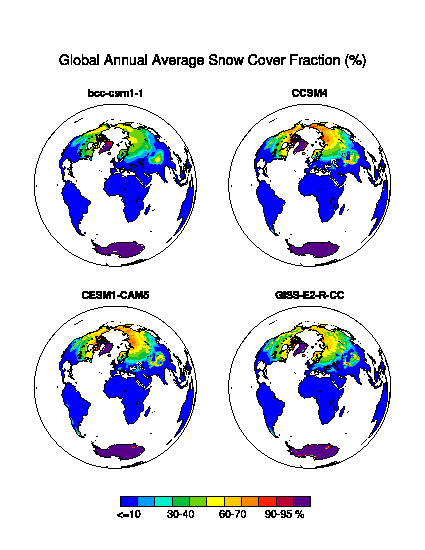
Figure 7.1: Global Distribution of Long-term Average.
This section illustrates how to calculate the global distribution of long-term average (see Figure 7.1) with either flat files or group file. Key steps include:
- Average ensemble members of each model using
nces(seencesnetCDF Ensemble Statistics) - Average the record dimension using
ncra(seencranetCDF Record Averager) - Store results of each model as a distinct group in a single output file using
ncecat(seencrcatnetCDF Record Concatenator) with the --gag option
The first example shows how to process flat files.
#!/bin/bash
#===========================================================================
# After cmb_fl.sh
# Example: Long-term average of each model globally
#
# Input files like:
# /data/cmip5/snc_LImon_bcc-csm1-1_historical_r1i1p1_185001-200512.nc
#
# Output files like:
# /data/cmip5/output/snc/snc_LImon_all-mdl_historical_all-nsm_clm.nc
#
# Online:
# http://nco.sourceforge.net/nco.html#Global-Distribution-of-Long_002dterm-Average
#
# Execute this script: bash glb_avg.sh
#===========================================================================
#---------------------------------------------------------------------------
# Parameters
drc_in='/home/wenshanw/data/cmip5/' # Directory of input files
drc_out='/home/wenshanw/data/cmip5/output/' # Directory of output files
var=( 'snc' 'snd' ) # Variables
rlm='LImon' # Realm
xpt=( 'historical' ) # Experiment ( could be more )
fld_out=( 'snc/' 'snd/' ) # Folders of output files
#---------------------------------------------------------------------------
for var_id in {0..1}; do # Loop over two variables
# Names of all models
# (ls [get file names]; cut [get the part for model names];
# sort; uniq [remove duplicates]; awk [print])
mdl_set=$( ls ${drc_in}${var[var_id]}_${rlm}_*_${xpt[0]}_*.nc | \
cut -d '_' -f 3 | sort | uniq -c | awk '{print $2}' )
# Number of models (echo [print contents]; wc [count])
mdl_num=$( echo ${mdl_set} | wc -w )
for mdl in ${mdl_set}; do # Loop over models
# Average all the ensemble members of each model
# Use nces file ensembles mode: --nsm_fl
nces --nsm_fl -O -4 -d time,"1956-01-01 00:00:0.0","2005-12-31 23:59:9.9" \
${drc_in}${var[var_id]}_${rlm}_${mdl}_${xpt[0]}_*.nc \
${drc_out}${fld_out[var_id]}${var[var_id]}_${rlm}_${mdl}_${xpt[0]}\
_all-nsm_195601-200512.nc
# Average along time
ncra -O ${drc_out}${fld_out[var_id]}${var[var_id]}_${rlm}_${mdl}_${xpt[0]}\
_all-nsm_195601-200512.nc \
${drc_out}${fld_out[var_id]}${var[var_id]}_${mdl}.nc
echo Model ${mdl} done!
done
# Remove temporary files
rm ${drc_out}${fld_out[var_id]}${var[var_id]}*historical*.nc
# Store models as groups in the output file
ncecat -O --gag ${drc_out}${fld_out[var_id]}${var[var_id]}_*.nc \
${drc_out}${fld_out[var_id]}${var[var_id]}_${rlm}_\
all-mdl_${xpt[0]}_all-nsm_clm.nc
echo Var ${var[var_id]} done!
done
With the use of group, the above script will be shortened to ONE LINE.
# Data from cmb_fl_grp.sh # ensemble averaging nces -O --nsm_grp --nsm_sfx='_avg' \ sn_LImon_all-mdl_all-xpt_all-nsm_200001-200512.nc \ sn_LImon_all-mdl_all-xpt_nsm-avg.nc
The input file,
sn_LImon_all-mdl_all-xpt_all-nsm_200001-200512.nc, produced by
cmb_fl_grp.sh, includes all the ensemble members as groups.
The option ‘--nsm_grp’ denotes
that we are using group ensembles mode of nces,
instead of file ensembles mode, ‘--nsm_fl’.
The option ‘--nsm_sfx='_avg'’ instructs nces
to store the output as a new child group /[model]/[model name]_avg/var;
otherwise, the output will be stored directly in the parent group /[model]/var.
In the final output file, sn_LImon_all-mdl_all-xpt_nsm-avg_tm-avg.nc,
sub-groups with a suffix of ‘avg’ are the long-term averages of each model.
One thing to notice is that for now,
ensembles with only one ensemble member will be left untouched.
7.3 Annual Average over Regions 
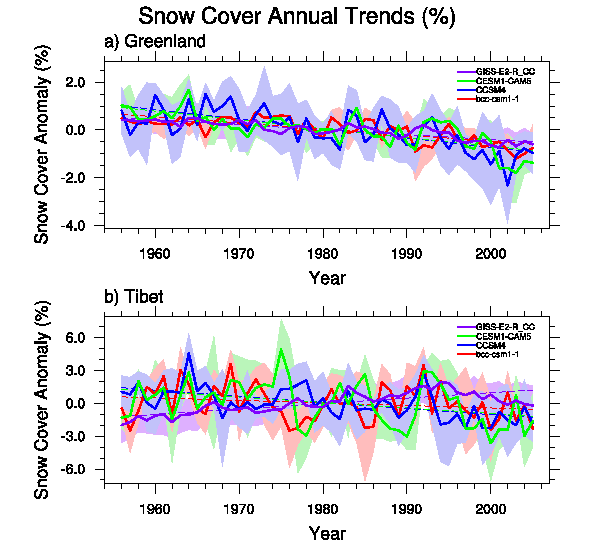
Figure 7.2: Annual Average over Regions.
This section illustrates how to calculate the annual average over specific regions (see Figure 7.2). Key steps include:
- Spatial average using
ncap2(seencap2netCDF Arithmetic Processor) andncwa(seencwanetCDF Weighted Averager); - Change dimension order using
ncpdq(seencpdqnetCDF Permute Dimensions Quickly); - Annual average using
ncra(seencranetCDF Record Averager); - Anomaly from long-term average using
ncbo(seencbonetCDF Binary Operator); - Standard deviation using
ncbo(seencbonetCDF Binary Operator) andnces(seencesnetCDF Ensemble Statistics); - Rename variables using
ncrename(seencrenamenetCDF Renamer); - Edit attributions using
ncatted(seencattednetCDF Attribute Editor); - Linear regression using
ncap2(seencap2netCDF Arithmetic Processor); - Use
ncap2(seencap2netCDF Arithmetic Processor) with nco script file (i.e., .nco file); - Move variables around using
ncks(seencksnetCDF Kitchen Sink).
Flat files example
#!/bin/bash
# Includes gsl_rgr.nco
#===========================================================================
# After cmb_fl.sh
# Example: Annual trend of each model over Greenland and Tibet
# ( time- and spatial-average, standard deviation,
# anomaly and linear regression)
#
# Input files:
# /data/cmip5/snc_LImon_bcc-csm1-1_historical_r1i1p1_185001-200512.nc
#
# Output files:
# /data/cmip5/outout/snc/snc_LImon_all-mdl_historical_all-nsm_annual.nc
#
# Online: http://nco.sourceforge.net/nco.html#Annual-Average-over-Regions
#
# Execute this script: bash ann_avg.sh
#===========================================================================
#---------------------------------------------------------------------------
# Parameters
drc_in='/home/wenshanw/data/cmip5/' # Directory of input files
drc_out='/home/wenshanw/data/cmip5/output/' # Directory of output files
var=( 'snc' 'snd' ) # Variables
rlm='LImon' # Realm
xpt=( 'historical' ) # Experiment ( could be more )
fld_out=( 'snc/' 'snd/' ) # Folders of output files
# ------------------------------------------------------------
for var_id in {0..1}; do # Loop over two variables
# Names of all models
# (ls [get file names]; cut [get the part for model names];
# sort; uniq [remove duplicates]; awk [print])
mdl_set=$( ls ${drc_in}${var[var_id]}_${rlm}_*_${xpt[0]}_*.nc | \
cut -d '_' -f 3 | sort | uniq -c | awk '{print $2}' )
for mdl in ${mdl_set}; do # Loop over models
# Loop over ensemble members
for fn in $( ls ${drc_in}${var[var_id]}_${rlm}_${mdl}_${xpt[0]}_*.nc ); do
pfx=$( echo ${fn} | cut -d'/' -f6 | cut -d'_' -f1-5 )
# Two regions
# Geographical weight
ncap2 -O -s 'gw = cos(lat*3.1415926/180.); gw@long_name="geographical weight"\
;gw@units="ratio"' ${fn} ${drc_out}${fld_out[var_id]}${pfx}_gw.nc
# Greenland
ncwa -O -w gw -d lat,60.0,75.0 -d lon,300.0,340.0 -a lat,lon \
${drc_out}${fld_out[var_id]}${pfx}_gw.nc \
${drc_out}${fld_out[var_id]}${pfx}_gw_1.nc
# Tibet
ncwa -O -w gw -d lat,30.0,40.0 -d lon,80.0,100.0 -a lat,lon \
${drc_out}${fld_out[var_id]}${pfx}_gw.nc \
${drc_out}${fld_out[var_id]}${pfx}_gw_2.nc
# Aggregate 2 regions together
ncecat -O -u rgn ${drc_out}${fld_out[var_id]}${pfx}_gw_?.nc \
${drc_out}${fld_out[var_id]}${pfx}_gw_rgn4.nc
# Change dimensions order
ncpdq -O -a time,rgn ${drc_out}${fld_out[var_id]}${pfx}_gw_rgn4.nc \
${drc_out}${fld_out[var_id]}${pfx}_gw_rgn4.nc
# Remove temporary files (optional)
rm ${drc_out}${fld_out[var_id]}${pfx}_gw_?.nc \
${drc_out}${fld_out[var_id]}${pfx}_gw.nc
# Annual average (use the feature of 'Duration')
ncra -O --mro -d time,"1956-01-01 00:00:0.0","2005-12-31 23:59:9.9",12,12 \
${drc_out}${fld_out[var_id]}${pfx}_gw_rgn4.nc \
${drc_out}${fld_out[var_id]}${pfx}_yrly.nc
# Anomaly
# Long-term average
ncwa -O -a time ${drc_out}${fld_out[var_id]}${pfx}_yrly.nc \
${drc_out}${fld_out[var_id]}${pfx}_clm.nc
# Subtract long-term average
ncbo -O --op_typ=- ${drc_out}${fld_out[var_id]}${pfx}_yrly.nc \
${drc_out}${fld_out[var_id]}${pfx}_clm.nc \
${drc_out}${fld_out[var_id]}${pfx}_anm.nc
done
rm ${drc_out}${fld_out[var_id]}${var[var_id]}_${rlm}_${mdl}_${xpt[0]}_*_yrly.nc
# Average over all the ensemble members
ncea -O -4 ${drc_out}${fld_out[var_id]}${var[var_id]}_\
${rlm}_${mdl}_${xpt[0]}_*_anm.nc ${drc_out}${fld_out[var_id]}\
${var[var_id]}_${rlm}_${mdl}_${xpt[0]}_all-nsm_anm.nc
# Standard deviation ------------------------------
for fn in $( ls ${drc_out}${fld_out[var_id]}${var[var_id]}_${rlm}_${mdl}_\
${xpt[0]}_*_anm.nc ); do
pfx=$( echo ${fn} | cut -d'/' -f8 | cut -d'_' -f1-5 )
# Difference between each ensemble member and the average of all members
ncbo -O --op_typ=- ${fn} \
${drc_out}${fld_out[var_id]}${var[var_id]}_\
${rlm}_${mdl}_${xpt[0]}_all-nsm_anm.nc \
${drc_out}${fld_out[var_id]}${pfx}_dlt.nc
done
# RMS
ncea -O -y rmssdn ${drc_out}${fld_out[var_id]}${var[var_id]}_${rlm}_\
${mdl}_${xpt[0]}_*_dlt.nc \
${drc_out}${fld_out[var_id]}${var[var_id]}_${rlm}_\
${mdl}_${xpt[0]}_all-nsm_sdv.nc
# Rename variables
ncrename -v ${var[var_id]},sdv \
${drc_out}${fld_out[var_id]}${var[var_id]}_${rlm}_\
${mdl}_${xpt[0]}_all-nsm_sdv.nc
# Edit attributions
ncatted -a standard_name,sdv,a,c,"_standard_deviation_over_ensemble" \
-a long_name,sdv,a,c," Standard Deviation over Ensemble" \
-a original_name,sdv,a,c," sdv" \
${drc_out}${fld_out[var_id]}${var[var_id]}_${rlm}_\
${mdl}_${xpt[0]}_all-nsm_sdv.nc
#------------------------------------------------------------
# Linear regression -----------------------------------------
#!!!!!!!!!!!!!!!!!!!!!!!!!!!!!!!!!!!!!!!!!!!!!!!!!!!!!!!!!!!!!!!!!!!!!!!!!!!
# Have to change the name of variable in the commands file
# of gsl_rgr.nco manually (gsl_rgr.nco is listed below)
ncap2 -O -S gsl_rgr.nco \
${drc_out}${fld_out[var_id]}${var[var_id]}_${rlm}_\
${mdl}_${xpt[0]}_all-nsm_anm.nc ${drc_out}${fld_out[var_id]}${var[var_id]}\
_${rlm}_${mdl}_${xpt[0]}_all-nsm_anm_rgr.nc
#!!!!!!!!!!!!!!!!!!!!!!!!!!!!!!!!!!!!!!!!!!!!!!!!!!!!!!!!!!!!!!!!!!!!!!!!!!!
# Get rid of temporary variables
ncks -O -v c0,c1,pval,${var[var_id]},gw \
${drc_out}${fld_out[var_id]}${var[var_id]}_${rlm}_${mdl}_\
${xpt[0]}_all-nsm_anm_rgr.nc \
${drc_out}${fld_out[var_id]}${var[var_id]}_${mdl}.nc
#------------------------------------------------------------
# Move the variable 'sdv' into the anomaly files (i.e., *anm.nc files)
ncks -A -v sdv \
${drc_out}${fld_out[var_id]}${var[var_id]}_${rlm}_\
${mdl}_${xpt[0]}_all-nsm_sdv.nc \
${drc_out}${fld_out[var_id]}${var[var_id]}_${mdl}.nc
rm ${drc_out}${fld_out[var_id]}${var[var_id]}_*historical*
echo Model ${mdl} done!
done
# Store models as groups in the output file
ncecat -O --gag ${drc_out}${fld_out[var_id]}${var[var_id]}_*.nc
${drc_out}${fld_out[var_id]}${var[var_id]}_\
${rlm}_all-mdl_${xpt[0]}_all-nsm_annual.nc
echo Var ${var[var_id]} done!
done
gsl_rgr.nco
// Linear Regression
// Called by ann_avg.sh
// Caution: make sure the variable name is
// in agreement with the main script (now is 'snd')
// Online: http://nco.sourceforge.net/nco.html#Annual-Average-over-Regions
// Declare variables
*c0[$rgn]=0.; // Intercept
*c1[$rgn]=0.; // Slope
*sdv[$rgn]=0.; // Standard deviation
*covxy[$rgn]=0.; // Covariance
*x = double(time);
for (*rgn_id=0;rgn_id<$rgn.size;rgn_id++) // Loop over regions
{
gsl_fit_linear(time,1,snd(:,rgn_id),1,$time.size, \
&tc0, &tc1, &cov00, &cov01,&cov11,&sumsq); // Linear regression function
c0(rgn_id) = tc0; // Output results
c1(rgn_id) = tc1;
covxy(rgn_id) = gsl_stats_covariance(time,1,\
$time.size,double(snd(:,rgn_id)),1,$time.size); // Covariance function
sdv(rgn_id) = gsl_stats_sd(snd(:,rgn_id), \
1, $time.size); // Standard deviation function
}
// P value------------------------------------------------------------
*time_sdv = gsl_stats_sd(time, 1, $time.size);
*r_value = covxy/(time_sdv*sdv);
*t_value = r_value/sqrt((1-r_value^2)/($time.size-2));
pval = abs(gsl_cdf_tdist_P(t_value, $time.size-2) - \
gsl_cdf_tdist_P(-t_value, $time.size-2));
//----------------------------------------------------------------
// Write RAM variables to disk
//------------------------------------------------------------
// Usually NCO writes the outputs directly to disk
// Using RAM variables, declared by *, will shorten running time
// Output the final results using ram_write()
//------------------------------------------------------------
ram_write(c0);
ram_write(c1);
With the group feature, all the loops over experiments, models and ensemble members can be omitted. As we are working on implementing group feature in all NCO operators, some functions (e.g., regression and standard deviation over ensemble members) may have to wait until the new versions.
#!/bin/bash
#
#============================================================
# Group data output by cmb_fl_grp.sh
# Annual trend of each model over Greenland and Tibet
# Time- and spatial-average, standard deviation and anomaly
# No regression yet (needs ncap2)
#
# Input files:
# sn_LImon_all-mdl_all-xpt_all-nsm_200001-200512.nc
#
# Online: http://nco.sourceforge.net/nco.html#Annual-Average-over-Regions
#
# Execute this script: bash ann_avg_grp.sh
#===========================================================================
# Input and output directory
drc='../data/grp/'
# Constants
pfx='sn_LImon_all-mdl_all-xpt_all-nsm'
tms='200001-200512' # Time series
# Greenland
ncwa -O -w gw -d lat,60.0,75.0 -d lon,300.0,340.0 -a lat,lon \
${drc}${pfx}_${tms}.nc \
${drc}${pfx}_${tms}_grl.nc
# Tibet
ncwa -O -w gw -d lat,30.0,40.0 -d lon,80.0,100.0 -a lat,lon \
${drc}${pfx}_${tms}.nc \
${drc}${pfx}_${tms}_tbt.nc
# Aggregate 2 regions together
ncecat -O -u rgn ${drc}${pfx}_${tms}_???.nc \
${drc}${pfx}_${tms}_rgn2.nc
# Change dimensions order
ncpdq -O -a time,rgn ${drc}${pfx}_${tms}_rgn2.nc \
${drc}${pfx}_${tms}_rgn2.nc
# Remove temporary files (optional)
rm ${drc}${pfx}_${tms}_???.nc
#Annual average
ncra -O --mro -d time,,,12,12 ${drc}${pfx}_${tms}_rgn2.nc \
${drc}${pfx}_${tms}_rgn2_ann.nc
# Anomaly
#------------------------------------------------------------
# Long-term average
ncwa -O -a time ${drc}${pfx}_${tms}_rgn2_ann.nc \
${drc}${pfx}_${tms}_rgn2_clm.nc
# Subtract
ncbo -O --op_typ=- ${drc}${pfx}_${tms}_rgn2_ann.nc \
${drc}${pfx}_${tms}_rgn2_clm.nc \
${drc}${pfx}_${tms}_rgn2_anm.nc
#------------------------------------------------------------
# Standard Deviation: inter-annual variability
# RMS of the above anomaly
ncra -O -y rmssdn ${drc}${pfx}_${tms}_rgn2_anm.nc \
${drc}${pfx}_${tms}_rgn2_stddev.nc
7.4 Monthly Cycle 
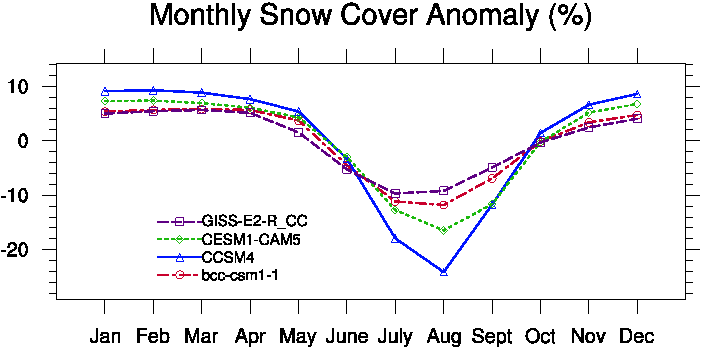
Figure 7.3: Monthly Cycle.
This script illustrates how to calculate the monthly anomaly from the annual average (see Figure 7.3). In order to keep only the monthly cycle, we will subtract the annual average of each year from the monthly data, instead of subtracting the long-term average. This is a little more complicated in coding since we need to loop over years.
Flat files example
#!/bin/bash
#============================================================
# After cmb_fl.sh
# Example: Monthly cycle of each model in Greenland
#
# Input files:
# /data/cmip5/snc_LImon_bcc-csm1-1_historical_r1i1p1_185001-200512.nc
#
# Output files:
# /data/cmip5/snc/snc_LImon__all-mdl_historical_all-nsm_GN_mthly-anm.nc
#
# Online: http://nco.sourceforge.net/nco.html#Monthly-Cycle
#
# Execute this script: bash mcc.sh
#============================================================
#------------------------------------------------------------
# Parameters
drc_in='/home/wenshanw/data/cmip5/' # Directory of input files
drc_out='/home/wenshanw/data/cmip5/output/' # Directory of output files
var=( 'snc' 'snd' ) # Variables
rlm='LImon' # Realm
xpt=( 'historical' ) # Experiment ( could be more )
fld_out=( 'snc/' 'snd/' ) # Folders of output files
#------------------------------------------------------------
for var_id in {0..1}; do # Loop over two variables
# names of all models
# (ls [get file names]; cut [get the part for model names];
# sort; uniq [remove duplicates]; awk [print])
mdl_set=$( ls ${drc_in}${var[var_id]}_${rlm}_*_${xpt[0]}_*.nc | \
cut -d '_' -f 3 | sort | uniq -c | awk '{print $2}' )
for mdl in ${mdl_set}; do ## Loop over models
# Average all the ensemble members of each model
ncea -O -4 -d time,"1956-01-01 00:00:0.0","2005-12-31 23:59:9.9" \
${drc_in}${var[var_id]}_${rlm}_${mdl}_${xpt[0]}_*.nc \
${drc_out}${fld_out[var_id]}${var[var_id]}_${rlm}_${mdl}_${xpt[0]}_all-nsm.nc
# Greenland
# Geographical weight
ncap2 -O -s \
'gw = cos(lat*3.1415926/180.); \
gw@long_name="geographical weight";gw@units="ratio"' \
${drc_out}${fld_out[var_id]}${var[var_id]}_${rlm}_${mdl}_${xpt[0]}_all-nsm.nc \
${drc_out}${fld_out[var_id]}${var[var_id]}_${rlm}_${mdl}_${xpt[0]}_all-nsm.nc
ncwa -O -w gw -d lat,60.0,75.0 -d lon,300.0,340.0 -a lat,lon \
${drc_out}${fld_out[var_id]}${var[var_id]}_${rlm}_${mdl}_${xpt[0]}_all-nsm.nc \
${drc_out}${fld_out[var_id]}${var[var_id]}_${rlm}_${mdl}_${xpt[0]}_all-nsm_GN.nc
# Anomaly----------------------------------------
for moy in {1..12}; do # Loop over months
mm=$( printf "%02d" ${moy} ) # Change to 2-digit format
for yr in {1956..2005}; do # Loop over years
# If January, calculate the annual average
if [ ${moy} -eq 1 ]; then
ncra -O -d time,"${yr}-01-01 00:00:0.0","${yr}-12-31 23:59:9.9" \
${drc_out}${fld_out[var_id]}${var[var_id]}_${rlm}_${mdl}_\
${xpt[0]}_all-nsm_GN.nc ${drc_out}${fld_out[var_id]}${var[var_id]}_\
${rlm}_${mdl}_${xpt[0]}_all-nsm_GN_${yr}.nc
fi
# The specific month
ncks -O -d time,"${yr}-${mm}-01 00:00:0.0","${yr}-${mm}-31 23:59:9.9" \
${drc_out}${fld_out[var_id]}${var[var_id]}_\
${rlm}_${mdl}_${xpt[0]}_all-nsm_GN.nc \
${drc_out}${fld_out[var_id]}${var[var_id]}_${rlm}_${mdl}_${xpt[0]}_\
all-nsm_GN_${yr}${mm}.nc
# Subtract the annual average from the monthly data
ncbo -O --op_typ=- ${drc_out}${fld_out[var_id]}${var[var_id]}_\
${rlm}_${mdl}_${xpt[0]}_all-nsm_GN_${yr}${mm}.nc \
${drc_out}${fld_out[var_id]}${var[var_id]}_${rlm}_${mdl}_${xpt[0]}_\
all-nsm_GN_${yr}.nc ${drc_out}${fld_out[var_id]}${var[var_id]}_${rlm}_\
${mdl}_${xpt[0]}_all-nsm_GN_${yr}${mm}_anm.nc
done
# Average over years
ncra -O ${drc_out}${fld_out[var_id]}${var[var_id]}_${rlm}_${mdl}_\
${xpt[0]}_all-nsm_GN_????${mm}_anm.nc \
${drc_out}${fld_out[var_id]}${var[var_id]}_${rlm}_${mdl}_\
${xpt[0]}_all-nsm_GN_${mm}_anm.nc
done
#--------------------------------------------------
# Concatenate months together
ncrcat -O ${drc_out}${fld_out[var_id]}${var[var_id]}_${rlm}_${mdl}_\
${xpt[0]}_all-nsm_GN_??_anm.nc \
${drc_out}${fld_out[var_id]}${var[var_id]}_${mdl}.nc
echo Model ${mdl} done!
done
rm -f ${drc_out}${fld_out[var_id]}${var[var_id]}*historical*
# Store models as groups in the output file
ncecat -O --gag -v ${var[var_id]} \
${drc_out}${fld_out[var_id]}${var[var_id]}_*.nc \
${drc_out}${fld_out[var_id]}${var[var_id]}_${rlm}_all-mdl_\
${xpt[0]}_all-nsm_GN_mthly-anm.nc
echo Var ${var[var_id]} done!
done
Using group feature and hyperslabs of ncbo,
the script will be shortened.
#!/bin/bash
#============================================================
# Monthly cycle of each ensemble member in Greenland
#
# Input file from cmb_fl_grpsh
# sn_LImon_all-mdl_all-xpt_all-nsm_199001-200512.nc
# Online: http://nco.sourceforge.net/nco.html#Monthly-Cycle
#
# Execute this script in command line: bash mcc_grp.sh
#============================================================
# Input and output directory
drc='../data/grp/'
# Constants
pfx='sn_LImon_all-mdl_all-xpt_all-nsm_200001-200512'
# Greenland
ncwa -O -w gw -d lat,60.0,75.0 -d lon,300.0,340.0 -a lat,lon \
${drc}${pfx}.nc ${drc}${pfx}_grl.nc
# Anomaly from annual average of each year
for yyyy in {2000..2005}; do
# Annual average
ncwa -O -d time,"${yyyy}-01-01","${yyyy}-12-31" \
${drc}${pfx}_grl.nc ${drc}${pfx}_grl_${yyyy}.nc
# Anomaly
ncbo -O --op_typ=- -d time,"${yyyy}-01-01","${yyyy}-12-31" \
${drc}${pfx}_grl.nc ${drc}${pfx}_grl_${yyyy}.nc \
${drc}${pfx}_grl_${yyyy}_anm.nc
done
# Monthly cycle
for moy in {1..12}; do
mm=$( printf "%02d" ${moy} ) # Change to 2-digit format
ncra -O -d time,"2000-${mm}-01",,12 \
${drc}${pfx}_grl_????_anm.nc ${drc}${pfx}_grl_${mm}_anm.nc
done
# Concatenate 12 months together
ncrcat -O ${drc}${pfx}_grl_??_anm.nc \
${drc}${pfx}_grl_mth_anm.nc
7.5 Regrid MODIS Data 
In order to compare the results between MODIS and CMIP5 models, one usually regrids one or both datasets so that the spatial resolutions match. Here, the script illustrates how to regrid MODIS data. Key steps include:
- Regrid using bilinear interpolation (see Bilinear interpolation)
- Rename variables, dimensions and attributions using
ncrename(seencrenamenetCDF Renamer).
Main Script
#!/bin/bash
# include bi_interp.nco
#===========================================================================
# Example for
# - regrid (using bi_interp.nco): the spatial resolution of MODIS data
# is much finer than those of CMIP5 models. In order to compare
# the two, we can regrid MODIS data to comform to CMIP5.
#
# Input files (Note: the .hdf files downloaded have to be converted to .nc at
# the present):
# /modis/mcd43c3/MCD43C3.A2000049.005.2006271205532.nc
#
# Output files:
# /modis/mcd43c3/cesm-grid/MCD43C3.2000049.regrid.nc
#
# Online: http://nco.sourceforge.net/nco.html#Regrid-MODIS-Data
#
# Execute this script: bash rgr.sh
#===========================================================================
var=( 'MCD43C3' ) # Variable
fld_in=( 'monthly/' ) # Folder of input files
fld_out=( 'cesm-grid/' ) # Folder of output files
drc_in='/media/grele_data/wenshan/modis/mcd43c3/' # Directory of input files
for fn in $( ls ${drc_in}${fld_in}${var}.*.nc ); do # Loop over files
sfx=$( echo $fn | cut -d '/' -f 8 | cut -d '.' -f 2 ) # Part of file names
# Regrid
ncap2 -O -S bi_interp.nco ${fn} ${drc_in}${fld_out}${var}.${sfx}.regrid.nc
# Keep only the new variables
ncks -O -v wsa_sw_less,bsa_sw_less ${drc_in}${fld_out}${var}.${sfx}.regrid.nc \
${drc_in}${fld_out}${var}.${sfx}.regrid.nc
# Rename the new variables, dimensions and attributions
ncrename -O -d latn,lat -d lonn,lon -v latn,lat -v lonn,lon \
-v wsa_sw_less,wsa_sw -v bsa_sw_less,bsa_sw -a missing_value,_FillValue \
${drc_in}${fld_out}${var}.${sfx}.regrid.nc
echo $sfx done.
done
bi_interp.nco
// Bilinear interpolation
// Included by rgr.sh
// Online: http://nco.sourceforge.net/nco.html#Regrid-MODIS-Data
defdim("latn",192); // Define new dimension: latitude
defdim("lonn",288); // Define new dimension: longitude
latn[$latn] = {90,89.0576 ,88.1152 ,87.1728 ,86.2304 ,85.288 ,\
84.3456 ,83.4031 ,82.4607 ,81.5183 ,80.5759 ,79.6335 ,78.6911 ,\
77.7487 ,76.8063 ,75.8639 ,74.9215 ,73.9791 ,73.0367 ,72.0942 ,\
71.1518 ,70.2094 ,69.267 ,68.3246 ,67.3822 ,66.4398 ,65.4974 ,\
64.555 ,63.6126 ,62.6702 ,61.7277 ,60.7853 ,59.8429 ,58.9005 ,\
57.9581 ,57.0157 ,56.0733 ,55.1309 ,54.1885 ,53.2461 ,52.3037 ,\
51.3613 ,50.4188 ,49.4764 ,48.534 ,47.5916 ,46.6492 ,45.7068 ,\
44.7644 ,43.822 ,42.8796 ,41.9372 ,40.9948 ,40.0524 ,39.11 ,\
38.1675 ,37.2251 ,36.2827 ,35.3403 ,34.3979 ,33.4555 ,32.5131 ,\
31.5707 ,30.6283 ,29.6859 ,28.7435 ,27.8011 ,26.8586 ,25.9162 ,\
24.9738 ,24.0314 ,23.089 ,22.1466 ,21.2042 ,20.2618 ,19.3194 ,\
18.377 ,17.4346 ,16.4921 ,15.5497 ,14.6073 ,13.6649 ,12.7225 ,\
11.7801 ,10.8377 ,9.89529 ,8.95288 ,8.01047 ,7.06806 ,6.12565 ,\
5.18325 ,4.24084 ,3.29843 ,2.35602 ,1.41361 ,0.471204,-0.471204,\
-1.41361,-2.35602,-3.29843,-4.24084,-5.18325,-6.12565,-7.06806,\
-8.01047,-8.95288,-9.89529,-10.8377,-11.7801,-12.7225,-13.6649,\
-14.6073,-15.5497,-16.4921,-17.4346,-18.377 ,-19.3194,-20.2618,\
-21.2042,-22.1466,-23.089 ,-24.0314,-24.9738,-25.9162,-26.8586,\
-27.8011,-28.7435,-29.6859,-30.6283,-31.5707,-32.5131,-33.4555,\
-34.3979,-35.3403,-36.2827,-37.2251,-38.1675,-39.11 ,-40.0524,\
-40.9948,-41.9372,-42.8796,-43.822 ,-44.7644,-45.7068,-46.6492,\
-47.5916,-48.534 ,-49.4764,-50.4188,-51.3613,-52.3037,-53.2461,\
-54.1885,-55.1309,-56.0733,-57.0157,-57.9581,-58.9005,-59.8429,\
-60.7853,-61.7277,-62.6702,-63.6126,-64.555 ,-65.4974,-66.4398,\
-67.3822,-68.3246,-69.267 ,-70.2094,-71.1518,-72.0942,-73.0367,\
-73.9791,-74.9215,-75.8639,-76.8063,-77.7487,-78.6911,-79.6335,\
-80.5759,-81.5183,-82.4607,-83.4031,-84.3456,-85.288,-86.2304,\
-87.1728,-88.1152,-89.0576,-90}; // Copy of CCSM4 latitude
lonn[$lonn] = {-178.75,-177.5,-176.25,-175,-173.75,-172.5,-171.25,\
-170,-168.75,-167.5,-166.25,-165,-163.75,-162.5,-161.25,-160,\
-158.75,-157.5,-156.25,-155,-153.75,-152.5,-151.25,-150,-148.75,\
-147.5,-146.25,-145,-143.75,-142.5,-141.25,-140,-138.75,-137.5,\
-136.25,-135,-133.75,-132.5,-131.25,-130,-128.75,-127.5,-126.25,\
-125,-123.75,-122.5,-121.25,-120,-118.75,-117.5,-116.25,-115,\
-113.75,-112.5,-111.25,-110,-108.75,-107.5,-106.25,-105,-103.75,\
-102.5,-101.25,-100,-98.75,-97.5,-96.25,-95,-93.75,-92.5,-91.25,\
-90,-88.75,-87.5,-86.25,-85,-83.75,-82.5,-81.25,-80,-78.75,-77.5,\
-76.25,-75,-73.75,-72.5,-71.25,-70,-68.75,-67.5,-66.25,-65,-63.75,\
-62.5,-61.25,-60,-58.75,-57.5,-56.25,-55,-53.75,-52.5,-51.25,-50,\
-48.75,-47.5,-46.25,-45,-43.75,-42.5,-41.25,-40,-38.75,-37.5,\
-36.25,-35,-33.75,-32.5,-31.25,-30,-28.75,-27.5,-26.25,-25,-23.75,\
-22.5,-21.25,-20,-18.75,-17.5,-16.25,-15,-13.75,-12.5,-11.25,-10,\
-8.75,-7.5,-6.25,-5,-3.75,-2.5,-1.25,0,1.25,2.5,3.75,5,6.25,7.5,\
8.75,10,11.25,12.5,13.75,15,16.25,17.5,18.75,20,21.25,22.5,23.75,\
25,26.25,27.5,28.75,30,31.25,32.5,33.75,35,36.25,37.5,38.75,40,\
41.25,42.5,43.75,45,46.25,47.5,48.75,50,51.25,52.5,53.75,55,56.25,\
57.5,58.75,60,61.25,62.5,63.75,65,66.25,67.5,68.75,70,71.25,72.5,\
73.75,75,76.25,77.5,78.75,80,81.25,82.5,83.75,85,86.25,87.5,88.75,\
90,91.25,92.5,93.75,95,96.25,97.5,98.75,100,101.25,102.5,103.75,\
105,106.25,107.5,108.75,110,111.25,112.5,113.75,115,116.25,117.5,\
118.75,120,121.25,122.5,123.75,125,126.25,127.5,128.75,130,131.25,\
132.5,133.75,135,136.25,137.5,138.75,140,141.25,142.5,143.75,145,\
146.25,147.5,148.75,150,151.25,152.5,153.75,155,156.25,157.5,\
158.75,160,161.25,162.5,163.75,165,166.25,167.5,168.75,170,171.25,\
172.5,173.75,175,176.25,177.5,178.75,180}; // Copy of CCSM4 longitude
*out[$time,$latn,$lonn]=0.0; // Output structure
// Bi-linear interpolation
bsa_sw_less=bilinear_interp_wrap(bsa_sw,out,latn,lonn,lat,lon);
wsa_sw_less=bilinear_interp_wrap(wsa_sw,out,latn,lonn,lat,lon);
// Add attributions
latn@units = "degree_north";
lonn@units = "degree_east";
latn@long_name = "latitude";
lonn@long_name = "longitude";
bsa_sw_less@hdf_name = "Albedo_BSA_shortwave";
bsa_sw_less@calibrated_nt = 5;
bsa_sw_less@missing_value = 32767.0;
bsa_sw_less@units = "albedo, no units";
bsa_sw_less@long_name = "Global_Albedo_BSA_shortwave";
wsa_sw_less@hdf_name = "Albedo_WSA_shortwave";
wsa_sw_less@calibrated_nt = 5;
wsa_sw_less@missing_value = 32767.0;
wsa_sw_less@units = "albedo, no units";
wsa_sw_less@long_name = "Global_Albedo_WSA_shortwave";
7.6 Add Coordinates to MODIS Data 
Main Script
#!/bin/bash
#============================================================
# Example for
# - regrid (using bi_interp.nco): the spatial resolution of MODIS data
# is much finer than those of CMIP5 models. In order to compare
# the two, we can regrid MODIS data to comform to CMIP5.
# - add coordinates (using coor.nco): there is no coordinate information
# in MODIS data. We have to add it manually now.
#
# Input files:
# /modis/mcd43c3/cesm-grid/MCD43C3.2000049.regrid.nc
#
# Output files:
# /modis/mcd43c3/cesm-grid/MCD43C3.2000049.regrid.nc
#
# Online: http://nco.sourceforge.net/nco.html#Add-Coordinates-to-MODIS-Data
#
# Execute this script: bash add_crd.sh
#============================================================
var=( 'MOD10CM' ) # Variable
fld_in=( 'snc/nc/' ) # Folder of input files
drc_in='/media/grele_data/wenshan/modis/' # directory of input files
for fn in $( ls ${drc_in}${fld_in}${var}*.nc ); do # Loop over files
sfx=$( echo ${fn} | cut -d '/' -f 8 | cut -d '.' -f 2-4 ) # Part of file names
echo ${sfx}
# Rename dimension names
ncrename -d YDim_MOD_CMG_Snow_5km,lat -d XDim_MOD_CMG_Snow_5km,lon -O \
${drc_in}${fld_in}${var}.${sfx}.nc ${drc_in}${fld_in}${var}.${sfx}.nc
# Add coordinates
ncap2 -O -S crd.nco ${drc_in}${fld_in}${var}.${sfx}.nc \
${drc_in}${fld_in}${var}.${sfx}.nc
done
crd.nco
// Add coordinates to MODIS HDF data // Included by add_crd.sh // Online: http://nco.sourceforge.net/nco.html#Add-Coordinates-to-MODIS-Data lon = array(0.f, 0.05, $lon) - 180; lat = 90.f- array(0.f, 0.05, $lat);
7.7 Permute MODIS Coordinates 
MODIS orders latitude data from 90°N to -90°N, and longitude from -180°E to 180°E. However, CMIP5 orders latitude from -90°N to 90°N, and longitude from 0°E to 360°E. This script changes the MODIS coordinates to follow the CMIP5 convention.
#!/bin/bash
##===========================================================================
## Example for
## - permute coordinates: the grid of MODIS is
## from (-180 degE, 90 degN), the left-up corner, to
## (180 degE, -90 degN), the right-low corner. However, CMIP5 is
## from (0 degE, -90 degN) to (360 degE, 90 degN). The script
## here changes the MODIS grid to CMIP5 grid.
##
## Input files:
## /modis/mcd43c3/cesm-grid/MCD43C3.2000049.regrid.nc
##
## Output files:
## /modis/mcd43c3/cesm-grid/MCD43C3.2000049.regrid.nc
##
## Online: http://nco.sourceforge.net/nco.html#Permute-MODIS-Coordinates
##
## Execute this script: bash pmt_crd.sh
##===========================================================================
##---------------------------------------------------------------------------
## Permute coordinates
## - Inverse lat from (90,-90) to (-90,90)
## - Permute lon from (-180,180) to (0,360)
for fn in $( ls MCD43C3.*.nc ); do # Loop over files
sfx=$( echo ${fn} | cut -d '.' -f 1-3 ) # Part of file names
echo ${sfx}
## Lat
ncpdq -O -a -lat ${fn} ${fn} # Inverse latitude (NB: there is '-' before 'lat')
## Lon
ncks -O --msa -d lon,0.0,180.0 -d lon,-180.0,-1.25 ${fn} ${fn}
## Add new longitude coordinates
ncap2 -O -s 'lon=array(0.0,1.25,$lon)' ${fn} ${fn}
done
8 Parallel 
This section will describe NCO scripting strategies. Many techniques can be used to exploit script-level parallelism, including GNU Parallel and Swift.
ls *historical*.nc | parallel ncks -O -d time,"1950-01-01","2000-01-01" {} 50y/{}
9 CCSM Example 
This chapter illustrates how to use NCO to process and analyze the results of a CCSM climate simulation.
************************************************************************
Task 0: Finding input files
x************************************************************************
The CCSM model outputs files to a local directory like:
/ptmp/zender/archive/T42x1_40
Each component model has its own subdirectory, e.g.,
/ptmp/zender/archive/T42x1_40/atm
/ptmp/zender/archive/T42x1_40/cpl
/ptmp/zender/archive/T42x1_40/ice
/ptmp/zender/archive/T42x1_40/lnd
/ptmp/zender/archive/T42x1_40/ocn
within which model output is tagged with the particular model name
/ptmp/zender/archive/T42x1_40/atm/T42x1_40.cam2.h0.0001-01.nc
/ptmp/zender/archive/T42x1_40/atm/T42x1_40.cam2.h0.0001-02.nc
/ptmp/zender/archive/T42x1_40/atm/T42x1_40.cam2.h0.0001-03.nc
...
/ptmp/zender/archive/T42x1_40/atm/T42x1_40.cam2.h0.0001-12.nc
/ptmp/zender/archive/T42x1_40/atm/T42x1_40.cam2.h0.0002-01.nc
/ptmp/zender/archive/T42x1_40/atm/T42x1_40.cam2.h0.0002-02.nc
...
or
/ptmp/zender/archive/T42x1_40/lnd/T42x1_40.clm2.h0.0001-01.nc
/ptmp/zender/archive/T42x1_40/lnd/T42x1_40.clm2.h0.0001-02.nc
/ptmp/zender/archive/T42x1_40/lnd/T42x1_40.clm2.h0.0001-03.nc
...
************************************************************************
Task 1: Regional processing
************************************************************************
A common task in data processing is often creating seasonal cycles.
Imagine a 100-year simulation with its 1200 monthly mean files.
Our goal is to create a single file containing 12 months of data.
Each month in the output file is the mean of 100 input files.
Normally, we store the "reduced" data in a smaller, local directory.
caseid='T42x1_40'
#drc_in="${DATA}/archive/${caseid}/atm"
drc_in="${DATA}/${caseid}"
drc_out="${DATA}/${caseid}"
mkdir -p ${drc_out}
cd ${drc_out}
Method 1: Assume all data in directory applies
for mth in {1..12}; do
mm=`printf "%02d" $mth`
ncra -O -D 1 -o ${drc_out}/${caseid}_clm${mm}.nc \
${drc_in}/${caseid}.cam2.h0.*-${mm}.nc
done # end loop over mth
Method 2: Use shell 'globbing' to construct input filenames
for mth in {1..12}; do
mm=`printf "%02d" $mth`
ncra -O -D 1 -o ${drc_out}/${caseid}_clm${mm}.nc \
${drc_in}/${caseid}.cam2.h0.00??-${mm}.nc \
${drc_in}/${caseid}.cam2.h0.0100-${mm}.nc
done # end loop over mth
Method 3: Construct input filename list explicitly
for mth in {1..12}; do
mm=`printf "%02d" $mth`
fl_lst_in=''
for yr in {1..100}; do
yyyy=`printf "%04d" $yr`
fl_in=${caseid}.cam2.h0.${yyyy}-${mm}.nc
fl_lst_in="${fl_lst_in} ${caseid}.cam2.h0.${yyyy}-${mm}.nc"
done # end loop over yr
ncra -O -D 1 -o ${drc_out}/${caseid}_clm${mm}.nc -p ${drc_in} \
${fl_lst_in}
done # end loop over mth
Make sure the output file averages correct input files!
ncks --trd -M prints global metadata:
ncks --trd -M ${drc_out}/${caseid}_clm01.nc
The input files ncra used to create the climatological monthly mean
will appear in the global attribute named 'history'.
Use ncrcat to aggregate the climatological monthly means
ncrcat -O -D 1 \
${drc_out}/${caseid}_clm??.nc ${drc_out}/${caseid}_clm_0112.nc
Finally, create climatological means for reference.
The climatological time-mean:
ncra -O -D 1 \
${drc_out}/${caseid}_clm_0112.nc ${drc_out}/${caseid}_clm.nc
The climatological zonal-mean:
ncwa -O -D 1 -a lon \
${drc_out}/${caseid}_clm.nc ${drc_out}/${caseid}_clm_x.nc
The climatological time- and spatial-mean:
ncwa -O -D 1 -a lon,lat,time -w gw \
${drc_out}/${caseid}_clm.nc ${drc_out}/${caseid}_clm_xyt.nc
This file contains only scalars, e.g., "global mean temperature",
used for summarizing global results of a climate experiment.
Climatological monthly anomalies = Annual Cycle:
Subtract climatological mean from climatological monthly means.
Result is annual cycle, i.e., climate-mean has been removed.
ncbo -O -D 1 -o ${drc_out}/${caseid}_clm_0112_anm.nc \
${drc_out}/${caseid}_clm_0112.nc ${drc_out}/${caseid}_clm_xyt.nc
************************************************************************
Task 2: Correcting monthly averages
************************************************************************
The previous step appoximates all months as being equal, so, e.g.,
February weighs slightly too much in the climatological mean.
This approximation can be removed by weighting months appropriately.
We must add the number of days per month to the monthly mean files.
First, create a shell variable dpm:
unset dpm # Days per month
declare -a dpm
dpm=(0 31 28.25 31 30 31 30 31 31 30 31 30 31) # Allows 1-based indexing
Method 1: Create dpm directly in climatological monthly means
for mth in {1..12}; do
mm=`printf "%02d" ${mth}`
ncap2 -O -s "dpm=0.0*date+${dpm[${mth}]}" \
${drc_out}/${caseid}_clm${mm}.nc ${drc_out}/${caseid}_clm${mm}.nc
done # end loop over mth
Method 2: Create dpm by aggregating small files
for mth in {1..12}; do
mm=`printf "%02d" ${mth}`
ncap2 -O -v -s "dpm=${dpm[${mth}]}" ~/nco/data/in.nc \
${drc_out}/foo_${mm}.nc
done # end loop over mth
ncecat -O -D 1 -p ${drc_out} -n 12,2,2 foo_${mm}.nc foo.nc
ncrename -O -D 1 -d record,time ${drc_out}/foo.nc
ncatted -O -h \
-a long_name,dpm,o,c,"Days per month" \
-a units,dpm,o,c,"days" \
${drc_out}/${caseid}_clm_0112.nc
ncks -A -v dpm ${drc_out}/foo.nc ${drc_out}/${caseid}_clm_0112.nc
Method 3: Create small netCDF file using ncgen
cat > foo.cdl << 'EOF'
netcdf foo {
dimensions:
time=unlimited;
variables:
float dpm(time);
dpm:long_name="Days per month";
dpm:units="days";
data:
dpm=31,28.25,31,30,31,30,31,31,30,31,30,31;
}
EOF
ncgen -b -o foo.nc foo.cdl
ncks -A -v dpm ${drc_out}/foo.nc ${drc_out}/${caseid}_clm_0112.nc
Another way to get correct monthly weighting is to average daily
output files, if available.
************************************************************************
Task 3: Regional processing
************************************************************************
Let's say you are interested in examining the California region.
Hyperslab your dataset to isolate the appropriate latitude/longitudes.
ncks -O -D 1 -d lat,30.0,37.0 -d lon,240.0,270.0 \
${drc_out}/${caseid}_clm_0112.nc \
${drc_out}/${caseid}_clm_0112_Cal.nc
The dataset is now much smaller!
To examine particular metrics.
************************************************************************
Task 4: Accessing data stored remotely
************************************************************************
OPeNDAP server examples:
UCI DAP servers:
ncks --trd -M -p http://dust.ess.uci.edu/cgi-bin/dods/nph-dods/dodsdata in.nc
ncrcat -O -C -D 3 \
-p http://dust.ess.uci.edu/cgi-bin/dods/nph-dods/dodsdata \
-l /tmp in.nc in.nc ~/foo.nc
Unidata DAP servers:
ncks --trd -M -p http://thredds-test.ucar.edu/thredds/dodsC/testdods in.nc
ncrcat -O -C -D 3 \
-p http://thredds-test.ucar.edu/thredds/dodsC/testdods \
-l /tmp in.nc in.nc ~/foo.nc
NOAA DAP servers:
ncwa -O -C -a lat,lon,time -d lon,-10.,10. -d lat,-10.,10. -l /tmp -p \
http://www.esrl.noaa.gov/psd/thredds/dodsC/Datasets/ncep.reanalysis.dailyavgs/surface \
pres.sfc.1969.nc ~/foo.nc
LLNL PCMDI IPCC OPeNDAP Data Portal:
ncks --trd -M -p http://username:password@esgcet.llnl.gov/cgi-bin/dap-cgi.py/ipcc4/sresa1b/ncar_ccsm3_0 pcmdi.ipcc4.ncar_ccsm3_0.sresa1b.run1.atm.mo.xml
Earth System Grid (ESG): http://www.earthsystemgrid.org
caseid='b30.025.ES01'
CCSM3.0 1% increasing CO2 run, T42_gx1v3, 200 years starting in year 400
Atmospheric post-processed data, monthly averages, e.g.,
/data/zender/tmp/b30.025.ES01.cam2.h0.TREFHT.0400-01_cat_0449-12.nc
/data/zender/tmp/b30.025.ES01.cam2.h0.TREFHT.0400-01_cat_0599-12.nc
ESG supports password-protected FTP access by registered users
NCO uses the .netrc file, if present, for password-protected FTP access
Syntax for accessing single file is, e.g.,
ncks -O -D 3 \
-p ftp://climate.llnl.gov/sresa1b/atm/mo/tas/ncar_ccsm3_0/run1 \
-l /tmp tas_A1.SRESA1B_1.CCSM.atmm.2000-01_cat_2099-12.nc ~/foo.nc
# Average surface air temperature tas for SRESA1B scenario
# This loop is illustrative and will not work until NCO correctly
# translates '*' to FTP 'mget' all remote files
for var in 'tas'; do
for scn in 'sresa1b'; do
for mdl in 'cccma_cgcm3_1 cccma_cgcm3_1_t63 cnrm_cm3 csiro_mk3_0 \
gfdl_cm2_0 gfdl_cm2_1 giss_aom giss_model_e_h giss_model_e_r \
iap_fgoals1_0_g inmcm3_0 ipsl_cm4 miroc3_2_hires miroc3_2_medres \
miub_echo_g mpi_echam5 mri_cgcm2_3_2a ncar_ccsm3_0 ncar_pcm1 \
ukmo_hadcm3 ukmo_hadgem1'; do
for run in '1'; do
ncks -R -O -D 3 -p ftp://climate.llnl.gov/${scn}/atm/mo/${var}/${mdl}/run${run} -l ${DATA}/${scn}/atm/mo/${var}/${mdl}/run${run} '*' ${scn}_${mdl}_${run}_${var}_${yyyymm}_${yyyymm}.nc
done # end loop over run
done # end loop over mdl
done # end loop over scn
done # end loop over var
cd sresa1b/atm/mo/tas/ukmo_hadcm3/run1/
ncks -H -m -v lat,lon,lat_bnds,lon_bnds -M tas_A1.nc | m
bds -x 096 -y 073 -m 33 -o ${DATA}/data/dst_3.75x2.5.nc # ukmo_hadcm3
ncview ${DATA}/data/dst_3.75x2.5.nc
# msk_rgn is California mask on ukmo_hadcm3 grid
# area is correct area weight on ukmo_hadcm3 grid
ncks -A -v area,msk_rgn ${DATA}/data/dst_3.75x2.5.nc \
${DATA}/sresa1b/atm/mo/tas/ukmo_hadcm3/run1/area_msk_ukmo_hadcm3.nc
Template for standardized data:
${scn}_${mdl}_${run}_${var}_${yyyymm}_${yyyymm}.nc
e.g., raw data
${DATA}/sresa1b/atm/mo/tas/ukmo_hadcm3/run1/tas_A1.nc
becomes standardized data
Level 0: raw from IPCC site--no changes except for name
Make symbolic link name match raw data
Template: ${scn}_${mdl}_${run}_${var}_${yyyymm}_${yyyymm}.nc
ln -s -f tas_A1.nc sresa1b_ukmo_hadcm3_run1_tas_200101_209911.nc
area_msk_ukmo_hadcm3.nc
Level I: Add all variables (not standardized in time)
to file containing msk_rgn and area
Template: ${scn}_${mdl}_${run}_${yyyymm}_${yyyymm}.nc
/bin/cp area_msk_ukmo_hadcm3.nc sresa1b_ukmo_hadcm3_run1_200101_209911.nc
ncks -A -v tas sresa1b_ukmo_hadcm3_run1_tas_200101_209911.nc \
sresa1b_ukmo_hadcm3_run1_200101_209911.nc
ncks -A -v pr sresa1b_ukmo_hadcm3_run1_pr_200101_209911.nc \
sresa1b_ukmo_hadcm3_run1_200101_209911.nc
If already have file then:
mv sresa1b_ukmo_hadcm3_run1_200101_209911.nc foo.nc
/bin/cp area_msk_ukmo_hadcm3.nc sresa1b_ukmo_hadcm3_run1_200101_209911.nc
ncks -A -v tas,pr foo.nc sresa1b_ukmo_hadcm3_run1_200101_209911.nc
Level II: Correct # years, months
Template: ${scn}_${mdl}_${run}_${var}_${yyyymm}_${yyyymm}.nc
ncks -d time,....... file1.nc file2.nc
ncrcat file2.nc file3.nc sresa1b_ukmo_hadcm3_run1_200001_209912.nc
Level III: Many derived products from level II, e.g.,
A. Global mean timeseries
ncwa -w area -a lat,lon \
sresa1b_ukmo_hadcm3_run1_200001_209912.nc \
sresa1b_ukmo_hadcm3_run1_200001_209912_xy.nc
B. Califoria average timeseries
ncwa -m msk_rgn -w area -a lat,lon \
sresa1b_ukmo_hadcm3_run1_200001_209912.nc \
sresa1b_ukmo_hadcm3_run1_200001_209912_xy_Cal.nc
10 References 
- [ZeM07] Zender, C. S., and H. J. Mangalam (2007), Scaling Properties of Common Statistical Operators for Gridded Datasets, Int. J. High Perform. Comput. Appl., 21(4), 485-498, doi:10.1177/1094342007083802.
- [Zen08] Zender, C. S. (2008), Analysis of Self-describing Gridded Geoscience Data with netCDF Operators (NCO), Environ. Modell. Softw., 23(10), 1338-1342, doi:10.1016/j.envsoft.2008.03.004.
- [WZJ07] Wang, D. L., C. S. Zender, and S. F. Jenks (2007), DAP-enabled Server-side Data Reduction and Analysis, Proceedings of the 23rd AMS Conference on Interactive Information and Processing Systems (IIPS) for Meteorology, Oceanography, and Hydrology, Paper 3B.2, January 14-18, San Antonio, TX. American Meteorological Society, AMS Press, Boston, MA.
- [ZMW06] Zender, C. S., H. Mangalam, and D. L. Wang (2006), Improving Scaling Properties of Common Statistical Operators for Gridded Geoscience Datasets, Eos Trans. AGU, 87(52), Fall Meet. Suppl., Abstract IN53B-0827.
- [ZeW07] Zender, C. S., and D. L. Wang (2007), High performance distributed data reduction and analysis with the netCDF Operators (NCO), Proceedings of the 23rd AMS Conference on Interactive Information and Processing Systems (IIPS) for Meteorology, Oceanography, and Hydrology, Paper 3B.4, January 14-18, San Antonio, TX. American Meteorological Society, AMS Press, Boston, MA.
- [WZJ06] Wang, D. L., C. S. Zender, and S. F. Jenks (2006), Server-side netCDF Data Reduction and Analysis, Eos Trans. AGU, 87(52), Fall Meet. Suppl., Abstract IN53B-0826.
- [WZJ073] Wang, D. L., C. S. Zender, and S. F. Jenks (2007), Server-side parallel data reduction and analysis, in Advances in Grid and Pervasive Computing, Second International Conference, GPC 2007, Paris, France, May 2-4, 2007, Proceedings. IEEE Lecture Notes in Computer Science, vol. 4459, edited by C. Cerin and K.-C. Li, pp. 744-750, Springer-Verlag, Berlin/Heidelberg, doi:10.1007/978-3-540-72360-8_67.
- [WZJ074] Wang, D. L., C. S. Zender and S. F. Jenks (2007), A System for Scripted Data Analysis at Remote Data Centers, Eos Trans. AGU, 88(52), Fall Meet. Suppl., Abstract IN11B-0469.
- [WZJ081] Wang, D. L., C. S. Zender and S. F. Jenks (2008), Cluster Workflow Execution of Retargeted Data Analysis Scripts, Proceedings of the 8th IEEE Int’l Symposium on Cluster Computing and the Grid (IEEE CCGRID ’08), pp. 449-458, Lyon, France, May 2008.
- [WZJ091] Wang, D. L., C. S. Zender, and S. F. Jenks (2009), Efficient Clustered Server-side Data Analysis Workflows using SWAMP, Earth Sci. Inform., 2(3), 141-155, doi:10.1007/s12145-009-0021-z.
- [PFT88] Press, Flannery, Teukolsky, and Vetterling (1988), Numerical Recipes in C, Cambridge Univ. Press, New York, NY.
General Index 
| Jump to: | _
-
;
:
?
.
'
"
[
@
*
/
\
#
%
^
+
<
|
$
0
3
6
A B C D E F G H I J K L M N O P Q R S T U V W X Y Z |
|---|
| Jump to: | _
-
;
:
?
.
'
"
[
@
*
/
\
#
%
^
+
<
|
$
0
3
6
A B C D E F G H I J K L M N O P Q R S T U V W X Y Z |
|---|